





TIMOTEUS ANGGAWAN KUSNO
b. 1989, IndonesiaTimoteus Anggawan Kusno is a multi-disciplinary contemporary artist, researcher, and filmmaker whose installations, drawings, and moving-image works probe the afterlives of colonialism and authoritarian rule through meta-fictional, archive-based narratives. His practice has gained international attention through projects such as the long-term ‘Centre for Tanah Runcuk Studies’ and the moving-image Phantoms Trilogy, presented at institutions including Tate Modern and the Rijksmuseum.
Early life and background
Timoteus Anggawan Kusno was born in Indonesia in 1989 and began his artistic career in Yogyakarta in the late 2000s, participating in Biennale Jogja IX: Neo-Nation in 2007. He has since developed a practice that moves between Indonesia and Europe, living and working between Yogyakarta and Amsterdam, where he has held residencies and institutional collaborations.
Kusno’s training spans visual art, moving image, and research-driven practice, underpinning his interest in how power shapes historical narratives and collective memory. His long-running project the Centre for Tanah Runcuk Studies (founded 2013) adopts the form of a ‘fictional institution’ devoted to an imagined territory in the former Dutch East Indies, allowing the artist to test how fabricated archives can mirror the operations of official historiography.
Timoteus Anggawan Kusno artworks
Timoteus Anggawan Kusno’s artworks merge installation, drawing, film, and institutional formats to explore how colonialism, military regimes, and their ‘shadows’ persist in bodies, landscapes, and archives. Through carefully constructed documents, scripted interviews, and cinematic tableaux, his works blur distinctions between fiction and documentary to reveal how editing, classification, and display produce what comes to be accepted as history.
Tanah Runcuk and fictional archives
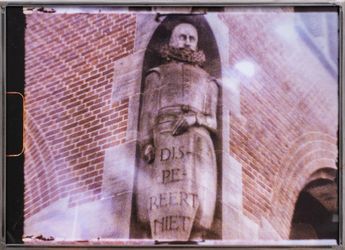
Since 2013, Kusno has developed the Centre for Tanah Runcuk Studies, an ongoing project framed as a research institute devoted to a lost territory located at the meeting point of three tectonic plates and entangled with Dutch colonial expansion. Early exhibitions such as Memoir of Tanah Runcuk: A Note from the “Lost” Land at Kedai Kebun Forum in Yogyakarta examined how maps, testimonies, and museum-style displays can fabricate a coherent yet unstable narrative of place and memory.
Works related to Tanah Runcuk combine pseudo-ethnographic documents, models, and media fragments to question the authority of archives, echoing the bureaucratic language of colonial administration while exposing its erasures. By staging speculative histories as if they were institutional fact, Kusno reveals how power and ideology shape which stories are preserved and which are silenced.
Colonial legacies and museum collections
Kusno’s engagement with colonial history extends into major museum collaborations, most notably with the Rijksmuseum in Amsterdam. There he produced Luka dan Bisa Kubawa Berlari (translated as Wounds and Venom I Carry as I Run), an installation that reconfigures colonial-era objects and images from the museum’s collection to evoke resistance leading up to the Indonesian revolution and to reflect on the ongoing ‘coloniality of power’.
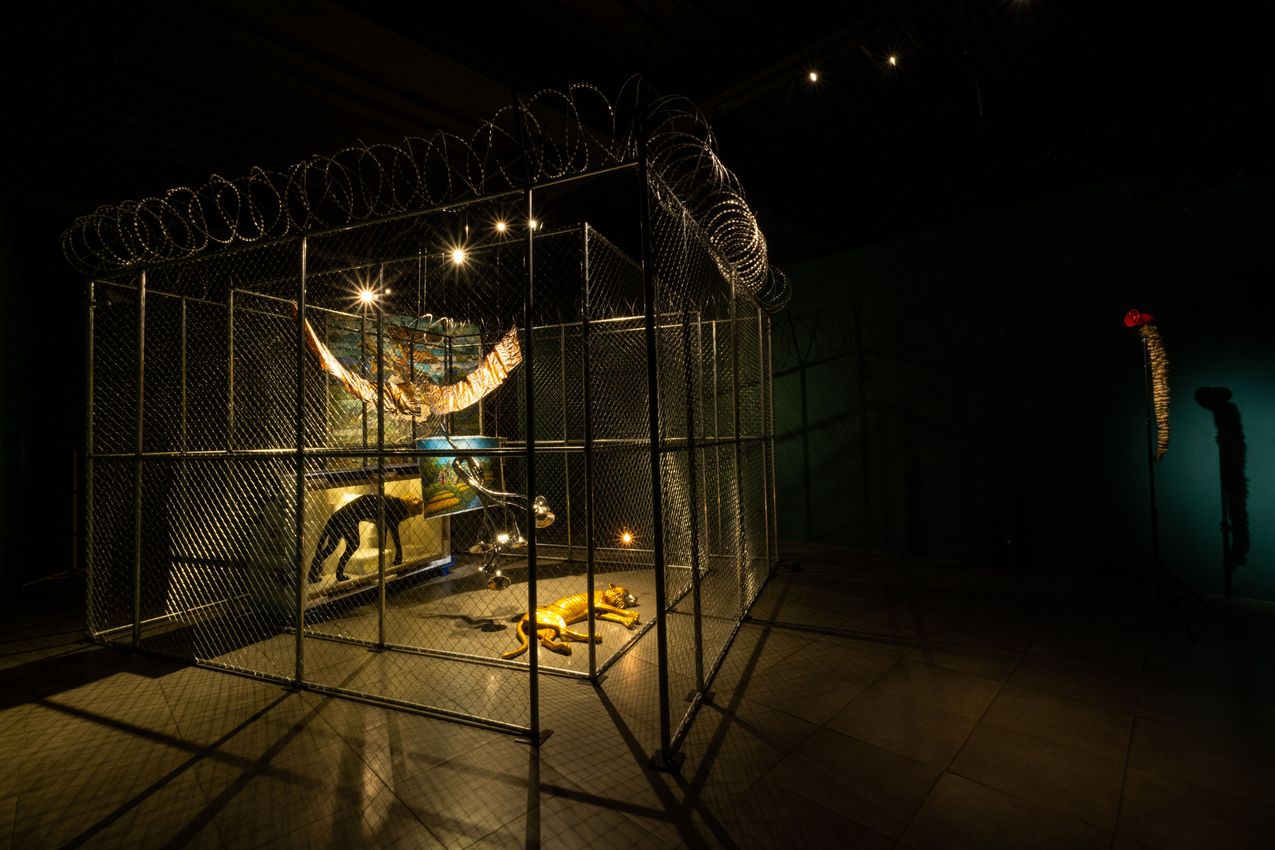
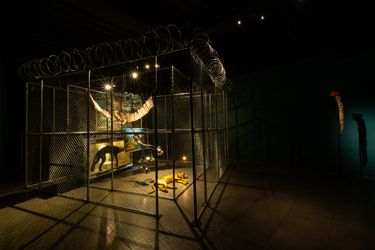
Other works, including The Death of a Tiger and Other Empty Seats (2018), collected by the National Museum of Modern and Contemporary Art, Seoul, extend this critical approach to display and spectatorship. Through staged absences, emptied chairs, and reoriented artefacts, Kusno’s installations trace how violence and trauma linger in institutional spaces and viewing habits.
Phantoms Trilogy and moving image
Kusno’s Phantoms Trilogy brings his interest in history-making into a cinematic form that combines archival footage, re-enactments, and AI-generated imagery. The three works—Reversal, Terra Incognita, and After Colossus—follow different protagonists and temporalities while addressing Indonesia’s transition from colonial rule to authoritarian militarism and beyond.
Reversal centres on a young man whose compulsive dance leads him through disused colonial sugar mills, connecting bodily gesture to inherited trauma and buried histories of labour and violence. After Colossus is set around the fall of Suharto and the discovery of secret files on “Project Rafflesia”, a covert operation that links state surveillance and political unrest, while Terra Incognita operates as an abstract index, focusing on erasure, mass mobilisation, and how official narratives overwrite lived memory.
Timoteus Anggawan Kusno Exhibitions
Select solo exhibitions
- Fever Dream, major solo exhibition exploring Indonesia’s colonial ghosts, venue including paintings, photographs, sculptures, and videos developed over more than a decade
- Solo exhibition Memoir of Tanah Runcuk: A Note from the “Lost” Land, Kedai Kebun Forum, Yogyakarta
- Solo presentations related to Phantoms Trilogy with institutional partners and film organisations including Tate Modern and Han Nefkens Foundation
Select group exhibitions
- Power and Other Things: Indonesia & Art (1835–now), Europalia Arts Festival Indonesia, BOZAR – Centre for Fine Arts, Brussels
- 13th Gwangju Biennale, presenting Shades of the Unseen, commissioned installation on visibility and state violence
- Mindful Circulation, Dr Bhau Daji Lad Mumbai City Museum, Mumbai
- Exhibitions at Rijksmuseum, Amsterdam; National Museum of Modern and Contemporary Art, Seoul; Museum of Contemporary Art, Taipei; Bonn Museum of Modern Art; and other international museums and galleries
Select awards and accolades
- Han Nefkens Foundation – Loop Barcelona Video Production Award, 2021
- VISIO – European Programme on Artists’ Moving Image, Production Fund, 2024
- Locarno Residency awardee, 2024
- Focus: Timoteus Anggawan Kusno at International Film Festival Rotterdam (IFFR) 2025, including a curated spotlight on his moving-image
Website and Instagram
Timoteus Anggawan Kusno’s website can be found at https://www.takusno.com, which gathers information about his artworks, films, and projects. Timoteus Anggawan Kusno’s Instagram can be found at https://www.instagram.com/takusno, where he shares images, exhibition updates, and studio-related content.
Timoteus Anggawan Kusno FAQs
Who is Timoteus Anggawan Kusno?
Timoteus Anggawan Kusno is an Indonesian contemporary artist, researcher, and filmmaker known for installations, drawings, and films that address the legacies of colonialism, authoritarianism, and historical memory. You can follow Timoteus Anggawan Kusno on Ocula to learn more about his work, find out about art for sale, contact his gallery, and keep up to date with upcoming exhibitions.
Where can I see work by Timoteus Anggawan Kusno?
Work by Timoteus Anggawan Kusno has been exhibited at institutions including the Rijksmuseum in Amsterdam, National Museum of Modern and Contemporary Art in Seoul, Dr Bhau Daji Lad Museum in Mumbai, Museum of Contemporary Art in Taipei, and Gwangju Biennale in South Korea, as well as at film festivals such as IFFR, CPH:DOX, and DOK Leipzig. You can follow Timoteus Anggawan Kusno on Ocula to receive alerts on upcoming exhibitions by the artist.
Are there lesser-known facts about Timoteus Anggawan Kusno?
A lesser-known aspect of Timoteus Anggawan Kusno’s practice is the long-term Centre for Tanah Runcuk Studies, a fictional research institution that he has developed since 2013 to examine how invented territories and archives can mirror real mechanisms of colonial knowledge production. You can follow Timoteus Anggawan Kusno on Ocula to receive alerts on news about the artist.
Where does Timoteus Anggawan Kusno live?
Timoteus Anggawan Kusno lives and works between Amsterdam in the Netherlands and Yogyakarta in Indonesia, reflecting his sustained engagement with both Indonesian histories and European institutional contexts. This transnational base supports collaborations with museums, biennales, and universities across Asia and Europe.
How is Timoteus Anggawan Kusno’s name pronounced?
Timoteus Anggawan Kusno’s name is commonly pronounced ‘Tee-mo-TAY-oos Ang-ga-wan KOOS-no, keeping clear emphasis on each component of his Indonesian name. When in doubt, many institutions and interviews adopt a careful, syllable-by-syllable pronunciation to respect the artist’s full name.
Where can I buy Timoteus Anggawan Kusno’s work?
Timoteus Anggawan Kusno is represented by leading contemporary art galleries and collaborates with international museums and film organisations. You can explore Ocula to find out which Ocula galleries represent the artist and enquire directly about buying art by Timoteus Anggawan Kusno. You can also get in touch with Ocula’s art advisory team to find out more about buying or selling work by Timoteus Anggawan Kusno.
Ocula | 2026

Recently Exhibited

Representative Artworks
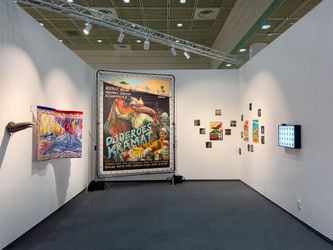
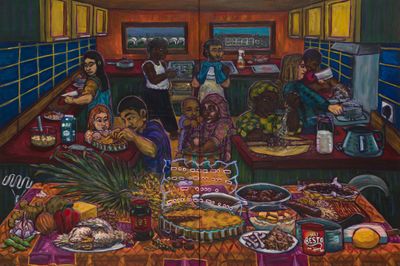
Timoteus Anggawan Kusno, Kohesi Initiatives, Frieze Seoul (2025). Courtesy the artist and Kohesi Initiatives, Yogyakarta.
View story
View story
View story
View story
View story




Explore and Follow Artists Shaping Contemporary Art
A respected voice in contemporary art discourse.
Focusing on ambitious storytelling and insightful art-world commentary. Ocula Magazine publishes in-depth interviews, critical essays and timely analysis on the artists, exhibitions and ideas driving the global art world.
Learn more about Ocula Magazine
Showcasing the best of the art world.
Ocula partners with galleries from around the world to highlight their artists, artworks and exhibitions. Gallery membership is by application and invitation, with each member vetted by an independent panel.
Learn more about Ocula Membership
Specialises in the sale of major artworks.
Led by a team with deep ties to the world’s leading auction houses, galleries and collectors. Ocula’s advisory team offers bespoke services to high-net-worth clients from around the world who are looking to acquire the best of contemporary and modern art.
Learn more about our team and services