






TOM LLOYD
1929-1996, United StatesTom Lloyd was a pioneering American artist, activist, teacher, and community organiser whose innovative practice united art and social action for more than three decades. He worked primarily in abstraction and technology creating pioneering light works.
In 2025, the Studio Museum in Harlem, New York dedicated a major survey to him, Tom Lloyd, spanning 20 years of the artist’s career, including his important contributions to art and technology, and paying tribute to his involvement with the Art Workers’ Coalition and his founding of the Store Front Museum, the first art museum in Queens, New York. You can read about the show in Lloyd Forever Shines a Light on Black Art via Ocula Magazine.
Early Life and Background
Born in Jamaica, Queens, New York in 1929, Tom Lloyd was deeply connected to his community throughout his life. He pursued higher education and later held teaching positions at Sarah Lawrence College and Cooper Union in New York City, sharing his expertise with emerging artists and developing art workshops for youth and adults across the city.
Tom Lloyd Artworks, Exhibitions and Activism
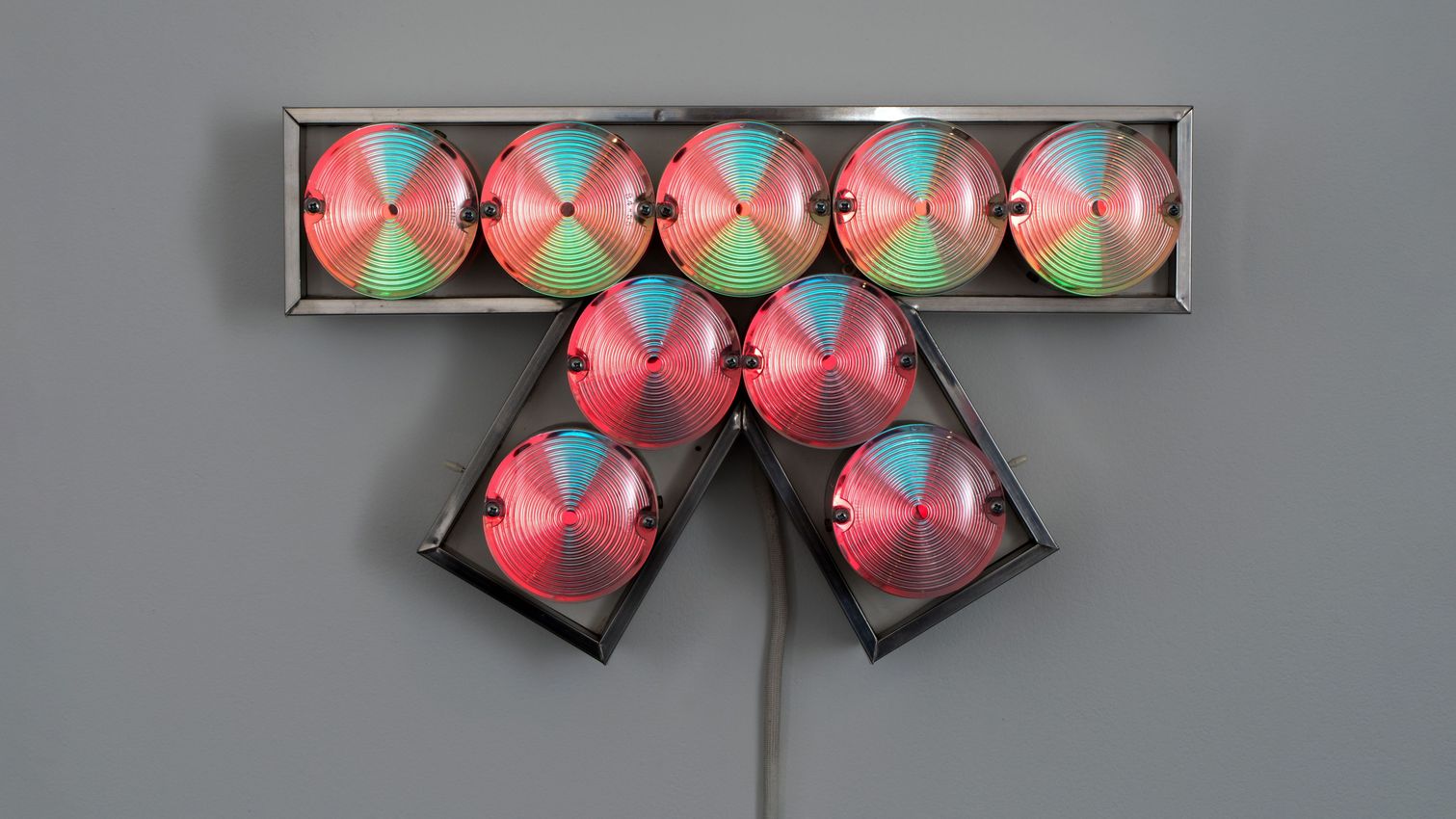
Tom Lloyd (1929–1996) was a pioneering American artist, activist, and community organizer whose life and career helped shape the trajectory of modern art and museum activism in New York. His practice is defined by a profound integration of electronic technology, abstraction, and social justice, most notably in the form of his groundbreaking light sculptures.
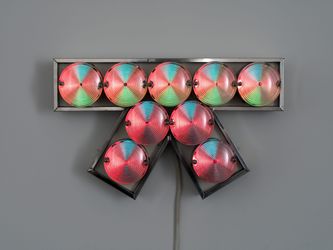
Lloyd studied art at Pratt Institute and the Brooklyn Museum, developing a singular voice that would soon wield great influence. By the mid-1960s, Lloyd was among the first artists to harness electric light as a primary artistic medium, collaborating with engineers at the Radio Corporation of America (RCA) to create technologically sophisticated pieces that challenged perceptions of Black art and inspired future explorations in kinetic and electronic practices.
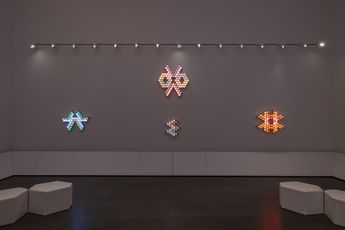
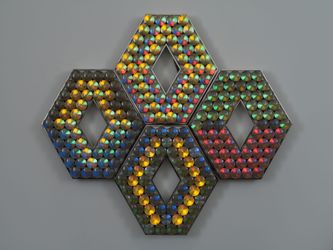
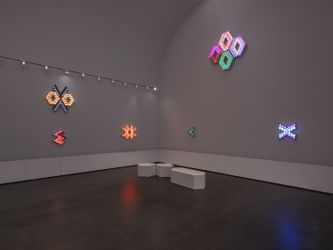
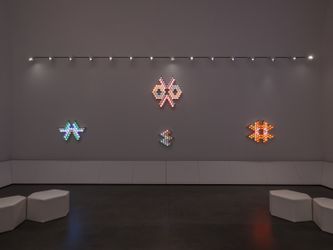
In 1968, Lloyd was selected as the inaugural artist for the Studio Program at the newly opened Studio Museum in Harlem. His solo exhibition, Electronic Refractions II, marked the museum’s very first show and presented his electronically programmed light sculptures—works that remain seminal in the canon of 20th century American art. That same year, Lloyd created Veleuro, an ambitious kinetic assemblage of nearly 800 blinking-colored lights in a sculptural arrangement powered by a complex electrical system, now held in the Museum of Modern Art‘s permanent collection.
Electronic Refractions II (1968): Lloyd’s initial solo exhibition at The Studio Museum in Harlem showcased his electronically programmed sculptures, marking the museum’s inaugural exhibition. Lloyd was the first artist selected for the Museum’s Studio Program.
A dedicated community leader, Lloyd founded the Store Front Museum/Paul Robeson Theatre in Jamaica, Queens, in 1971, transforming an abandoned warehouse into the borough’s first art museum. The Store Front Museum became a vital center for Black art and culture, hosting exhibitions, performances, classes, and festivals for sixteen years, and offering enrichment programs to the community long after its founding.
Lloyd’s impact extended to national conversations about the visibility of Black and Puerto Rican artists, as he was a founding member of the Art Workers’ Coalition (AWC) formed in 1969 to diversify city museum boards and promote equity. His activism was deeply connected to his studio work, both motivated by the need for social and political change.
Throughout his career, Lloyd exhibited widely, with important appearances including the Whitney Museum‘s Contemporary Black Artists in America exhibition (1971), as well as numerous institutional and thematic shows that consistently recognized the innovative and activist thrust of his practice.
Lloyd’s legacy lives on today, as major institutions revisit his pivotal role in merging aesthetics with social action. Nearly six decades after his landmark Studio Museum debut, retrospectives continue to explore his dynamic light sculptures, assemblages, and transformative influence within community arts. Founding Member, Art Workers’ Coalition (AWC), helping diversify city museum boards and amplify Black and Puerto Rican artists.
Tom Lloyd FAQs
Who is Tom Lloyd?
Tom Lloyd was an American artist renowned for pioneering electronic light sculptures and combining art with activism. Follow Tom Lloyd on Ocula to learn more about his work, view art for sale, and keep informed about upcoming exhibitions.
Where can I see work by Tom Lloyd?
Tom Lloyd’s works have been the subject of a major retrospective at the Studio Museum in Harlem and appear in institutional collections and major museum exhibitions. Follow Tom Lloyd on Ocula for alerts on his exhibitions.
What are Tom Lloyd’s most important works?
Tom Lloyd’s key works include Electronic Refractions II (1968), his famous inaugural exhibition at the Studio Museum in Harlem featuring electronically programmed light sculptures, and Veleuro (1968), a kinetic work in MoMA’s permanent collection composed of nearly 800 blinking lights and modular forms.
Is Tom Lloyd considered an activist?
Yes; Tom Lloyd’s activism included founding the Store Front Museum in Jamaica, Queens, which provided free art and enrichment programs, and being a leading member of the Art Workers’ Coalition (AWC), advocating for racial equity in museums and higher visibility of Black and Puerto Rican artists.
What was the Store Front Museum, and why is it significant?
Founded by Tom Lloyd in 1971, the Store Front Museum in Jamaica, Queens, became the borough’s first art museum and served as a vital community center hosting exhibitions, concerts, classes, and festivals, supporting cultural and educational needs for over a decade.
Are there lesser-known facts about Tom Lloyd?
Lloyd edited and published Black Art Notes in 1971, a collective statement calling for direct relationships between aesthetics and social action, helping shape the discourse around Black art during a pivotal era. He also mentored emerging artists through the Studio Museum’s Studio Program and engaged in youth education throughout his career.
What was distinctive about Tom Lloyd’s artistic methods?
Tom Lloyd was one of the first artists to use programmable electric light as a sculptural medium, collaborating with RCA engineers, and integrating painting, sculpture, and technology into dynamic works.
How was Tom Lloyd’s work received during his lifetime?
While innovative, some of Lloyd’s exhibitions sparked controversy for departing from prevailing figurative aesthetics in African American art. His work, however, has since been recognised as transformative and foundational for contemporary Black artists and technologists.
Where did Tom Lloyd live?
Tom Lloyd lived and worked in the Jamaican neighborhood of Queens, New York.
Where can I buy Tom Lloyd’s work?
Tom Lloyd is represented in major museum collections, but not for sale via museums. Explore Ocula to see which galleries hold his works and enquire directly about buying art, or contact Ocula’s art advisory team for assistance.
What is a notable quote from Tom Lloyd?
In Black Art Notes, Tom Lloyd wrote: ‘There is a need for a relationship between art and social and political action’.
What is Tom Lloyd’s legacy?
Tom Lloyd’s legacy encompasses pioneering the use of electronic light in art, advocating for institutional change, and developing spaces for collective creativity. His influence endures in Black art history and community activism.
Ocula | 2025


Representative Artworks
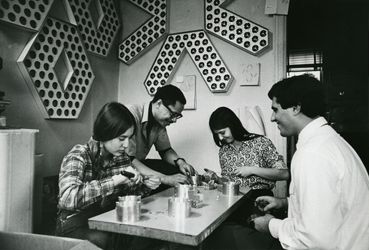
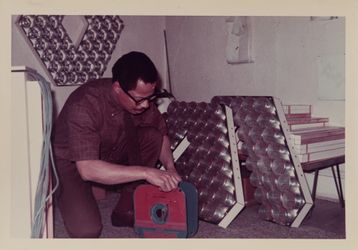
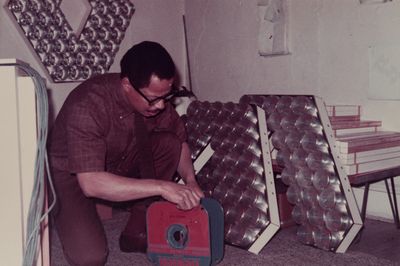
Tom Lloyd and apprentices in the artist’s studio in Jamaica, Queens, New York (c. 1968). Courtesy Studio Museum in Harlem. Photo: Reginald McGhee.
View story
View story
View story
View story
View story
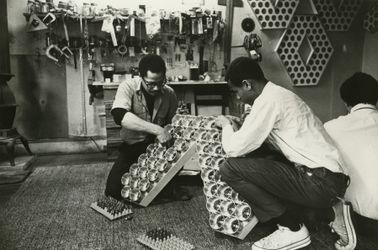
Tom Lloyd and apprentices, including his son Omar, in the artist’s studio in Jamaica, Queens, New York (c. 1968). Courtesy Studio Museum in Harlem. Photo: Reginald McGhee.
View story
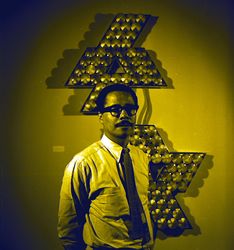
Tom Lloyd standing in front of unknown artwork (1968). Courtesy Studio Museum in Harlem. Photo: Unknown.
View story
View story

Explore and Follow Artists Shaping Contemporary Art
A respected voice in contemporary art discourse.
Focusing on ambitious storytelling and insightful art-world commentary. Ocula Magazine publishes in-depth interviews, critical essays and timely analysis on the artists, exhibitions and ideas driving the global art world.
Learn more about Ocula Magazine
Showcasing the best of the art world.
Ocula partners with galleries from around the world to highlight their artists, artworks and exhibitions. Gallery membership is by application and invitation, with each member vetted by an independent panel.
Learn more about Ocula Membership
Specialises in the sale of major artworks.
Led by a team with deep ties to the world’s leading auction houses, galleries and collectors. Ocula’s advisory team offers bespoke services to high-net-worth clients from around the world who are looking to acquire the best of contemporary and modern art.
Learn more about our team and services