






Tom Lloyd Forever Shines a Light on Black Art
Nearly 60 years on from his show that inaugurated the Studio Museum in Harlem, the activist artist’s light sculptures return for its reopening to ask, what is the essence of Black art? Save to My Ocula
That the late activist and artist Tom Lloyd was born in Detroit in 1929 is significant. Detroit, the city where Black bodies were absorbed by the machinery of American industry at the turn of the 20th century. The city where technology became fully enmeshed with capitalism through the automotive industry. The city where Black and techno music became indistinguishable in the 1980s as a futuristic sound rooted in funk and soul emerged from its clubs. Detroit, as scholar DeForrest Brown Jr notes in Assembling a Black Counter Culture (2022), ‘emerged as the United States’ fourth largest city in the 1920s, greatly contributing to the rising standards of living across the nation with its investments in the “Big Three” (Ford, Chrysler, and General Motors) automotive empire’.
The plainly titled Tom Lloyd exhibition christens the newly reopened Studio Museum in Harlem this autumn, and the influence of the automobile industry can still be felt in Lloyd’s early sculptures. In Untitled (1965), it can be seen in the green scuffed metal, the rugged industrial parts, and the plastic Buick backup lights (famously mass manufactured by Guide Lamp, at the time a division of General Motors). Though abstract, the sculpture borrows the vernacular of contemporary life: the car, bent steel, electrical illumination, in service of new forms and new modes of interaction. Black ones.
The Studio Museum first opened in September 1968 with Electronic Refractions II, a solo exhibition for Lloyd. But his light bulbs and electronically programmed works were controversial choices for a museum whose purpose was, and is, so staunchly devoted to Black art. On the opening night, a disgruntled audience member notoriously damaged one of the sculptures because it ‘did not seem to be by a Black artist’. Lloyd and his technology-driven light works raise a question that remains highly relevant today: ‘What is Black art?’ Lloyd’s answer, given during a symposium at the Museum of Modern Art in 1969, was simple: ‘We’re Black. No matter what kind of work you do, you’re influenced by all these things.’
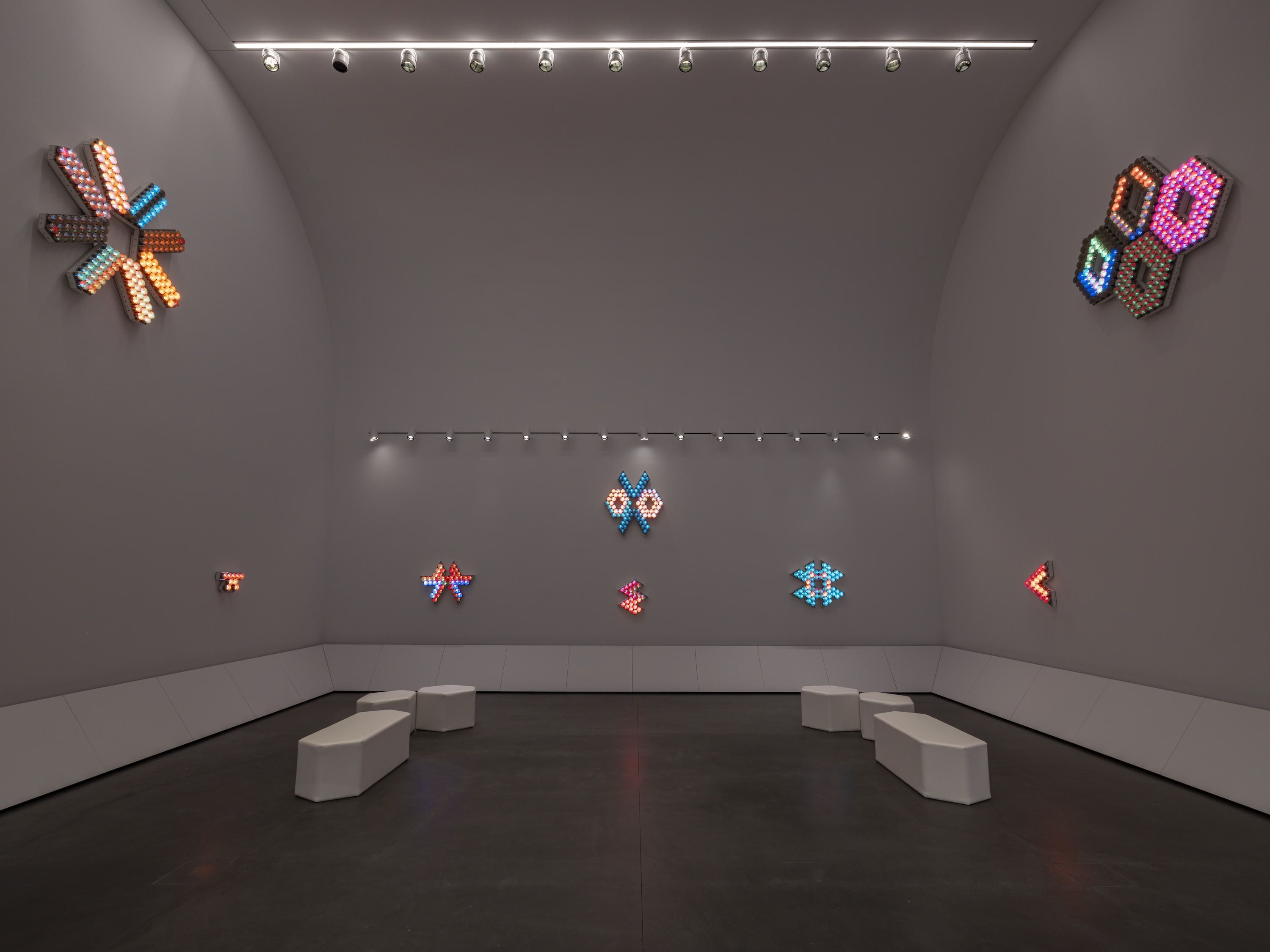
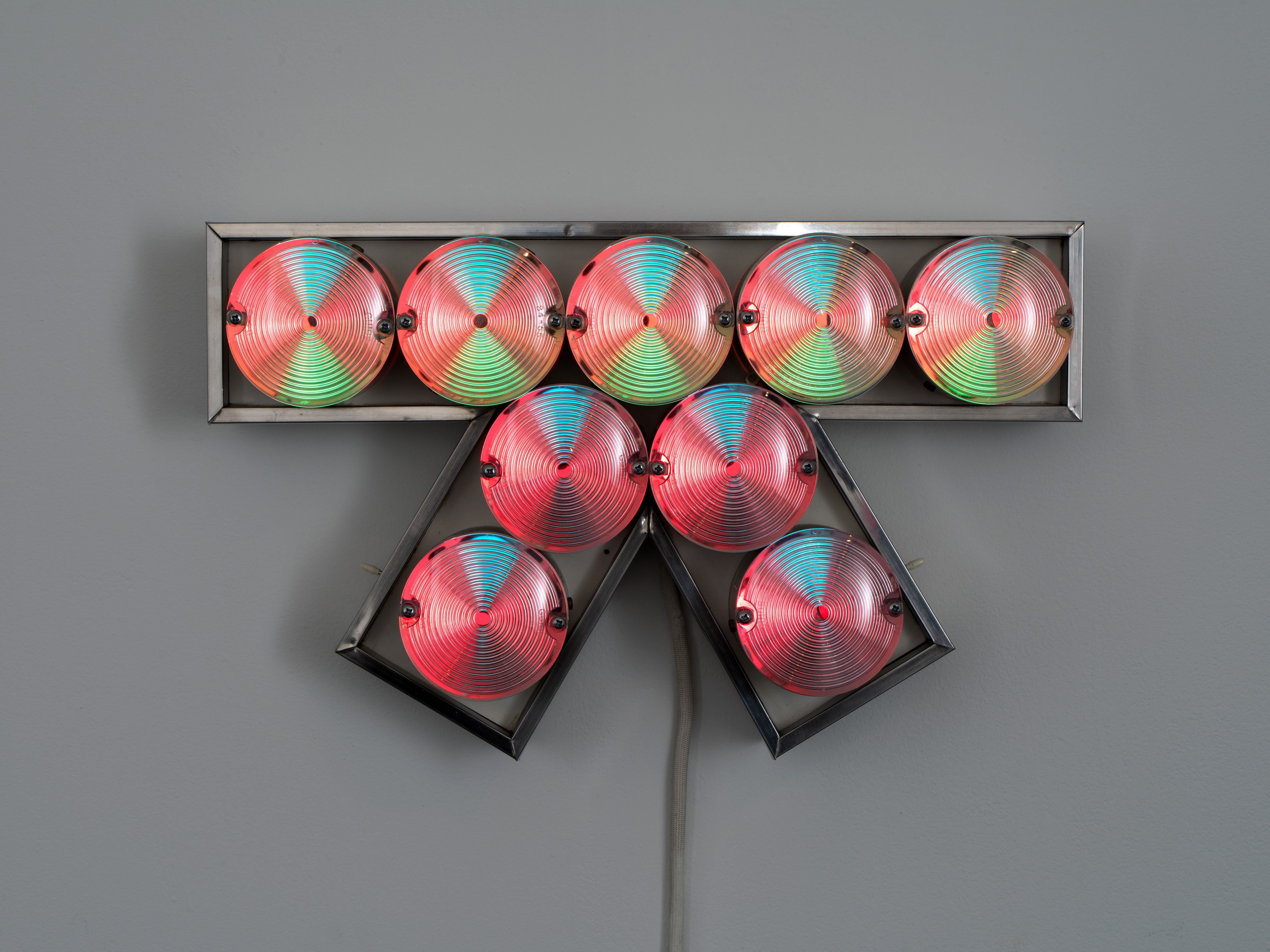
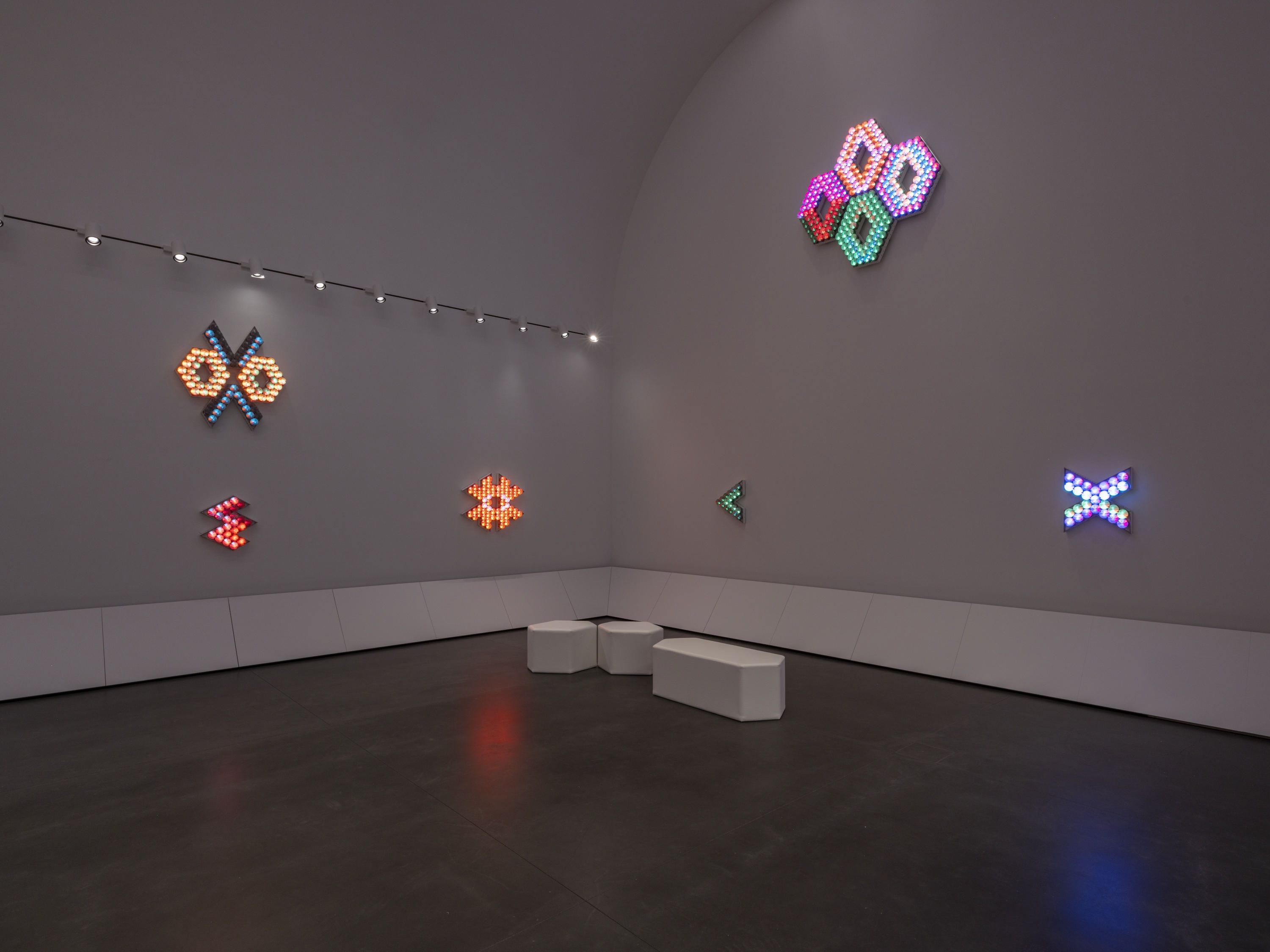
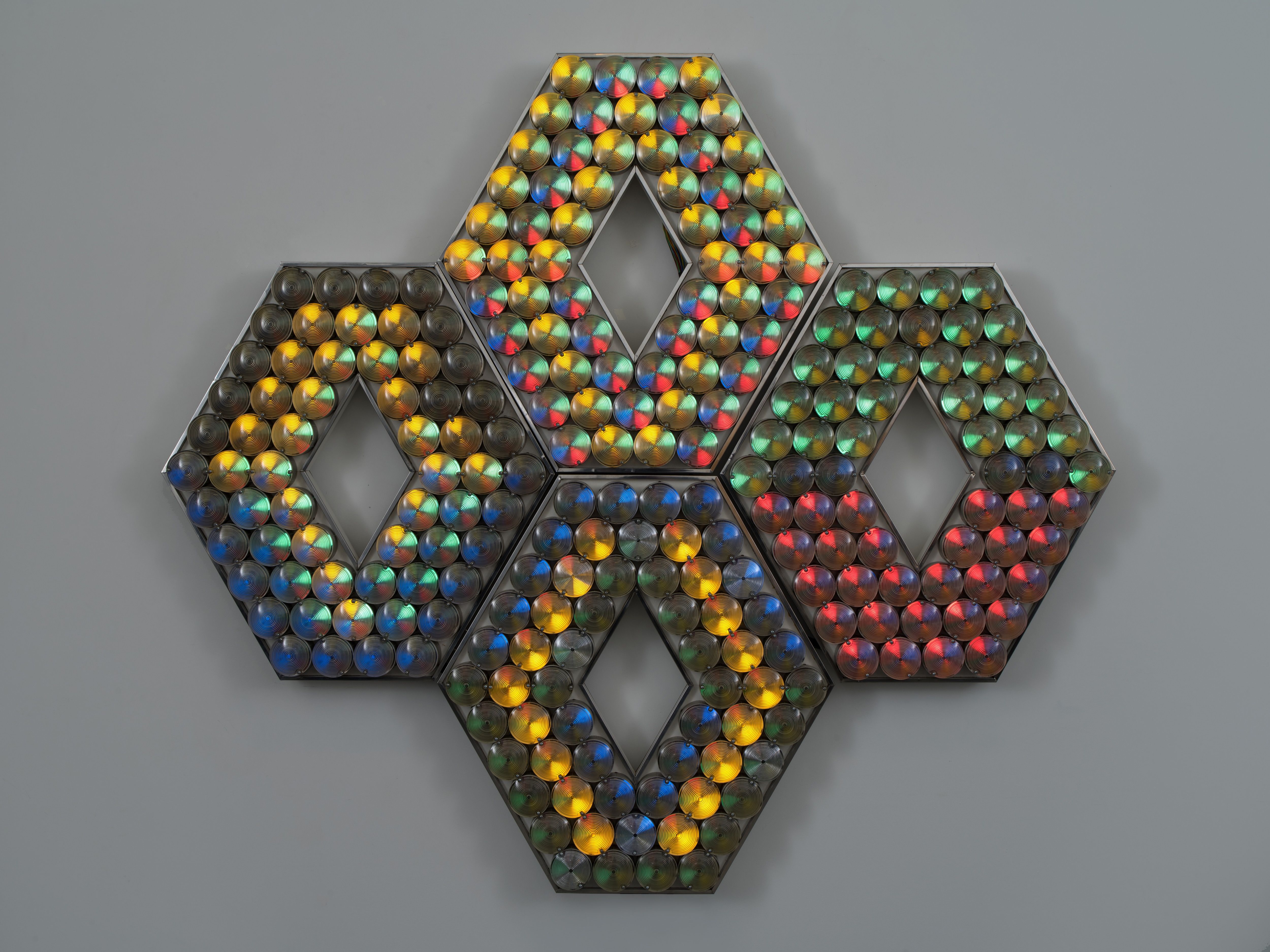
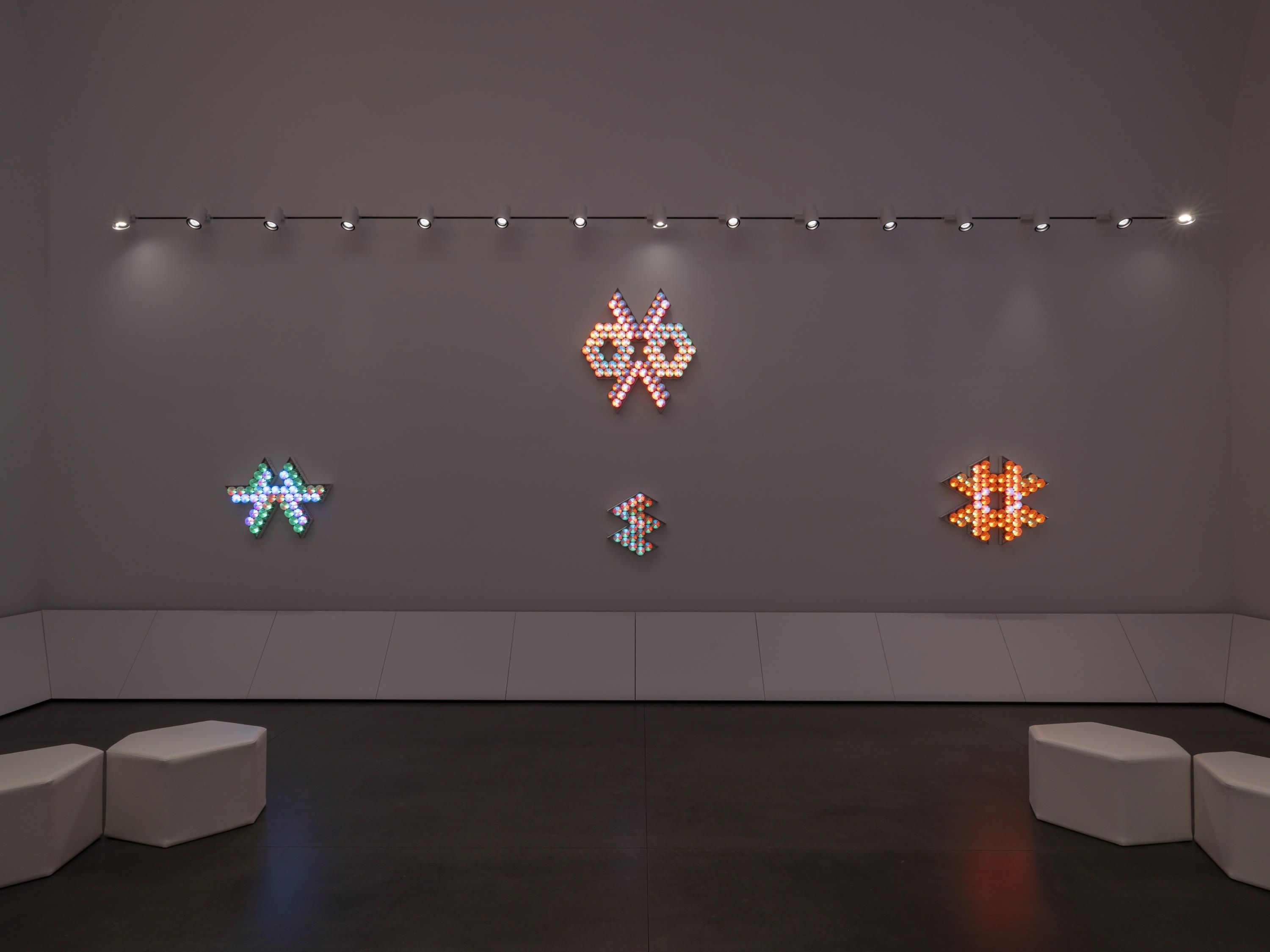
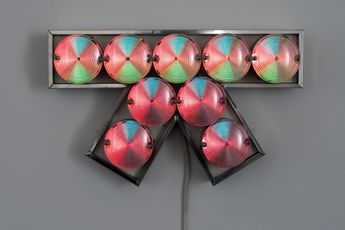
The form most represented in Lloyd’s current exhibition is a series of sculptures that make use of artificial light, taking the electronic elements explored in sculptures like Untitled and presenting them with a starkly minimalistic aesthetic. Gone is the viridescent, lightly scraped metal. Now only lights remain, set next to each other, in curious geometric shapes. In Mantara (1965), Lloyd meticulously places 27 lights in the shape of an X, like four parallelograms stitched together; they flicker rhythmically, showing off hues of turquoise and soft reds. The work is hypnotising and, in many ways, melodic, like a chorus of morse code signals being passed from above.
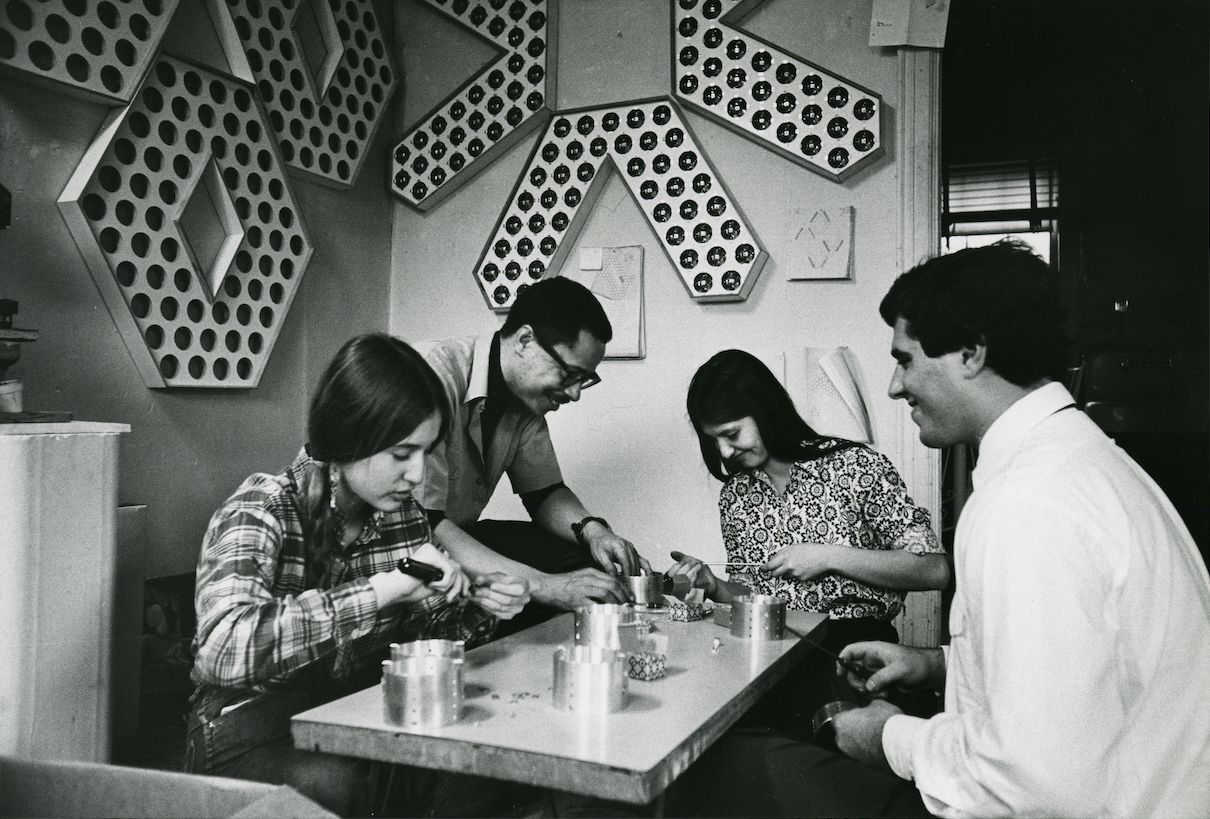
Sitting in front of Medevar II (1965) feels like play, like abstraction reaching out of the sculpture and tap-dancing into the gallery space. This joy and playfulness is the miracle of Lloyd’s work: technology is reconfigured in service of abstraction and Blackness. The neighbourhood children who hung out around his New York studio in Jamaica, Queens to look at his work, understood this intuitively.

The late art historian Elsa Honig Fine wrote in her essay The Afro-American Artist: A Search for Identity (1973), ‘When viewing Lloyd’s work, one becomes aware of the conflict between his aesthetic philosophy and his art. His sculpture is highly intellectual, abstract and seemingly incapable of making a social or political statement.’ Fine saw the lights, but did not understand the message; she lacked the lived experience to compute the encoded parables and the tales lying deep beneath the abstraction. She did not see the severance of forms as transgressive, perhaps because the radical gift of freedom was already given to her. Lloyd wrote in Black Art Notes (1971), a collection of essays which he edited, almost pre-empting the criticism, that there are ‘conflicts and complexities which can be understood and analysed only by the people involved in the struggle itself’.
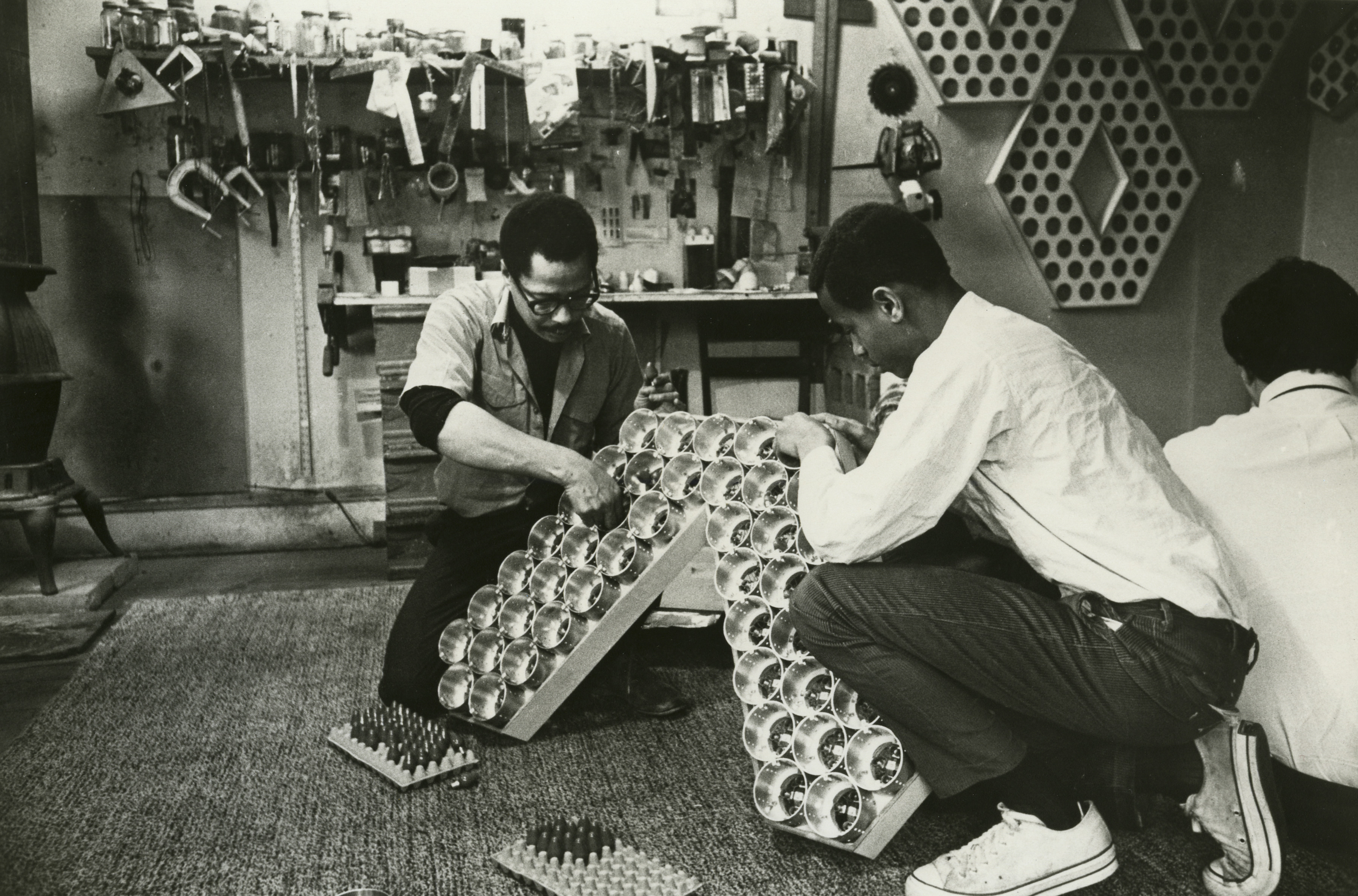
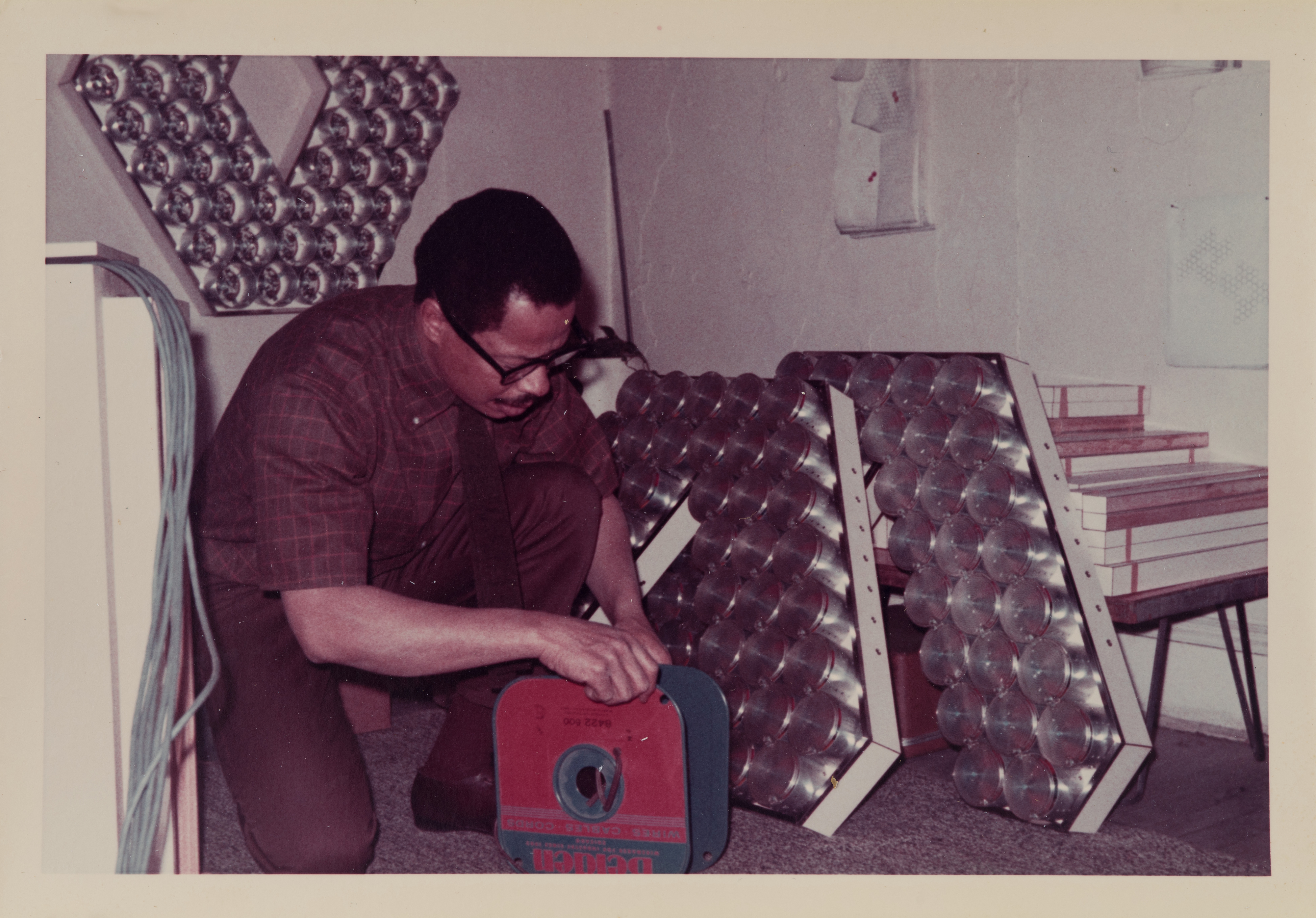
After 1968, Lloyd went on to focus mostly on his activism, through his work with the Art Workers’ Coalition and his founding of the Store Front Museum in Jamaica, Queens. Lloyd sought through his practices, both artistic and social, to open up the possibilities of Blackness, and to bend, like industrial steel, the artefacts of contemporary life to its service. His collaboration with Radio Corporation of America engineer Alan Sussman to make the electronically programmed light sculptures exemplifies this desire to work with the stuff of everyday life in service of beauty; here, technology itself is bent. When choosing the location for his museum in Queens, Lloyd landed upon an old Goodyear dealership scheduled for demolition, which chimes, once more, with the underlying leitmotif of the automobile: his birth in Detroit, the repurposing of the industrial in service of Blackness.
Upon the syncopated flickers of Lloyd’s electronic sculptures, hints and clues gather like a lost signal sent from decades ago. Lloyd’s upheaval of the definition of Black art, the function of technology in contemporary society, leads us to a deeper truth: Blackness, itself a technology, continues to endure, as a mode of revealing, as a beacon to a better future.
Light is not the opposite of darkness, nor is it the obverse of Blackness: light in the hands of a Black artist is a tool, a medium, an invitation to interaction. Light, in the hands of Lloyd, presents itself as the ultimate entryway: a Black art understood even by the Black children on the street peering into Lloyd’s studio, made from the humble mass-produced materials of the urban landscape. In the words of American artist Nikita Gale, born some 50 years after Lloyd: ‘Blackness isn’t the absence of light, but light’s total absorption.’ We clamour for the right to opacity as the light flickers on. —[O]
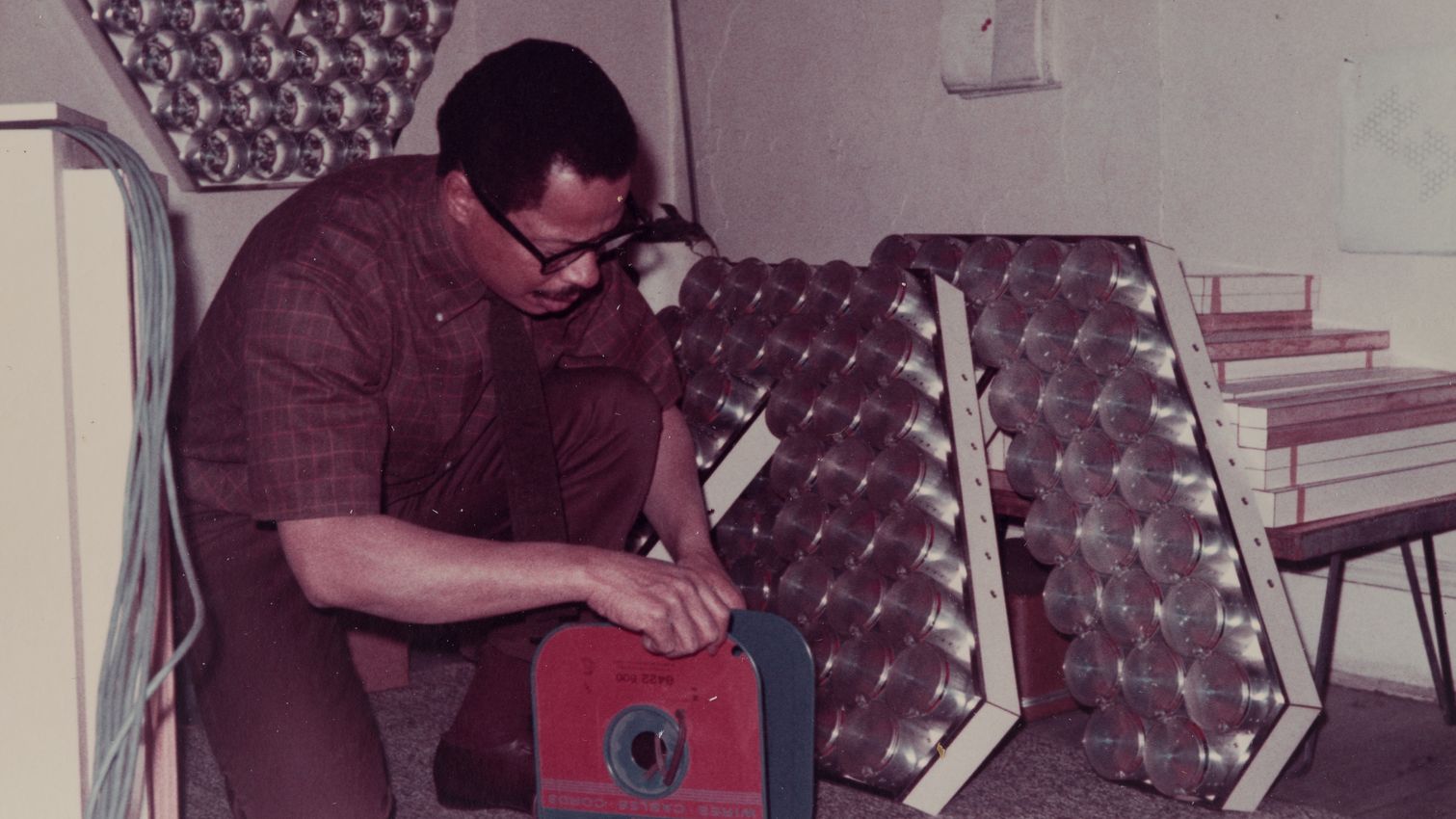
Main image: Tom Lloyd working on Veleuro (c. 1968) (detail). Colour photograph. 3 1/2 × 5 1/16 inches. Collection of Studio Museum in Harlem Archives; gift of Martha A. Cotter in honour of Alan Sussman TD.015.1. Photo: Unknown.





A respected voice in contemporary art discourse.
Focusing on ambitious storytelling and insightful art-world commentary. Ocula Magazine publishes in-depth interviews, critical essays and timely analysis on the artists, exhibitions and ideas driving the global art world.
Learn more about Ocula Magazine
Showcasing the best of the art world.
Ocula partners with galleries from around the world to highlight their artists, artworks and exhibitions. Gallery membership is by application and invitation, with each member vetted by an independent panel.
Learn more about Ocula Membership
Specialises in the sale of major artworks.
Led by a team with deep ties to the world’s leading auction houses, galleries and collectors. Ocula’s advisory team offers bespoke services to high-net-worth clients from around the world who are looking to acquire the best of contemporary and modern art.
Learn more about our team and services