






TORKWASE DYSON
b. 1973, United StatesTorkwase Dyson’s artistic practice explores the connection and continuity between infrastructure, ecology and architecture, considering how Black and brown bodies perceive and negotiate the idea of space as information. Her abstract pieces include aspects of scale and movement, focusing on the spaces communities have occupied in history and today.
Early Years
Torkwase Dyson was born in Chicago in 1973, growing up on the city’s South Side among activists, scholars and educators. Her father owned a record store for a while and her mother, D Soyini Madison, co-founded schools whose curriculums focused on the Black diaspora. She majored in sociology at Tougaloo College in Mississippi but during her final year, decided to take some art classes. She gained her BFA in painting and printmaking from Virginia Commonwealth University in 1999 and her MFA from Yale in 2003. However, the themes that have come to define Dyson’s artistic practice emerged during 2003. She was teaching at Spelman College in Atlanta when 30 people displaced from New Orleans by Hurricane Katrina arrived in her shared loft. “Hurricane Katrina directly politicized me,” she has said. “The people in my house were environmental refugees. This was climate migration.” Experiencing a realisation that class, power, race, infrastructure and ecology were linked, she started to teach herself about architecture and energy.
Torkwase Dyson: Artworks
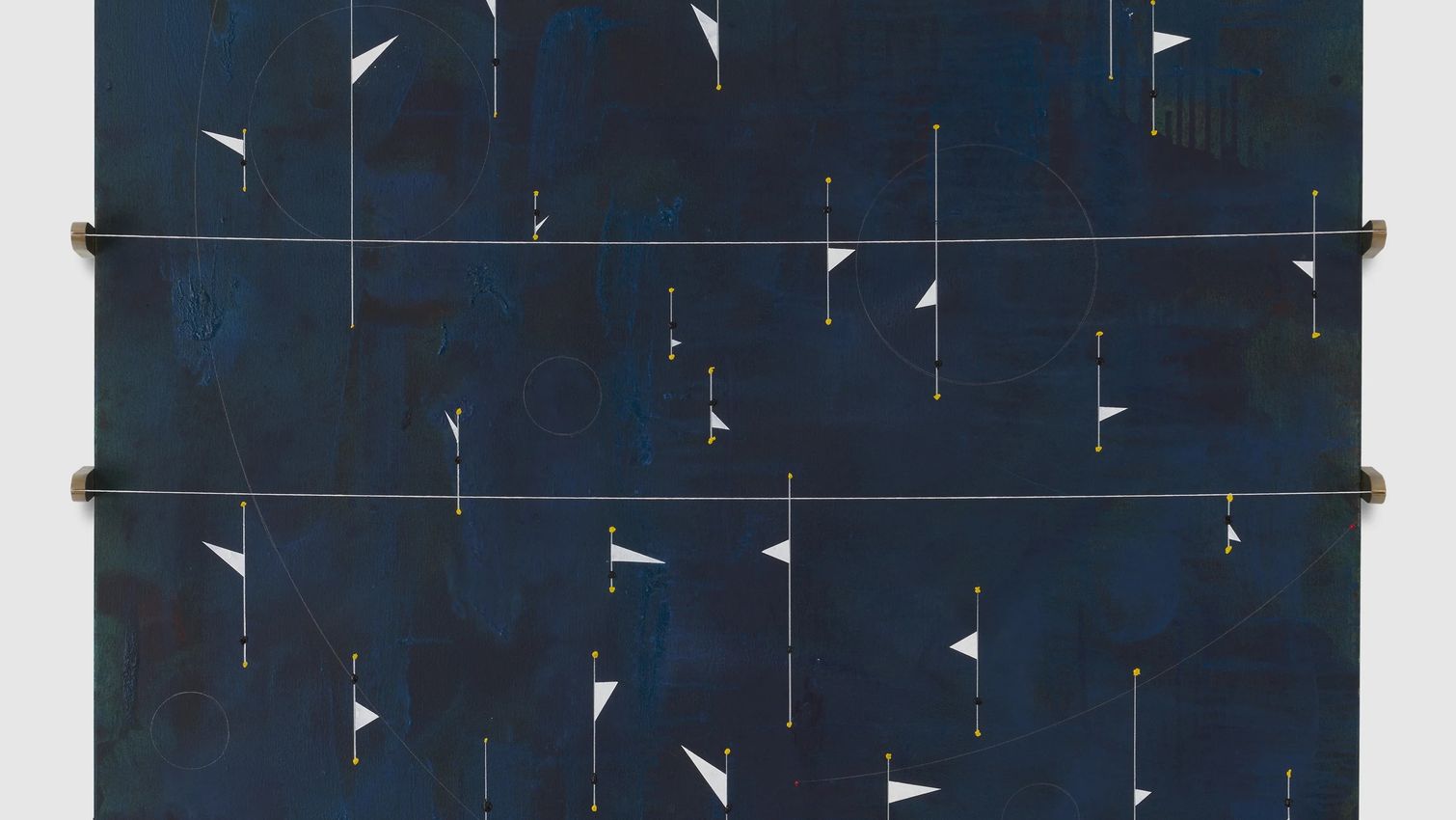
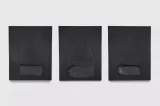
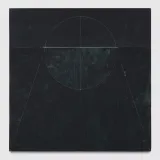
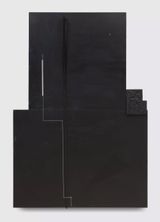
Torkwase Dyson’s abstract pieces consider spatial relations: how do our bodies move through natural and built environments? She uses dark pigments and creates many drawings before she begins an individual artwork. “Momentum comes from the drawings, the making with my hands, which then produces a set of questions and a set of curiosities,” she has said. Her large-scale geometric paintings and sculptures use materials ranging from acrylic to plexiglass, paying particular attention to shape and scale.
- Dyson’s 2019 exhibition 1919: Black Water was a collection of sculptures and paintings about the 1919 murder of Eugene Williams, which sparked the Chicago race riot that year. Williams and four other Black teenagers took a home-made raft to Lake Michigan—when it drifted towards a whites-only beach, someone threw a rock, fatally hitting Williams and causing him to drown.
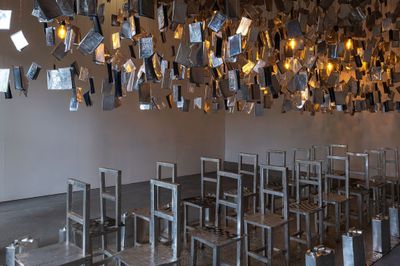
- In her 2019 two-act performance and sculptural installation I Can Drink the Distance, Dyson created a platform for the examination of Black ecological and spatial relations, based around her evolving theory of Black Compositional Thought and the relationship between the Anthropocene and the white supremacy of industrialisation and plantation slavery. She examined how movement, scale and sound could create narratives that became networks of liberation.
- For the 2026 Venice Biennale, Torkwase Dyson exhibited Tougaloo (2026), a large-scale installation including painting, sculpture and sound. Dyson studied at Tougaloo College in Mississipi, which was a former plantation. How has the college’s former life impacted its role as a space for education?
Torkwase Dyson: Select Exhibitions
Select Solo Exhibitions
- Torkwase Dyson: Of Line and Memory, Richard Gray Gallery, Chicago (2025)
- Torkwase Dyson: Here, Pace, Los Angeles (2024)
- Torkwase Dyson, T Space Rhinebeck, New York City (2023)
- Torkwase Dyson: A Liquid Belonging, Pace Gallery, New York City (2022)
- Liquid A Place, Pace Live, Pace Gallery, London (2021)
- Torkwase Dyson: Black Compositional Thought | 15 Paintings for the Plantationocene, New Orleans Museum of Art (2020)
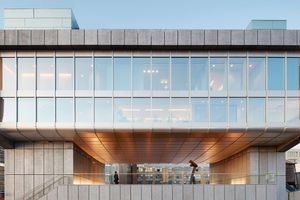
- Torkwase Dyson—1919: Black Water, Arthur Ross Architecture Gallery, Columbia University, New York City (2019)
- Torkwase Dyson: I Can Drink the Distance, The Irwin S Chanin School of Architecture, The Cooper Union, New York City (2019)
- _Torkwase Dyson: Dear Henry, Davidson Contemporary, New York City (2018)
- Torkwase Dyson: Black Compositional Thought and the Wynter-Wells Drawing School for Environmental Justice, The Drawing Centre, New York City (2018)
- Illegal Abstraction, Hemphill Fine Arts, Washington DC (2016)
- Mine: a solo exhibition by Torkwase Dyson, Schiltkamp Gallery, Clark University, Worcester (2014)
- Torkwase Dyson: Hereinafter, Meat Market Gallery, Washington, DC (2008)
- Torkwase Dyson: Oil and Water Don’t Mix, Ty Stokes Gallery, Atlanta (2006)
Select Group Exhibitions
- Monuments, Geffen Contemporary at MOCA, Los Angeles (2026) (and touring)
- In Minor Keys, 61st Venice Biennale (2026)
- Artist’s Choice: Arthur Jafa—Less Is Morbid, MoMA, New York City (2025)
- Revolutions: Art from the Hirshhorn Collection, 1860–1960, Smithsonian Hirshhorn Museum and Sculpture Garden, Washington DC (2025)
- Sites of Impermanence, National Academy of Design, New York City (2024)
- Liverpool Biennial 2023: uMoya: The Sacred Return of Lost Things, Liverpool (2023)
- Living with Ghosts, Pace Gallery, London (2022)
- Bodies of Water: The 13th Shanghai Biennale—Phase 03: An Exhibition, Power Station of Art, Shanghai (2021)
- Drawing 2020, Gladstone Gallery, New York City (2020)
- Dialogues In Drawing, Jenkins Johnson Gallery, San Francisco (2017)
- Torkwase Dyson and John Trevino: Mine Mind and Sunken City, Second Street Gallery, Charlottesville (2016)
- Material Girls: Contemporary Black Women Artists, Reginald F Lewis Museum, Baltimore (2011)
- It Might Blow Up, But It Won’t Go Pop, African American Art Museum, Dallas (2008)
Further Reading
- Torkwase Dyson official website
- Torkwase Dyson’s Instagram
- 2020 conversation from The Brooklyn Rail
- 2022 interview in Lux magazine
- 2021 interview in the Guardian
- 2022 story from The New York Times
Torkwase Dyson FAQs
Who are Torkwase Dyson’s influences?
Her early influences included Minnie Evans, David C Driskell and Samella Lewis. At Tougaloo, she met the activist and figurative painter Benny Andrews, one of the co-founders of the Black Emergency Cultural Coalition. She also cites Christina Sharpe’s 2016 book In the Wake: On Blackness and Being, as an influence—the text considers the slave ship and its wake as a metaphor for how slavery’s aftereffects have impacted Black life.
What materials and techniques does Torkwase Dyson use?
In her painting practice, Dyson uses a palette of black, grey and indigo. She builds her work slowly, accumulating surfaces and washes, adding drips and layers. She will then add marks with brushes or scored lines reminiscent of architectural drawings. Her large-scale sculptures feature glass, graphite, acrylic, wood and steel—these are fabricated but then she adds drawn shapes and pieces of graphite paste to the surfaces. Before producing any work, Dyson will make many, many drawings.
What is Black Compositional Thought?
Torkwase Dyson’s own evolving theory of Black Compositional Thought informs the abstract shapes and lines of her artistic practice—“hypershapes”. Black Compositional Thought considers how Black (and brown) bodies inhabit existing geography, architecture and infrastructure, and how energy consumption and climate erosion contribute to this. The theory also takes into account the legacy of plantation economies—the Anthropocene becomes the Plantationocene and hypershapes are a way to think about how enslaved Black people felt about and reacted to the space they were given to occupy, and what Black freedom looks like visually.
Ocula


View Torkwase Dyson's Artworks



















Explore and Follow Artists Shaping Contemporary Art
A respected voice in contemporary art discourse.
Focusing on ambitious storytelling and insightful art-world commentary. Ocula Magazine publishes in-depth interviews, critical essays and timely analysis on the artists, exhibitions and ideas driving the global art world.
Learn more about Ocula Magazine
Showcasing the best of the art world.
Ocula partners with galleries from around the world to highlight their artists, artworks and exhibitions. Gallery membership is by application and invitation, with each member vetted by an independent panel.
Learn more about Ocula Membership
Specialises in the sale of major artworks.
Led by a team with deep ties to the world’s leading auction houses, galleries and collectors. Ocula’s advisory team offers bespoke services to high-net-worth clients from around the world who are looking to acquire the best of contemporary and modern art.
Learn more about our team and services