





TYLER HOBBS
b. 1987, United States“I want to find new ways to deeply merge the hand with the algorithm,” generative artist Tyler Hobbs has said. He develops custom algorithms to generate images and his artistic practice discusses how software shapes output and how generative systems connect with visual abstraction.
Early Years
Tyler Hobbs was born in Austin, Texas in 1987. As a child, he used to draw comic books, and later took up oil painting, inspired by abstract expressionism and artists including Wassily Kandinsky and Bridget Riley. He studied computer science at university and became a software engineer. He produced artwork at this time using conventional materials, but was always thinking about how art and computers could co-exist creatively and wrote online essays on the subject, thinking about how randomness shapes both art and the natural world. In 2016, he started making generative art, experimenting with flow fields.
Tyler Hobbs: Artworks
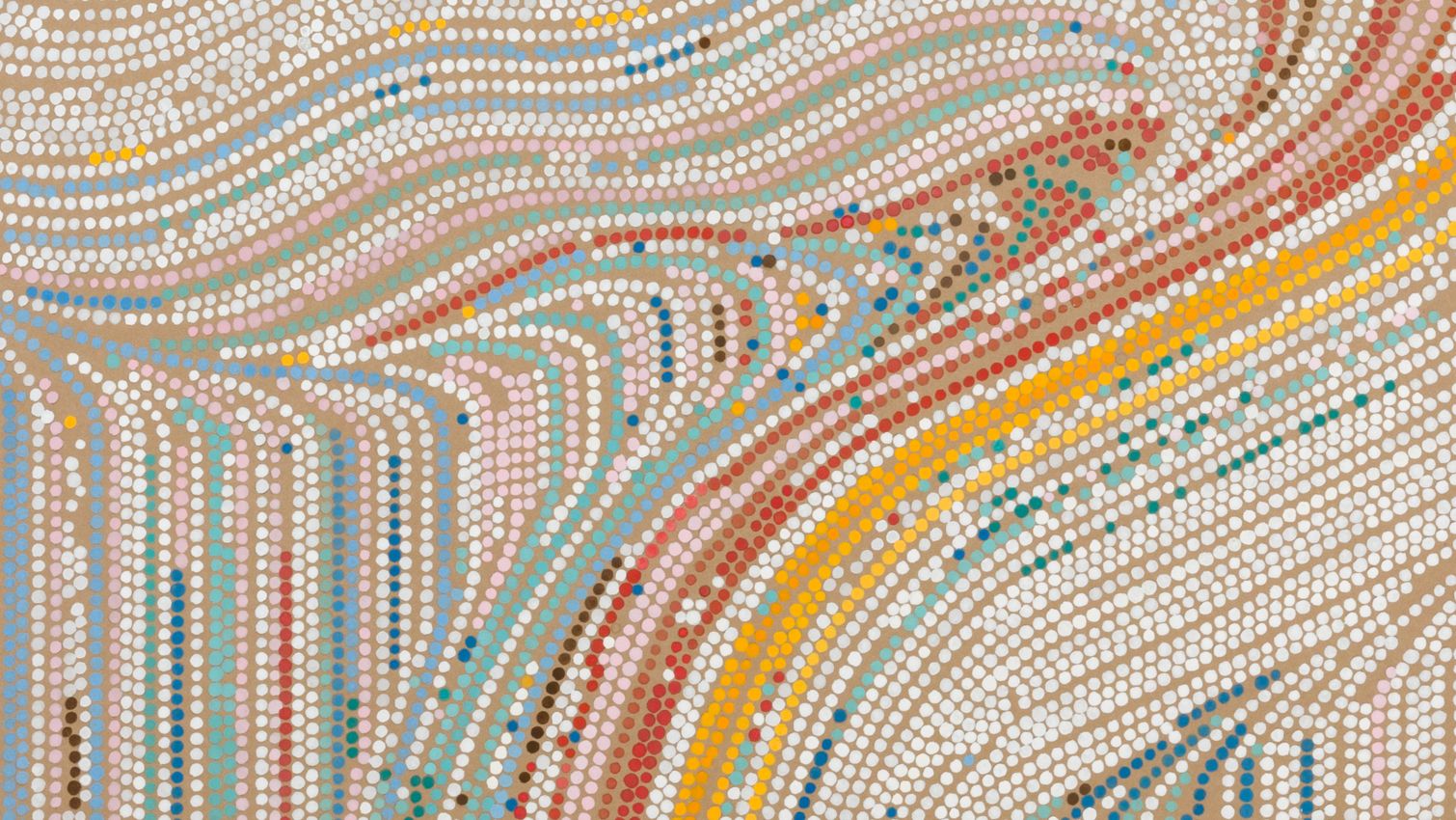
Randomness and spontaneity are key elements of Tyler Hobbs’ creative process. He creates and refines algorithms to include spontaneous ideas and sometimes bugs. His work balances order and chaos and explores how we perceive art to feel “natural” or “digital”. Hobbs’ algorithms intentionally introduce imperfections into the art pieces they create. When creating physical versions of his digital works, Hobbs might use a plotter or add hand-drawn marks.
- Tyler Hobbs’ Fidenza series (999 NFTs that brought him to prominence in 2021) is based on a flow field algorithm which produces organic, unpredictable curves that can be realised in several colour palettes and whose overlapping can be regulated. (And it’s named after a small town in Italy.)
- Hobbs’ Translated Gestures series (2025) considers what it means to be spontaneous, translating the free gestures of mark-making into the algorithmic world.
- The 2026 series Please Respond brought together a chain of algorithmic artists, initiated by Hobbs, responding to the work of the artist before them. As well as seeing the previous artist’s work, they receive the code that made it and can use as much of it as they like.
Tyler Hobbs: Select Exhibitions
Select Solo Exhibitions
- From Noise, Art Basel Miami Beach (2025)
- Mechanical Hand, Unit London (2023)
- QQL: Analogs, Pace, New York City (2023)
- Incomplete Control, Bright Moments New York (2021)
- Progress, Galerìa dos Topos Léon, Guanajuato (2018)
Select Group Exhibitions
- Silicon Based: New Creators, Tang Contemporary Art, Beijing (2025)
- 10 Year Anniversary Group Show, Unit London (2023)
- Gen/Gen: Generative Generations, Gazelli Art House, London (2023)
- In Our Code, Unit London (2022)
Further Reading
- Tyler Hobbs’ official website
- Tyler Hobbs’ Instagram
- Artist profile page at Unit London
- Article in Wallpaper (2023)
- 2023 profile in Forbes
- 2022 story about QQL from Right Click Save
Tyler Hobbs FAQs
What is QQL?
Tyler Hobbs and Dandelion Mané created QQL in 2022, describing it as “a new way to mint NFTs that celebrates emergence, unpredictability and happenstance over forced rarity”. They also established a community around the project, planning to keep the website open for “a long, long time”—anyone can play with the algorithm and 999 mint passes were originally available.
Does Tyler Hobbs use a plotter?
Hobbs has used a mechanical plotter to create physical versions of his digital work but also paints freehand on some pieces. He has also attached a paintbrush to the plotter.
How does code fit into Tyler Hobbs’ artistic practice?
Tyler Hobbs recognises the importance of code in our everyday lives, in the way that we share content and culture through code-created images and videos. Writing in 2021, he said: 8 “If wood, concrete, glass and steel were the core materials of important new construction in the 20th century, coding has easily supplanted these in the 21st. Art must keep up with evolutions in the fabric of society.”
Who are Tyler Hobbs’ influences?
In the art world, Hobbs cites Helen Frankenthaler, Robert Motherwell, Wassily Kandinsky, Mark Rothko and Franz Kline as influences. He has also said that realising Anni Albers and other textile artists were working with algorithmic patterns was “very enriching”.
Ocula











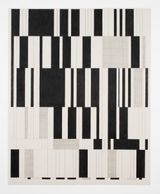
Explore Tyler Hobbs' Exhibitions




Explore and Follow Artists Shaping Contemporary Art
A respected voice in contemporary art discourse.
Focusing on ambitious storytelling and insightful art-world commentary. Ocula Magazine publishes in-depth interviews, critical essays and timely analysis on the artists, exhibitions and ideas driving the global art world.
Learn more about Ocula Magazine
Showcasing the best of the art world.
Ocula partners with galleries from around the world to highlight their artists, artworks and exhibitions. Gallery membership is by application and invitation, with each member vetted by an independent panel.
Learn more about Ocula Membership
Specialises in the sale of major artworks.
Led by a team with deep ties to the world’s leading auction houses, galleries and collectors. Ocula’s advisory team offers bespoke services to high-net-worth clients from around the world who are looking to acquire the best of contemporary and modern art.
Learn more about our team and services