



WEI LIGANG
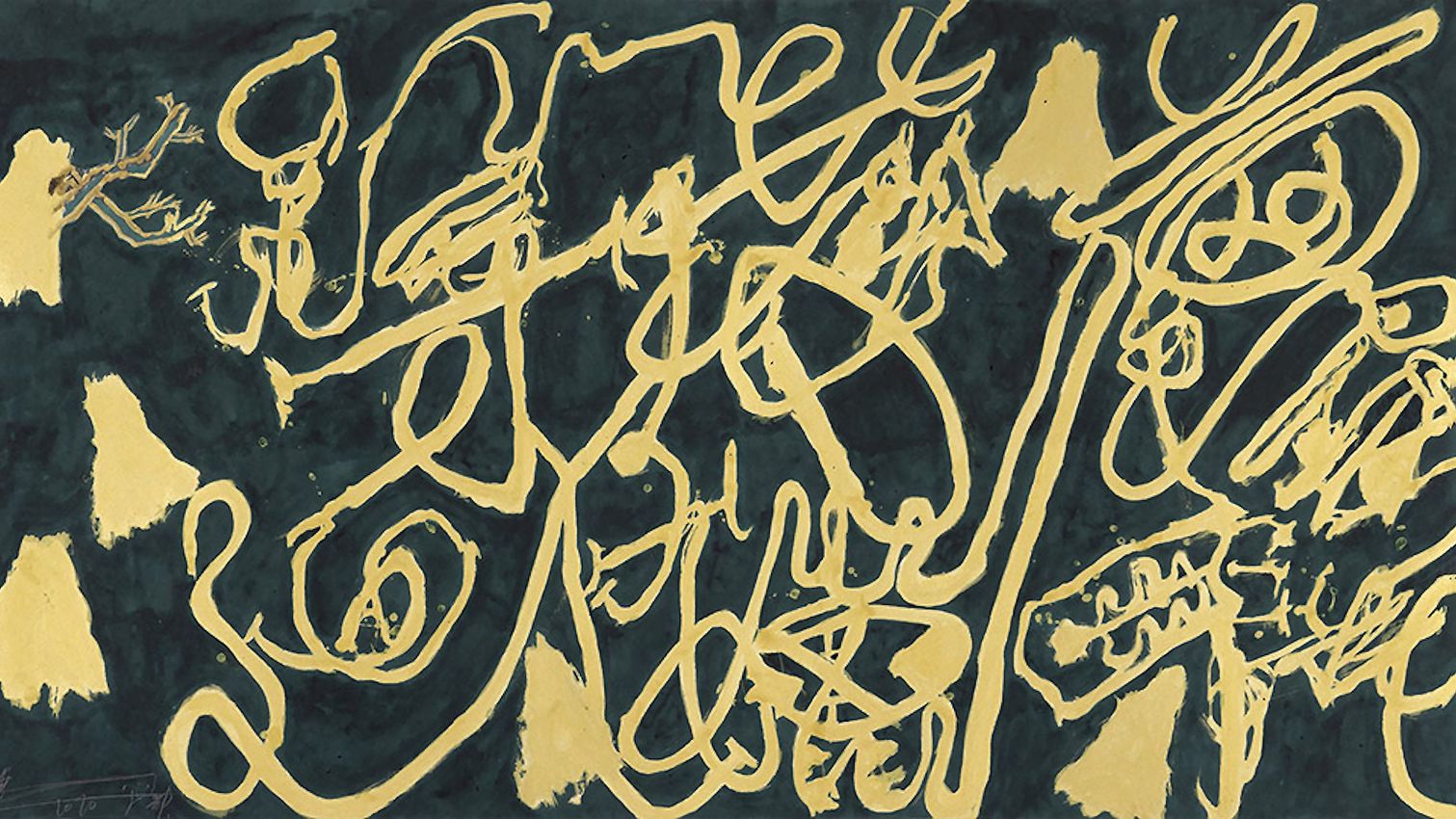
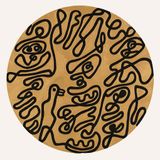
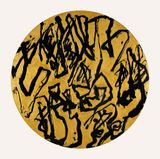
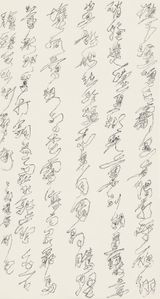
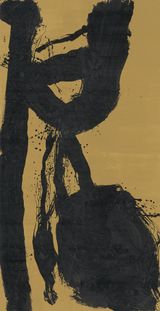
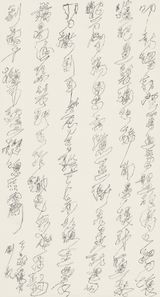
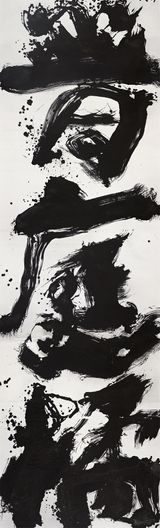
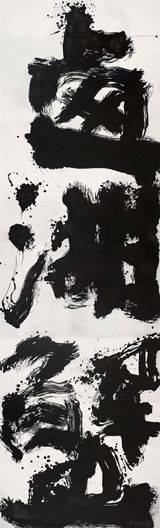
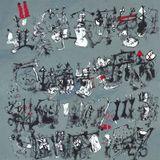
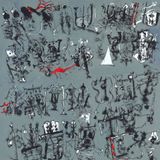
b. 1964, ChinaIn his career of three decades, Wei Ligang (b. 1964) has sought a universal language of abstraction based on the linear and spatial compositions of Chinese writing, a language capable of embodying the complexity and expansiveness of contemporary human knowledge and existence. His signature ‘magic squares’, which preserve the structure and strokes of Chinese characters and hark back to the pictographic origins of Chinese writing, are one of the earliest examples of a distinctly personal language in contemporary Chinese art. Wei Ligang generalises the continuous cursive calligraphy of the 17th-century Shanxi calligrapher Fu Shan, applying it to the seal, clerical, and Oracle Bone scripts of antiquity to create the distinctive script styles of epigraphic mad cursive, ‘gold-ink cursive’, and ‘shadow cursive’. Wei Ligang is also the author of a celebrated body of calligraphy-informed abstract paintings.
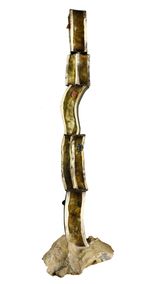
Wei Ligang’s art is a unique fusion of systematic thought and sensibility, delicacy and spirituality, exoticism and naturalness. His wide-ranging inspirations include ancient Egyptian hieroglyphs, industrial civilisation and modern machines, European castles and palaces, contemporary physics and astronomy, and the structures of animals and plants. He employs the bright colours of gold, red, and blue, and uses acrylic paints to increase substance and texture. In these respects his art differs from traditional Chinese calligraphy, which typically is monochrome and privileges fluency.
Wei Ligang was born in Datong, the first capital of the Northern Wei Dynasty (386–534) and home to the famous Buddhist grotto shrines of Yungang, which instilled in him a fondness for the grandeur of Han and Tang-dynasty art. Wei’s father, an art-loving railway worker, inspired his interest in mechanics and calligraphy. At age 17, Wei entered the mathematics department of Nankai University, where he honed his logical and analytical skills. As President of the university calligraphy society, he came under the mentorship of the local masters Li Henian (1912–2000), Wang Xuezhong (1925–2013), and Sun Boxiang (1934–2024) in classical poetry and epigraphic scripts. Wang Xuezhong, an early pioneer of Modern Calligraphy, was especially influential to Wei.
After graduating from Nankai in 1985, Wei Ligang became a teacher at a normal school in Taiyuan and immersed himself in the legacy of Fu Shan, a fellow Shanxi native. In 1995, he relocated to the Old Summer Palace in Beijing as a professional artist, and thereafter increasingly engaged with abstract painting and international contemporary art. Over the 1990s, Wei gained prominence as a young pioneer of Modern Calligraphy, participating in and organising a number of influential exhibitions in the field, including Bashu Parade: A Review of China Modern Calligraphy at the End of 20th Century in 1999 in Chengdu. A committed educator and the founder of the International Shuxiang Society, he believes that Chinese calligraphy will reach an unprecedented height within this generation. He aims to develop ‘writing’ (shuxie) into an art form capable of embodying all phenomena and things in the universe and a way to construct ‘pure structure itself’.
Wei Ligang was the recipient of the 2005 Asian Cultural Council Dr. Joseph K. W. Li Arts Fellowship. His works are in the collections of the Asian Art Museum, San Francisco; British Museum; Cernuschi Museum, Paris; Bill and Melinda Gates Foundation, Seattle; National Museum of China, Beijing; National Art Museum of China, Beijing; François-Henri Pinault Family, France; and San Francisco Museum of Modern Art; among others.
Courtesy INKstudio

Works at INKstudio








Works Elsewhere










Explore and Follow Artists Shaping Contemporary Art
A respected voice in contemporary art discourse.
Focusing on ambitious storytelling and insightful art-world commentary. Ocula Magazine publishes in-depth interviews, critical essays and timely analysis on the artists, exhibitions and ideas driving the global art world.
Learn more about Ocula Magazine
Showcasing the best of the art world.
Ocula partners with galleries from around the world to highlight their artists, artworks and exhibitions. Gallery membership is by application and invitation, with each member vetted by an independent panel.
Learn more about Ocula Membership
Specialises in the sale of major artworks.
Led by a team with deep ties to the world’s leading auction houses, galleries and collectors. Ocula’s advisory team offers bespoke services to high-net-worth clients from around the world who are looking to acquire the best of contemporary and modern art.
Learn more about our team and services