




‘No Single Image Can Contain the Whole Truth’: Rethinking Colonial-Era Photography
An exhibition in Zurich urges visitors to engage with the difficult histories contained in colonial photographic archives. Save to My OculaCôte d’Ivoire artist Cédric Kouamé has spent years collecting photographs: family pictures, photos from professional studios, images he found in copies of National Geographic. He would cut them out and make collages. It was while going over his own family photographs that he noticed something interesting. “They had this beautiful decay on them,” he says.
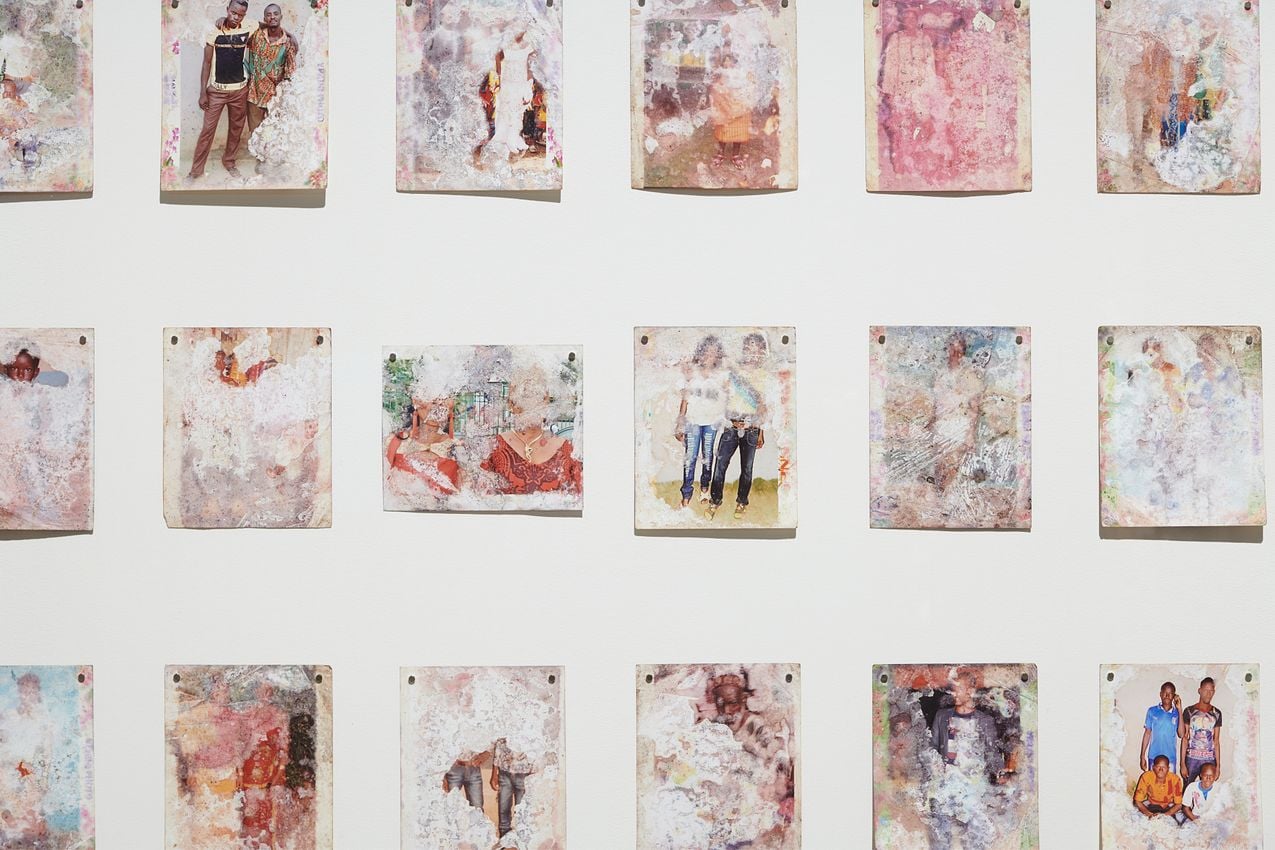
The climate along the West African coast is tropical, humid and damp. Photographic surfaces react to this humidity with mould; it grows in powdery colonies, spreading across the paper emulsion, absorbing the acid-bright dyes in the prints. Kouamé realised mould was affecting photographs across the region, so, starting in Abidjan, he set about visiting once-bustling photographic studios, seeking images with colourful degradation.
“In West Africa, especially in Côte d’Ivoire, there is a significant gap in the conservation of photographs as historical objects,” Kouamé says. “To me, even altered, these pictures are an invaluable visual testimony of the social and vernacular scenes from the 1970s to the 2000s.” He began building a collection called The Gifted Mould Archive.
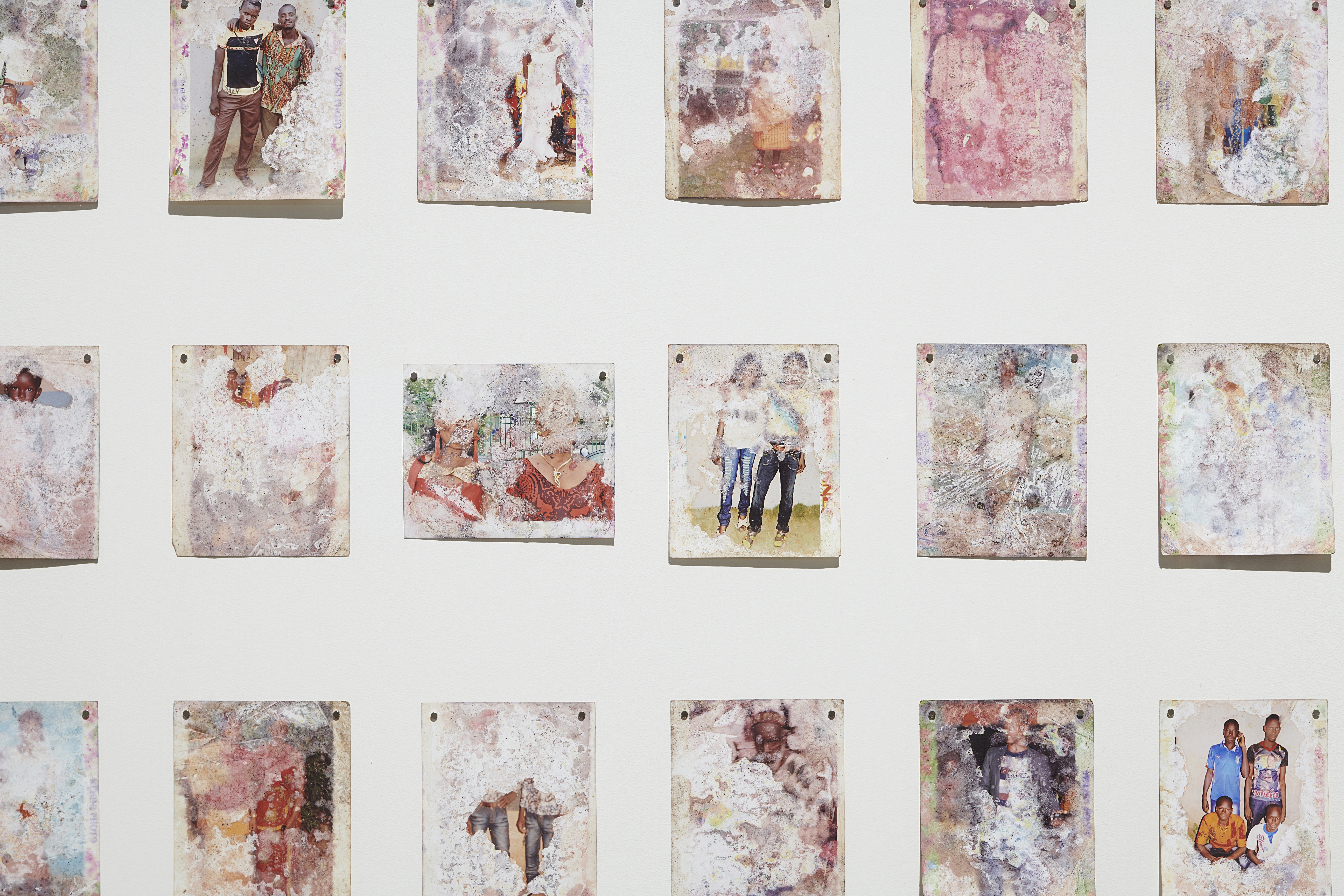
A selection of prints from Kouamé’s project are on view in A Kind of Paradise: Colonial-Era Photography in Contemporary Art at Zurich’s Museum Rietberg. In one image, two figures pose together, mould merging with an ornate floral border, one figure half-consumed by encroaching blooms of white, pink, purple, yellow and blue. “It is poetic. The mould writes its own story in a beautiful way; they almost look like paintings, these photos,” says the exhibition’s curator Nanina Guyer, who is the museum’s curator of photography and head of the photographic archive. “It is interesting to think about what’s happening with our memory if we do not have photos of our past, what is disappearing besides the photographic surface.”
The exhibition features 20 artists from the Global South and its diaspora, each of whom is returning to colonial archives not as an academic exercise, but because the dominant stories told about their ancestors were false and incomplete—or, in many cases, never told at all.
The idea for the show came about three years ago. Guyer, then with a newborn baby, found herself scrolling on Instagram and was struck by some of the artists suggested by the app’s algorithm. “I saw more and more and I realised it’s a global phenomenon: artists from the majority world are coming back to the photo archive in order to negotiate history, in order to heal stories,” Guyer says. “It became this idea that we should do an exhibition inviting these artists who were all in their own right working with the archives, not because they were invited by Western institutions.”
“Artists from the majority world are coming back to the photo archive in order to negotiate history, in order to heal stories”
Three years of research followed: Guyer narrowed the artists in her list from 50 to 20. Despite working independently across the world, each artist arrives at similar questions in their practice: the right to new histories, the right to obscurity, shielding the depicted from view—questions Guyer grapples with as a curator. “It’s always the same questions,” she says. “We all have to do the work.”
In her 2009 TED talk, The Danger of a Single Story, Chimamanda Ngozi Adichie says that “when we reject the single story, when we realise that there is never a single story about any place, we regain a kind of paradise.” Guyer wants to “open up the museum as a space for multiple perspectives on history to be heard and multiple stories to be heard. And this idea resonates beautifully in this quote.”
Artworks are grouped into four sections: Shapeshifters, Confrontation, Care, and In the Photo-Fantastic, the latter inspired by cultural historian Saidiya Hartman’s notion of Critical Fabulation. A workshop, held with artists and fellow curators in March 2025, explored whether ethnographic, colonial and studio photographs from the museum’s collection should be shown and, if so, how. Thirty are displayed, grouped into small displays. “It’s like an offer to the visitor,” says Guyer. “You can just look at the contemporary work, and it works, that narrative, but you can also dive into these little islands.”
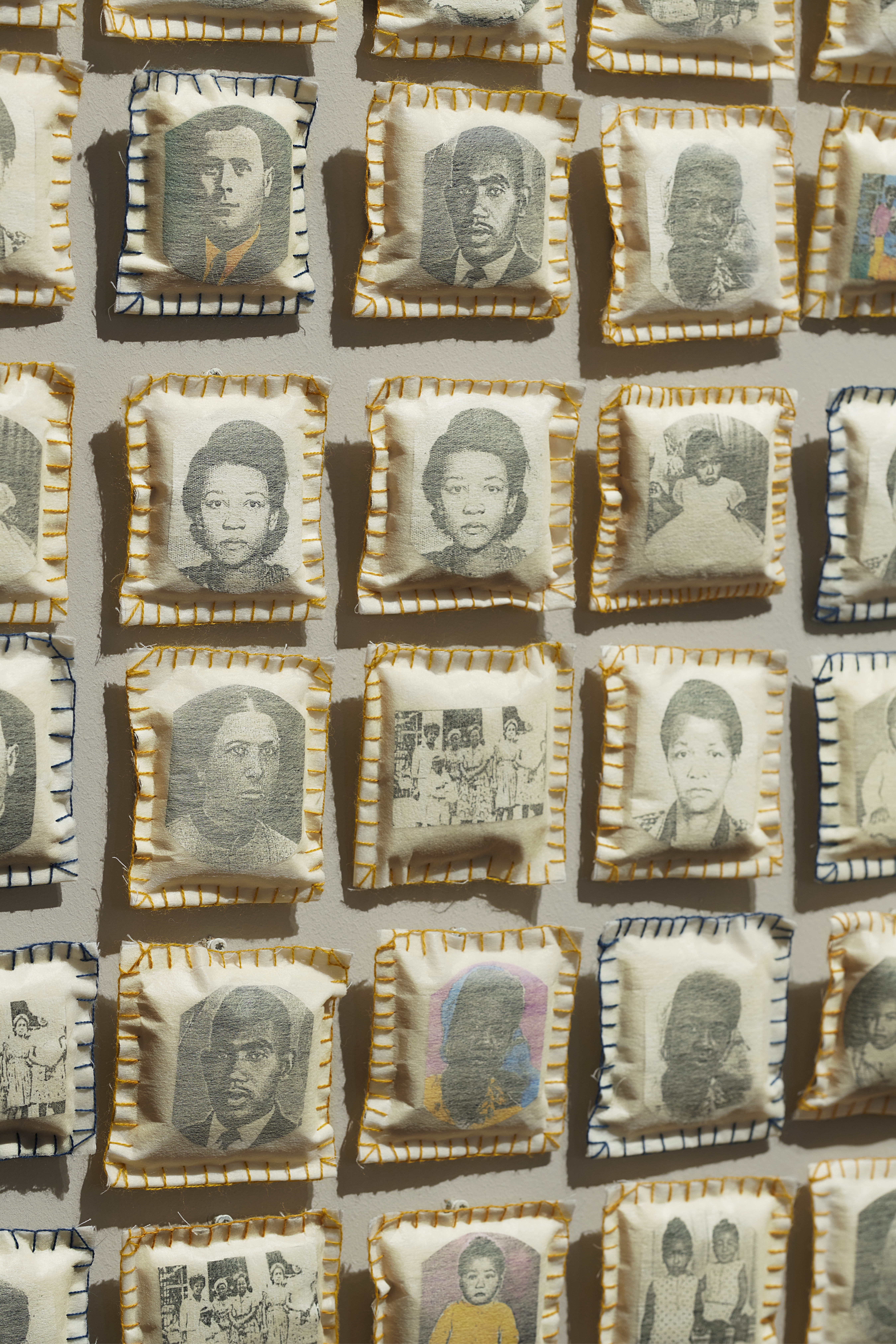
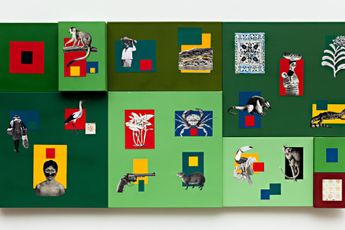
“Photography shapes memory by fixing what is seen and what is silenced,” says Brazilian artist Rosana Paulino. “When images are missing, absence becomes evidence of erasure, violence and control, demanding that history be reconstructed.” Paulino’s monumental work, Parede da Memória (Wall of Memory) (1994–2015) is made up of 750 repeated portraits, taken from her own family albums and printed on to fabric to create patuás, small amulet pouches used in Afro-Brazilian religious practices.
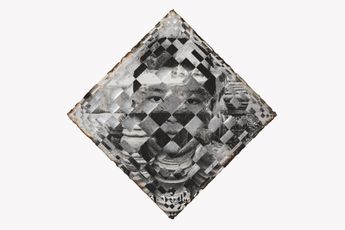
The late Vietnamese American artist Dinh Q. Lê began collecting vernacular photographs in the junk shops of Ho Chi Minh City in 1993. In Crossing the Farther Shore (2014), Lê combined hundreds of these images with verses from the Vietnamese epic poem Truyên Kiều (The Tale of Kiều) and recollections of Vietnamese migrants, weaving them together using cotton thread and linen ribbon. Metal rods hold the work together in hollow cube structures, evoking the mosquito nets under which Lê slept when fleeing Vietnam in 1978.
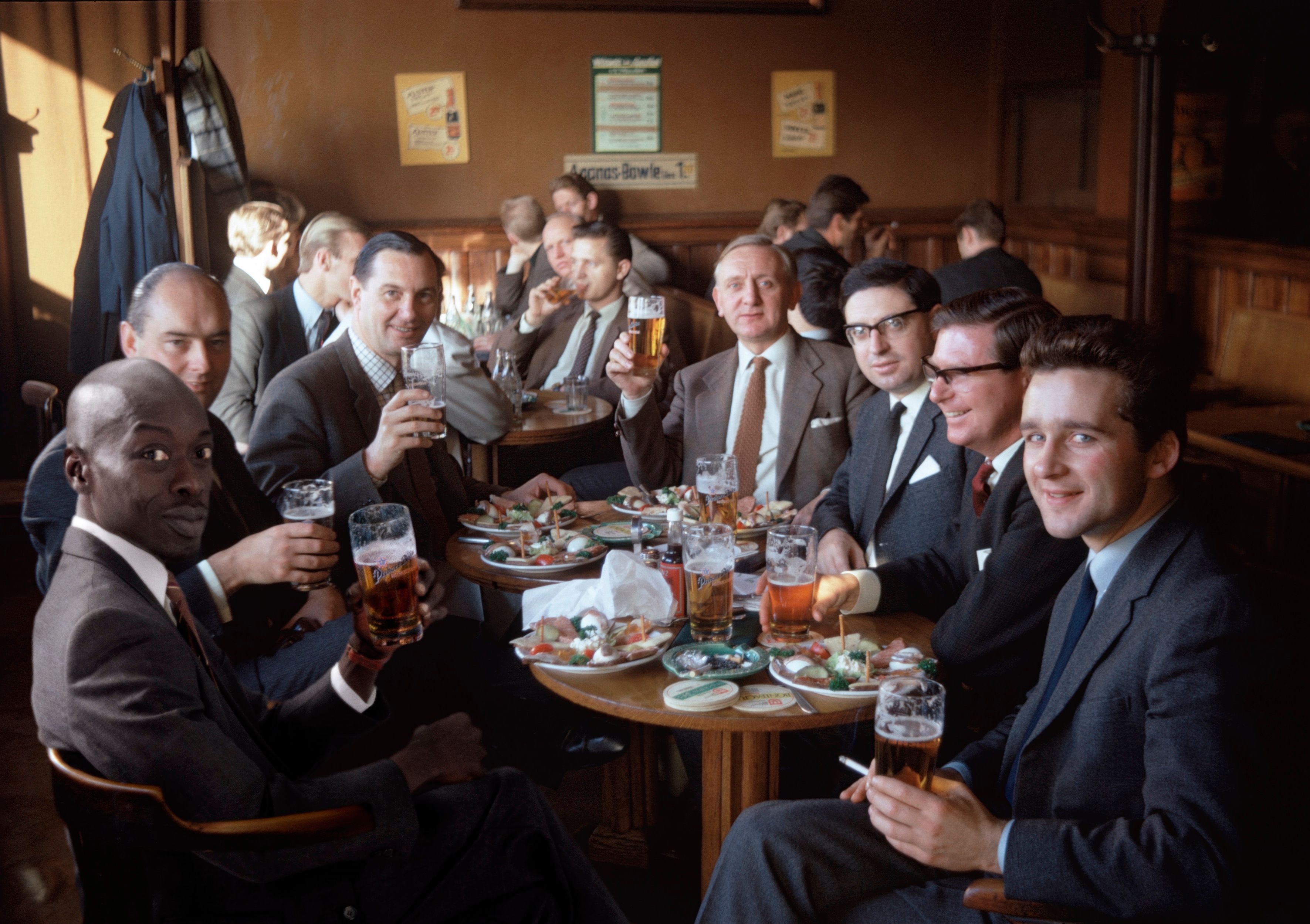
Senegalese photographer Omar Victor Diop inserts himself into everyday snapshots of white middle-class North American families in the 1950s and 1960s, from the collection of the photographer and filmmaker Lee Shulman. It takes a moment to realise that, because of segregation, these scenes could never have taken place. “It makes you smile, and then you look at it, and then something happens,” Guyer says. “It’s really giving the work back to us as viewers to question some stereotypes we still have in mind.”
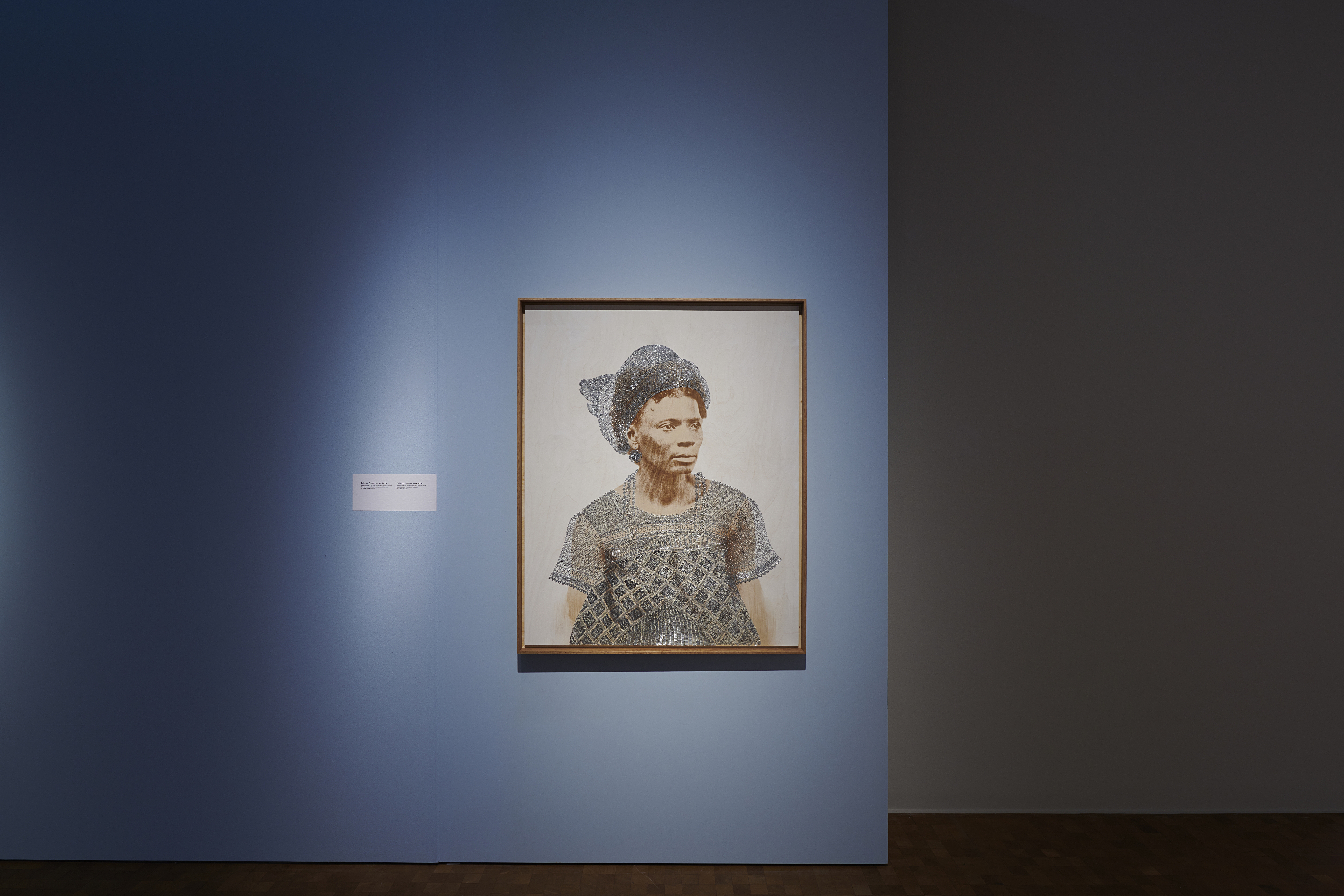
Swiss artist Sasha Huber works with the earliest known images of enslaved people, for which they were forced to pose naked for an 1850 commission by Louis Agassiz, a Swiss-American naturalist. In Tailoring Freedom (2021–2022), Huber shoots reproductions of these photographs with a staple gun, destroying the image surface and recreating gestures of violence. “She dresses these individuals with shiny armour,” Guyer says. “Armour inspired by the garments of great freedom fighters: Harriet Tubman, Frederick Douglass, Sojourner Truth.”
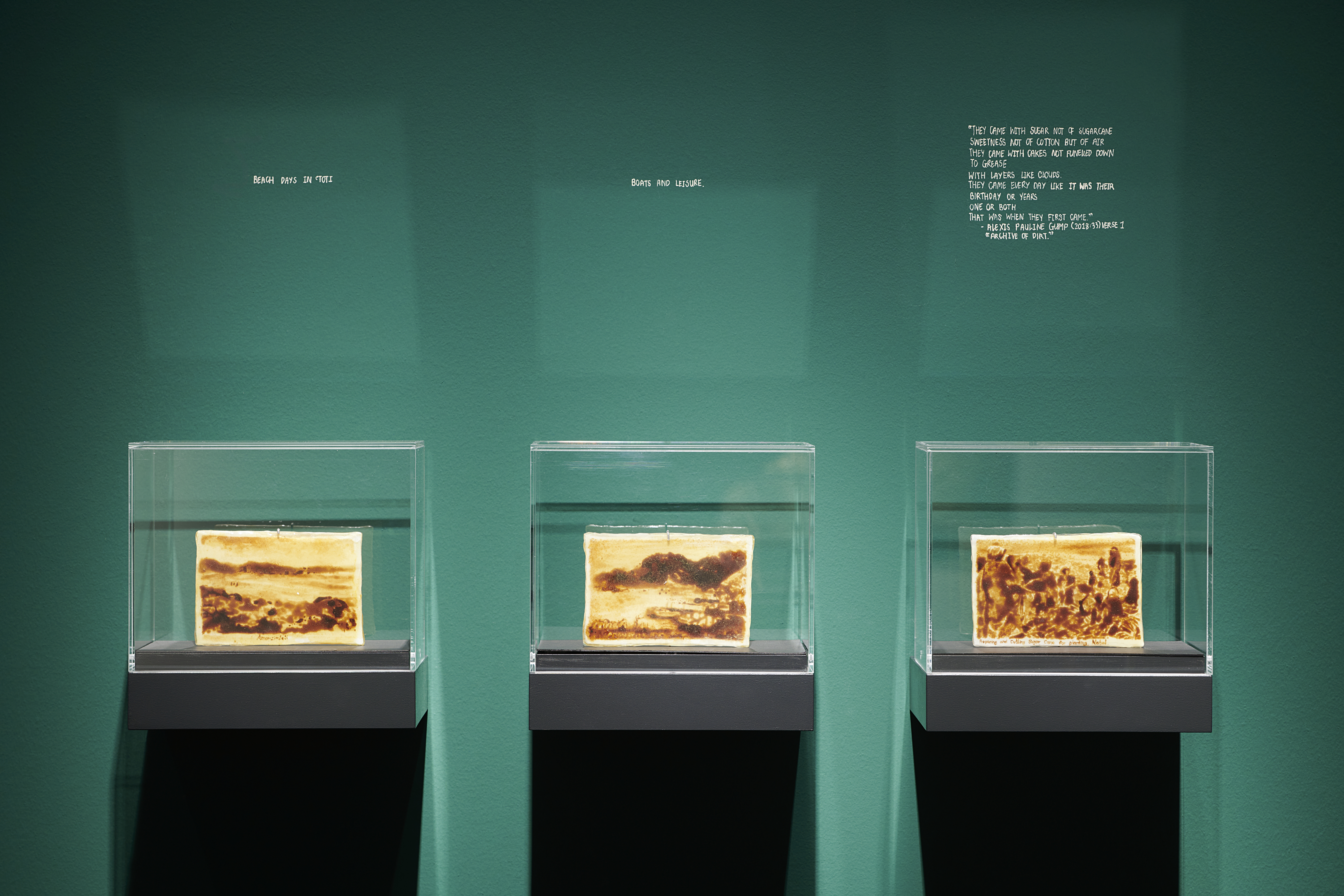
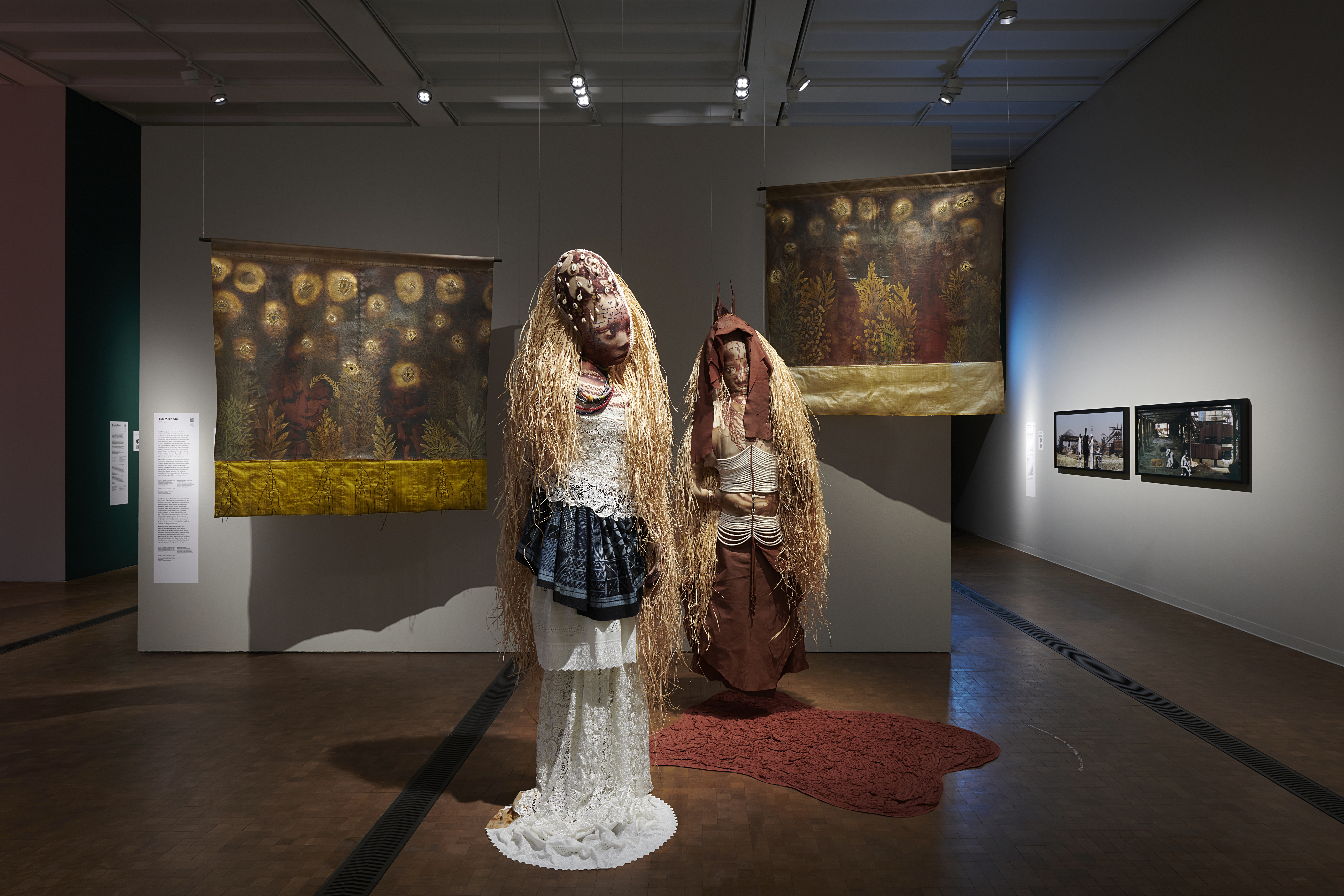
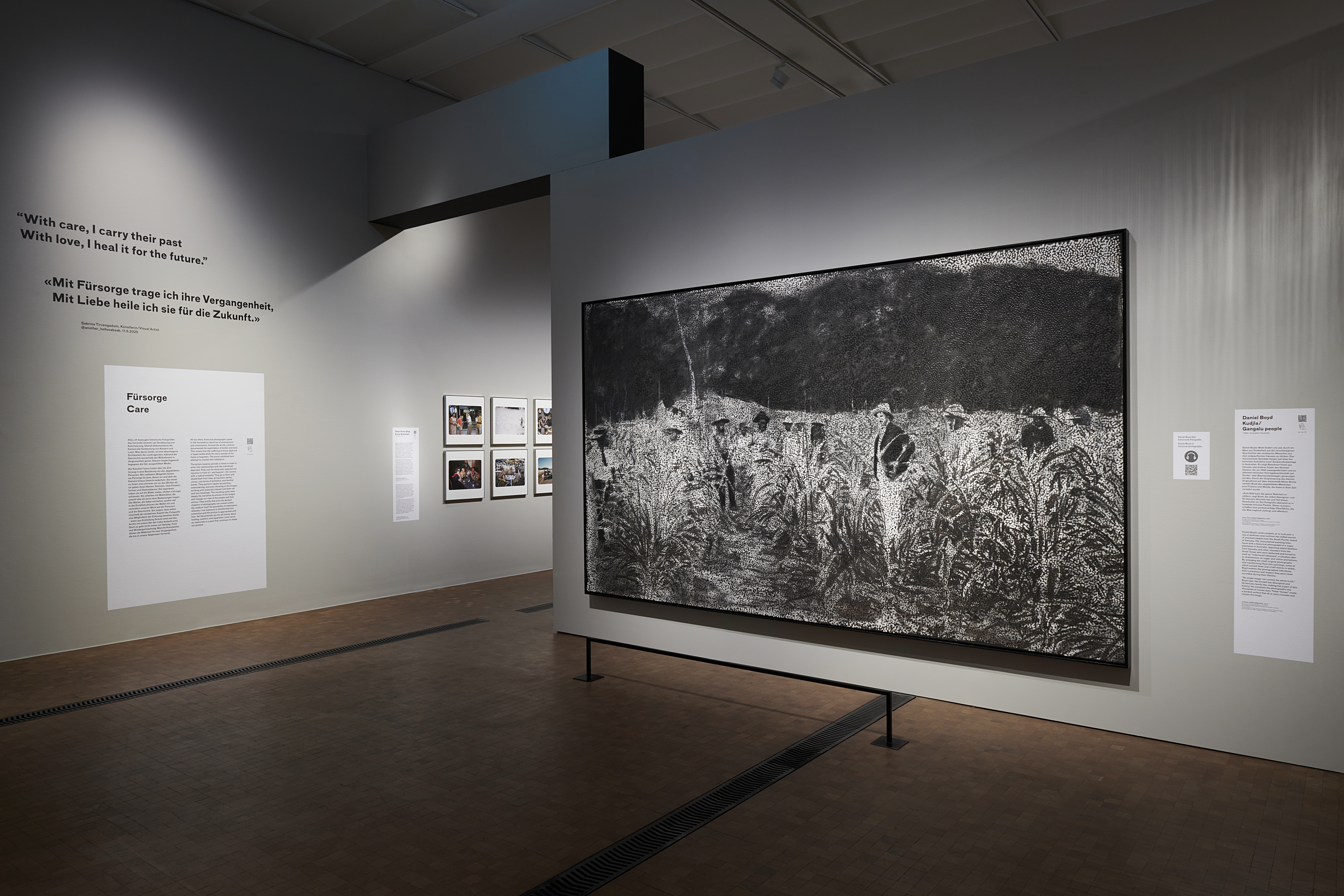
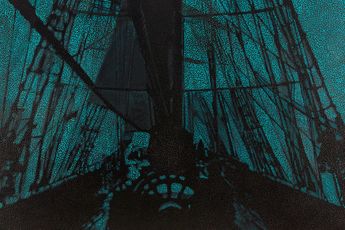
Photography, here, is presented in its most expansive sense. Indian South African multimedia artist Zenaéca Singh recreates landscape photographs in sugar; Tuli Mekondjo buries photographs in Namibian sun and soil. Working from photographs of plantations and indentured labourers, Indigenous Australian artist Daniel Boyd applies dots of glue and paint to vast canvases. Up close, the image dissolves into black. “No single image can contain the whole truth,” Boyd says.
“No single image can contain the whole truth”
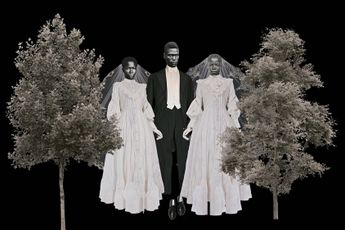
Tshepiso Moropa, a South African artist, uses portraits found in archives to create collages invoking her ancestors, imagining their appearance through a mixture of memories and dreams. Moropa is a twin; her compositions often depict two figures, surrounded by flora and fauna, dressed in 19th-century clothes. She also makes short films: folk tales narrated by her mother in Setswana, the portrait figures cast as actors. “Photography gives you this wonderful moment or opportunity to collapse the time layers,” says Guyer.
Guyer wants visitors to leave with a feeling. “We all know about the horrors of slavery, of colonialism, of exploitation, of segregation. We all know this in our heads, but I think people who haven’t experienced racism don’t feel it.” The exhibition makes a compelling case for engaging with difficult histories and the many voices present. “It makes you long for a way to go forward together, and into the future.”
A Kind of Paradise: Colonial-Era Photography in Contemporary Art (until 6 September 2026) at Museum Rietberg.
Main image: Cédric Kouame, The Gifted Mould Archive. Exhibition view: Group Exhibition, A Kind of Paradise: Colonial-Era Photography in Contemporary Art, Museum Rietberg, Zurich (16 April–6 September 2026). © Museum Rietberg. Photo: Patrik Fuchs.




A respected voice in contemporary art discourse.
Focusing on ambitious storytelling and insightful art-world commentary. Ocula Magazine publishes in-depth interviews, critical essays and timely analysis on the artists, exhibitions and ideas driving the global art world.
Learn more about Ocula Magazine
Showcasing the best of the art world.
Ocula partners with galleries from around the world to highlight their artists, artworks and exhibitions. Gallery membership is by application and invitation, with each member vetted by an independent panel.
Learn more about Ocula Membership
Specialises in the sale of major artworks.
Led by a team with deep ties to the world’s leading auction houses, galleries and collectors. Ocula’s advisory team offers bespoke services to high-net-worth clients from around the world who are looking to acquire the best of contemporary and modern art.
Learn more about our team and services