



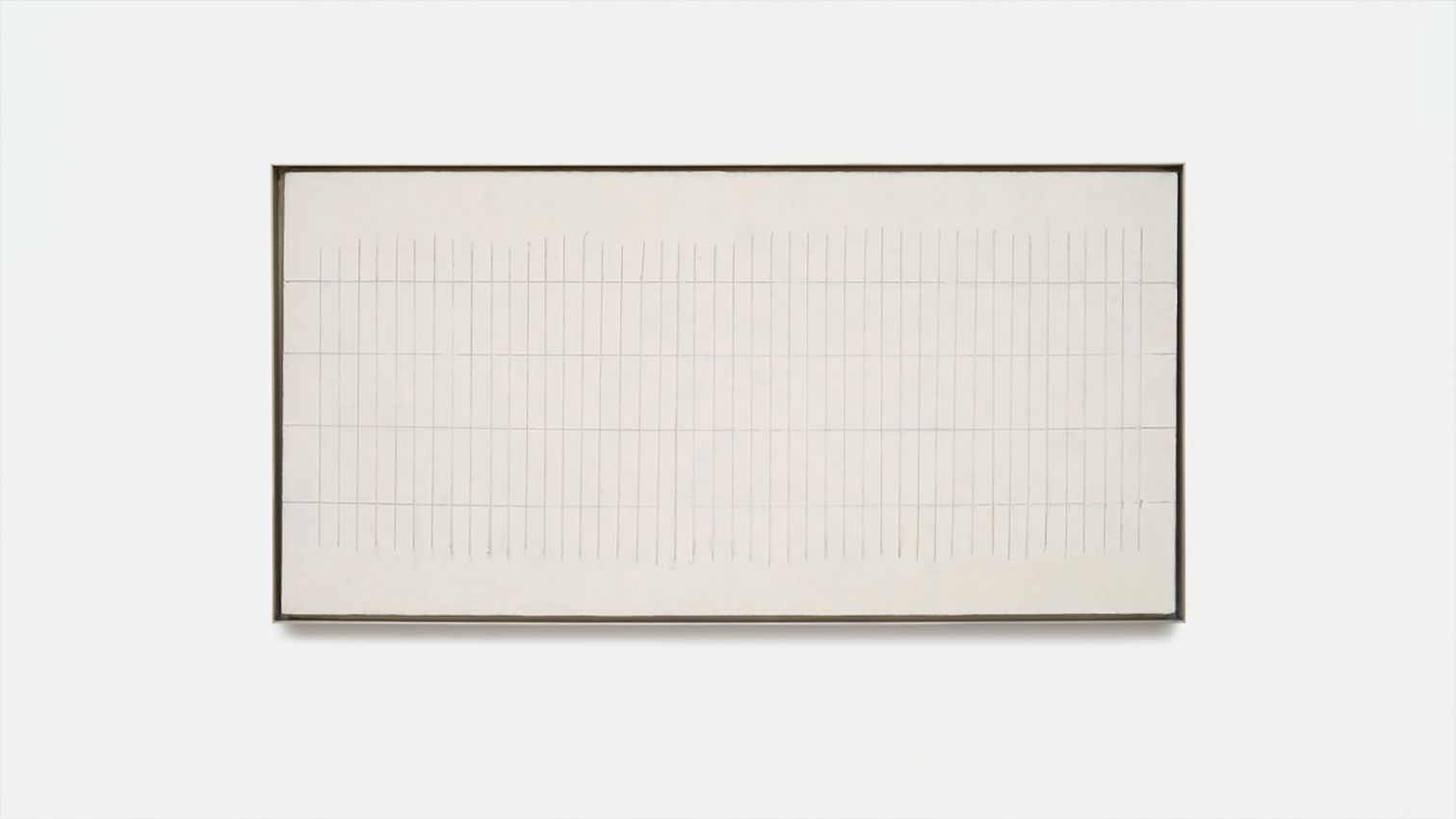
You have to bring your whole mind to bear on painting; to carry on, to go forward. Painting is not making paintings; it is a development of awareness. And with this awareness, your work changes, but very slowly. —Agnes Martin
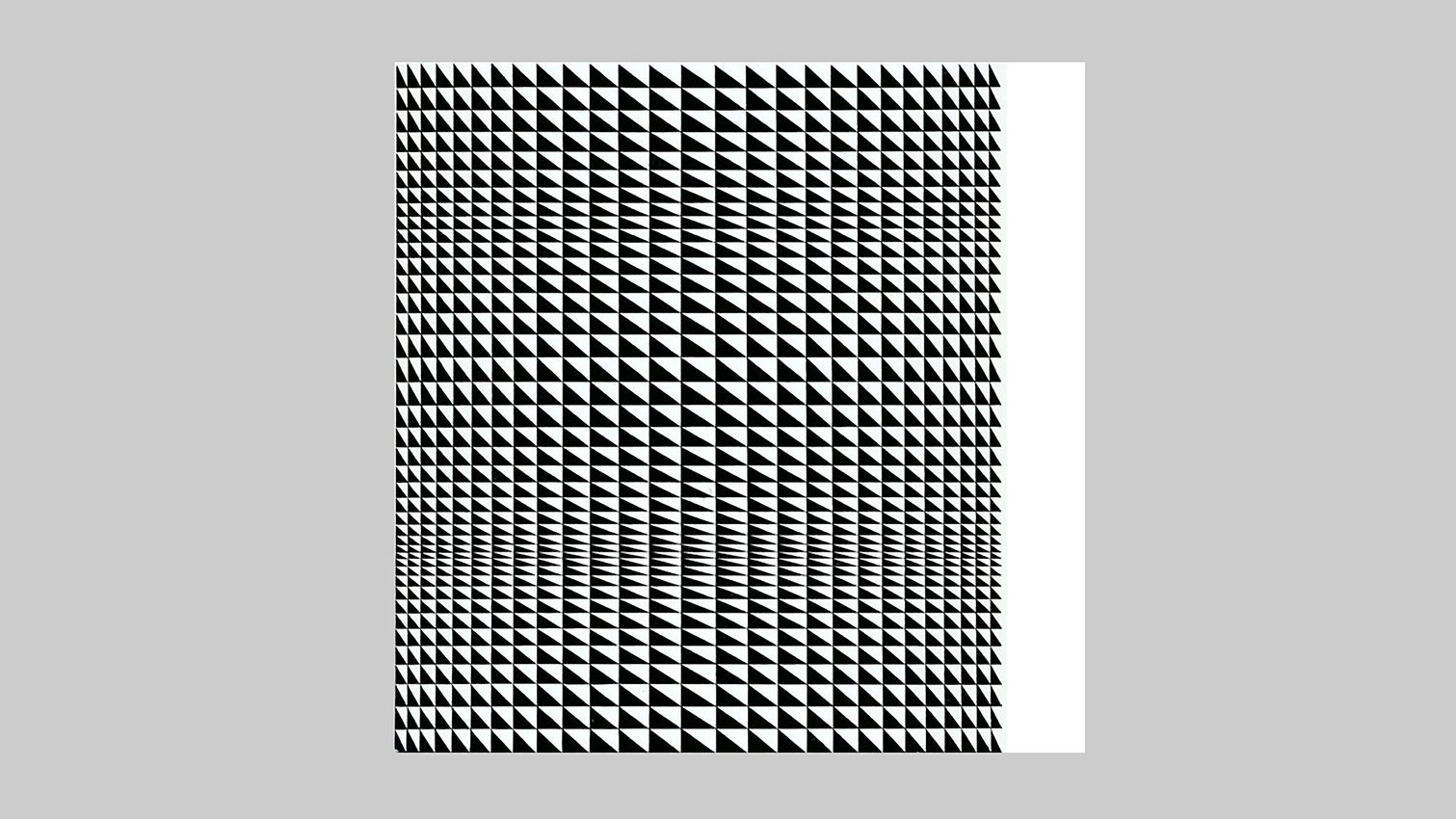
Agnes Martin: Painting is not making paintings draws primarily from Dia’s extensive collection of Martin’s canvases to focus on the breadth of the artist’s output during the 1950s and ’60s, complemented by significant works from the latter decades of her practice. Charting Martin’s transition from quasi-organic abstraction to the graphite grid, this selection illuminates how she developed her approach to creating highly considered, delicately balanced compositions, which progressed slowly and iteratively over time. Key examples of her use of the grid—a distinctly reduced compositional device, rigorously yet meditatively articulated with hand-drawn lines—demonstrate how Martin expanded and refined her Minimal vocabulary over the course of the 1960s. A series of works created post-1974, following a painting hiatus of several years, encompass the range of compositions and palettes she adopted in that period, from horizontal bands and luminous acrylic washes to the return of geometric forms and her final “black” canvases. Martin’s evolution over the course of five decades articulates her refusal of painting as a product-driven practice but as a way of existing in the world. Returning her work to Dia Beacon’s galleries for the first time in nearly a decade, this exhibition offers a renewed opportunity to view Martin’s singular contributions to Minimalism in the context of her conceptually like-minded peers.

Agnes Martin (1912–2004) was a Canadian-born, American-based painter whose subtle grid paintings and luminous bands of colour have made her one of the most influential figures in postwar abstraction.


DIA Beacon is a renowned contemporary art museum situated in Beacon, New York, on the banks of the Hudson River. Housed in a repurposed 1929 Nabisco box printing factory, its expansive galleries and minimalist architecture make it a destination for lovers of postwar art and industrial design.

A respected voice in contemporary art discourse.
Focusing on ambitious storytelling and insightful art-world commentary. Ocula Magazine publishes in-depth interviews, critical essays and timely analysis on the artists, exhibitions and ideas driving the global art world.
Learn more about Ocula Magazine
Showcasing the best of the art world.
Ocula partners with galleries from around the world to highlight their artists, artworks and exhibitions. Gallery membership is by application and invitation, with each member vetted by an independent panel.
Learn more about Ocula Membership

Specialises in the sale of major artworks.
Led by a team with deep ties to the world’s leading auction houses, galleries and collectors. Ocula’s advisory team offers bespoke services to high-net-worth clients from around the world who are looking to acquire the best of contemporary and modern art.
Learn more about our team and services