





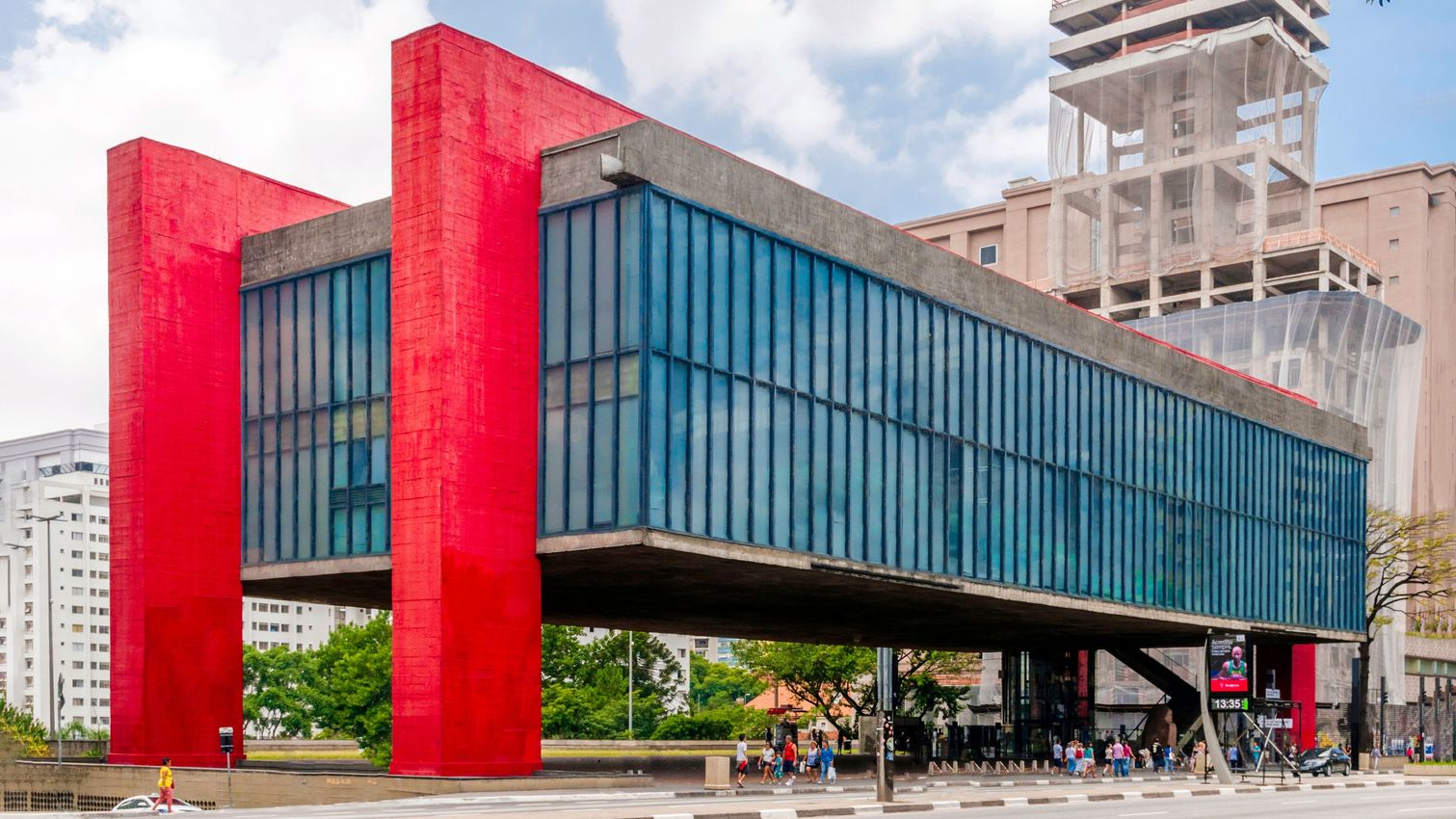
Museu de Arte de São Paulo (MASP)
São Paulo Learn more about what's on at Museu de Arte de São Paulo (MASP) and the artists shaping its programme.The Museu de Arte de São Paulo (MASP) is a private not-for-profit museum founded in 1947 by business mogul and patron of the arts Assis Chateaubriand (1892–1968), becoming the first modern museum in the country. Chateaubriand invited Italian art dealer and critic Pietro Maria Bardi (1900–1999) to direct MASP, and Lina Bo Bardi (1914–1992) to conceive the architecture and the exhibition design. With the most important collection of European art in the southern hemisphere, MASP’s holdings currently consist of more than 11 thousand artworks, including paintings, sculptures, objects, photographs, videos and pieces of clothing from various periods, from Europe, Africa, Asia and the Americas.
Initially located on the street 7 de Abril, in downtown São Paulo, in 1968 the museum was transferred to its current location on Avenida Paulista, in the iconic building designed by Lina Bo Bardi, which has become a landmark in the history of 20th-century architecture. Making use of glass and concrete, in her architecture Lina Bo Bardi put rough, unfinished surfaces into harmony with aspects of lightness, transparency and suspension. The ground-level plaza under the building’s immense free span was designed as a multipurpose public square.
The architect’s radicality is also present in the glass display easels created to show the collection on the building’s second floor. By taking the artworks off the walls, the display easels question the traditional model of the European museum, in which the spectator is led to follow a linear narrative suggested by the order and arrangement of the artworks in the rooms. In MASP’s spacious picture gallery, the suspended and transparent exhibition design allows the public to engage in a closer relationship with the collection since the visitor can choose his or her own path among the artworks, move around them and see their backs.
Besides the long-term show Acervo em transformação [Collection in Transformation] in the museum’s picture gallery, throughout each year there is a broad programming of group exhibitions and solo shows articulated around thematic axes: histories of sexuality (2017), Afro-Atlantic histories (2018), histories of feminism/women (2019). It is important to consider the plural quality of the term “histories,” pointing to multiple, diverse and polyphonic histories, open, inconstant and unfinished histories, fragmented and layered histories, nontotalizing and nondefinitive histories. In Portuguese, the word histórias can denote either fictional stories or factual histories, narratives that can be personal and political, private and public, micro and macro.



More São Paulo Museums and Galleries


A respected voice in contemporary art discourse.
Focusing on ambitious storytelling and insightful art-world commentary. Ocula Magazine publishes in-depth interviews, critical essays and timely analysis on the artists, exhibitions and ideas driving the global art world.
Learn more about Ocula Magazine
Showcasing the best of the art world.
Ocula partners with galleries from around the world to highlight their artists, artworks and exhibitions. Gallery membership is by application and invitation, with each member vetted by an independent panel.
Learn more about Ocula Membership
Specialises in the sale of major artworks.
Led by a team with deep ties to the world’s leading auction houses, galleries and collectors. Ocula’s advisory team offers bespoke services to high-net-worth clients from around the world who are looking to acquire the best of contemporary and modern art.
Learn more about our team and services