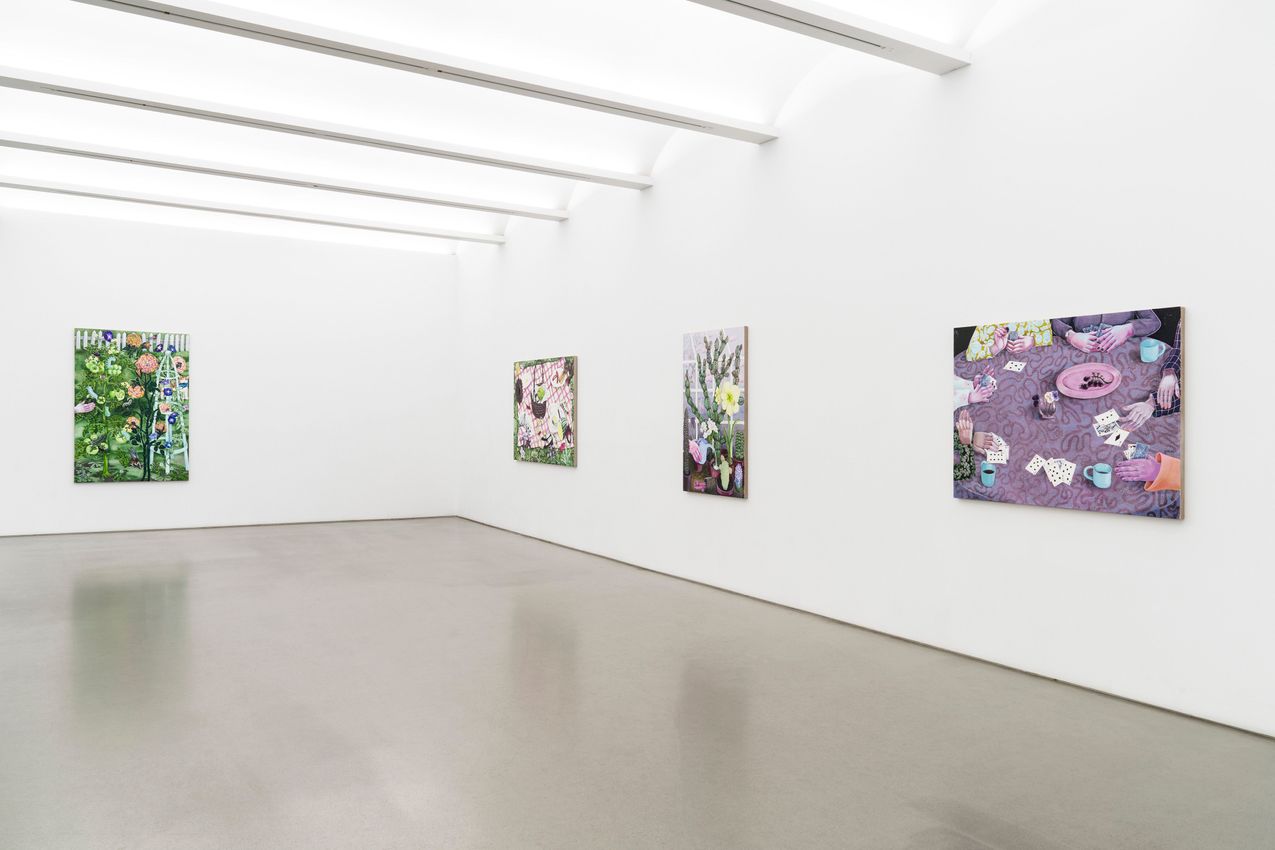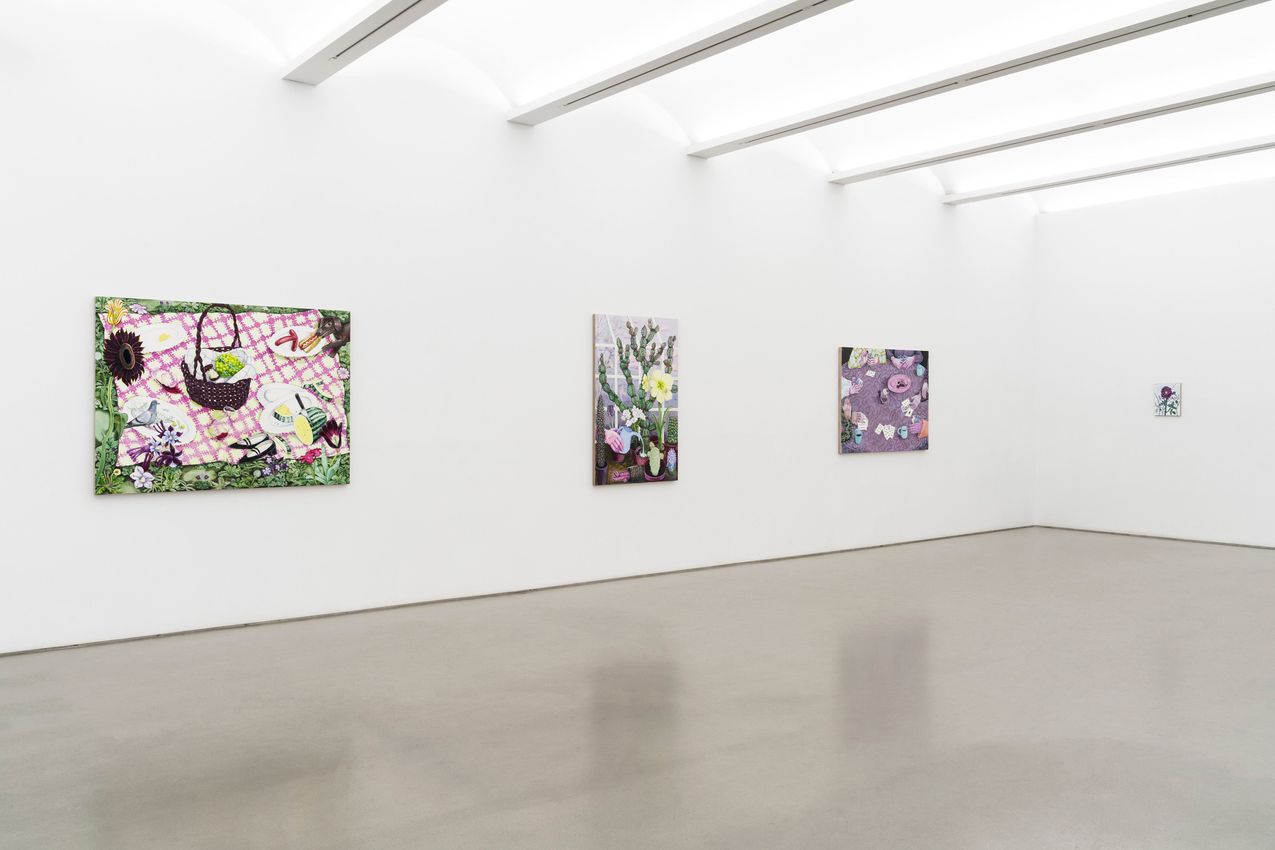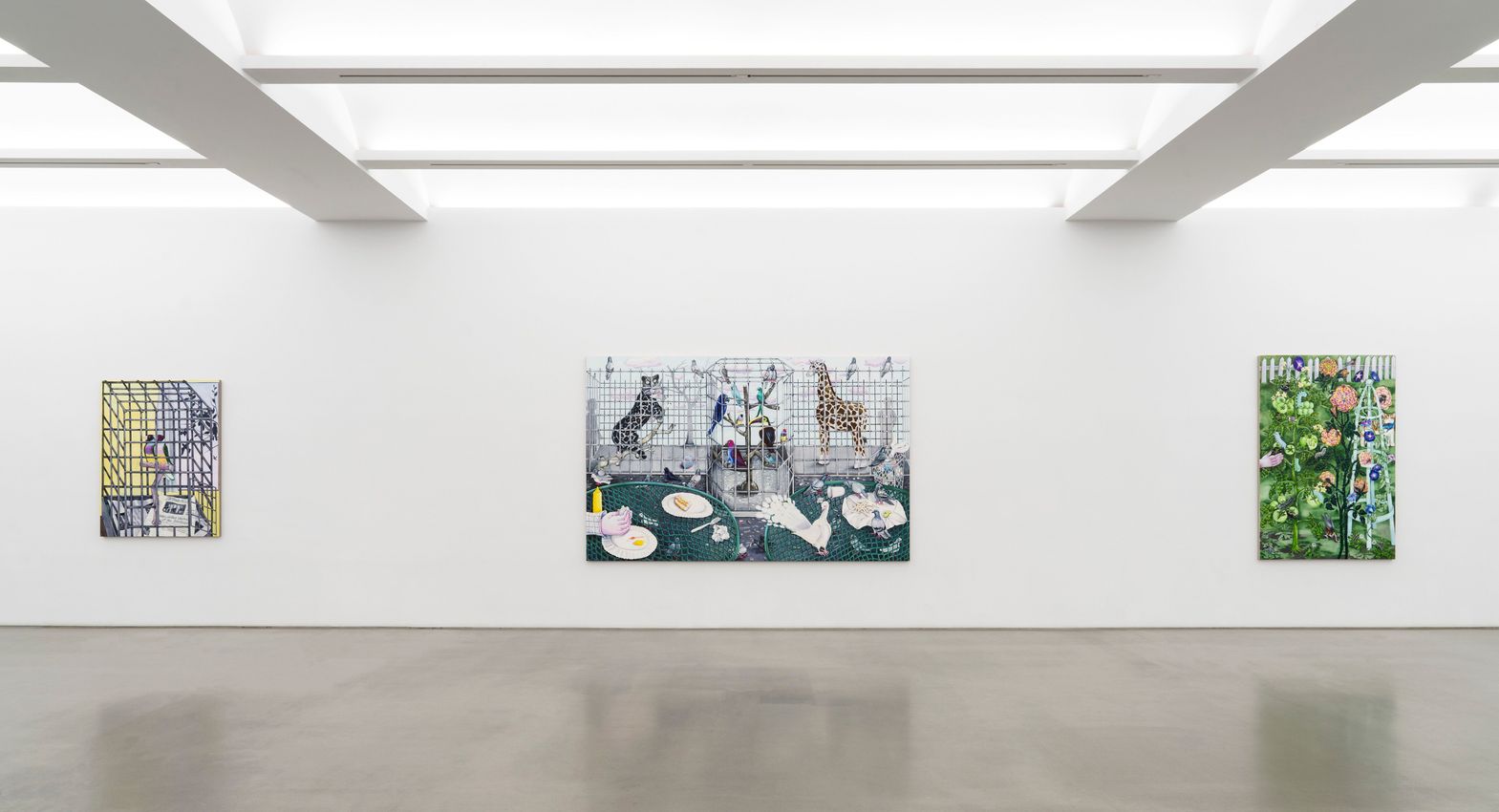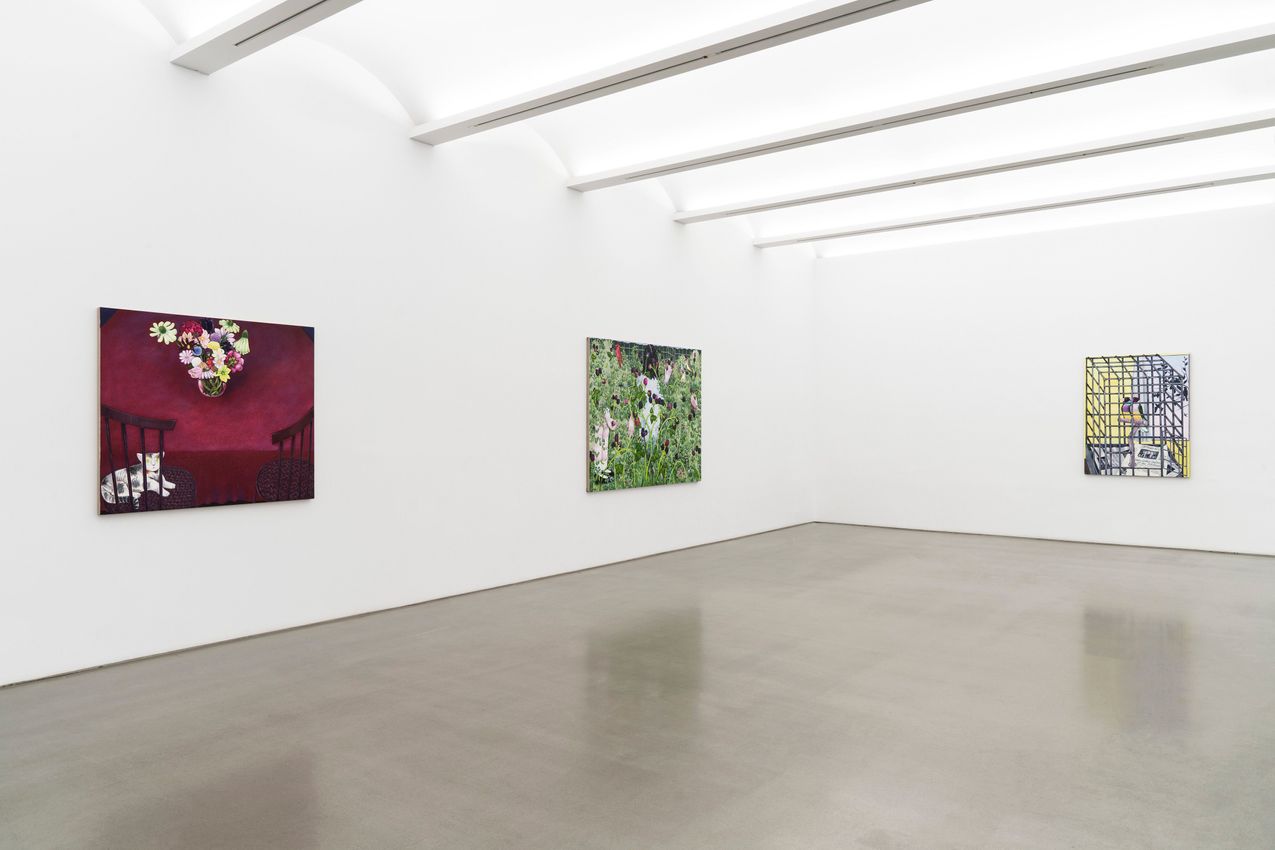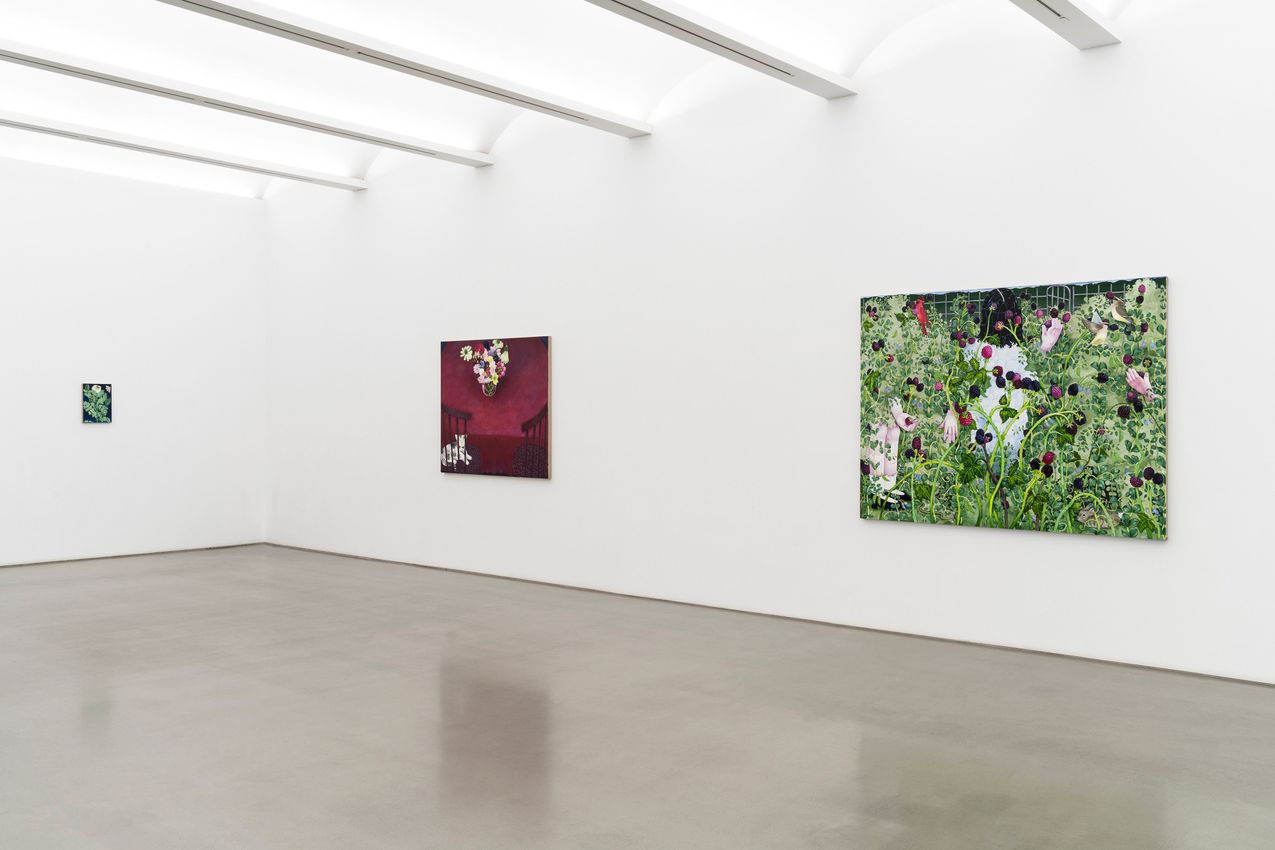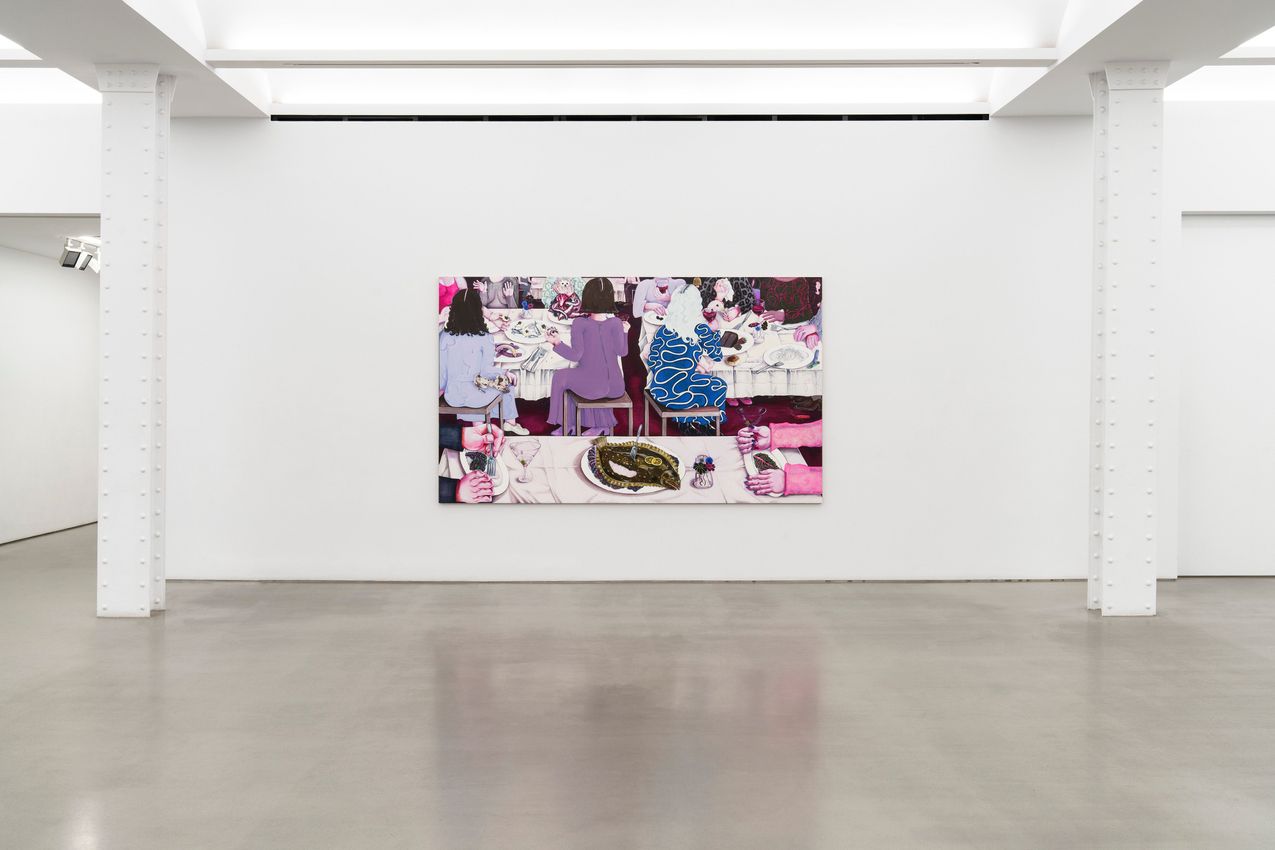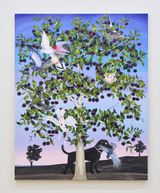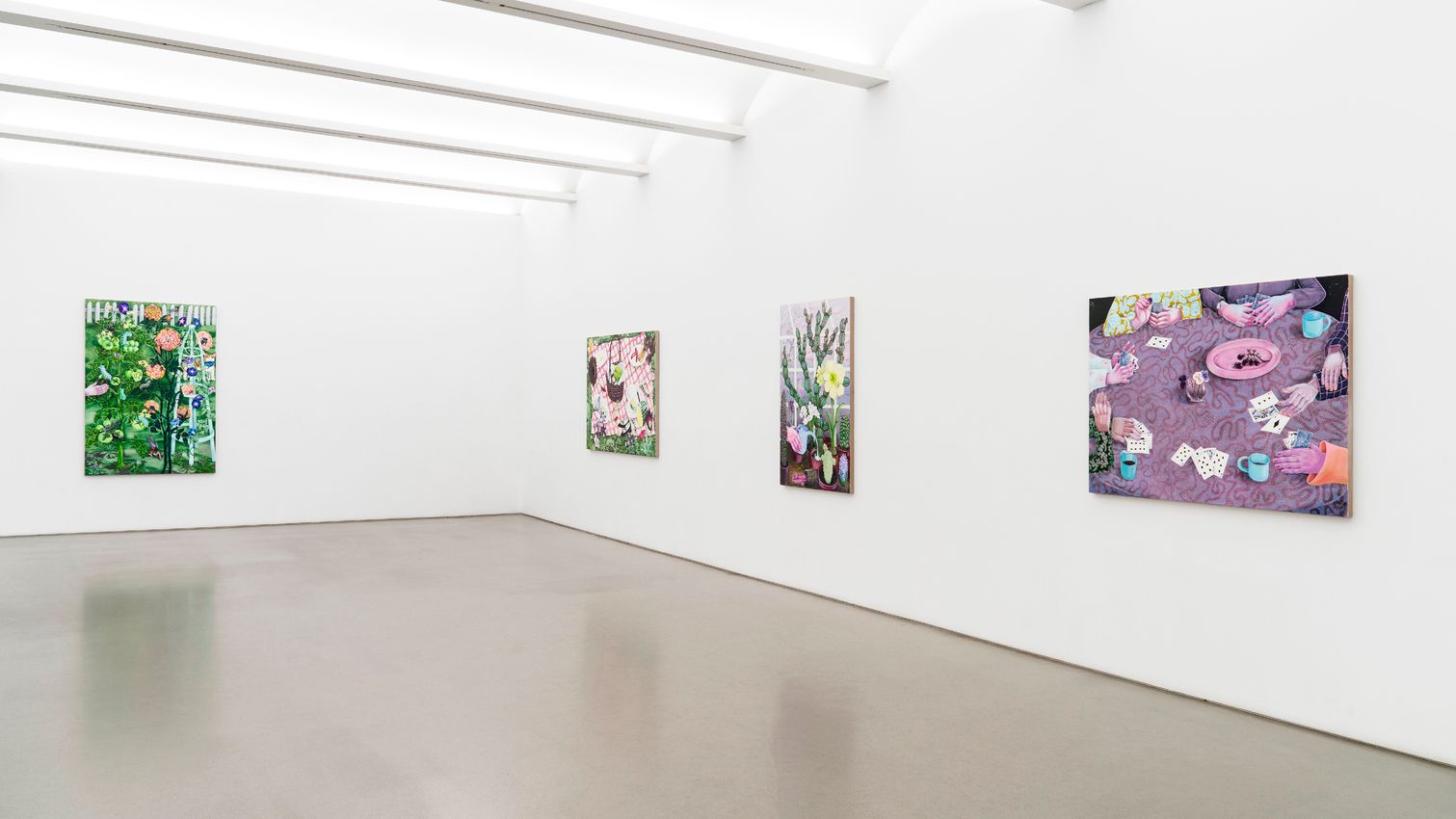
Perrotin New York is pleased to present Menagerie, anexhibition by Nikki Maloof. The artist’s new body of paintingspresents a world where imagined interiors and fantasticallandscapes become proxies for the human experience and ourrepressed animal instincts. Over the last few years Maloof hasexpanded her intimate painterly universe to include vastcountry landscapes. In this new body of work, she moves intopublic spaces, including a zoo and a restaurant.
Every day, Maloof drops her daughters off at school before headingto her backyard studio in Massachusetts. There she follows thecrumbs of her own desires. She plays around with paint until ametallic pattern emerges, reminding her of a grid. In the grid, shesees confinement, which takes her mind to a zoo, the sort of placeshe takes her children. Eventually, the painting becomes Menagerie,the exhibition’s titular work. To Maloof, the zoo embodiesdichotomies of sadness and joy, freedom and containment; it alsoserves as a metaphor for motherhood. In the background of herpainting stands an elaborate cage; to the left, a leopard with apigeon in its mouth; to the right, a giraffe whose impassive eyereaches just over the top of the cage. The foreground is messier:two picnic tables, crumpled napkins, smears of ketchup, andpigeons everywhere, fighting over garbage and waiting forsomething to happen in their space of unfettered freedom.
In Maloof’s paintings, human figures are partially obscured, neverquite revealing themselves, but animals are fully visible with intactidentities. “I’m trying to make sense of what it means to be human,”Maloof says. “Aren’t we just animals? Are we even that special?”
The sense of confinement is heightened in Lost in a Bramble.Characteristic of Maloof’s paintings, the human figures arefragmented, almost disembodied. Two girls in white are enmeshedin a bramble of blackberries that completely obscure their faces.Their hands emerge from puffs of green, reaching for the fruitsrendered in lush, rounded strokes and tones of wine, fuchsia, anda purple so dark it is almost black. The thorns, if you look closely,are everywhere. And a fence, echoing the one in Menagerie, is justvisible over the horizon.
Maloof’s subjects often convey a sense of loneliness buoyed byhumour and painted in a saturated palette. For Maloof, the home and motherhood, is both dark and light, both soft berry and hardcage. It is entrapment and, also, the wash of unbelievable joy.Midnight Bouquet masquerades as a still life with flowers – twochairs, a cat, all set against a wash of speckled, shockingly arousedmagenta. The colour palette exudes brightness in the flowers andsomberness in the red tablecloth, while the empty seats suggest anabsence of human connection.
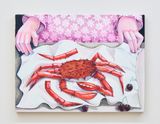
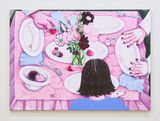
In The Restaurant, layers of activity create a sense of distance orcontainment. Depicting a banquet, the painting is filled withmothers, or women who could be mothers, with classic Malooftropes: fish rendered in exquisite detail, vegetables that look likesea creatures, intricate patterns, Frankenstein hands, and crinkled tablelinens. The composition is an orgy of gluttony: stuffed olives sinkinto clear martinis, deviled eggs are coated in caviar, and a fish pickedto its skeleton. The diners, shown only from the neck down, areobviously gossiping. At the table to the left, young women holdsmall dogs, purebred and vicious, training wheels for the future. Tothe right, a table of older women dons the armour of labels andbabies. One with natural grey hair breastfeeds, while another, inChanel ballet flats, offers a pacifier to a baby whose eyes peek overthe edge of the table with the same unfocussed impassivity as thegiraffe in Menagerie.
The most thinking Maloof does is when she’s planning the logic ofher paintings. Throughout the exhibition, recurring patterns andcolour palettes connect disparate settings: plaid reappears in picnicblankets, animal enclosures, fences, and furniture. In AbandonedPicnic, for example: where do the flowers go? The plates? Themelon? What colours, and in what saturation? What brushes, whichtechniques? Pigeons appear again, just in a different form. “It’s likeI’m a musician, and I’m practising the song a lot,” she says of herprocess, creating study after study before projecting the imageonto the canvas and perfecting the composition.
In the moment of creation, she disappears. “The best feeling iswhen you have it all laid out, and you’re ready to go to town, andyou can sit down and be gone from reality,” Maloof says. The magicof placing your mind outside the body in the form of art is, perhaps,what makes us distinctly human after all.
—Brienne Walsh
Courtesy Perrotin
Nikki Maloof is an American artist known for her still life paintings that depict animals in brightly coloured and highly patterned settings. Her drawings and oil paintings portray anthropomorphised creatures that oscillate between being humorous and unnerving.


A respected voice in contemporary art discourse.
Focusing on ambitious storytelling and insightful art-world commentary. Ocula Magazine publishes in-depth interviews, critical essays and timely analysis on the artists, exhibitions and ideas driving the global art world.
Learn more about Ocula Magazine
Showcasing the best of the art world.
Ocula partners with galleries from around the world to highlight their artists, artworks and exhibitions. Gallery membership is by application and invitation, with each member vetted by an independent panel.
Learn more about Ocula Membership

Specialises in the sale of major artworks.
Led by a team with deep ties to the world’s leading auction houses, galleries and collectors. Ocula’s advisory team offers bespoke services to high-net-worth clients from around the world who are looking to acquire the best of contemporary and modern art.
Learn more about our team and services