





The Getty Center
Los Angeles Learn more about what's on at The Getty Center and the artists shaping its programme.The Getty Center: Hilltop Museum of Art, Architecture, and Landscape in Los Angeles
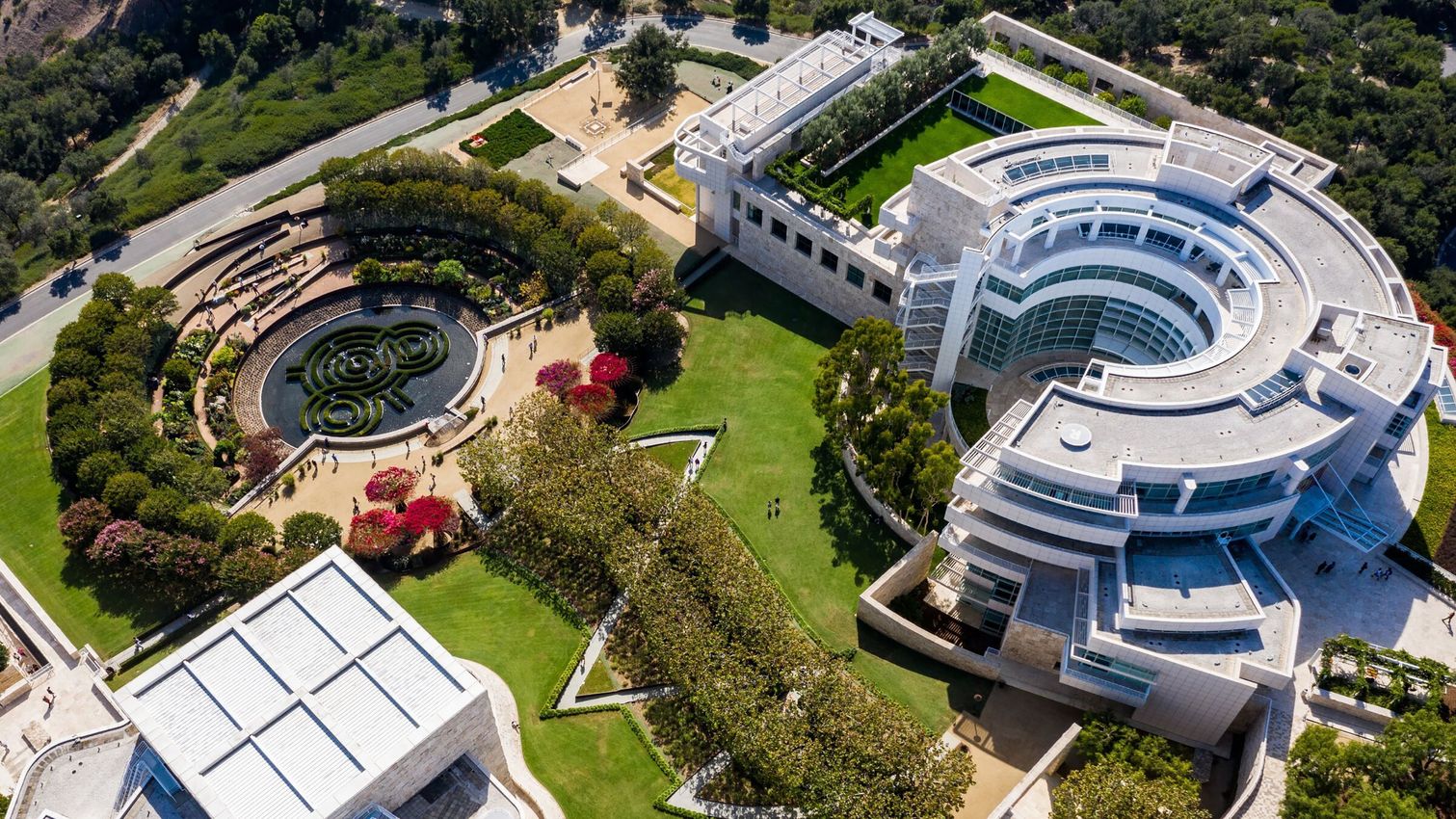
The Getty Center, in the Brentwood neighbourhood of Los Angeles, United States, is the main hilltop campus of the J. Paul Getty Museum and the headquarters of the J. Paul Getty Trust. Opened to the public in 1997 and designed by architect Richard Meier, the 24-acre complex brings together the museum’s collections, the Getty Research Institute, the Getty Conservation Institute, the Getty Foundation, and the Trust’s administrative offices. Perched above the San Diego Freeway and reached by tram, the Getty Center combines art, architecture, and panoramic views over Los Angeles and the Pacific, making it one of the city’s most visited cultural destinations.
The J. Paul Getty Museum’s Getty Center galleries present Western art from the Middle Ages to the present, complementing the Getty Villa, which focuses on the ancient Mediterranean. The Center’s branch of the museum is best known for pre-20th-century European paintings, drawings, illuminated manuscripts, sculpture, and decorative arts, as well as photographs from the 1830s to today and outdoor sculpture installed on terraces and in gardens. Works on view include Vincent van Gogh’s Irises (1889), important paintings by Rembrandt, Titian, and Monet, and major holdings in French decorative arts.
Art, architecture, and gardens
The Getty Center’s permanent collection is displayed in four two-storey pavilions organised chronologically around a central rotunda, with light-sensitive works such as manuscripts, drawings, photographs, and furniture on the lower levels and paintings in naturally lit galleries above. Special exhibitions are presented in a dedicated Exhibitions Pavilion, which hosts major scholarly shows on topics ranging from Renaissance painting to contemporary photography. The museum’s photography programme is particularly strong, representing 19th-, 20th-, and 21st-century photographers from around the world.
Richard Meier’s Modernist design is characterised by travertine-clad volumes, white metal panels, precise geometric grids, and carefully framed vistas that link the galleries to the surrounding hills and city. Landscape artist Robert Irwin designed the Central Garden as a living artwork, with a tree-lined walkway, zigzagging stream, and a circular azalea maze set within a reflecting pool, providing a sensory counterpart to the galleries and one of the most recognisable views of the Getty Center. Throughout the campus, outdoor sculpture, fountains, and terraces emphasise the interplay between art, architecture, and California light.
Visiting information
The Getty Center is located at 1200 Getty Center Drive, just off the I-405, and is accessed via a hill-climbing tram from the parking structure at the base of the site. Admission to the Getty Center is free, though visitors are required to book a timed-entry reservation in advance; parking is paid, with a daily fee per car that is reduced after mid-afternoon and for evening events. The museum is typically open Tuesday to Sunday, with extended evening hours on Saturdays, and is closed on Mondays and major holidays; visitors should consult Getty’s website for current opening hours, exhibitions, and ticketing information.
The Getty Center FAQs
What is the Getty Center?
The Getty Center is the hilltop campus of the J. Paul Getty Museum and the J. Paul Getty Trust in Brentwood, Los Angeles. It combines an art museum focused on Western art from the Middle Ages to the present with research, conservation, and grant-making institutes, all housed in a landmark complex designed by Richard Meier.
How is the Getty Center different from the Getty Villa?
Both sites belong to the J. Paul Getty Museum, but they focus on different collections. The Getty Center presents Western art from the medieval period to contemporary photography, while the Getty Villa in Pacific Palisades is dedicated to the art and cultures of ancient Greece, Rome, and Etruria.
What kind of art can I see at the Getty Center?
Visitors encounter pre-20th-century European paintings, drawings, illuminated manuscripts, sculpture, and decorative arts, along with photography from the 1830s to today and outdoor sculpture in the gardens and terraces. Highlights include Vincent van Gogh’s Irises, works by artists such as Rembrandt, Titian, and Monet, and extensive holdings in French furniture and decorative arts.
How much does it cost to visit the Getty Center?
Admission to the Getty Center is free for all visitors, but a timed-entry reservation is required and must be booked in advance online or by phone. Parking at the base of the hill is paid, with a per-vehicle fee that is reduced after 3 p.m. and for certain evening hours.
Why is the Getty Center notable in architecture and landscape design?
Designed by Richard Meier, the Getty Center is recognised as a major work of late-20th-century Modernist architecture, distinguished by its travertine and metal-clad buildings, a rigorous geometric grid, and dramatic siting along the ridgeline above Los Angeles. Robert Irwin’s Central Garden and the campus’s numerous terraces, fountains, and outdoor sculptures make the site as much about landscape and light as about the artworks inside, offering sweeping views over the city and the Pacific Ocean.






More Los Angeles Museums and Galleries




A respected voice in contemporary art discourse.
Focusing on ambitious storytelling and insightful art-world commentary. Ocula Magazine publishes in-depth interviews, critical essays and timely analysis on the artists, exhibitions and ideas driving the global art world.
Learn more about Ocula Magazine
Showcasing the best of the art world.
Ocula partners with galleries from around the world to highlight their artists, artworks and exhibitions. Gallery membership is by application and invitation, with each member vetted by an independent panel.
Learn more about Ocula Membership
Specialises in the sale of major artworks.
Led by a team with deep ties to the world’s leading auction houses, galleries and collectors. Ocula’s advisory team offers bespoke services to high-net-worth clients from around the world who are looking to acquire the best of contemporary and modern art.
Learn more about our team and services