






David Lynch, an Artist and Filmmaker Who ‘Turned Insanity Into Philosophy’
A painter by training, Lynch was influenced by the grit of Philadelphia where he lived as an art student, producing his first ‘moving paintings’ and learning cinematography from staff at a local camera shop. Save to My Ocula
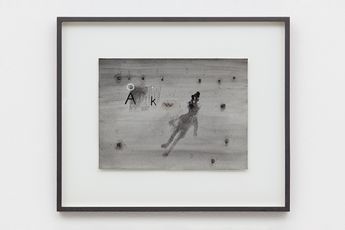
David Lynch, the American artist and award-winning filmmaker behind cult classics like Eraserhead (1977) and ‘Twin Peaks’ (1990–2017), has died at age 78. His family shared the news on Thursday.
Last year, Lynch told British film magazine Sight and Sound that he was diagnosed with emphysema (also known as chronic obstructive pulmonary disease) from years of smoking, and was confined to his home. Responding to concerned fans on X, Lynch wrote that he was otherwise ‘in excellent shape’ and ‘will never retire’.

A painter by training, Lynch had his breakthrough in 1977 with Eraserhead, a horror that probes a man’s fear of parenthood. The film was inspired by Lynch’s student days living in a run-down area of Philadelphia, where he learned the basics of stop-motion animation and cinematography from staff at a camera shop. He produced his first ‘moving paintings’—projections over multidimensional works—in the late 1960s.
In 1989, the renowned gallerist Leo Castelli offered Lynch a solo show at his SoHo gallery. Writing for The New York Times, Roberta Smith described his paintings—which delve into the dark side of suburban America—as ‘familiar, unoriginal, and slick’. In 2014, Lynch’s work was surveyed at his alma mater, the Pennsylvania Academy of the Fine Arts.
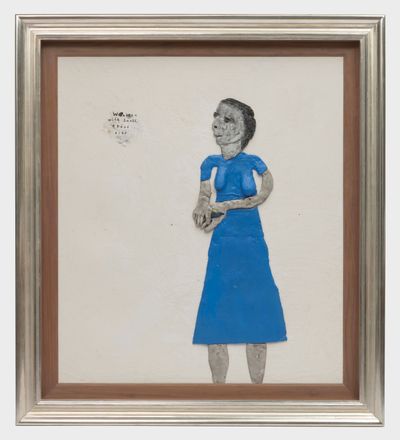
In 2022, Lynch joined global mega-gallery Pace. His debut solo exhibition Big Bongo Night was presented in their New York outpost that same year, and comprised mixed-media sculptures and paintings.
Marc Glimcher, CEO of Pace Gallery, said in a statement: ‘Anybody lucky enough to grow up during the prime Lynch years—the 80s and 90s—had the architecture of their brain significantly rebuilt by his genius. What an unbelievable loss of a pure creator. Lynch turned insanity into philosophy.’

Beyond film, painting, and sculpture, Lynch’s five-decade practice encompasses printmaking, drawing, and music.
Lynch told The Guardian in 2018: ‘A film or a painting, each thing is its own sort of language, and it’s not right to try to say the same thing in words.’
His style of filmmaking inspired the term ‘Lynchian’—alluding to the ominous yet surreal quality of his scenes that combine the macabre with the mundane. His award-nominated productions include Blue Velvet (1986) and Mulholland Drive (2001). —[O]
Main image: David Lynch. Photo: Mark Berry.
A respected voice in contemporary art discourse.
Focusing on ambitious storytelling and insightful art-world commentary. Ocula Magazine publishes in-depth interviews, critical essays and timely analysis on the artists, exhibitions and ideas driving the global art world.
Learn more about Ocula Magazine
Showcasing the best of the art world.
Ocula partners with galleries from around the world to highlight their artists, artworks and exhibitions. Gallery membership is by application and invitation, with each member vetted by an independent panel.
Learn more about Ocula Membership
Specialises in the sale of major artworks.
Led by a team with deep ties to the world’s leading auction houses, galleries and collectors. Ocula’s advisory team offers bespoke services to high-net-worth clients from around the world who are looking to acquire the best of contemporary and modern art.
Learn more about our team and services