





Lebanese Authorities Condemn Israel’s ‘Unprecedented Attack’ on Protected Heritage Site

The Israeli flag flies over Beaufort Castle in the southern Lebanese village of Arnoun (31 May 2026). Photo: © Marwan Naamani/ZUMA Press Wire.

Lebanese authorities and Unesco have both issued strong statements of condemnation following Israeli military attacks that have damaged at least one heritage site inscribed on the United Nations agency’s enhanced protection list.
Damage to the historic fortress of Chama’ Citadel has been confirmed, with strikes also reported close to the ancient city of Tyre and the 900-year-old Beaufort Castle, which the Israeli military yesterday seized in its deepest incursion into Lebanon in 26 years.
Over the past two-and-a-half years, as hostilities between Israel and Hezbollah have reignited, Lebanon has moved urgently to shield its heritage, securing enhanced protection from Unesco for 73 sites between November 2024 and April 2026. The designation prohibits sites from being targeted or used for military purposes, with “serious violations” potentially giving rise to criminal responsibility under Second Protocol of the 1954 Hague Convention.
In a statement issued on Friday, Unesco said it was “deeply alarmed” by damage to Chama’ Citadel and reported strikes near Beaufort Castle, and expressed concern that “recent alarming developments” might expose Tyre to “further damage and potential looting”.
It added: “Unesco strongly condemns unlawful attacks against cultural property. Sites under enhanced protection benefit from the highest level of legal protection against attack and use for military purposes. Damage to such institutions deprives communities of access to culture and shared spaces essential for recovery and social cohesion.”
The latest round of conflict in the region began in March, after US and Israeli attacks on Iran prompted Hezbollah to launch rockets into Israel. Despite a 10-day ceasefire that came into effect on 16 April and has since been extended, Israel’s military offensive has continued, particularly in southern Lebanon, and has escalated in recent days.
Samar Karam, director of archaeological sites at Lebanon’s Directorate General of Antiquities and the official responsible for World Heritage sites and Hague Convention matters, told Ocula that Lebanon continues to face “a grave and unprecedented attack on its cultural and heritage identity”. Archaeological and historical sites across southern Lebanon are, she said, being subjected to “extremely violent Israeli military operations” that not only cause physical destruction but also undermine their symbolic, historical and cultural significance.
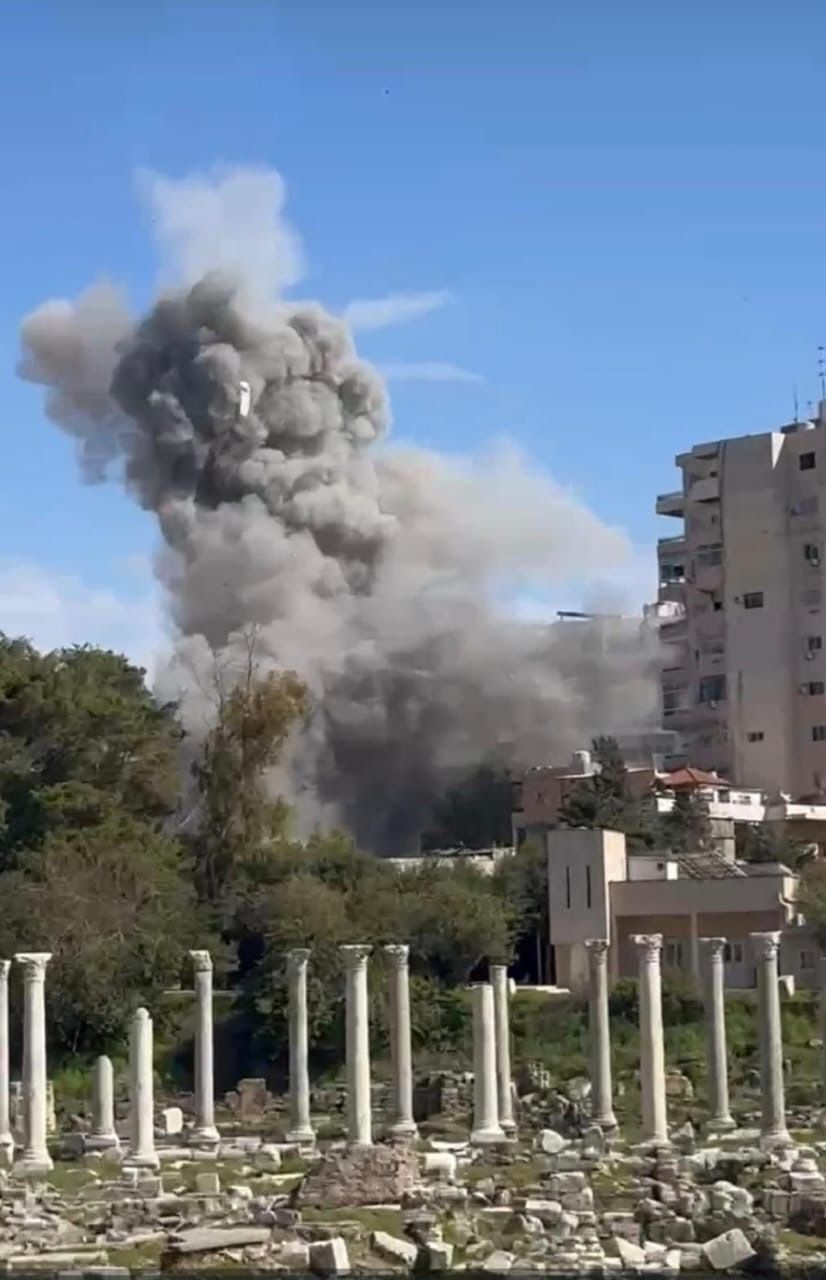
According to Karam, Chama’ Citadel, which was built as an early Crusader military post and granted enhanced protection in 2024, has been severely damaged, with its shrine and minaret destroyed. “In addition to the citadel itself, other religious monuments, historic souks and heritage buildings in the surrounding area have also been affected amid widespread destruction,” she said.
Karam told Ocula that Beaufort Castle, known locally as Qal’at al-Shaqif, has also sustained serious damage. “The site was notably occupied through the installation of military surveillance devices and the raising of the Israeli flag in April, constituting a blatant violation of its protected status,” she said, adding that the site was further damaged by Israeli strikes in its immediate surroundings on 27 May.
Built in the 12th century by the King of Jerusalem and later modified by the Ayyubids and Mamluks, Beaufort Castle is one of the best-preserved Crusader-period castles in the Near East. Now under Israeli control, the site is inaccessible, raising what Karam describes as “serious concerns regarding irreversible damage and the complete loss of oversight”.
In a statement issued yesterday, Israeli prime minister Benjamin Netanyahu said the capture of the castle marked a “dramatic shift” in Israel’s campaign against Hezbollah in Lebanon. “We have broken the barrier of fear. We are taking the initiative, we are operating on all fronts—in Syria, in Gaza, in Lebanon,” he said.
The situation in the ancient city of Tyre, a Unesco World Heritage Site in the south of Lebanon that was granted enhanced protection in November 2024, is also said to be dire. Its archaeological areas, Karam told Ocula, have been at the centre of “extremely violent Israeli bombardments” since March.
According to Karam, the site’s museum building has been damaged and ongoing explosions pose a critical threat to the structural integrity of the entire area. “These sites are now facing an imminent risk of major destruction,” she said, adding that on Friday bombardment became so intense that guards were forced to leave the area.
Limited access to the three sites makes a comprehensive assessment extremely difficult, Karam said, underscoring the urgent need for international co-operation to document the damage and protect what she described as “a national treasure and an essential component of the heritage of humanity”.
In an X post on 28 May, Lebanon’s prime minister Nawaf Salam called for international support to help bring about a ceasefire and the withdrawal of Israeli forces. He wrote: “Nothing can justify the ongoing assaults on my regions of Tyre and Nabatieh and the destruction of their historical landmarks, nor the continuous threats targeting our peaceful people there…”
In its statement, Unesco said it will continue working with Lebanese authorities to assess damage and strengthen safeguarding measures.



A respected voice in contemporary art discourse.
Focusing on ambitious storytelling and insightful art-world commentary. Ocula Magazine publishes in-depth interviews, critical essays and timely analysis on the artists, exhibitions and ideas driving the global art world.
Learn more about Ocula Magazine
Showcasing the best of the art world.
Ocula partners with galleries from around the world to highlight their artists, artworks and exhibitions. Gallery membership is by application and invitation, with each member vetted by an independent panel.
Learn more about Ocula Membership
Specialises in the sale of major artworks.
Led by a team with deep ties to the world’s leading auction houses, galleries and collectors. Ocula’s advisory team offers bespoke services to high-net-worth clients from around the world who are looking to acquire the best of contemporary and modern art.
Learn more about our team and services