The art world in focus
Subscribe to our newsletter for news and insights on artists, galleries and exhibitions.

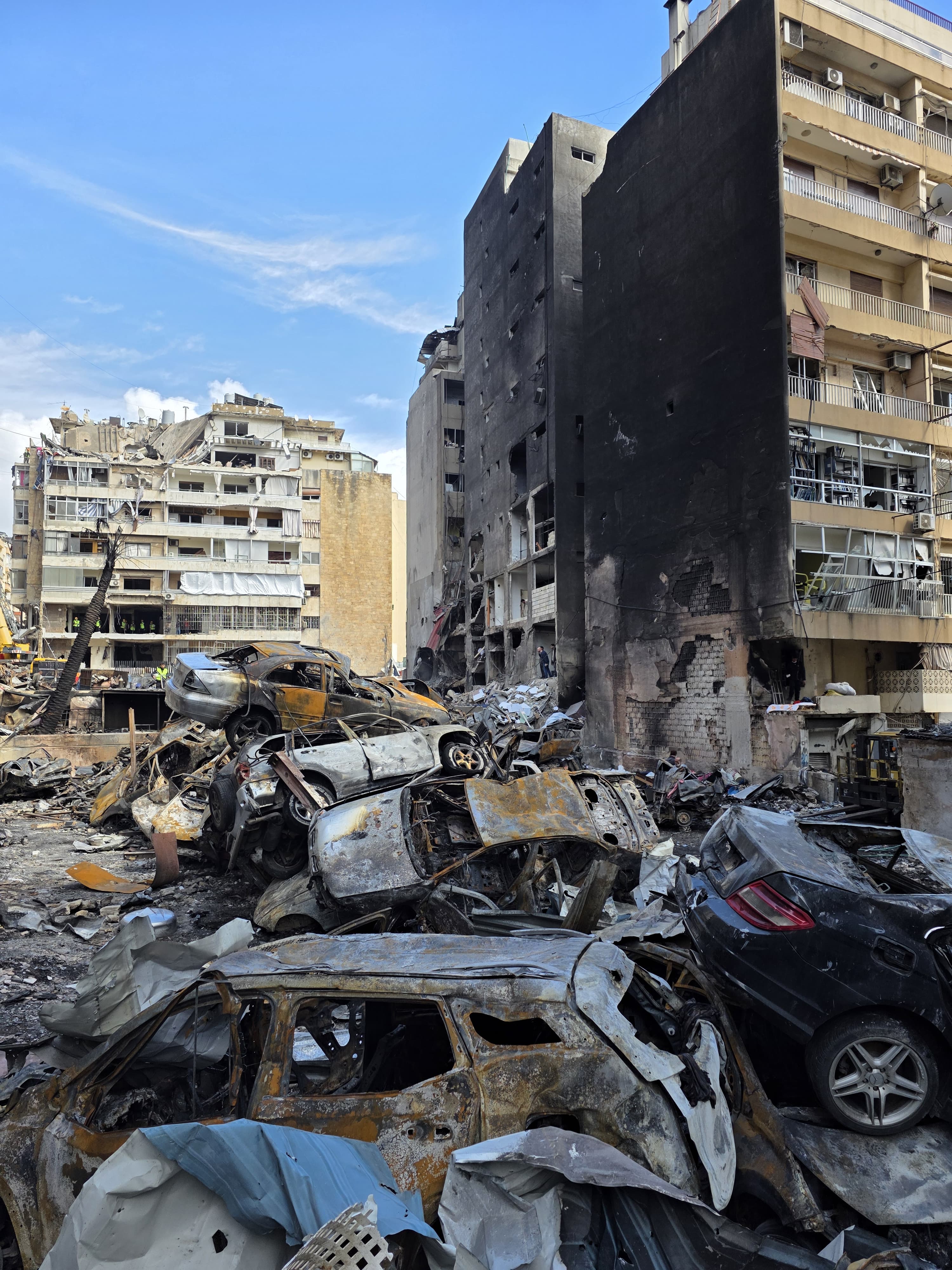
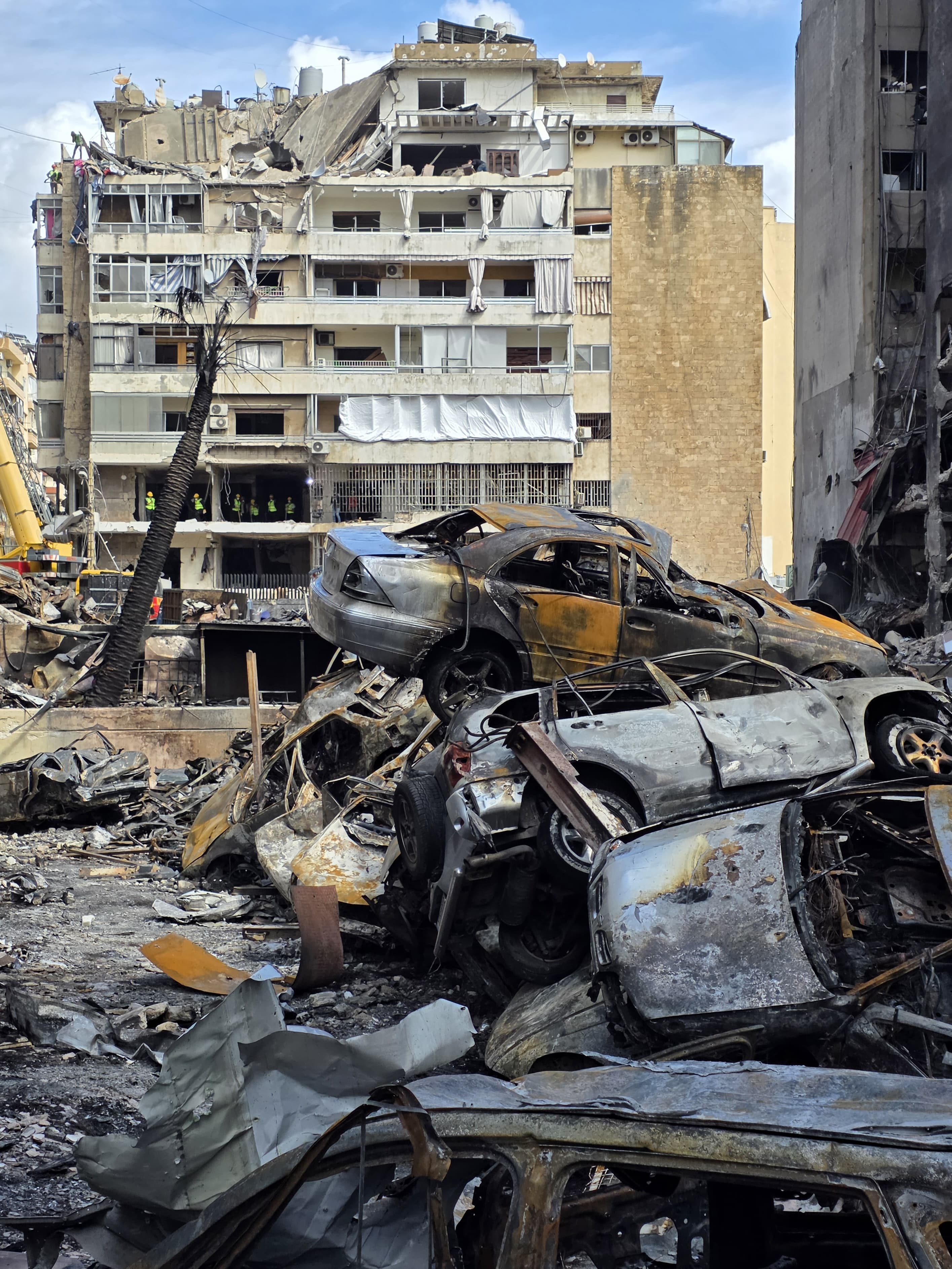
On the afternoon of 8 April, when a wave of rapid, continuous explosions began to echo across Beirut, Abed Al Kadiri was on his way to pick up materials for an art session with displaced children. “Because I was in the car, I didn’t understand what was happening,” he tells Ocula. “I thought this cannot be airstrikes.” Though used to the sounds of war, these blasts were more intense: repetitive, close together, almost constant. When the communication networks were cut and thick smoke began to fill the sky, he realised something was seriously wrong.
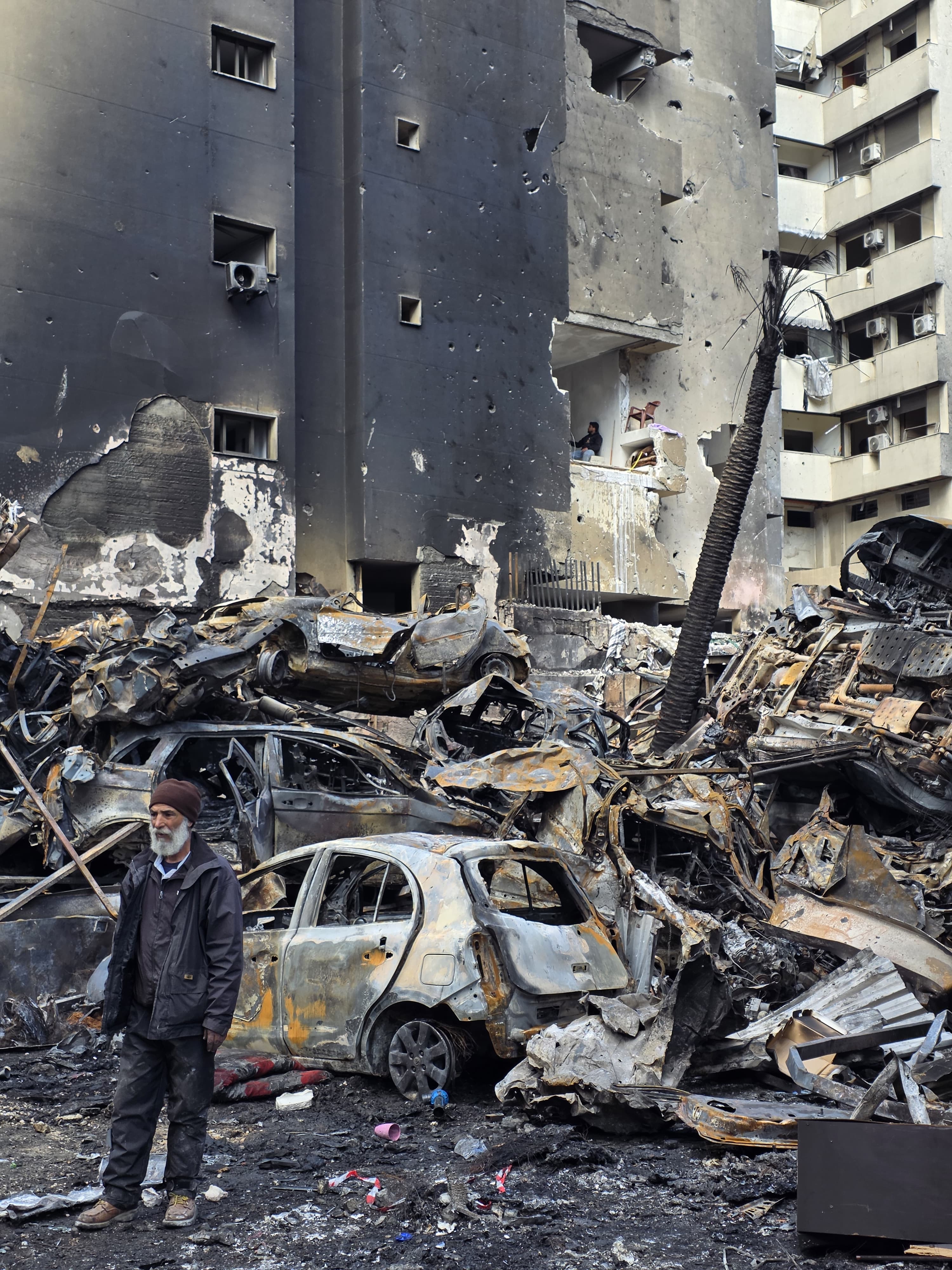
The sounds Al Kadiri heard were quickly confirmed to be Israeli airstrikes—and they were happening across Lebanon. Israeli forces soon claimed to have hit 100 sites in just 10 minutes. According to Lebanon’s health ministry, 357 people were killed and more than 1,200 were injured, making it one of the bloodiest days in Lebanon’s recent history. It is now referred to as “Black Wednesday”.
The previous evening, the US and Iran had announced a two-week ceasefire, bringing their nearly 40-day war to a pause. However, despite early hopes, the truce between the US and Iran did not extend to Lebanon, from where Hezbollah, a political and armed group closely aligned with Tehran, had entered the conflict in early March. An Israel-Lebanon ceasefire was agreed the following week, and has since been extended until later this month. However, violence between the two sides continues.
A “panicked” Al Kadiri, further shaken by ambulances racing through the city and people “driving insanely”, abandoned his plans and headed to his mother’s home in the Barbour neighbourhood of Beirut. He found her in distress; one of the heaviest strikes had landed nearby. He moved his mother to a safer area in the mountains, where she remains, and, within days, returned to visiting shelters across the country.
Al Kadiri is working with some of the hundreds of thousands of children who have been uprooted from their homes since the start of the war, and supports them in expressing themselves through art. Their works will soon form part of a larger collaborative project involving art institutions, artists and publishers, to be exhibited and sold to raise funds for Lebanon’s displaced communities—which, according to the UN, now total more than 1.1 million people.
“We went through the same terror and violence and destruction when we were children”
Born in 1984, in the midst of Lebanon’s civil war (1975–1990) and Israel’s 18-year occupation of southern Lebanon (1982–2000), Al Kadiri grew up surrounded by conflict. He experienced loss and repeated displacement, spending time in shelters and living in damaged buildings. The impact shaped both his sensitivity to violence and his artistic practice, which explores violence and both personal and collective trauma, with a focus on cultural destruction, migration and belonging.
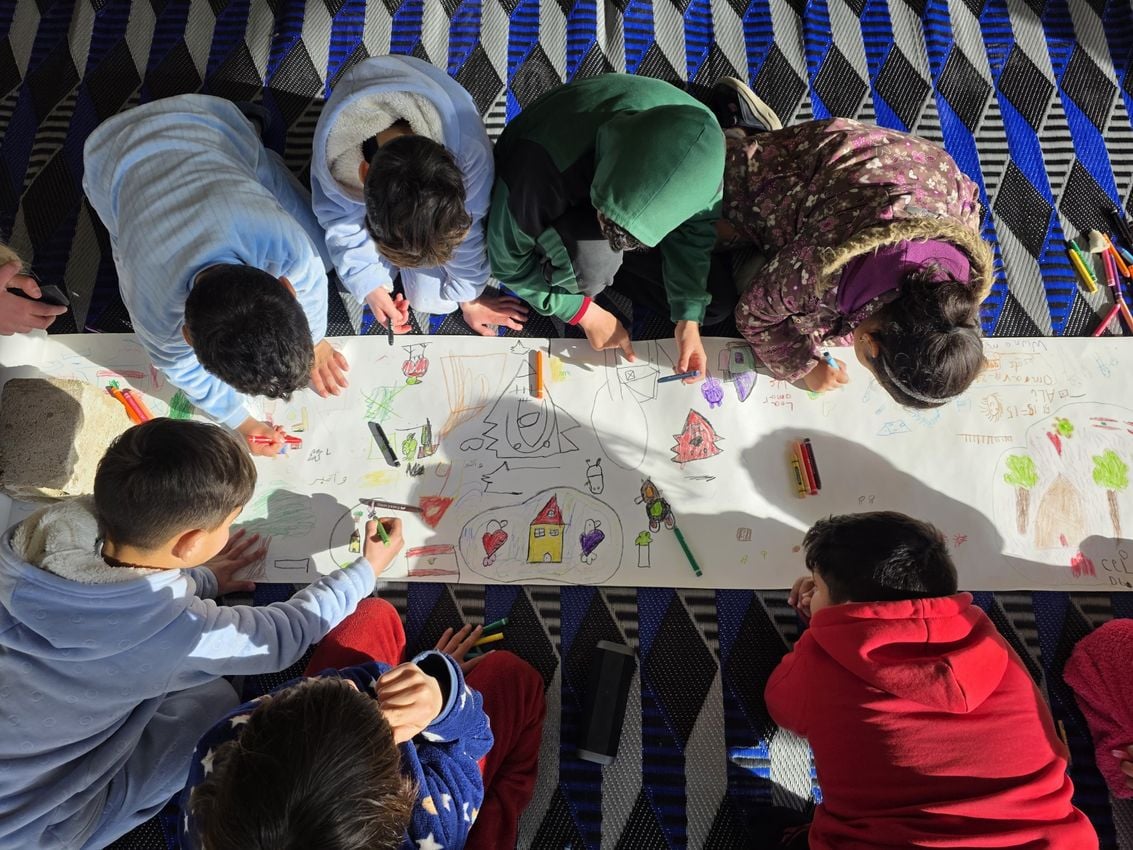
When violence returned to Lebanon in March, and more people, especially children, were displaced, Al Kadiri felt he had to contribute. What began as a plan to give art materials as Ramadan Eid gifts to children driven from their homes quickly grew into something larger. Inspired by the sight of families carrying their belongings rolled across car roofs, and with the support of NGOs, he visited a school sheltering displaced families with a 10-metre roll of white paper and art materials. Here he encouraged children to draw and paint their experiences on the roll and, at the end of each session, he gifted them colouring books, pens and pencils.
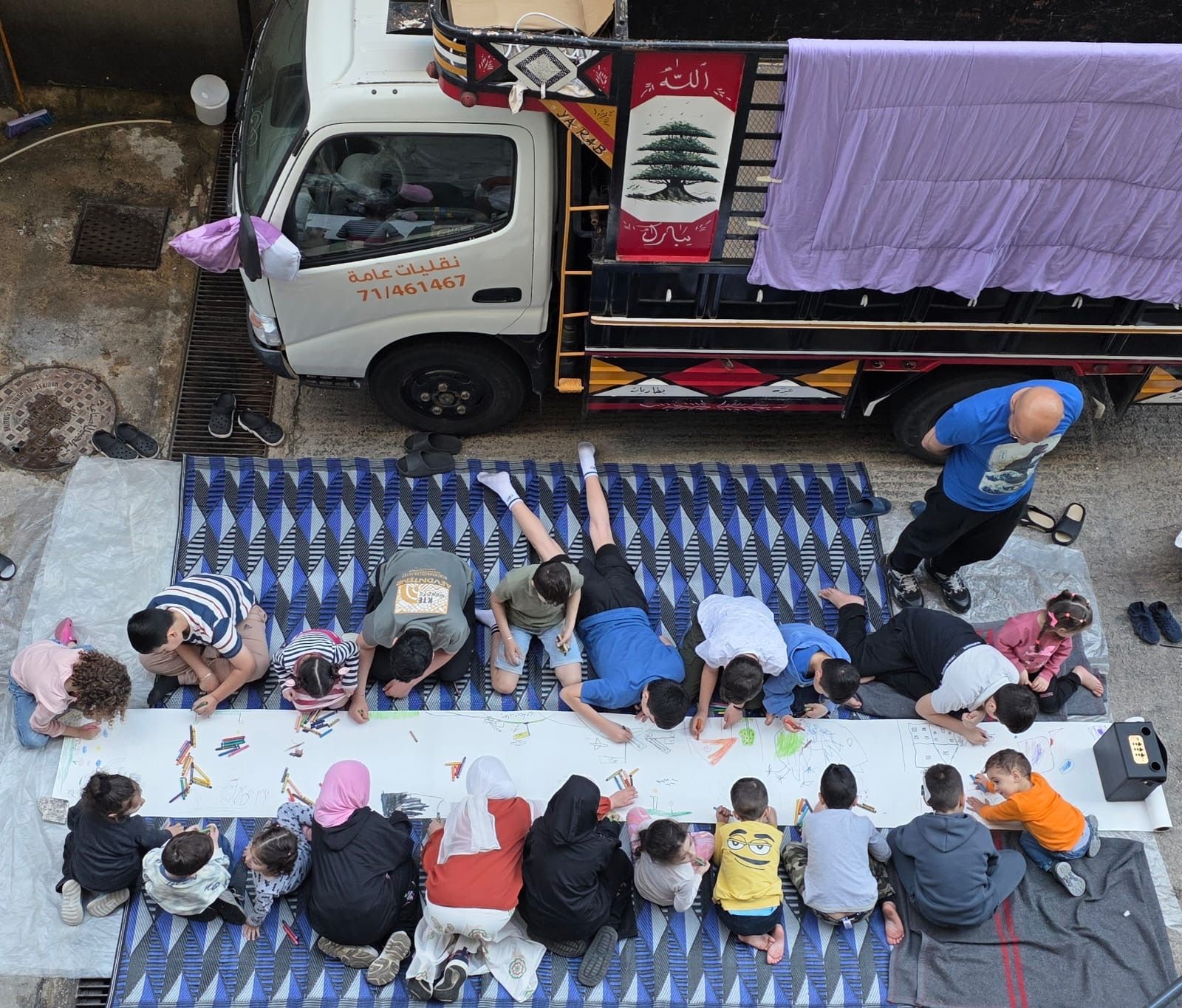
The positive response to this convinced Al Kadiri to expand the initiative and to try to reach 1000 children. He and other artists then plan to intervene on the reverse side of the children’s creations by sketching on their own experiences of war and displacement. “Because we went through the same thing. We went through the same terror and violence and destruction when we were children,” he explains. The works will then be turned into concertina-style books to be exhibited and sold. Proceeds will be donated to the children’s families. So far, he has reached more than 400 children and six established Lebanese artists have already agreed to take part—and he expects more to join.
For galleries across Beirut, the same tensions between sustaining activity and responding to crisis have played out in different ways. Like the majority of spaces, Salah Barakat Gallery—one of the city’s most established galleries—cancelled its shows and closed when the war began. It later reopened gradually, extending hours week by week, while allowing staff to decide daily whether it was safe to come in.
“We were operating in what is called a war mode. We would be open and suddenly we receive a warning and everybody starts running away,” says the gallery’s founder, Salah Barakat. Even when the gallery was open, however, he was not expecting sales or visitors. “You can imagine very well that nobody buys art under the bombs,” he explains.
With continued instability, Barakat has turned to international art fairs to diversify his market, despite the costs. He was in France for Art Paris 2026 when Black Wednesday unfolded, and says being away made it worse as he tried to reach loved ones. A strike near the gallery prompted him to tell staff to close immediately, and the space largely remained shut until the following week. At the fair, he says, there was strong solidarity from visitors, including figures such as Queen Rania of Jordan and leaders from the Pompidou Centre and the Institut du Monde Arabe.
“We have skin like an alligator—we are tough”
Next is Venice, where his artists Nabil Nahas and Hala Schoucair are participating in the Biennale—Nahas representing Lebanon at its national pavilion and Schoucair exhibiting at the Giardini and Arsenale—followed by the rescheduled Art Dubai 2026 in May. However, the gallerist says the Dubai trip is more about showing support for the city, which has also been affected by the war, than it is about sales. “I am going there not expecting anything, except to tell the people of Dubai we are there with you, in the better and for the worse,” he says, noting that he has not missed the event since its inception.
Despite the scale of destruction—with Lebanese authorities estimating that nearly 40,000 homes were destroyed or damaged prior to the ceasefire—Barakat does not believe that galleries will shut down. “We have skin like an alligator—we are tough,” he says. “But we’ll have to wait and see.”
Meanwhile, some spaces have pivoted away from exhibiting entirely. Founded in 2009, the Beirut Art Center (BAC) is a key institution in the city’s art scene. Known for its exhibitions and educational work, the centre has long positioned itself as a bridge between artistic practice and socio-political life. However, after the 2024 conflict between Israel and Hamas, the space’s programme has been largely disrupted. Since March, much of it has been paused.
“Our first role as a cultural organisation is to be present to the moment and serve as a place of gathering and sense making together,” says Boulos Saad, BAC’s head of operations. “We were in the process of producing several exhibitions, long in the planning, but we’ve put them on indefinite delay. We can’t continue doing what we are doing just because it was planned,” he says, stressing that relevance is essential.
With its programme suspended, in March BAC opened its space to initiatives and groups working on the ground, allowing them to use the centre as an operational hub to provide aid to displaced people—from mattresses and blankets to food, medicine and clothing. After a short break over Easter, the team regrouped to consider a longer-term response, aimed at those in the cultural sector.
The result is a new programme, set to launch on 14 May in collaboration with Stayha, an art and community centre located in Kfar Reman, Nabatieh, in southern Lebanon, focusing on musicians and visual and video artists from the south. Despite the ceasefire, Israeli forces continue to occupy around six percent of southern Lebanon, reportedly carrying out airstrikes and demolishing buildings, including entire villages. With many unable to return to the country’s south, the programme focuses on supporting artists whose livelihoods have been disrupted. “It’s this next phase of saying we can continue to curate, but contextualise to the moment and build an economy for those who need it,” Saad says.
For independent artists, the sheer extent of the destruction and displacement caused by the war has weakened an already reeling economy, leaving many in the sector struggling to sustain their livelihoods. Tarek Mourad, director of the Beirut Printmaking Studio, describes the situation as “a humanitarian crisis”. The artist, filmmaker and printmaker set up his studio informally in 2015, before developing it into a more structured, open-access space in 2017. It now offers artists a place to learn and practise printmaking—filling what Mourad saw as a gap in Lebanon’s art infrastructure.
More collective effort than business, much of the studio’s operations are funded by Mourad through his salary as an instructor at Lebanese International University. Its core programme—free scholarships and residencies for young and emerging artists—is sustained through the sale of works produced by the participants at the end of each year.
“I don’t expect any of this to sell, but we still have to do it”
But years of compounded crises—from the 2019 economic collapse to the 2020 Beirut port explosion and successive wars—have strained this model. The latest conflict forced the studio to suspend all activity, halting courses, residencies and access. It has only recently reopened on reduced hours and, even for those who can attend, basic costs have become a barrier. The same is true for Mourad’s university students—in a recent class of around 20 students, only three showed up. The $4 USD taxi fare, he explains, had become too much for some.
However, despite the economic hardships, Mourad is pushing ahead with a series of exhibitions and events next month. On 14 May he plans to present a self-published and designed booklet at Difaf Gallery, built around a decades-long photographic study of a Roman altar in the mountains, which he has documented since the 1990s. The presentation will blend personal narrative with historical inquiry.
Later in the month, his studio will host an exhibition of posters created in solidarity with Lebanon after the 2024 conflict and sent to him by the Paris-based Atelier Morsure, which will also be offered for sale. However, he is realistic about what these events might achieve. “I don’t expect any of this to sell, but we still have to do it,” he says. “You cannot tell a baker not to bake.” —[O]



A respected voice in contemporary art discourse.
Focusing on ambitious storytelling and insightful art-world commentary. Ocula Magazine publishes in-depth interviews, critical essays and timely analysis on the artists, exhibitions and ideas driving the global art world.
Learn more about Ocula Magazine
Showcasing the best of the art world.
Ocula partners with galleries from around the world to highlight their artists, artworks and exhibitions. Gallery membership is by application and invitation, with each member vetted by an independent panel.
Learn more about Ocula Membership
Specialises in the sale of major artworks.
Led by a team with deep ties to the world’s leading auction houses, galleries and collectors. Ocula’s advisory team offers bespoke services to high-net-worth clients from around the world who are looking to acquire the best of contemporary and modern art.
Learn more about our team and services