






Venice Pavilions Shutter and Protesters Clash With Police Amid Anti-Israel Action

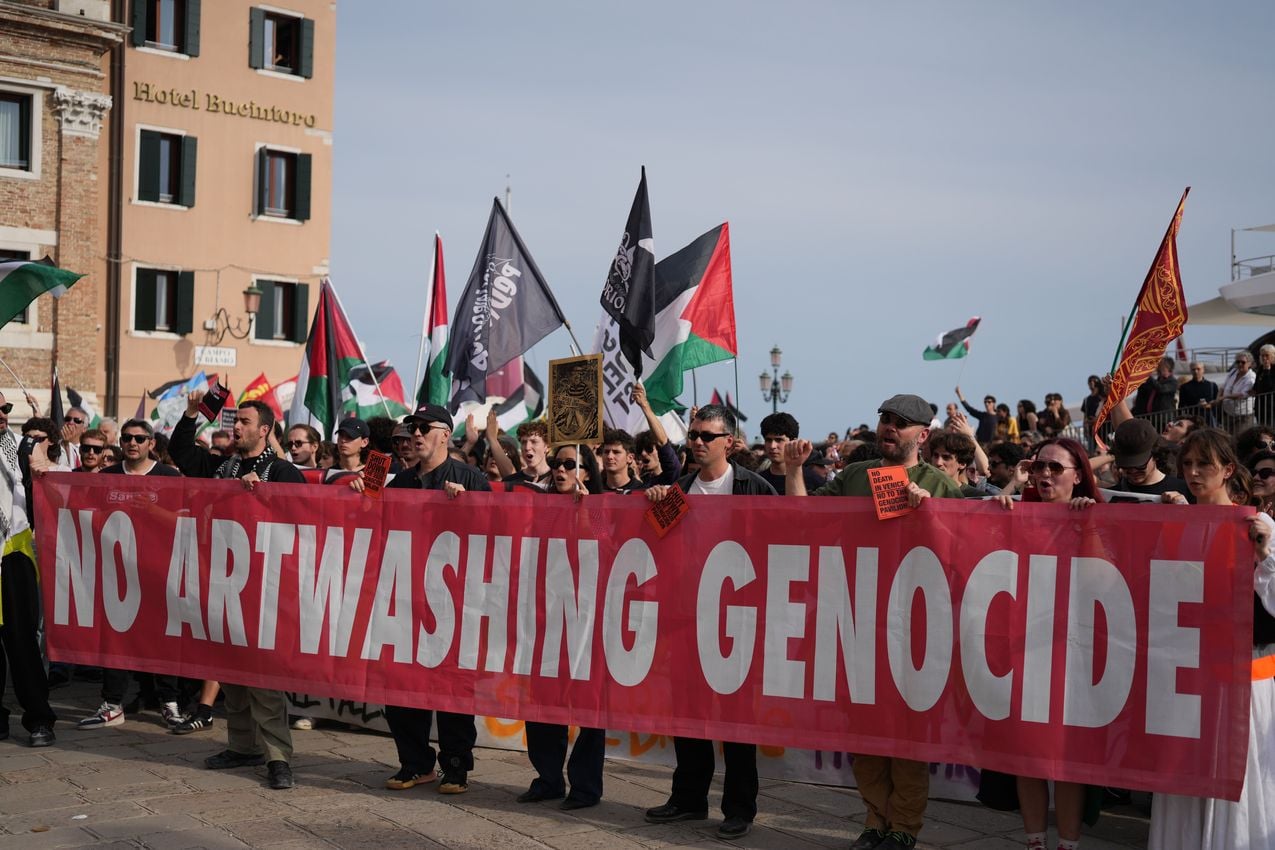
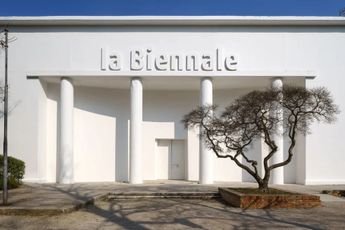
A host of national pavilions across the Venice Biennale were closed to visitors today (Friday 8 May) as culture workers walked out in protest against the presence of Israel, creating yet more disruption at what has already been a turbulent 61st edition.
The strike is the latest in a string of actions organised by the Art Not Genocide Alliance (ANGA)—the same campaign group that on Wednesday led a 200-strong protest outside the Israeli pavilion, causing the space to close for several hours. According to the organisation, a total of 27 pavilions have taken part in full or partial closures, an “unprecedented level of participation in the history of the biennale”.
An ANGA statement said: “Israel, which this year cannot rely on its historic pavilion in the Giardini, is being officially ‘hosted’ by the Biennale, which has decided to offer it space at the Arsenale. Why is the red carpet being rolled out for a state responsible for genocide, apartheid, and ethnic cleansing?”
The organisation said the action also opposes the diversion of public resources away from welfare, education and culture towards military spending and securitisation. “This is taking place while massacres and systematic violations of human rights continue to be legitimised, in part through the labour of thousands of workers within the cultural sector,” a statement said.

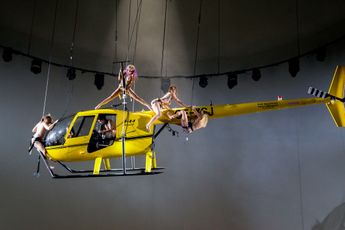
In the Giardini, the Dutch and Belgian pavilions were closed all day, as was the highly popular Austrian pavilion, where Florentina Holzinger is presenting Seaworld Venice. The British pavilion briefly shuttered before midday and, in the Arsenale, the Latvian pavilion closed for several hours. The pavilions of Austria, Catalonia, Ecuador, France, Egypt, Iceland, Korea, Malta, Poland, Slovenia, Spain and Switzerland all also closed at various times during the biennale’s final day of previews before it opens to the public on 9 May.
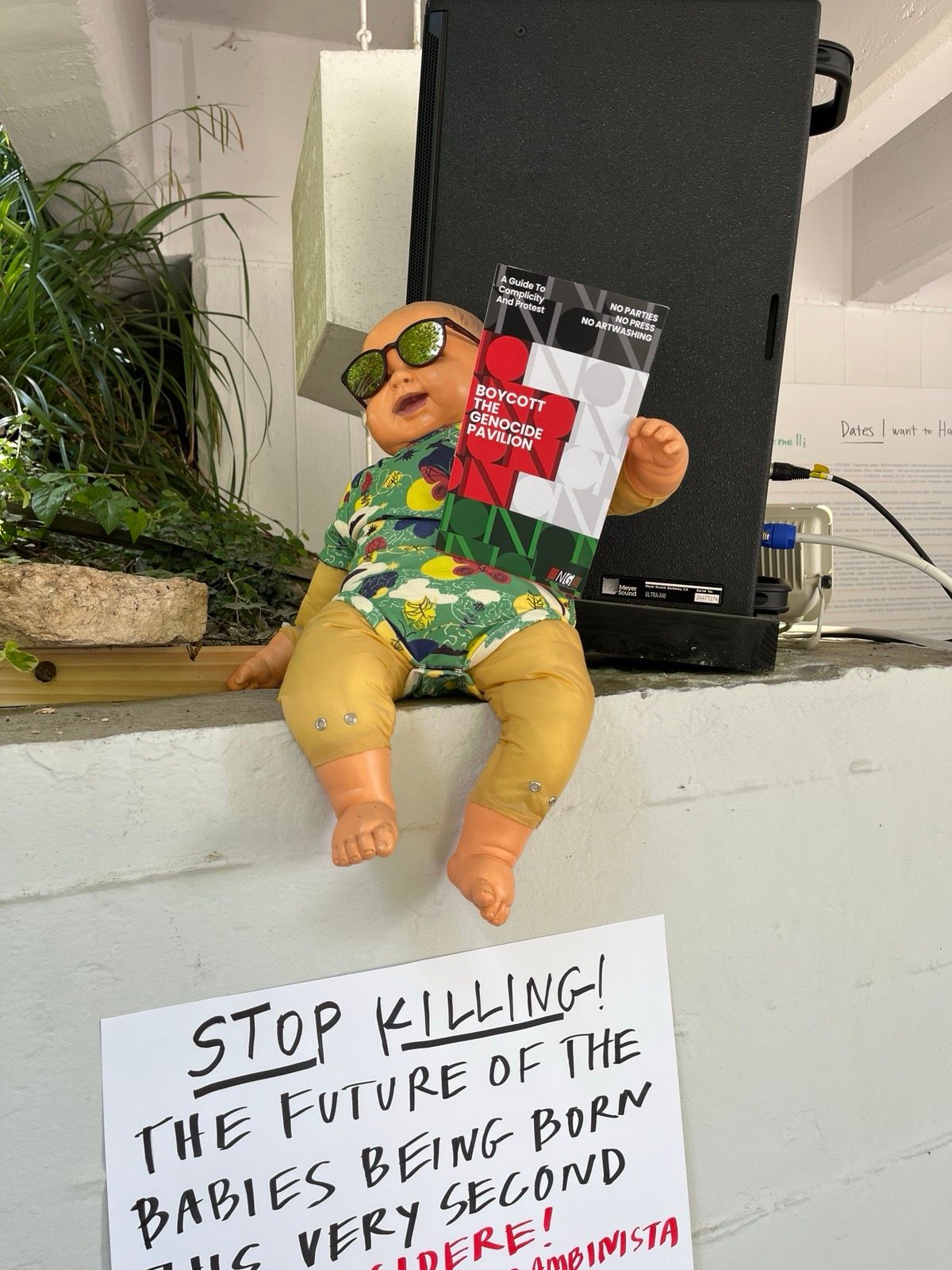
Outside the Japanese space, which has been popular among visitors thanks in part to artist Ei Arakawa-Nash’s display of baby dolls, signs read “Palestine is the future of the world” and “We demand an end to genocide, war crimes, and the systematic destruction of life in Palestine”. The pavilion closed briefly in the morning and, when it reopened, the dolls had been removed—workers told Ocula the objects were “on strike”.
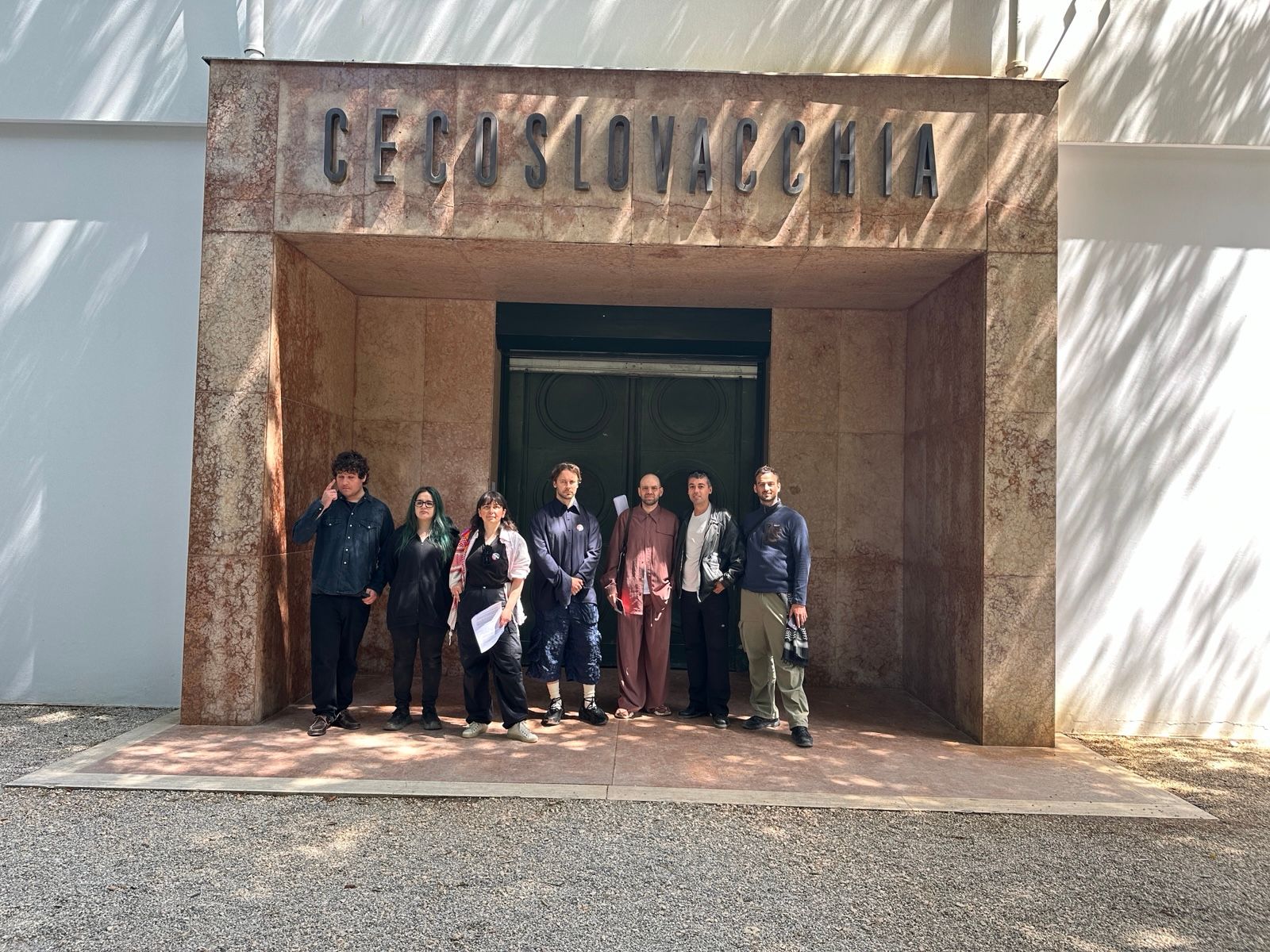
The Czech and Slovak pavilion, which is presenting The Silence of the Mole by artists Jakub Jansa and Selmeci Kocka Jusko, closed for approximately two hours in the early afternoon. The show’s curator, Peter Sit, told Ocula: “Humans are being bombed and we are watching it 24/7 through our phones. There should be no question about [taking action]; I feel it’s our duty.”
Asked if he had a message for biennale organisers, he said: “We don’t want to exhibit in the show in these conditions, and most of the artists we’ve met, most of the workers we’ve met, are completely against it. If this institution wants some future, in the context of art, they need to rebuild their position, and rebuild the founding stones of this institution.”
The biennale has been facing increasing pressure surrounding the presence of the Israeli pavilion since March, when more than 200 curators and art workers signed an open letter demanding the exclusion of the country from the edition, citing ongoing atrocities in Gaza and the West Bank. The letter read in part: “The Venice Biennale’s complicity with the attempted destruction of Palestinian life must end. No artist or cultural worker should be asked to share a platform with this genocidal state.”
Pietrangelo Buttafuoco, the biennale’s president, said this week that the exhibition was a place “where the world comes together” and that all should be welcome rather than subject to censorship.
The biennale did not respond to Ocula’s request for comment, but said in a statement yesterday that the strikes “do not involve the institution’s staff or organisation” and that it was “committed to ensuring the orderly conduct of the exhibition, respecting freedom of expression and the plurality of opinions”.
The Israeli pavilion, which was guarded by armed police at various points throughout Friday, is presenting the exhibition Rose of Nothingness by sculptor Belu-Simion Fainaru. Fainaru also did not respond to Ocula’s request for comment, but told Artnews in January: “Dialogue is the best way to express ourselves.”
The artist went on to say he is “totally against boycotts, and not just in Venice”, and described his installation as “a vision of hope and human feeling, the total opposite of boycott and exclusion, giving space to everybody”.
At the Dutch pavilion, exhibiting artist Dries Verhoeven told Ocula that today’s action “stands on the shoulders” of artists and curators who protested against apartheid in South Africa at the 1968 edition of the biennale.
He said: “We think this is the best thing we could do, with pain in our hearts because we made a work that we really would like to show to the audience. But we think there’s something even more important today, which is stating that Israel should not be given a chance to art-wash themselves.
“The biennale stated that this is a neutral space for cultural exchange, and it’s not. It’s clearly a political space, and we should also use it as such. By giving Israel a pavilion and not somewhere in the city, but on the holy grounds of the Arsenale, you legitimise what they have been doing in Gaza, what they’re doing on the West Bank.”

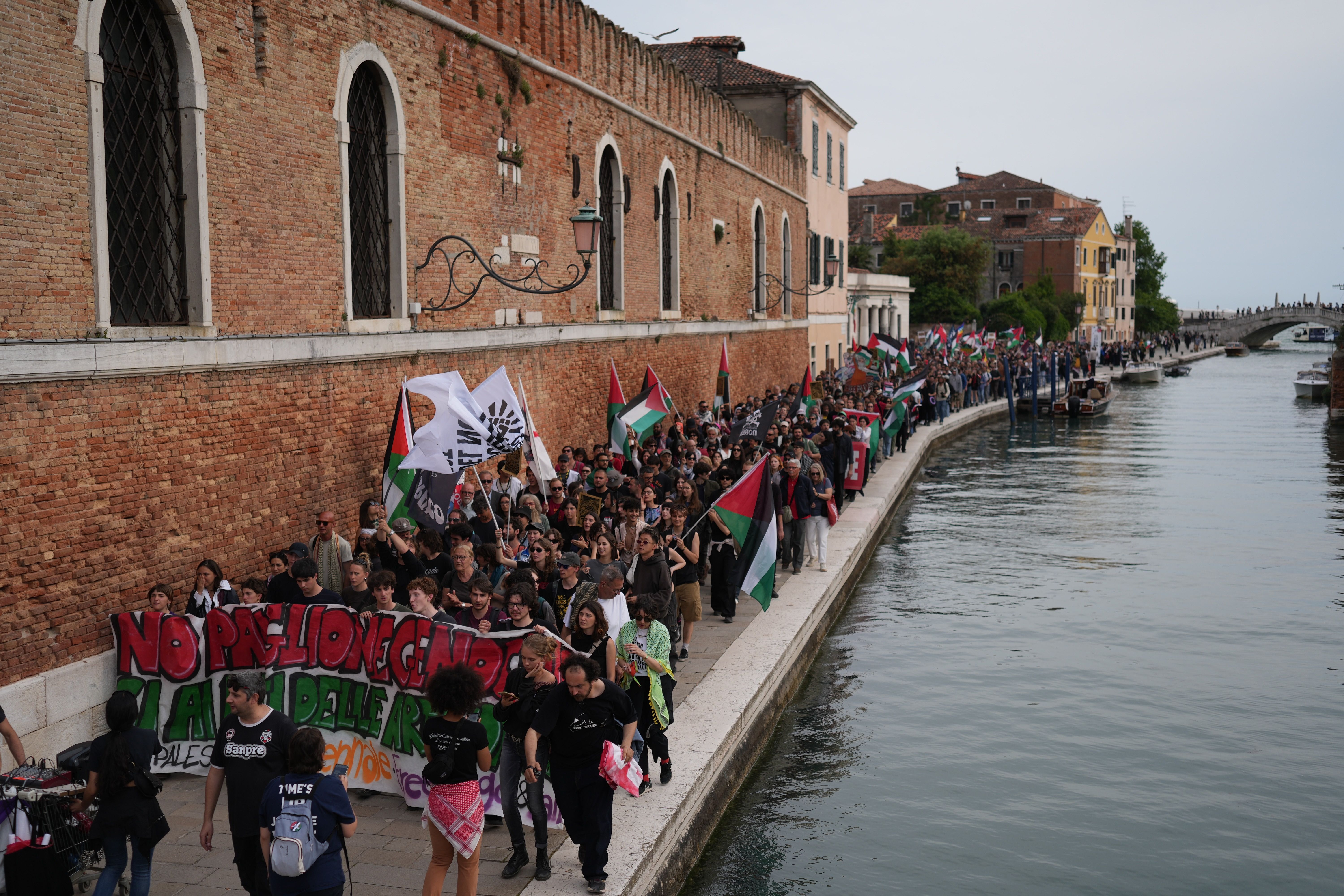
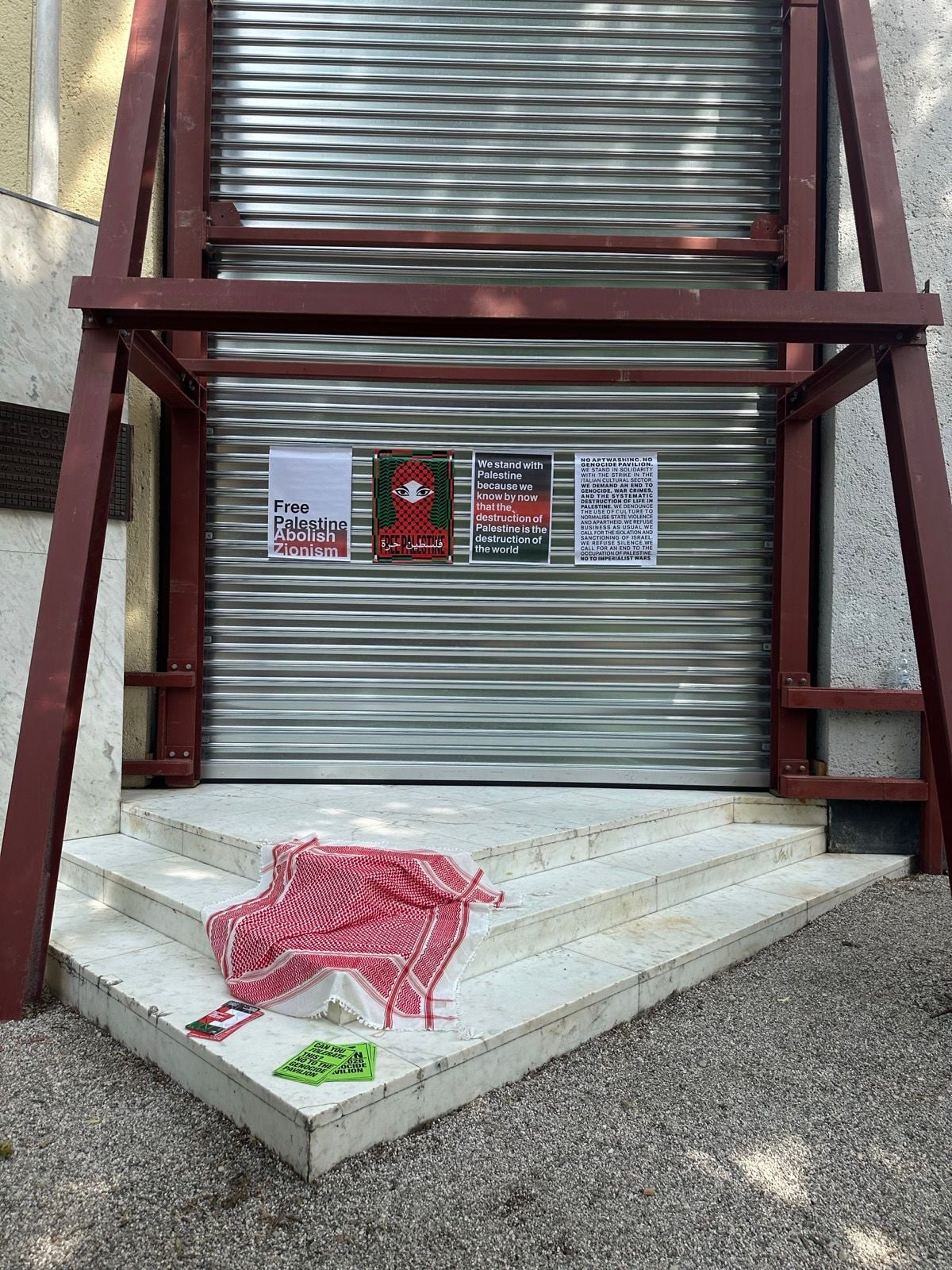
A Palestinian flag was hung outside the pavilion, alongside posters and a sign encouraging visitors to attend a protest, also organised by ANGA, which began outside the Giardini shortly after 5pm. A crowd numbering into the thousands gathered before proceeding to the waterfront, blocking passers-by and biennale-goers, with many waving Palestinian flags and chanting “no art-washing” and “artists, united, will never be defeated”.
The crowds were joined by ousted South African pavilion artist Gabrielle Goliath and curator of the Belgian pavilion, Caroline Dumalin. Addressing protesters, Dumalin called for solidarity with the Golden Lion jury—which resigned last week having previously refused to consider the Israeli and Russian pavilions—and for the vision of late curator Koyo Kouoh to be honoured. She said: “I don’t believe we can stand for humanity and culture while lives are being wiped out with impunity. We have to recognise it and condemn it with force.”
Goliath addressed the biennale directly. She said: “To remind the biennale foundation, I come from a country, South Africa, that was once barred from the biennale, and I think they need to find their moral and political compass.” Her words were greeted with chants of “Palestina libera” (free Palestine).
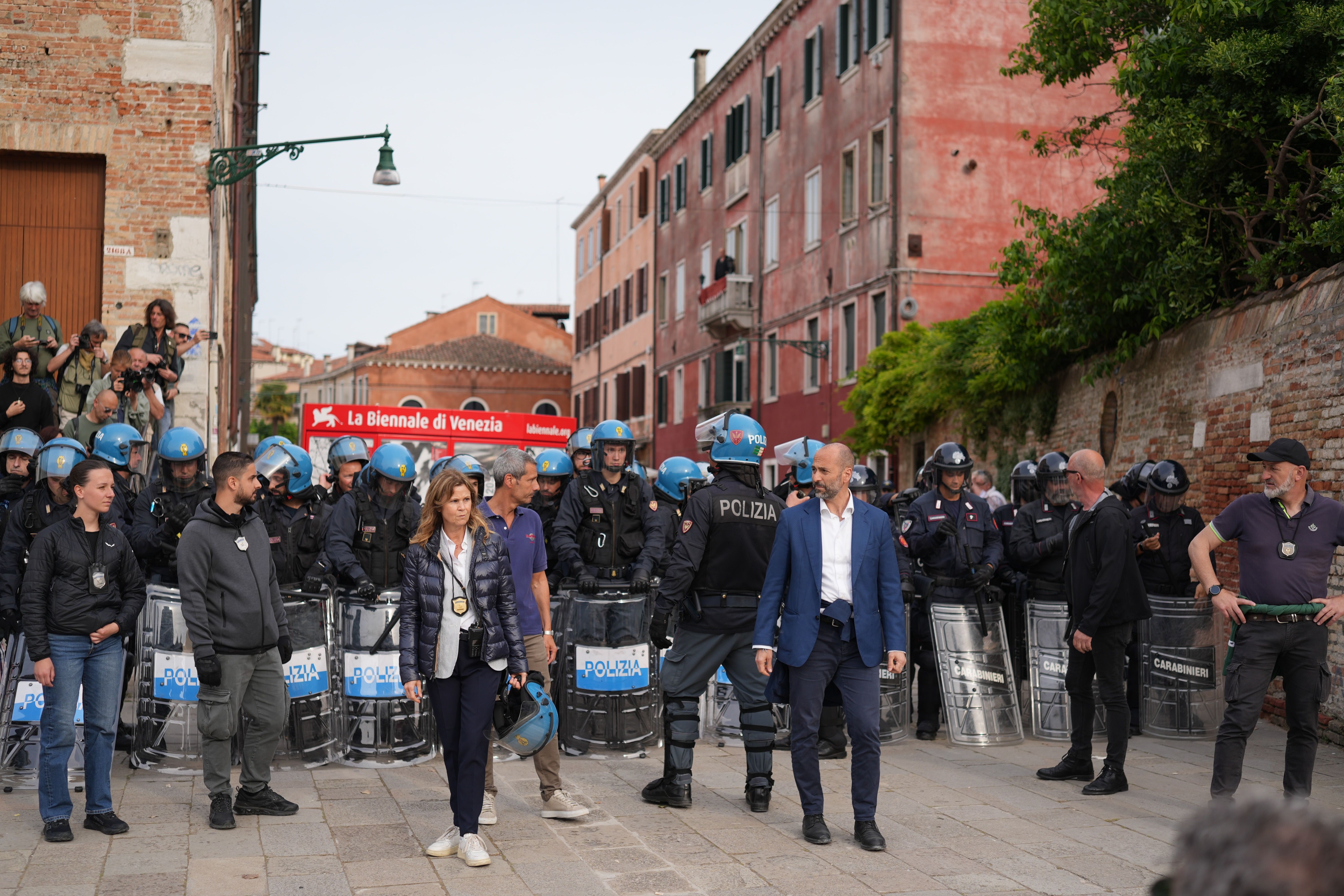
As protesters approached the Arsenale, more than 50 riot police blocked their path. Violent scuffles soon broke out, with officers striking marchers with batons. The procession then moved along the side of the Arsenale, culminating at a bridge from which banners were draped reading “no art-washing genocide” and “no genocide pavilion at the biennale”.
While protests continued through Venice, across the city at Complesso di Santa Maria Ausiliatrice, biennale president Buttafuoco addressed a crowd gathered for the opening of one of two venues hosting this year’s Vatican City pavilion. He described the biennale as delivering a “message of peace for the meeting of peoples, even if [those] peoples are at war with each other”.




A respected voice in contemporary art discourse.
Focusing on ambitious storytelling and insightful art-world commentary. Ocula Magazine publishes in-depth interviews, critical essays and timely analysis on the artists, exhibitions and ideas driving the global art world.
Learn more about Ocula Magazine
Showcasing the best of the art world.
Ocula partners with galleries from around the world to highlight their artists, artworks and exhibitions. Gallery membership is by application and invitation, with each member vetted by an independent panel.
Learn more about Ocula Membership
Specialises in the sale of major artworks.
Led by a team with deep ties to the world’s leading auction houses, galleries and collectors. Ocula’s advisory team offers bespoke services to high-net-worth clients from around the world who are looking to acquire the best of contemporary and modern art.
Learn more about our team and services