






Museums are Embracing AI, But When Will Policy and Funding Catch Up?

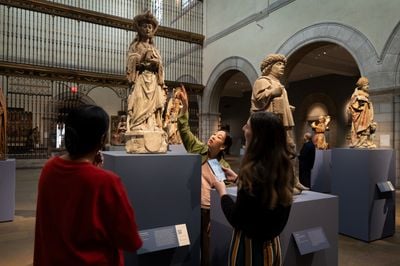
The Metropolitan Museum of Art reported “pushback” from some visitors in response to AI-related activities. Photo: Nathaniel Noir.
A survey of more than 400 museums across 90 countries has revealed the pace at which some institutions are adopting artificial intelligence, with 57 percent already using the technology, despite 55 percent having no official strategy or internal policy governing its usage.
The United Nations Educational, Scientific and Cultural Organisation (UNESCO) and the International Council of Museums (ICOM) presented their findings from the first Global Survey on the Use of Artificial Intelligence in Museums at a conference in Riyadh last week. ICOM has committees in 172 countries and represents 20,000 museums around the world, including The Metropolitan Museum of Art in New York City, the Palace Museum in Beijing and the Louvre Museum in Paris.
The report highlights a “gap between AI use and the institutional structures needed to support responsible AI use”. Nayef Al-Fayez, UNESCO’s assistant director-general for culture, echoed these findings. He described the museums sector as at “an important stage of AI adoption”, during which “experimentation is advancing faster than institutional capacity and governance”.
Areas in which museums are integrating AI technology include backroom administration, translation and collections research tasks, as well public-facing activities such as exhibition development and visitor engagement.
However, funding emerged as a significant barrier, with 67 percent saying they do not currently allocate any funding to the AI-related activities they are undertaking, and 83 percent reporting that they do not provide any training for staff on the use of AI.
Adoption is also uneven across the sector, mirroring existing disparities in digital infrastructure and financing. Museums with larger operational budgets were “substantially” more likely to report AI use, internal governance, staff training, and dedicated funding, according to the report.
Al-Fayez said that UNESCO will continue to support museums in developing the skills, policies and ethical frameworks necessary so they can use AI in service of their cultural, educational and social missions.
Within the report, the accuracy of AI outputs emerged as a critical concern among 79 percent of museums, with copyright and intellectual property issues, and data protection and privacy concerns also ranking highly.
In the qualitative answers, museums warned that inaccurate, poorly sourced, or insufficiently transparent AI-generated content could undermine public trust in institutions. The Metropolitan Museum of Art noted in a write-in answer that it had received “pushback and negative feedback from some visitors” in response to AI-related activities.
Elsewhere, the Riverton Heritage Museum and Tourist Centre Trust in New Zealand said that it decided not to use AI-generated promotional images after receiving negative feedback from a public consultation.
Museums were more optimistic about the potential for AI to improve collections research, and accessibility. The UK’s Wellcome Collection said it was working with AI to aid “discovery and use” of its collections.
Elsewhere, museums are integrating AI-supported translations—in Kenya, the Maasai Heritage Museum has developed MaasaiGPT, which supports Maa-English translation to document, preserve and share Maasai cultural heritage.
Overall, the application of AI in museums globally has raised ethical quandaries both old, such as museums’ environmental footprint, and new, including “Indigenous data sovereignty”, which was identified as a consideration by the Maasai Heritage Museum.
Medea Ekner, ICOM’s director general, said the survey will help her organisation to “support museums in making informed decisions about whether, when and how AI should be used”.





A respected voice in contemporary art discourse.
Focusing on ambitious storytelling and insightful art-world commentary. Ocula Magazine publishes in-depth interviews, critical essays and timely analysis on the artists, exhibitions and ideas driving the global art world.
Learn more about Ocula Magazine
Showcasing the best of the art world.
Ocula partners with galleries from around the world to highlight their artists, artworks and exhibitions. Gallery membership is by application and invitation, with each member vetted by an independent panel.
Learn more about Ocula Membership
Specialises in the sale of major artworks.
Led by a team with deep ties to the world’s leading auction houses, galleries and collectors. Ocula’s advisory team offers bespoke services to high-net-worth clients from around the world who are looking to acquire the best of contemporary and modern art.
Learn more about our team and services