The art world in focus
Subscribe to our newsletter for news and insights on artists, galleries and exhibitions.

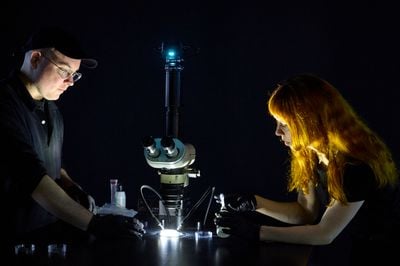
The award’s inaugural winners are Alice Bucknell, Reina Mun, Alfredo Salazar-Caro and Auriea Harvey (pictured). Courtesy of Serpentine Galler
Alice Bucknell, Reina Mun, Alfredo Salazar-Caro and Auriea Harvey have been named the inaugural Serpentine Future Art Ecosystems R&D Fellows. The gallery’s new programme aims to shape the ways emerging technologies are understood and developed, and to connect creative research and development with academia, policy and industry.
Almost 1,000 artists, curators, producers and technologists applied to an open call, and the final four were selected by a jury including artists Cao Fei, Holly Herndon and Rafik Anadol, as well as Google DeepMind chief operating officer Lila Ibrahim.
In a statement, Serpentine Galleries chief executive officer Bettina Korek and artistic director Hans Ulrich Obrist said: “Rooted in an evolving R&D framework, this fellowship creates space for innovation, pragmatic interventions and new ways of thinking about the relationship between technology, society and culture. It reflects Serpentine’s wider approach to working with artists, from research and development, through exhibition and now into new formats, contexts and audiences.”
Each member of the winning quartet receives £10,000 to support their research and development over six months, as well as subsidised travel to London, plus dedicated mentorship and specialist seminars and workshops.
The fellowship is based on the premise that artists contribute to technological change, rather than simply observing it, shaping wider conversations about how new technologies are governed and imagining how life alongside AI will look and feel. The programme is supported by Glass Castle Foundation, a philanthropic organisation that supports artists (and audiences) through early-stage and long-term initiatives.
LA-based Alice Bucknell explores how video games can work as interfaces for understanding complex systems and forms of knowledge. MIT alumnus Reina Mun is a designer and researcher considering machine learning, context-aware systems and dynamic sensory interventions. Alfredo Salazar-Caro founded virtual reality platform the Digital Museum of Digital Art, dedicated to the exhibition, development and preservation of virtual reality and digital artworks. Auriea Harvey’s sculptures blend handmade and digital production.
Serpentine’s Arts Technologies programme uses art and research projects to examine the impact of technology and has supported art and technology artists including judges Herndon, Fei and Anadol and Berlin-basedGabriel Massan. Since 2019, Serpentine’s Future Art Ecosystems programme has considered technology’s interaction with culture and society, publishing research and supporting experiments in AI, game technologies and blockchain.
A respected voice in contemporary art discourse.
Focusing on ambitious storytelling and insightful art-world commentary. Ocula Magazine publishes in-depth interviews, critical essays and timely analysis on the artists, exhibitions and ideas driving the global art world.
Learn more about Ocula Magazine
Showcasing the best of the art world.
Ocula partners with galleries from around the world to highlight their artists, artworks and exhibitions. Gallery membership is by application and invitation, with each member vetted by an independent panel.
Learn more about Ocula Membership
Specialises in the sale of major artworks.
Led by a team with deep ties to the world’s leading auction houses, galleries and collectors. Ocula’s advisory team offers bespoke services to high-net-worth clients from around the world who are looking to acquire the best of contemporary and modern art.
Learn more about our team and services