






Turner Prize Showcase Opens in Middlesbrough: Meet the 2026 Nominees
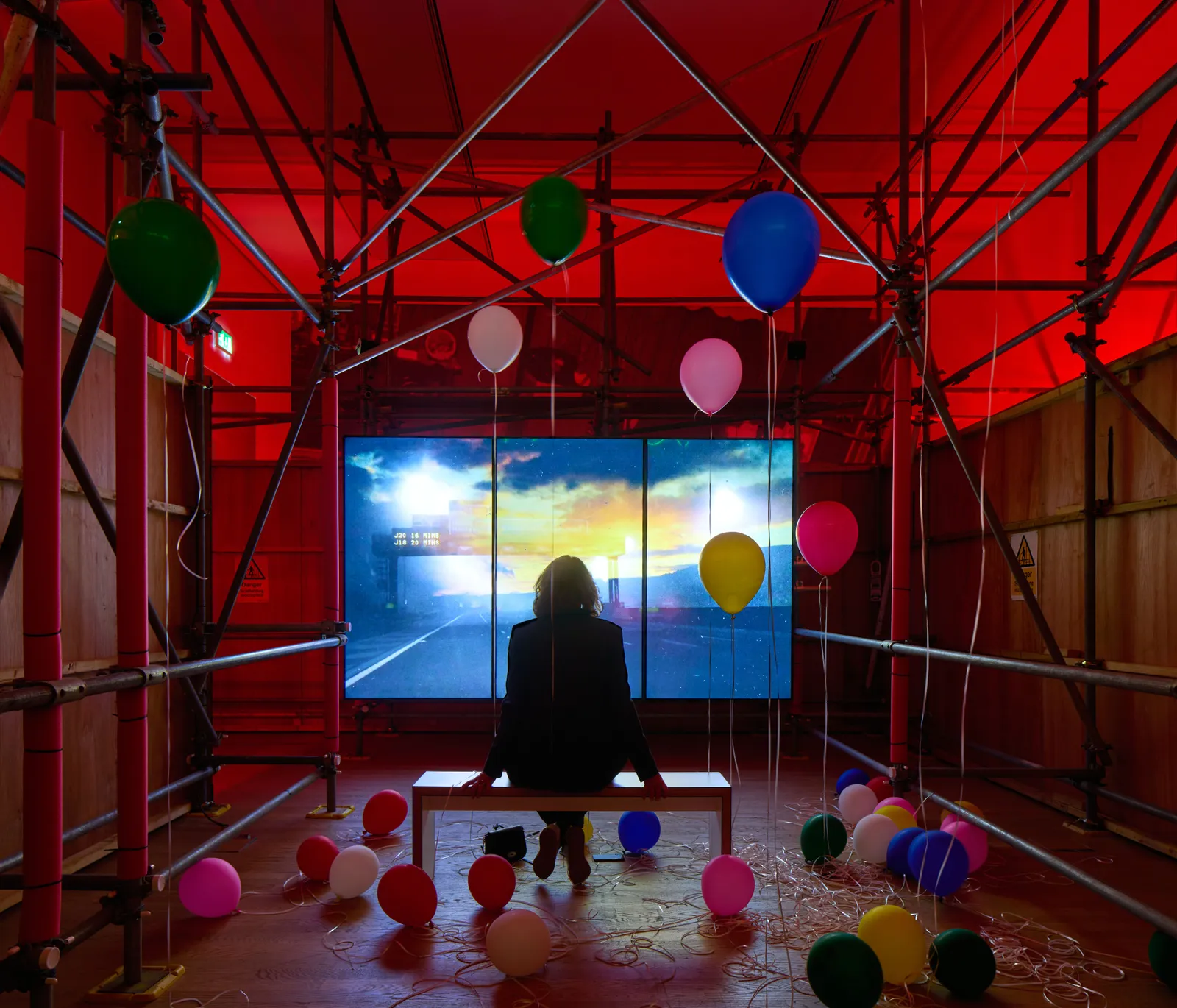
Simeon Barclay, The Ruin, Turner Prize 2026. Installation view at MIMA, Middlesbrough Institute of Art. Photo: David Levene
Ahead of the unveiling of this year’s Turner Prize showcase, both director of Tate Britain Alex Farquharson and Laura Sillars, director of the Middlesbrough Institute of Modern Art (MIMA), emphasised the significance of the exhibition’s northern venue. On display from tomorrow in an industrial North Yorkshire town more than 250 miles from London, the works of the four shortlisted artists will be accessible to communities who, as Sillars put it, will imbue them with “new meanings not seen elsewhere”.
These meanings will likely be as varied as the works themselves, which span steampunk sculpture, political trinkets and a poetic performance that considers a “tin can deliverance” from the bonds of class structure and masculine ideals. Ahead of the show’s opening, Ocula spoke to all four of the artists about their inspirations, installations, and their hopes for how visitors to MIMA—local or otherwise—will connect with their works.
Tanoa Sasraku, nominated for Morale Patch at the Institute of Contemporary Arts, London
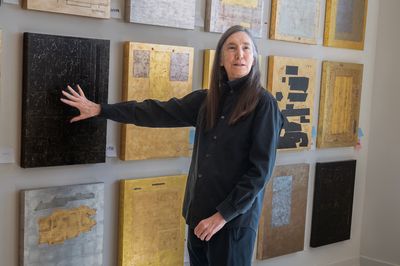
Tanoa Sasraku’s research for Morale Patch began following a move to Scotland in 2024, where she discovered that many of her partner’s male relatives work miles out from the country’s shoreline, on the desolate oil rigs of the North Sea. These men, she told Ocula, are treated in the community as “heroic, almost soldier-like figures”, who are searching for a material that is simultaneously fascinating in its composition and terrifying in its global power.
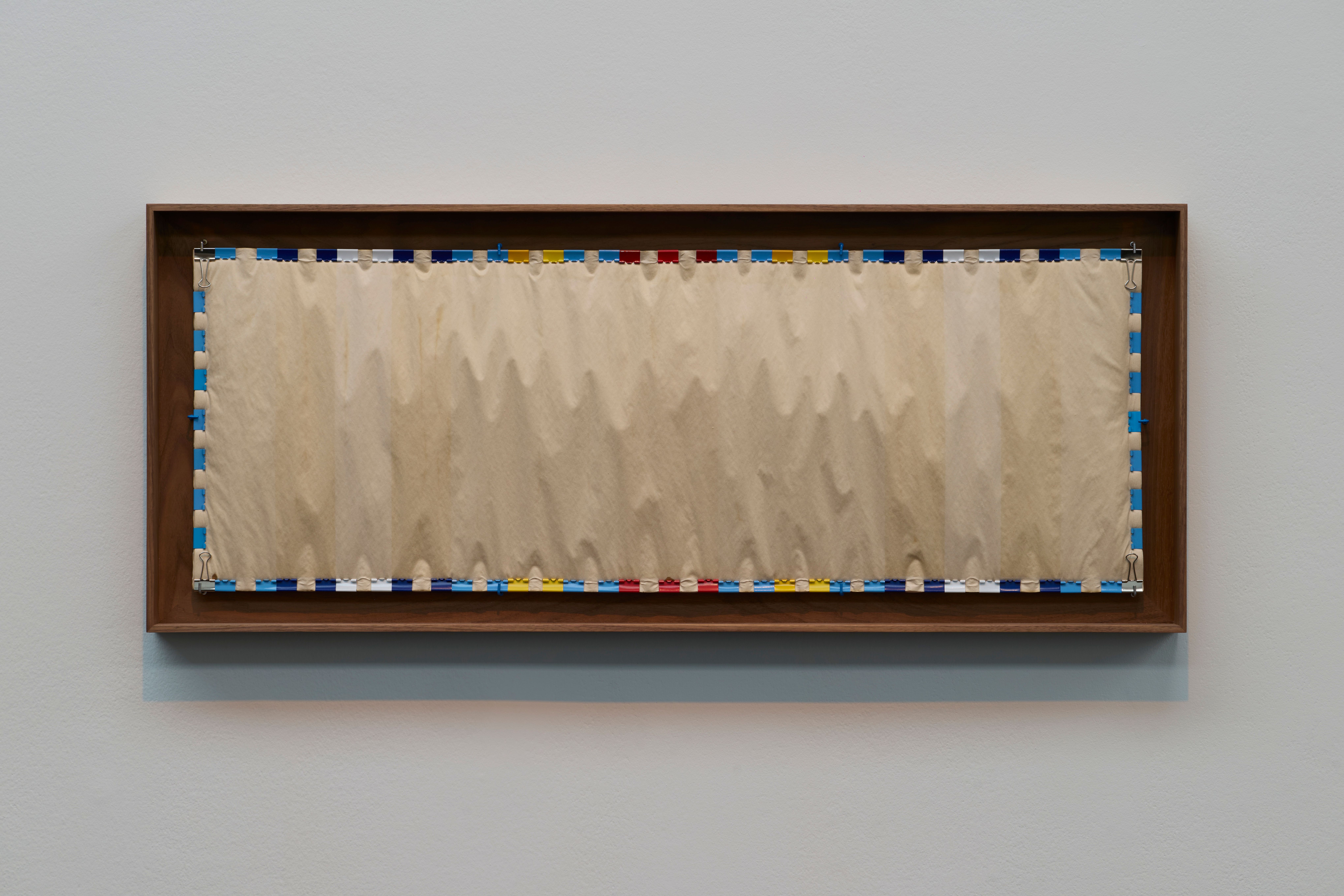
At MIMA, the wall-based Subdued Morale Patch [Prisoner of War] (2025) is not the show’s most immediately commanding work, but it is its most political. Inspired by the colourful mounts of military medals issued to soldiers who fought in the oil-rich Middle East, largely in the years following 9/11, Sasraku used a photographic procedure involving a commercial tanning bed and sheets of blank newspaper to entirely mute the once-vibrant fabrics.
“I became really interested in the collapsing of human suffering into trinkets,” she recalled. “I wanted to see if there was a way that I could suck the vitality out of those medals, to speak to this faded glory and this melancholy attached to trying to tie a ribbon on all of this trauma.”
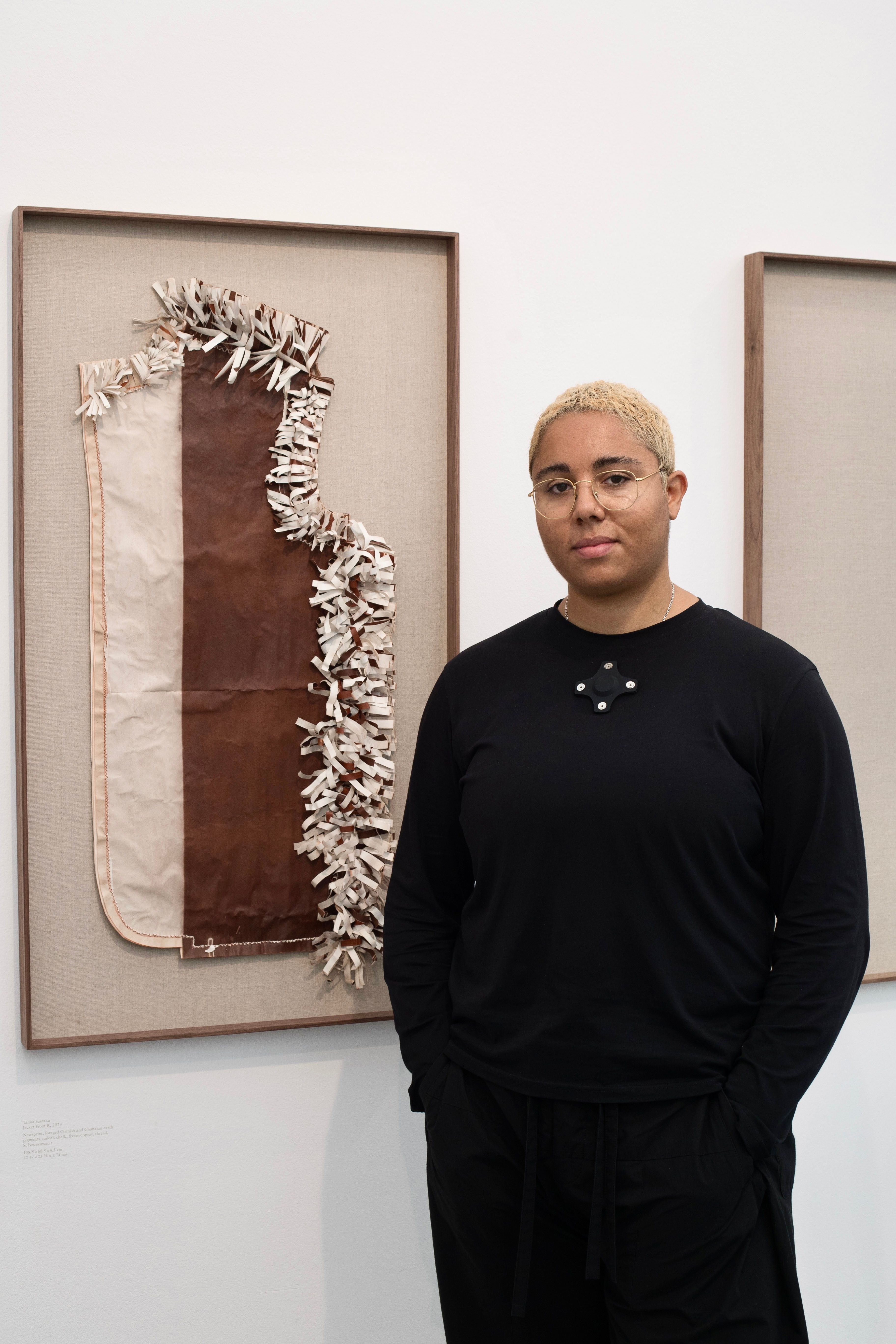
The artist, however, is staunchly opposed to any reading of the work that is focused purely on the geopolitical, or even the environmental. Instead, she hopes that, in a time period increasingly plagued by totalitarianism and patriarchal ideals, Morale Patch will encourage us to consider our individual relationships to desire, possession, protection and power.
“I think art is meant to take us somewhere else that is more spiritual, and that floats above just cerebral engagement,” she said. “I think it has to be about material intrigue and some sort of magic—if you’re skilled enough to generate it in the space.”
Kira Freije, nominated for Unspeak the Chorus at The Hepworth Wakefield, West Yorkshire
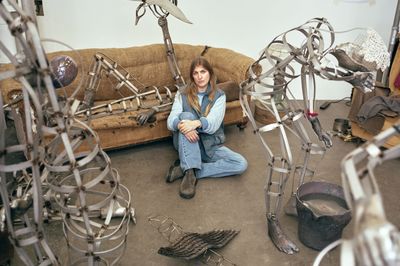
When Kira Freije began building the life-sized figures for Unspeak the Chorus—unsettlingly human-like forms with highly detailed faces, feet and hands attached to bare metal frames, frozen in the midst of unclear pursuits—she did not have a plan. There were no detailed sketches, no lists of materials and no schedule of works. Instead, she trusted that the sculptures she was creating would only, and could only, be conceived within the specific time and space available to her.
She was, however, chasing an emotion, or just “a glimpse of something”, that was a driving force behind the work. “In a way, it’s probably quite important for me that I don’t disclose what emotional thought that was,” she explained. “Because I don’t think that that needs to be fixed, or should be fixed.”
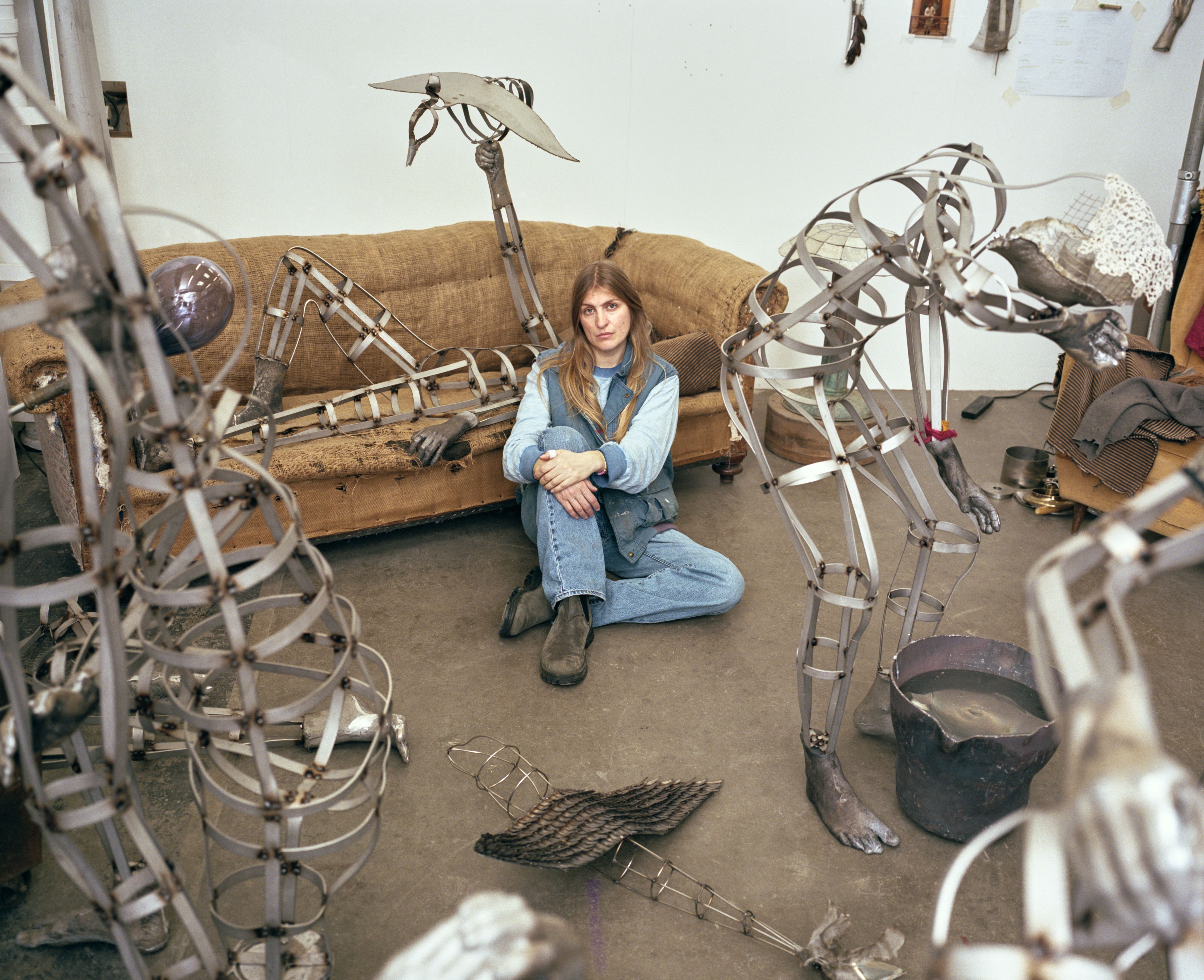
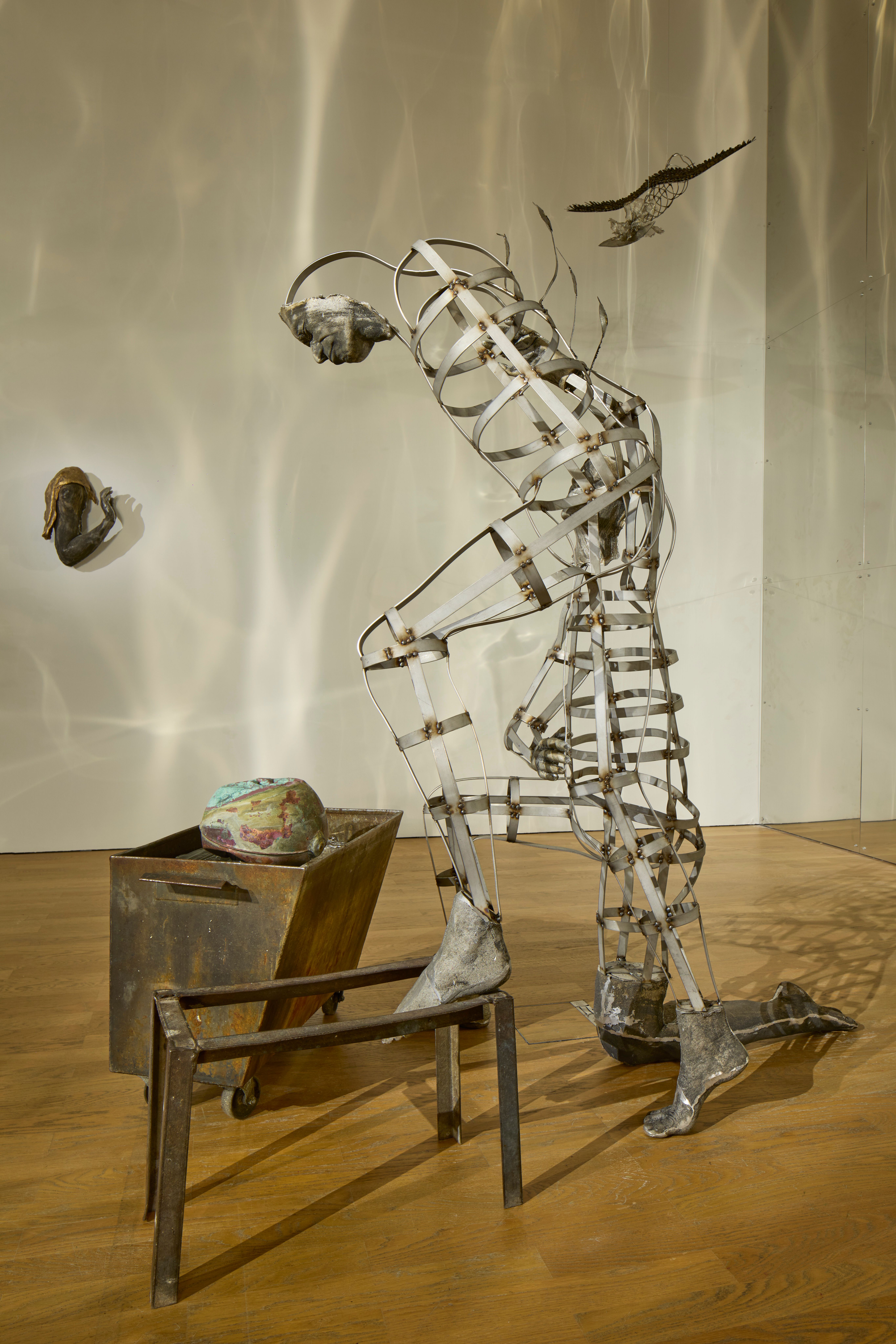
The grouped figures of Unspeak the Chorus do not represent any one experience, the artist argued, but are instead vessels for our own imaginations. Their tableau-like positions were not choreographed but chosen through instinct, and so differ between the two shows—first in Wakefield and now in Midlesborough. At MIMA, the lighting, too, tells a different story.
At the Hepworth, sunlight streamed into the space, allowing impressions of each skeletal frame to shift subtly throughout the day. But at MIMA, spotlights and great sheets of reflective metal have replaced natural light, creating dancing faux-sunbeams that Freije described as a “cosmos”.
“I think with natural light, there’s an aliveness and an unpredictability that I really like,” she said. “But I think the version that we’ve done at MIMA still has that somehow. There’s a movement that comes from all these, if you like, stars, that doesn’t change but still somehow feels like it’s changing.”
Marguerite Humeau, nominated for Torches at ARKEN Museum of Contemporary Art, Ishøj
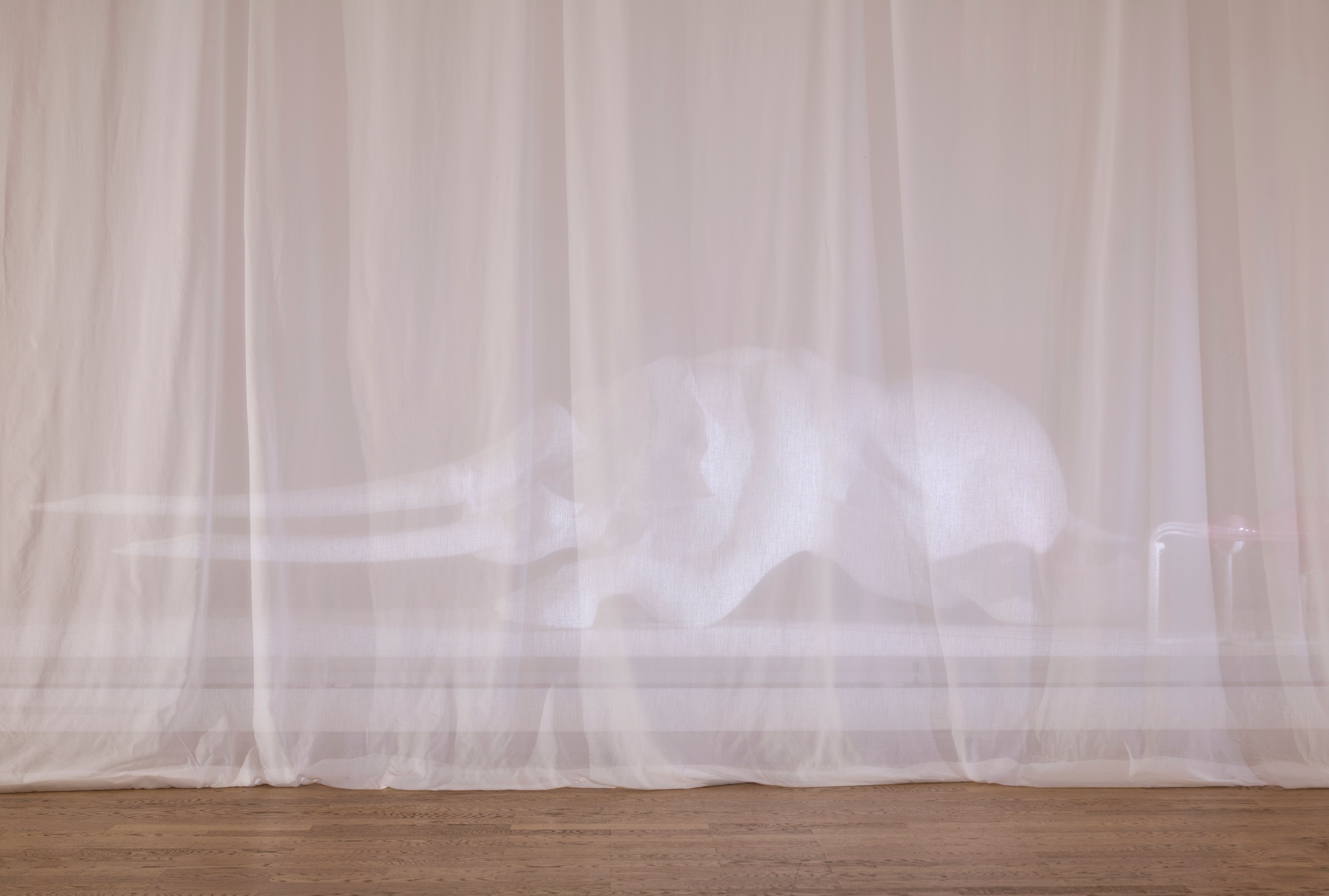
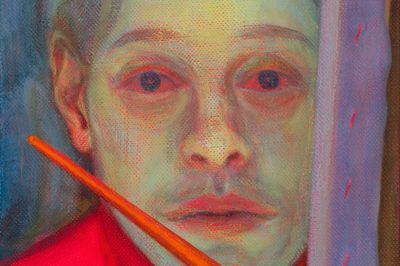
Central to Marguerite Humeau’s presentation is a cavernous and yet intimate space: a chapel of sorts, designed for the quiet contemplation of profound mourning. Behind a thin veil, the vast, pale form of an elephant lies as if lingering in her final moments, while a haunting, trumpeting soundscape laments her passing. Each time Humeau hears the music, it moves her to tears.
“When I was installing it last week at MIMA, there was this moment when, suddenly, everyone went quiet,” the artist recalled from her London studio. “Everyone was listening and no one said anything, but I could feel everyone was quite moved by it. To generate that level of silence during a very busy install, it meant a lot to me.”
This sense of the sacred, though now lighter, more vibrant and accompanied by the scent of beeswax, continues into the adjoining gallery, where tactile, fungus-like sculptures are scattered across a white felt floor. These forms emit their own song, though in one shared voice, posing a question that is central to Humeau’s practice: is there a consciousness that is shared across all life forms?
To create the space, which is intended to evoke a forest-like landscape, the artist thought carefully about the human experience. “I thought the gallery might be really stressed that the white felt would get trashed,” she said. “We’re going to have all these steps of all the humans who have traversed this landscape, and that becomes part of it. In a way, the human completes the work.”
Simeon Barclay, nominated for The Ruin at the Institute of Contemporary Arts, London
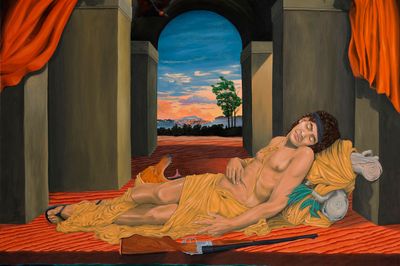
Historically, Simeon Barclay has not been recognised as a performance artist. It is through sculptures and installations that he has come to be known for his world-building and class-conscious cultural commentary. However, he has always been a performer—albeit as a character of his own design.
“When you’re growing up and your father’s making suits and you have to parade in those suits, in that moment you’re aware of people’’s perceptions,” Barclay explained, referencing his father’s work as a tailor, which features regularly in his practice. “You understand how that’s a performance. It’s [given me] a sort of sixth sense for negotiating a world where you can be susceptible to people’s spectatorship.”
Barclay did not apply to the residency where he eventually developed The Ruin—an hour-long, multidisciplinary performance combining spoken word, live percussion and horn—but instead was chosen. The work returns to a time when the M62 motorway was being carved out across the north of England during Barclay’s adolescence, and explores what such an ambitious project meant for the young northern artist and others like him.
When writing the work’s poetic monologue, he imagined that someone else would eventually bring it to life but, in the end, found himself too closely enmeshed in its language, and took to the stage himself at the ICA. “And that’s very different from the performance that we do in our daily lives,” he admitted. “Actually standing there under those lights and being vulnerable in front of that many people.”
At MIMA, The Ruin takes the form of a video intervention voiced by Barclay, installed at the centre of a maze of metal and scaffolding, lit only by red bulbs and the flashing of a neon sign. The staging speaks to Barclay’s wider practice, and to his desire to create both barriers and tension in any gallery he occupies. He explained: “As you work your way around the space, understanding will come to bear—but then, it still might not be what you expected.”
Turner Prize 2026 (26 September–29 March 2027) at MIMA, Middlesbrough





A respected voice in contemporary art discourse.
Focusing on ambitious storytelling and insightful art-world commentary. Ocula Magazine publishes in-depth interviews, critical essays and timely analysis on the artists, exhibitions and ideas driving the global art world.
Learn more about Ocula Magazine
Showcasing the best of the art world.
Ocula partners with galleries from around the world to highlight their artists, artworks and exhibitions. Gallery membership is by application and invitation, with each member vetted by an independent panel.
Learn more about Ocula Membership
Specialises in the sale of major artworks.
Led by a team with deep ties to the world’s leading auction houses, galleries and collectors. Ocula’s advisory team offers bespoke services to high-net-worth clients from around the world who are looking to acquire the best of contemporary and modern art.
Learn more about our team and services