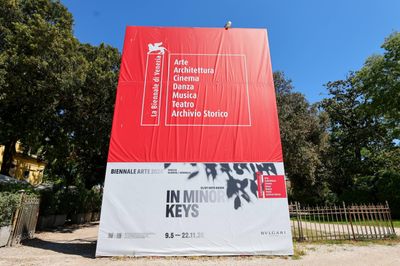
The art world in focus
Subscribe to our newsletter for news and insights on artists, galleries and exhibitions.

Pavilion of India, _Geographies of Distance: remembering home, _**__**61st International Art Exhibition – La Biennale di Venezia, _In Minor Keys. ___Photo: Jacopo Salvi. Courtesy La Biennale di Venezia.
The organisers of the 61st Venice Biennale have today named the national pavilion of India and the American sculptor Nick Cave as the winners of its awards for best national participation and best participant respectively.
The Indian pavilion, based in the Arsenale, presented Geographies of Distance: Remembering Home, featuring works by Alwar Balasubramaniam, Sumakshi Singh, Ranjani Shettar, Asim Waqif and Skarma Sonam Tashi, and curated by Amin Jaffer. Most notably, the show featured Permanent Address (2026), Singh’s recreation of her family’s now-demolished former home in New Delhi, created using suspended architectural fragments rendered in white embroidered thread.
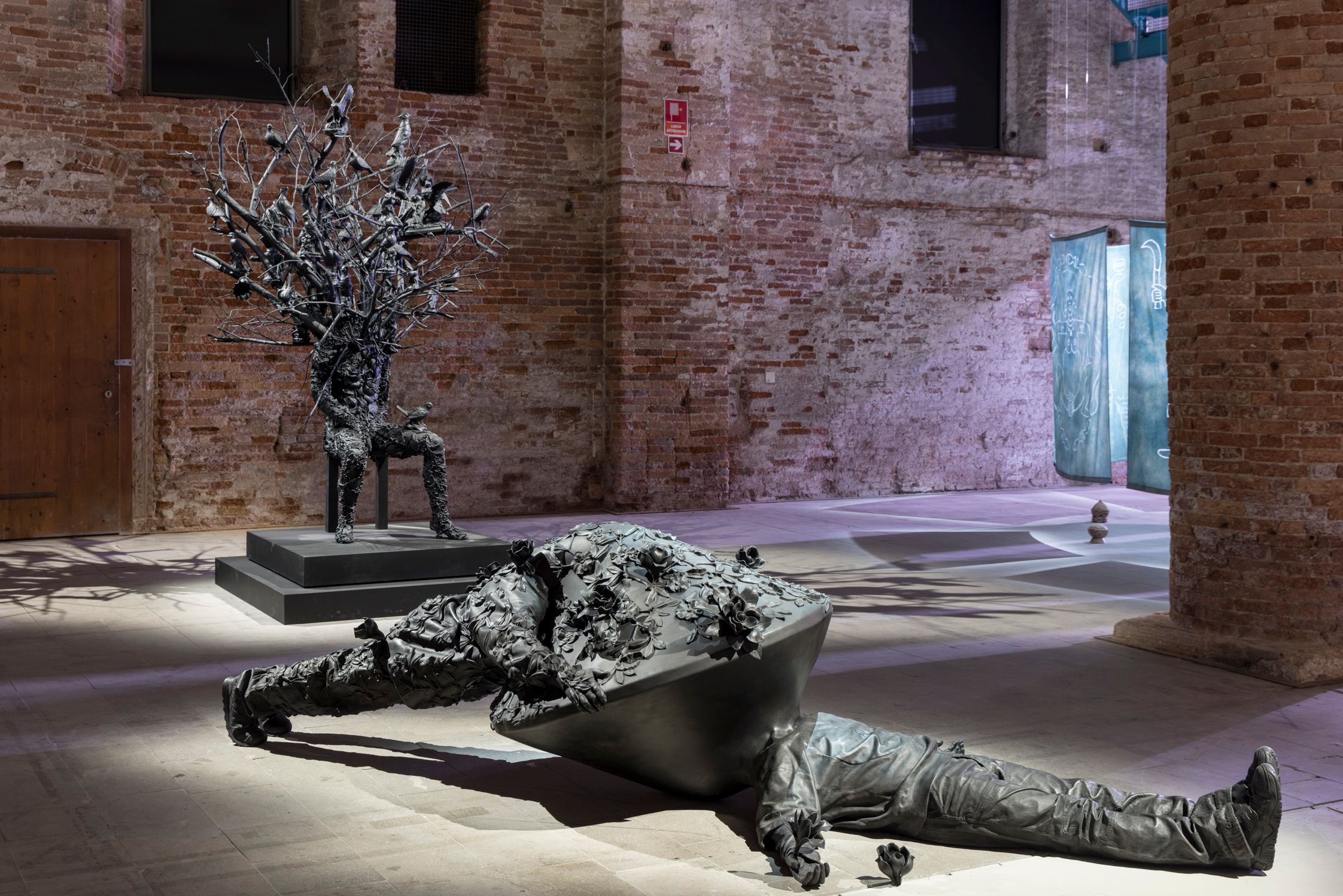
Cave’s sculptures, installed through the biennale’s central exhibition, In Minor Keys, and in areas surrounding the Arsenale, address the stages of grief toward mourning, rebirth, and radical connection. In a departure from the wearable sculptures or ‘Soundsuits’ for which he is best known, Cave’s bronze figures fuse body and nature with gramophones, blooming florals and birds.
The decision follows months of controversy surrounding the awards, after the original prize jury for the traditional Golden and Silver Lions resigned. More than half the artists participating in the international exhibition later withdrew from consideration for the substitute awards, which were chosen by exhibition attendees and known as the Visitors’ Lions.
The news of the winners was shared by biennale organisers without fanfare via a press release earlier today, amid complaints from exhibiting artists of a “disrespectful” process. The announcement described the awards as “giving voice to the public’s choices”.
In an accompanying statement, biennale president Pietrangelo Buttafuoco said: “The exhibition’s audience has seized the opportunity presented by this recognition—the Visitors’ Award—to bring to life an idea once expressed by Pablo Picasso: a painting lives only through the person who looks at it.” He added that the biennale is “brimming with ever-renewed energy”.
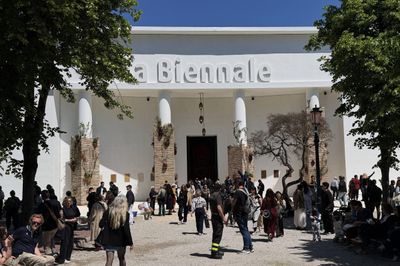
Buttafuoco’s pronouncement follows an exceptional year for the biennale, which ran from 9 May–22 November. Under normal circumstances, following the end of the exhibition, an independent international jury awards the Golden and Silver Lions for the best national pavilions, as well as the best artwork in the biennale’s central show, which unfolds across the central pavilion in the Giardini as well as the Arsenale’s shipyard complex.
This year, however, that jury resigned after the biennale overruled its decision not to consider for the top prize any countries “whose leaders are currently charged with crimes against humanity by the International Criminal Court”. This decision effectively removed Russia and Israel from awards consideration, though both countries were returned to the running following the jury’s resignation.
In response to the jury’s decision, the biennale decided to instead offer two Visitors’ Lions awards—a sort of “people’s choice” prize decided by ticketholders who visited both the Arsenale and the Giardini during the exhibition’s public run. This decision was made, organisers said, in adherence with “the principle of inclusion and equal treatment among all participants”.
In early June, 69 out of the 109 artists, collectives, or estates in the main exhibition, and representatives for 39 of the 100 national pavilions, signed a statement of solidarity with the judges, stating that they did not wish to be considered for the Visitors’ Lions. However, when the biennale closed on Sunday, after attracting a record 714,015 visitors, the vote went ahead.
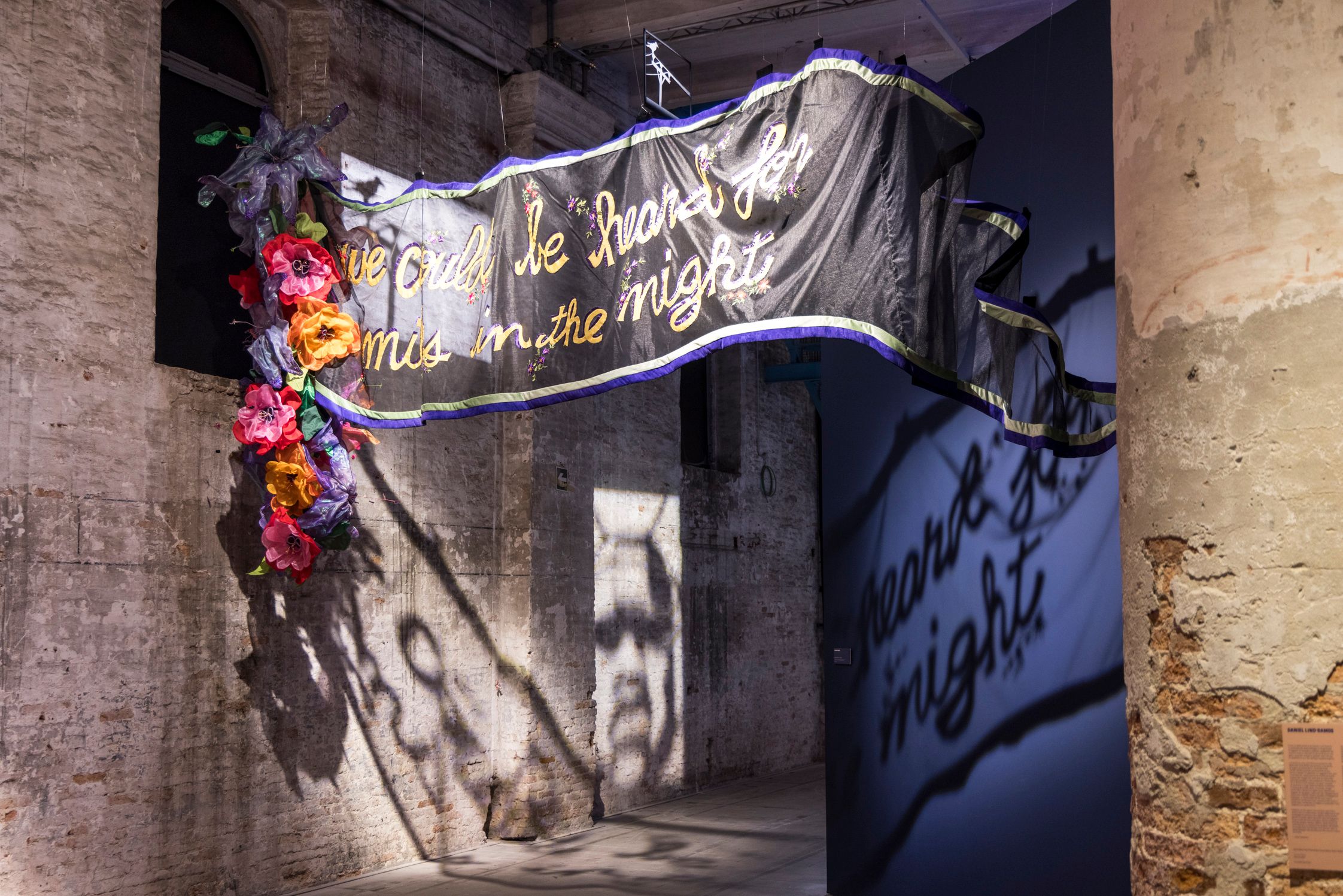
Artist Cauleen Smith, whose multisensory installation inspired by Los Angeles poet Wanda Coleman was included in the main exhibition, In Minor Keys, signed the June statement, withdrawing herself from awards consideration. She told Ocula that she did so in support of the original judging panel, who had suffered from “a lack of support and protection” from the biennale.
Opposition has also mounted against the procedures surrounding the Visitors’ Lions. Smith told Ocula that, while she is unaware of opposition to the overall concept of an audience prize, the Visitors’ Lions were “poorly conceived and even more poorly executed”.
Despite complaints, the names of all artists and countries participating in the biennale were left on the ballots issued to exhibition visitors. The full results of the popular vote will not be published and, biennale organisers confirmed, votes for any artists or pavilions that opted out of consideration were not counted “for the purpose of awarding the prizes”.
A representative for the biennale told Ocula that while it “respects the free decision of artists and participating countries to decline awards”, it kept all names on the ballot to guarantee visitors their “freedom of expression”.
Smith called the decision to take the popular vote but not publish the results “bizarre”, and criticised the voting system as susceptible to bias, in favour of the more readily accessible pavilions. “Pavilions outside the Giardini—how would we even know how many visitors saw those pavilions?” she asked.
Representatives for the Japan Pavilion, which showed artist Ei Arakawa-Nash’s emotional installation of baby dolls in the Giardini, were last-minute additions to the list of artists not participating in the Visitors’ Lions, confirming their decision in a statement issued last week.
In an Instagram post, the pavilion’s artist and curators said they felt the biennale had not set things up to allow “a fair vote” given that more than half of the participating national pavilions are located outside of the biennale’s two principal venues. They also expressed solidarity with the award’s original judges and the statement shared in June by other artists and pavilions.
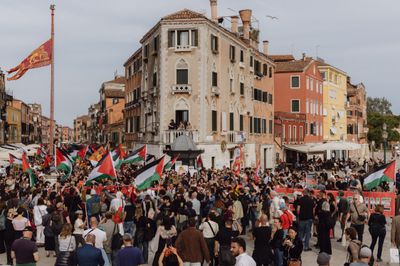
“Although our statement comes near the end of the exhibition, we wish to join these actions in solidarity,” the post read. “We oppose the wars in Gaza and Ukraine.”
In a statement, biennale organisers said that eligibility criteria for the Visitors’ Lions “is consistent with the founding spirit of La Biennale, based on openness, dialogue, and the rejection of any form of closure or censorship”.


A respected voice in contemporary art discourse.
Focusing on ambitious storytelling and insightful art-world commentary. Ocula Magazine publishes in-depth interviews, critical essays and timely analysis on the artists, exhibitions and ideas driving the global art world.
Learn more about Ocula Magazine
Showcasing the best of the art world.
Ocula partners with galleries from around the world to highlight their artists, artworks and exhibitions. Gallery membership is by application and invitation, with each member vetted by an independent panel.
Learn more about Ocula Membership
Specialises in the sale of major artworks.
Led by a team with deep ties to the world’s leading auction houses, galleries and collectors. Ocula’s advisory team offers bespoke services to high-net-worth clients from around the world who are looking to acquire the best of contemporary and modern art.
Learn more about our team and services