





‘Moral Blindness Is Costly’: Ukraine Welcomes EU Cuts to Venice Biennale Funding

Ukrainian politicians have today welcomed a decision by the European Union to withdraw €2 million in funding from the Venice Biennale, following a review of decision-making surrounding the reopening of the Russian pavilion at this year’s edition of the international exhibition.
In a statement shared yesterday, the European Education and Cultural Executive Agency confirmed that, having conducted a legal investigation and accepted a recommendation from the European Commission, it would cancel the grant.
The New York Times reported that a spokesperson for the commission said: “Cultural events, funded by European taxpayers’ money, should safeguard democratic values, foster open dialogue, diversity and freedom of expression—values which are not respected in today’s Russia.”
Responding to the announcement, Andrii Sybiha, Ukraine’s acting minister for foreign affairs, took to X to thank the commission for their “principled decision”. “Moral blindness is costly,” he wrote.
“There can be no EU funding for initiatives that provide a platform for Russia while it continues its brutal war of aggression against Ukraine. As Russian missiles and bombs kill civilians and destroy Ukraine’s cultural heritage on the every day basis [sic], Europe must remain unwavering in defending its values and denying legitimacy to the aggressor on the international arena.”
Ukraine’s deputy prime minister for humanitarian policy and minister of culture, Tetyana Berezhna, also welcomed the commission’s decision. She wrote on X: “Russia has no place at international cultural events while it destroys Ukraine’s cultural heritage and wages a brutal war.”
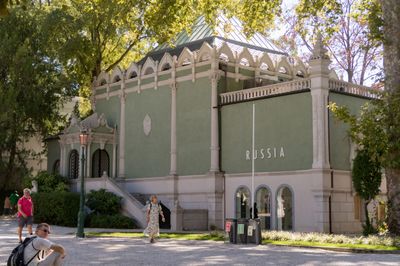
The European Commission first suggested that it would withdraw funding from the Biennale in March, shortly after it was revealed that Russia would reopen its Venice pavilion for the first time since its full-scale invasion of Ukraine in 2022.
In a statement at the time, the commission’s executive vice-president for tech sovereignty, security and democracy, Henna Virkkunen, and Glenn Micallef, commissioner for intergenerational fairness, youth, culture and sport, said Russia’s participation was “not compatible with the EU’s collective response to Russia’s brutal aggression”.
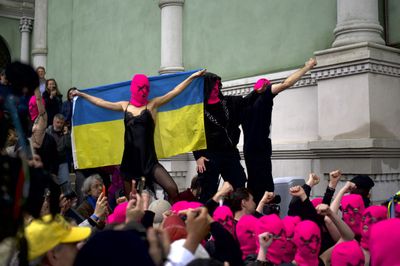
The country’s involvement sparked outrage from international politicians ahead of the Biennale’s opening and led to protests during its preview days in May, when Russia’s pavilion, titled The Tree is Rooted in the Sky, was open to invited guests and media. However, the pavilion did not open to the public and will remain closed for the duration of the Biennale.
The Biennale has long denied that it has the power to prevent countries that have historically participated in the event from continuing to do so, and previously said it has ‘‘verified and complied with all national and international regulations’’ in relation to Russia’s participation on the world stage.
In line with this stance, according to Reuters, Biennale organisers now plan to contest the commission’s decision. Speaking to the news agency, organisers also rejected links between the commission funding and Russia, noting that the money co-financed projects run by its cinema department which “have nothing to do with Russia’s participation”.
“The measure has no significant impact on the budget, accounts or planned and ongoing activities of La Biennale di Venezia, which remain confirmed,” a statement added.






A respected voice in contemporary art discourse.
Focusing on ambitious storytelling and insightful art-world commentary. Ocula Magazine publishes in-depth interviews, critical essays and timely analysis on the artists, exhibitions and ideas driving the global art world.
Learn more about Ocula Magazine
Showcasing the best of the art world.
Ocula partners with galleries from around the world to highlight their artists, artworks and exhibitions. Gallery membership is by application and invitation, with each member vetted by an independent panel.
Learn more about Ocula Membership
Specialises in the sale of major artworks.
Led by a team with deep ties to the world’s leading auction houses, galleries and collectors. Ocula’s advisory team offers bespoke services to high-net-worth clients from around the world who are looking to acquire the best of contemporary and modern art.
Learn more about our team and services