






Alfredo Jaar

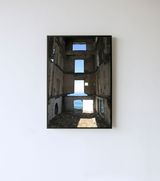
Image: Alfredo Jaar, 2002. Courtesy the artist and Auckland Art Gallery Toi o Tāmaki.


Chilean-born artist, architect and filmmaker Alfredo Jaar is celebrated for his poetic yet unflinching address of global injustices, political prejudice and tragedy.
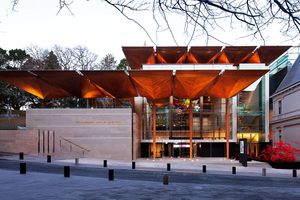
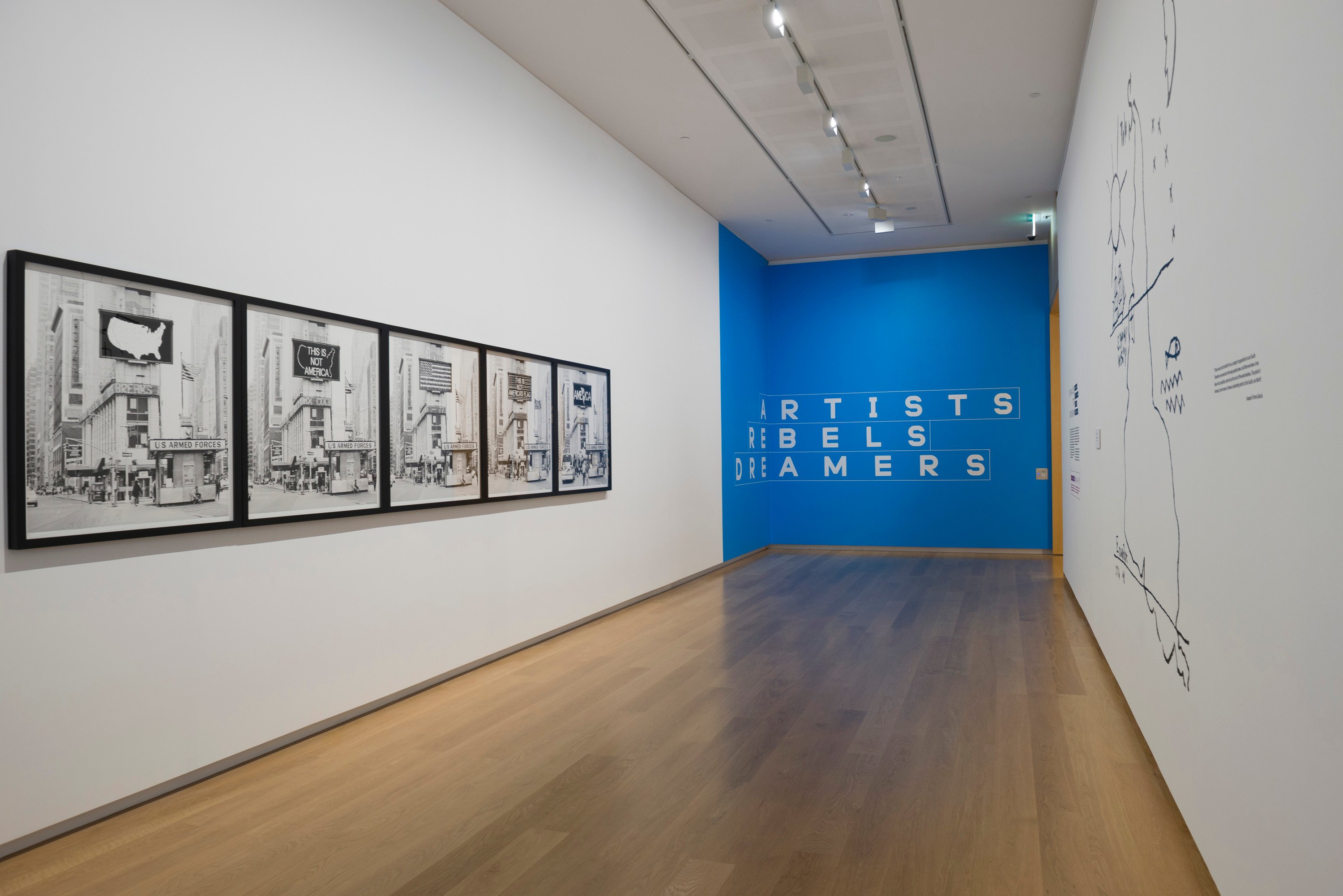
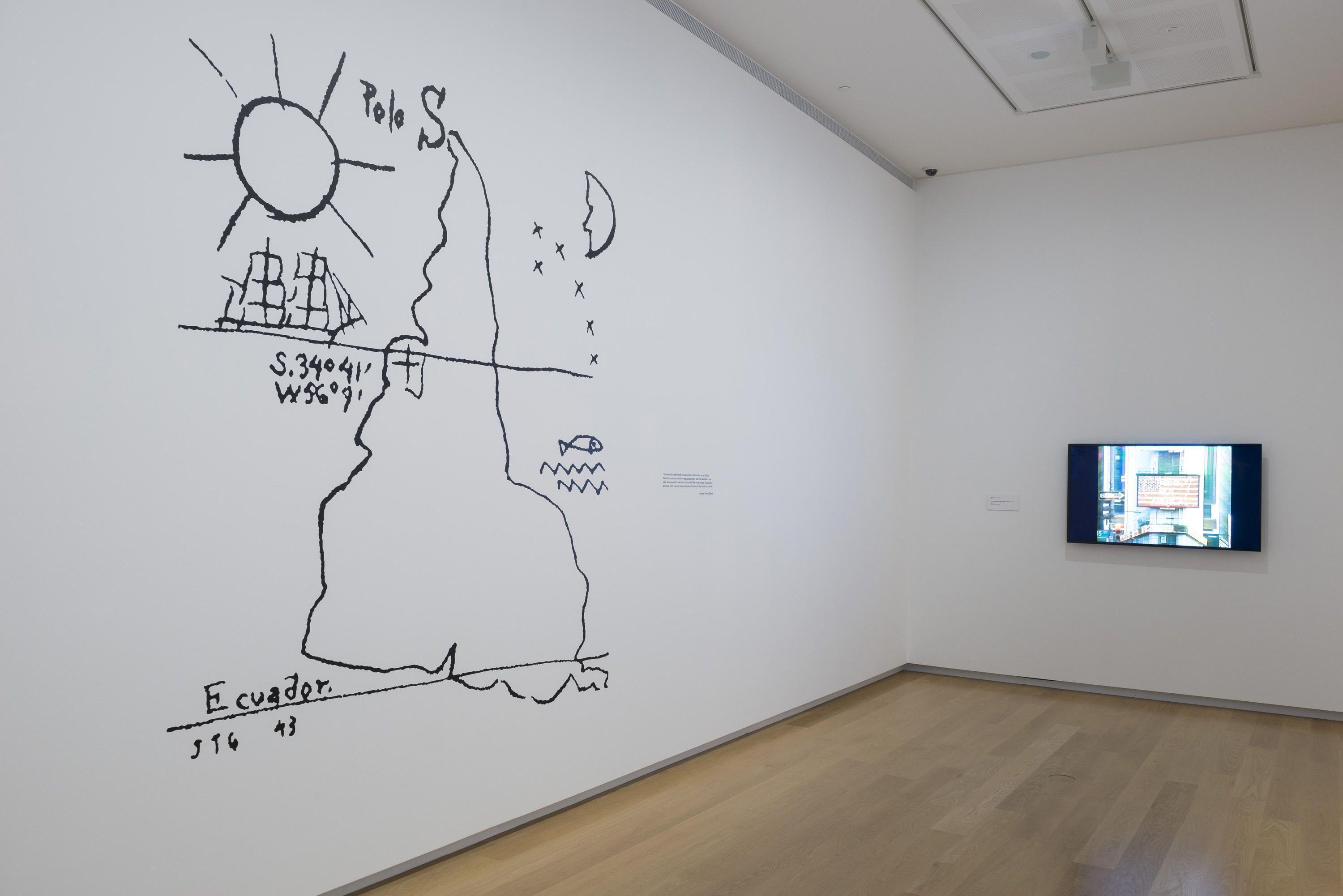
The recipient of numerous awards and accolades, Jaar was recently in Auckland, New Zealand, for the major group exhibition Space to Dream: Recent Art From South America, at the Auckland Art Gallery Toi o Tāmaki (7 May–18 September 2016).
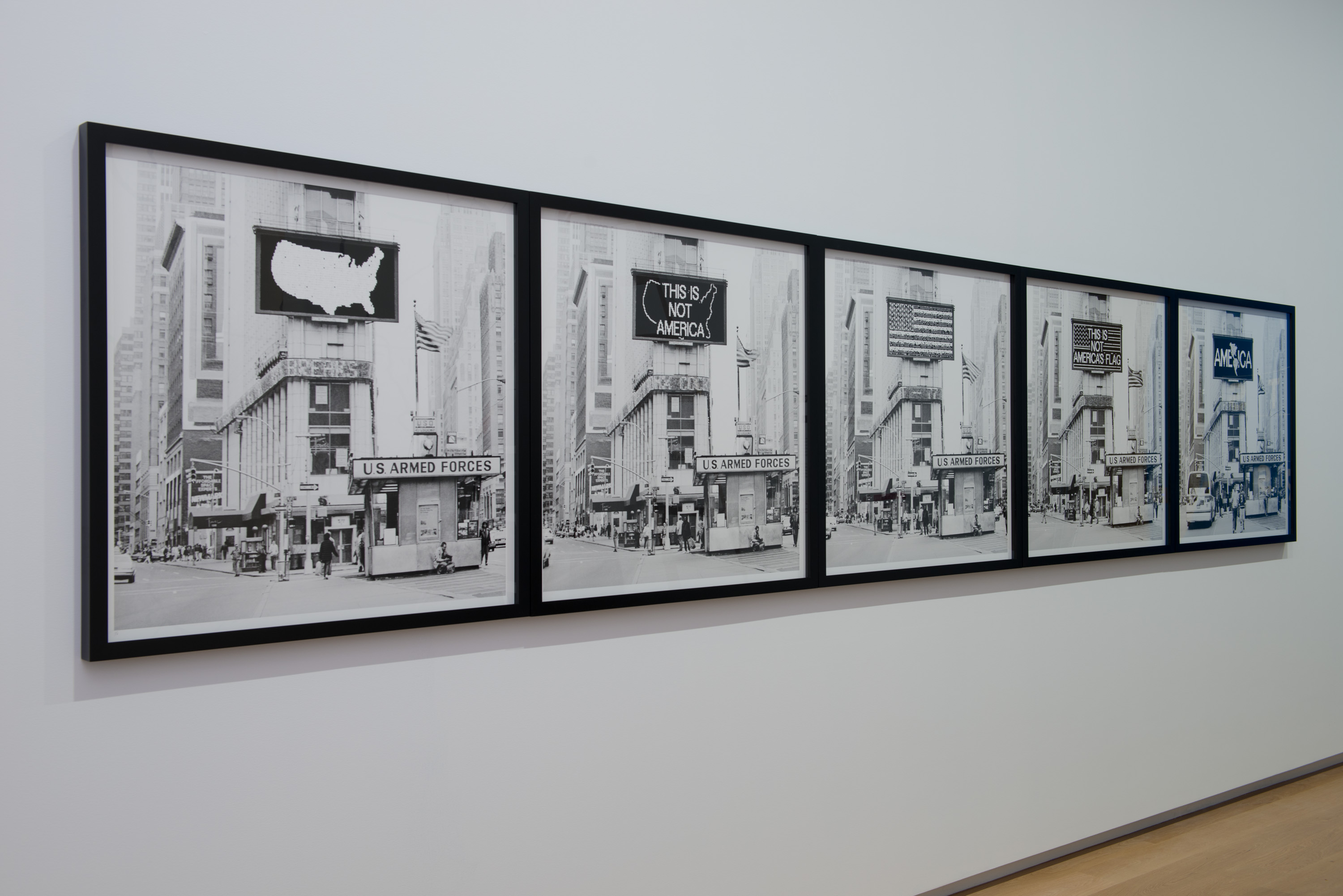
Jaar gave the keynote lecture for this exhibition, during which he discussed works from his extensive career that respond to different political situations including the Fukushima Daiichi nuclear disaster, Norway’s historically restrictive immigration policies, homelessness in Montreal and the Chilean victims of Augusto Pinochet’s regime. Between each of these discussions Jaar repeated a sequence of specific images: photographs of the lifeless body of Aylan Kurdi, the three-year old Syrian refugee who was found dead on a Turkish beach in September of 2015.

Jaar is an artist who is interested in the power of the image to change minds and ideas—something that the photographs of this wretched small boy’s body potentially achieved when they were published in newspapers around the world. As Jaar observed, this media event shifted the European impression of the refugee as an unwanted interloper to person who is in desperate need of humanitarian aid.
Jaar met with Kate Brettkelly-Chalmers to talk about these photographs, the plight of immigrants and the artistic memorialisation of global tragedies.
KBC: Your artist lecture was unusually affecting and emotive, especially with respect to the photographs of Aylan Kurdi. Can you talk about your approach to this image in the context of a public lecture?
AJ: I lecture quite often—maybe some 30 times a year, all around the world—and I have learned with experience to read the audience. Every one of my works and every single project of mine implores them to ‘stay with me,’ ‘give me a minute of your time,’ ‘let me tell you something.’ And this is the same with my lectures. Over time, I realised that I had to create a system where the audience is taken with me: where they are truly listening and looking. This is something that can be difficult to do in contemporary society. We live in difficult times and difficult worlds where everyone is centred on their own little problems.
I work with the politics of images. Society does not teach us to look at images. They teach children to read—words, sentences and vocabularies—but not to read images. I am interested in this issue. I want to make people ‘see.’
KBC: Is this why you repeated the sequence of images where Kurdi is lifted from the beach about five or six times throughout the course of the lecture? Were you gauging how the audience responded each time they were shown the same very difficult image?
AJ: For me, repetition is not just repetition. With every single reiteration of that image the audience sees something else—they see another detail. The vision becomes fuller as they see it again and again. On the one hand, I was mimicking what the media has already done with this image. But on the other hand, I was hoping that by showing the further details and the wider context of the photograph, that people would finally see it. In actually seeing it, you start thinking about the meaning of the image: What does it mean for us? What is the relationship of that boy to me... ?
KBC: Many of your works are memorials to a specific historical event, such as the recent Fukushima disaster. But you also develop works that draw attention to urgent political situations or conditions—the plight of Syrian immigrants is a good example. Is this process of ‘memorialisation’ something that has always interested you?
AJ: It is not that I am just a memorial specialist—you know, I can be funny too! But all of my work is about context. I have never created a single work that is just a pure product of my imagination or me as an artist in the studio. When I’m interested in a certain issue, I travel to a place and I investigate—I react. I started travelling around the world and reacting to different tragedies because this was the context I was in... I could not ignore these things. For instance, I went to Hong Kong to look at the refugee camps of Vietnamese people that were escaping after the war.
They were called ‘boat people’ and I did a series of work about them. Then I went to Rwanda and I did a project about the Rwandan genocide. I was also invited by the government of Chile to create a memorial for the victims of the Pinochet regime. Then I was invited to Fukushima to do the memorial you are referring to. So, many of my works, one way or another, are memorialising certain people and certain tragedies...
KBC: Yes, some of these projects are temporary and some are permanent, such as the Santiago memorial to Pinochet’s victims...
AJ: As an architect who makes art, to do a memorial is a beautiful challenge. To make a permanent work that will speak to this generation and then future generations about an event. To have the capacity to trigger memories and emotions about an event that might be far removed from its original context. To be able to trigger different emotions is very difficult to do, but it is a beautiful challenge. In saying this, it can be very painful because the situation itself is difficult, but as a professional challenge it is extraordinary.
KBC: You are careful to remind people that you are, in your own words, ‘an architect who makes art’ and not an art school trained artist. How did you become an architect and what role does this background play in your current art practice?
AJ: I always wanted to be an artist, but my father thought it was a very bad idea. It was Chile; it was the seventies; and it was wholly unthinkable that I could make a living as an artist. So when I announced to my father that I wanted to be an artist, he convinced me that perhaps I should study architecture. And when I discovered architecture I was the happiest man on earth.
KBC: You were happy? I thought you wanted to be an artist!
AJ: No, I was always very good with my hands, and I did very much want to be an artist. But when I discovered architecture I thought: this is extraordinary! And so when I moved to New York I worked as an architect for a few years to finance my art. Instead of being a waiter or a carpenter like most artists at the time, I was an architect and I had a good living. I thought this was a perfect arrangement—that I would live this double life of being an architect during the day, and an artist at night. And I do think like an architect: I look at space not only as a physical space, but also as a cultural space and a social space and a political space. So, architecture really did change my life and I am very thankful for that. —[O]
Main image: Image: Alfredo Jaar, 2002. Courtesy the artist and Auckland Art Gallery Toi o Tāmaki.






A respected voice in contemporary art discourse.
Focusing on ambitious storytelling and insightful art-world commentary. Ocula Magazine publishes in-depth interviews, critical essays and timely analysis on the artists, exhibitions and ideas driving the global art world.
Learn more about Ocula Magazine
Showcasing the best of the art world.
Ocula partners with galleries from around the world to highlight their artists, artworks and exhibitions. Gallery membership is by application and invitation, with each member vetted by an independent panel.
Learn more about Ocula Membership
Specialises in the sale of major artworks.
Led by a team with deep ties to the world’s leading auction houses, galleries and collectors. Ocula’s advisory team offers bespoke services to high-net-worth clients from around the world who are looking to acquire the best of contemporary and modern art.
Learn more about our team and services