





Mother Land
As the Minas Gerais‑born artist holds solo exhibitions in Venice and Veneza in Brazil, he reflects on the places which have inspired the stories of trade, history and family in his work. Save to My OculaNestled between the hills of the Palmital neighbourhood on the outskirts of Belo Horizonte, a city in the southeast of Brazil, there is a grey metal gate framed by a fruit tree, bearing a blue-and-white sign printed with the words: “Paulo Nazareth: Arte Contemporânea/LTDA.” The “LTDA” gives the artist’s name an official aura, winking towards the way artists increasingly operate as enterprises. However, the name in fact refers to an artistic persona; the Brazilian Afro-Indigenous artist’s birth name is Paulo Sérgio da Silva. He adopted his grandmother’s first name, Nazareth, as his surname in homage to her story. During the 1940s, shortly after his grandmother gave birth to a daughter (the artist’s mother), she was involuntarily interned in a mental institution and was never heard of again by the family.
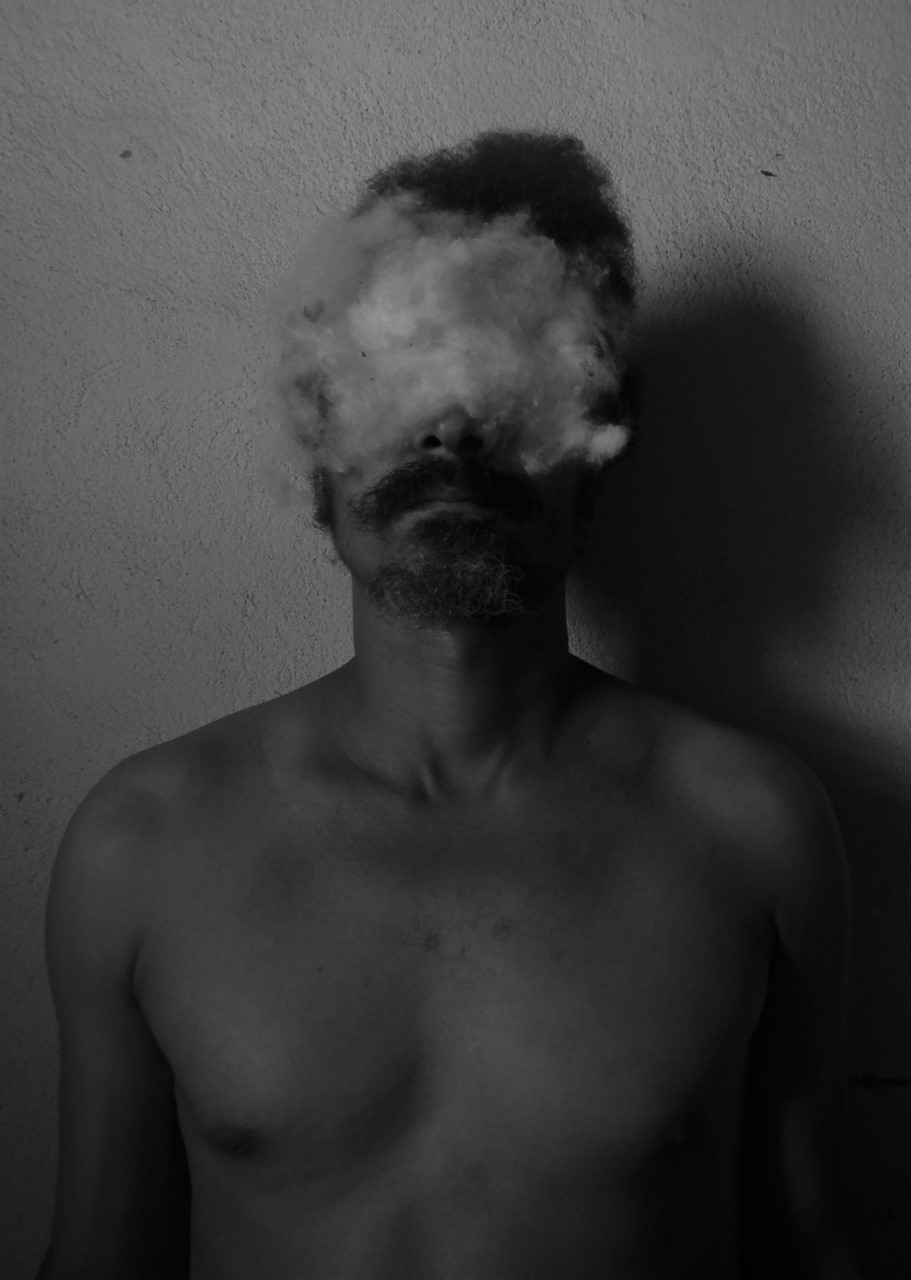
“I talk about art as a precept, as something that needs to be done”
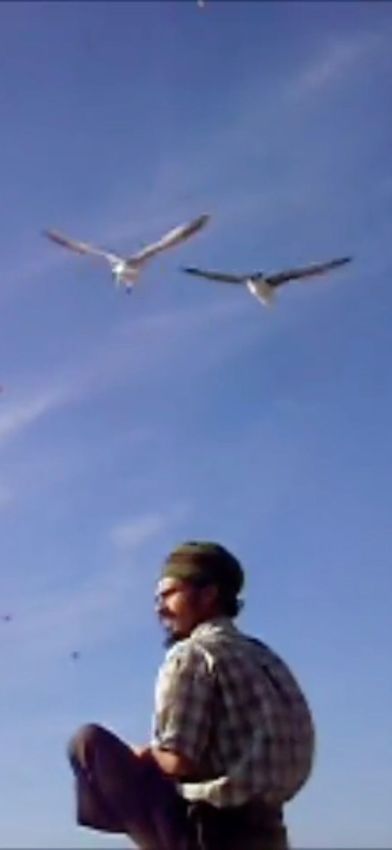
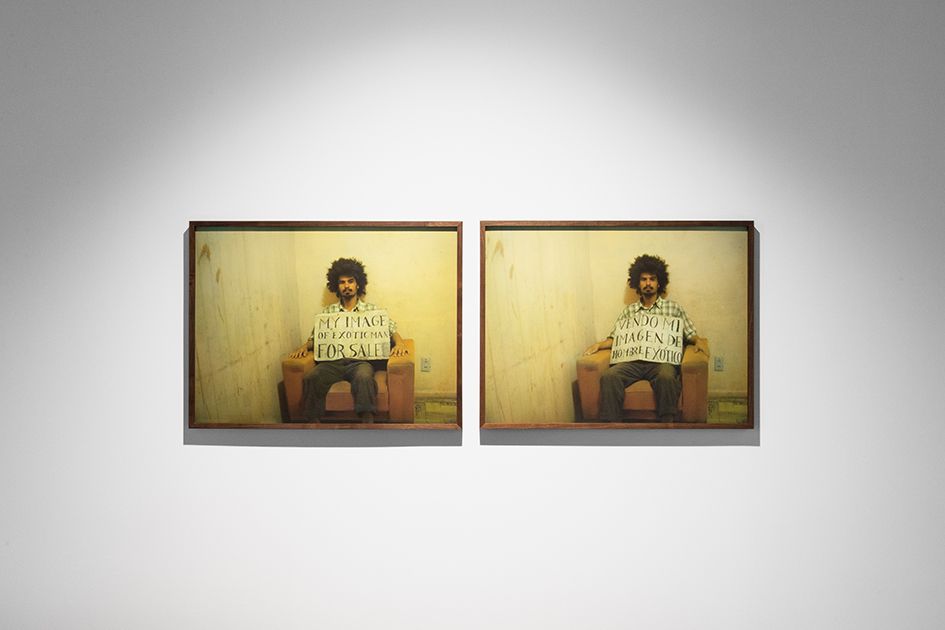
Nazareth’s decision to take his grandmother’s name is also an expression of his interest in language, identity, territory, mercantile relations, resistance, racial violence and colonial cartography as traced across the Americas, the Caribbean and the African continent. It is also indicative of the way Nazareth has bound his artistic practice up with his life. “I talk about art as a precept, as something that needs to be done,” he says. His most famous work saw him travel the thousands of kilometres from Brazil to the US by bus and foot, either barefoot or in flip-flops, without cleaning his feet, so that he carried the dust and soil of his journey into North America. He termed it a “residency in transit” and documented it in a series of videos, photographs and performances titled News from the Americas (2011–2012), some of which on display in his current exhibitions in Brazil and Italy. “To live walking is to occupy territory,” he says, speaking with characteristic lyricism.
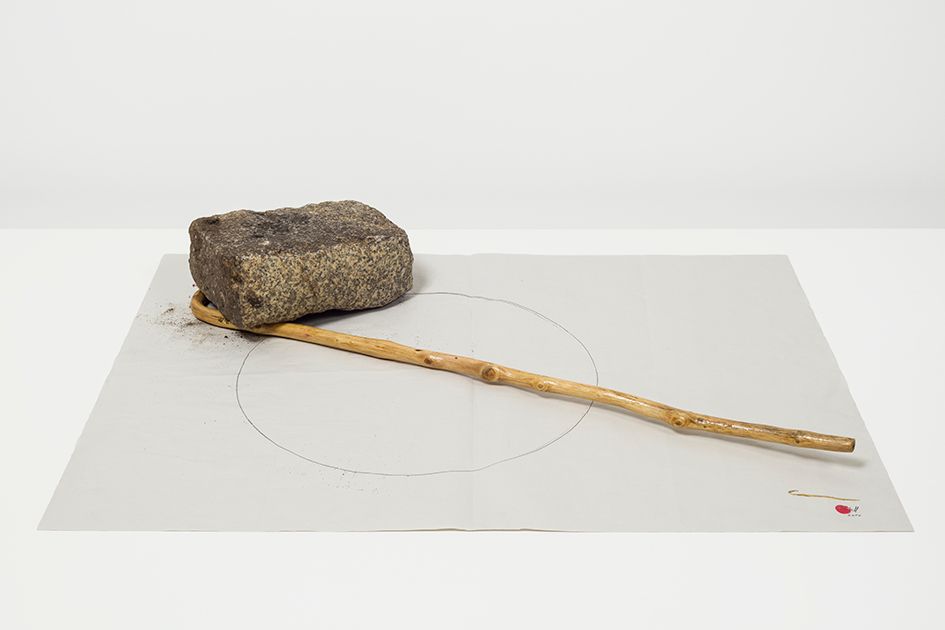
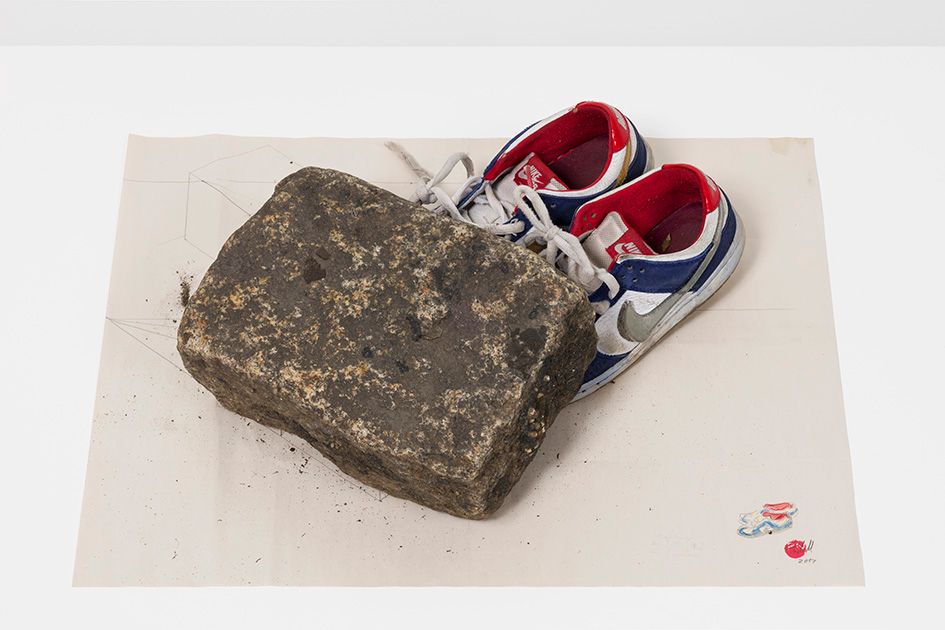
We are meeting on the occasion of two significant exhibitions of Nazareth’s work. The retrospective exhibition Algebra at Punta della Dogana in Venice, recently opened to the public, is a showcase of 20 years of his artwork, spanning photographs, works on paper, objects, painting, video and installations. It is titled Algebra after the Arabic “al-jabr”, a term used by the ninth-century Persian mathematician Muhammad ibn Musa al-Khwarizmi to mean “the reunion of broken parts/bones”, which eventually led to what we know as algebra, and latterly to the algorithm. “The title of the exhibition is an artwork in itself; it’s an incantation, a blessing,” says Nazareth. “Algebra has always been important, even more so now with the algorithm, the many truths, the lies that become truths, the manipulated truths. It’s fundamental in understanding the construction of the contemporary world”.
“Algebra has always been important, even more so now with the algorithm, the lies that become truths”
Nazareth, who has vowed not to go to Europe in person before he’s been to all African countries, is also staging a parallel exhibition with the same title in the Veneza neighbourhood of the Brazilian city of Ribeirão das Neves. In that the Brazilian and Italian places have similar names, the pairing serves as a commentary on the politics of territories considered “peripheries” (Veneza) or “centres” (Venice). During the exhibition openings, simultaneous performances anchored in the Brazilian Bumba-Meu-Boi tradition (theatre, music and dance based on the death and resurrection of a prized ox) occurred in the streets of Venice and Veneza, linking the “periphery” and “centre” and establishing a connection between the places through Nazareth’s work. During my meeting with Nazareth, we are going to visit sites in his home state that are important to the exhibitions and to the story of Nazareth’s life and work.
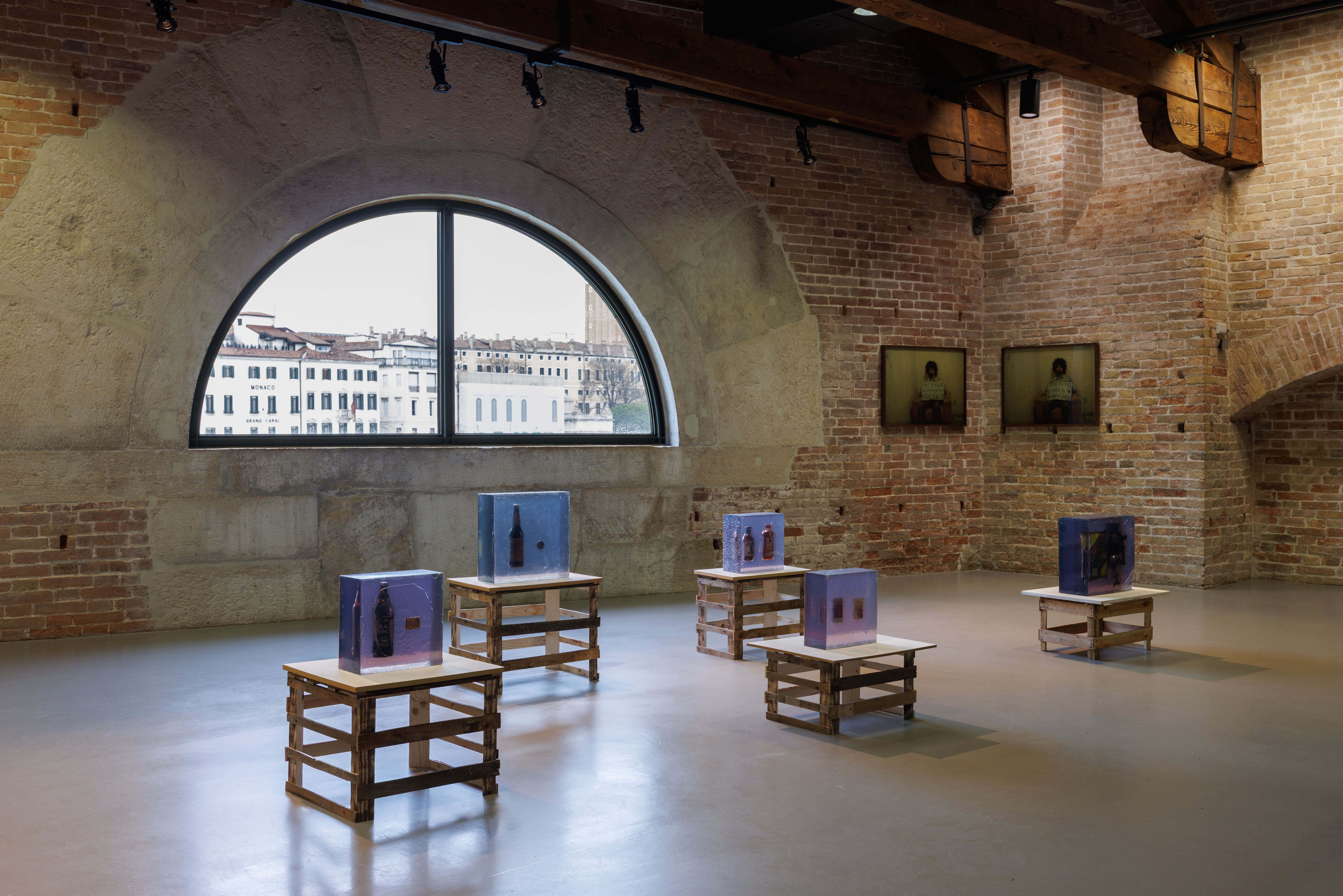
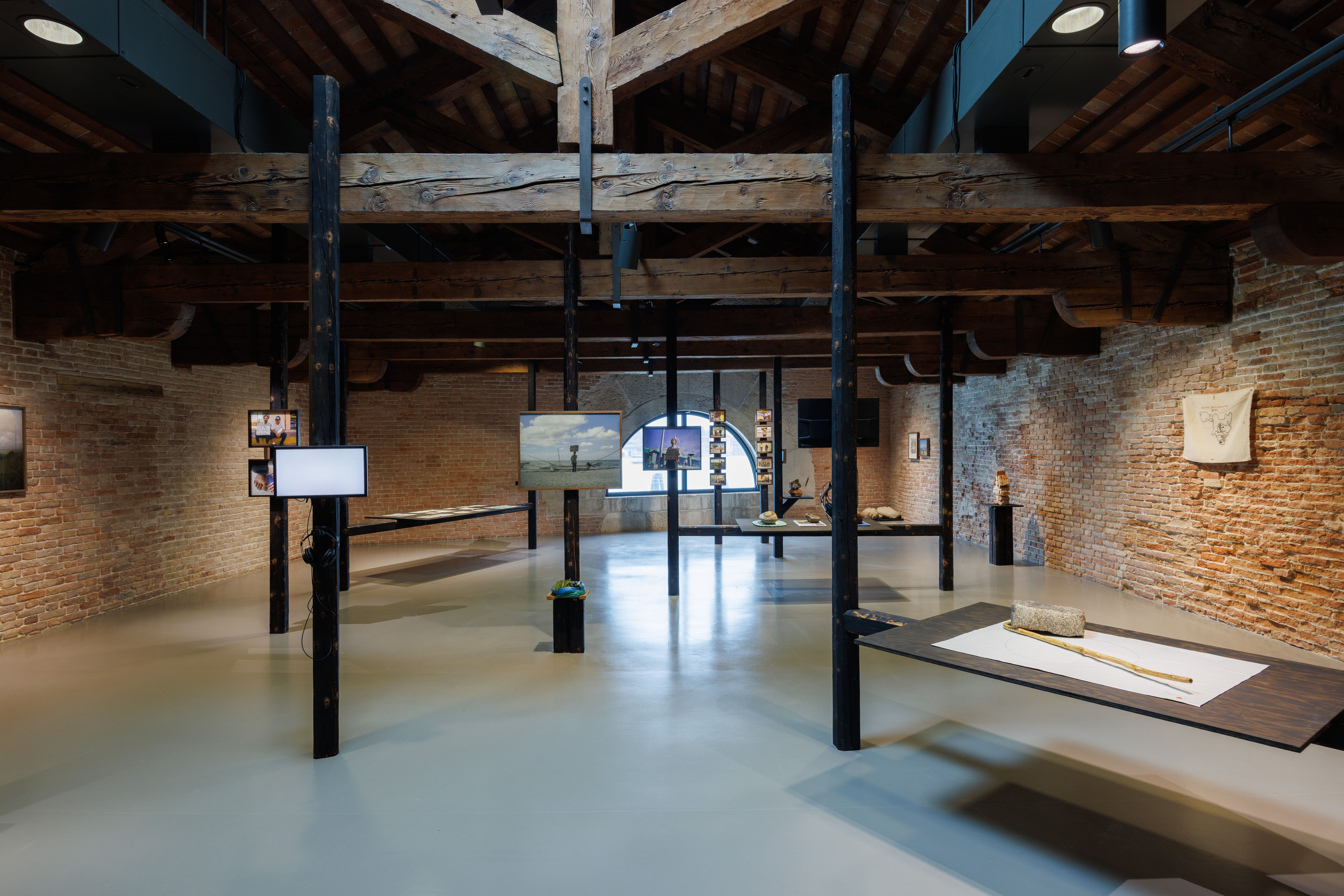
Paulo Nazareth was born in in the city of Governador Valadares, 300km northeast of Palmital, where the artist, his mother and siblings moved in his youth. Brazil was under a military dictatorship from 1964 to 1985 which saw the economy tank and inflation rocket. Nazareth, born in 1977, spent years of his youth laboring as a cleaner, trading in street markets and handling livestock. He started to fix up broken dolls with chewing gum and twigs, and was introduced to the idea of art by a master craftsman called Mestre Orlando, who made mystical ship figureheads called carrancas. Orlando taught Nazareth woodwork and made a play on words in Portuguese: “He told me that ‘artesanato’ (craftsmanship) is ‘arte-nata’ (innate art).” Nazareth went on to study linguistics and fine arts in his home state and, to date, much of his work explores wordplay, language and found objects.
When he greets me, Nazareth is barefoot, and a gentle smile plays across his face. He invites me into “Casa da Mãe” (Mother’s House) in Palmital, where his mother still lives and where some of his artwork is made. The house is filled with his family history. We walk past a star fruit tree in the courtyard that was inherited from his grandfather; in one of the rooms, the artist’s mother is embroidering one of the 90 pieces of white cotton that comprise the textile installation Amor de Mãe (Mother’s Love) (2026), which is exhibited in Venice. Each piece of cloth has “mother’s love” embroidered on it in a different language. The idea of the “mother”—Nazareth’s own and others’—permeates many of his artworks. The ongoing installation, Mama Monument to the World’s Mother (2023–), which is also on show in both the Brazilian and Italian exhibitions, is a collection and archive of visitors’ drawings of their mothers. Elsewhere in the house, there are things he has gathered or been given over the years: a collection of walking sticks and trinkets in one corner; flip-flops hanging from a bookcase.
![Paulo Nazareth, Sem Titulo [Encruzihada ] (2022), plastic and rubber from flipflop.](https://files.ocula.com/rf/d8/d8b274bc-aad0-46fa-a39e-fdc4fccae2a3/mwpnz.jpg)
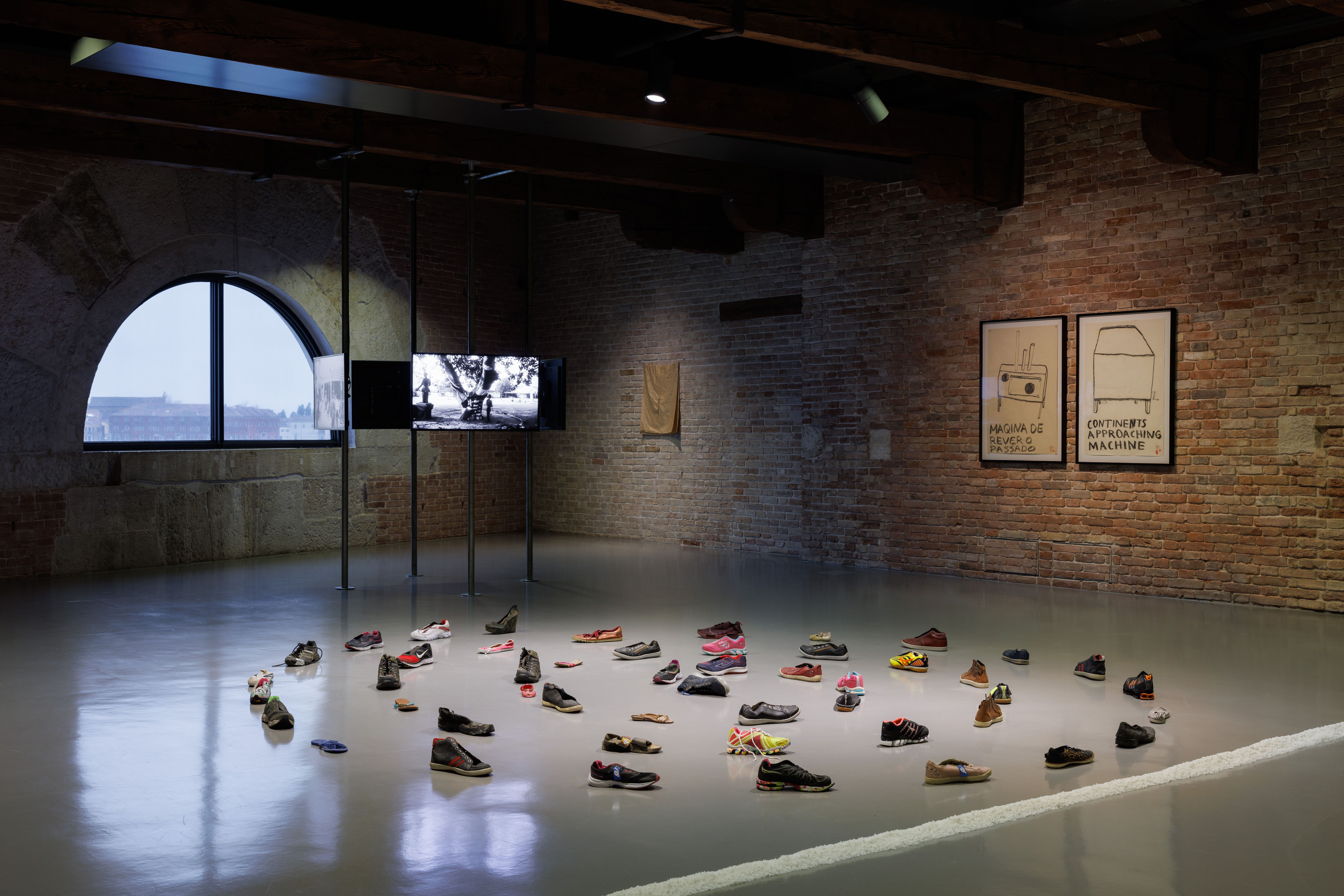
In the Candomblé and Umbanda faiths, which originated with enslaved Africans in Brazil, the spiral is associated with the transition between the spiritual and physical worlds and non-linear time. It’s a symbol that appears in his work Saci (2020), composed of 49 single shoes laid out on the ground in a spiral shape. Gesturing to Casa da Mãe, Nazareth says, “this is the centre of the spiral”.
From Casa da Mãe, Nazareth’s brother drives us 10 minutes to another site, where the sign on the door reads: “Casa Borun Povo de Luzia” (“Borun House, Luzia’s People”). The door leads to a plot with a viewing platform and the cabin from a truck. Nazareth created this site in honour of his family’s ancestral ties to the Borun Indigenous people, and organises different types of events here. “I often think that the people of Luzia may have come up here to look at the ‘beautiful horizon’,” says Nazareth, (Belo Horizonte translates in English to beautiful horizon). Casa Borun is situated at a transitional spot where two different Brazilian districts meet—to the artist, it’s a place where different times and peoples also collide: those of a pre-colonised Brazil, and that of the Italian immigrants who came to the region in waves from the end of the 19th century and who were fundamental in building the state’s capital, Belo Horizonte. “Borders are places of tension,” he says, as we look out at the view. It brings to mind his work Sem Titulo [Zé Pelintra na Encruzilhada] (2022) (Untitled [Zé Pelintra at the Crossroads]), which is on show in Venice. It features a figurine of a Black spirit guide dressed in a white suit standing at the juncture of two flip-flop soles cut into shapes resembling the African and South American continents.
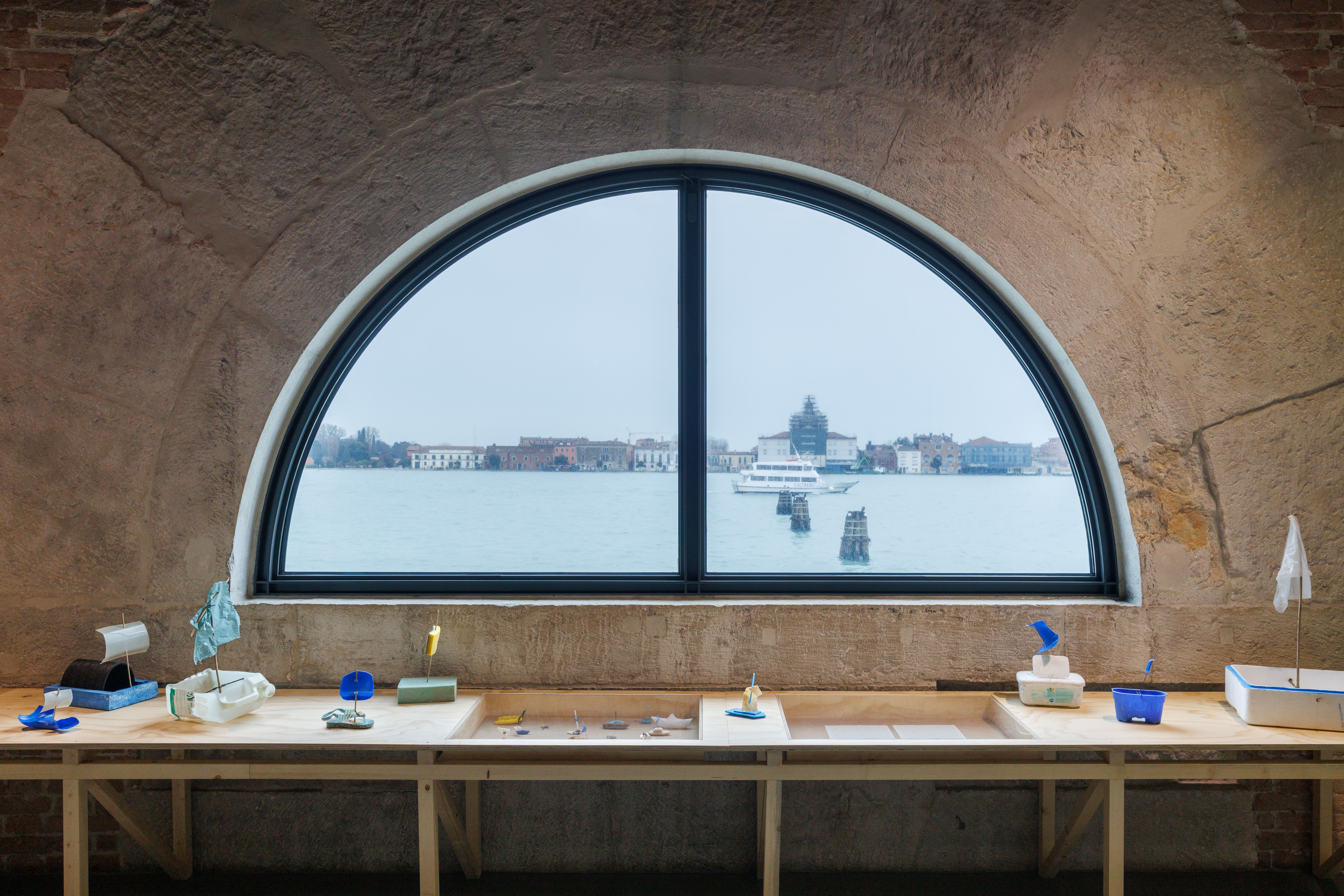
A 30-minute drive brings us to Veneza and Casa Mundo (World House), a simple building perched high on a hillside where the current Veneza exhibition is on show. Staring out through Casa Mundo’s wooden casement windows as the sun sets and golden light spills over the landlocked state of Minas Gerais, Nazareth tells me about Iemanjá, the sea deity who is named in Nazareth’s work Tempo: Coleção de Barcos de lemanjá (Collection of lemanjá boats) (2023–2033) selected for both the Venice and Veneza shows. This group of model makeshift boats echoes a traditional ritual of floating offerings to Iemanjá into the sea, and the varying designs and scales of the models bring to mind both slave vessels and immigrant boats, as if this work is a request for Iemanjá to bless migrants at sea across the ages.
In Venice, Nazareth is showing inside a building that carries its own history of trade. From the 15th to the late 17th century, the Punta della Dogana site, situated where the Grand Canal meets the Giudecca Canal, first housed salt warehouses, a vital commodity for the city. Until the 1980s it served as a customs house, auditing shipments. Nazareth has tapped into that history. The video CA—Sugar Ship (2023), exhibited in both Brazil and Italy, shows the artist drawing the outline of a slave vessel with sugar, near a banner for the Toronto-based Redpath Sugar refinery bearing the slogan: “Making the world a sweeter place.” At Punta della Dogana, there’s a site-specific installation made from a thick line of salt that runs through the exhibition spaces. This line outlines the shape of a maritime slave carrier, a symbol the artist uses in other works, for example, the charcoal-on-rock Navio Negreiro (Slave Ship) I, II and III (2019), also selected for Venice. “I really like thinking about this relationship, this conversation between nature and culture,” he says. “It’s a line, it places you to one side or another, like a stroke on a stone. A small stroke back then built the humanity we are today”.
At a time when lives are governed by algorithms, Nazareth’s work proposes a different perspective: an openness to variables and interconnectivity rather than linearity and algorithmic absolutes. “Art is a way of creating worlds, other worlds,” he says. “It’s a way of traversing worlds; it’s not just for the market, to be in a gallery, it’s also for existence, spirituality, faith.”—[O]
Algebra, Paulo Nazareth (until 22 November) at Punta della Dogana. The Veneza show runs simultaneously.
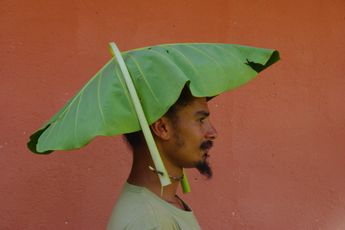
Main image: Paulo Nazareth, Cuando Tengo Comida en Mis et Manos, 2012 (still), Pinault Collection © Paulo Nazareth.











A respected voice in contemporary art discourse.
Focusing on ambitious storytelling and insightful art-world commentary. Ocula Magazine publishes in-depth interviews, critical essays and timely analysis on the artists, exhibitions and ideas driving the global art world.
Learn more about Ocula Magazine
Showcasing the best of the art world.
Ocula partners with galleries from around the world to highlight their artists, artworks and exhibitions. Gallery membership is by application and invitation, with each member vetted by an independent panel.
Learn more about Ocula Membership
Specialises in the sale of major artworks.
Led by a team with deep ties to the world’s leading auction houses, galleries and collectors. Ocula’s advisory team offers bespoke services to high-net-worth clients from around the world who are looking to acquire the best of contemporary and modern art.
Learn more about our team and services