





Koyo Kouoh’s Death and the Politics of the Silent Black Subject
As In Minor Keys opens at the Venice Biennale, what will the absence of its first Black female curator mean for its reception? Save to My Ocula
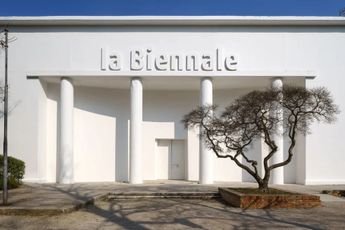
When Koyo Kouoh was announced as the curator of the 61st edition of the Venice Biennale in December 2024, I refrained from emailing her to offer my congratulations. I assumed thousands of others, who had also met and been influenced by her over the decades of her work as a curator and founder of the RAW Material Company in Dakar, would have had the same idea. I didn’t want to bother her. I planned to congratulate her in person—the first Black woman curator of the Venice Biennale—but six months later, she was dead.
The shock was blunt and profound. The official press statement described the loss as “sudden and untimely”, and her death represents the first time a curator of the Venice Biennale has been forced to leave midway through preparations for one of the largest and most prominent exhibitions of art on a global stage. There is no precedent. Yet the next question was not if the show must go on, but how.
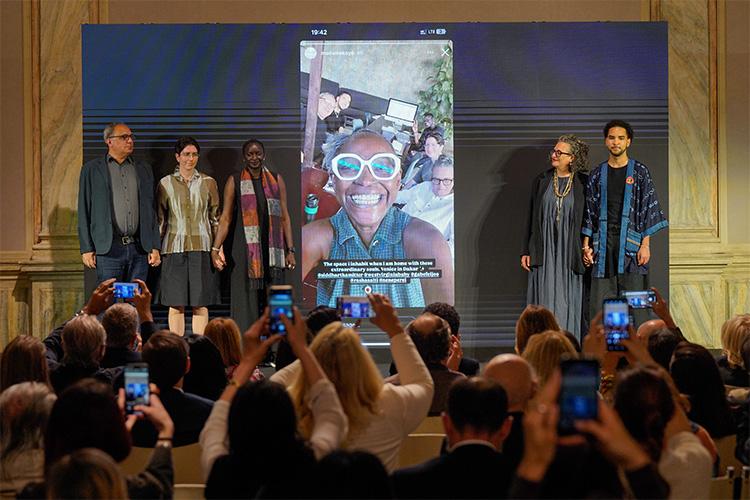
Beyond tragedy, Kouoh’s death has fundamentally altered the critical framework through which her already historic biennial will be received. Biennials are already the ultimate format for overdetermined authorship, where curators justify their work ad nauseam in interviews, symposia, essays, et cetera. But how can a biennial go about opening without any living curator at all? How can Kouoh’s appointed team (comprising curators Gabe Beckhurst Feijoo and Marie Hélène Pereira, writers Rasha Salti and Siddhartha Mitter, and her assistant Rory Tsapayi) ensure the accurate execution and representation of her vision without her immediate oversight? How might the viewers’ critical engagement be distorted? In her death, Kouoh has become vulnerable to praise she cannot use and critique she cannot answer.
The triangulated feedback loop between artist and artwork, curator and curatorial framework, and viewer and critical framework has been fundamentally disrupted. What remains is an exhibition that cannot speak for itself as intended. This is a discourse of assumptions. “She had a will, a driving force to change things, and all the choices she made were right,” writer Simon Njami, who co-curated the 2001 and 2003 editions of the Bamako Encounters photo biennial in Mali with Kouoh, once said. “When something is wrong, she tries to find the way to fix it.”
“In her death, Kouoh has become vulnerable to praise she cannot use and critique she cannot answer”
Kouoh was a formidable interlocutor. She was precise, articulate and resistant to misinterpretation. In 2020, seeking approval to publish a case study I had written about the RAW Material Company for Navigating the Planetary: A guide to the planetary art world - its past, present, and potentials, an anthology published by the International Summer Academy of Fine Arts in Salzburg, Kouoh politely requested my sources and reasoning with regards to a passage in which I invoked her previous criticisms of the Dakar art scene, with its crumbling institutions and lack of infrastructure. Thank you for your work. This is much better and reflects what we do, she wrote after I tightened up the paragraph. Best regards, Koyo. I felt relieved, not simply at her approval, but at having demonstrated that I understood her position, and the terms on which she insisted it be read.
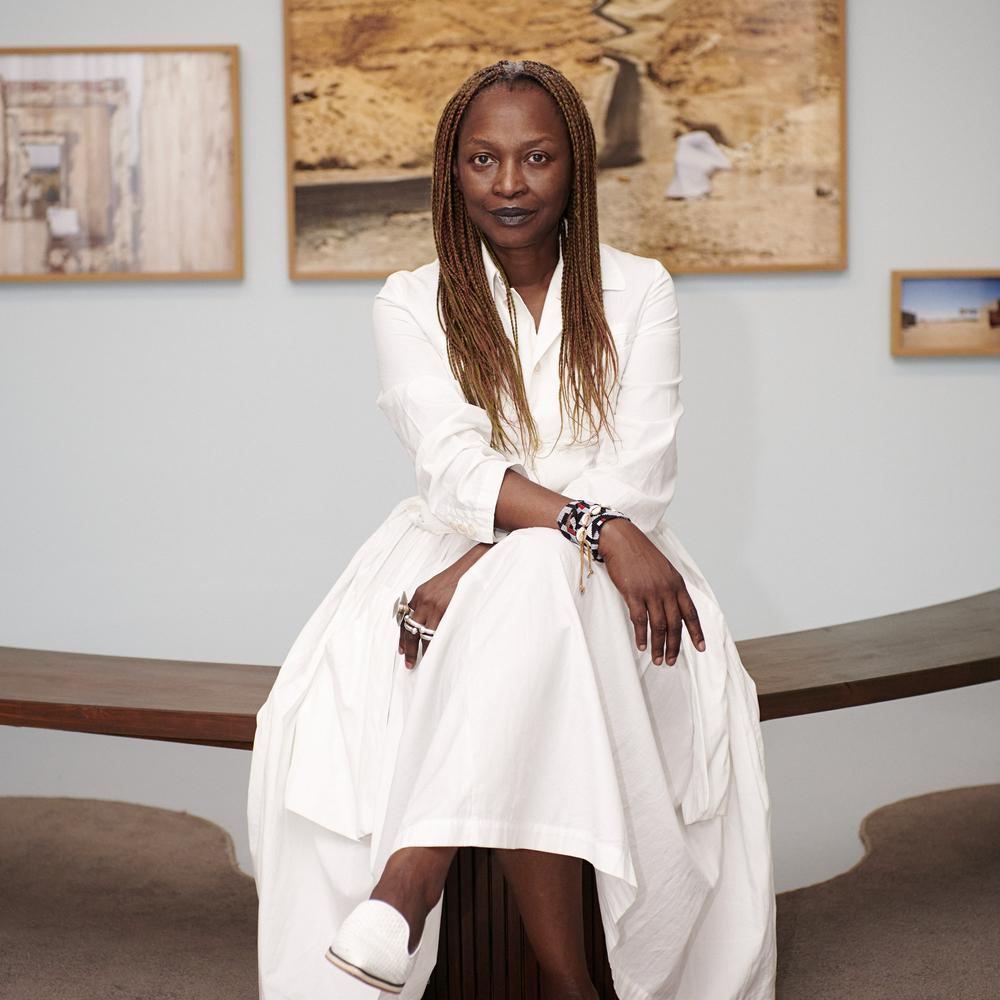
Kouoh arrived in Dakar for the first time in 1995. Although she was on a journalistic assignment to profile the legendary cinematic auteur Ousmane Sembéne, “barely two hours after landing” she made the acquaintance of the polymathic artist and writer, Issa Samb, quietly altering the trajectory of her life. The following year, Kouoh and her infant son relocated from Switzerland (where she had lived since the age of 13, following a modest childhood in Douala, Cameroon) to Dakar.
Samb would become her mentor as well as collaborator. As a budding curator of exhibitions and performances, in which she prioritised collaborations with artists of African descent, she was compelled by “his unflinching radical stand opposed to mainstream and utter resilience throughout time”. She embraced his devotion to collaboration and critical analysis, and his opposition to chauvinist politics. By the early 2000s, Kouoh was fast among the rising generation of curators in and of the African diaspora. Diaspora—not as a geographic location, but as a “mindset”.
“What was intended as a refusal of spectacle risks becoming one: not of excess, but of projection”
Throughout her prodigious career, Kouoh expressed a range of complicated feelings towards intellectual life in Senegal and the wider region. At the inaugural Global Academy (2016) conference at the Künstlerhaus Salzburg, she said that “the lack of a thriving public sector in African countries is not sufficient as a direct causality of the issues surrounding the emergence and survival of independent art spaces” in places like Dakar, and that attention needs to be paid to the wasting of fundamental institutions like the city’s art school, which first opened during the early independence days of the 1960s but was of “no real value today”, much like the University of Dakar, which, despite being the flagship Francophone educational institute in West Africa, is merely a “shell”, holding on only to those who simply cannot afford to leave.
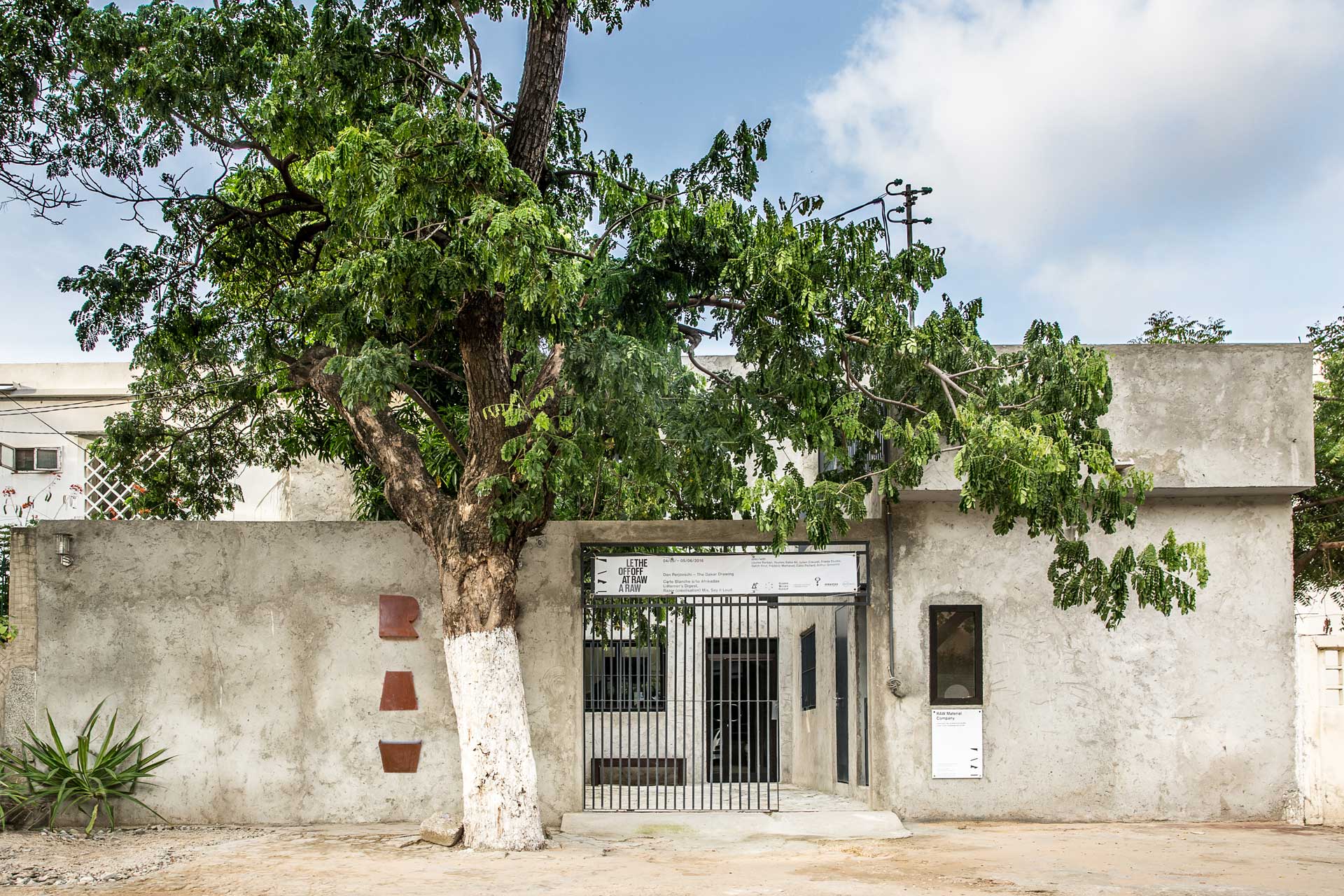
In 2018, at a RAW Material Company symposium at the Museum of Black Civilisations in Dakar, Kouoh kicked off proceedings by saying that “the goal of this symposium is not about legitimising histories and concepts, but disrupting them.” I cannot imagine why her goal for the upcoming Venice Biennale would be any different. And yet, in her absence, the terms of that disruption risk being reconfigured without her consent.
“Black subjects are often positioned as objects of interpretation rather than as participants”
Titled In Minor Keys, Kouoh’s biennale proposes an experience of slowness, listening, repair, and sensorial encounter rather than didactic spectacle. Borrowing from musical terminology, the “minor key” becomes a metaphor for quieter frequencies: melancholy, fugitivity, consolation, improvisation, and collective resilience. But how can a curatorial framework premised on attunement, relation, and listening attempt to unfold without the figure who would have calibrated its terms? What was intended as a refusal of spectacle risks becoming one: not of excess, but of projection.
The irony that (in the art world, at least) Black subjects are often positioned as objects of interpretation rather than as participants is not lost on me at this moment. This is not, strictly speaking, a necropolitical condition, as no single actor orchestrated Kouoh’s silence. She died of cancer, as did the late Nigerian curators Okwui Enwezor (the former director of the Haus der Kunst in Munich, and the first Black curator to lead the Venice Biennale in 2015) and Bisi Silva (founder of the Centre for Contemporary Art, Lagos). And yet, the effect is uncannily similar: a concentration of Black curatorial authority repeatedly interrupted at its apex, leaving their projects to circulate without the key figures who would have shaped their reception.
In Minor Keys will open. It will be seen, reviewed, debated, and historicised. Kouoh’s vision will endure, but as something necessarily partial. What persists is a pattern of consequence, not intent, in which Black curatorial voices are posthumously fixed as objects of interpretation, rather than active participants within it. —[O]
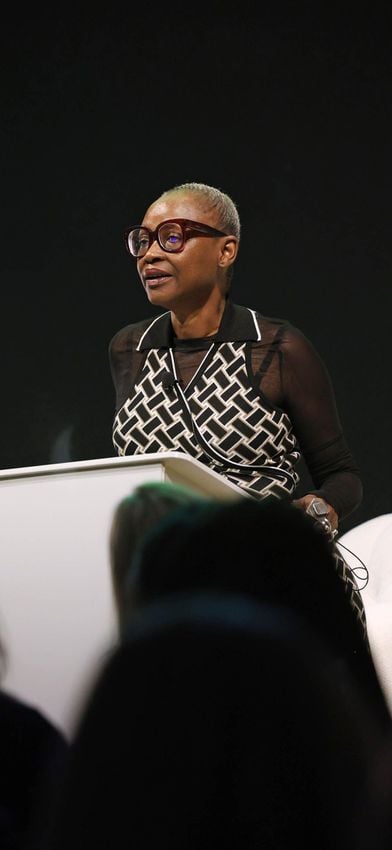
Main image: Koyo Kouoh speaks at AWITA, ‘Build Your Art World’ at Christie’s, London (2024). Photo: PA Images / Alamy.





A respected voice in contemporary art discourse.
Focusing on ambitious storytelling and insightful art-world commentary. Ocula Magazine publishes in-depth interviews, critical essays and timely analysis on the artists, exhibitions and ideas driving the global art world.
Learn more about Ocula Magazine
Showcasing the best of the art world.
Ocula partners with galleries from around the world to highlight their artists, artworks and exhibitions. Gallery membership is by application and invitation, with each member vetted by an independent panel.
Learn more about Ocula Membership
Specialises in the sale of major artworks.
Led by a team with deep ties to the world’s leading auction houses, galleries and collectors. Ocula’s advisory team offers bespoke services to high-net-worth clients from around the world who are looking to acquire the best of contemporary and modern art.
Learn more about our team and services