





‘The Studio Is a Cauldron for My Reckoning’
American artist Chase Hall sits down with Ruby J. Thelot on the occasion of his first solo show in Vienna at Galerie Eva Presenhuber to consider the inner and outer worlds of his paintings. Save to My Ocula
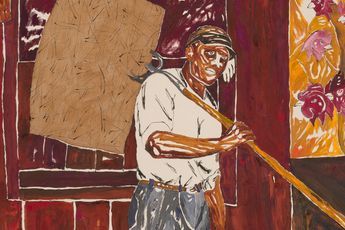
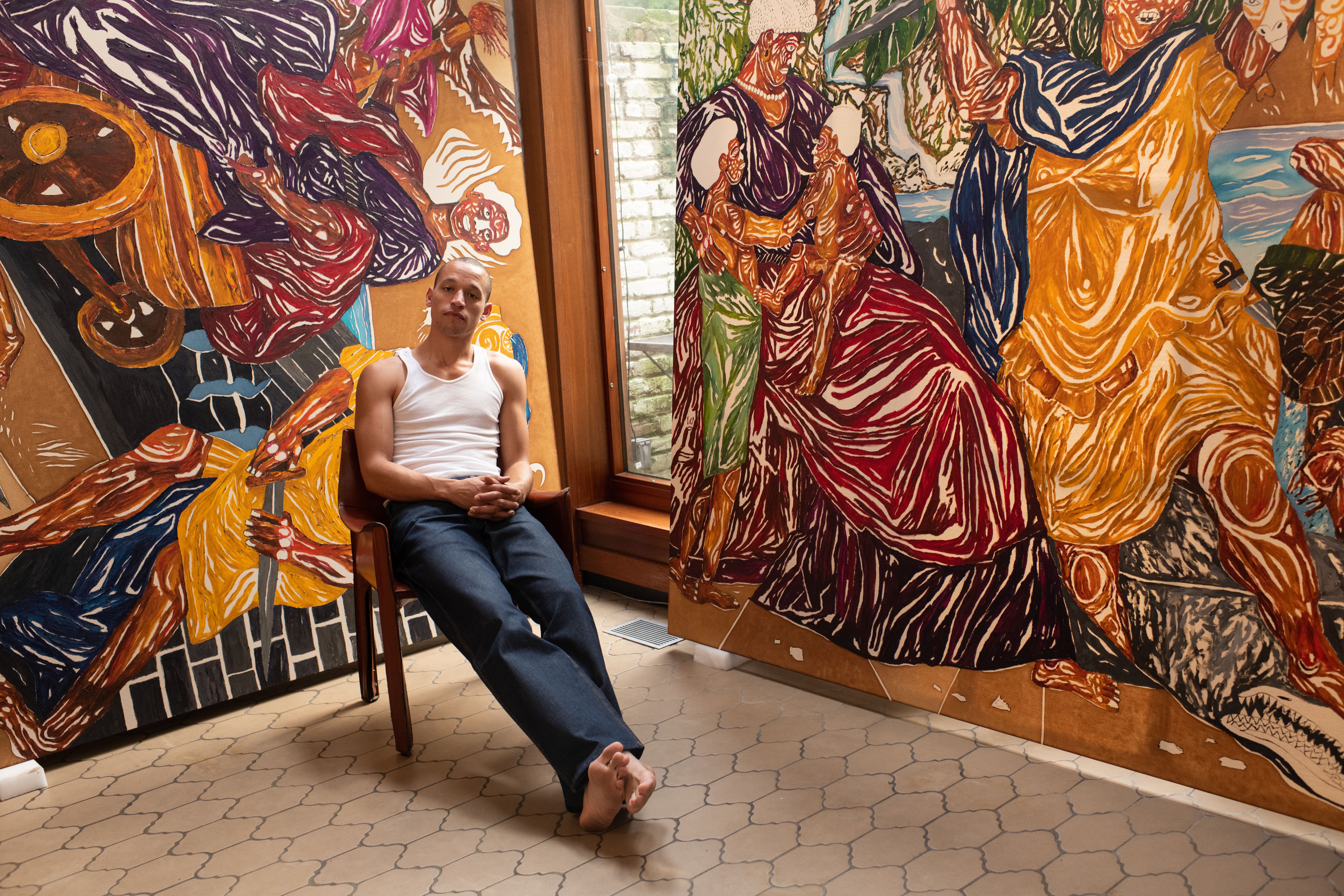
When I speak to Chase Hall, he is at Galerie Eva Presenhuber, finishing up the install for his new show. He’s wearing a burnt-orange sweater and meandering around the gallery to find a calm place for us to chat. The 31-year-old artist has been heralded one of the best new voices in painting due to his unique, provocative, and layered portrayal of Blackness, masculinity, and personal history. Although the word ‘layered’ is often overused in describing paintings, it rings true to Hall’s work, with its signature build up of expressive tones over coffee-dyed canvases.
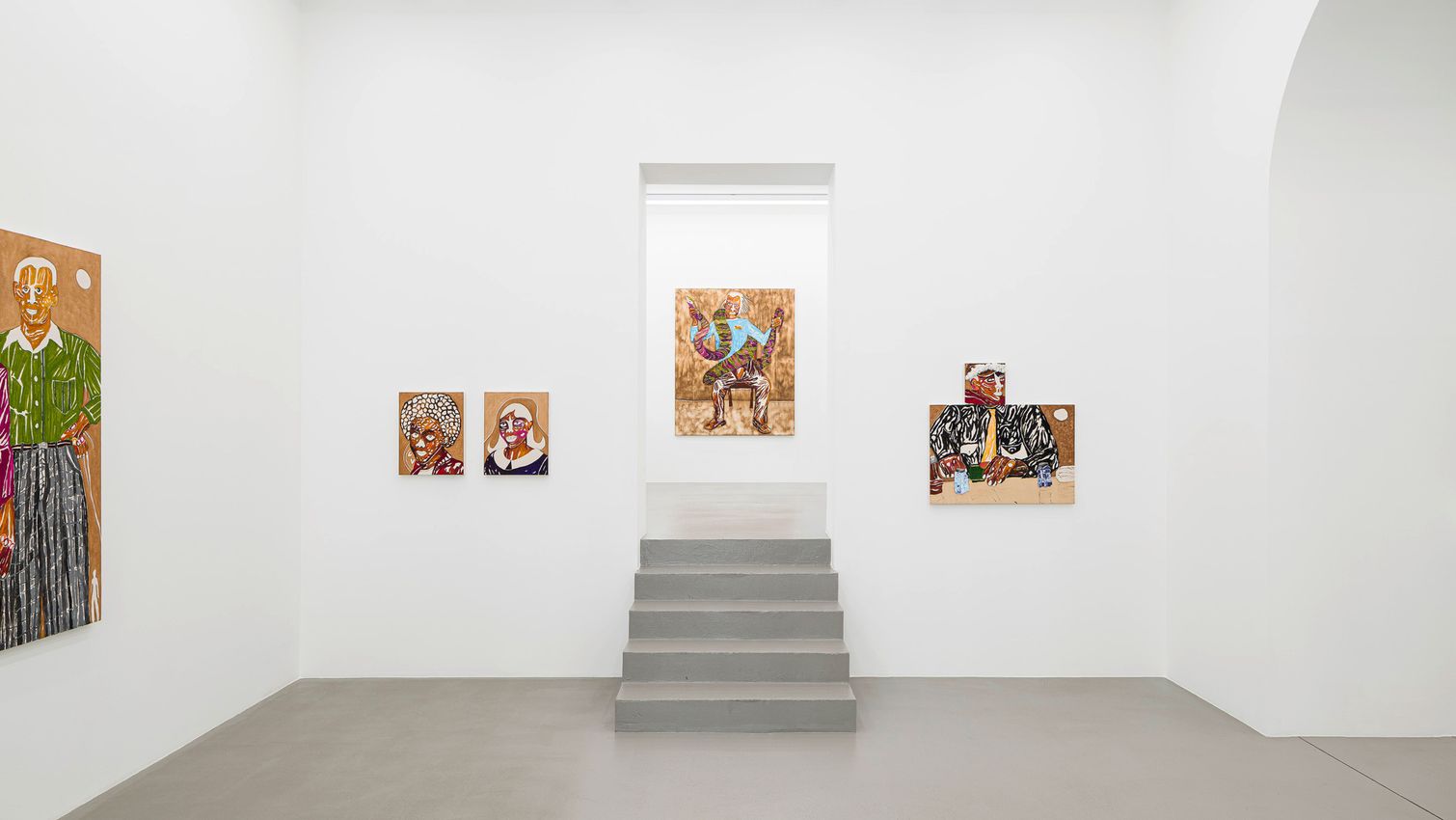
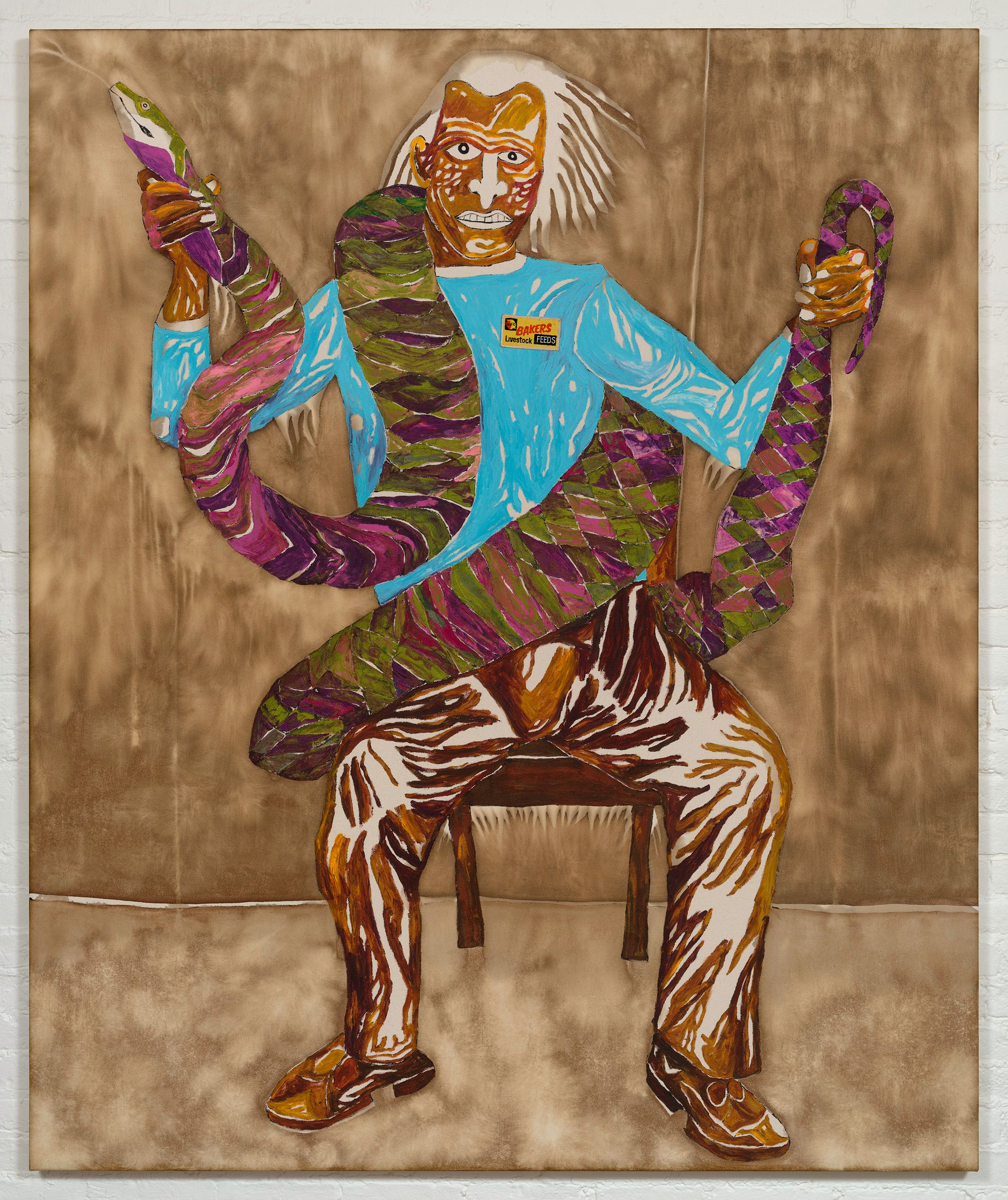
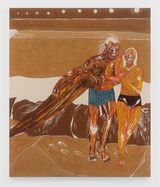
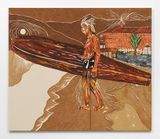
Hall is on the go in Vienna, where his latest show is being mounted, with, in his own words, ‘no laptop and a baby’. Our pleasantries are interrupted by the first glimpse of his paintings. Burnt topaz, deep browns, and blurry splashes of white dominate, along with striking moments of bright colour—in one large painting, a figure is adorned with an azure quasi-pareo. I am immediately drawn to the arresting characters who dominate Hall’s espresso-coloured canvases.
RJT: Can you tell me a little more about the figures within the paintings?
CH: For me, a lot of these start with archetypal representations of a self seen through different narratives, landscapes, and types of people. Oftentimes, I’m thinking of family members or friends, brotherhood, and this idea of being and becoming. The exhibition’s title, Momma’s Baby, Daddy’s Maybe, references growing up as an only child with a single mom.
RJT: There are two elements that strike me as affirming or expressing identity in these works. The first is your depiction of the group, or brotherhood; the second is the clothes. Thinking first about brotherhood, is the idea of finding identity through companionship prominent in the work?
CH: Yes, I think for me, growing up an only child, there was always a hope to find space for some of that tension in different places and to find community. I only really felt this when visiting my family, so I often longed for companionship. I’m deeply interested in the mentor-mentee relationship, friendship, and brotherhood as a space where you come together and form a chosen family. Always being a nomad, growing up on the hip of my mother, I longed for community.
I find that using coffee to stain the cotton canvas introduces a tension I’m interested in between negative and positive space. It’s a kind of hybridity, articulating in-betweenness. I often oscillate between group portraits as expressions of companionship and the oppositional gaze and isolation of a singular figure. It’s like an accordion that expands and contracts back into the self.
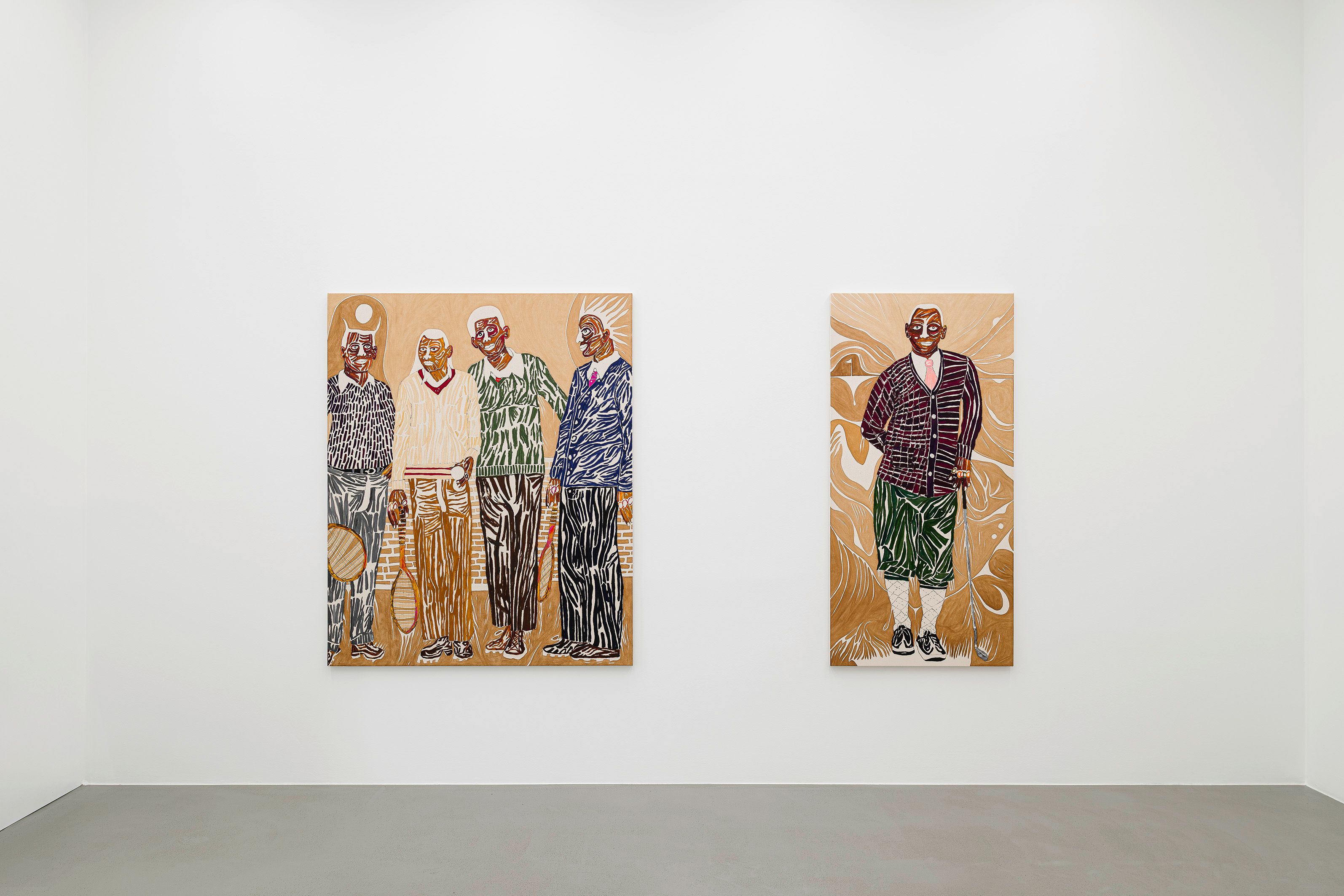
RJT: There also seems to be a recurring leitmotif of activity in the paintings, whether golf, tennis, horseback riding…
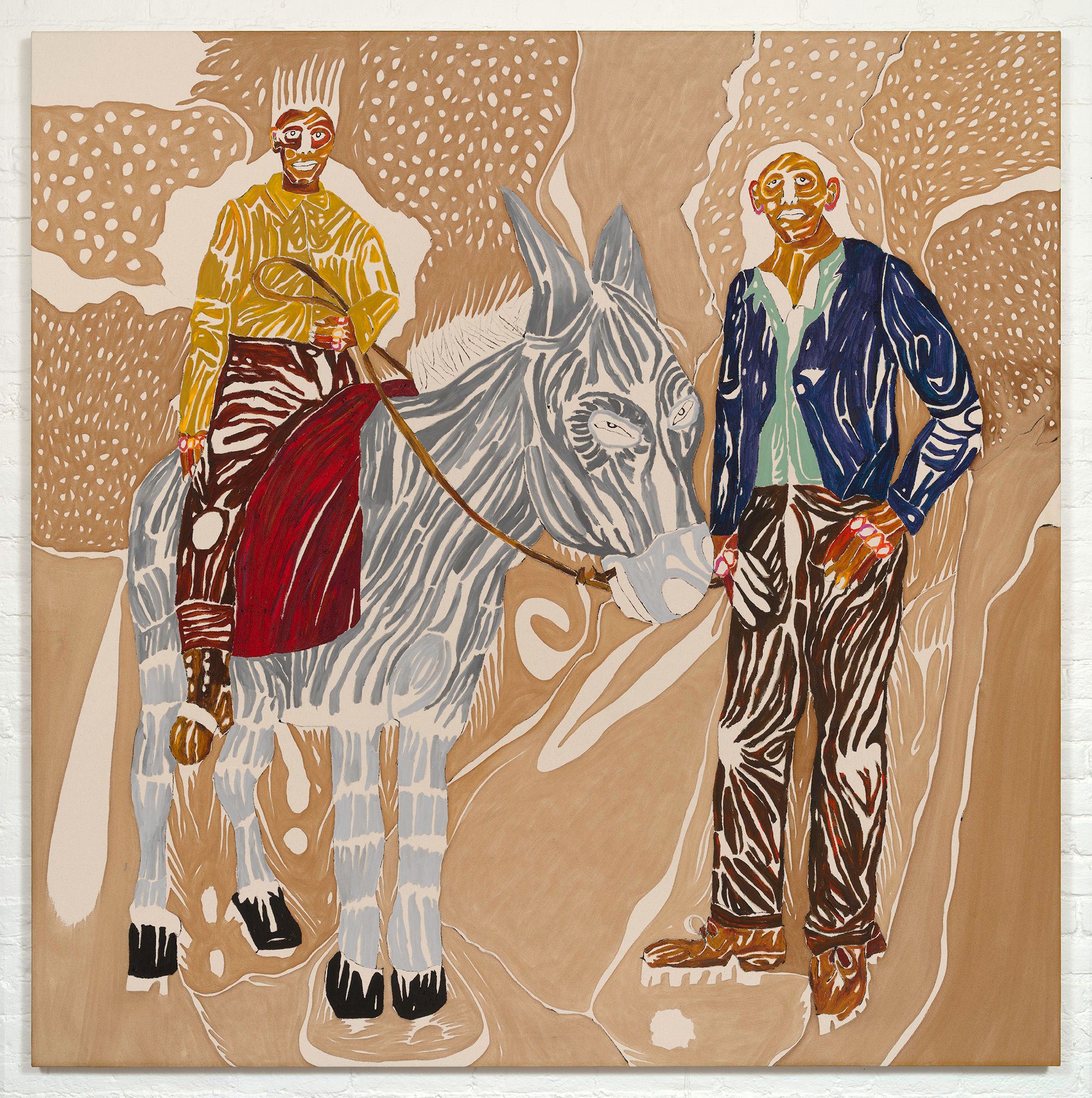
CH: Yes, horseback riding, people just hanging out, misfits up to no good, snake wrangling, a daydreaming figure at a diner. Much of the work is about interior dialogue: Who are you to yourself? How do you become who you are? We often discover ourselves through pressure points like cinema, music, sports, hobbies, and friendships. These activities are opportunities to find community through leisure or sportsmanship.
Often, Blackness is portrayed through climactic moments of physicality, aggression, or overcoming. I’m more interested in what it means to simply hang out and exist. To express instances of thought, creativity, longing, an interior self. These pedagogical moments, where you’re learning or encountering symbols representing learning and presence in the world, are vital. Not everything has to be performance.
RJT: It’s almost as if there’s a return to stillness as the bedrock of identity, rather than performance or constant activity. Even within the activities you depict in your paintings, there’s stillness. It’s in that calm that one regains a sense of self.
CH: Absolutely. A phrase I reflect on often is ‘still waters run deep’. The soil and nutrients are fulfilled through settling. When you’re not running from yourself or from the need to prove something, you can sit back, be grounded, and simply exist. In that existence, you are enough. Being enough allows a deeper relationship to life, rather than one dictated by tragedy or struggle. For me, moving across states and schools, enduring experiences of parental incarceration and varying class structures, these tragedies propelled a reckoning: What does it mean to not be on the run? What does it mean to be settled and comfortable with oneself?
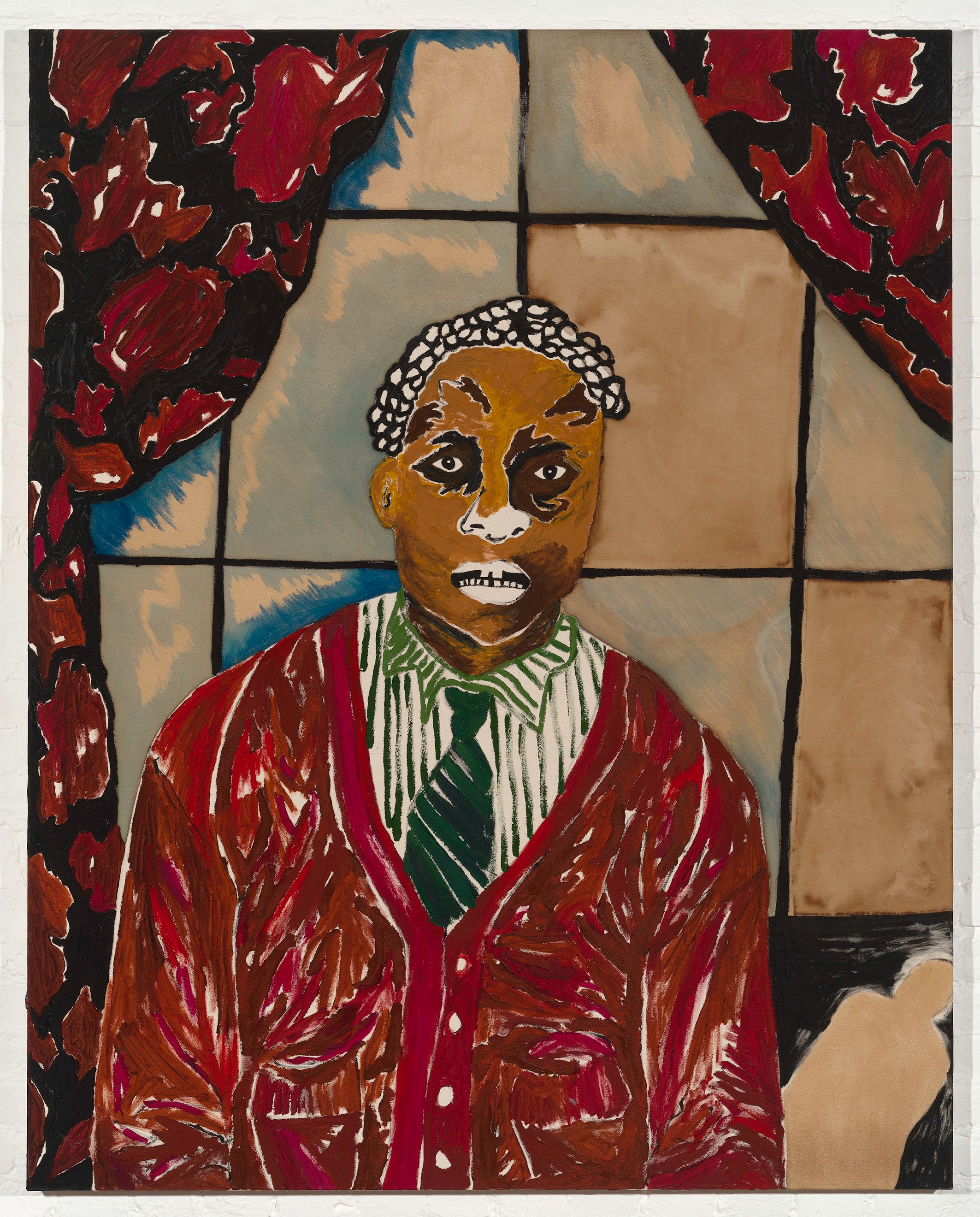
Moments of portraiture, of stillness, the oppositional gazes in my work: they look back at you. Even the canvas, made of cotton, holds fibres that speak of that history. Stained with Blackness, the extracted and exploited seed, overcoming whiteness, rematerialised while retaining traces of negative space. There’s a rhythm akin to sport or boxing. I leave knuckles white, as a nod to white knuckling. Tension in the nose, psychotic glitches from long-held strain.
The materials articulate a history without depicting it outright, though it’s within us. There are gestures: arrows, ups and downs, shadow selves, hidden interior parts. The idea of whiteness as acne, my light-skinned Blackness often questioned, drives me to bridge and lexicon moments of emptiness.1 In that emptiness, we must still exist and look forward. Refusals and boils become mosaics, space to grow, and strength to stand.
The sponge rings out: What remains? Hidden messages, like Rorschach tests or pareidolia—seeing images where none exist. These moments embed history, truth, palindromes, double and triple entendres. Coffee staining becomes jazz-like improvisation, rooted in archetype and history. My work tries to navigate this personal-rooted duality. The glitch, the frequency, visualised. Standing on the sea, phallic forms, garments as identity markers. Workwear, symbolism, who we look up to, who we resemble. My grandfather worked the land, did business, played sports. He faced history directly. Now, we encounter that legacy in a contemporary light.
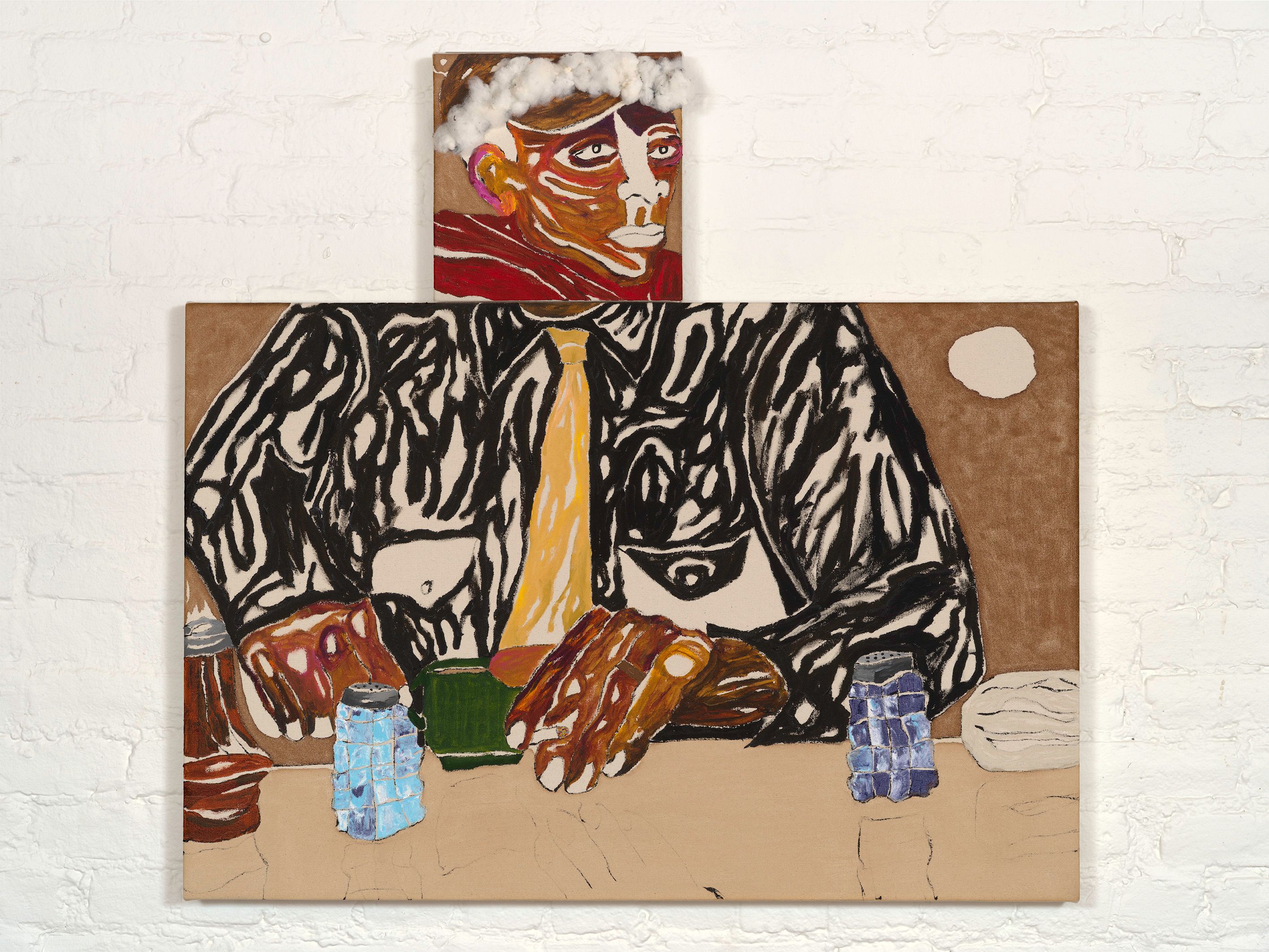
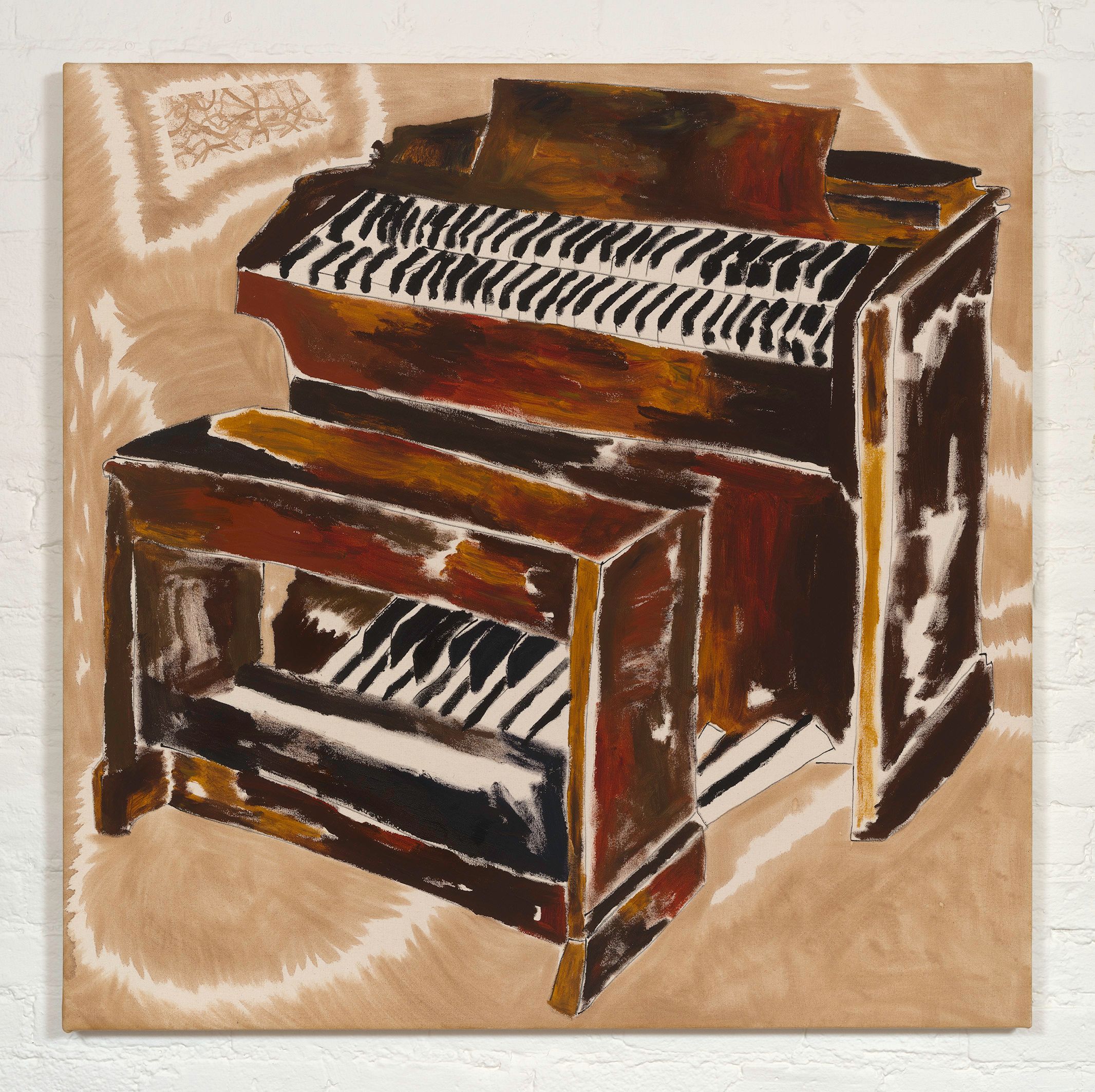
RJT: I’m fascinated by the textural contrasts in your paintings. You mentioned their Rorschach nature and pareidolia—the obsessive perception of faces around us. What role do the specific materials, like the canvas and the coffee, play in building up those juxtapositions and textural layers?
CH: You’ve hit the nail on the head. Much of my work is about understanding the interior. For me, I’m hiding a lot of internal discussions in those materials. Many of the symbols I’m working with inside the subject become articulated through the coffee and the cotton canvas. Then, with the application of the paint, I begin to show more of the stylised aspects: the drip, the marbling, my love of garments and representation. For me, this is a way to hide Easter eggs. I’m thinking about how rap or jazz has helped me understand the triple entendre, where one thing represents something more than itself.
The contrast deepens the visual language. Through that deepening, I’ve developed a lexicon to articulate the clash, the glitch. It’s almost a psychosis: me and the subjects becoming intertwined through moments of coffee and canvas. That literal blackness and whiteness, their clash, is an articulation of the hybridity I’m trying to build language for, an internal frequency the subjects think through, in mirror to myself.
RJT: Have you seen Michael R. Jackson’s musical A Strange Loop [2019]? It’s about a Black gay musical theatre writer who makes ends meet as a theatre usher, and how his self-perception, desires, and needs collide with friends, family, potential lovers, and community.
CH: I have. It was really fascinating. It’s a great way to explore those themes, how things reappear from different angles.
“Not everything has to be performance”
RJT: Yes, I was thinking about the figure of the usher, the recurrence of characters. You mentioned a palindrome, which reminded me of looping.
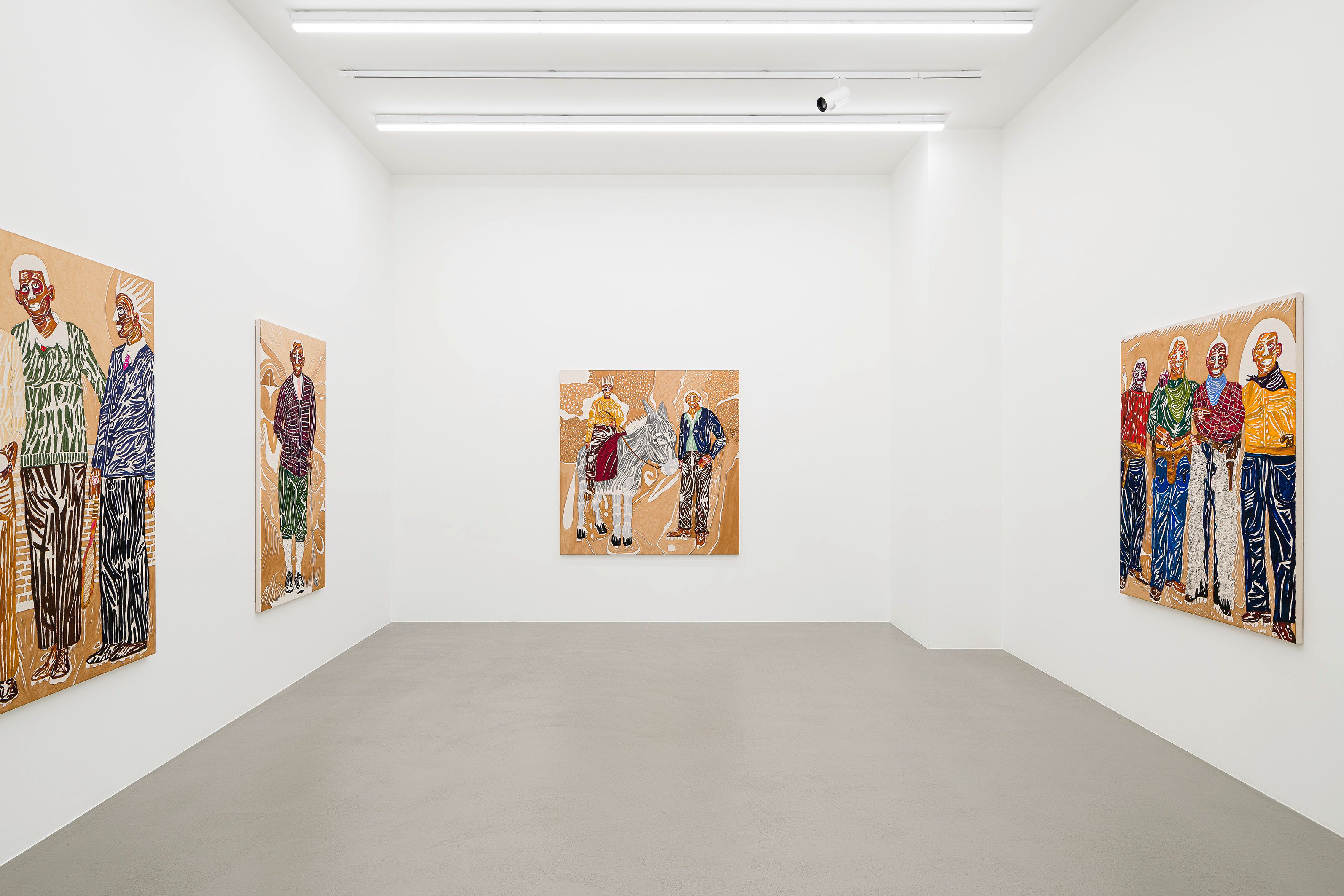
CH: Exactly. The concept of a palindrome is very compelling to me. I’m thinking of a donkey with a grey and white coat: Is it grey with white stripes, or white with grey stripes? Or the zebra, which is black and white at the same time. These articulations occur through the canvas, the abstraction, the conceptual layering, the triangulation of ideas in the work and compositions. How do you question the ‘three-fifths clause’2 or the ‘one-drop rule’3, both of which define whiteness as absolute? If you’re not just white, how do you articulate a non-monolithic Blackness and non-monolithic whiteness? That tension drives much of the critique in my work. These paintings are receipts of a self—personal questions asked and worked through via material, composition, and figure, all of which are allowed to exist within one another.
RJT: In the paintings, what role do the clothes specifically play?
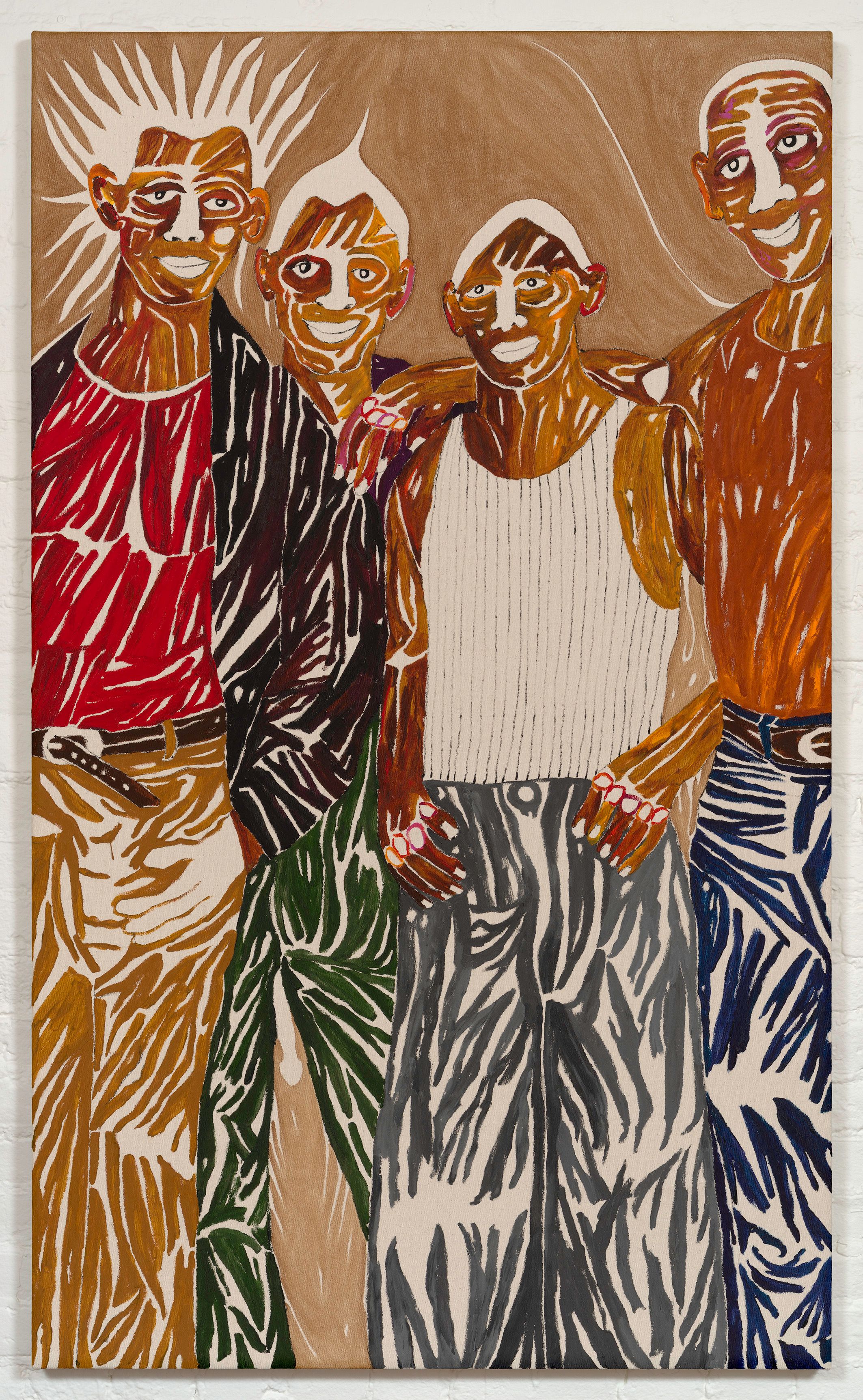
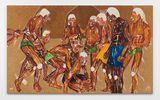
CH: I’m interested in how different landscapes and spaces bring different garments forward. For instance, the four young men in Mama Tried [2025] evoke Black hardcore and punk with their utilitarian wide-leg pants and tank tops. These garments help us understand who these people are. There’s a sense of: ‘Birds of a feather flock together.’ Young men going out, smoking outside a bar, these characters emerge through fashion.
You dress for the life you want. Fashion and garments have always been a love of mine. They represent my interests: a 1940s Black man with a purpose, a to-do list. From grey plaid pants to lime green, there’s a coolness and style that reveals who they are—and who I am through them. I dress them how I dress myself: a sweater, white jeans, a t-shirt. I see myself in them: wide slacks, classic cuts, white shirt, collar, tie, cardigan, workwear Americana. All this relates to the histories I’m thinking about and how you see yourself in your work. I leave so much of myself in these paintings. Fashion becomes a question: What would I wear? Who are these people? What do they eat? What do they do?
Now, as a father, I must leave a part of my younger self behind. As much as I love that self, and want to hold onto him, there is a formative pressure to move forward, not abandoning the past, but knowing there are new things to come. The studio is a cauldron for my reckoning. —[O]
Chase Hall: Momma’s Baby, Daddy’s Maybe is on view at Galerie Eva Presenhuber in Vienna from 23 May to 19 July 2025.
1 As Hall observed in an interview with Vogue: ‘Whiteness will always question my Blackness, and sticks out like a scar or acne seeming to carry a sense of shame that can’t ever truly be hidden.’ Dodie Kazanjian, ‘The Awesome Audacity of Chase Hall’, Vogue, 14 July 2022.
2 The Three-Fifths Compromise was reached among state delegates in the U.S. during the 1787 Constitutional Convention. It determined that three out of every five enslaved people were counted when determining a state’s total population for legislative representation and taxation.
3 In the U.S., the ‘one-drop rule’—also known as hypodescent—dates to a 1662 Virginia law on the treatment of mixed-race individuals. The legal notion of hypodescent has been upheld as recently as 1985, when a Louisiana court ruled that a woman with a black great-great-great-great-grandmother could not identify herself as ‘white’ on her passport.






A respected voice in contemporary art discourse.
Focusing on ambitious storytelling and insightful art-world commentary. Ocula Magazine publishes in-depth interviews, critical essays and timely analysis on the artists, exhibitions and ideas driving the global art world.
Learn more about Ocula Magazine
Showcasing the best of the art world.
Ocula partners with galleries from around the world to highlight their artists, artworks and exhibitions. Gallery membership is by application and invitation, with each member vetted by an independent panel.
Learn more about Ocula Membership
Specialises in the sale of major artworks.
Led by a team with deep ties to the world’s leading auction houses, galleries and collectors. Ocula’s advisory team offers bespoke services to high-net-worth clients from around the world who are looking to acquire the best of contemporary and modern art.
Learn more about our team and services