

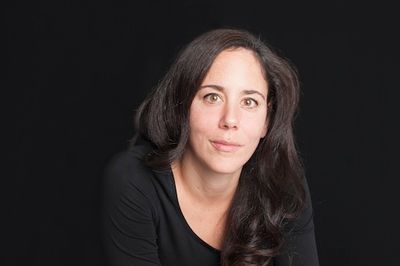
Dyala Nusseibeh is the fair director of Istanbul’s new international contemporary art fair, ArtInternational. Despite opening in a country recently wracked by protest, and notwithstanding litigation and a subsequent last minute change of name, the fair had a successful debut. Running from 16 to 18 September 2013, ArtInternational coincided with the 13th Istanbul Biennial and brought together 62 leading and emerging international contemporary art galleries. In a city that acts as a geographical and psychological gateway between East and West, the fair provided a platform from which to consider emerging art from Turkey, the Middle East, Asia and beyond. In conversation with Ocula, Nusseibeh talked about how she came to be involved with the fair and her experience of its inaugural year.
You completed your MA with Christie’s. What did you write your thesis on?
Wow I have never been asked that question – I confess I had to look it up as it has been awhile! Thanks for the interest. The title of my thesis was Fugitive Stories. It was essentially about work that bears stories in material form, and the process of remembering these stories. Artists I was drawn to included Richter with his October 18, 1977 cycle, Kara Walker’s silhouettes which re-present slavery plantations in the South, Doris Salcedo’s works about victims in Columbia’s long-running internal armed conflict, Mona Hatoum, Emily Jacir and Teresa Margolles amongst others. These labours of re-memory by artists as a form of social participation, formed the core investigation for my thesis.
The co-founder of ArtInternational is the fair veteran Sandy Angus, of Art HK fame. He teamed up with the Turkish firm Interteks, which has organised fairs for the past 34 years, to launch the new event. Tell me about how you came to be involved with the fair?
I knew Sandy Angus and was initially enlisted to research the market in Turkey and find out whether it held long-term potential.
How were you able to draw on the experience of Angus?
He must have organized over 30 fairs over the past few decades and has a vast experience in this field. So as you can imagine I had a fountain of knowledge to draw from whenever issues arose or questions came up that needed considered responses. He also has a phenomenal network that was put to full effect for the fair.
The Fair was organised to coincide with the 13th Istanbul Biennial - which has prioritized less privileged geographies like Latin America, North Africa, the Middle East and Turkey in the selection of artists. To what extent did the approach taken by the Biennial reflect or contrast with the type of work that was shown at ArtInternational?
Although ArtInternational coincided with the Biennial, we ran it as two very separate events. I would say the nature of Istanbul probably permeated both – so for example we naturally had a strong number of Middle Eastern and Turkish artists represented at the fair. However whilst the Biennial is curator-led, a fair is far more gallery-led and more commercial, meaning we were more dependant on which galleries would succeed with the market in Istanbul and with international collectors. One of our interests for the future would certainly be to bring more galleries in from Latin America and North Africa, as these were under-represented in our first edition, whilst also exploring regional links further.
With a myriad of art fairs around the world and even a contemporary art fair already in Istanbul, what do you believe the fair added - both globally and locally?
Globally the appeal of Istanbul with its cultural heritage and vibrant contemporary art scene certainly had its advantages in attracting international collectors, whilst the hybrid identity of the fair gave it a unique draw. Locally it makes sense for Istanbul to have an international platform like ArtInternational where artists, curators, collectors, gallerists and other art world professionals can connect.
Were you concerned the fair could become a target for some of the discontent over financial inequality that has brought thousands of protestors into the streets of Istanbul? And do you feel that this in anyway detracted from the number of people who attended the fair?
As the protests were anti-government, there was less concern about our international visitors becoming a target and more about them being caught up in the middle of any protests. We did have some concerns over the summer, particularly as travel warnings were posted on some embassy websites. Consequently we had less visitors from the US for example but overall the number of international collectors in attendance was solid. In terms of the fair itself, our view is that art provides a platform for social issues to be debated and articulated and we are inclusive rather than exclusive of different voices. A great number of Turkish artists were very engaged in these recent events but appreciated our viewpoint and were able to join us at the fair as a result.
Do you have an idea of the type of collectors who attended the fair, how many were local collectors versus international collectors?
That’s hard to quantify precisely but we did have a strong number of international collectors present including museum groups and well known collectors, as well as strong endorsement from local collectors. International museum guests included representatives from Tate Modern, London; Whitechapel Gallery, London; Museum of Contemporary Art of Rome, Rome (Macro); Centre Pompidou, Paris; La Maison Rouge – Fondation Antonie de Galbert, Paris and the Royal Academy of Arts, London. International collectors who attended the fair included Lekha and Anupam Poddar, Nicola and Beatrice Bulgari, Alistair Hicks, Ramin Salsali and Sheikha Hoor al-Qasimi; whilst some of the Turkish collectors in attendance included Bulent Eczacibasi (Istanbul Modern), Ahmet Kocabiyik (Borusan) Guler and Sevil Sabanci (Sabanci Museum), Can and Sevda Elgiz (Elgiz Museum), Fusun and Faruk Eczacibasi (SAHA), Cigdem Simavi, Caroline Koç, Omer Koç and Melih Ferlerli (Arter) among others.
Ocula correspondent, Stephanie Bailey, suggested in her report that it felt a truly global fair in that galleries came from many different parts of the world - from Jeddah (Athr Gallery) to Buenos Aires (Ignacio Liprandi Artes Contamporaneo) to Budapest (Viltin Gallery). Although there were a number of very established galleries showing at the fair, Stephanie also noted that there were only three galleries from the United States. In the years to come will the fair continue to offer such an international selection of galleries, or do you expect to see more London and U.S galleries represented?
Istanbul being less than a 4 hour flight from 50 countries creates a fantastic geographic base to begin with. The more international in scope the better and future editions of ArtInternational definitely hope to attract galleries from further afield whilst continuing to build upon regional ties as a core strength.
What did you feel was the greatest success of the fair?
The enthusiastic feedback from participating galleries and visitors – we couldn’t be more pleased with the positive experiences participants had at this first edition.
What can we expect from the next fair?
In year one we laid the foundations. Going forward, we have myriad things to improve on and develop whilst letting ArtInternational evolve organically and at a measured pace - if you enjoyed the first edition you are bound to enjoy the second even more. — [O]
A respected voice in contemporary art discourse.
Focusing on ambitious storytelling and insightful art-world commentary. Ocula Magazine publishes in-depth interviews, critical essays and timely analysis on the artists, exhibitions and ideas driving the global art world.
Learn more about Ocula Magazine
Showcasing the best of the art world.
Ocula partners with galleries from around the world to highlight their artists, artworks and exhibitions. Gallery membership is by application and invitation, with each member vetted by an independent panel.
Learn more about Ocula Membership
Specialises in the sale of major artworks.
Led by a team with deep ties to the world’s leading auction houses, galleries and collectors. Ocula’s advisory team offers bespoke services to high-net-worth clients from around the world who are looking to acquire the best of contemporary and modern art.
Learn more about our team and services