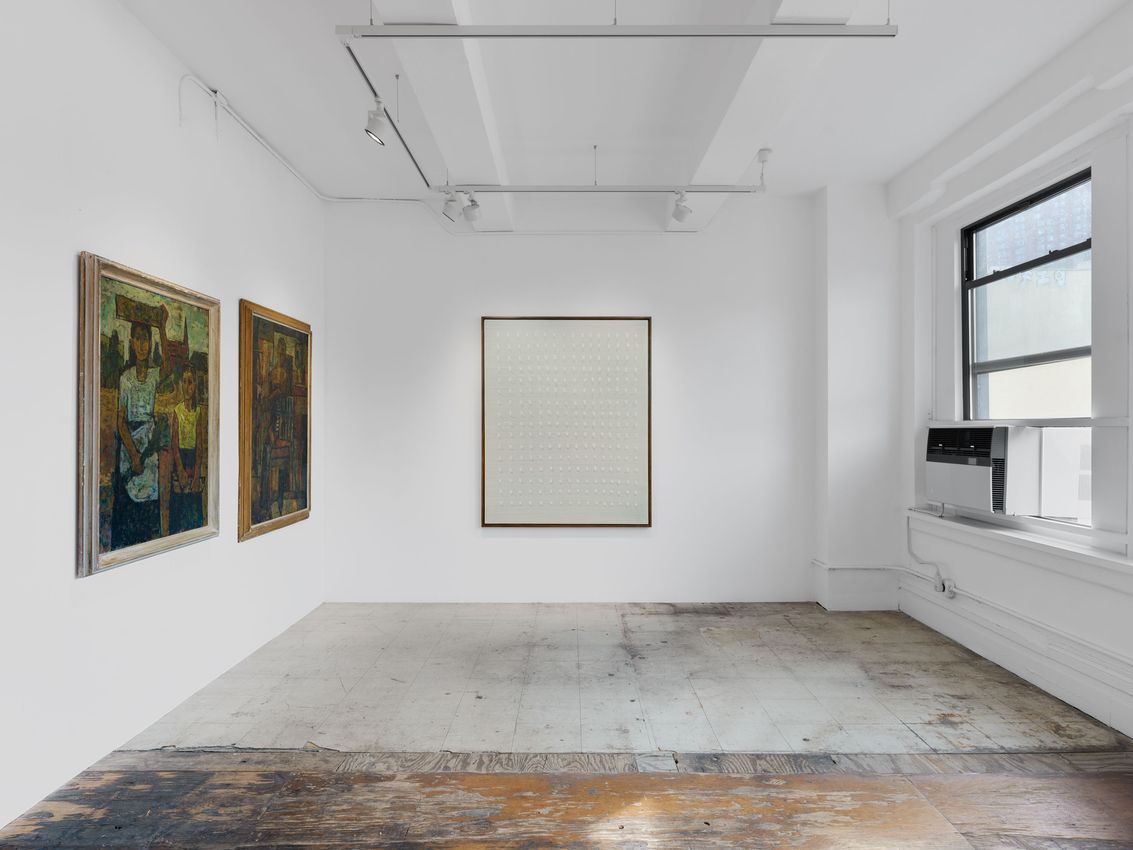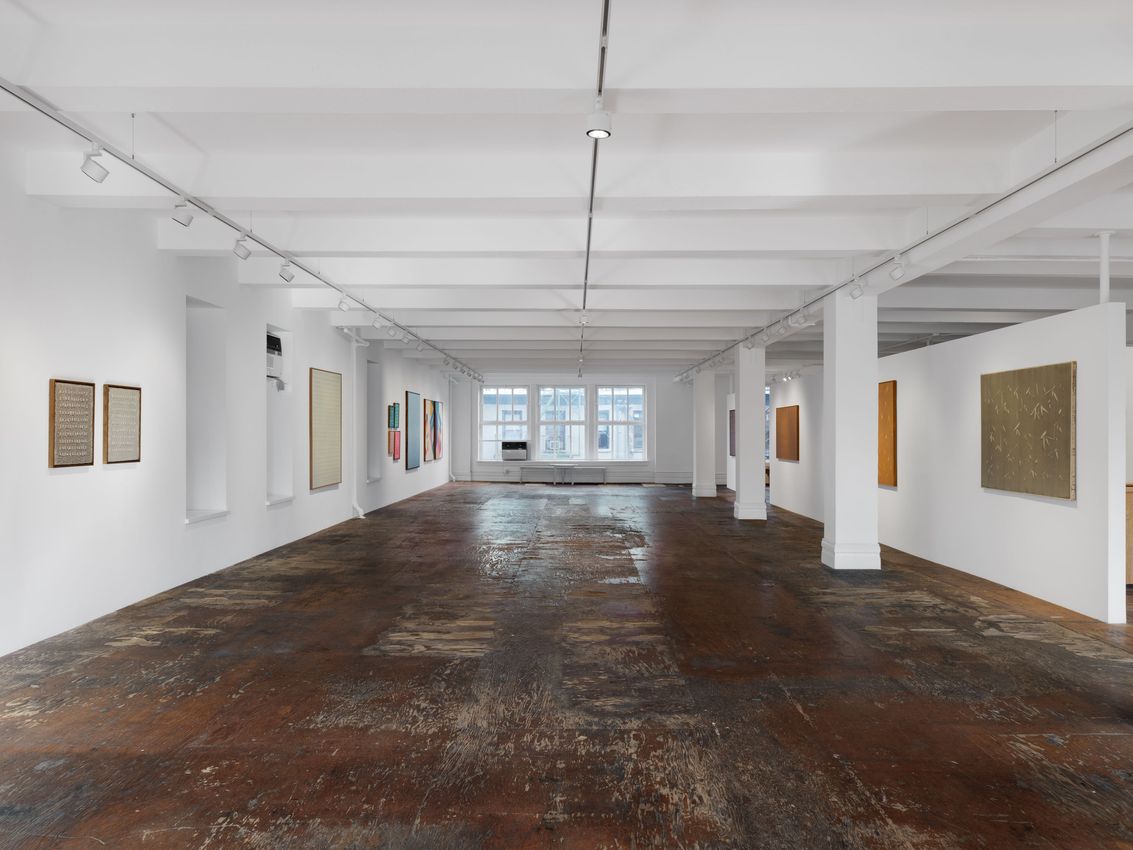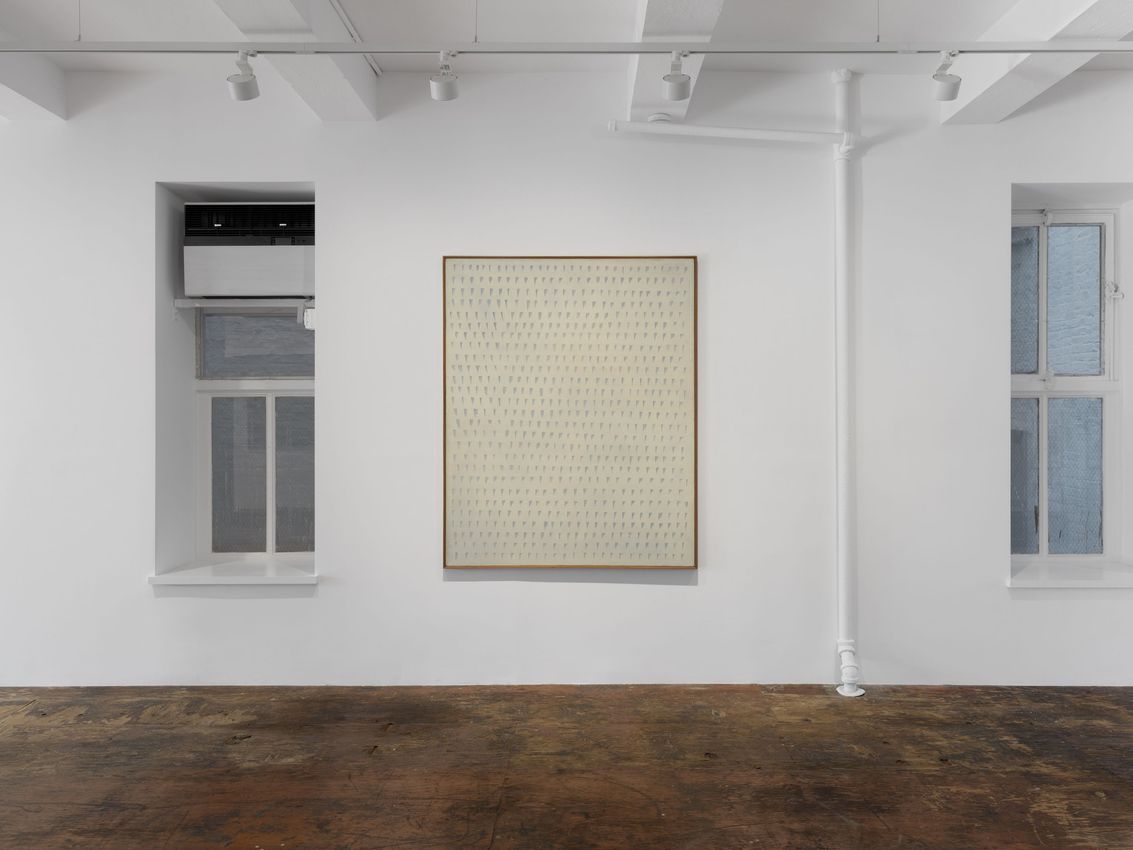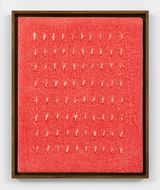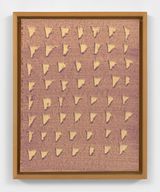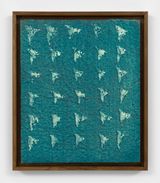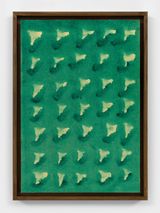




Kiang Malingue is pleased to present Cho Yong-Ik: The Irreducible I, the first solo exhibition of Cho Yong-Ik (1934–2023) at the gallery’s New York space. Bringing together paintings spanning the late 1950s through the early 2020s, including a selection of rarely seen works, it marks the most extensive presentation of Cho’s work outside Asia to date. The exhibition traces a path from early figurative works through the vivid geometric abstractions of the 1960s and the iterative marks that came to define Cho’s work from the 1970s onward, extending to paintings from his final years. Together, these works bring the breadth of his six-decade practice into view.
In November 1959, Hyundai Misulga Hyeophoe (Contemporary Artists Association), issued its first manifesto on the occasion of the group’s fifth exhibition. Formed by young Korean painters, the group challenged the academic conventions and institutional authority of Gukjeon, the state-sponsored National Art Exhibition, which then was the principal avenue for artistic recognition. The manifesto declared: “Casting off every rationalist order, we affirm the desire for life and resolve to begin the world anew from the irreducible ‘I’.” Cho, then twenty-five, was among the participating artists.
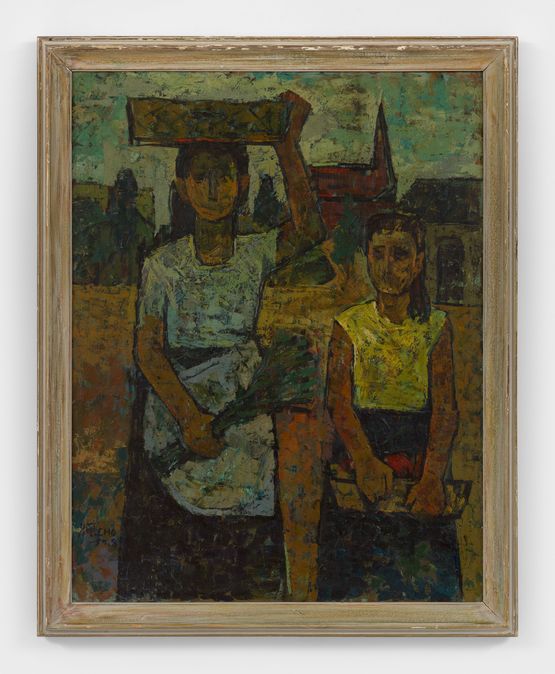
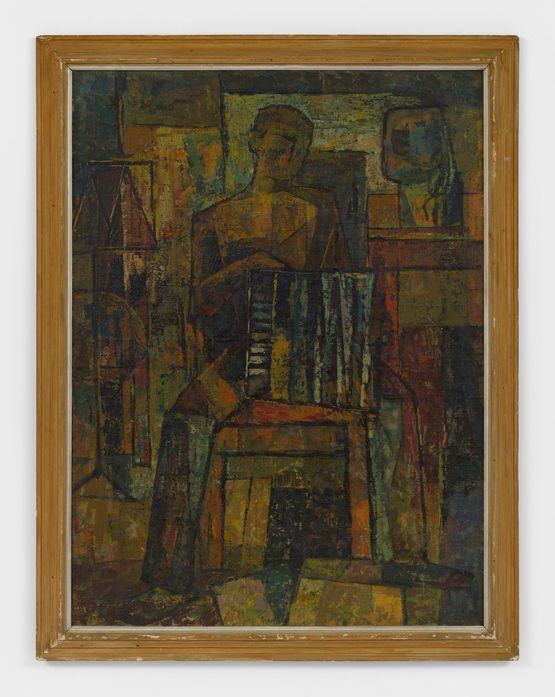
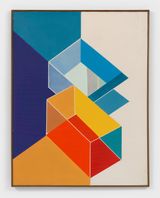
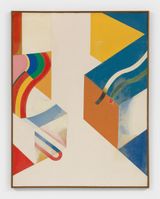
While the collective declaration may not fully capture the diversity of Cho’s individual practice, it offers a revealing context for the changes his work underwent around the period. Two paintings on view from 1957, produced during Cho’s final years at Seoul National University, mark an early point of departure in his practice. In Accordion and the Boy (1957) and Mother and Daughter 3 (1957), figures appear against somber, earth-toned backgrounds. By the early 1960s, traces of figures narrative receded in two markedly different directions. In Untitled (1962) and 63-713 (1963), dark tonalities and dense impasto create thick, tactile surfaces, while in 68-113 (1968), ribbon-like bands in saturated red, blue, green, and yellow thread through perspectival, rectilinear planes. In 68-112 (1968), a similar bright palette extends across interlocking rectangular planes, forming a sharper, more architectural geometry. In both works, the colors recall obangsaek—the traditional Korean symbolic palette of blue, red, yellow, white, and black—as well as dancheong, the polychrome decorative painting of traditional Korean architecture.
The coexistence of these two seemingly distinct visual languages within the same decade is worth noting, as it offers a lens through which to understand how postwar abstraction took shape in Korea. By the time Cho first exhibited with Hyundai Misulga Hyeophoe in 1958, the association was becoming a central force in the formation of Korea Informel, one of the earliest collective movements of postwar Korean art. Paint was approached less as a vehicle for representation than as matter itself, through accumulated pigment, visible brushwork, and traces of bodily gestures—concerns also explored by his peers, including Kim Tschang-Yeul, Park Seo-Bo, and Chung Sang-Hwa.
Korean artists came to encounter a widening range of images and visual languages circulating across Europe and North America—notably American Expressionism, French Informel, hard-edge painting, color-field abstraction, and Op art among others—through imported publications and a growing circuit of international exhibitions. Movements that had unfolded across distinct geographies and over several decades of Western art history were thus compressed into a remarkably short period of reception in Korea. Entering a postwar environment transformed by rapid industrialization and urbanization, with modern architecture and mass-reproduced imagery, these visual languages acquired new meanings and formal possibilities. Cho, together with his peers, actively experimented with, translated, and reinterpreted them, exploring how cultural difference could be articulated within a shared modernist vocabulary.
Cho occupied an active position during this period, particularly through his involvement in international exhibitions. He participated in the second and sixth Biennales de Paris (1961, 1969) and the ninth Bienal de São Paulo (1967), followed by the first International Festival of Painting at Cagnes-sur-Mer, France (1969) and the third India Triennale (1974). In 1967 and 1969, he served as the Korean commissioner for the fifth and sixth Biennales de Paris, overseeing the selection of participating young Korean artists and shaping what would be presented internationally as “Korean art.” Organized through national sections and devoted to a younger generation of artists, largely in their twenties and thirties, the Biennale functioned as more than an exhibition. It became a diplomatic platform, if not a strategic opportunity, through which postcolonial and newly established nations—including Korea—could project their cultural modernity within the emerging international order of the Cold War.
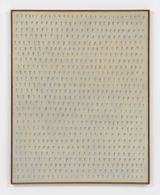
Within this broader context, Cho Yong-Ik: The Irreducible I revisits the signature marks that began to emerge in Cho’s work in the mid-1970s. In the series commonly known as Jumwha, or dot paintings, Cho laid diluted acrylic paint across the surface and, while it remained wet, pressed or scraped away its upper layer mark by mark, often with his bare thumb, exposing the contrasting ground beneath. In 77-208 (1977), dark, thumb-sized impressions punctuate the brown weave of burlap in loosely ordered rows and columns. Each bears subtle variations in pressure, density, and contour, creating a rhythm shaped by the hand rather than mechanical repetition. The subdued palette, material emphasis, serial repetition, and attention to the physical act of making would later situate Cho within the discourse of Dansaekhwa, the framework through which his practice has most often been understood.
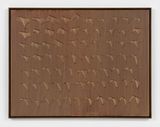
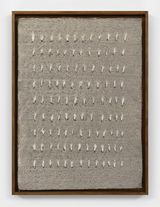
Entering the 1980s, Cho retained the warm, muted palette of beige, brown, and other earthy tones, while the rhythm of his gestures began to change. In the Wave series, the short, staccato marks of the earlier Jumwha paintings give way to undulating strokes that extend across the surface in a more continuous cadence. These sweeping gestures were closely bound to the movement and breath of the artist’s body, as Cho described works as being “in a state of breathing”. By the 1990s, these elongated gestures began to take on more recognizable forms. Repeated across the surface, the marks evoke both bamboo leaves—one of the traditional subjects of the Four Gentlemen in East Asian ink painting—and, at times, the calligraphic form of the Chinese character bu (不), denoting negation.
Yet these forms never fully settle into representation. They emerge gradually from the same repeated movements of the hand that had shaped Cho’s work since the 1970s, hovering between organic, natural form, and abstract mark. Here, the mark is made as much through subtraction as addition. Each act of removal is simultaneously generative, negating one state of the surface while bringing another into being. Through repetition, these successive gestures open up the passage of time as well as a spatial field across the canvas.
After an extended period of withdrawal from any artistic activity, Cho returned to painting with a renewed body of work in the early 2010s. The works of his final years are among his most vivid and exuberant, revisiting the gestures and techniques that had sustained his decades-long practice while introducing an increasingly saturated palette, from indigo to vermilion. Working across canvas, linen, burlap, and Korean paper, Cho continued to scrape, remove, and repeat until the final years of his life, carrying familiar rhythms into unexpected variations of color, density, and scale.
Long contextualized primarily through the lens of Dansaekhwa, Cho nevertheless occupies a distinct position within this artistic orbit. His sustained exploration of color, together with a prolonged retreat from the art world, complicates a straightforward alignment with a singular movement. His work emerged from the particular conditions of postwar Korea, at a moment when artists of his generation were continually challenging and renegotiating inherited traditions amid rapidly shifting sociopolitical and cultural realities. Across nearly three decades of teaching, from 1965 to 1992, at Seorabeol Art College (now Chung-Ang University) and Chugye University, Cho remained in close dialogue with successive generations of younger artists. Renewed attention to his work in the 2000s led to a series of solo exhibitions, culminating in his first large-scale institutional retrospective at Sungkok Art Museum in Seoul in 2016, at the age of 82.
The questions that animated Cho’s practice, from searching for a sense of self amid sweeping change to establishing and renewing a language of one’s own, extend beyond a particular geography or historical moment. It is this delicate yet persistent balance between continuity and change, between preserving what is one’s own without letting it become fixed, that gives Cho’s practice its continued relevance today.
—Taeyi Kim
During the exhibition, Kiang Malingue New York will host a public program co-conceived in collaboration with Taeyi Kim (Curatorial Fellow, the New Museum, New York). Details to be announced.
A respected voice in contemporary art discourse.
Focusing on ambitious storytelling and insightful art-world commentary. Ocula Magazine publishes in-depth interviews, critical essays and timely analysis on the artists, exhibitions and ideas driving the global art world.
Learn more about Ocula Magazine
Showcasing the best of the art world.
Ocula partners with galleries from around the world to highlight their artists, artworks and exhibitions. Gallery membership is by application and invitation, with each member vetted by an independent panel.
Learn more about Ocula Membership

Specialises in the sale of major artworks.
Led by a team with deep ties to the world’s leading auction houses, galleries and collectors. Ocula’s advisory team offers bespoke services to high-net-worth clients from around the world who are looking to acquire the best of contemporary and modern art.
Learn more about our team and services