




Moon Kyungwon and Jeon Joonho's Post-Apocalyptic Universe
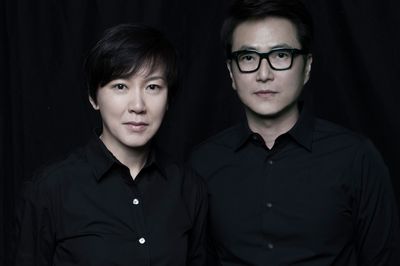
Photo by Yong-Ho Kim
Artists Moon Kyungwon and Jeon Joonho established their styles and names individually, but have created an undeniable synergy working together since 2009.
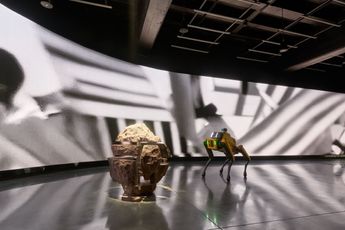
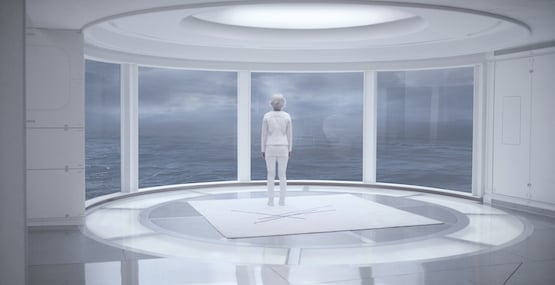
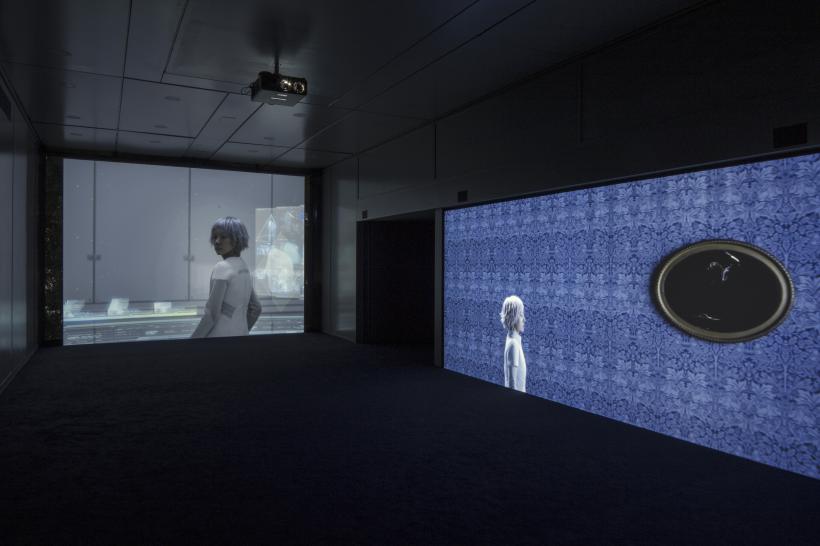
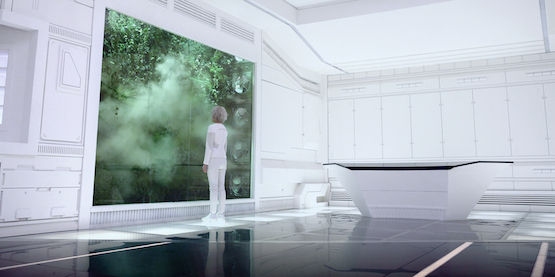
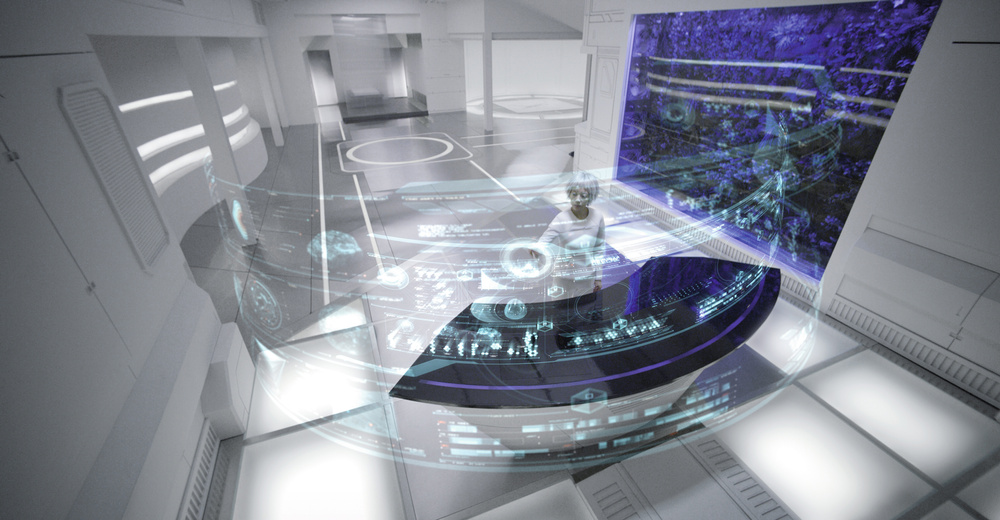
The duo won the Korea Artist Prize at the National Museum of Modern and Contemporary Art, Korea, in 2012, and participated in dOCUMENTA the same year, with News From Nowhere (2012), which takes its name from William Morris’ 1890’s book of the same name. Presented as a film, an installation, a publication, and a website, the work explores a world in which humans have been wiped out by natural and man-made disasters.
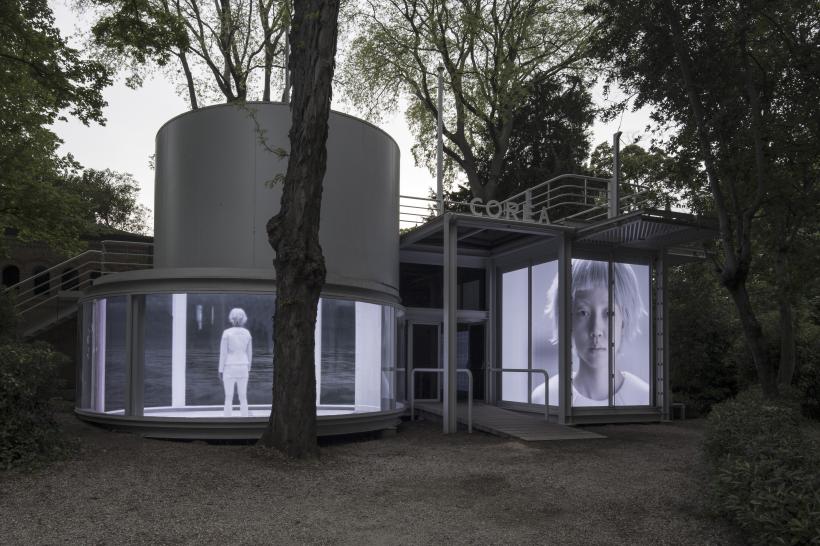
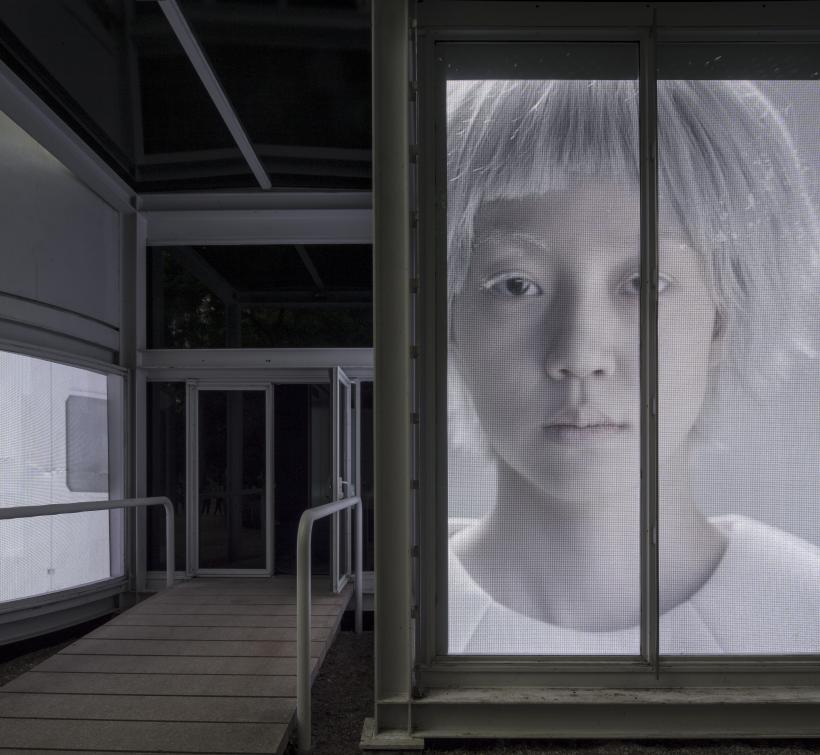
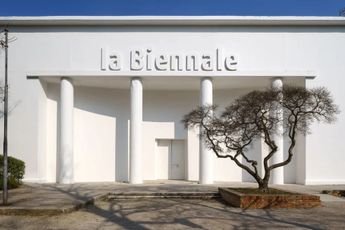
The Ways of Folding Space & Flying, a site-specific work created for the Korean Pavilion at the 56th Venice Biennale, further expands the artists’ post-apocalyptic universe, while integrating Taoist beliefs of supernatural abilities achieved through strict discipline: the title of the 10’30” video installation draws on the Korean words ‘chukjibeop’, associated in Taoism with contracting distance, and ‘bihaengsul’, which describes a supernatural ability to fly and time travel.
Curated by Lee Sook-kyung of the Tate Research Centre, the work is a retro-future look at civilisation through its architectures, with the institutional and architectural forms of the Venice Biennale itself woven into the narrative. The artists expand on the work in this interview.
IM: How did you two first meet and begin working together in art?
MK & JJ: Since 2007 we have had a lot of opportunities to participate in the same group shows. We naturally began to talk to each other about the exhibitions and our work. In particular, we started having deep discussions about the station of artwork within society, in addition to what the role of the artist is and issues in contemporary art today.
At that time, we were already fed up, feeling irritated about wasteful exhibitions and art production. We desperately wanted to find the reason why artists should exist and discover some hopeful potential from among the meaningless art. That’s how we started projects that seek out this potential, together with various people we’ve met in fields outside of art.
IM: Your work is increasingly interdisciplinary, i.e., News from Nowhere. How do you select which people to collaborate with and what is that process like?
MK & JJ: We decided to feel out the social utility and role of art and its potential functionality while actually making practical creations (whether or not the final result was called “art”) with practitioners of the arts such as architecture, design and fashion—but not visual—that moved us beyond discussions that merely exchange perspectives on issues.
But during that process we began to feel an urgent necessity about the universal study and aspiration for beauty retained in humans and the function of the arts within our society. That’s how we started the interview project in which we meet and speak with people in other fields such as medicine, the humanities, science and society.
As we moved forward with this project, the most important point we stressed was the restoration of today’s art from its warped state and the study of the relationship between life and functionality. Along this journey, the starting point for all those involved was the idea “Let’s return to the beginning!” This somewhat typical departure was a fateful, epochal point on which to reminisce the role and form of today’s art. Let’s say the era in which we lived had ended. All of mankind’s civilization had disappeared into the depths of water.
From this calamity, a few survivors begin a new life within a barren environment. As an architect, what would be most important in building a house for man to pioneer new life? What would become of fashion or design? Furthermore, what about art? These questions and, subsequently, their answers became the pivotal focus of_News from Nowhere._
For this project, we looked for collaborators who could share our critical perspective both seriously and sincerely. That is, people who could generate questions and alternatives to contemporary society, who also question modern mankind. We did a lot of research and sought information through myriad methodologies in order to make this happen.
IM: Your videos, in addition to being highly polished productions, also include very famous actors, like Im Soo-jung and Lee Jung-jae. What was your intention in bringing such recognizable faces to your work, and was that a difficult step to actualize?
MK & JJ: Our works all have a producer. Her name is Oh Jung-wan, executive director of Bom Film Production, an important contributor to the development of the Korean film industry, and she oversees our entire production from casting to staff hiring and shooting. We cast actors who can assume the image and best describe the character we envisioned for the protagonist in the work.
Of course, the actors are one of the most important pieces of this. They must have the intent to become involved in our non-commercial, experimental work, and it is an extremely important aspect that they aren’t just actors, but participating as collaborators. So to us, the actors are another form of collaborator.
“As we moved forward with this project, the most important point we stressed was the restoration of today’s art from its warped state and the study of the relationship between life and functionality.”
IM: Your exploration of the role and function of art examines the interdisciplinary and turns a critical eye to stagnant concepts of contemporary, visual art. Was there a particular moment or incident that made you expand your perspective and ask questions as to art’s function?
MK & JJ: Art that operates solely and is spoken of exclusively within the art world can no longer be called such. Art should be shared with anyone and produced by everyone, and must be able to be enjoyed by all. This freedom of creativity and enjoyment will lead to diversification. And diversification will lay the foundation for art to be honest and sound.
However, art today remains only within the boundaries of the art world. As ever, this includes the politics of art and imitation, exhibition practices, the absence of criticism, the collusion of the art market and cultural exclusivity. As mentioned earlier, this uncertainty about the artist’s own existence and issues of the art world served as the motivation for News from Nowhere.
IM: Why do you feel that reevaluation is poignant today?
MK & JJ: If the quality and values of life today were true and there were no conflict or disputes, we wouldn’t be echoing these questions back and forth. But the fact that we are speaking out, along with the many others both interested in and participating in this project, demonstrates that we do carry this awareness of the circumstances we’re faced with and the status of our selves. And it is an extremely serious situation.
This project isn’t about purporting blind criticism or whimsical analysis. Unseeing criticism and subjective analysis without alternative does not achieve sympathy or accountability. The reason why we investigate and collaborate with people from different fields is so that we can clarify and make transparent, at least slightly, our own place within a stagnant and warped value system—which is also evidence to the fact that in today’s age, we breathe alongside and together with art.
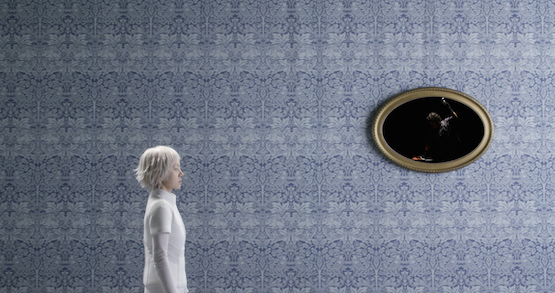
IM: Since you two became an artist duo, how do you maintain a balance of individual vs collaborative work? What is the breakdown of your two roles in this duo?
MK & JJ: As much as possible, we try not to keep that sort of system. We’re always trying to leave behind the categorization of our roles. So as to avoid stagnation, we work as flexibly and freely as possible together in tandem with our individual work.
“This project isn’t about purporting blind criticism or whimsical analysis. Unseeing criticism and subjective analysis without alternativedoes not achieve sympathy or accountability.”
IM: Could you tell me more about The Ways of Folding Space & Flying at the Korean Pavilion in Venice? What is the origin of that title and what kind of content will the pavilion include?
MK & JJ: Half of the work’s title in Korean, ‘chukjibeop’, signifies ‘how to contract physical distance’, which references a Taoist practice that enables one to move much more quickly between a space than normal. It’s a phrase for the diverse techniques of fast movement, and signifies in etymology the power to compress physical distance.
The other half of the title is ‘Bihaengsul’, or the supernatural power to move between space and time. It arises from the early human desire to achieve an unknown ability beyond man, the power to fly the skies. The method of attaining a completely free state in spirit and body, beyond the physical world of gravity, through extreme asceticism was researched in the ancient East. Bihaengsul, of man’s spirit and body that does not rely on scientific techniques, lives on today as valid hypothesis.
The seemingly illogical concepts of ‘chukjibeop’ and ‘bihaengsul’ echo the curiously unexplainable facet of art that is based on the human desire to imagine and challenge physical limitations. Through the character in our film, who persistently seeks change, we intend to raise questions about art and its role and function.
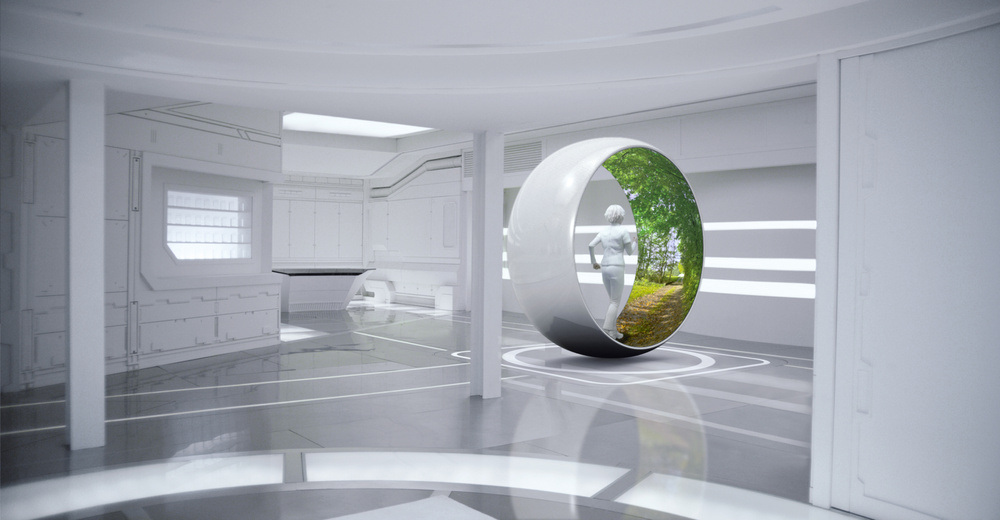
The new project for the Korean Pavilion of the Venice Biennale is a video installation that utilizes the architectural characteristics of the space. The Korean Pavilion, which was the last of the national structures to be erected in the Giardini, is a piece of architecture with a lot of difficulties in terms of exhibition as it was constructed according to strict regulations and restrictions.
But also, because of this, it’s a structure that makes you consider new challenges. We thought to make the architecture as a whole into a sort of buoy upon which video unfolds. The content and environment of the video we will show retains a connection to our ongoing project.
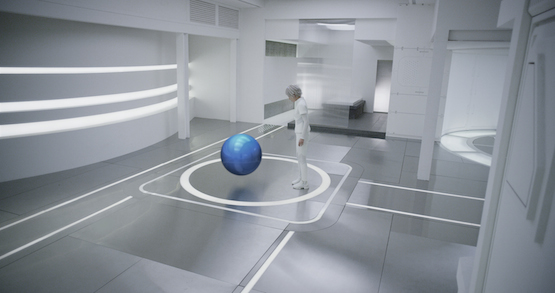
The story unfolds under the premise that after this cataclysmic event, when most of the earth, including Venice, is underwater, the Korean Pavilion floats alone like a buoy. Our thoughts about art unfold through the strange experiences and intended encounters of a single human being surviving in this limited space.
IM: Where do your readings and texts typically come from? From William Morris to Korean mythology and the incorporation of poets and philosophers today, your work references such a broad range of readings. Is there anything in particular you’re reading now or are interested in investigating further?
MK & JJ: Rather than focusing on any particular literature or field, we try to encounter as much information and content as possible with an open perspective. New inspirations come to us through constant attention and thought. It doesn’t happen by chance.
That being said, we don’t specifically seek materials looking to be influenced. We rather tend to get inspired by new concepts that we naturally encounter as we go with the flow. —[O]
Main image: Photo by Yong-Ho Kim



A respected voice in contemporary art discourse.
Focusing on ambitious storytelling and insightful art-world commentary. Ocula Magazine publishes in-depth interviews, critical essays and timely analysis on the artists, exhibitions and ideas driving the global art world.
Learn more about Ocula Magazine
Showcasing the best of the art world.
Ocula partners with galleries from around the world to highlight their artists, artworks and exhibitions. Gallery membership is by application and invitation, with each member vetted by an independent panel.
Learn more about Ocula Membership
Specialises in the sale of major artworks.
Led by a team with deep ties to the world’s leading auction houses, galleries and collectors. Ocula’s advisory team offers bespoke services to high-net-worth clients from around the world who are looking to acquire the best of contemporary and modern art.
Learn more about our team and services