





Natasha Tontey: ‘Dystopia Is Already Here’
The third instalment of the Indonesian artist’s film series takes us back to a reimagined version of a 1950s war and reconsiders how histories are told. Save to My Ocula
Speculative fabulation and Minahasan cosmology come together in the work of Indonesian artist Natasha Tontey. While departing from established regional aesthetic norms, she is now among the most sought-after Southeast Asian artists on Western institutional circuits. I first encountered her work around 2022, when her distinctive collage-driven aesthetic positioned Indigenous knowledge within a globally legible, theory-inflected framework. It is a position her current film series, Macho Mystic Meltdown, begins to unsettle.
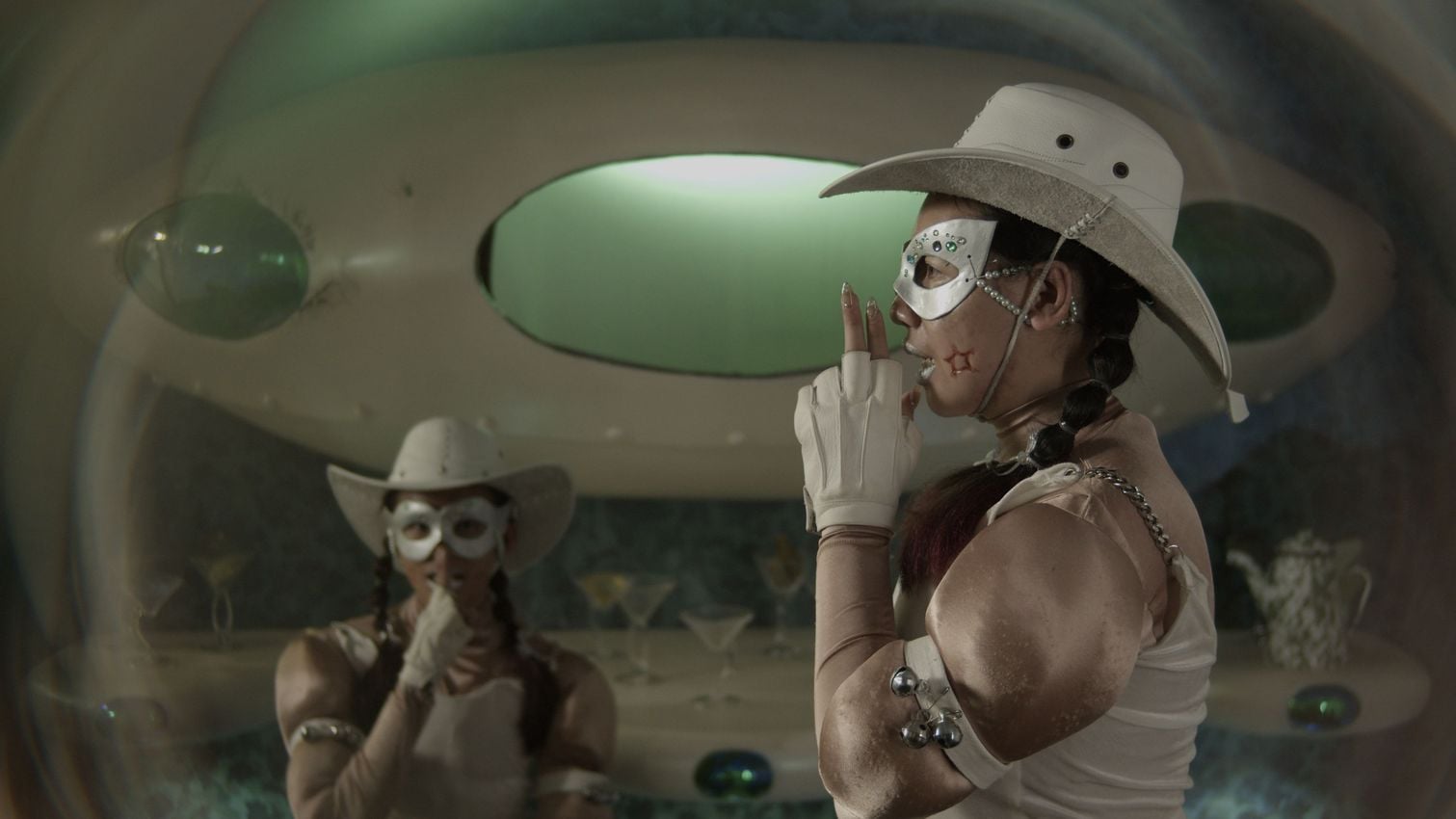
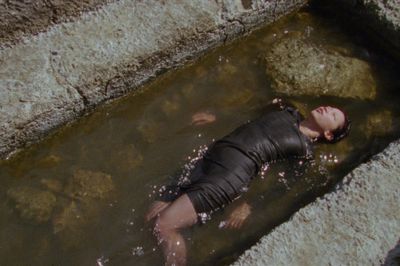
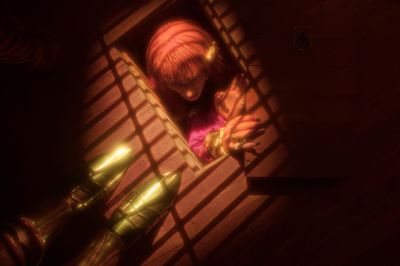
Following last year’s debut of the first chapter, Oikoumenē (2025), in which she imagined her own father’s disappearance at sea, Tontey turned in the second chapter, Monster, She Wrote (2026) to fondly recounted oral narratives around the legendary Len Karamoy, a female combatant in the Permesta rebellion of the late 1950s. While contributing to North Sulawesi’s push for autonomy against Jakarta’s centralised rule, Tontey reflects upon the ways in which Len’s voice, like those of many women from the same period in the country, has largely been reduced since to that of a general’s wife. The third chapter, The Phantom Combatants (2026) also features Len Karamoy, but reimagines her not as a single figure but as a mythic presence.
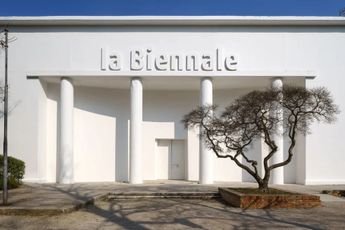
Our conversation began as Tontey was erecting a scaffolding structure inside a Venetian scuola for The Phantom Combatants, a gesture that half-echoes the historic production of epic murals yet reworks the form to unsettle Minahasan patriarchal norms. Produced by Berlin-based LAS Art Foundation and Helsinki’s Amos Rex, it is staged separately from the surrounding national pavilion framework of the Venice Biennale, even as Indonesia returns to the event for the first time since 2019. In conversation, Tontey reflects on heroism, militarised masculinity and its deconstruction, as well as her fascination with unstable bodies—where humour, violence, mythology and political memory uneasily co-exist.
SSQ: Your previous works before Macho Mystic Meltdown presented more-than-human universes. What drives you now to the particular historical background of the Permesta rebellion?
NT: I see my earlier projects as a kind of pilgrimage toward Minahasan culture—an encounter with indigenous roots, cosmology and ancestral memory. With Macho Mystic Meltdown, I am rethinking what it means to become a Minahasan artist. Despite rich cosmologies, Minahasa also carries machismo and historical vanity. For me, it means also refusing to behave “nicely” within history. I approach it not with pure reverence, but with love, suspicion, humour, and even a bit of bad taste.
“I am rethinking what it means to become a Minahasan artist”
Permesta existed around me as a contested memory. Growing up, I heard very different versions of it. In official history, it is framed as a rebellion, but within Minahasan memory it often appears as a source of pride or an unfinished struggle. I’m interested in its contradictions and tensions. But it was not until my encounter with Len Karamoy, a woman combatant in the Permesta War, that I could really start to construct this work. Women in war are barely mentioned in written text, but Karamoy is such a powerful and vivid presence in oral histories and among the Minahasan diaspora, sometimes remembered almost as a supernatural figure. Karamoy exists in fragments: admiration, rumour, exaggeration and silence. My work stays with that gap, asking how history is shaped—who gets recorded, who becomes mythologised, and who remains at the margins.
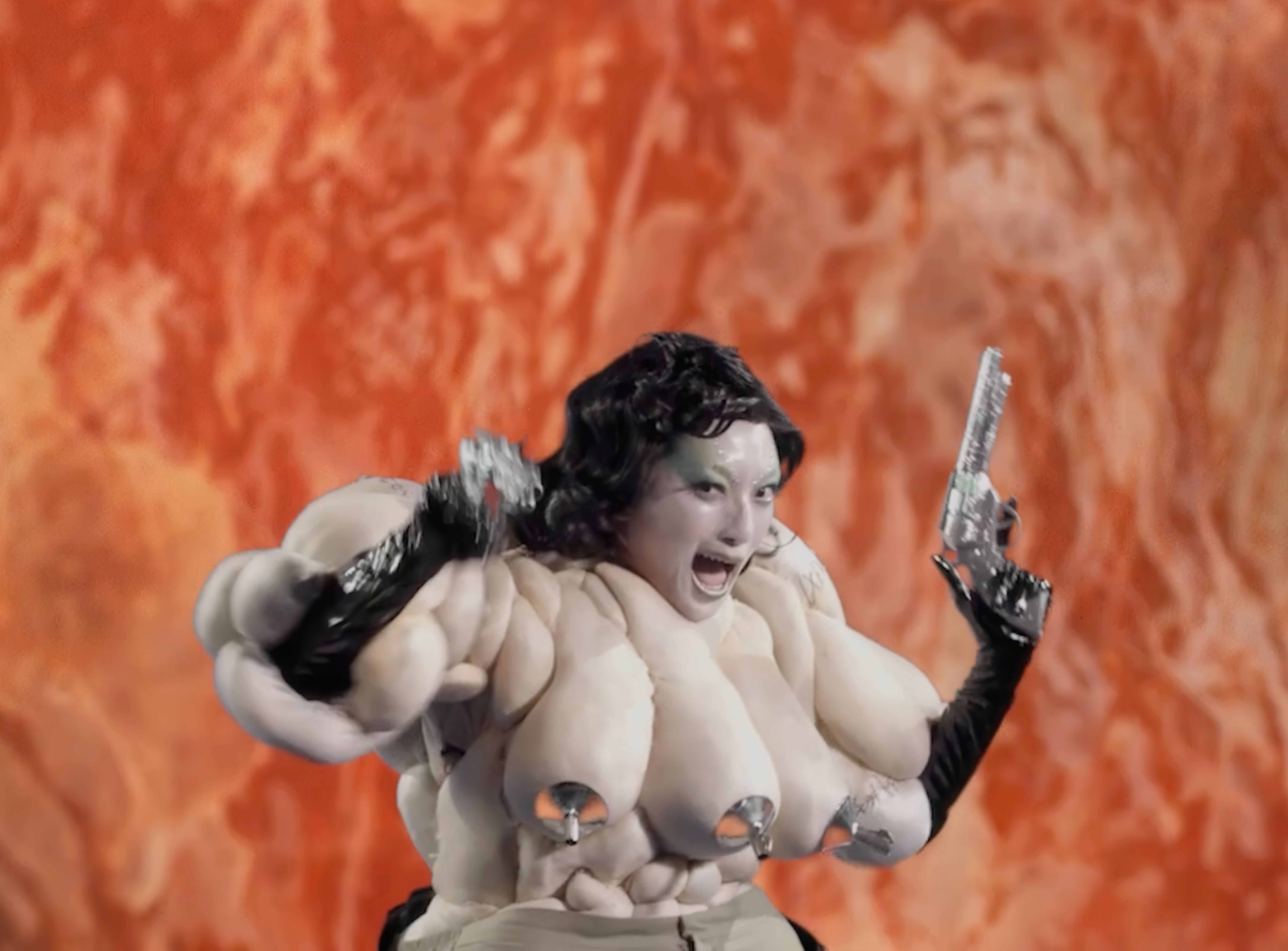
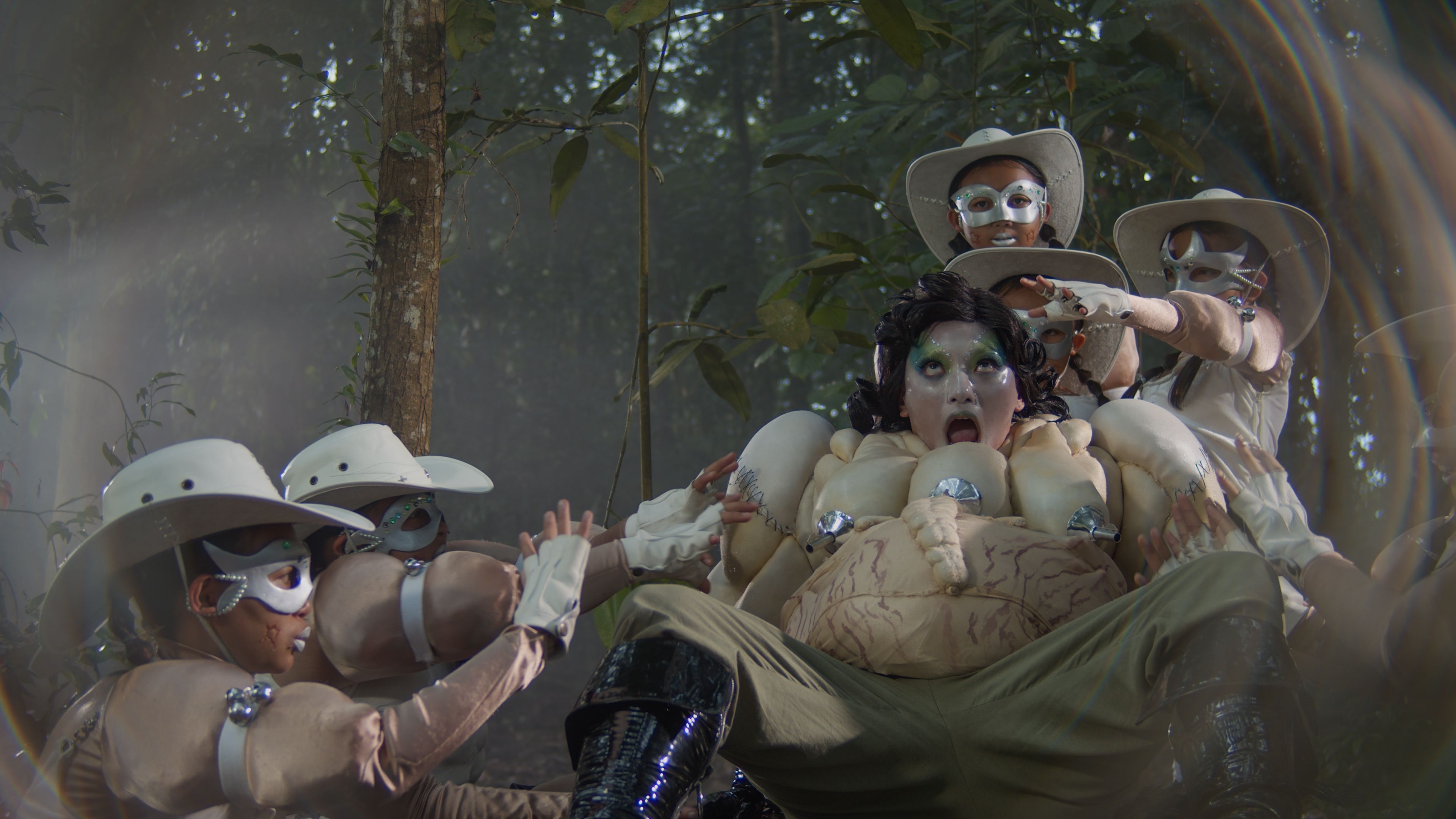
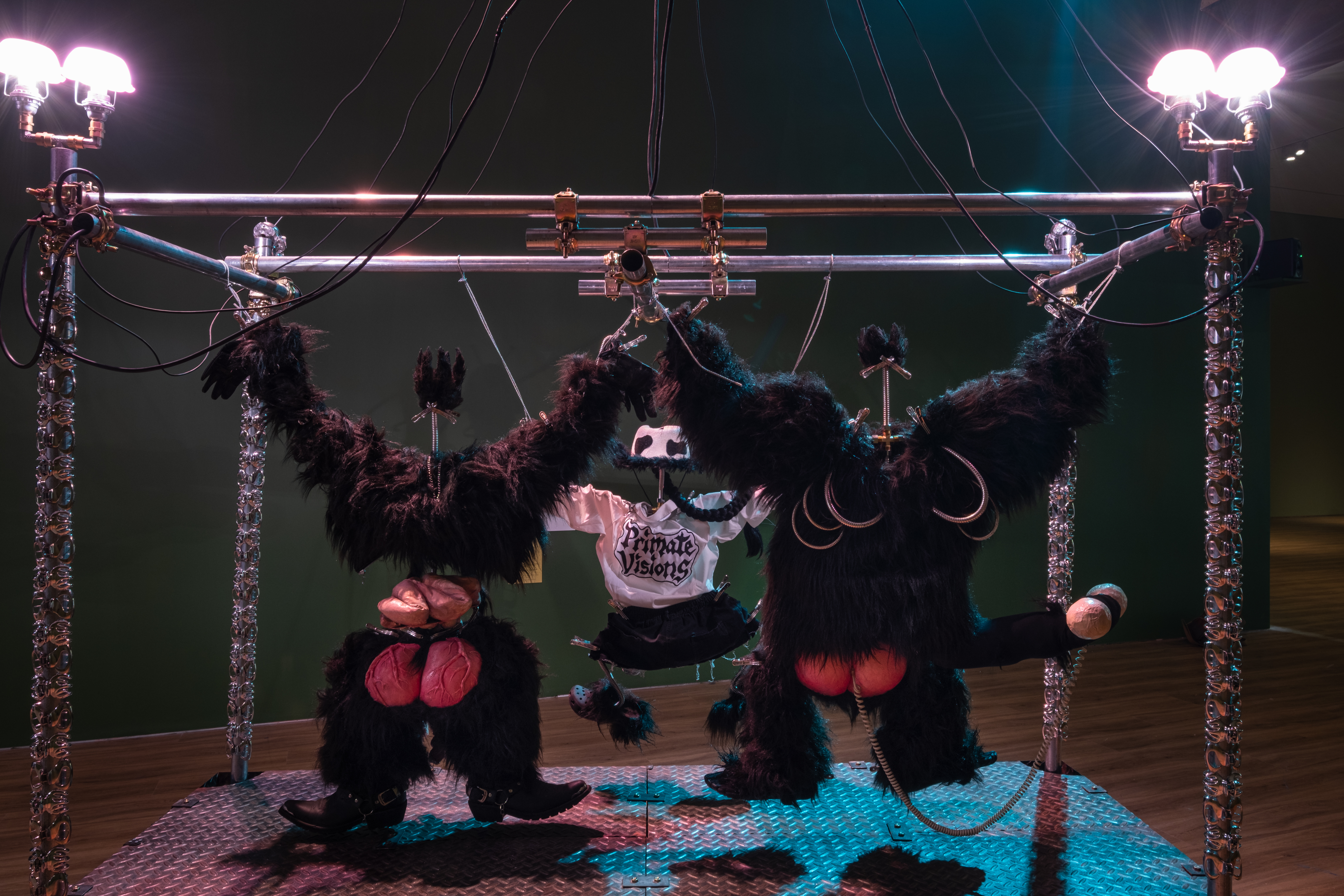
SSQ: The Phantom Combatants disrupts military masculinity through motifs of fertility, mutation and ritual, visible in its costumes, including multi-breasted forms, masked shamans and skeletal figures. How did you map these out?
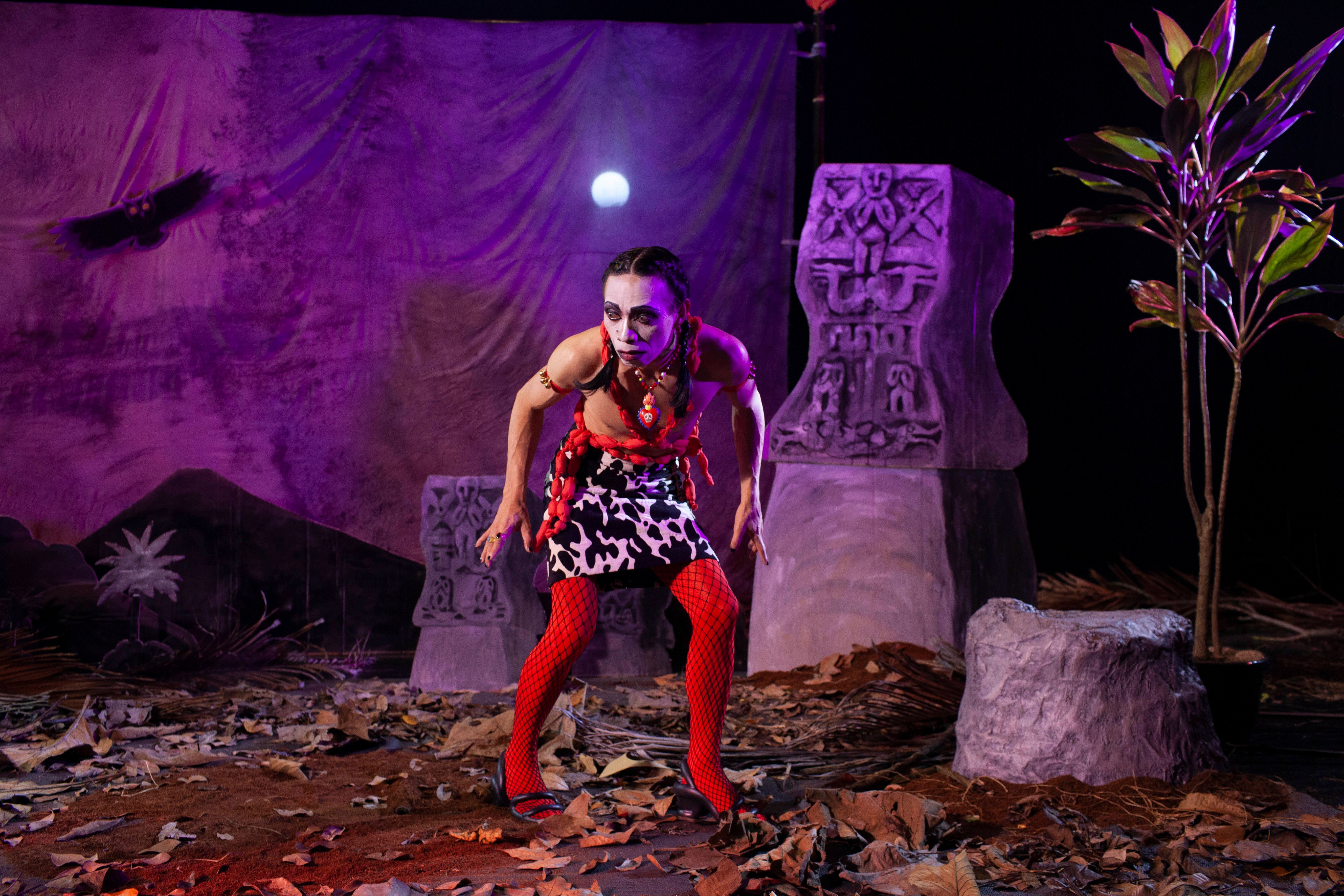
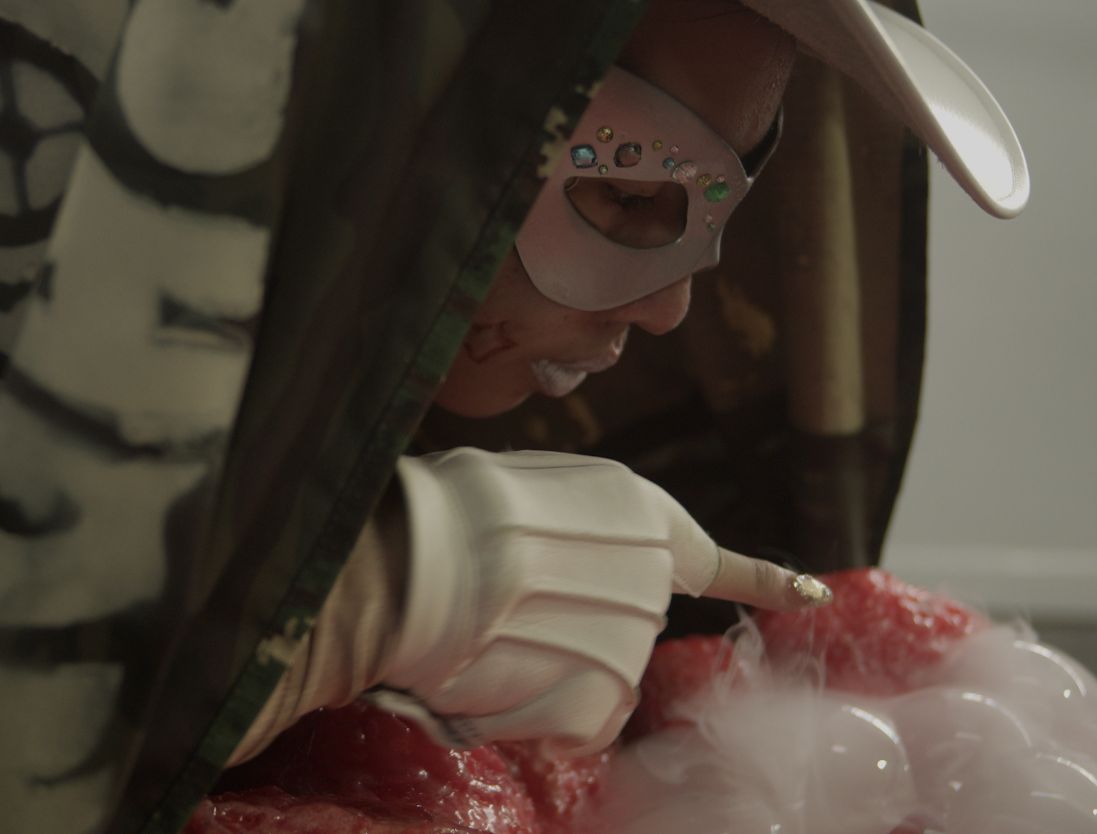
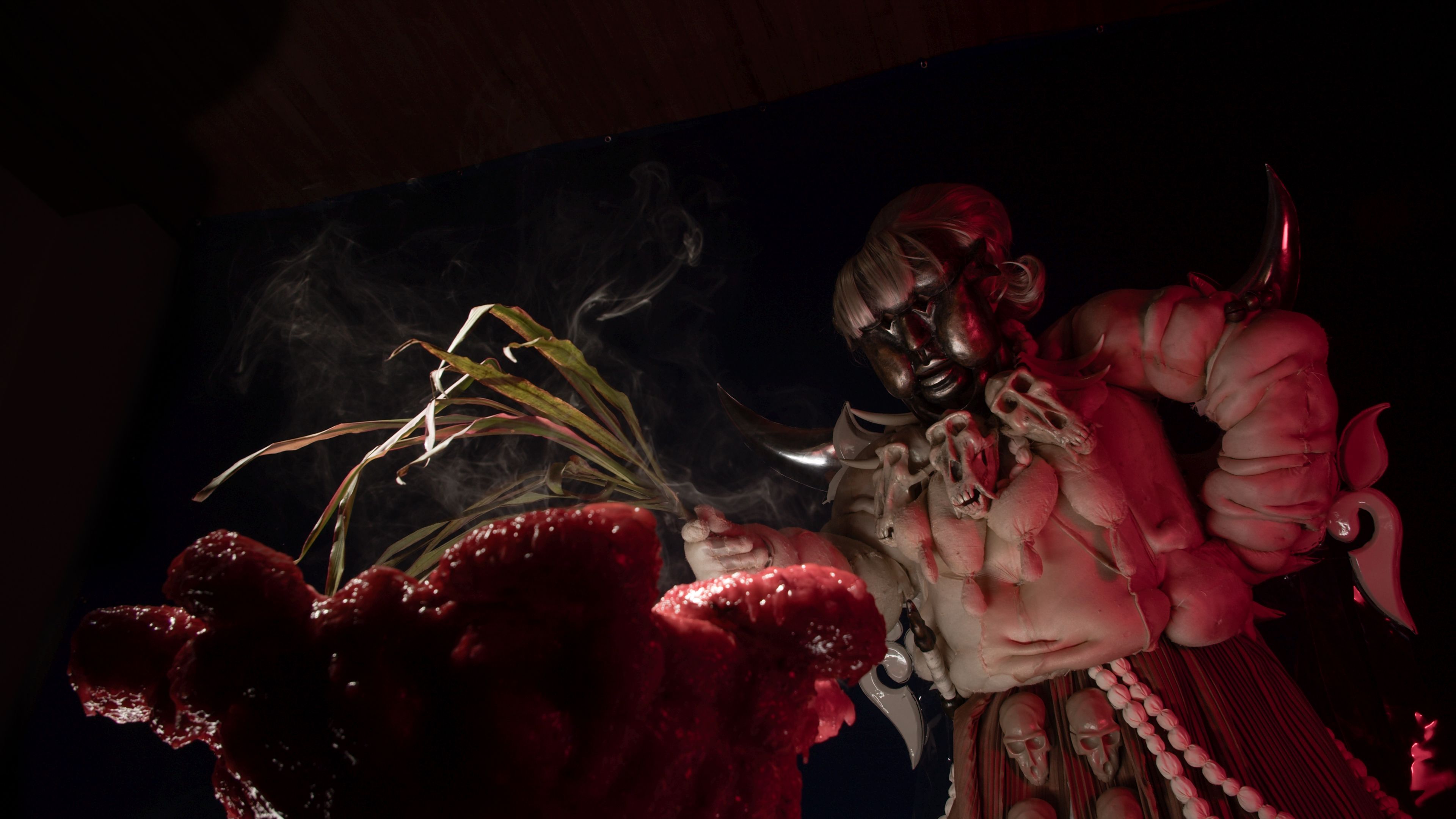
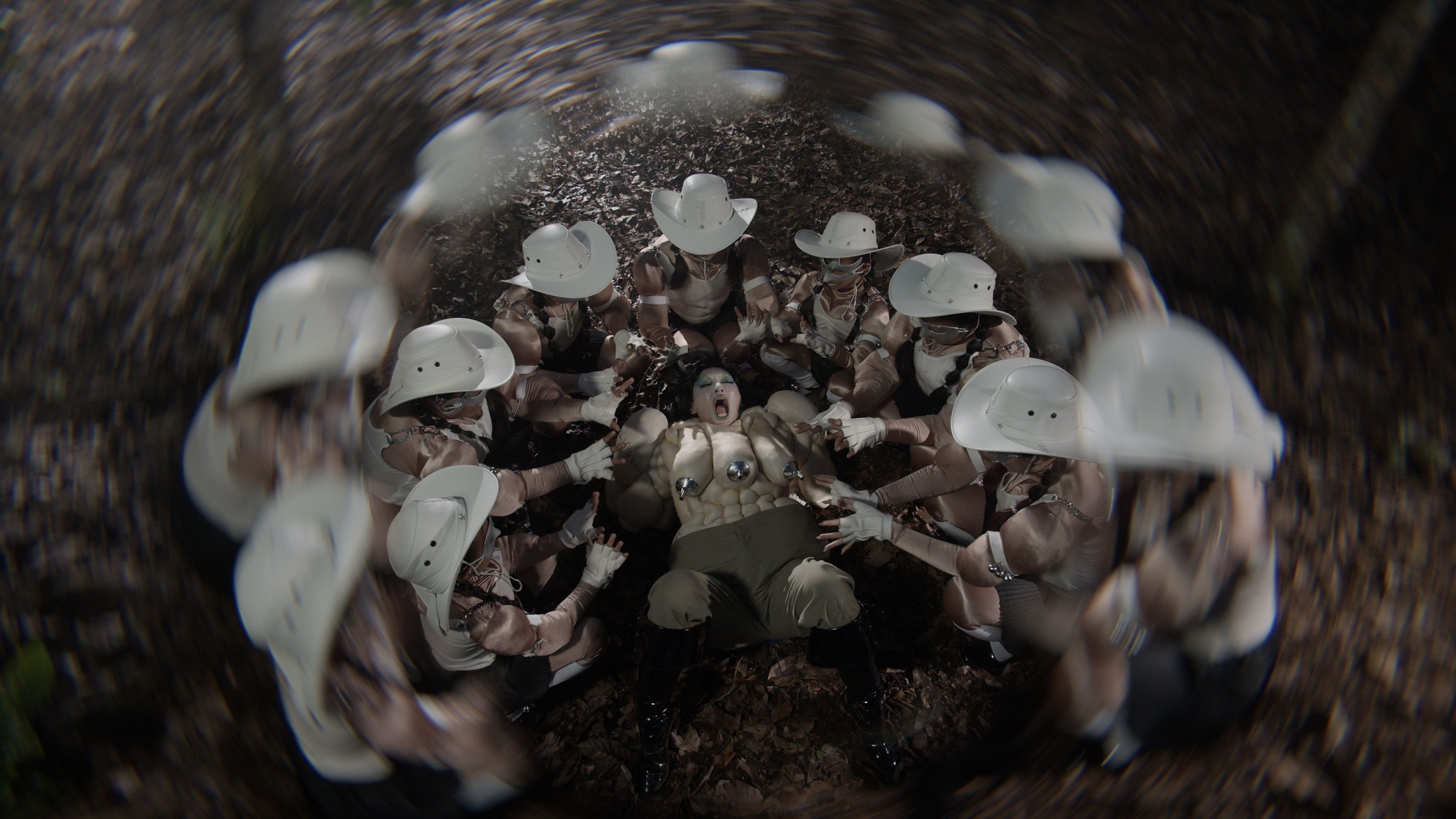
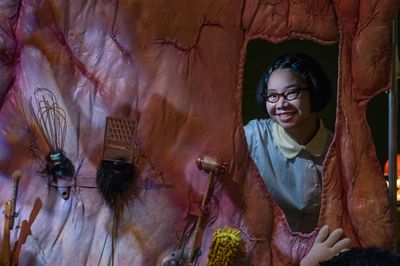
NT: I am interested in presenting the combatant as a contradictory body: disciplined by history, yet capable of leaking, mutating and becoming something else. I wanted to disrupt that language through hybrid, unstable figures, such as the growing three-breasted forms of the protagonist. It started with an idea of nourishments, suggesting excess, burden and bodies pushed beyond social legibility.
“My work asks how history is shaped—who becomes mythologised, and who remains at the margins”
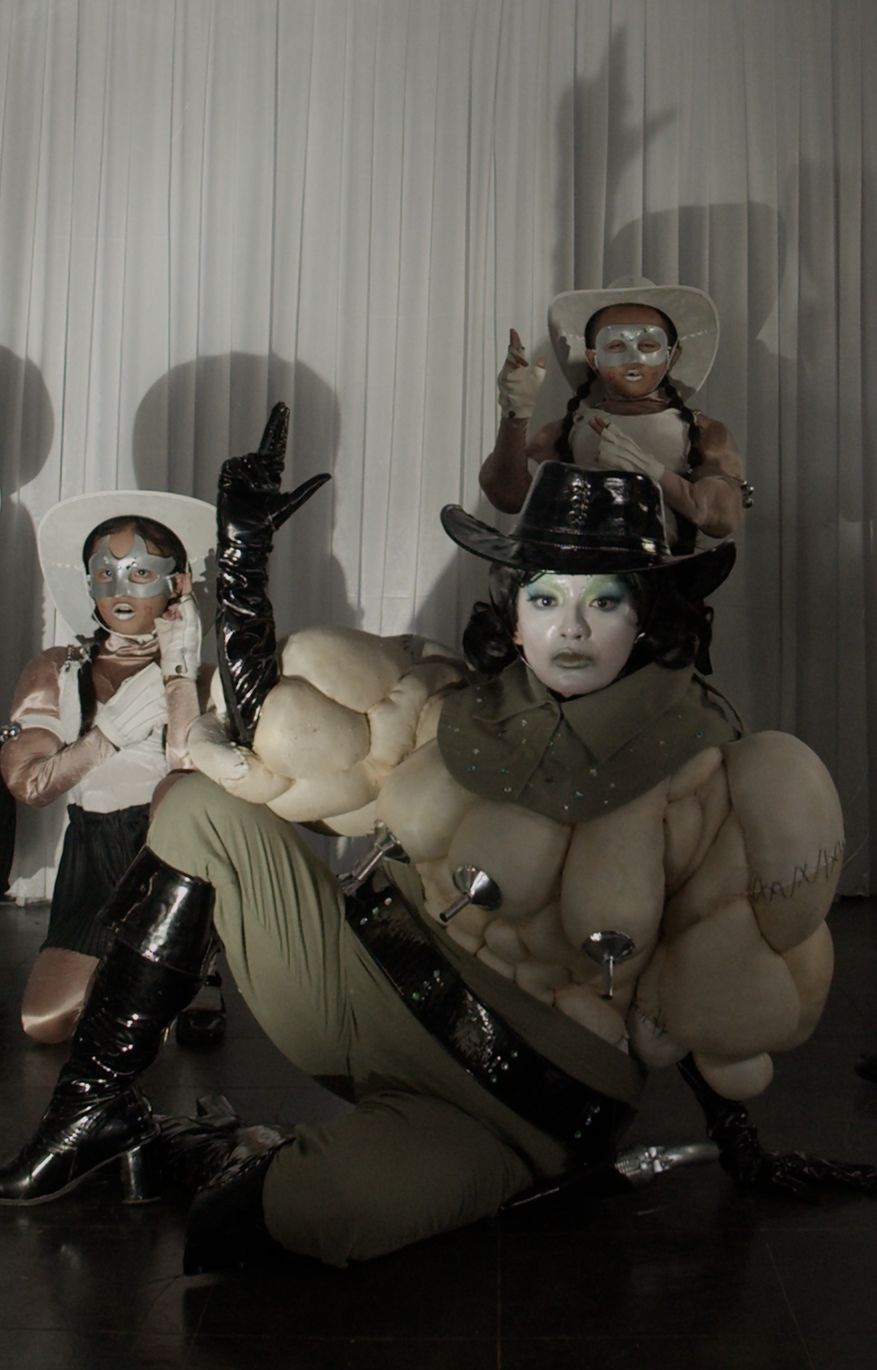
SSQ: It also connects armed struggle with forms of reproduction—not only biological, but also the reproduction of labour, trauma and ideology.
NT: For me, costume functions as an unstable surface where histories collide and generate mutant forms. The shaman figure in The Phantom Combatants—who resembles a silver-haired crone—moves between prophecy, ritual and pharmacology, functioning as a temporal disturbance. The skeletal imagery draws partly from stories around Jin Kasuang, a Permesta battalion associated with rumours of cannibalism as revenge against central government soldiers, understood as a violent, historical response to conflict.
SSQ: Now that we’ve arrived at the topic of costume, is there one prop or costume that feels the craziest to you?
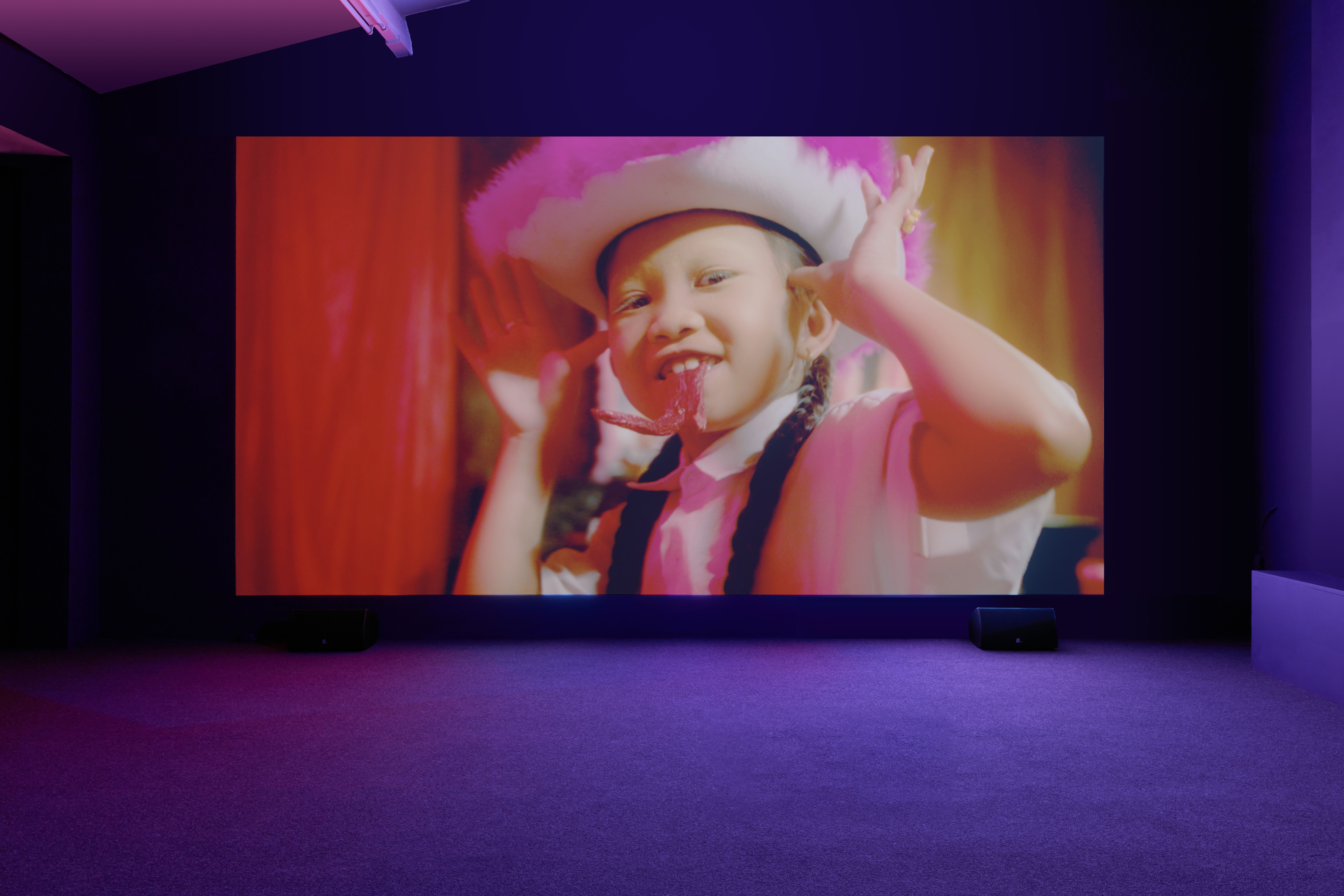
NT: Now maybe it’s the “Vagina Dentata” in The Phantom Combatants. In the scene where the combatant is giving birth, a teeth-shaped, monster-like creature is born. It’s almost like a hand puppet.
SSQ: You’ve been widely commissioned and exhibited internationally. How was your work initially received in Indonesia?
NT: I was once banned by the Indonesia Ministry [of Education, Culture, Research and Technology] for a performance work in 2017 that was seen [to be] in conflict with Islamic traditions. After that, it was only in 2024 that I had a second solo exhibition at an institution in Indonesia. But I often show my work in the Minahasan community while I am there, in what is more like a community gathering.
“I am interested in presenting the combatant as a contradictory body”
SSQ: You often show up at openings and events dressed in ways that resemble the characters in your work. Could you name three Indonesian fashion brands or designers you would wear?
NT: There is one fashion and accessory brand called Jvstify, founded by designers Agra Satria and Yasmine Yesy around the 2010s, raw and playful. But it no longer exists. If I had the money, I would absolutely wear the couture pieces by Kraton by Agusto Soesastro. It’s very dramatic. I also dream of owning pieces by Ovelia Transtoto, too. Her works combine elegance and intensity
SSQ: You have created so many dystopias in your art. How do you envision the future of our reality?
NT: I don’t see the future as purely dystopian—I think dystopia is already here. It just isn’t experienced equally: for some, it’s a crisis; for others, convenience. In my work, dystopia becomes a way to exaggerate and make visible what already exists: extraction, ecological collapse, militarism, technological control and the disciplining of bodies.
“Costume functions as an unstable surface where histories collide and generate mutant forms”
At the same time, I’m interested in a future that is strange and unfinished, where other forms of relation might still emerge. Rather than a single, grand apocalypse, I imagine the future as a messy field of overlapping conditions—collapse, adaptation and possibility coexisting at once. —[O]
Natasha Tontey, The Phantom Combatants (6 May–25 October) at Ateneo Veneto di Scienze, Lettere ed Arti.
Palette Cleanser is a weekly interview series with the artists you need to watch, as selected by our editors.
Main image: Natasha Tontey, The Phantom Combatants and the Metabolism of Disobedient Organs (2026). Commissioned by LAS Art Foundation and Amos Rex. © 2026 Natasha Tontey. Courtesy the artist.







A respected voice in contemporary art discourse.
Focusing on ambitious storytelling and insightful art-world commentary. Ocula Magazine publishes in-depth interviews, critical essays and timely analysis on the artists, exhibitions and ideas driving the global art world.
Learn more about Ocula Magazine
Showcasing the best of the art world.
Ocula partners with galleries from around the world to highlight their artists, artworks and exhibitions. Gallery membership is by application and invitation, with each member vetted by an independent panel.
Learn more about Ocula Membership
Specialises in the sale of major artworks.
Led by a team with deep ties to the world’s leading auction houses, galleries and collectors. Ocula’s advisory team offers bespoke services to high-net-worth clients from around the world who are looking to acquire the best of contemporary and modern art.
Learn more about our team and services