





Nick Goss: ‘I’m Combining Places That Do Exist to Create a Fiction’
The Anglo‑Dutch painter brings new life to a legendary hotel on an island in the Thames, beloved of jazz musicians, beatniks and rock stars during the 1960s. Save to My Ocula
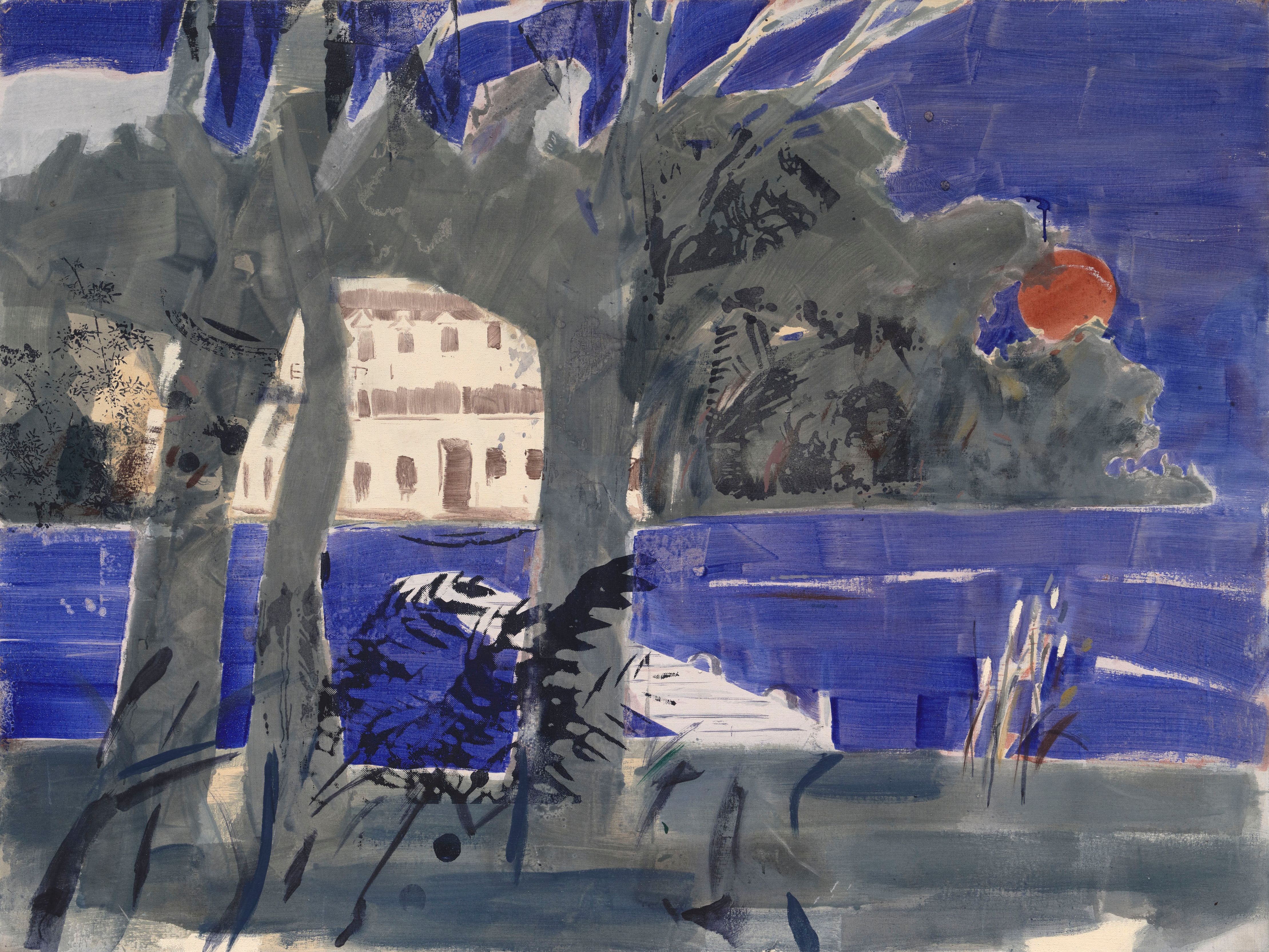
Nothing makes me more keenly aware of the fact that I live on an island than looking at Nick Goss’ paintings. The canvases that punctuate the walls of his east London studio are portholes looking on to an array of half-imagined, watery counterfactuals. What if the north-eastern tip of Kent was still an island, as it was up until the middle of the last millennium? What if London flooded? What if the whole country flooded?
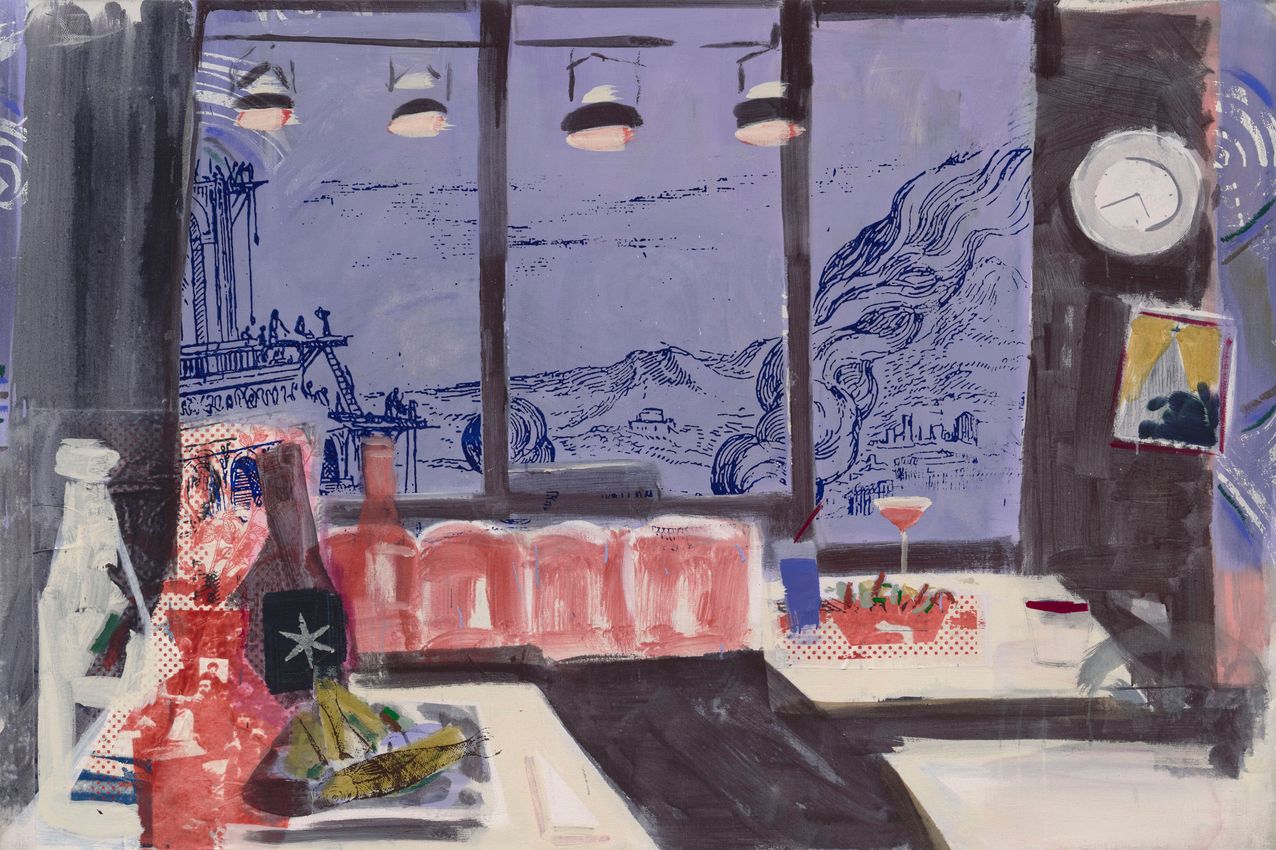
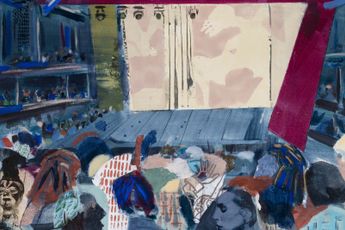
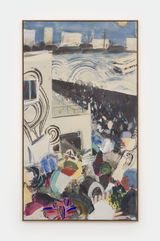
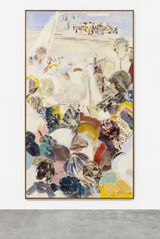
When I speak with Goss on the phone, he is on a trip to Vienna, having just finished the paintings that make up his solo exhibition, Eel Pie Hotel at Josh Lilley gallery. His subject is a real hotel that once stood on an island in the River Thames, which became a venue for starry jazz and rock concerts during the 1950s and 1960s before burning down in a mysterious fire in 1971. Each painting mingles historical images from the hotel and beyond (gathered by Goss from various archives) with contemporary advertising imagery and stills from films by mid-century Italian director Federico Fellini. He transmutes the materials into half-imagined scenes of the hotel, silkscreened on to canvas.
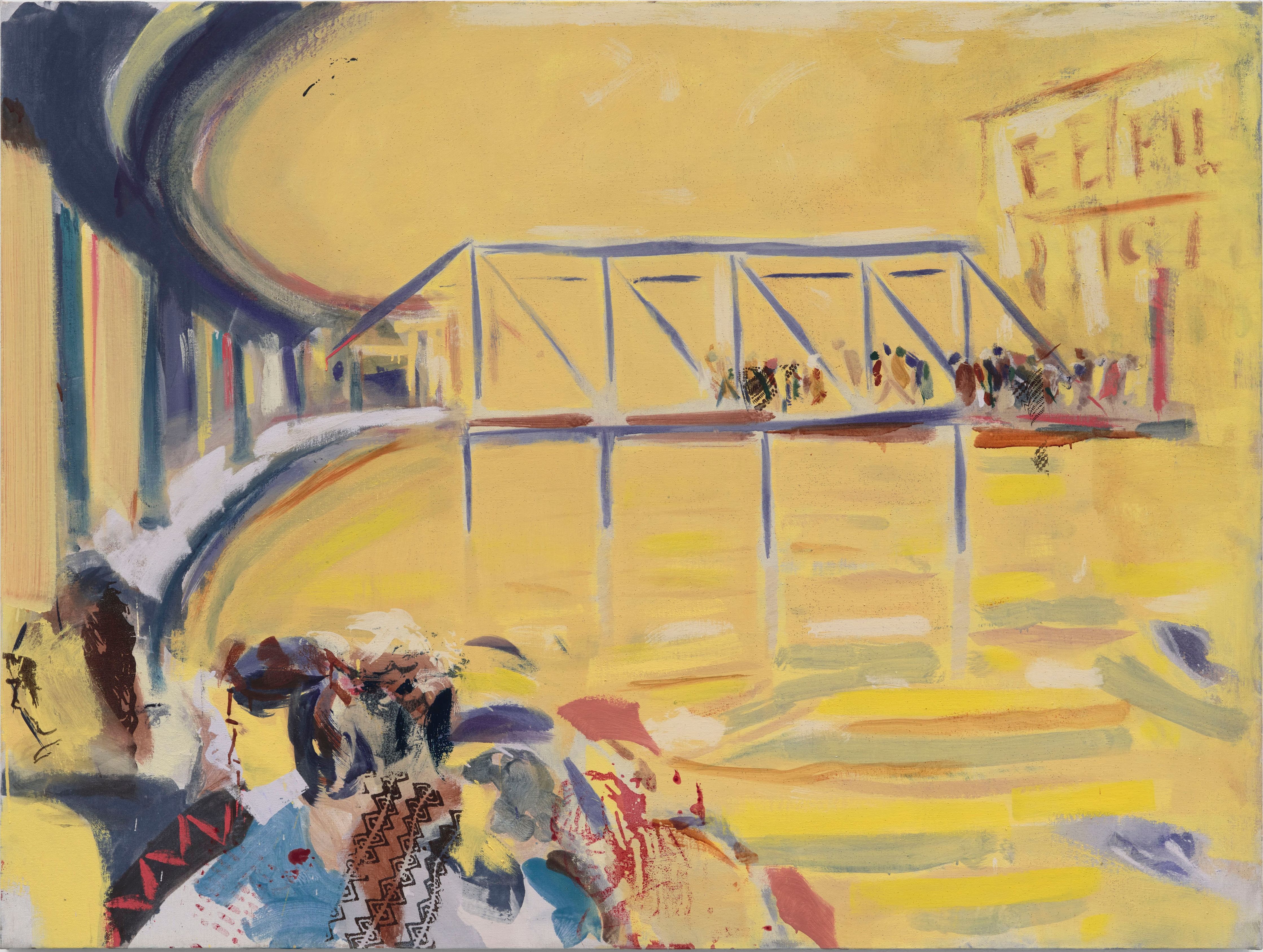
Goss’ paintings place an incongruous cast of characters into scenes that often feel deliberately ambiguous. Though there’s no explicit conflict within the images, there’s often a lingering anxiety: the sense that a raucous concert might turn into a brawl, or that a group of people gathered at the water’s edge might start tumbling in like dominoes.
PJ: Until the 1970s, Eel Pie Hotel was a real place—how close to its subject matter does this show come? Is it a history or a fiction?
NG: That tension is what interests me when I’m painting, and also where screen printing and borrowing imagery from other sources is useful. Eel Pie Island is a real place, but I’ve pieced [a version of] it together from many different places that I’ve passed through and taken photos, or seen in films. I’m combining all of these places that do exist to create a fiction.


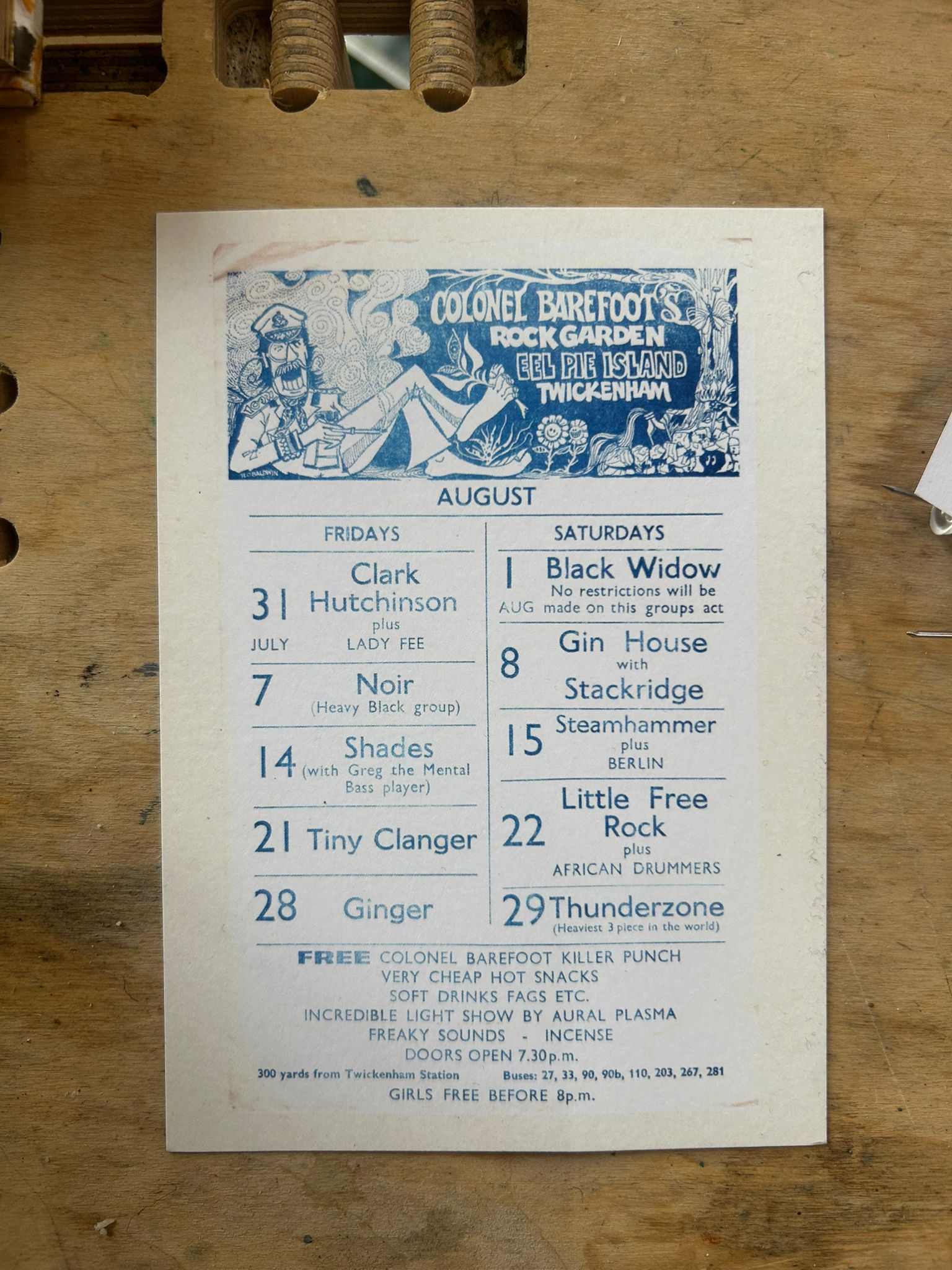
PJ: When it was open, the hotel was known for its concerts. Who would be on the bill of your dream Eel Pie Hotel show?
NG: I’d see Bowie with my family. My daughter, who is 12, has been really into Bowie recently and he played on the island a couple of times.
“I keep trying to push away from these water paintings, but they keep coming back”
PJ: This isn’t the first body of work of yours to include ever-present, sometimes encroaching, expanses of water. Why has water endured as a subject for you?
NG: It goes back to my childhood, when I spent a lot of time with my brother in Holland. There’s this feeling there of the impermanence of things—the water is always encroaching and you have to keep pumping it back into the canals or back into the sea or it will start rising. It’s not a metaphor in Holland; you can feel it under your feet.
In a broader sense, painting just lends itself to the idea of being swamped by water or by the paint itself. It makes so much sense to me, when I’m painting, that feeling of the tides getting higher and higher. I keep trying to push away from these water paintings, but they keep coming back.
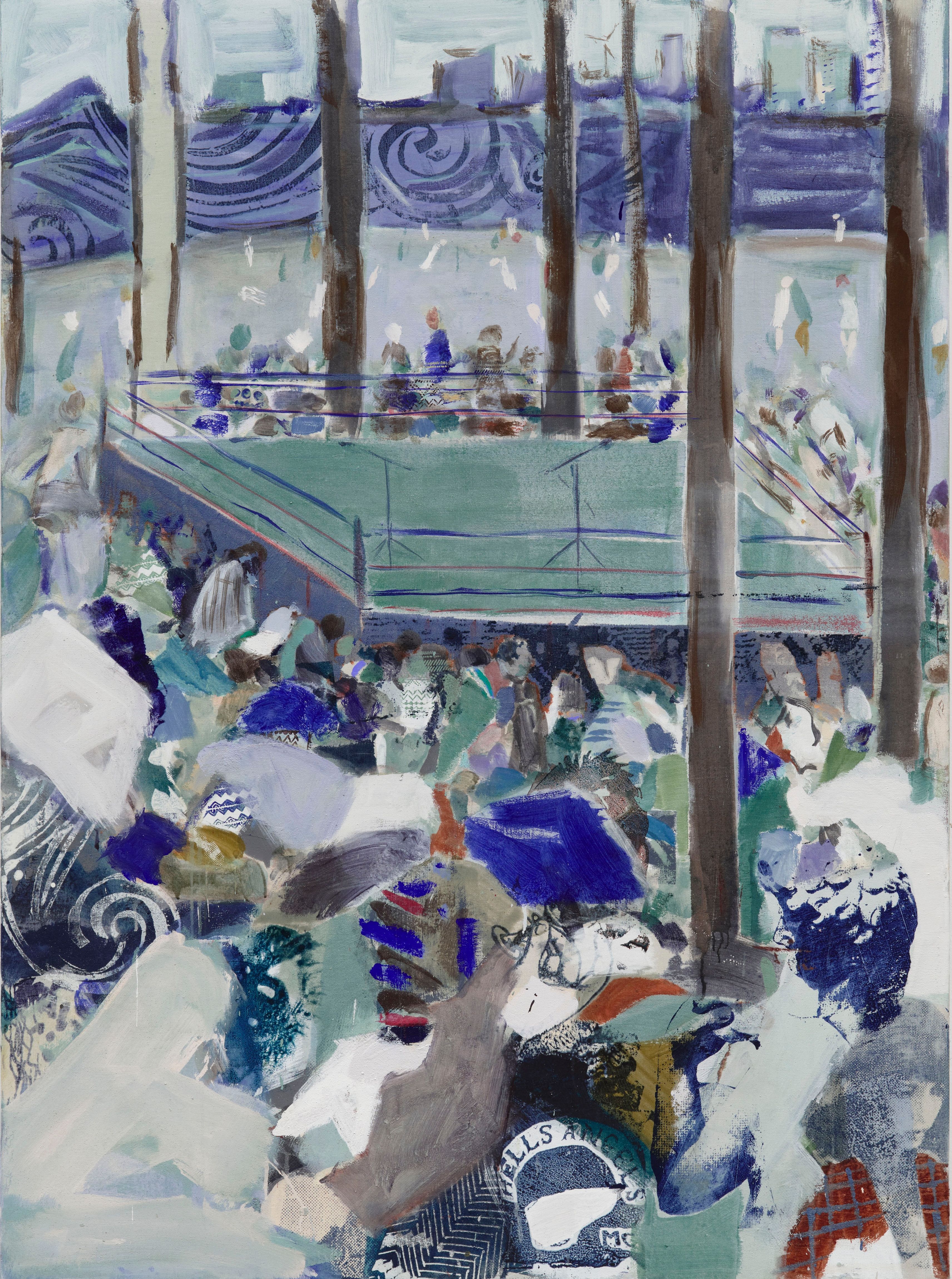
PJ: What’s the significance of crowds within your work?
NG: When Aby Warburg talks about his archives, he describes this collective unconscious memory, which really stuck in my head. If you look at the crowds I’m painting, that’s where the silkscreen element comes in: you have statues from Pompeii right next to actresses from the 1970s. It’s a big mix. You end up time-travelling, or experiencing a collapse of time. Like Sgt. Pepper’s [Lonely Hearts Club Band], the cover for the Beatles album—it feels like they had all of their heroes and their villains in the same crowd. I love that idea.
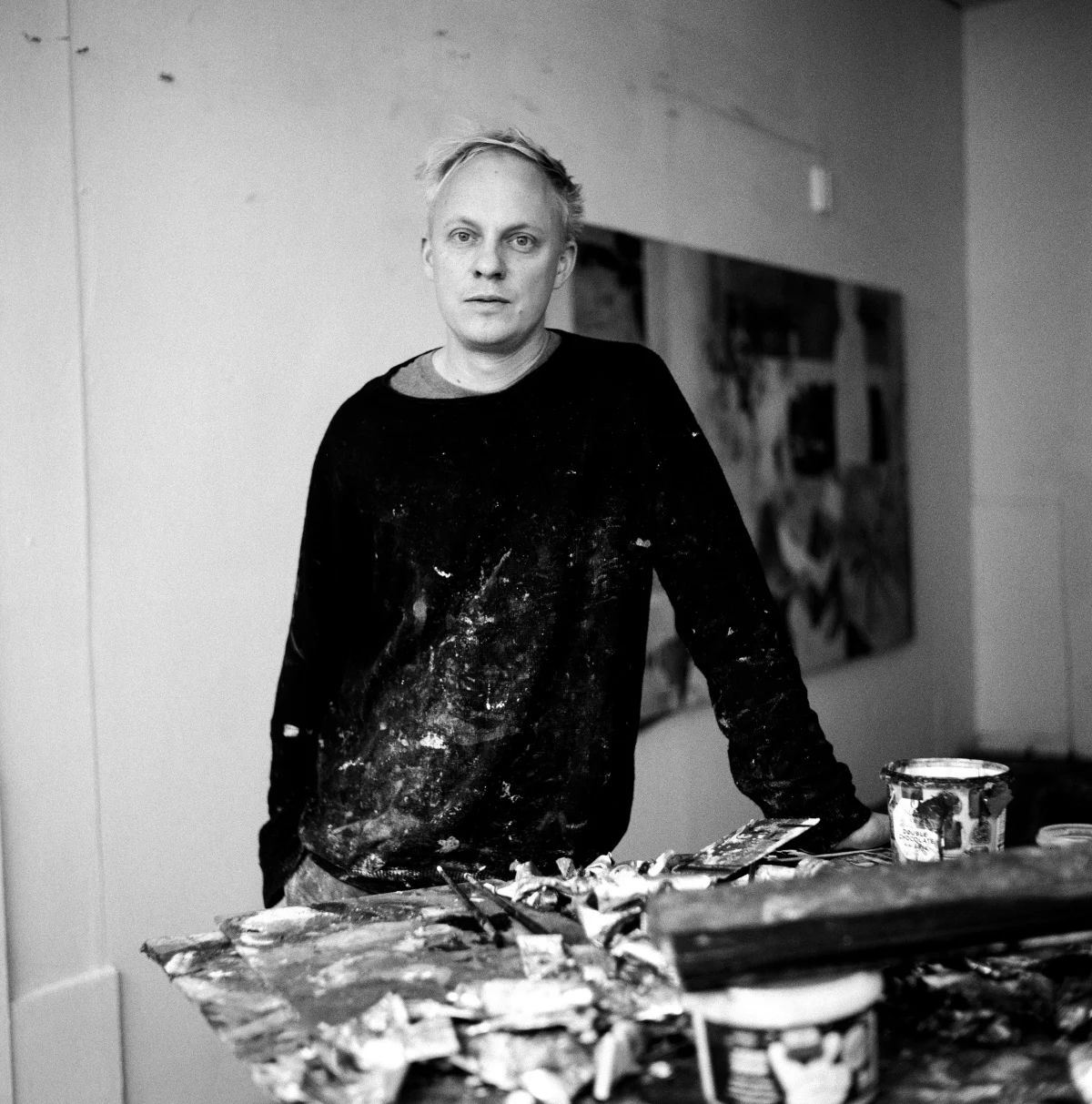
PJ: You’re part of a long and varied tradition of painters of crowds—for your money, who is the best?
NG: James Ensor paintings, particularly Christ’s Entry Into Brussels in 1889 (1888), unlocked the idea of painting crowds for me, so he’d be up there. But I went to a brilliant [Honoré] Daumier exhibition in Vienna this morning and his crowds are insane. He made these amazing paintings of people awaiting a trial with big, grotesque judges standing over them. It’s quite Kafka-y.
PJ: Imagine you’re marooned on a tiny island, not unlike Eel Pie. What three things are you bringing with you?
NG: I actually asked my daughters this, because I’m stumped. They came up with a very tall ladder, a foghorn and a fish whistle. I think they made that one up, but my youngest daughter assured me there is such a thing. You can blow it underwater and it attracts fish. —[O]
PJ: Nick Goss: Eel Pie Hotel is at Josh Lilley Gallery, London, until 23 May
NG: Palette Cleanser is a weekly interview series with the artists you need to watch, as selected by our editors.
Main image: Nick Goss, Just Before Six O'Clock (2026). Courtesy the artist and Josh Lilley, London. Photo: Ben Westoby / Fine Art Documentation.










A respected voice in contemporary art discourse.
Focusing on ambitious storytelling and insightful art-world commentary. Ocula Magazine publishes in-depth interviews, critical essays and timely analysis on the artists, exhibitions and ideas driving the global art world.
Learn more about Ocula Magazine
Showcasing the best of the art world.
Ocula partners with galleries from around the world to highlight their artists, artworks and exhibitions. Gallery membership is by application and invitation, with each member vetted by an independent panel.
Learn more about Ocula Membership
Specialises in the sale of major artworks.
Led by a team with deep ties to the world’s leading auction houses, galleries and collectors. Ocula’s advisory team offers bespoke services to high-net-worth clients from around the world who are looking to acquire the best of contemporary and modern art.
Learn more about our team and services