






It’s a Shame
Shame is the central theme for two Venice Biennale presentations this year, as artists Bugarin + Castle and Aline Bouvy strive to create a new discourse around social stigma. Save to My Ocula
If shame is social in nature, guilt is almost certainly individual. The release of the Epstein files last year clarified this theory by Dutch social psychologist Geert Hofstede. With the ignominy of being identified publicly in those files as a friend of—or collaborator with—a sex criminal, shame as a social and psychological phenomenon was revealed at its most attenuated.
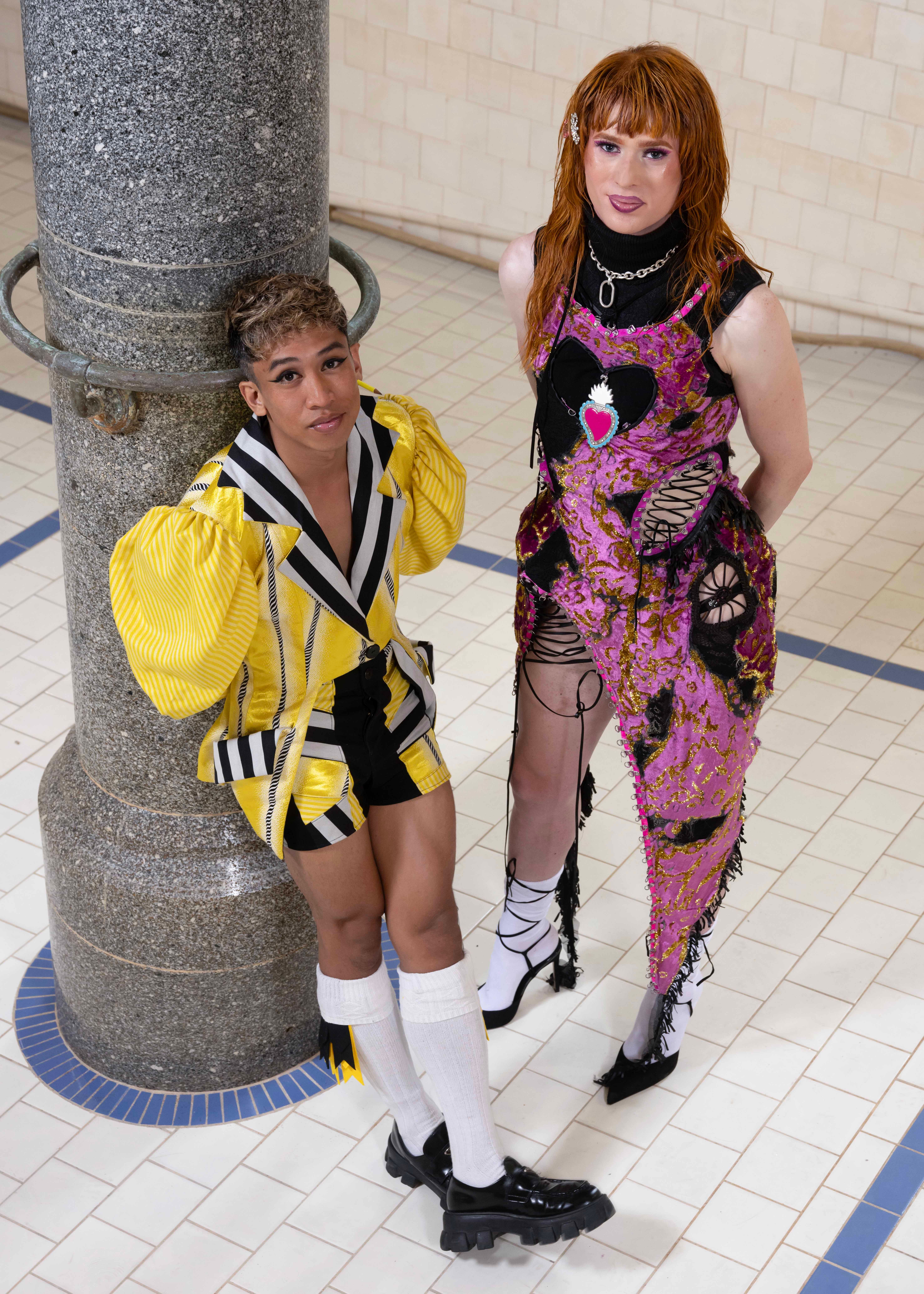
The vicissitudes of shame are a central theme of the multidisciplinary projects by three artists exhibiting in national pavilions at this year’s Venice Biennale, which opens to the public in May. Shame Parade, by Glasgow-based duo Bugarin + Castle (Davide Bugarin and Angel Cohn Castle), takes over the Scottish pavilion. Drenched in the pair’s signature dramatic lighting and sour candy hues, the work takes the form of a procession that emulates the historic shaming rituals that were a major aspect of European culture from the medieval period until as late as the mid-1900s. Meanwhile, things take a scatological turn in Aline Bouvy’s La Merde, the artist’s presentation at the Luxembourg pavilion, in which she focuses on the universality of shame as it relates to the processes of defecation.

“Charivari”—from the vulgar Latin word caribaria (headache), via Old French—describes the informal public processions (also known as “rough music” in the UK) that took place over centuries in Europe and North America, used to police and punish behaviours deemed shameful by the community and often focused on issues relating to sexuality and marriage. Bugarin + Castle’s exploration of these historic folk customs begins, somewhat surprisingly, in the Philippines. Bugarin, who is Filipino, was conducting “architectural sound mapping” in the historic, 54-hectare (130-acre) Manila North Cemetery, in which thousands of low-income and impoverished families have taken up residence among the mausoleums. “I found that there was a big discrepancy in sound between day and night,” Bugarin reflects. “At night, it was almost silent. I started wondering why.”
It was then that the duo found this antiquated term being used in contemporary Filipino law. “Charivari is a word that was born in the north of France, and travelled to the Philippines from Spain,” Bugarin tells me. “It’s still impressed upon the Filipino constitution and Filipino law.” In the Philippines, charivari—defined as a disorderly meeting or noise designed to annoy or disturb public peace—is a punishable offence. “It’s used nowadays, specifically in this cemetery, to ban any kind of loud noise at night. So it’s completely silent, even though there are thousands and thousands of people living inside.”
In their practice, the duo often explore language, using wordplay to investigate the dual positions of semantics and phonetics. Sore Throat, an installation shown at Tate Modern in 2025, employed interactive software that recorded the audience and played their own distorted words back to them back later, “imbued with new, monstrous meaning”.For Shame Parade, the duo focus on terminology found in queer and transgender communities, often flipping words on their head to find new entry points. The project links Filipino and Scottish colonial histories through a central sculptural installation inspired by a Filipino jeepney bus, covered with signs designed by the artists and painted by jeepney sign painters, which I glimpse in a private video tour of the work, the first the artists have given ahead of the public opening.
“Bugarin + Castle focus on terminology found in queer and transgender communities, flipping words on their head to find new entry points”
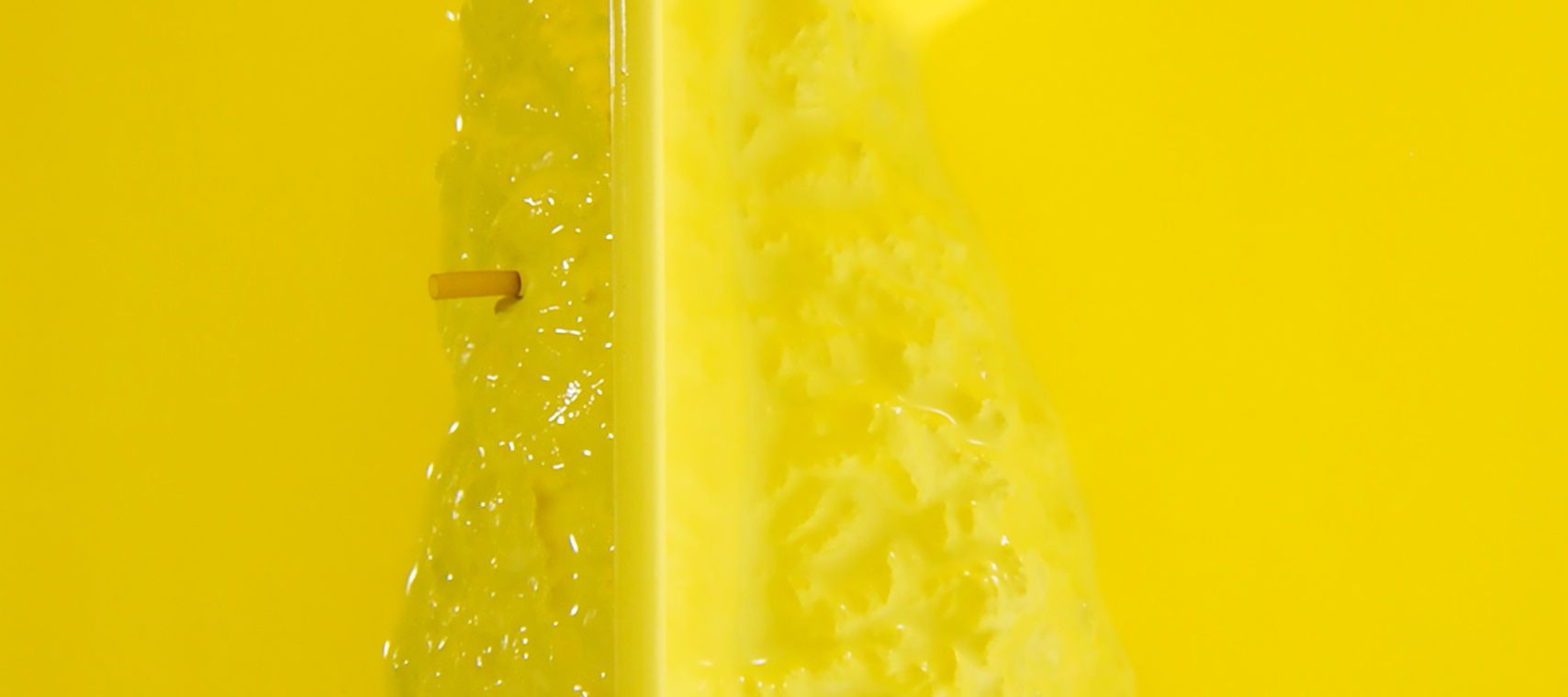
“Are you discreet?” reads a central slogan (which is also repeatedly stated in Submit to Sound (2026), a five-screen video installation) alongside other “coyly shushing kinds of phrases”. It’s a playful presentation “about what it means to be told to be quiet”. The installation also includes a resin sculpture of a transwoman’s throat inside a clock, At Certayne Tymes (2026), which references the slang phrase “clocking”, used to describe a trans-identifying person being noticed or recognised as transgender, as opposed to “passing” as cisgender.
Shame Parade responds to a “regressive and hostile environment” for transgender communities in both the UK and the US. Rather than reacting with slogans defending trans rights, or a celebratory message of pride, the artists have chosen to find something murkier. They’re most interested in “leaning into the complexity” and putting forward “difficult ideas rather than simple sloganeering”. Shame, says Castle, is “the sticky thing”. “If we’re talking about pride parades, well… pride implies the lack of shame. So, what is this shame? Am I mocking my own actions?”
“What is this shame? Am I mocking my own actions?”
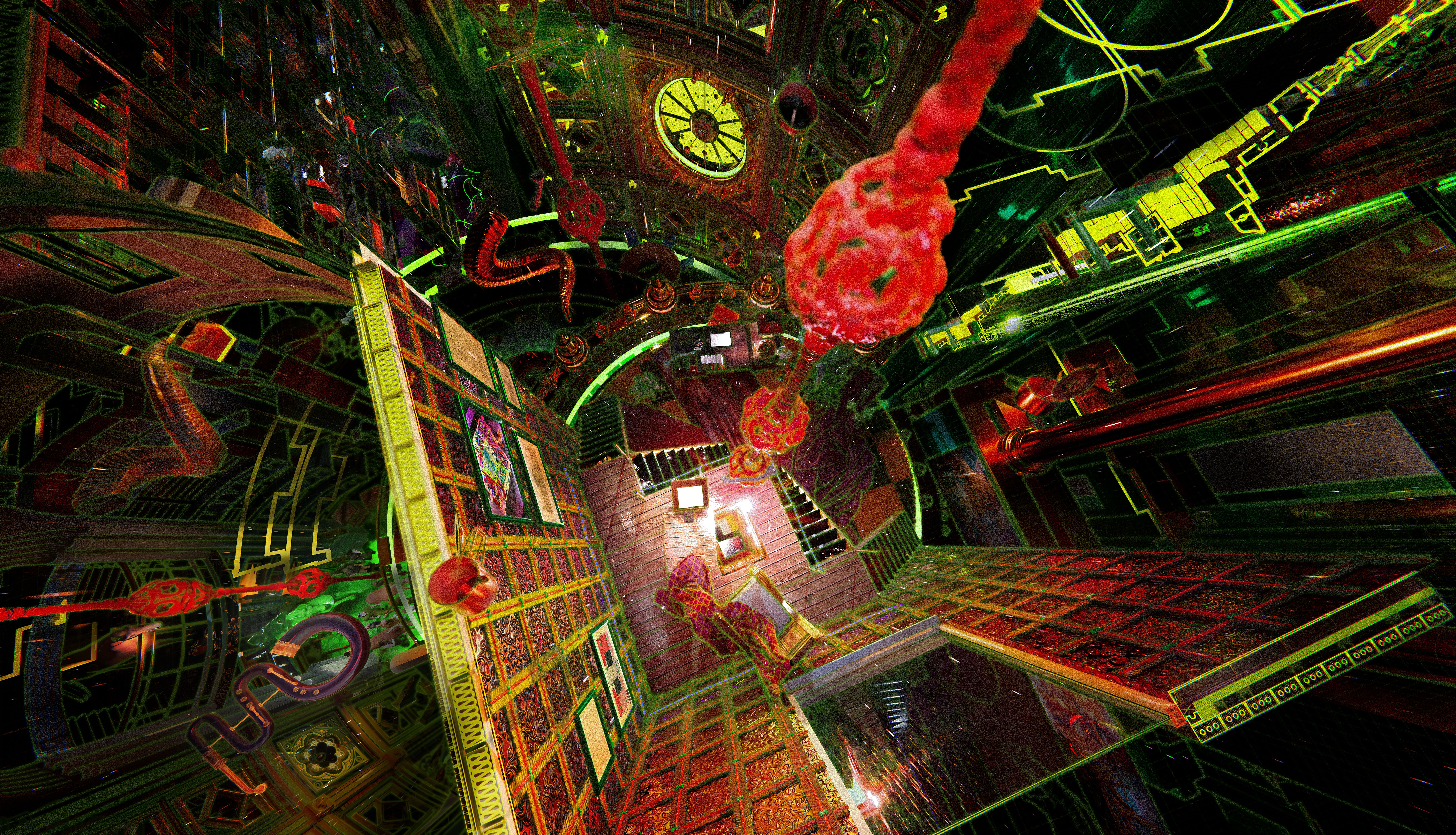
![Bugarin + Castle, Mr. Mimic [Submit to Sound] (2026). Photo (detail).](https://files.ocula.com/rf/e6/e68dee69-abe7-4f33-9485-0998e1fa4f80/bugarin-castle-mr.jpg)
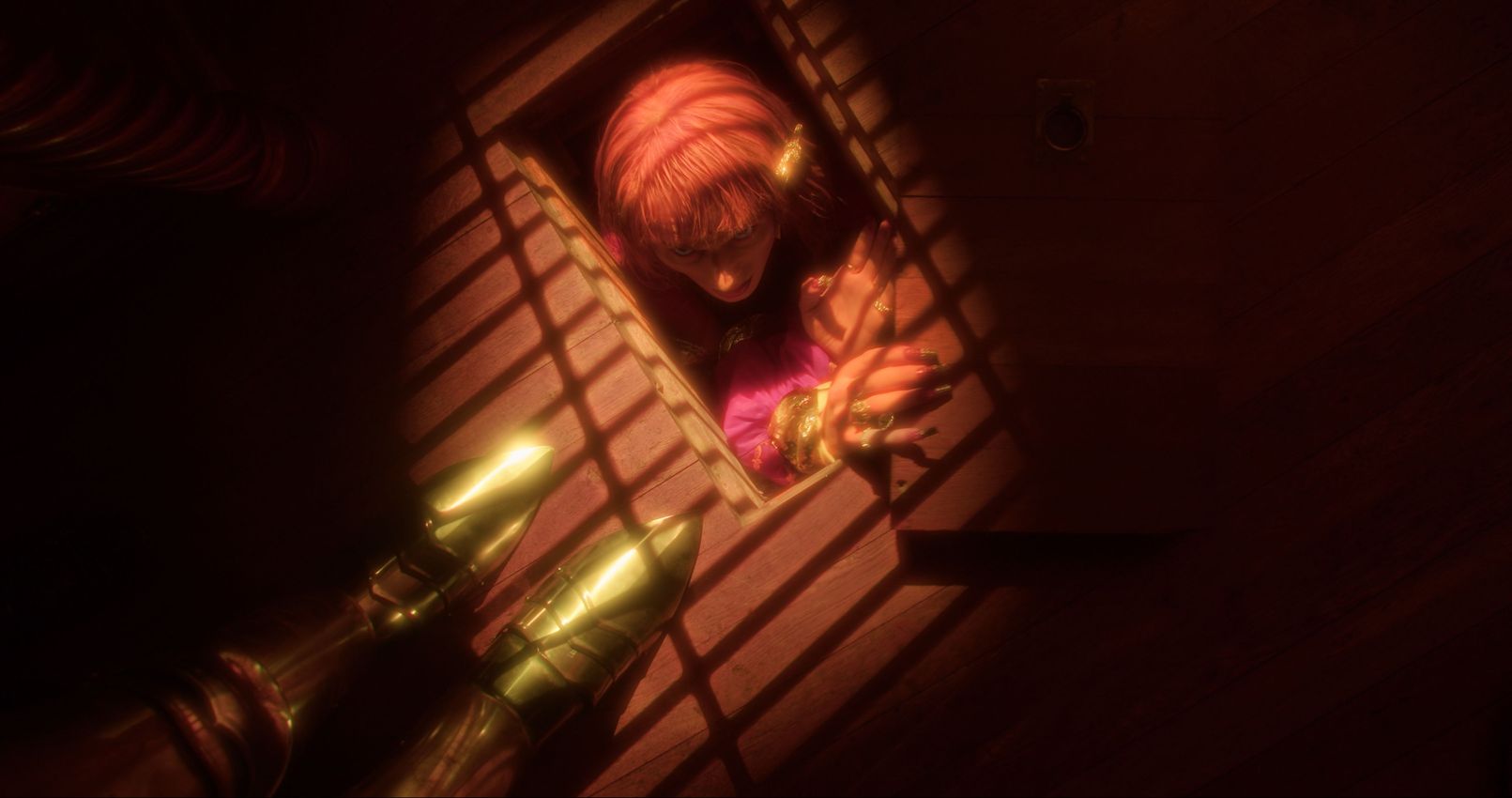
In the film component of the presentation, Bugarin + Castle jump between a contemporary trans voice-feminisation session and the history of charivari, drawing together historical and contemporary ideas around gendered performance, sound and shame. The film also includes a trap door—a play on words with the term “trap”, a slur used to imply that a transgender person is deceptively “trapping” others into attraction. The trap door is also realised physically in the installation itself. “It’s almost, like, a device mechanism that decides who’s being mocked,” says Bugarin, “or who’s mocking who.”
In contrast, Aline Bouvy’s La Merde focuses not upon identity and community as sites of discrimination, exclusion and shame, but on corporeality, in her exploration of the widespread social stigma around scatological themes. “The place from where shit is expelled, the anus, is also a place of shame, and yet it is such a powerful territory precisely because it transcends gender categories,” she tells me.
“The anus is also a place of shame, and yet it is such a powerful territory precisely because it transcends gender categories”

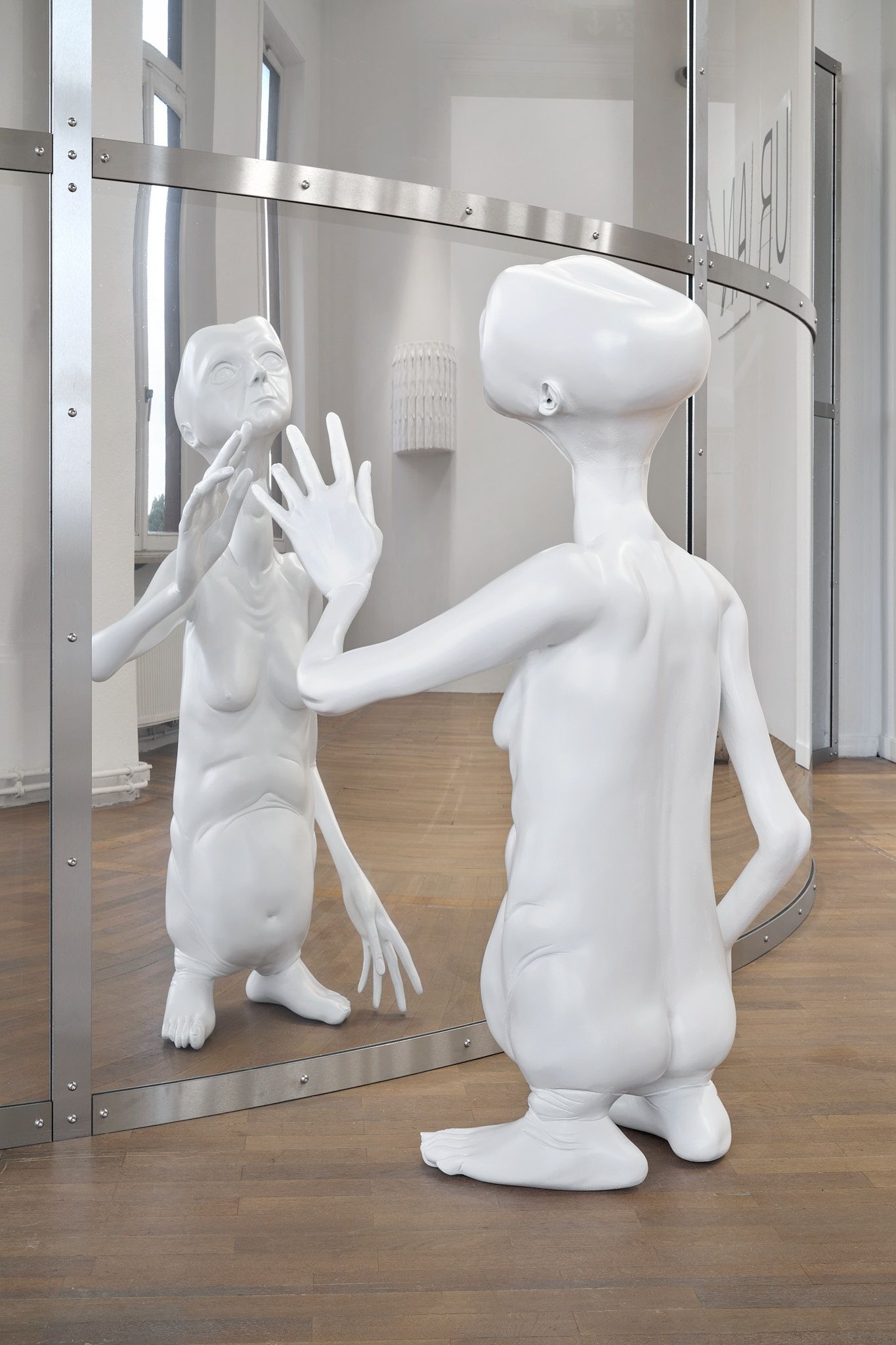
Her installation for the Luxembourg pavilion seats the audience in a semi-circular architectural structure made from two-way mirrors, the interior of which has been lined with acoustic padding on the ceiling and inner walls “to transform it into a kind of communal headphone”. Like Burgarin + Castle, the space in her installation features physical aspects that also show up in the film she made for the piece, creating the illusion of recursion. “The audience sits inside this space on chairs that are the same chairs that appear in one of the sequences of the film, which creates a direct mirroring effect.”
“My interest in the perception of space is inseparable from a reflection on how we perceive one another as human beings and, more specifically, the mechanisms that inform that perception, moving from architecture to psychology, from spatial perception to relational perception,” says Bouvy. “In the film it is the character of La Merde who reorganises perception and social relations, revealing all the things we try so hard to keep invisible.”
Both Bugarin + Castle and Bouvy are seeking to create a new discourse around shame. “Shit and shame are not synonymous, but they are deeply connected,” she reflects. “Defecation is first a material condition, something the body produces and expels, something that belongs to the circle of life itself. Shame comes later, through the social and cultural meanings attached to it.”
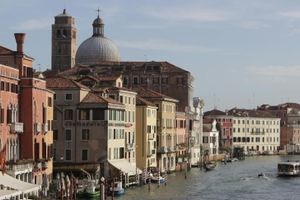
Venice serves a fitting backdrop to Bouvy’s investigation. Since the 16th century, a system of underground masonry tunnels called gatoli has collected sewage and grey water from buildings in Venice and channelled it into the canals. To this day, a significant amount of sewage is still plopped directly into those picture-perfect waterways. For Bouvy, it was learning more about waste treatment in general that informed her latest project.
She became acquainted with an individual who runs a Belgian organisation raising awareness around dry toilets who shared a similar perspective: “We had amazing discussions, even though we came from different contexts.” While Bouvy introduced the Belgian organiser to Austrian artist and architect Hundertwasser’s manifesto The Sacred Shit, which demands that humans cease treating bodily waste as garbage, instead transforming it into humus to close the natural cycle of life, he highlighted “the importance of shit in terms of recycling and circularity”, she explains. “Even our cadavers decompose into regenerated soil. We came to the conclusion that, for both of us, it’s the cultural shame attached to excrement that was preventing this non-acceptance of the necessity of fluidity—and even the acceptance of the circle of life, to the extent of death.”
In Venice, Bouvy will introduce audiences to her own exalted poo manifesto, one that seeks to radicalise our relationship with our own waste as a way of coming to terms with the true nature of our corporeality. “The fantasy of the clean social subject depends on the idea of a sealed body, but the body is never sealed,” she says. “It leaks, it transforms, it constantly reminds us of our own permeability.” To what extent does this distinction between what we are taught to define as “clean” or “dirty” shape our development, Bouvy asks. “And how does this define our relationship to ourselves, to others, and to the world?” —[O]
Main image: Bugarin + Castle, Submit to Sound (2026). Moving Image. Courtesy the Artists and Scotland + Venice © Bugarin + Castle.







A respected voice in contemporary art discourse.
Focusing on ambitious storytelling and insightful art-world commentary. Ocula Magazine publishes in-depth interviews, critical essays and timely analysis on the artists, exhibitions and ideas driving the global art world.
Learn more about Ocula Magazine
Showcasing the best of the art world.
Ocula partners with galleries from around the world to highlight their artists, artworks and exhibitions. Gallery membership is by application and invitation, with each member vetted by an independent panel.
Learn more about Ocula Membership
Specialises in the sale of major artworks.
Led by a team with deep ties to the world’s leading auction houses, galleries and collectors. Ocula’s advisory team offers bespoke services to high-net-worth clients from around the world who are looking to acquire the best of contemporary and modern art.
Learn more about our team and services