





Bring It Home
Artists across southern African countries are finding that they need to seek out success in other nations before exhibiting at home. Yet signs of change are on the horizon. Save to My Ocula
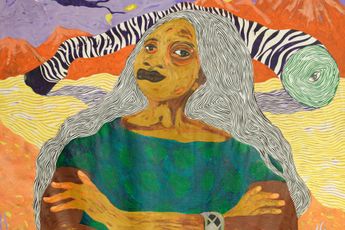
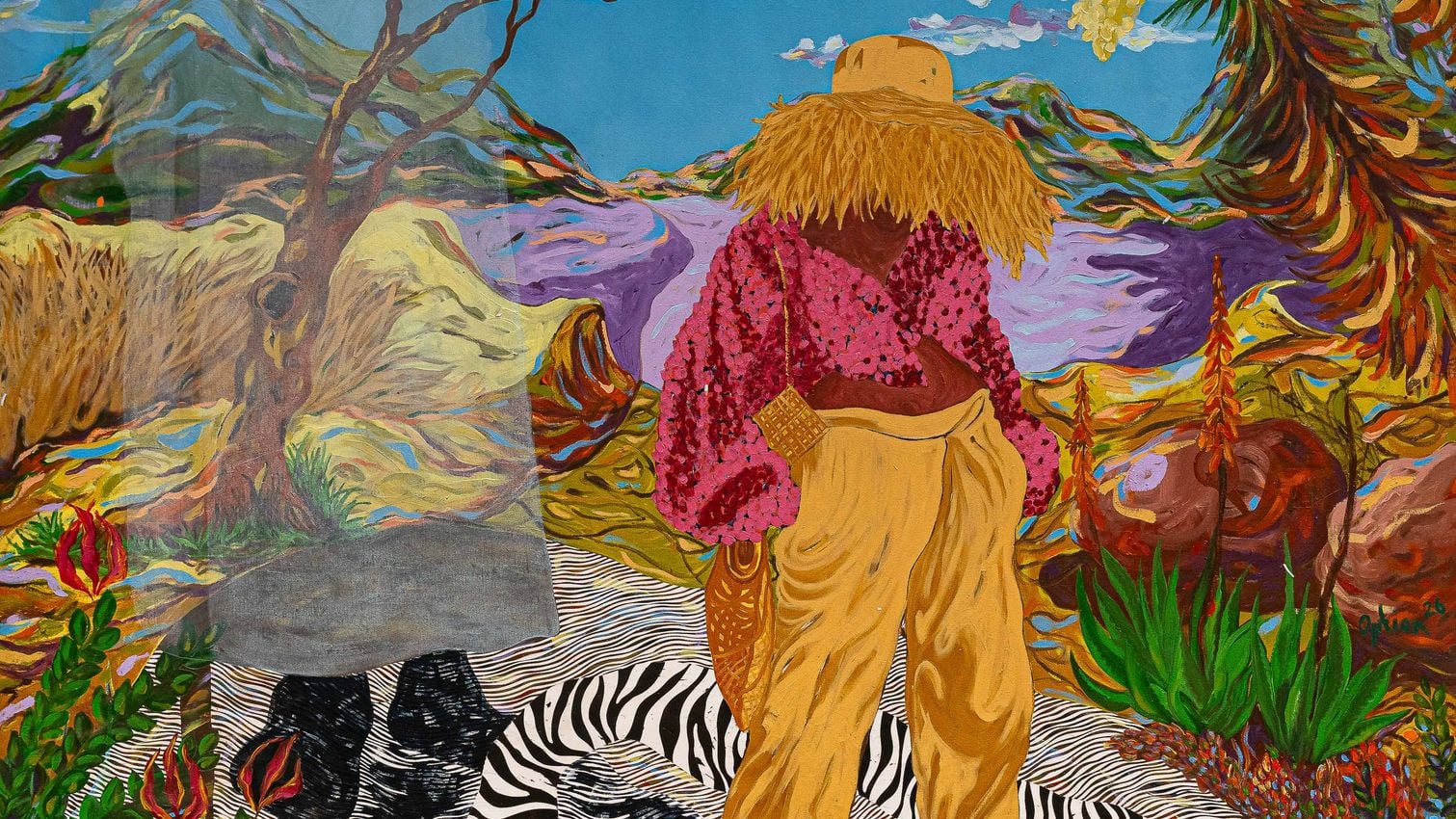
The opening of Zimbabwean artist Option Dzikamai Nyahunzvi’s solo exhibition Zvatiri (Who We Are) at the National Gallery of Zimbabwe in Harare earlier this year was a happy occasion. In his 11 years as a successful artist, it was Nyahunzvi’s first institutional show in his home country—a homecoming of sorts. “It’s a dream come true,” he says. “I’m proud to showcase my work in my space of belonging. I feel that the message really belongs and must reach most to the Zimbabwean natives. I am feeling blessed.”
Nyahunzvi graduated from Harare Polytechnic College in 2015 and began developing his practice, making colourful mixed media figurative works exploring different facets of African cultural identity. He flirted with the local art scene in Harare, staging a couple of shows before opening a solo exhibition at Unit Gallery in London in 2021, Sacred Origin (Kwatinobva Kunoyera), which was swiftly followed by another in Lagos. “After these milestones, I went on to participate in various group shows and residencies,” he recalls.
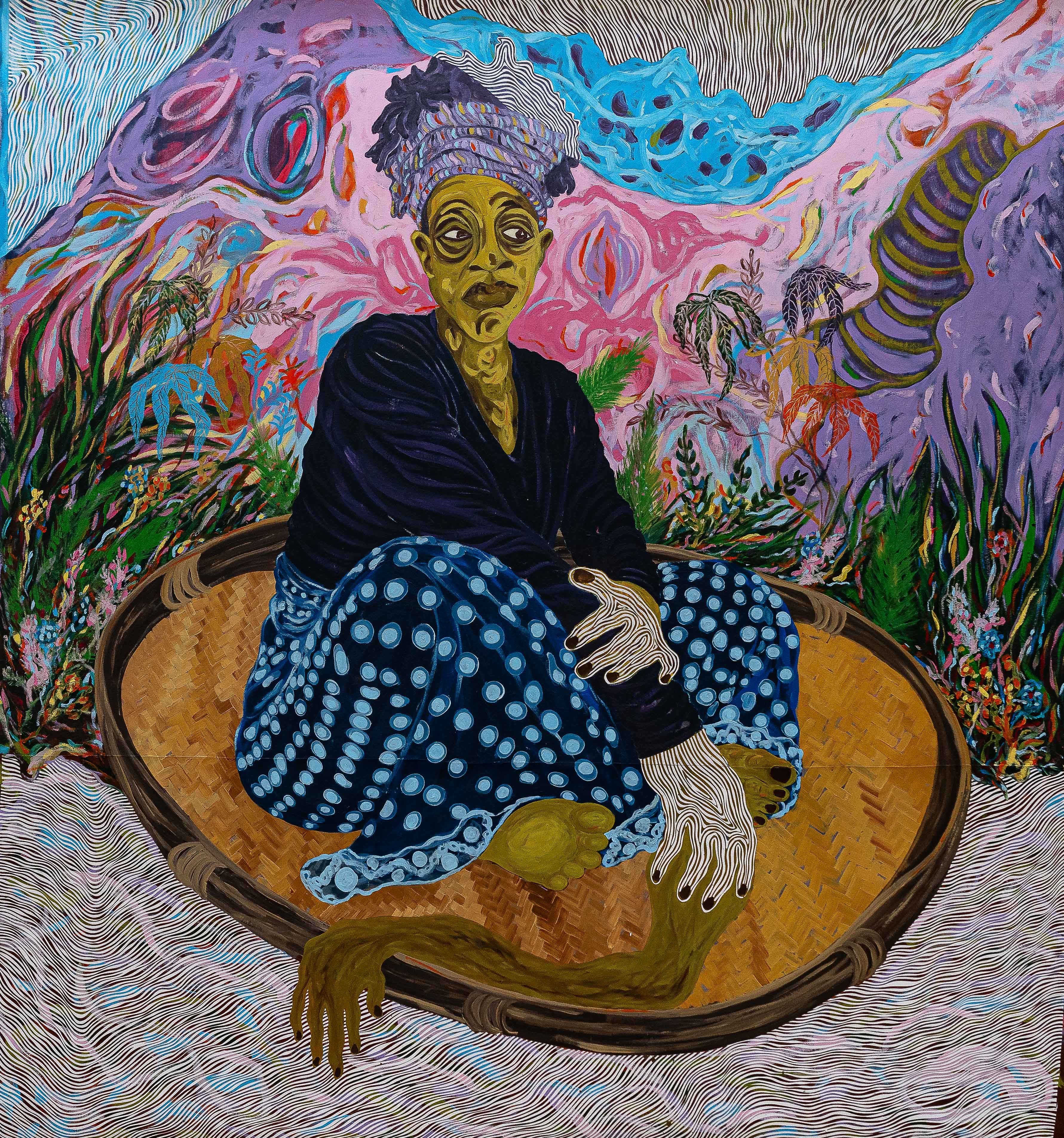
Nyahunzvi’s career path is typical of pockets of southern Africa. Most of his generation of millennials had their first meaningful shows outside their countries of birth. In many countries, a lack of government funding for the creative industry leave artists to fend for themselves, but this is particularly true of many parts of southern Africa, where art institutions are still few and far between and the collector base remains tiny. The Zimbabwean capital of Harare, for instance, only had three commercial galleries for many years.
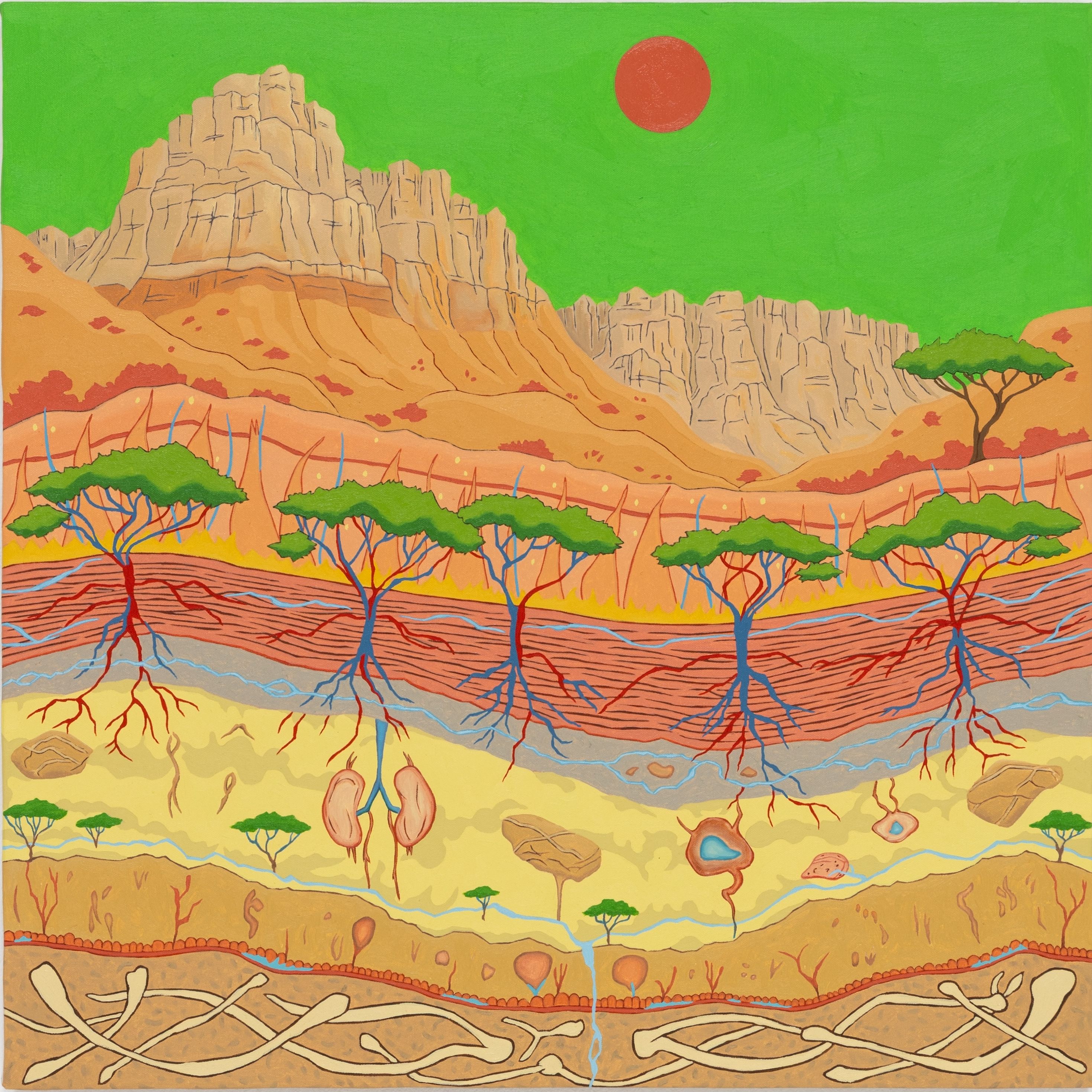
The situation in Botswana is similar. “A lot of the cutting-edge activity is driven by artist-run spaces and collectives, like TBP Artist Collective, which I am part of,” says Motswana artist Thebe Phetogo, “rather than formal institutions which don’t really offer any support.” He adds: “Efforts usually rely on the artist’s own resources. So, while there is a growing and active scene, the infrastructure that supports sustained careers is developing, but quite a way off.” Individual success depends on determination and, in most cases, snatching opportunities to share work abroad. “There needs to be a constant push of self-belief,” says Zimbabwean artist Ronald Muchatuta. “It takes a different type of tenacity to overcome each mountain.”
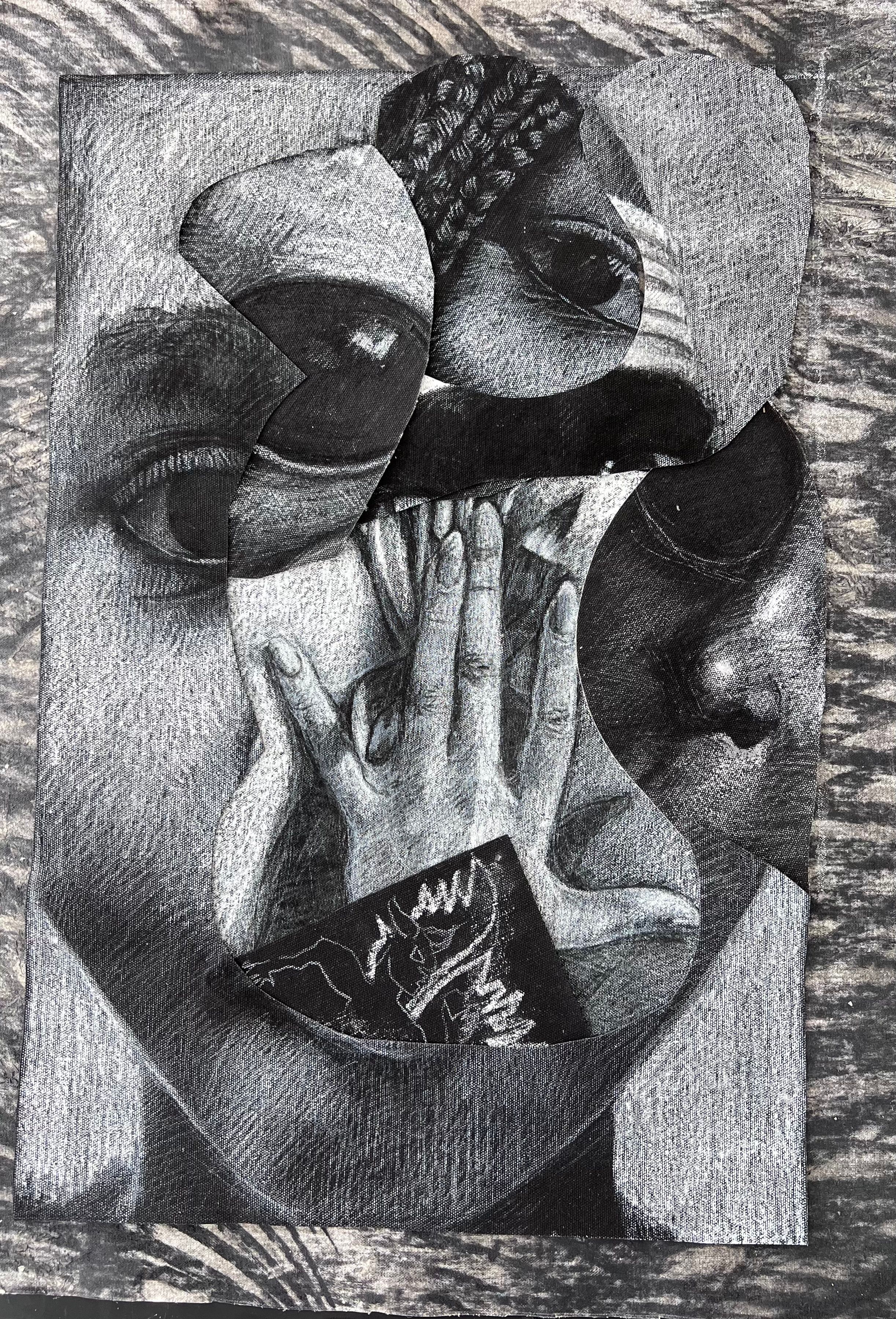
For many, recognition in the West, or the comparatively more developed South African art world, is a necessary step before being able to return and exhibit at home. Muchatuta, who was born in the Chirumanzu district of central Zimbabwe, is part of a wave of people who left Zimbabwe around 2007 as the economic crisis under Robert Mugabe deepened. He moved to Cape Town, seeking “access to the artistic epicentre of southern Africa”, which proved to be a generative experience. It was there that he began to make collage-based works exploring displacement and the relationship between exiles and migrants. “I unintentionally became the subject matter of my work,” says Muchatuta. These were picked up for a group show in the city’s Association for Visual Arts and, for the next 14 years, he exhibited internationally before being selected to represent Zimbabwe at the 2022 Venice Biennale. His Venice work, titled The Zimbabwean Gaze, comprising a 10-metre-long drawing and a set of portraits, transferred to the National Gallery in Harare the following year.
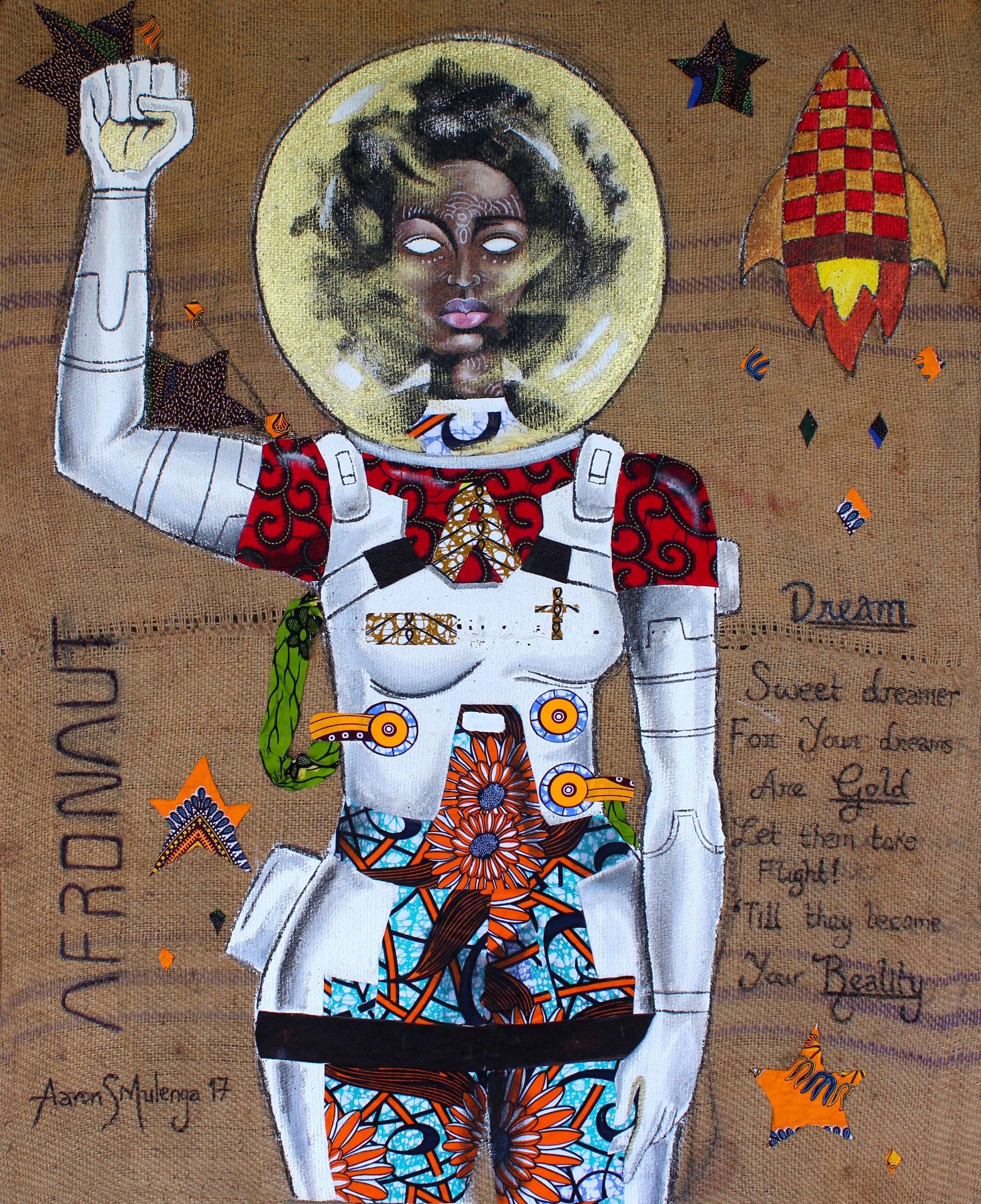
This kind of international success often comes with a touch of sadness. Muchatuta has continued to live in Cape Town, and often feels like “an anomaly, between two spaces”, he says. “My growth was in constant battle with being contextualised from my place of origin.” Similarly, interdisciplinary artist Aaron Samuel Mulenga left his homeland of Zambia to study in Cape Town in a bid to “broaden his academic horizons,” he writes on his website. There, after witnessing the movement to topple the statue of British imperialist Cecil Rhodes, he was inspired to work towards decolonising the narrative of his own country.
“My growth was in constant battle with being contextualised from my place of origin”
He embarked on a project centred on the story of Edward Mukuka Nkoloso, a Zambian who trained 12 “Afronauts” in a bid to beat the Americans and Russians to the moon during the Cold War. The work was picked up by a gallery in Johannesburg, and Mulenga went on to show at the inaugural Stellenbosch Triennale and at the Iziko South Africa National Gallery before exhibiting back at home. “While in South Africa, I felt there was a need to have my work grounded in something Zambian, that I could then trace back to a root that felt like home,” says Mulenga.
But breaking through in your adopted home does not necessarily translate into interest from a native art scene. Zimbabwean artist Tafadzwa Tega left Zimbabwe after graduating from the National Gallery school in 2008, seeing limited opportunities at home. He became interested in photographs taken by Zimbabwe’s diasporic community: even while undertaking menial jobs and enduring significant hardship, people would still get dressed up in their “Sunday best” and take glamorous portraits to share on social media or with family. He began painting layered figurative portraits inspired by these photographs, depicting people wearing colourful clothing against patterned backgrounds composed of zumbani tea leaves, which Zimbabweans use to treat colds.
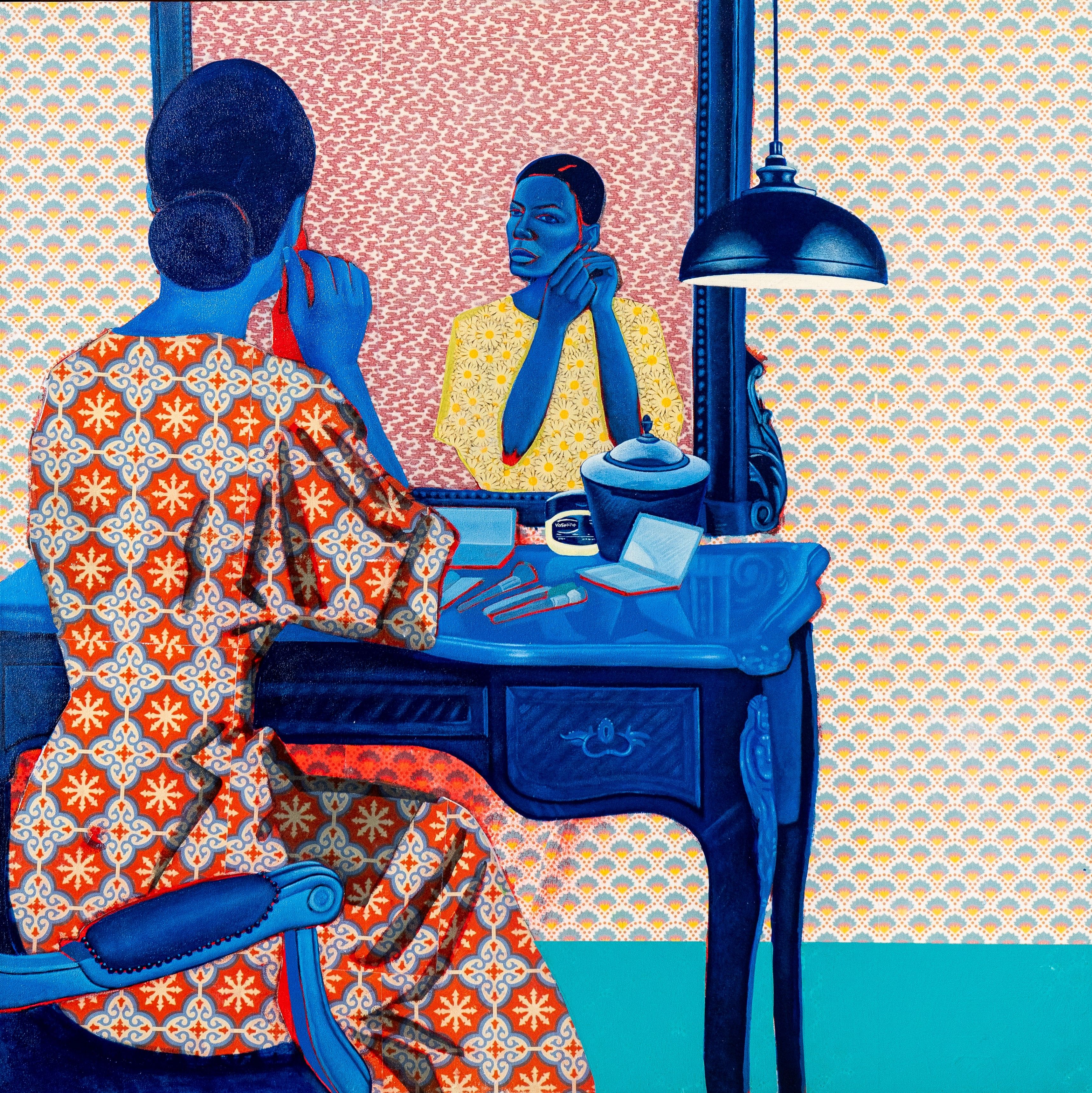
His spring 2026 show, Fortune Favours the Brave, was on at Everard Read in Franschhoek, near Cape Town—although Tega’s work is about Zimbabwe, he has not been shown there. “Every now and then, I meet Zimbabweans who have encountered my work, on social media or by word of mouth,” he says. “They cannot put the artist’s face to the work. It is a bittersweet experience.”
There are signs that things are shifting, though. Botswana elected a National Arts Council for the first time in 2020, while Zambia has welcomed new arts spaces, such as Modzi Arts and Lusaka Contemporary Art Centre, in recent years. Harare has seen a wave of new galleries opening, too. And the National Gallery’s programme now accommodates more exhibitions by local artists, such as Nyahunzvi’s current show. The impact on the lives of young artists is significant. “I am thrilled, and grateful,” says Nyahunzvi. —[O]
Main image: Option Nyahunzvi, Vhumbamiro yeMuchembere, 2026Courtesy the artist.




A respected voice in contemporary art discourse.
Focusing on ambitious storytelling and insightful art-world commentary. Ocula Magazine publishes in-depth interviews, critical essays and timely analysis on the artists, exhibitions and ideas driving the global art world.
Learn more about Ocula Magazine
Showcasing the best of the art world.
Ocula partners with galleries from around the world to highlight their artists, artworks and exhibitions. Gallery membership is by application and invitation, with each member vetted by an independent panel.
Learn more about Ocula Membership
Specialises in the sale of major artworks.
Led by a team with deep ties to the world’s leading auction houses, galleries and collectors. Ocula’s advisory team offers bespoke services to high-net-worth clients from around the world who are looking to acquire the best of contemporary and modern art.
Learn more about our team and services