






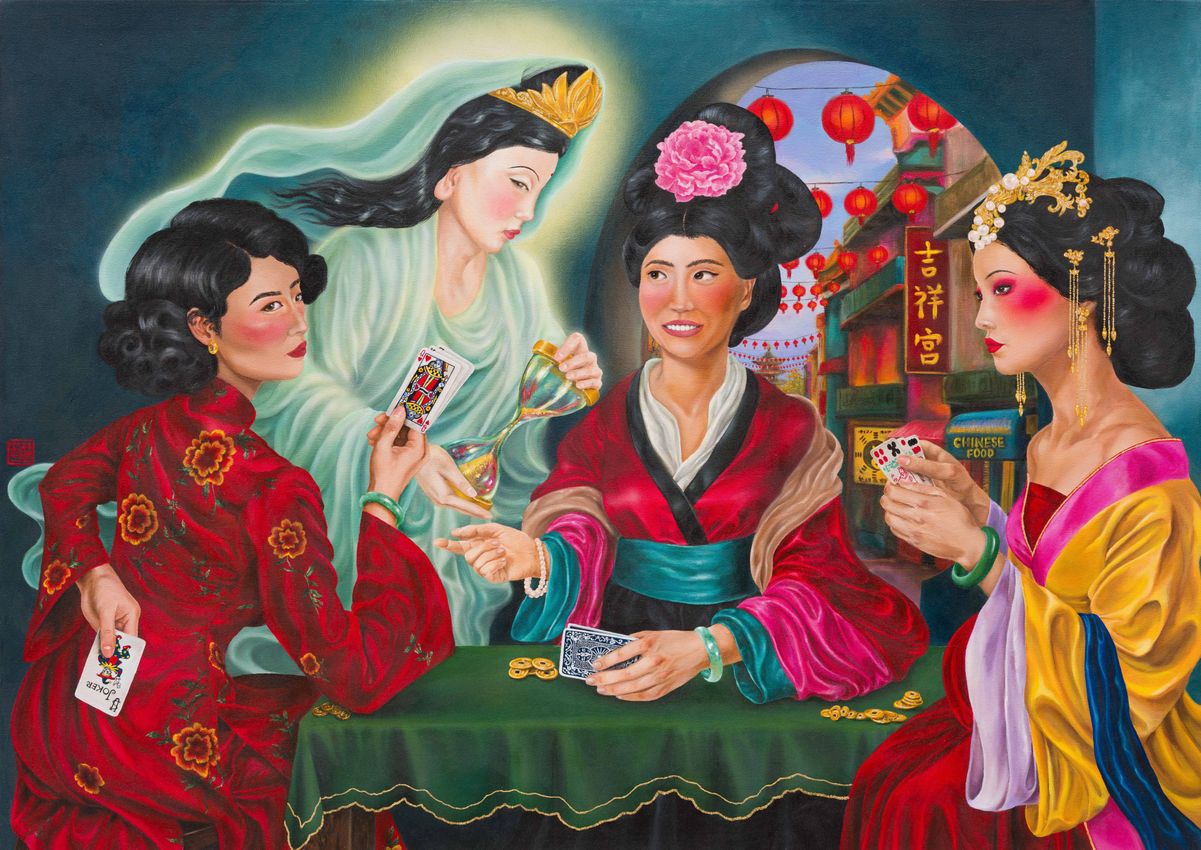
Ann Liu: ‘Being a Starving Artist Isn't Romantic. It’s Devastating’
LA‑based painter Ann Liu doesn’t rely on investors or institutions to fund her creative practice. She also trades. Save to My Ocula
Los Angeles-based artist Ann Liu leads something of a double life. When she’s talking about her calligraphic airbrushed paintings, she uses her real name. But her alias, Qwant Kitty, is a trader. It’s a persona she uses to preserve anonymity in the crypto and investing circles she has navigated for nearly a decade. “I’m not a quant trader in the traditional sense, in that I don’t deploy algorithms or use automated systems,” she says. “‘Qwant Kitty’ is more of a conceptual identity.”
Liu came of age in the noughties as the culture of speculation in the art market reached full maturity. Meta-speculation practices (betting not on a rise in price, but on the outcome of the bet itself) function as a way for Liu to fund her creative practice without having to bow to the demands or structures of the traditional art world.

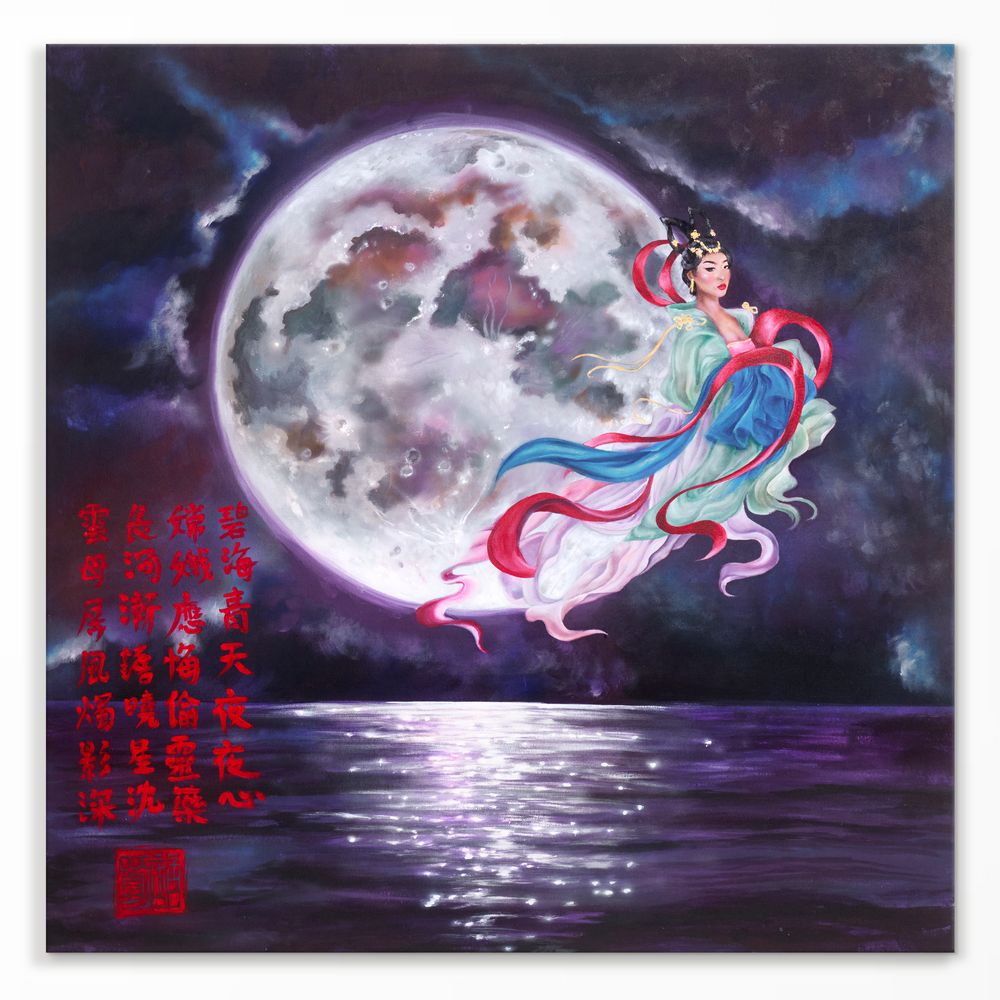
In our conversation, both “The Market” and Shanshui—the Daoist-influenced landscape painting tradition developed in fifth-century China on which Ann Liu draws for her paintings—emerge as vast and indifferent traditions.
“Crypto has its own culture and language”
EM: Shanshui is a practice rooted in Daoist ideas about time and the infinite, and your airbrush technique ties it to modernity. How does your work as a trader relate to those very old and new technologies?
AL: Shanshui painting is fundamentally about the relationship between the human and temporal forces that exceed human scale: we observe and nature endures. As a painter, my goal is to capture something about that relationship. Just as acrylic painting and airbrush collapses time into one surface, trading collapses the immediate and the cyclical into one finite decision. You could say both are technologies of time, and in both cases the end goal is resolution: beauty in one, a profitable close in the other.
The impulse to trade, to barter, to speculate and to seek an edge is as ancient as the impulse to make images. Whether you were a merchant on the ancient Silk Road or [are] a day trader watching Bitcoin futures at 4am, financial and creative thinking will always hold value.
EM: Is the painting the art, or is the whole system—the trading, painting, Instagram persona—the work?
AL: The painting is the art. It’s a physical, embodied, irreducible thing which carries a soul of its own.
It’s not equitable for artists to be stuck in a reality where they aren’t financially literate, where they don’t know how to invest, where the only path to sustainability runs through institutional gatekeepers who take enormous commissions and offer very little stability in return. To be a starving artist is not noble, romantic, or hot. It’s devastating and painful. The paintings are and will always be the art. But the entire system I’ve built nurtures the practice and allows me to do so with sovereignty. They’re not equivalent, but they’re interdependent.
EM: When you’re developing an automated trading strategy, are there aesthetic decisions happening there? Is that a creative space for you?
AL: My trading strategy is based on making decisions in real time. I’m constantly watching the market and being informed by macro conditions, technical levels and sentiment that are all shifting. But there are absolutely aesthetic decisions happening. When I’m looking at a chart, I’m responding to form; price movements have rhythm, tension and resolution. There’s an indicator called the Fibonacci retracement; it’s derived from the golden ratio, the same proportional logic that governs composition in Renaissance paintings and why certain visual arrangements feel right before you can articulate why. Markets are fractal systems, and Fibonacci levels show up naturally in how price moves: proportion creates meaning within a bounded frame.
“Financial and creative thinking will always hold value”
EM: NFT artists, as Hito Steyerl put it in an episode of the Disintegrator podcast, treated price as the artwork but were ultimately at the mercy of volatility they couldn’t control. Your quant practice is specifically about navigating that volatility. Does that feel like a more honest version of what those artists were attempting?
AL: A lot of artists and collectors saw genuine opportunity, curiosity and creative possibility in NFTs, but they were participating without understanding the market structure and cyclical attention economy that is fundamental to crypto. So when the tide went out, they became exit liquidity and potentially incurred massive financial losses. Crypto has its own culture and language.
I was in it, too—and I lost money, too. Some artists reject that world entirely. They find NFTs distasteful and incompatible with a more purist relationship to artmaking; I think because art is so precious, tampering with it and speculating on it in degenerate ways tarnishes its sanctity. And I ultimately respect that, because there is a beauty and integrity in drawing that line.
As for me, I’d rather move with it and understand the forces shaping it than stand still and be shaped by them. I came to markets through the back door: through meme coins, through actually losing money, through learning what liquidity means by watching it disappear in real time. —[O]
Palette Cleanser is a weekly interview series with the artists you need to watch, as selected by our editors.
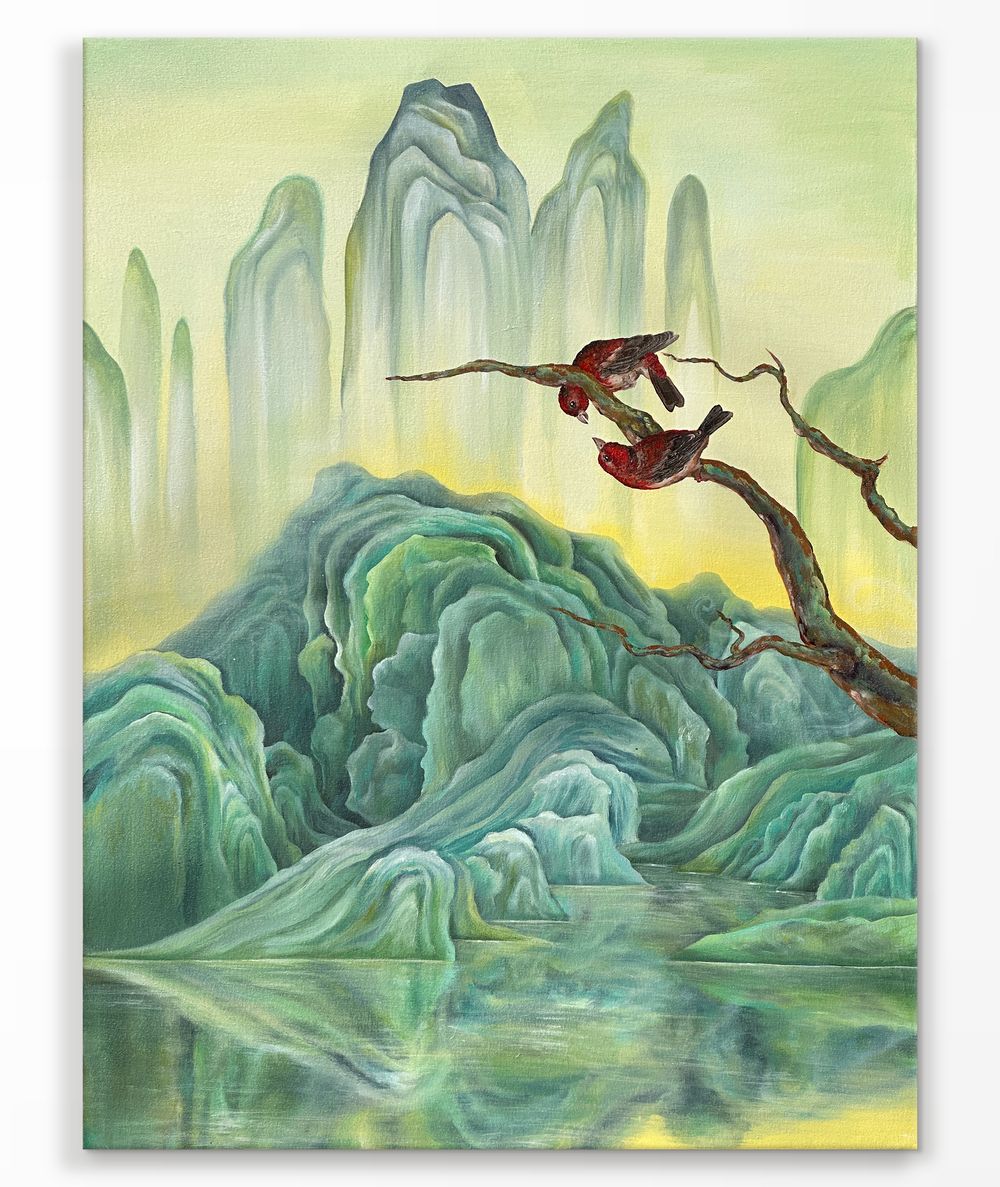
Main image: Ann Liu, What the Daughters Wager, The Mother Guards” 《女搏母佑》, 2025. Courtesy the artist.




A respected voice in contemporary art discourse.
Focusing on ambitious storytelling and insightful art-world commentary. Ocula Magazine publishes in-depth interviews, critical essays and timely analysis on the artists, exhibitions and ideas driving the global art world.
Learn more about Ocula Magazine
Showcasing the best of the art world.
Ocula partners with galleries from around the world to highlight their artists, artworks and exhibitions. Gallery membership is by application and invitation, with each member vetted by an independent panel.
Learn more about Ocula Membership
Specialises in the sale of major artworks.
Led by a team with deep ties to the world’s leading auction houses, galleries and collectors. Ocula’s advisory team offers bespoke services to high-net-worth clients from around the world who are looking to acquire the best of contemporary and modern art.
Learn more about our team and services