





Marco Giordano's Nocturnal Visions at The Modern Institute in Glasgow

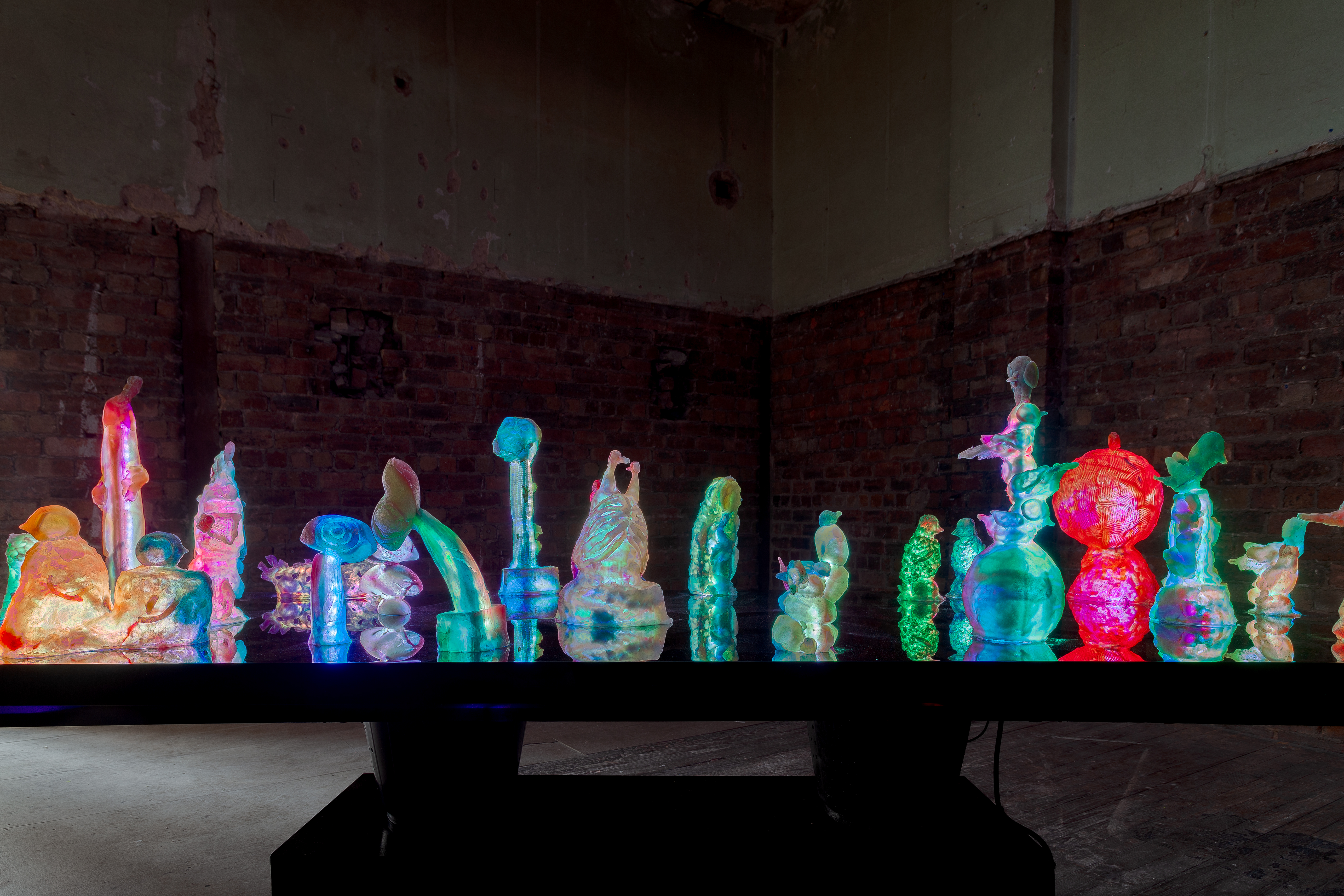
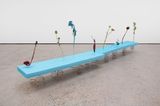
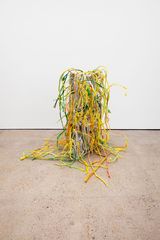
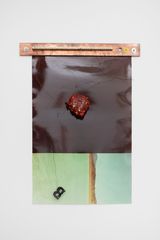
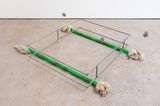
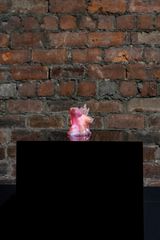
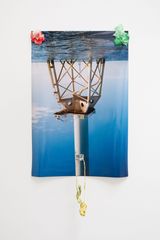
Exhibition view: Marco Giordano, To Disturb Somnolent Birds, The Modern Institute, Aird's Lane Bricks Space, Glasgow (1 February–4 April 2020). Courtesy the artist and The Modern Institute/Toby Webster Ltd, Glasgow. Photo: Patrick Jameson.

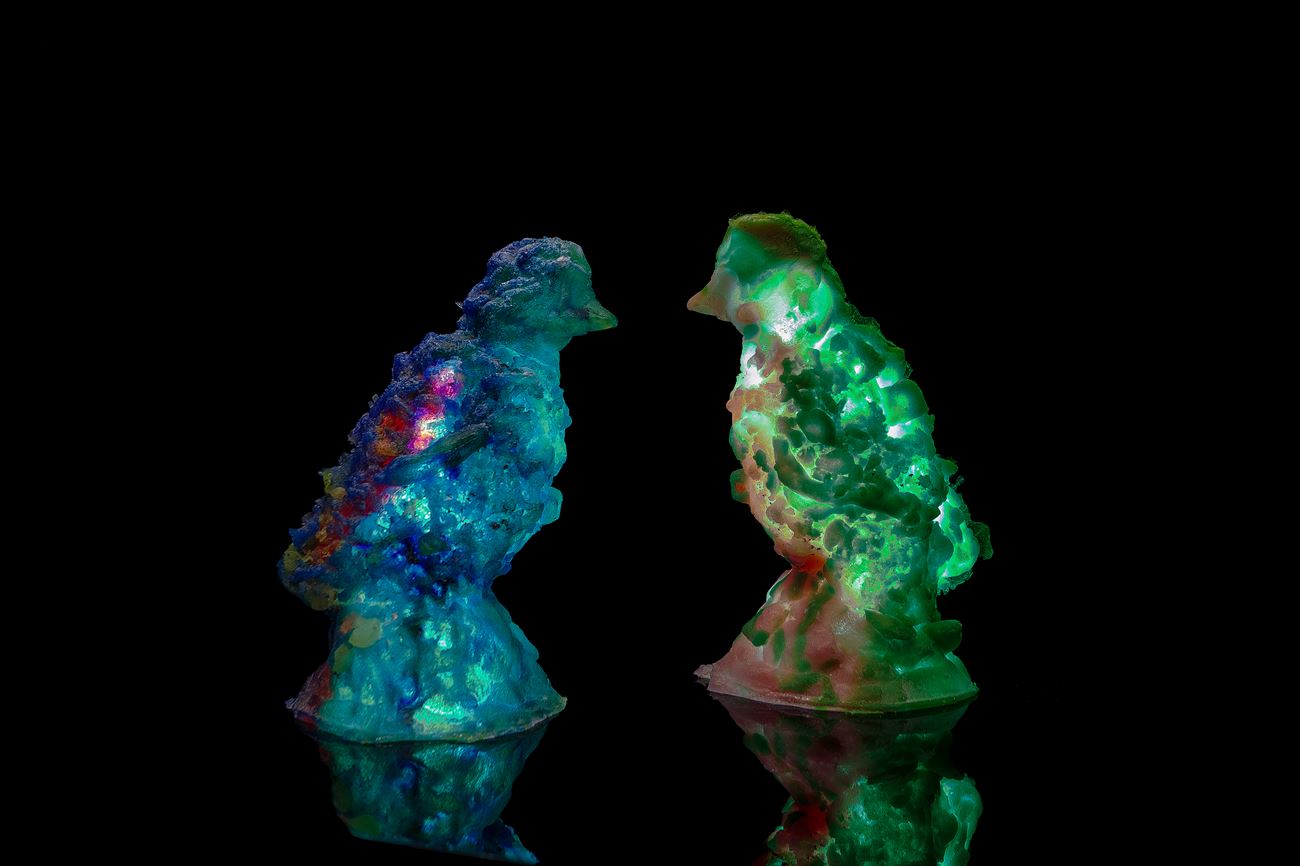
Central to this show is a grouping of illuminated sculptures rotocast in multicoloured resin: uncanny and imaginative forms that vaguely resemble things found in life, such as penguins huddled in an embrace, a fishtail cascading into water, or a cob of corn tufted with something like fluffy clouds. Positioned together on a reflective black surface—a Perspex replica of Giordano’s studio workbench—the light of their glowing forms is reflected in their smooth surfaces, creating an illusion of gazing into an abyss of the psyche. These are at once concrete yet abstract bodies, doubly suggesting billows of cosmic dust as if to reinforce the cerebral quality of the subconscious and the ambiguity between dreams and nightmares.


To Disturb Somnolent Birds—the somewhat abstruse title of the show—is a line borrowed from a 1928 lecture on cradle songs by Spanish playwright, theatre director, and poet, Federico García Lorca, whose interest in the genre was determined by the often-sombre quality of Western European lullabies. While Lorca observed that sleep songs tend to express the fatigue of work, rather than the shelter of parental love, it is the eccentric darkness of dreams that seems to interest Giordano, who cites a core interest in hypnagogia—the phenomenon of lucidity experienced during the transitional phase between waking and slumber—and its ability to psychically disturb.
“The droning refrain of “Sing and sink” acts as the mollifying lullaby to this hallucinatory room
The descent into dreams ostensibly triggers a period of mental vulnerability, in which matter from waking life and the subconscious fuse in unsettling and uncanny combinations, represented here in the sculptures’ irregular shapes. The droning refrain of ‘Sing and sink’ acts as the mollifying lullaby to this hallucinatory room, both compelling and sinister; its lethargic tones like an afterthought to the visual elements of the show.
An accompanying essay by Ari Nielsson further develops the exhibition’s conceptual material, drawing links between the labour-weary caregiver of centuries past—those songwriters of Lorca’s discourse—the present capitalisation of ‘downtime’ furnished with podcasts and meditation apps, and the commonly unsettling experience of ‘falling into sleep,’ a phrase that suggests a lurch of the stomach into the mouth as one begins to doze. Concerning somnolent birds, one can only imagine those usually lively morning creatures tormented by nocturnal visions. —[O]
Main image: Exhibition view: Marco Giordano, To Disturb Somnolent Birds, The Modern Institute, Aird's Lane Bricks Space, Glasgow (1 February–4 April 2020). Courtesy the artist and The Modern Institute/Toby Webster Ltd, Glasgow. Photo: Patrick Jameson.












A respected voice in contemporary art discourse.
Focusing on ambitious storytelling and insightful art-world commentary. Ocula Magazine publishes in-depth interviews, critical essays and timely analysis on the artists, exhibitions and ideas driving the global art world.
Learn more about Ocula Magazine
Showcasing the best of the art world.
Ocula partners with galleries from around the world to highlight their artists, artworks and exhibitions. Gallery membership is by application and invitation, with each member vetted by an independent panel.
Learn more about Ocula Membership
Specialises in the sale of major artworks.
Led by a team with deep ties to the world’s leading auction houses, galleries and collectors. Ocula’s advisory team offers bespoke services to high-net-worth clients from around the world who are looking to acquire the best of contemporary and modern art.
Learn more about our team and services