The art world in focus
Subscribe to our newsletter for news and insights on artists, galleries and exhibitions.

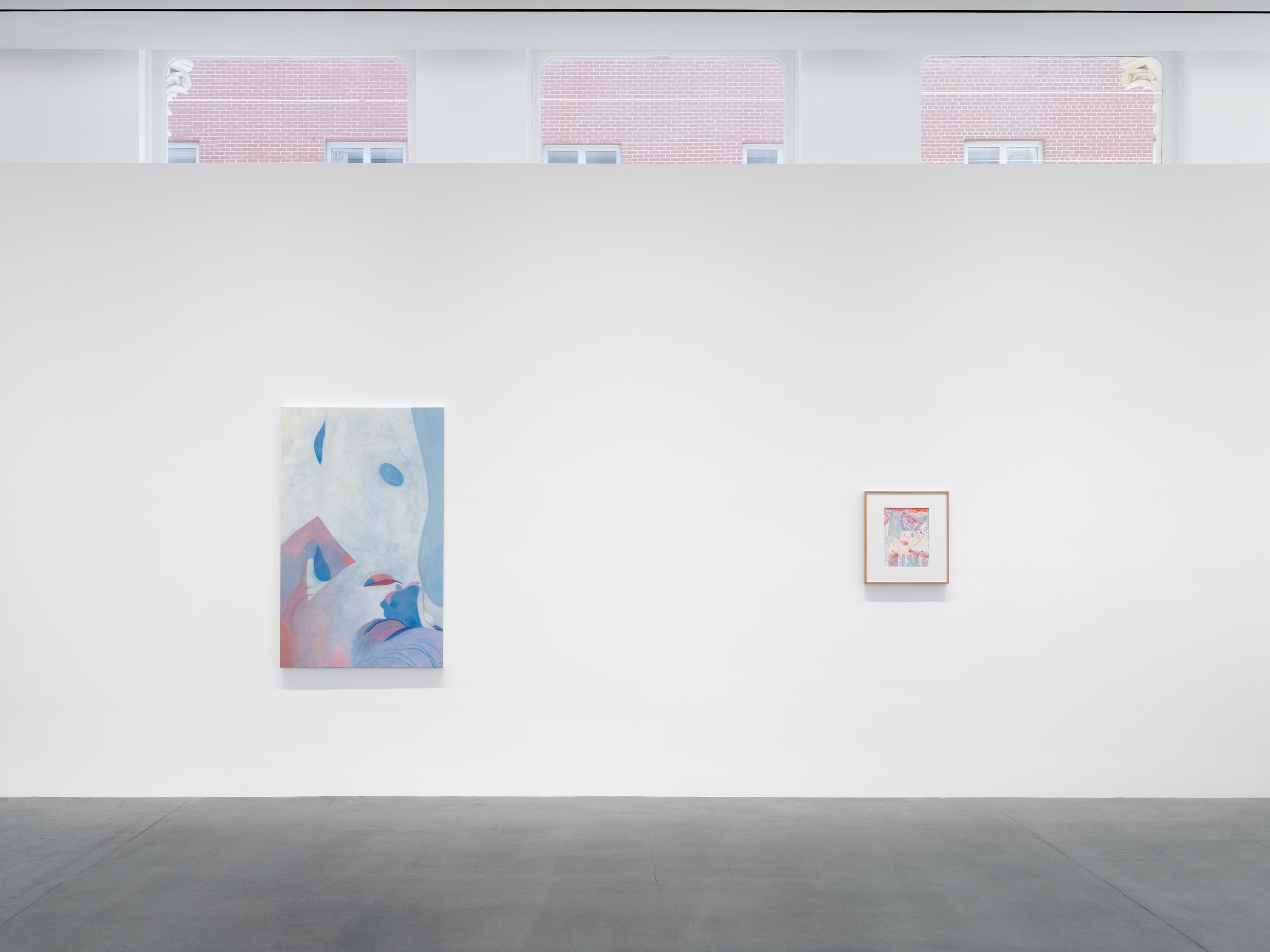
In an age of ubiquitous content sharing, a common point of discussion is whether or not it’s possible to ‘post for yourself’. Do you share images regardless of, or with indifference to, how your content will be seen or perceived? Is it possible to share simply for personal satisfaction? The counterpoint is self-evident: if it’s truly just for you, why post it at all? My view tends to fall into the latter camp. When I saw Inès Longevial’s portraits at her exhibition Skin of a Storm (26 June–1 August 2025), at Almine Rech, I began to think otherwise.
Longevial is a 34-year-old painter born in Agen, France, and based in Paris. She primarily paints large oil-on-linen portraits, and while most of the work appears to be self-portraiture (her gallery describes the work as such), the artist herself is more ambiguous as to its designation. Longevial is also an artist with a nimble understanding of how to curate a persona that hybridises her artworks with her online image, with a huge social media following and a dedicated practice of posting photos and videos of herself in various stages of her creative process.

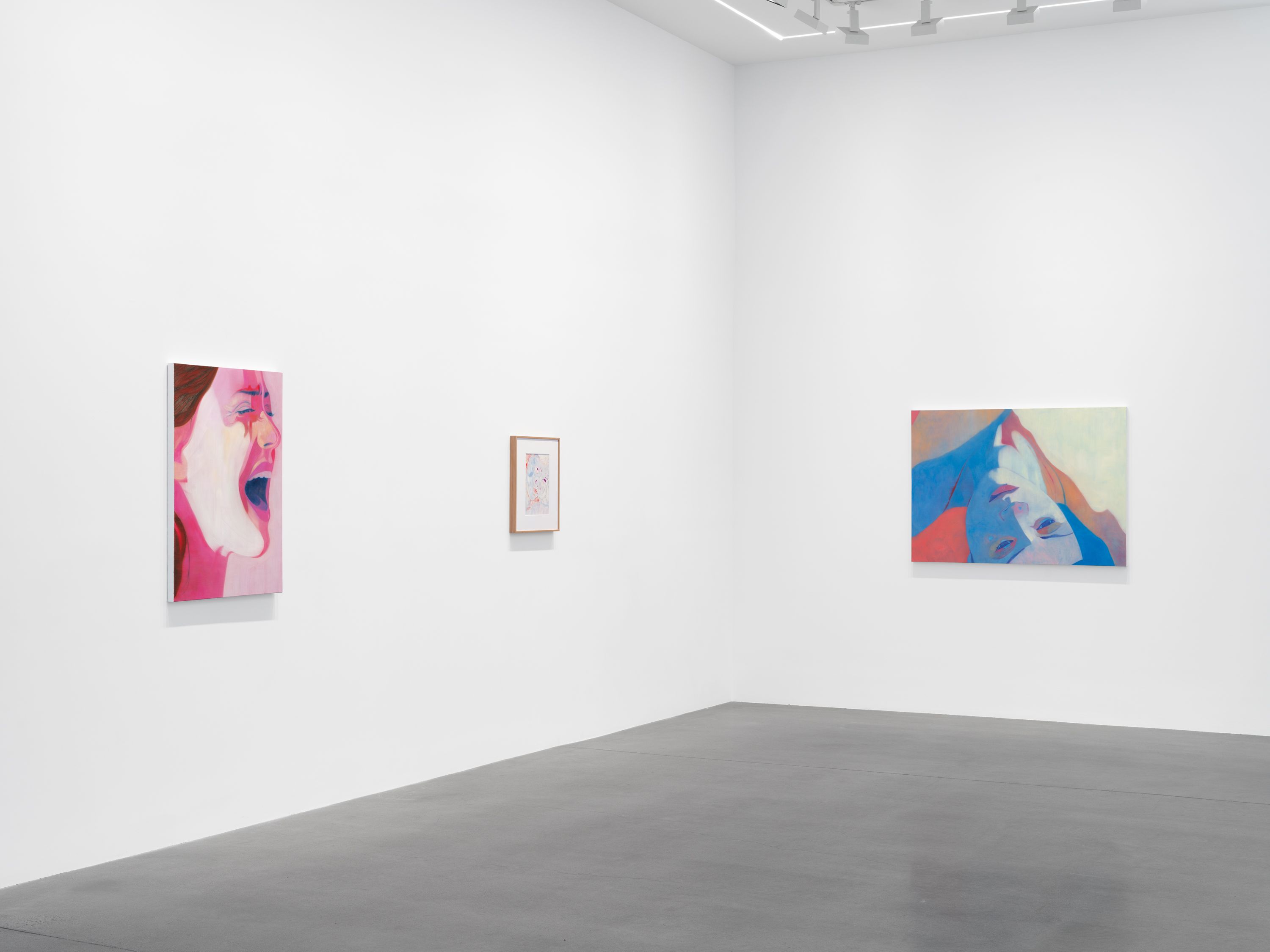

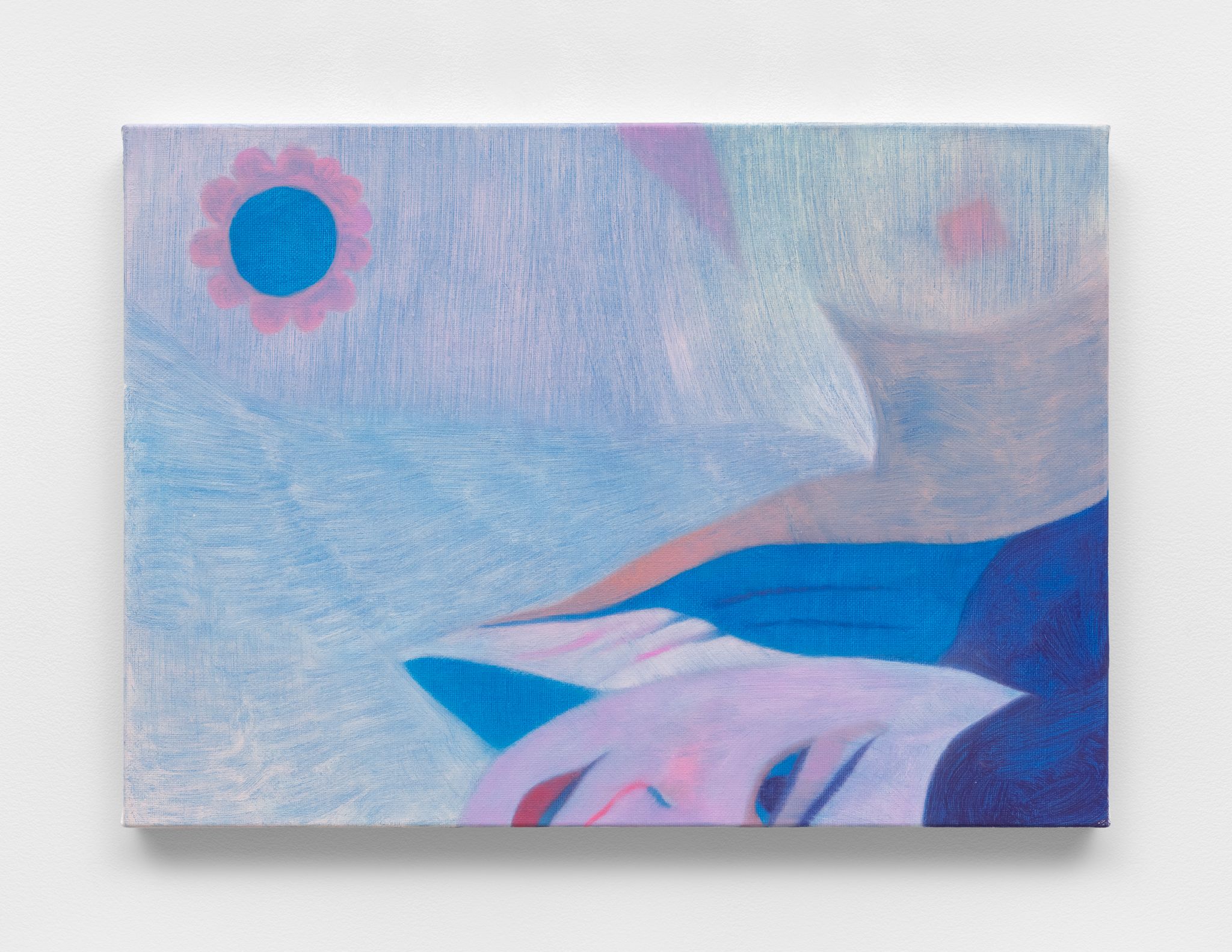
This is perhaps what makes her portraits, and their insistence on existing beyond context, so effective. Longevial begins by painting her face as a ‘neutral ground’, onto which she gradually works in emotions and bits of memories. Nothing is pre-planned or sketched out; feelings and experiences are expressed on the canvas as they emerge. Some motions are quick, even aggressive. The physical movement of brushstrokes across a giant canvas lends itself well to this somatic release—Longevial is a process painter of the expressionist order, but one who winds up with an unexpectedly precise and highly stylised final product.
The portraits in this exhibition present the subjects’ bodies entirely free of eroticism. In that freedom, they look natural and somewhat like landscapes (many of the works’ titles hint towards this). In the large diptych Body as beach map (2025), the subject lies on her side in an unguarded resting posture with her back to the viewer. Her profile is visible as she stares into the distance with her neck craned—she is someone in mid-thought or mid-feeling, rather than poised for our consumption. It is clear that the subject exists in her world, for herself only. Her body appears somewhat transparent, with organic (though not anatomical) shapes in varying blue and neutral tones. They swirl and touch internally, a propositional nod to the physical sensations that come with emotional dealings. Half of her posterior is cut off by the limits of the canvas. It is pink and leads to the wavy range of blues on her back; perhaps this is the beach she speaks of in the title.
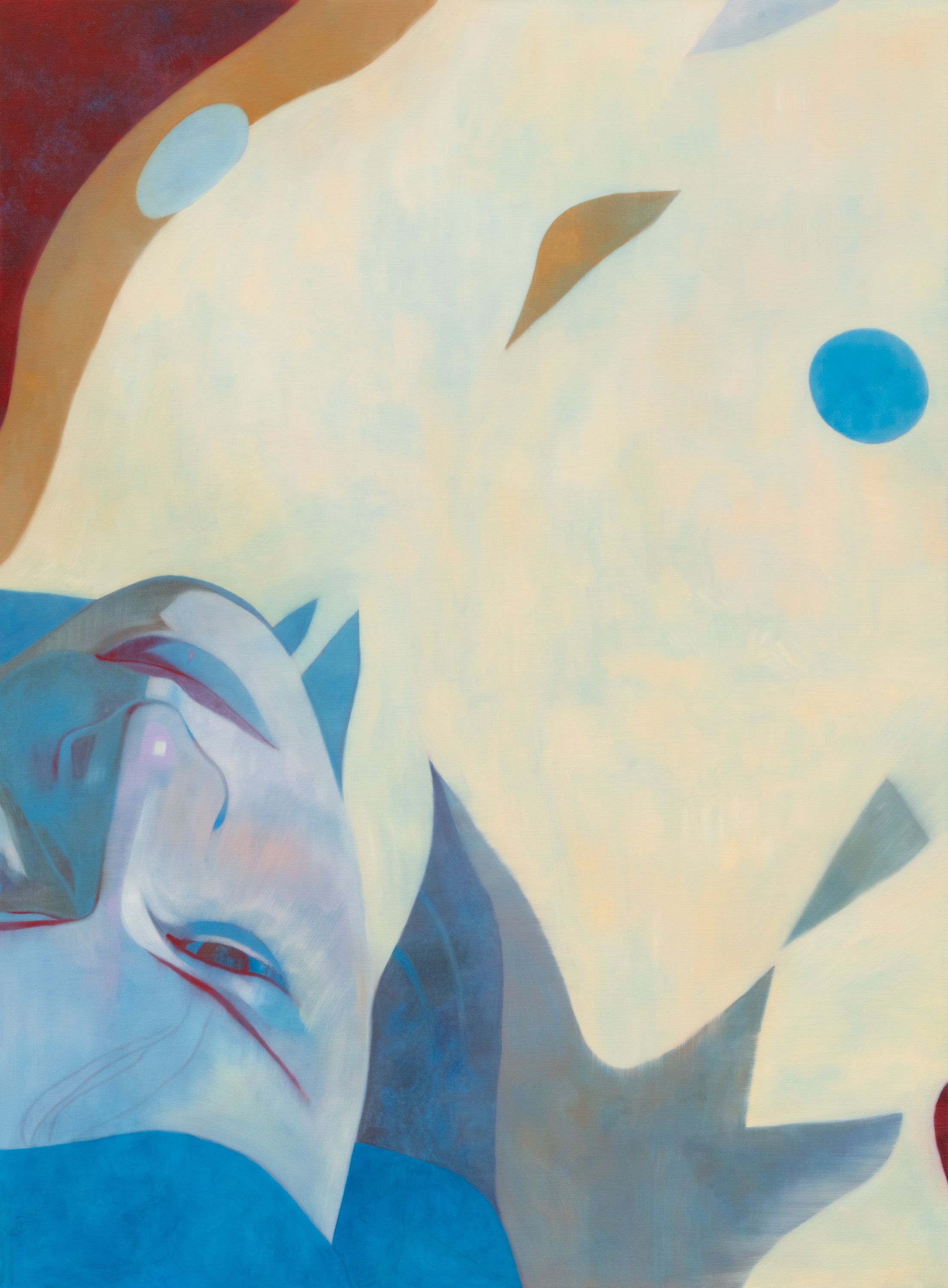
Cascading body (2025) uses similar techniques. Again, the face is rendered in detail, while the body appears more amorphous, positioned lying down. The curvature of the breasts and the space between them create almost mountain and valley-like structures. Blue dots stand in for, or censor, the nipples, echoing the tones of blue that appear in the pensive facial expression. The primary colour palette suggests a return to the basics; one imagines a necessary step in the emotional alchemy at play.
While Longevial’s process is deeply personal, the work itself reveals few details of her personal life; it is absent of clear biographical elements or narrative cues. While the artist works in a traditional medium, we don’t have the typical symbolism of past and present portraits—no jewellery, armour, books, animals, instruments, or other earthly possessions. With little information to form a connection directly to her, the viewer’s attention turns inward. Longevial’s portraits become a kind of mirror, reflecting something back to us about ourselves and our own emotional interior.

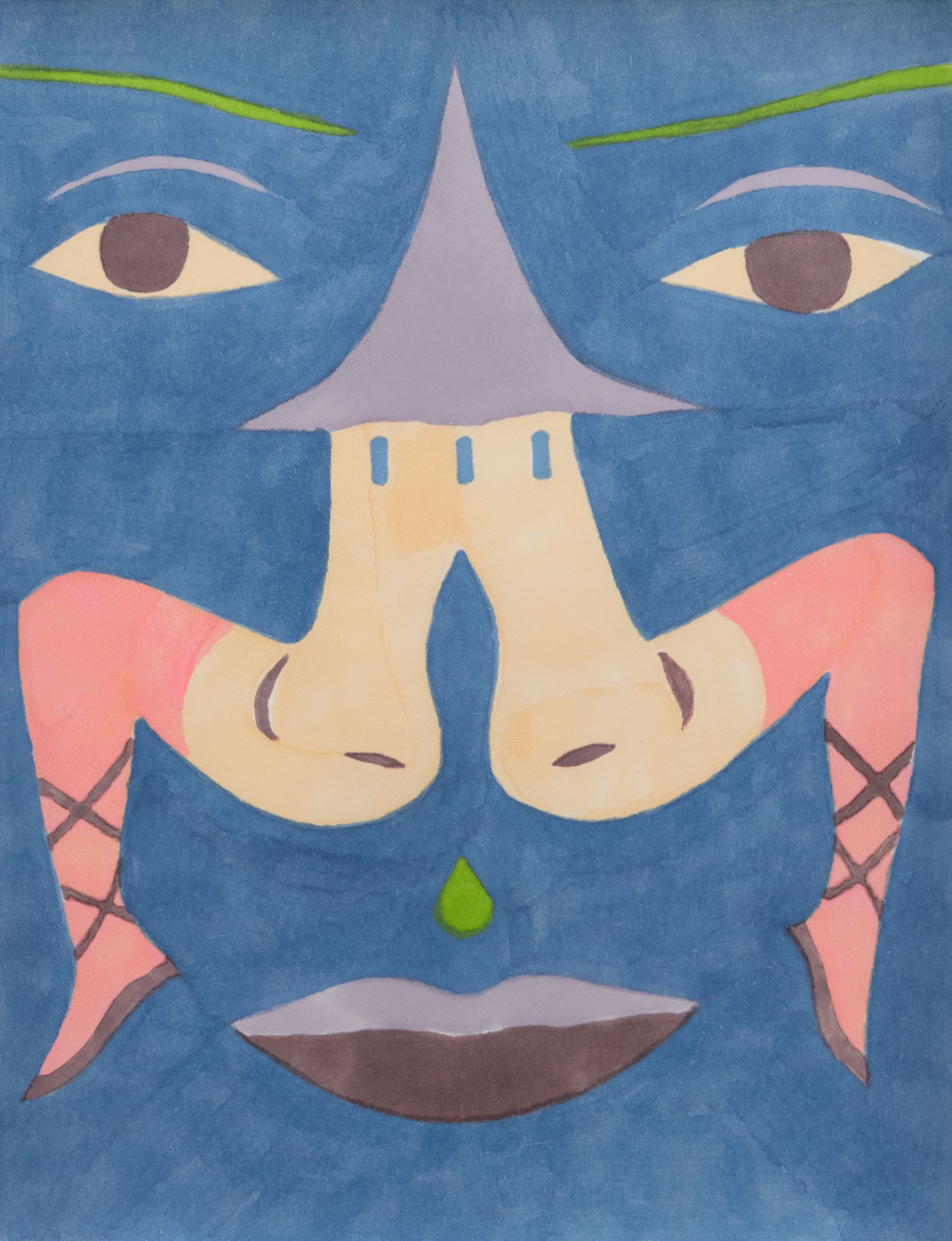
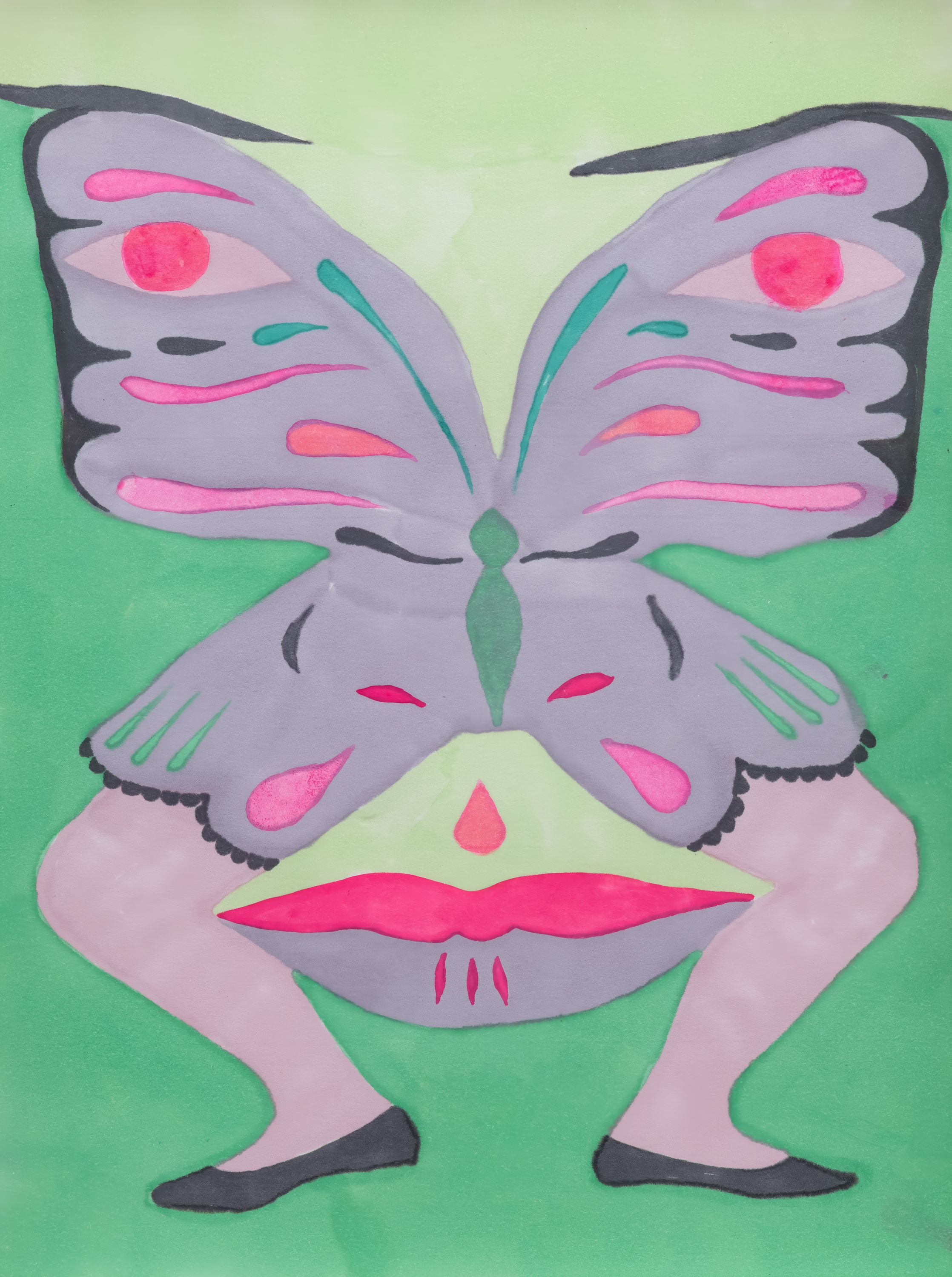
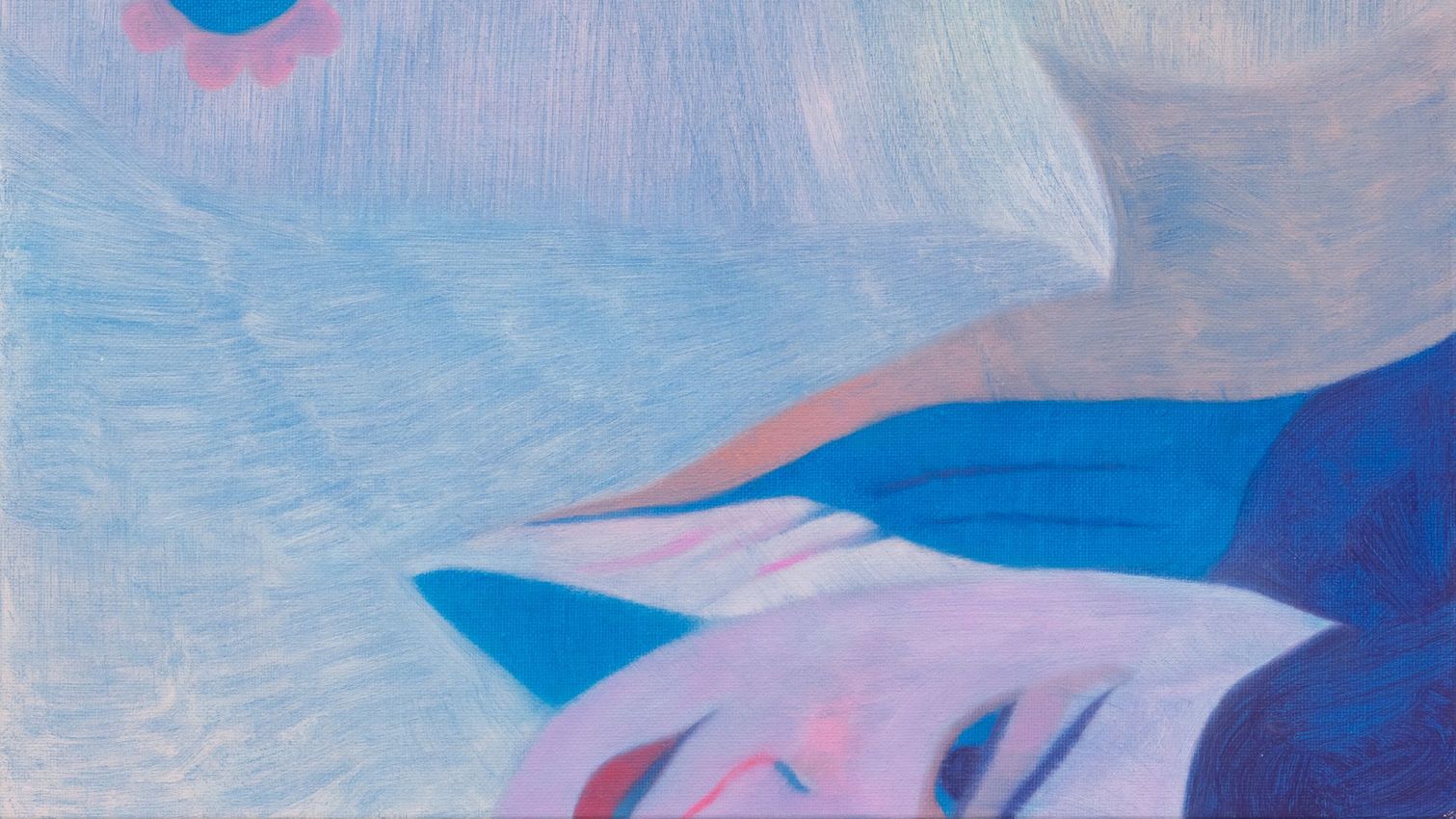
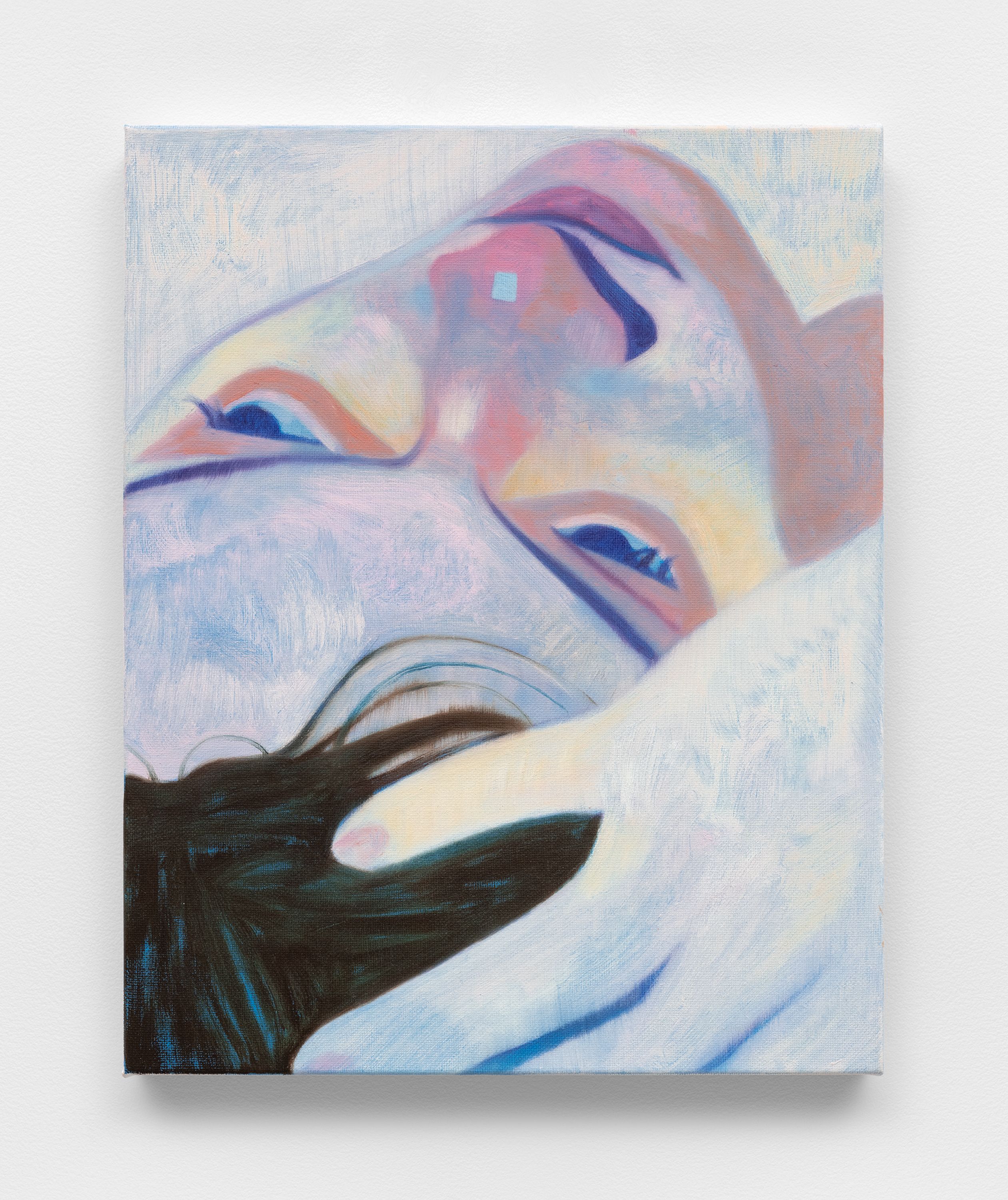
Cascading portrait 2 (2025) is one of the smaller pieces in the show, but it is no less ambitious in translating depth. Dominating the canvas is the face of a woman upside down, with her hands covering the upper half of her head. In the little space that is left, one can make out her hair and a bright blue background, while her eyes, nose, and mouth exist more fully. The form is concrete and the inclusion of highlights and shadows gives the features more definition. The skin on her face and hands appears flattened into two dimensions, yet is also textured and blurred. It serves more as an outline, a place where perhaps more paint might be applied later. This seems to approximate the processing of memories. The exercise of remembering isn’t linear; sometimes our bodies reject or forget the details, resulting in something hazy and unresolved. Longevial’s use of muted pastel tones (pinks, peaches, dusty blues, terracottas) evoke skin, warmth, vulnerability, and touch without veering too far into sentimentality, suggesting something intimate and bodily. They’re feminine, but not in a traditional or decorative way. They feel grounded in flesh and emotion.
Longevial’s portraiture reframes the face not as a means of presentation or validation, but as a home to emotional truth. That her paintings engender this experience—one that seems counter to that of the self-aware online persona—suggests that the acts of refusal found here are in fact choices, not happenstance. When we see faces online, they are almost always curated, filtered, and flattened into content. Longevial offers something radically still: a face that isn’t asking to be seen, but that simply is. In a digital world where self-image is so often performative—a world that the artist herself actively engages in—her paintings seem to push against that instinct entirely. Her portraits do not perform; they exist for themselves. Paradoxically, it’s in this refusal to engage that they become most affecting. They create room, not for projection or interpretation, but for feeling. —[O]
A respected voice in contemporary art discourse.
Focusing on ambitious storytelling and insightful art-world commentary. Ocula Magazine publishes in-depth interviews, critical essays and timely analysis on the artists, exhibitions and ideas driving the global art world.
Learn more about Ocula Magazine
Showcasing the best of the art world.
Ocula partners with galleries from around the world to highlight their artists, artworks and exhibitions. Gallery membership is by application and invitation, with each member vetted by an independent panel.
Learn more about Ocula Membership
Specialises in the sale of major artworks.
Led by a team with deep ties to the world’s leading auction houses, galleries and collectors. Ocula’s advisory team offers bespoke services to high-net-worth clients from around the world who are looking to acquire the best of contemporary and modern art.
Learn more about our team and services