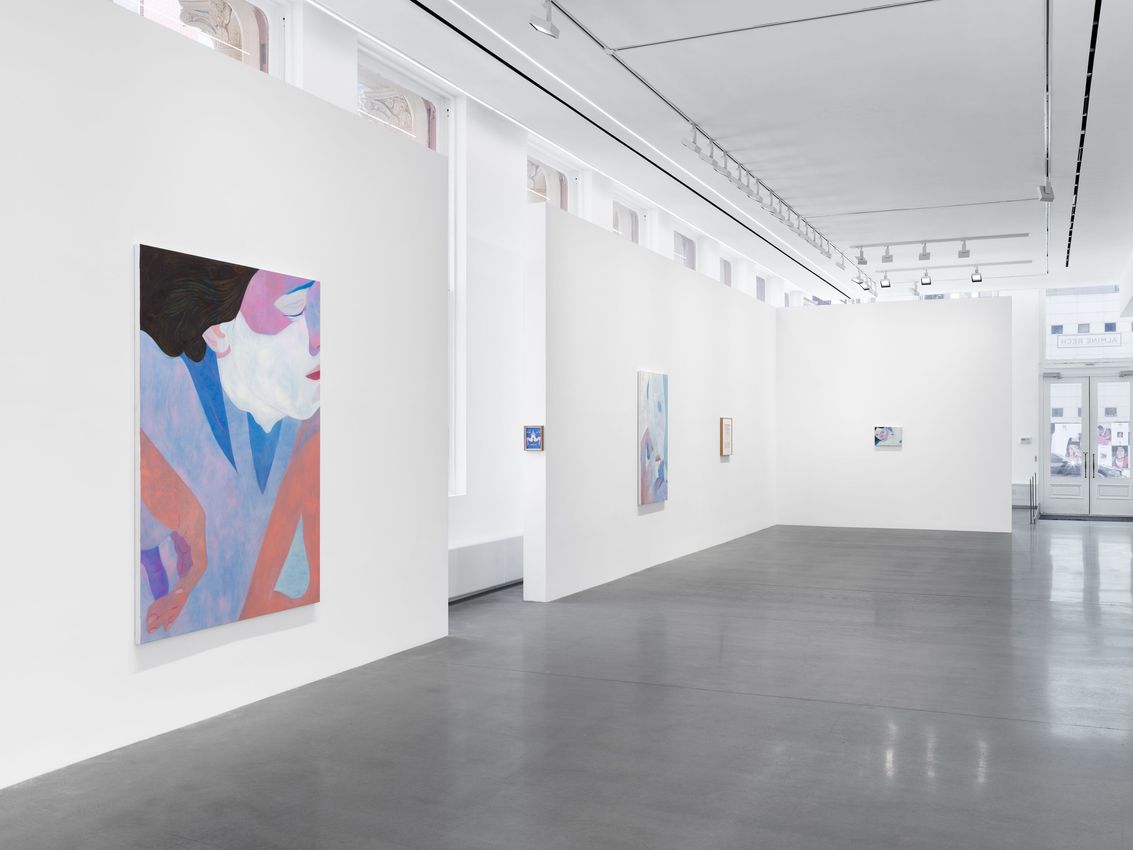
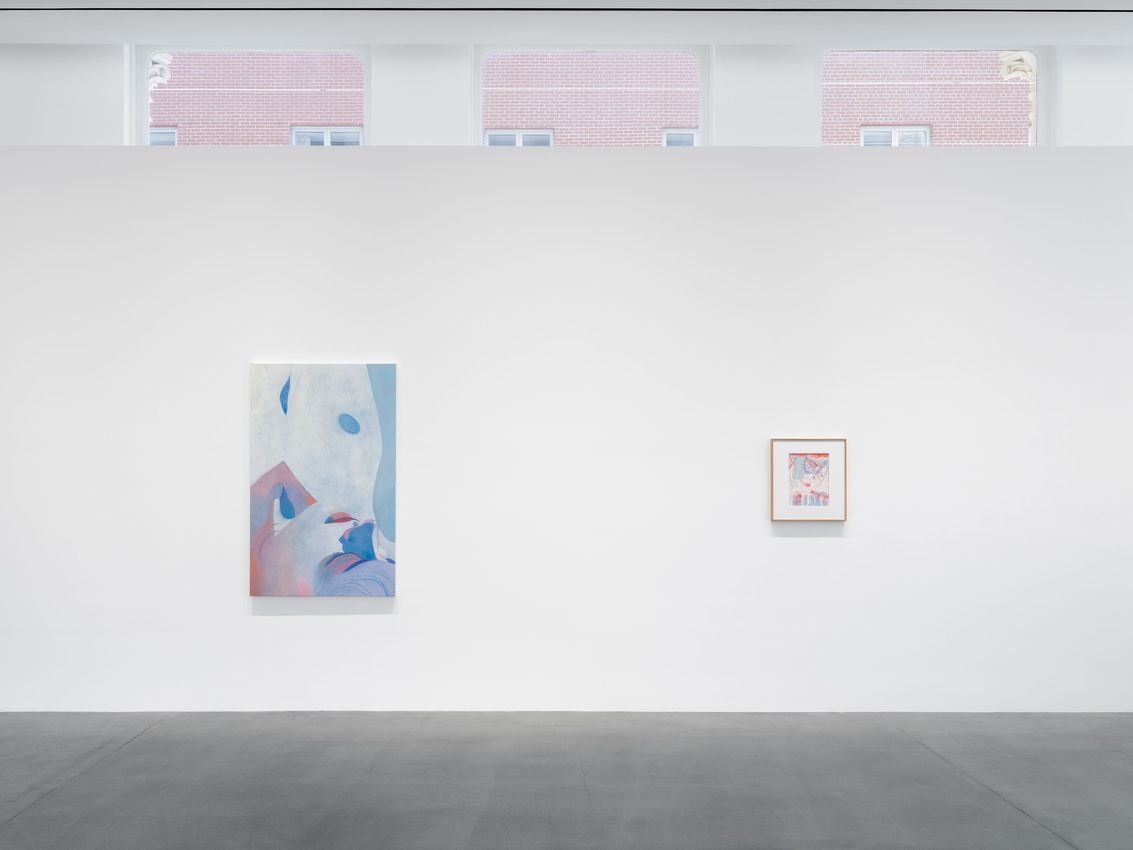
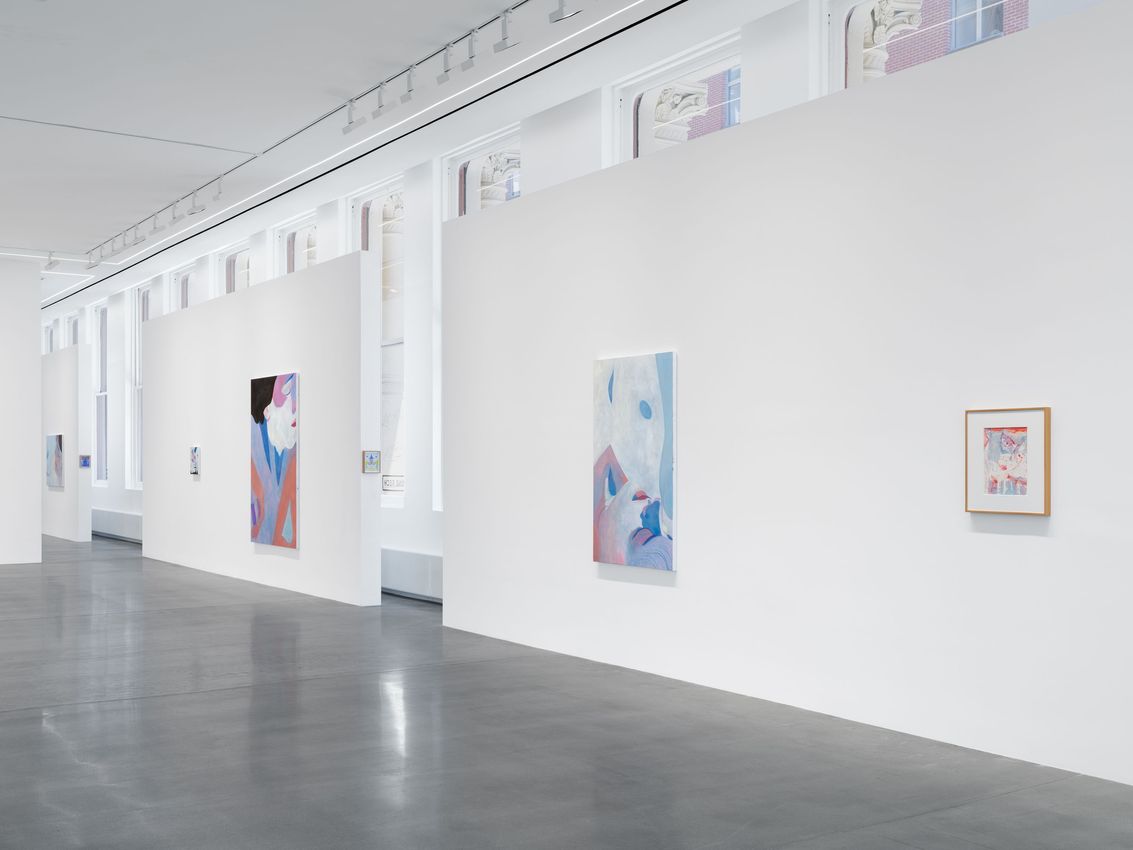
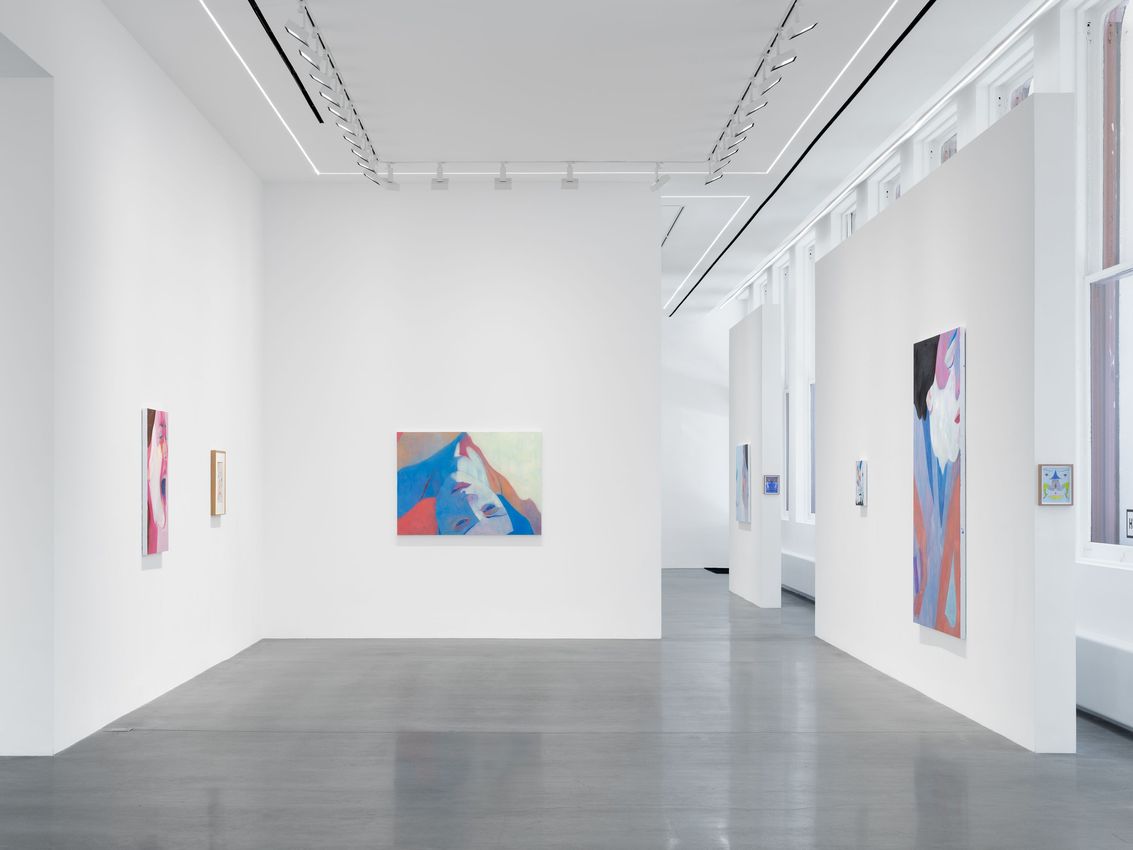
Skin cells are among the most rapidly renewed in the human body, only to be outpaced by varied gastrointestinal organs, elements of blood, and the cervix. Skin is the peel of our human body, a protective layer that encapsulates every other sensitive and squishy slice. Even as we decorate, bruise, and rejuvenate skin, it absorbs time, transforming for all to see. Skin can be a map, a projection—a mole or a scar, soft hands, a knobby knee, and a sweat-laden upper lip can rustle memories awake, occupying a space between seeing and feeling.
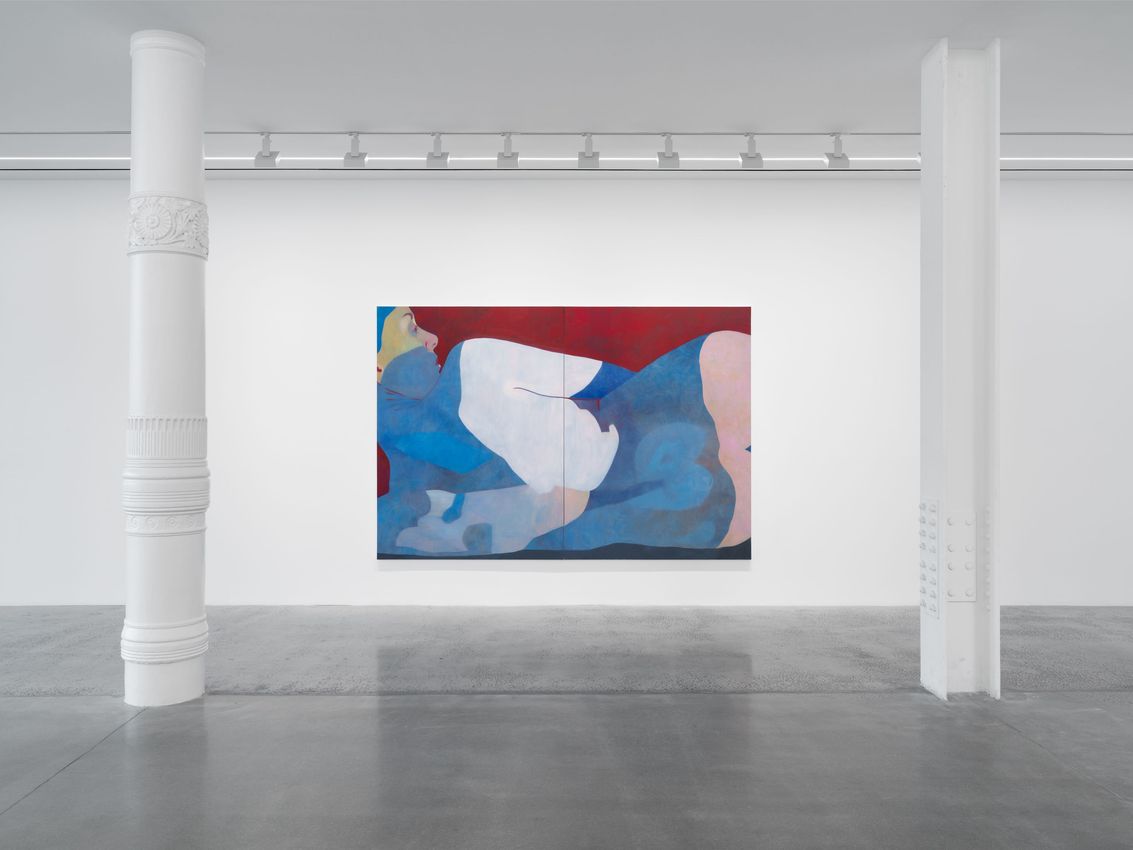
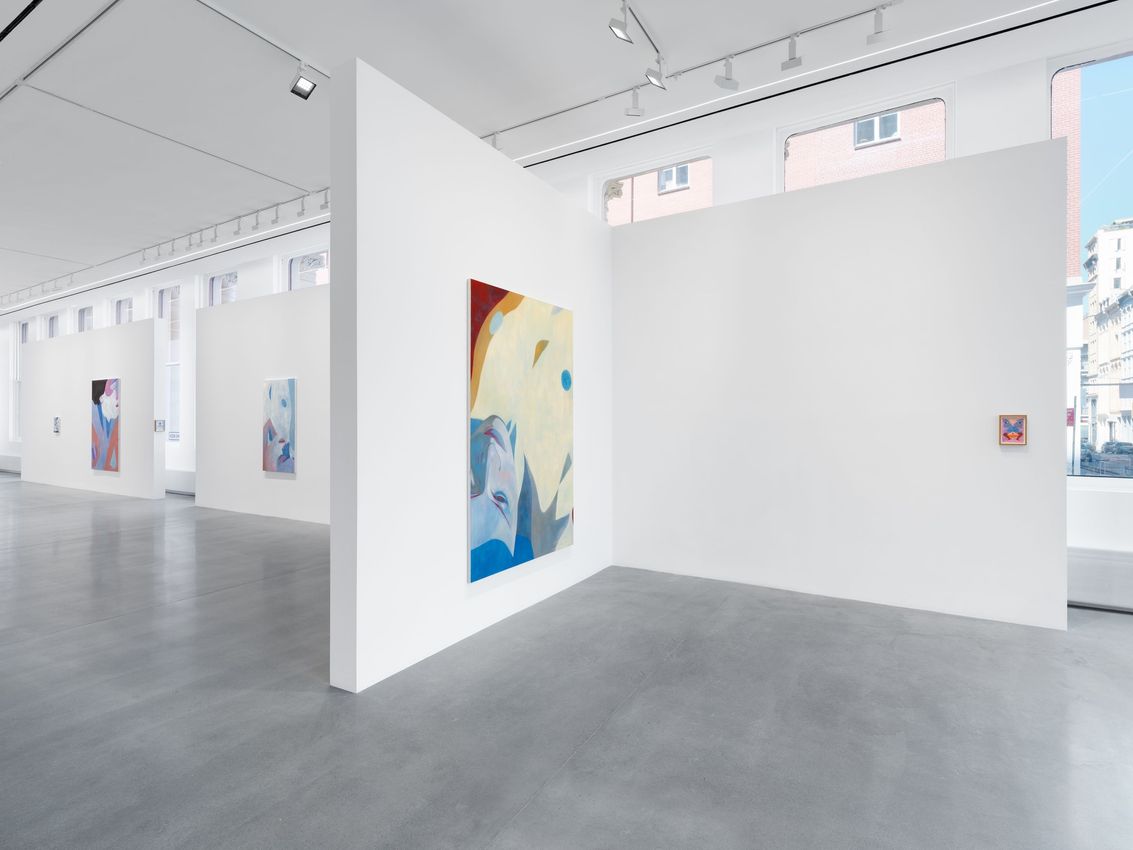
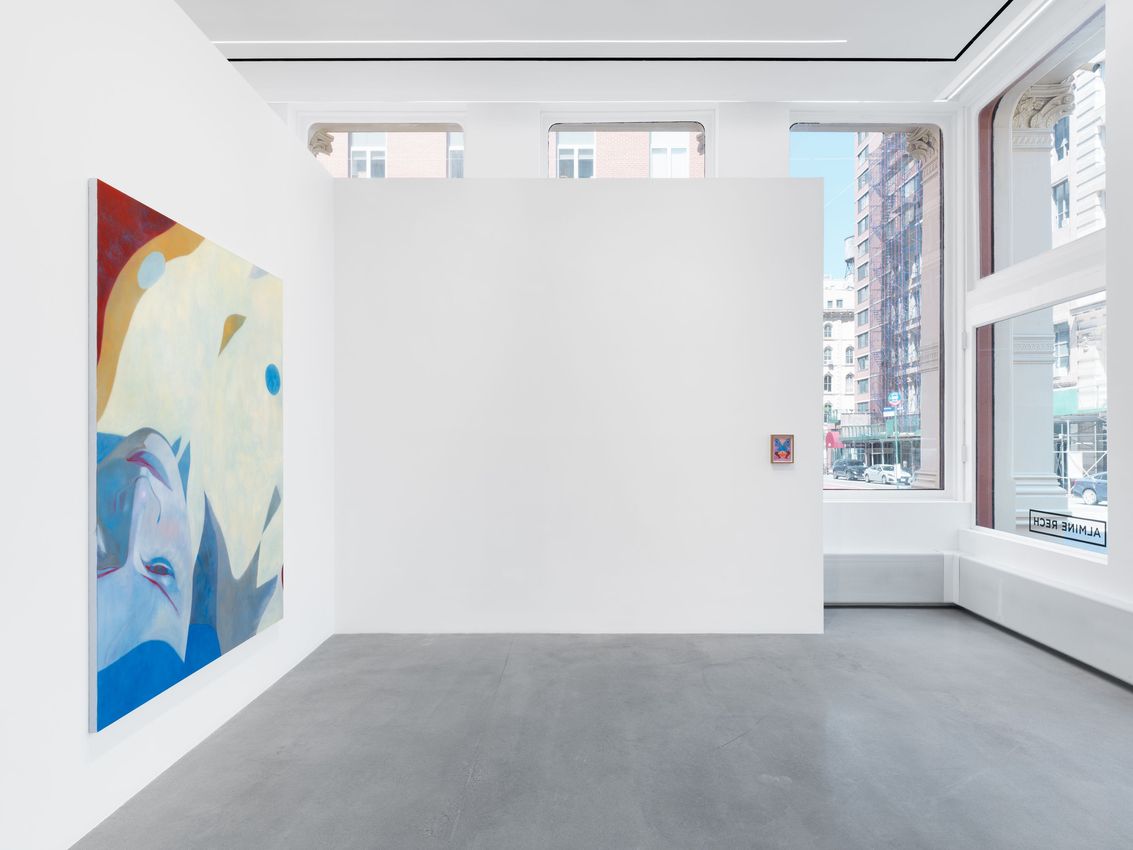
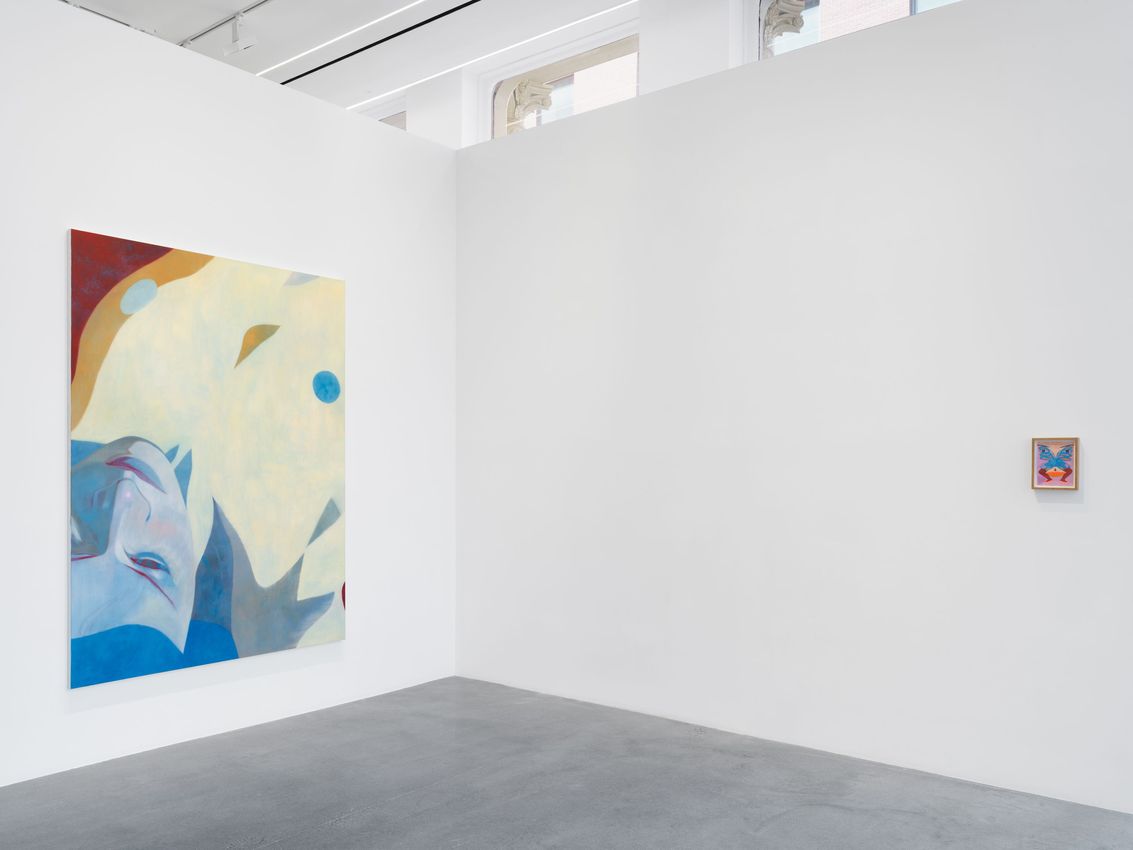
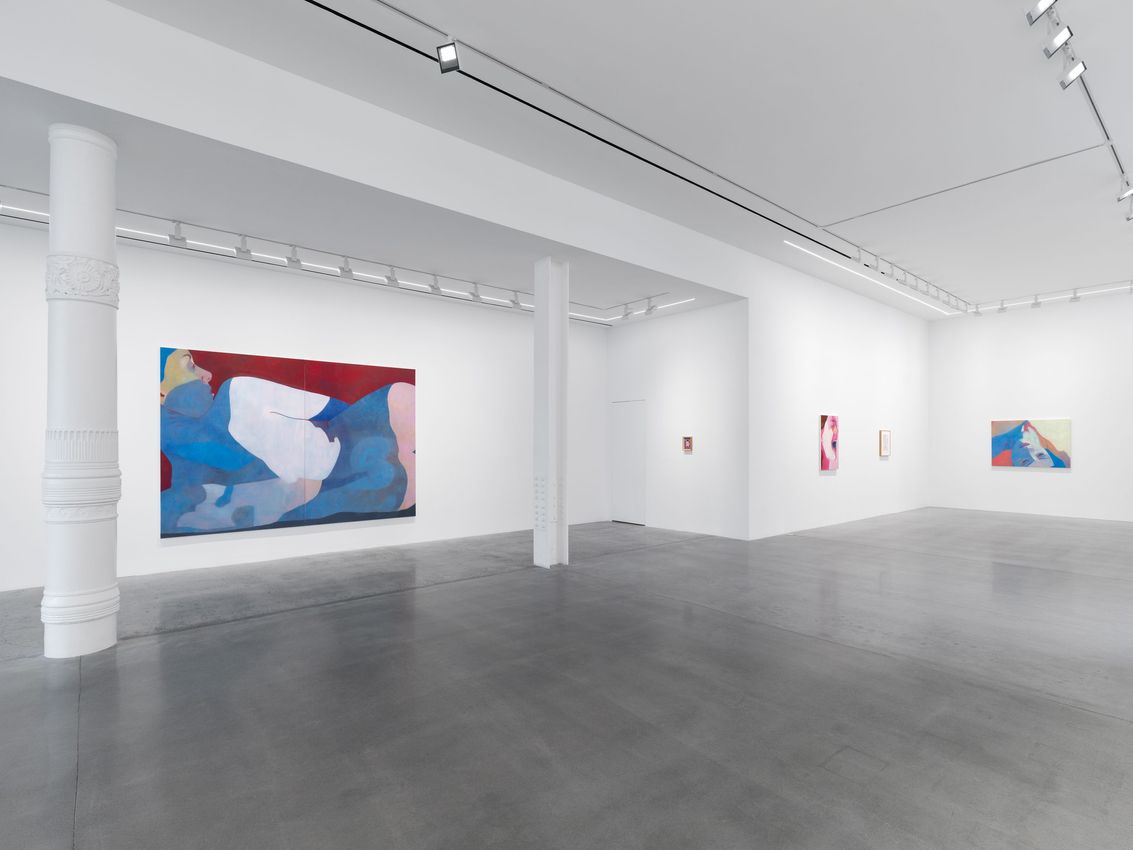
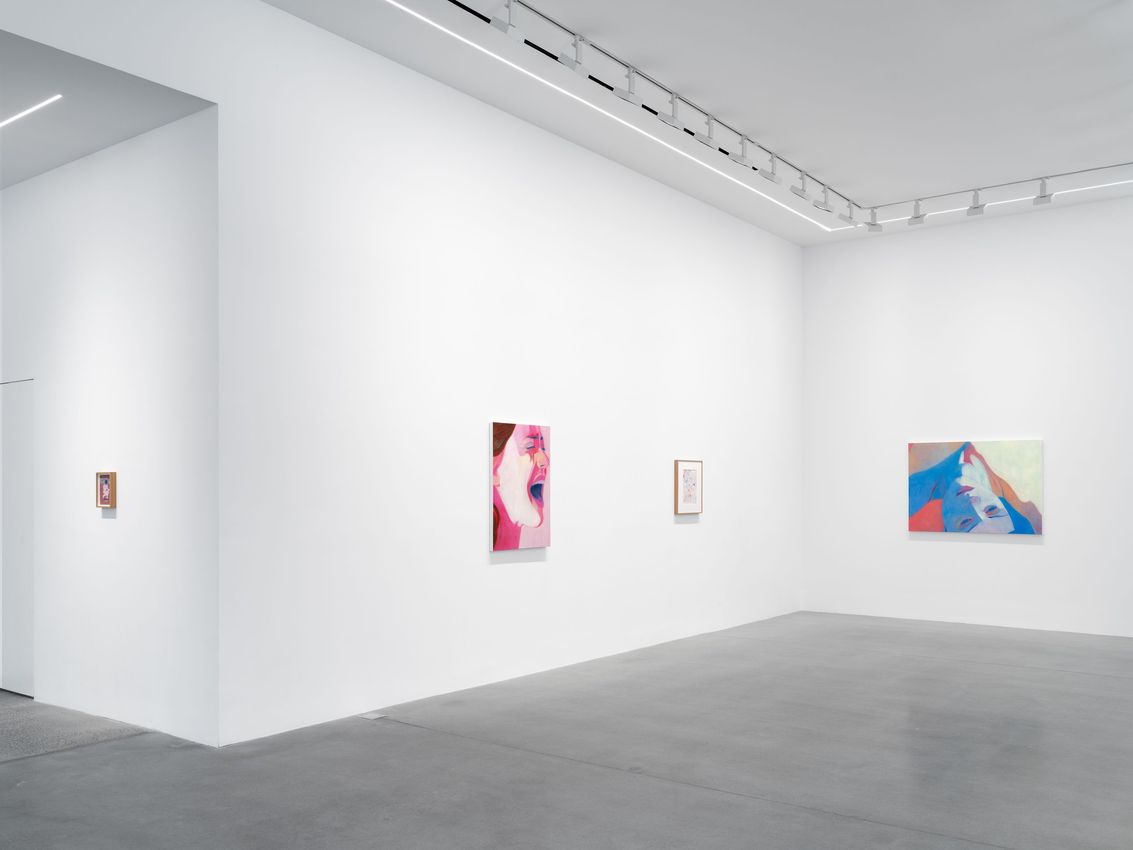
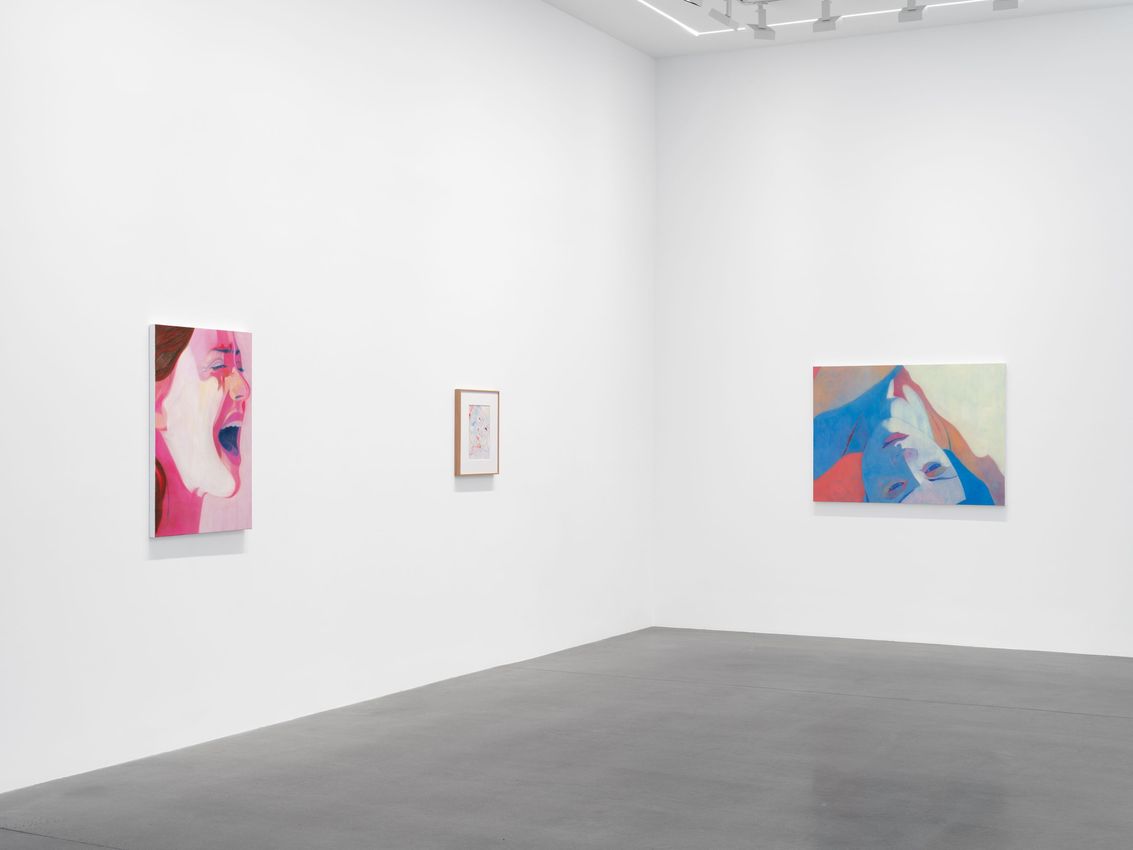
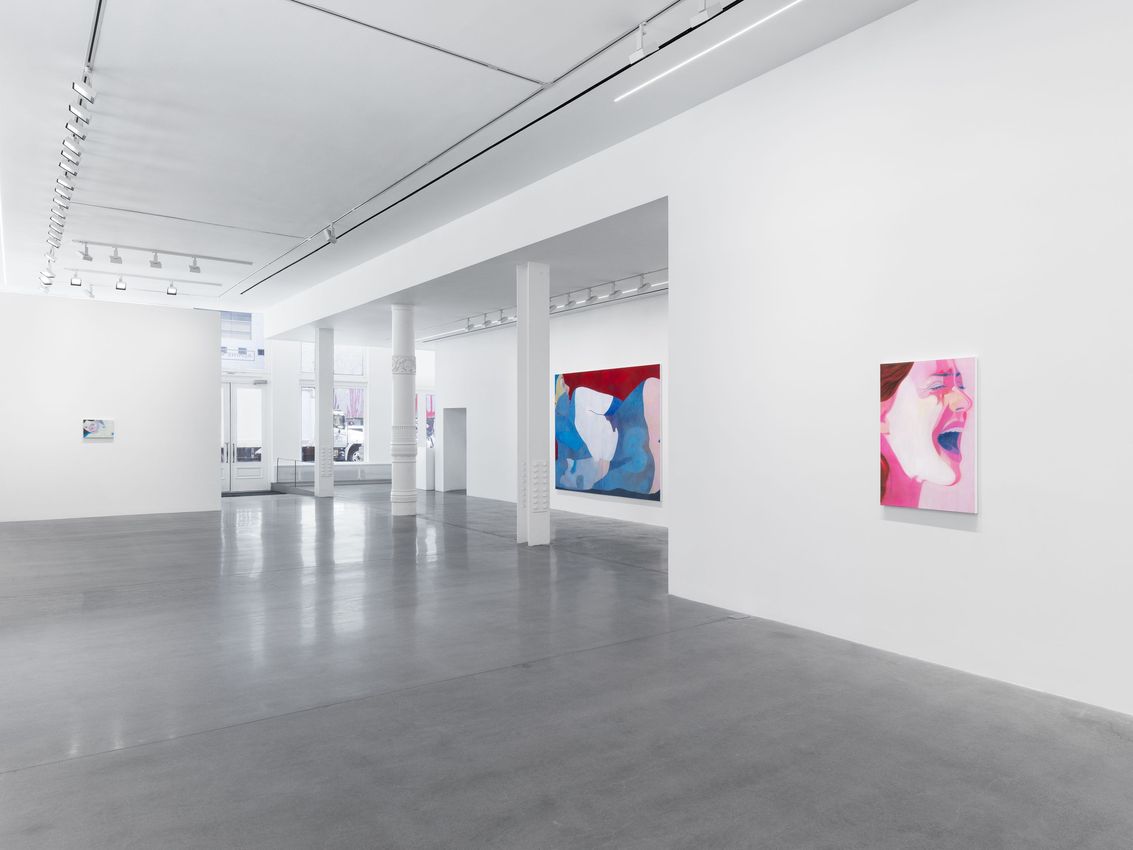
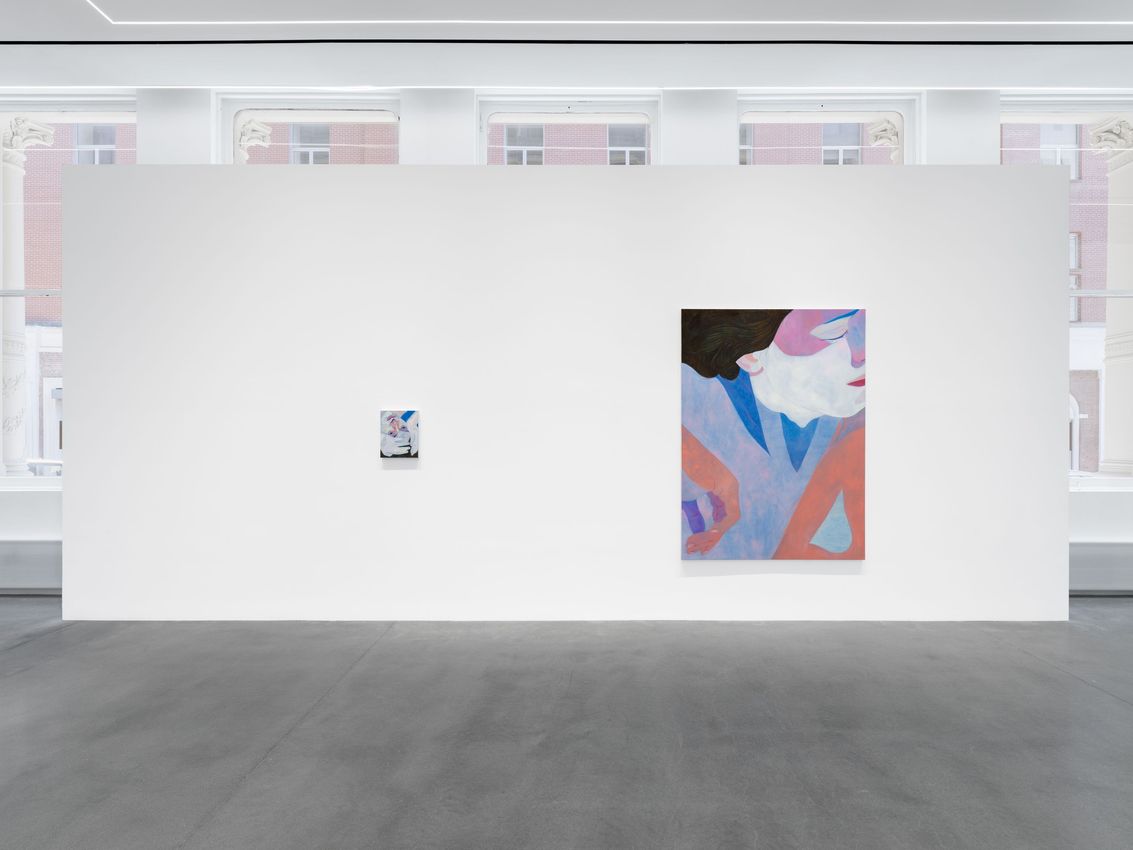
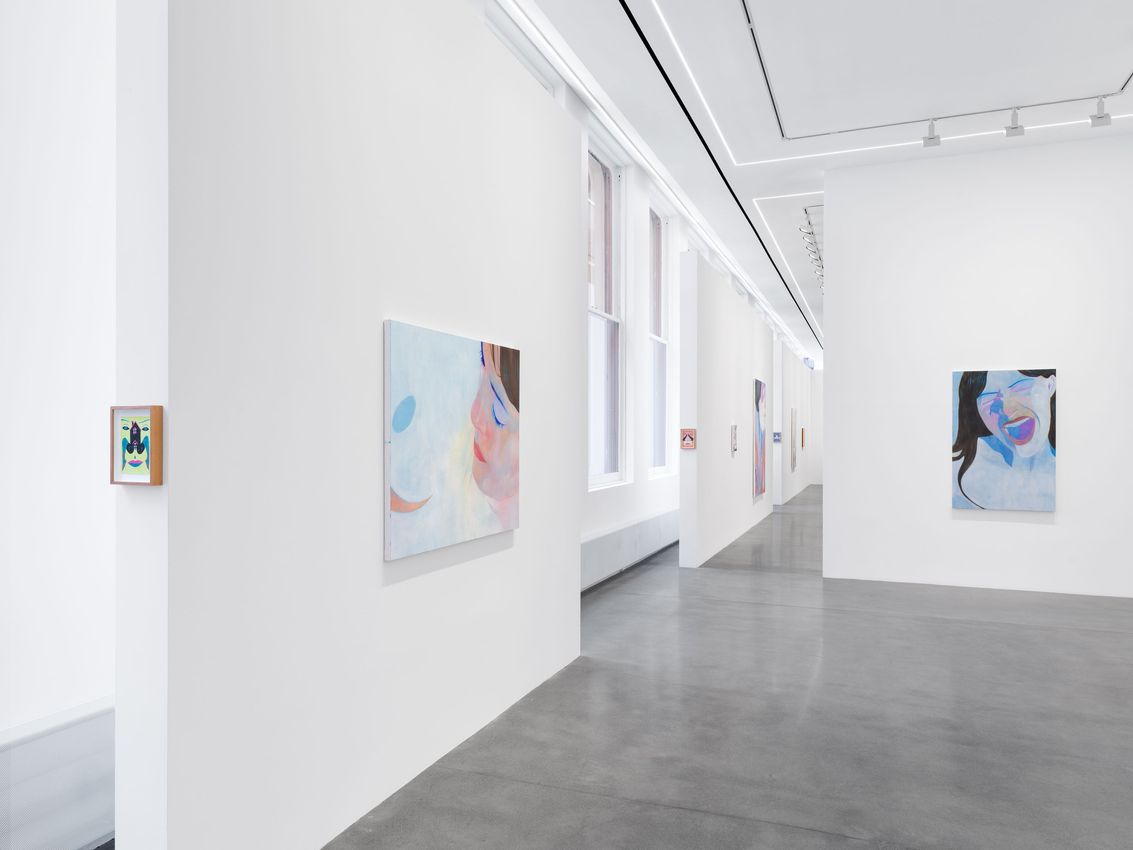
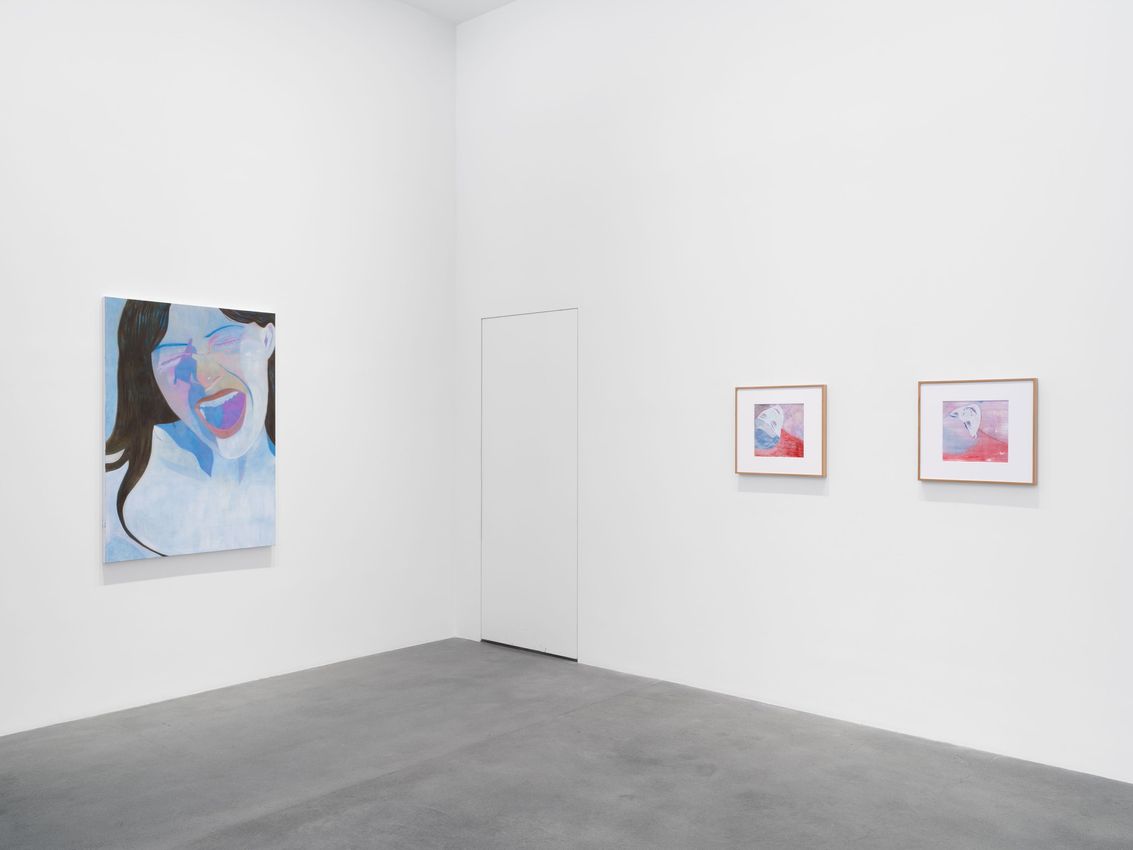
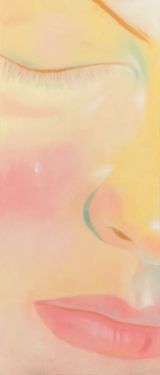
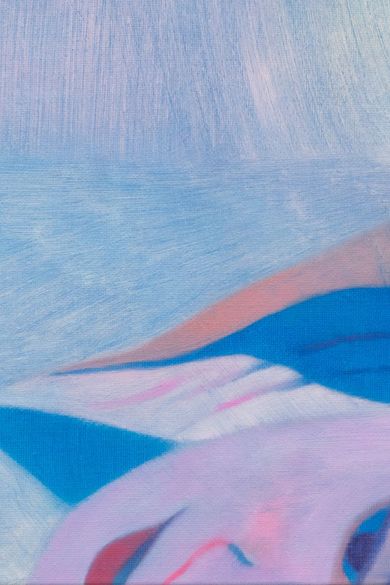
Inès Longevial’s oil paintings draw attention to the skin, layered in seemingly smooth swatches of ultramarine, crimson, slate, chantilly, and mauve. These self-portraits—composed mostly from memory, informed by a repository of textures and forms consulted prior to their emergence—are a method of situating the artist in herself and the world. They are painted with urgency and oftentimes completed in one sitting. In this flow-state, the female form becomes a surface littered with subtle footnotes, like an odd wrinkle in a pleated skirt or the deep crease of a dog-earred page. A cropped face with down-turned eyes, a punctuated nipple, and a scapula blooming like an iris are, at a distance, totemic. The stoic sitters are disassociated, fermented. Upon closer inspection, hot-pink contour or blankets of honey light, feathered by the dry bristles of the artist’s paintbrush, generate a supple, saturated landscape. Longevial offers an extreme perspectival shift through her impulsive markmaking upon the skin, often surprising herself. Her own experience living with myopia (extreme nearsidedness) is relayed to the viewer with grace, transforming skin into a woven surface, a microcosm, within the seemingly smooth composition of each painting. Wrapped in the tangible shimmer of the surface, unconcerned with matching the eye of the viewer, Longevial’s sage subject is unconcerned with the viewer’s yearning to define, place, or ingest her.
Longevial’s drawings make an arresting shift, directly addressing the viewer with deadpan eyes and a seemingly dimensionless face in a tight crop of the eyes, nose, and mouth. In one set, an inverted pelvis is perched upon the lips, with spread legs engulfing the nose in a diamond shape, heels touching at the bridge. In another set, howling wolves replace the nose and a deep plié surrounds the lips. Within the sublime uniformity of the face, a cast of characters narrativises the legacy of living in flashes of allegory. Ballet slippers are odes to flippant adolescence, while butterflies and snakes allude to metamorphosis. An anthropomorphised house and flower-headed femme throw us off the scent of such simplicity, however—these drawings serve as mythic self-reflection, nodding to place-making, masking, fear, transition, and freedom. Like petite prayer cards, each face is a theatre and a mirror. Rather than scars or wrinkles, the imagery emanating from each face is grounded in experience, tethered to what the viewer cannot know behind the eyes.
A lesser-shown element of Longevial’s practice, her monotypes, are being shown here for the first time. Although each print is unique, identical twins arise: an identical facial structure hosts distinct hairstyles or diametrically opposed colour palettes, for example. Longevial’s use of additive and subtractive marks, produced with alcohol markers and oil paint, insinuate an exfoliation and moisturising regimen. The skin here is in-process, wherein pooled pigment and camouflaged critters upon the face suggest the pressure and joy, turmoil and unabashed sensuality have visceral remnants. These faces are defiant, lacking both performativity and ease so commonly found in female portraiture. In these prints, skin narrates the artist’s relation to her changing world—stretching, sagging, morphing, and reflecting altercations or victories no one could know the true depth of.
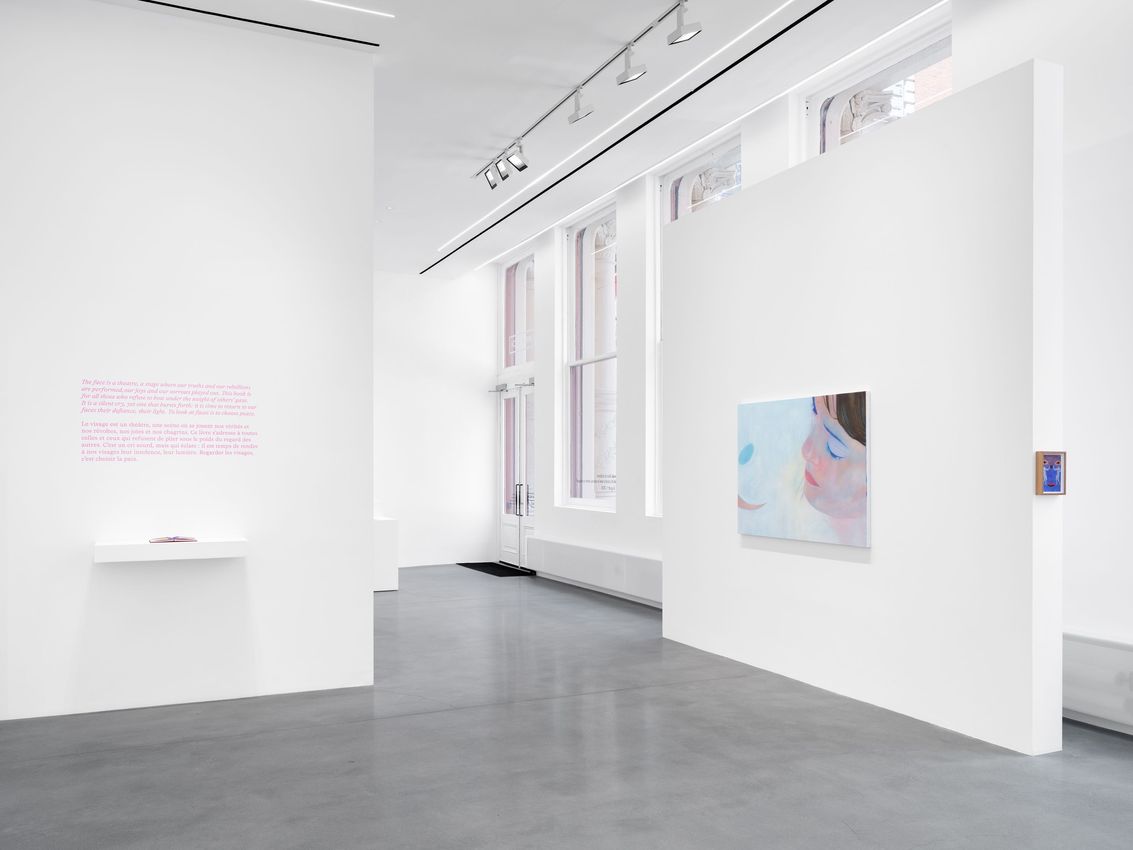
On the occasion of Longevial’s first solo exhibition at Almine Rech’s New York City location, a new publication including the artist’s drawings and poems written over the last two years will be available. This volume offers comprehensive insight into the artist’s use of the face and skin to understand the topography of the body and soul, connected over time.
— Lynn Maliszewski


From her earliest childhood, the artist was devoted to drawing, which she discovered through Picasso, Matisse and Modigliani, in the books of the family library. Later she studied Paula Modersohn-Becker, Georgia O’Keeffe and Niki de Saint-Phalle, all of whom clearly influenced her work. The love of colour, which she never ceases to explore in our lives, quickly leads her to painting and it is at the age of 8 that she paints her very first pictures. This practice quickly became a daily occupation but above all a true calling: as soon as she could, Inès Longevial dedicated herself to studying applied arts in Toulouse, from which she graduated in 2013 with an MFA.


A respected voice in contemporary art discourse.
Focusing on ambitious storytelling and insightful art-world commentary. Ocula Magazine publishes in-depth interviews, critical essays and timely analysis on the artists, exhibitions and ideas driving the global art world.
Learn more about Ocula Magazine
Showcasing the best of the art world.
Ocula partners with galleries from around the world to highlight their artists, artworks and exhibitions. Gallery membership is by application and invitation, with each member vetted by an independent panel.
Learn more about Ocula Membership

Specialises in the sale of major artworks.
Led by a team with deep ties to the world’s leading auction houses, galleries and collectors. Ocula’s advisory team offers bespoke services to high-net-worth clients from around the world who are looking to acquire the best of contemporary and modern art.
Learn more about our team and services