





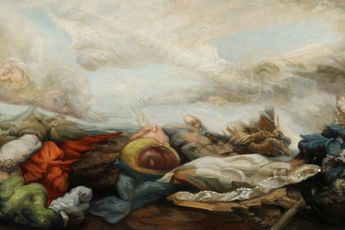
The art world in focus
Subscribe to our newsletter for news and insights on artists, galleries and exhibitions.

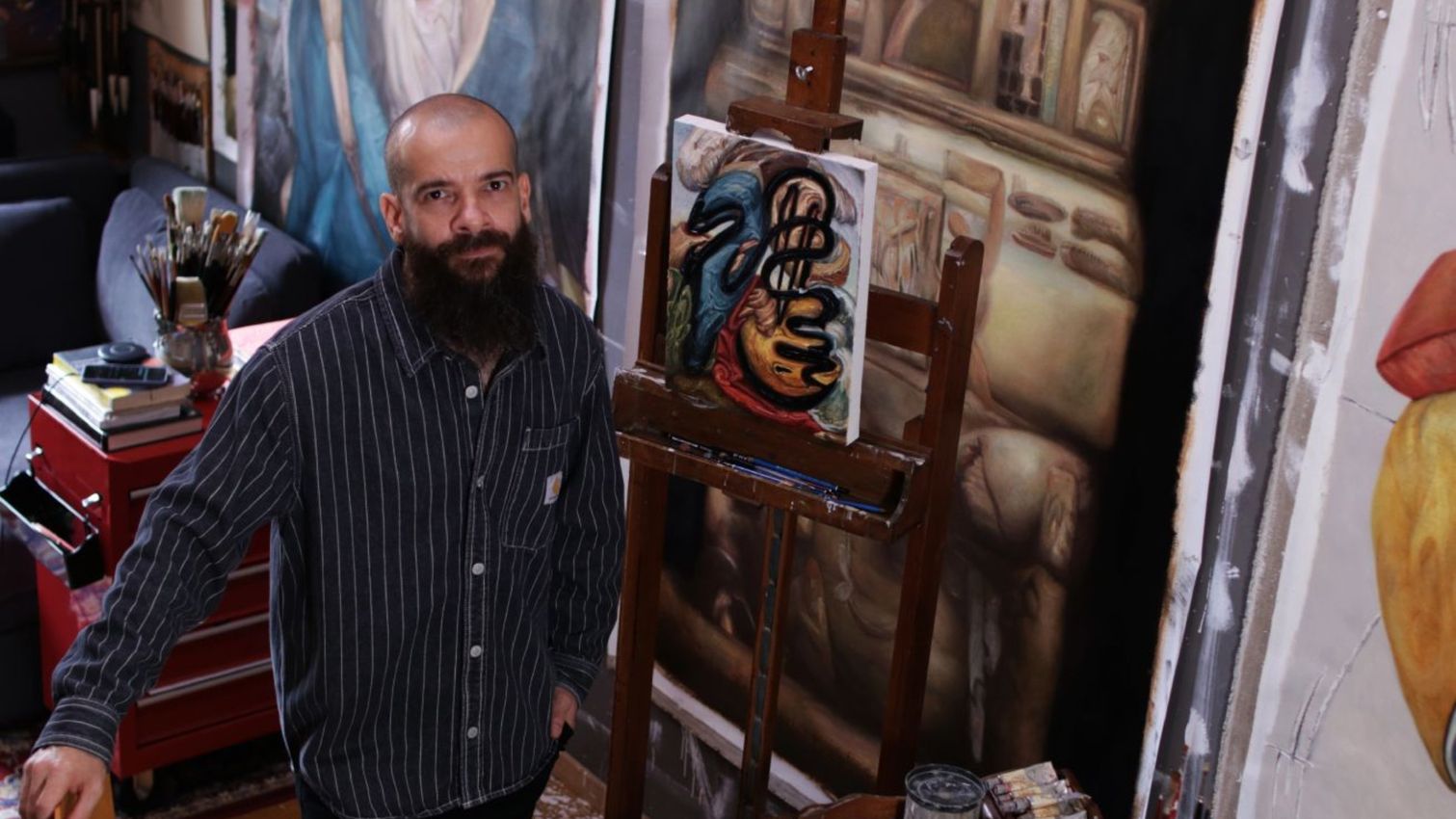
For his first exhibition in the U.K., the Cuban-American artist will show a recent body of works attempting to paint ‘the reality that cannot be identified but felt’.
Cesar Santos is known for a practice that combines and rearranges elements from well-known Classical and Modernist paintings. Born in 1982 in Cuba and raised in Miami, Santos studied at Florida’s New World School of the Arts before enrolling at Angel Academy of Art in Florence to study techniques used by Old Masters. Emerging from this background, his early ‘Syncretism’ (2010–2011) series saw the artist rendering fluidly between the styles of Michelangelo, Édouard Manet, Vincent van Gogh, Pablo Picasso, and Jackson Pollock.
After living for a time in New York City, he returned to Florence and has lived there since. For Santos, both cities unite the old and new. He describes New York as ‘the Constantinople of our time’, and Florence as a Renaissance centre where he was surprised to encounter contemporary exhibitions at many public institutions and private galleries.
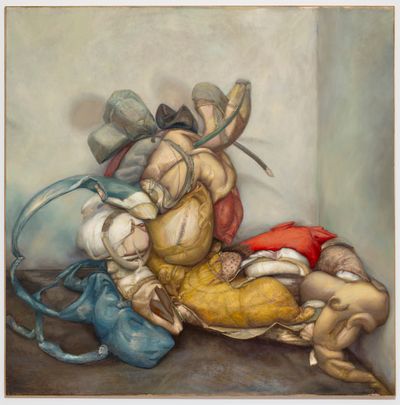
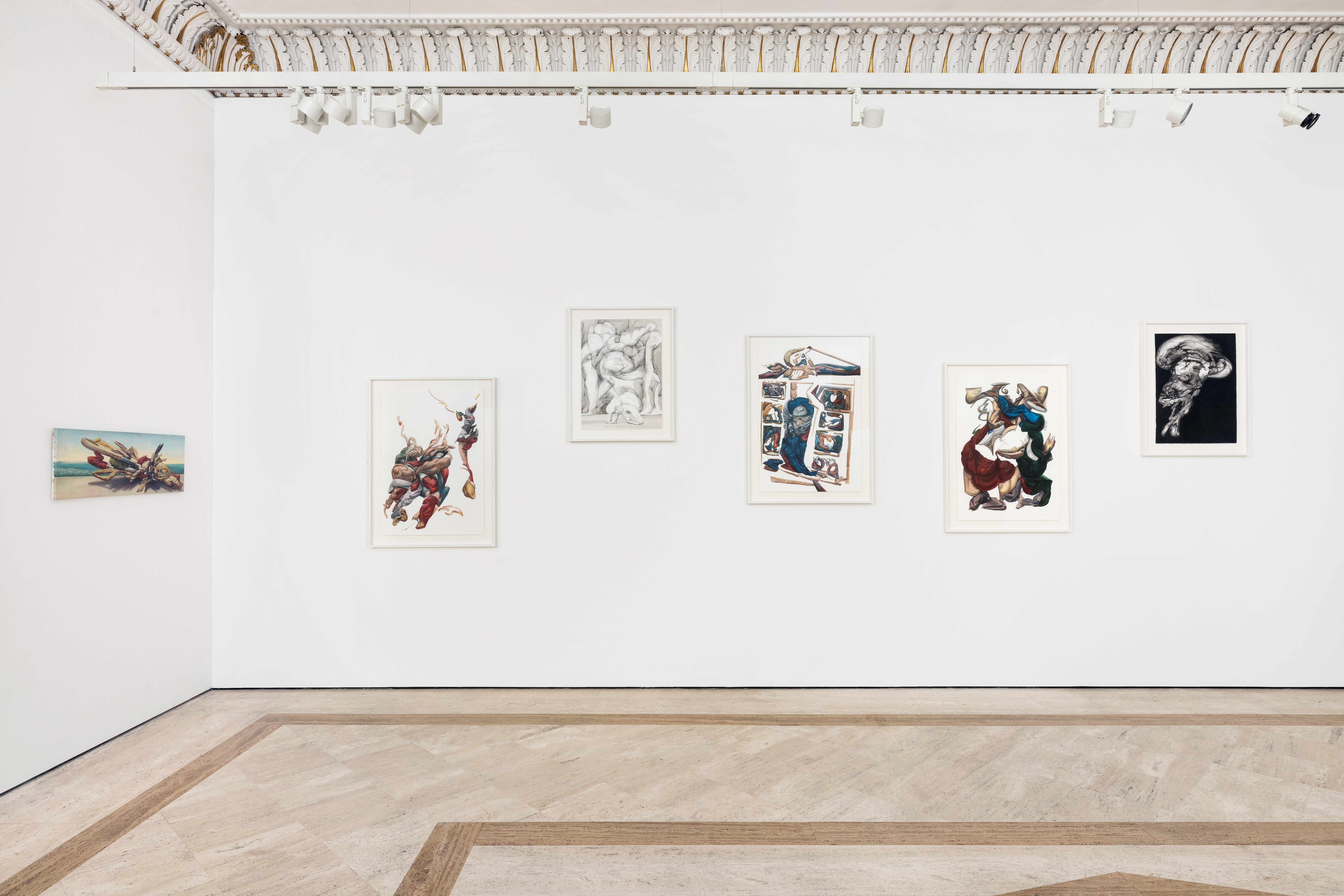
In 2022, Santos delved into abstraction; intuition drives his process, which he begins by sketching with a paintbrush dipped in grey on a canvas stretched on the wall. The resulting forms entwine their fleshy, contorting bodies with one another, almost hinting at the human figure, arranged into compositions with a heightened sense of drama that recall Classical paintings.
On 28 February, Robilant+Voena will present the artist’s first solo exhibition in London. Titled Manuscripts, it follows Santos’ solo presentation by the same name at the gallery’s New York space last year and features large-scale oil paintings and delicate ink and charcoal drawings. Distinct to this new body of work is the artist’s experimentation with impasto in the past year, from which he learned to manipulate thick paint as ‘an understructure guidance to further illusions such as glazes and details’.
Leading up to his exhibition, we spoke to Cesar Santos about the evolution of his practice, old and contemporary Masters, and the realness of dreams.
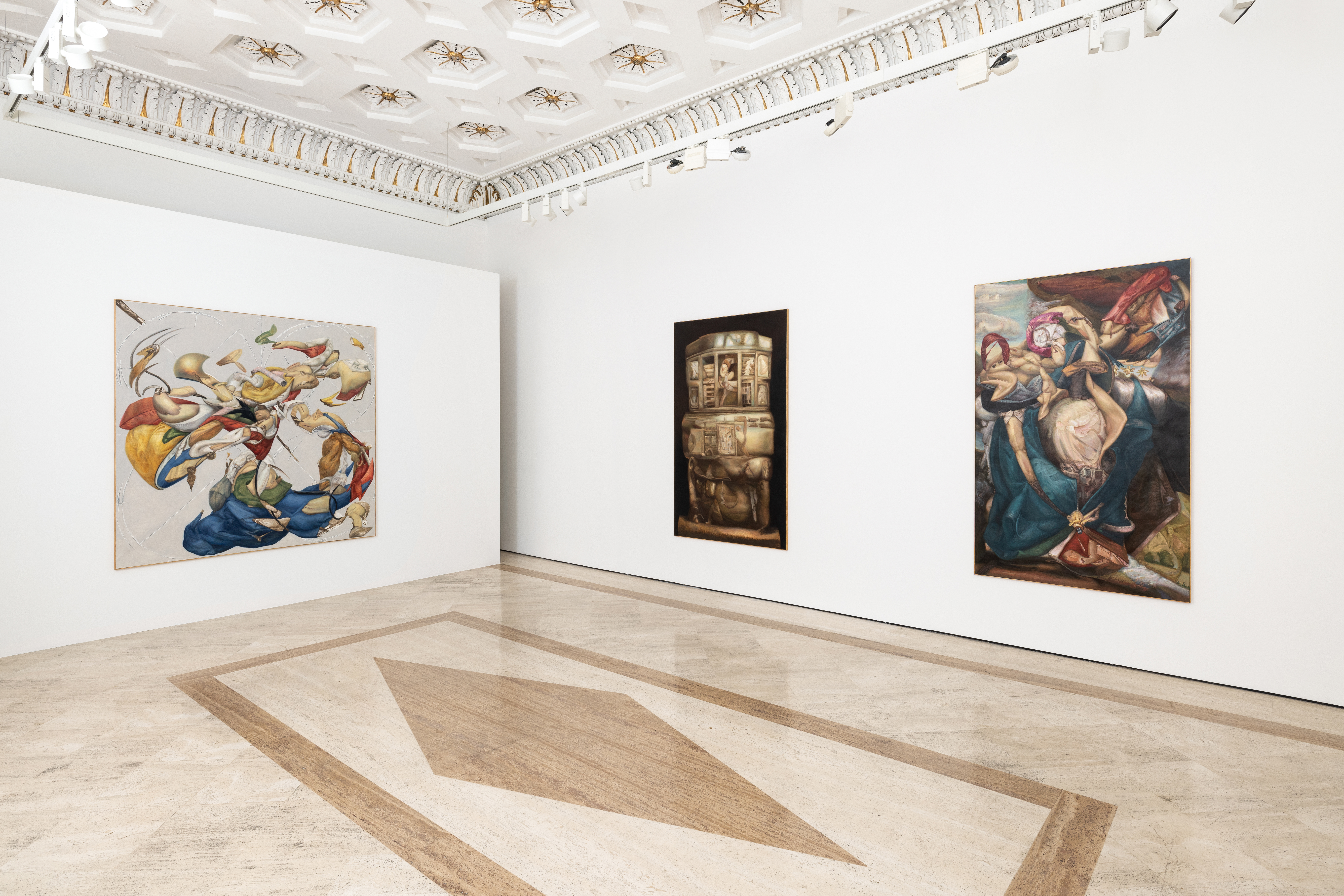
[The works in] Manuscripts are my latest handwriting in oil. These paintings show the calligraphy I have developed with fluid brushwork to communicate with the forces that mould the materiality of everything into coherent forms. I paint the reality that cannot be identified but felt. The flow of the elements takes on infinite textures and forms as they interact within their environment in the painting. I want to see everything new again.
Even though I have lived in the American continent all my life, the initial spark that led to this innovation happened in Europe. After a year of research, I exhibited this discovery with Robilant+Voena in Milan; it was so well received that there were no paintings left after the show. Now I am excited to exhibit a new suite with Robilant+Voena in London and present my vision to an audience known for its openness to experimentation and innovation in contemporary art.
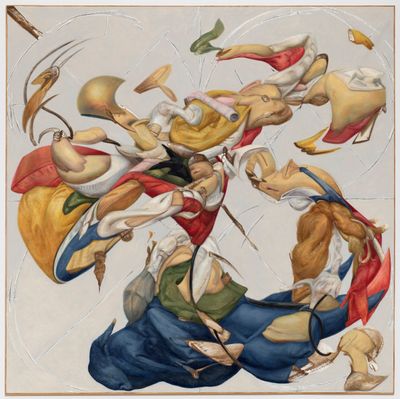
The paintings in this exhibition speak to one another through colour. They are informed by how nature—flowers, butterflies, minerals, the earth, and the sky—manifests itself, and the relationship between organisms.
I realised I was on the wrong path towards getting to know myself. It felt like all the work I did before my 40th birthday, almost three years ago, was preparation for this new series. I was in a mimesis state, thinking that creativity is based on reorganising what already exists. I realise now that creativity is the sudden understanding that changes the way I see things and, as a consequence, the way I create.
There are communalities between old and contemporary Masters: each had to invent a technique to express their vision. Each had to surpass the limitations of their teachers and their times. I see the old Masters as a contemporary way to get in touch with our hidden potential for unity and the contemporary Masters as an outward expression of the single soul.
Regarding my art, the old Masters are a source of knowledge. I am curious about their technology because their effects are incredible. The contemporary artists I admire respond to the advancement in technology with an outburst of organic designs related to our wild and more primitive spirit.
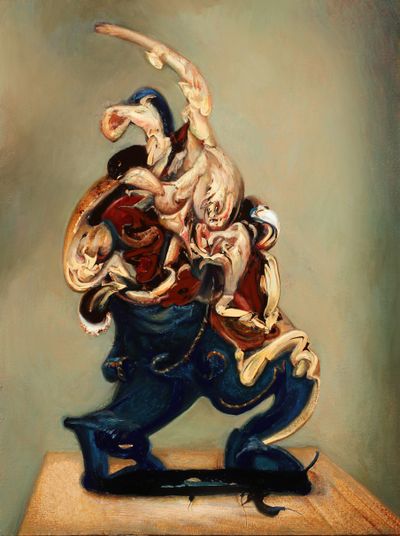
People might get a surreal feeling from my work; in the end, all works of art go beyond reality to play with our souls and our sense of meaning.
I see Surrealism as a curiosity to illustrate the activity of the subconscious. Surrealism’s aim, as André Breton wrote [in Manifesto of Surrealism, 1924], is to ‘resolve the previously contradictory conditions of dream and reality into an absolute reality, a super reality’. This suggests dreams and reality are two different things. I believe that there is nothing more real than dreams—when we are finally away from our narrow path of personal experiences and into a realm of what controls us.
What I meant by ‘even dreams have to have good form in order to influence us’ is that we are, in essence, sensitive to light and dark, reason and ignorance, and that we are only conscious and satisfied when we have connected enough dots to complete an idea or create a clear form. —[O]
A respected voice in contemporary art discourse.
Focusing on ambitious storytelling and insightful art-world commentary. Ocula Magazine publishes in-depth interviews, critical essays and timely analysis on the artists, exhibitions and ideas driving the global art world.
Learn more about Ocula Magazine
Showcasing the best of the art world.
Ocula partners with galleries from around the world to highlight their artists, artworks and exhibitions. Gallery membership is by application and invitation, with each member vetted by an independent panel.
Learn more about Ocula Membership
Specialises in the sale of major artworks.
Led by a team with deep ties to the world’s leading auction houses, galleries and collectors. Ocula’s advisory team offers bespoke services to high-net-worth clients from around the world who are looking to acquire the best of contemporary and modern art.
Learn more about our team and services

