The art world in focus
Subscribe to our newsletter for news and insights on artists, galleries and exhibitions.

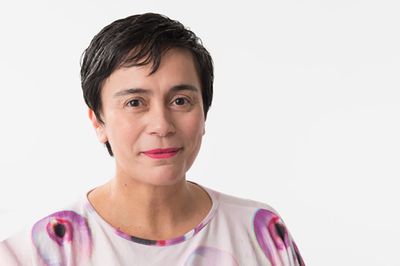
Lisa Reihana. Photo: Hugh Stewart.
Lisa Reihana talks to curator Tobias Berger about storytelling, care, and the use of sound to reclaim colonised space.
Since the 1990s, Lisa Reihana has been a pivotal figure in Aotearoa New Zealand and Māori contemporary art. The Ngāpuhi, Ngāti Hine, and Ngāi Tū artist is a long-time member of Pacific Sisters, a collective of Pacific and Māori artists formed in 1992 that creatively foregrounding the lives of young urban Pacific people in Aotearoa New Zealand.
![Lisa Reihana, in Pursuit of Venus [infected] (2015) (still). Multi-channel video. Auckland Art Gallery Toi o Tāmaki, gift of the Patrons of Auckland Art Gallery.](https://files.ocula.com/anzax/Content/Conversations/2024/Lisa%20Reihana/ad7eda81-fbdf-493a-9dbe-98fce908b271.jpg)
Themes of movement—migration, displacement, belonging—and the impact of colonialism on historical and contemporary Māori identity recur throughout Reihana’s work. For instance, in Pursuit of Venus [infected] (2015–2017), first shown at Auckland Art Gallery Toi o Tāmaki in 2015 and then at the Venice Biennale in 2017, is a panoramic video installation that reimagines the exoticised, utopian image of the Pacific Islands as popularised by the 19th-century French wallpaper and fabric manufacturer Joseph Dufour et Cie.
Filming in Tāmaki Makaurau Auckland, Reihana recruited Pacific actors to play their idealised counterparts while complicating the notion of authenticity by allowing room for fiction. ‘It’s not simply the issue of being exotic, but of inviting colonised people to partake [in] a document that is like a colonising moment in itself,’ she told Ocula Magazine in 2015.
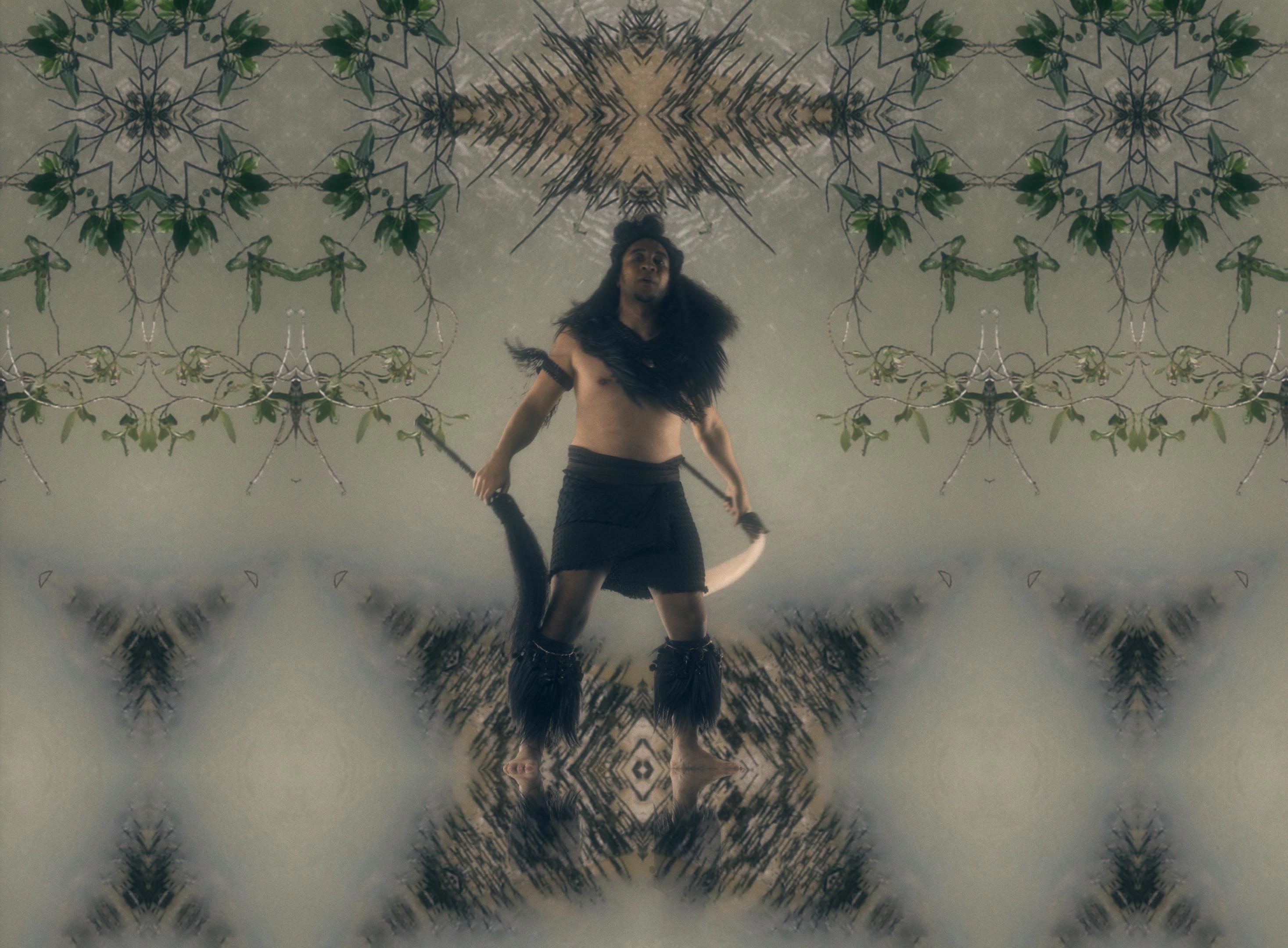
In June this year, Reihana unveiled Māramatanga (2024), a six-metre-tall video installation in the newly refurbished, nine-storey B201 Building at her alma mater, University of Auckland. In the site-specific work, six performers embody ātua (gods) and ancestral figures drawn from the carvings on the nearby Waipapa Marae Tāne-nui-a-rangi—the university meeting house completed on campus in 1988, a year after Reihana graduated from the Elam School of Fine Arts.

In the same month, the artist installed her monumental artwork GLISTEN (2024) on the roof of the National Gallery Singapore. Light reflects off its 114,000 shimmer discs, the patterns and colours inspired by Māori Tāniko weaving and Malaysian Songket. The installation is on view until 13 July 2025.
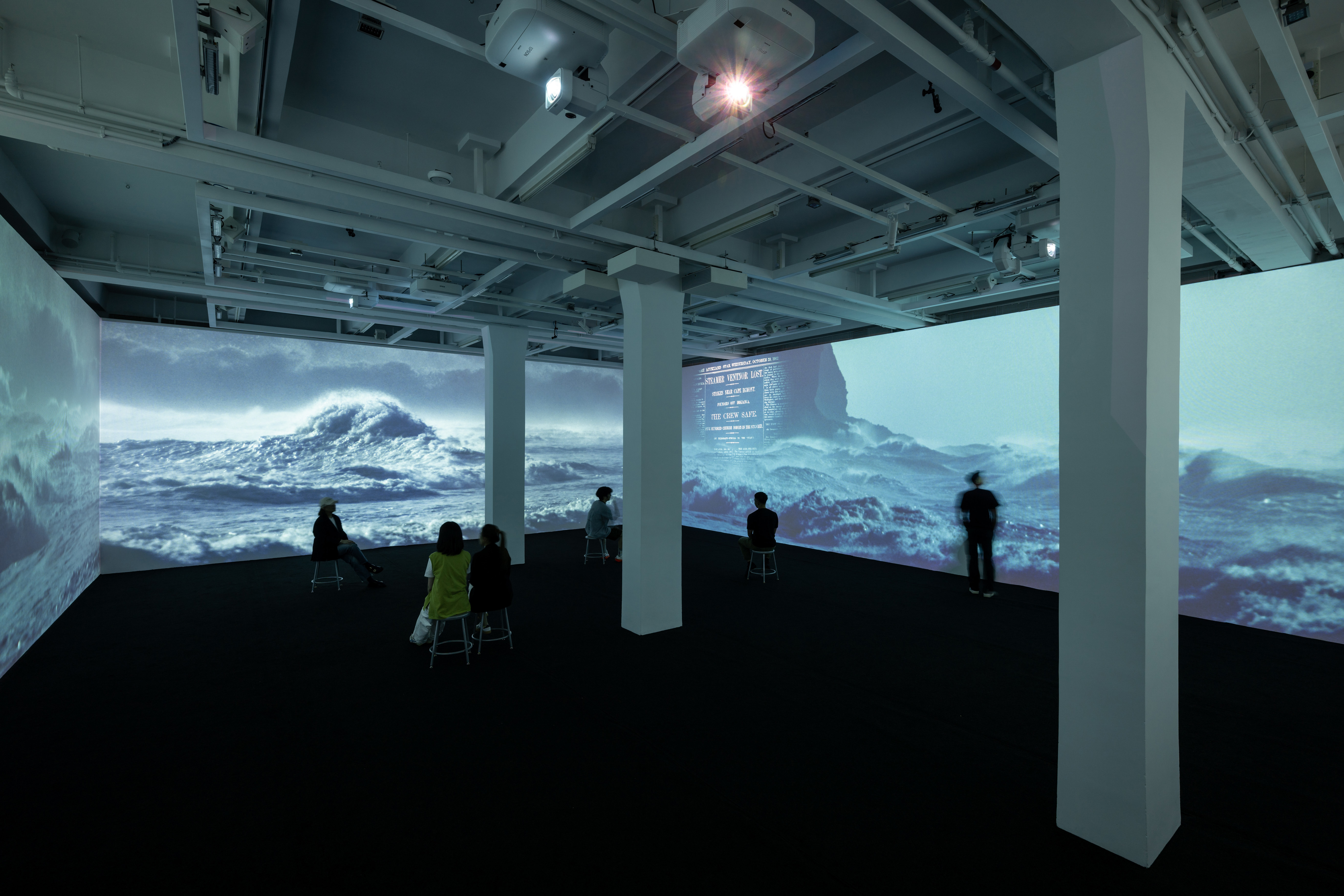
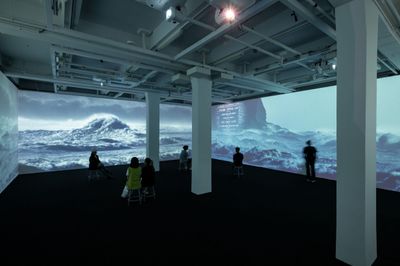
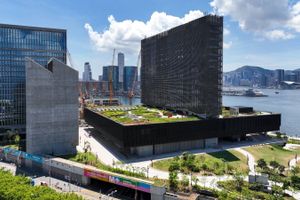
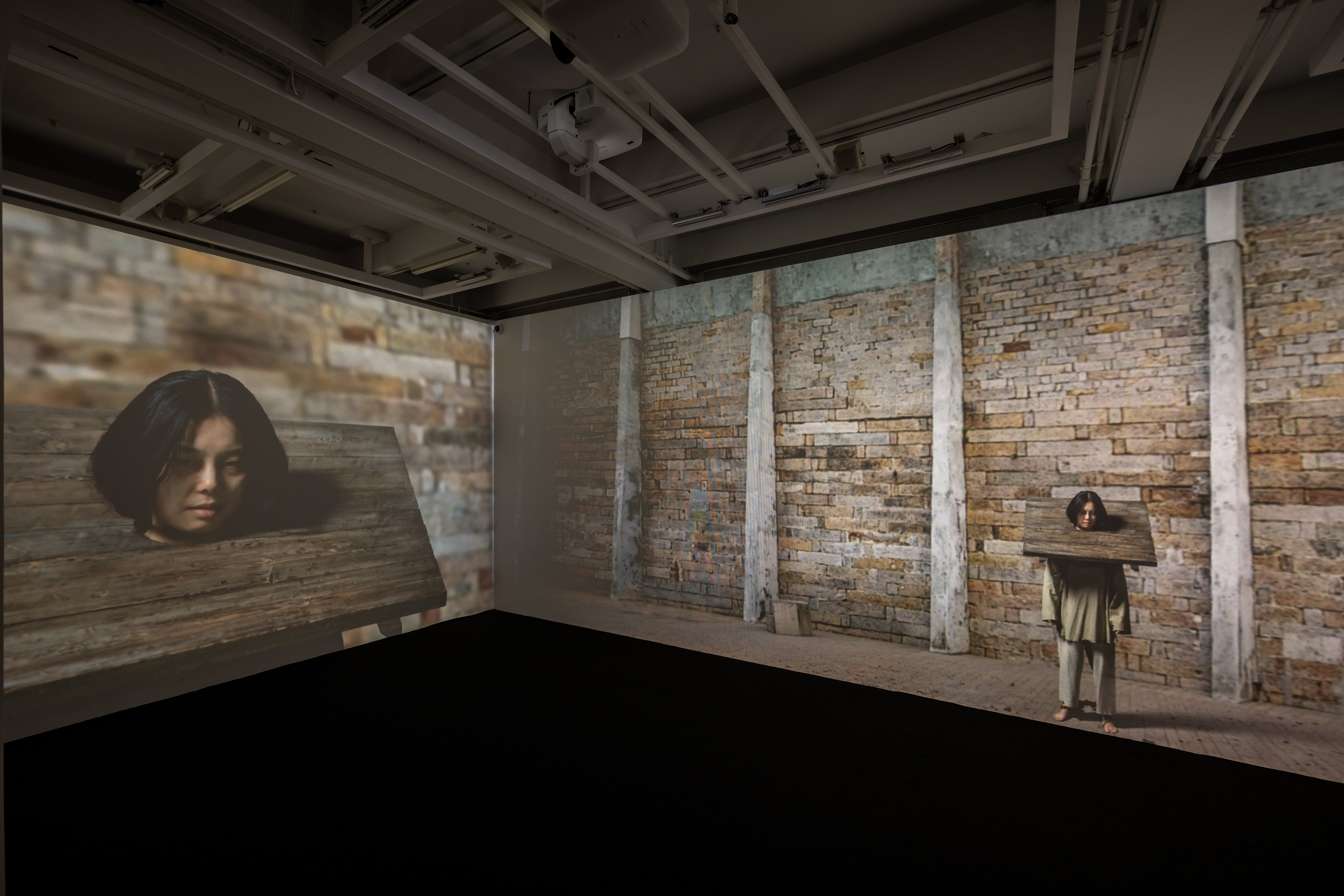
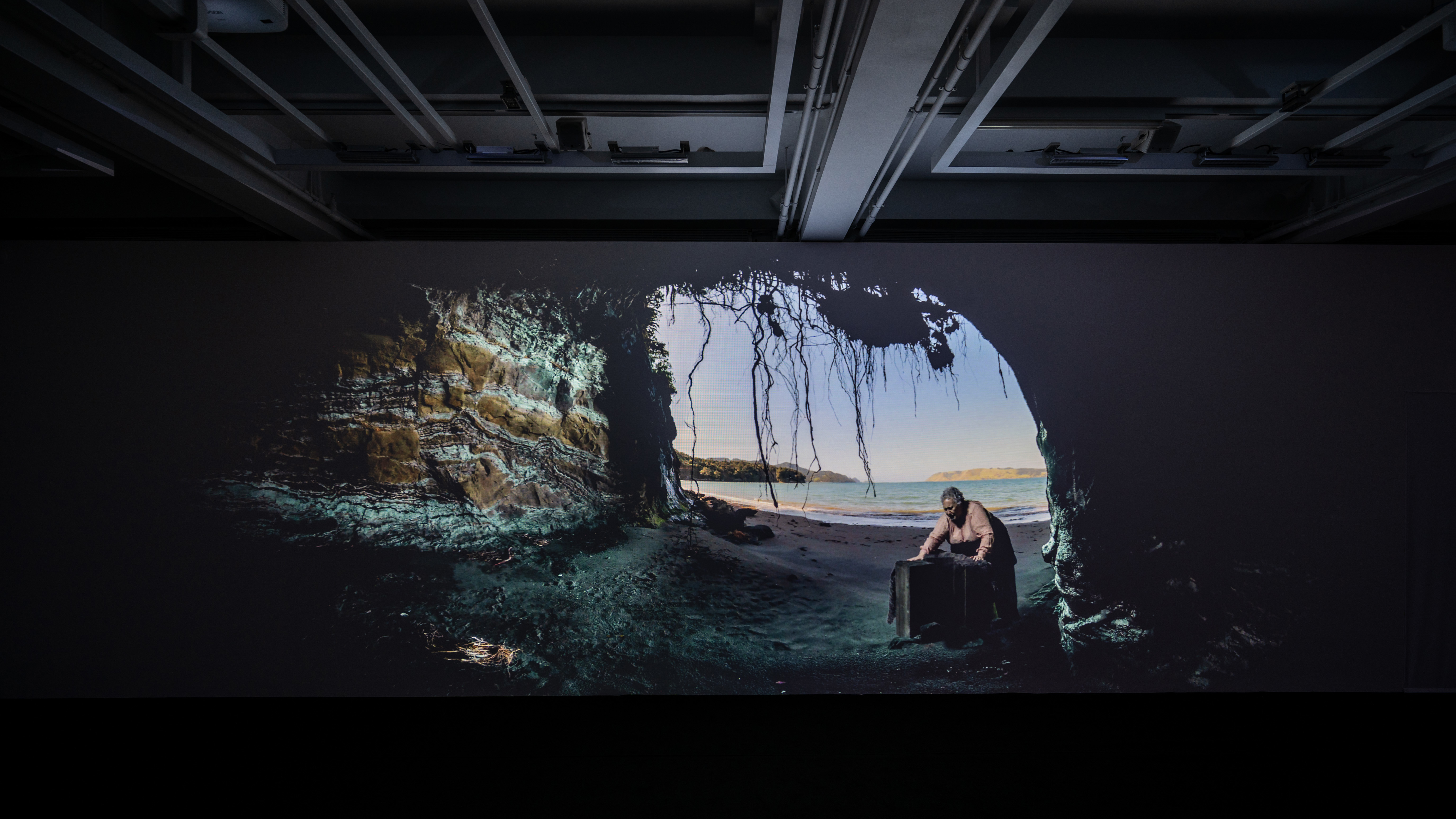
In November, Reihana’s latest video, GOLD_LEAD_WOOD_COAL (2024), was shown at Tai Kwun Contemporary in Hong Kong. Screened across all four walls of F Hall Studio, the work presented absorbing scenes of rocky terrain, crashing waves, and tranquil beaches from across Aotearoa New Zealand’s Otago region—the site of the 1860s gold rush—as well as footage of the former Victoria Prison in Hong Kong, which today houses Tai Kwun Contemporary.
Through the perspectives of four characters, Reihana recounts a fictionalised version of the true story of SS Ventnor—a British cargo steamship wrecked off Hokianga Harbour near the tip of Aotearoa New Zealand’s North Island in 1902, which had been on its way from South Island to repatriate the bodies of around 500 Chinese gold miners to Hong Kong and Guangzhou. Moments of humanity and care recur throughout Reihana’s video: between a Chinese merchant, formerly a gold miner himself, and his fellow countrymen; between a female prisoner and a warden in Hong Kong; and in the compassion shown by a Māori woman from the Northern tribes who recovers the remains of the Chinese gold miners.
The following is an edited extract from Reihana’s conversation with Tobias Berger, Curator at Large of Tai Kwun Contemporary, which took place on 1 November 2024 at F Hall Studio, Hong Kong.
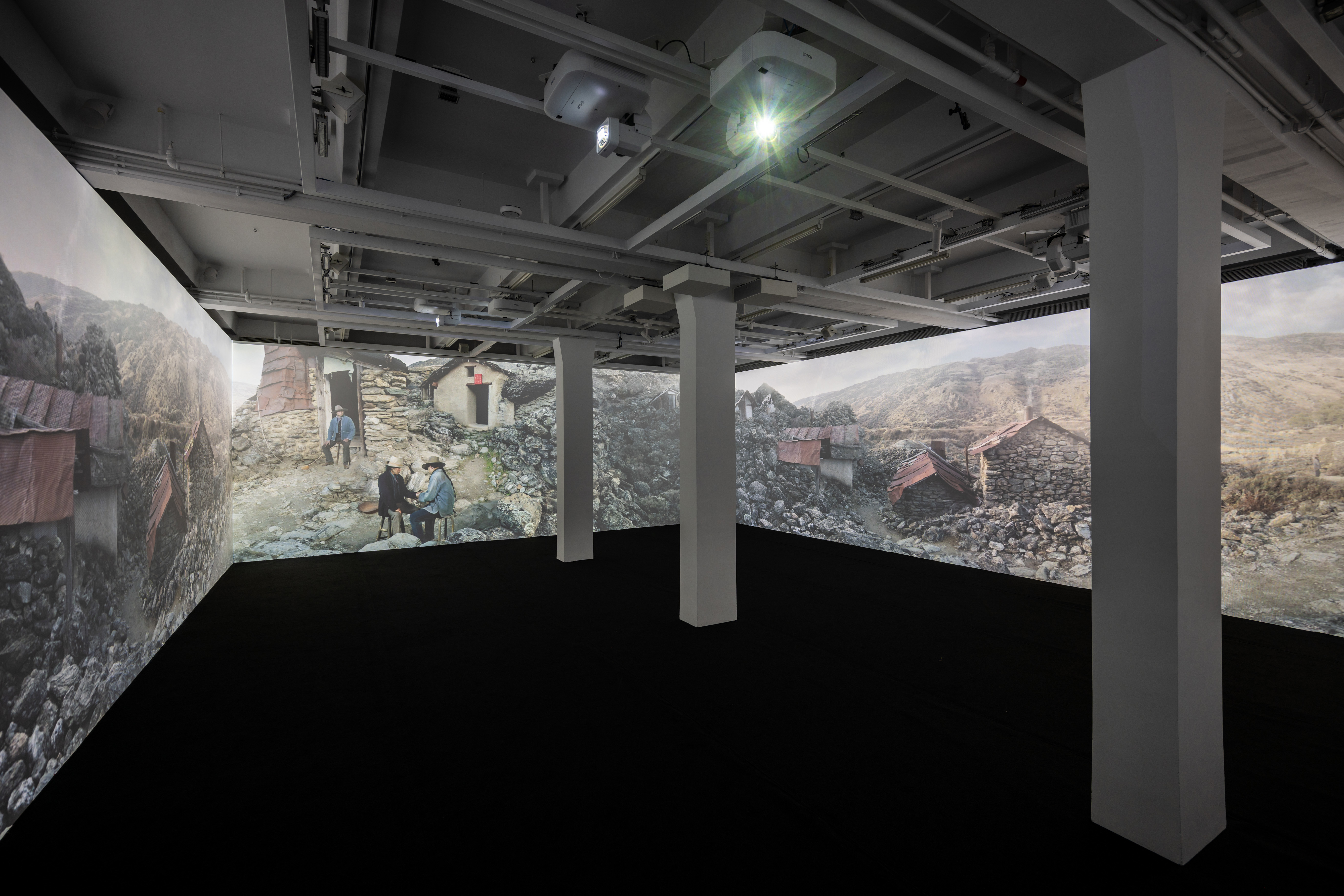
LR: Four main scenes or ideas are embedded in the work, starting with an image of the South Island, where many Chinese people went to find their fortunes around Cromwell and Naseby. Many Chinese gold miners came from two areas in Guangdong Province; often, after working in the gold fields in California, some went to Australia, others to New Zealand. There was a sense of care amongst them to ensure survival through harsh conditions—living in caves and miners’ hubs in the cold South Island climate.
One of the actors is a doctor, a descendant of the merchant from the Sew Hoy family, and in one scene, he’s bandaging a miner’s hands: I was imagining the physical pain of digging. Choie Sew Hoy—whose descendants are merchants today with a building in Dunedin, New Zealand—had been a gold miner; when he came to New Zealand, he encountered the racism imported from the Australian gold fields. He set up shop and became a merchant who provided food and all the materials that you need as a gold miner. He translated and wrote letters home for the men and represented them in court. There’s a scene where he’s writing on behalf of one of the gold miners.
I also wanted to show a sense of care between a prisoner and a warden. Through my research, I learnt about the Chinese Missionary Society, which was the first to help women addicted to opium. I was trying to tie these tough times for women in the late 1800s back to Tai Kwun. Another aspect of care is seen at the end of the storyline. One of the boats returning 500 bone boxes to China via Hong Kong tragically sank; over months, some of the boxes washed up on shore. Our ancestors, Māori from the Northern tribes of New Zealand, found, collected, and buried them in our cemeteries, our urupa (cemetery). In ancestry worship, there was a recognition of the importance of bones and caring for people you’ve never met. I wanted to bring humanity and a sense of love that transcends tragic moments.
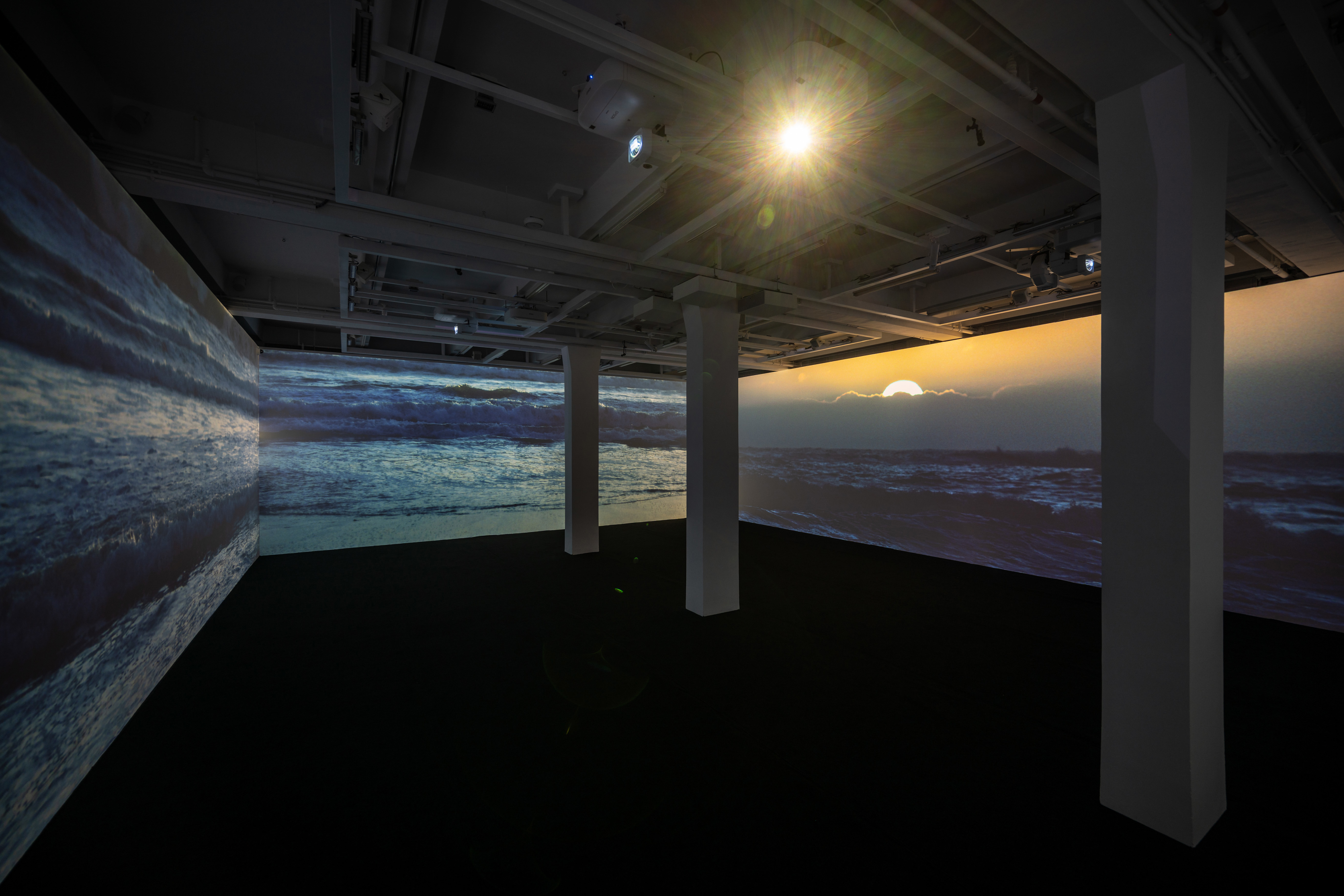
LR: Hong Kong has, for hundreds of years, been an important port. Some boxes were returned from New Zealand, as mentioned in a newspaper article in the exhibition. In Hong Kong, the Tung Wah Hospitals and Man Mo Temple were receiving places for the bone boxes. Through the many wars and floods in the late 1800s and early 1900s, people moved around tremendously, and Hong Kong became where these bones were deposited. Some have been sitting in the temple for 150 or 200 years.
LR: Many people sought to leave China due to the Taiping Rebellion and various floods, including the Huang He flood of 1887. Early on, they went to the Gold Rush in California. These men came from all walks of life: Māori, American, and Russian gold miners—a confluence of men moving around the world trying to find their fortune. The way it worked was you would pay to dig a certain plot of land. They might disappear or find another form of employment if they didn’t make money. After California, there was a gold rush in Australia, and when that dried up, they went down to New Zealand.
New Zealand was also seen as a place of resources. Many exotic birds were killed in New Zealand, and seals were hunted for the top hats. There was imperialism in China and colonialism in New Zealand. Both of our countries and cultures were adversely affected by the British Empire.
LR: I start with an idea. Then, I meet lots of people; through that series of conversations, I start to gather a sense of different points in time. It was important to talk to the Chinese community, and I was fortunate to have Christina Asher, one of our dear friends from New Zealand, who helped with the casting, alongside another friend, Selina Joe, who I had worked with before. We asked if there were local people who were descendants of the Sew Hoy family. In New Zealand, for Māori, our ancestry is paramount; we pass it on in oral tradition, in chanting. It was amazing looking at the familial histories that he (Richard Leung, aka the actor playing Choie Sew Hoy) shared with me.
Technical constraints include the 720 degrees of imagery in this room since we had to use the 360-degree camera imagery twice to fill this large space for the gold miners’ footage. To ensure the rivers ran and the people were visible in this projection, we doubled it to have enough land for the Māori characters to stand on. And then, in every aspect of filmmaking, there are many different details: what clothing did the people wear? How cold was it? How long have these people been there? What images exist from the period? I wanted something complex but not overwhelming.
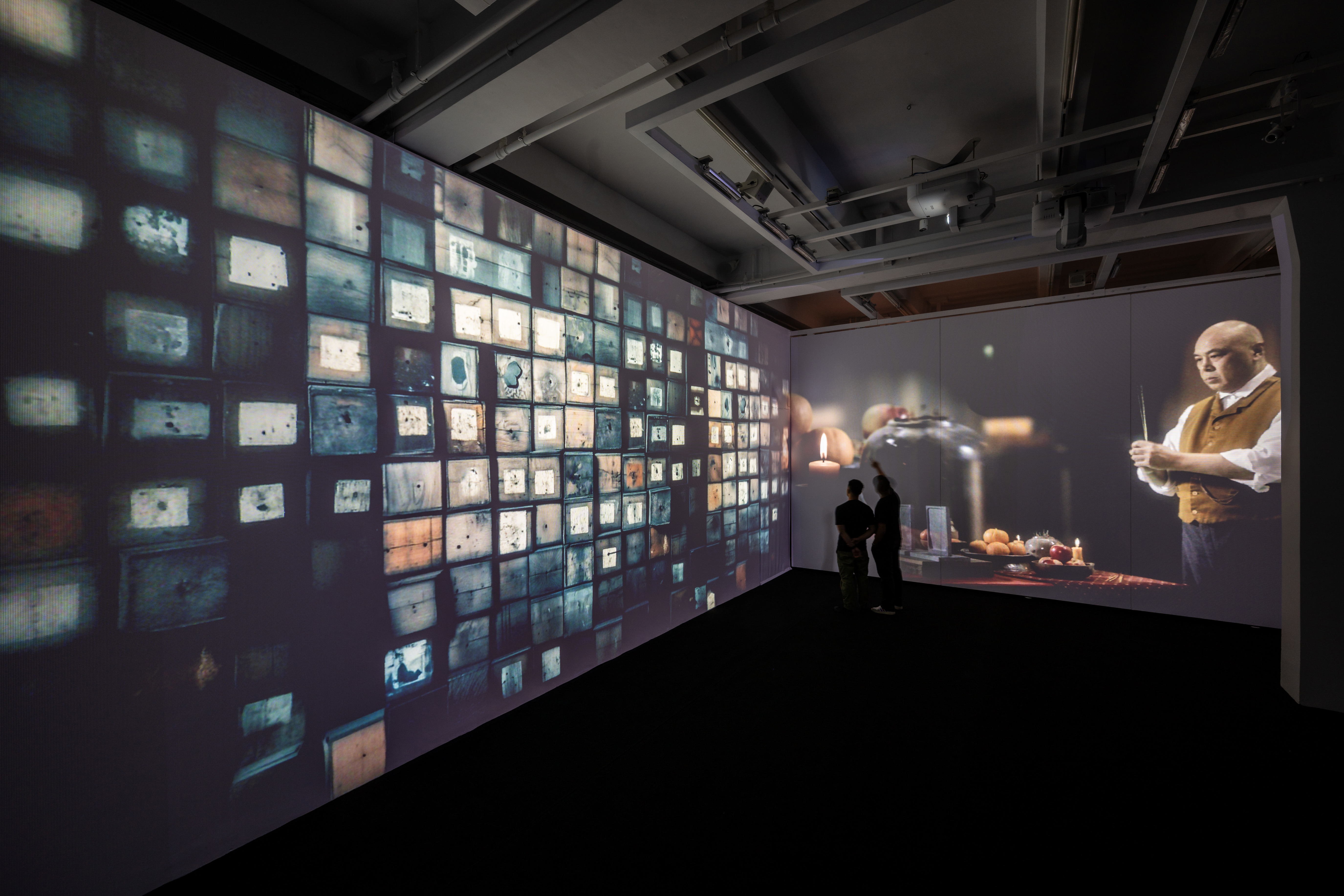
LR: Sound has always been important to my work, triggered by the fact that my mother and father experienced the trauma of losing language and culture. New Zealand and Wales were both colonised by the British, and speaking their native tongue was banned. So without words I use sound to convey the emotions that I want the audience to feel. James Pinker did an incredible job creating GOLD_LEAD_WOOD_COAL’s audio world. He prepared many draft compositions, I made a selection and then we played them against various scenes until we found the right emotional resonance, these were further developed for the final composition. F-Hall is an immersive space making it quite complicated. We added sound effects to bring this constructed world alive, and they are placed across the 22 speakers which helps to direct the audiences attention to where the narrative is focussed within the room with four walls.
LR: Having the opportunity to show a completely immersive work ‘in the round’ is really amazing from a cultural perspective. Though specific to New Zealand, the work deals with Chinese miners who ended up staying in California, Vancouver, or Canada as part of the diaspora. I imagine some Chinese families want to come to Hong Kong to meet extended family and hear these stories. We’re always looking for meaning and connections. And I want to show this work in New Zealand, down in the South Island, where there’s a large Chinese community, and share this with them and hear their stories. Although this project has a historic aspect, it lives on today.
For Tai Kwun, I wanted to show some landscape scenes from New Zealand—which is a wonderful contrast here, considering all the high-rise buildings around Tai Kwun.
LR: I like a good, complex story. When I look again, I remember particular moments and funny incidents that happened off the camera. Sometimes, I think, ‘I missed something from the stories the cast and crew may share with me during my research,’ and then that becomes an opening for the next work.
LR: A group of artists and I went to the Marshall Islands last year. We travelled to Bikini Atoll, where the US tested 20 nuclear bombs, and we had a Geiger counter clicking away. We must remind ourselves that the waterways are critical; without water, we won’t last. These ideas of care will translate into upcoming works. —[O]
A respected voice in contemporary art discourse.
Focusing on ambitious storytelling and insightful art-world commentary. Ocula Magazine publishes in-depth interviews, critical essays and timely analysis on the artists, exhibitions and ideas driving the global art world.
Learn more about Ocula Magazine
Showcasing the best of the art world.
Ocula partners with galleries from around the world to highlight their artists, artworks and exhibitions. Gallery membership is by application and invitation, with each member vetted by an independent panel.
Learn more about Ocula Membership
Specialises in the sale of major artworks.
Led by a team with deep ties to the world’s leading auction houses, galleries and collectors. Ocula’s advisory team offers bespoke services to high-net-worth clients from around the world who are looking to acquire the best of contemporary and modern art.
Learn more about our team and services