






The art world in focus
Subscribe to our newsletter for news and insights on artists, galleries and exhibitions.

Will Fredo and LoMaasBello. Courtesy © the artists.
Spanning musical genres from techno to cumbia, A Skip of the Beat A Change of the Heart is a lecture-dance performance by Will Fredo and LoMaasBello.
Born in Portugal and of Guatemalan and Cape Verdean origin, Fredo is a non-binary artist, writer, and editor who explores the dynamics of power, cultural dislocation, and the intersection of pop culture, decolonial thought, Blackness, and technology. LoMaasBello is an Afro-marica artivist based in Chapinero, Bogotá, who uses music and rhymes from the resistance to express the experiences—mostly violent—of bodies that escape the norm.
In their collaboration for A Skip of the Beat A Change of the Heart, Fredo and LoMaasBello narrate and interpret the liberatory potential of music and dance cultures originating from the African diasporas and the Global South. Three songs by LoMaasBello (‘Queer Black Bitch Killa’, ‘Shut Up’, and ‘Pose’) about the experiences of Afro queers propose readings that connect stories of Afro dances with sexual, social, political, gender, and metaphysical liberation, inspired by the cultures of the Maroons in the Americas.
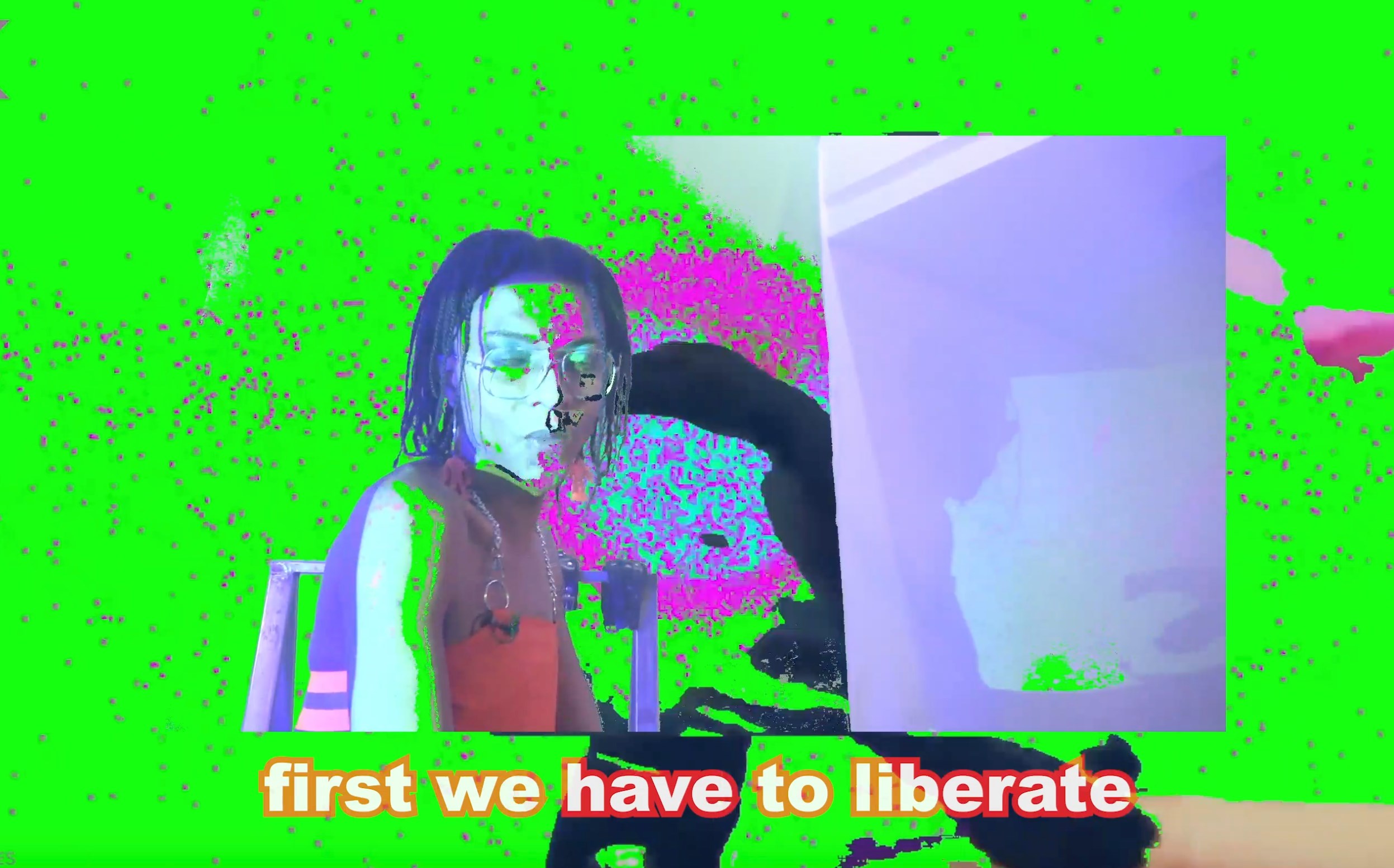
A Skip of the Beat A Change of the Heart begins with an episode in Berghain, a techno club in Berlin. Throughout, it analyses the taxonomies applied to the arts of Afro origin in relation to state policies in Latin America, that serve the cultural appropriation and capitalism of the white-mestizo paradigm. Linking movements from dances such as kuduro and house-ballroom culture with the theories of Argelia Laya, Hortense Spillers, Fred Moten, among others, A Skip of the Beat A Change of the Heart reconstructs an Afro musical world reconnected with its liberatory history.
The performance is a Goethe-Institut production first streamed on 11 July 2020 via Zoom in an event co-hosted with Contemporary And, which was followed by a talk with Colombian artist and researcher Luisa Ungar, who works with language as a tool for dislocation and distortion of colonial circuits and uses various means to review mechanisms with which history is constructed. The transcription below is an edited translation of that talk from the original Spanish.
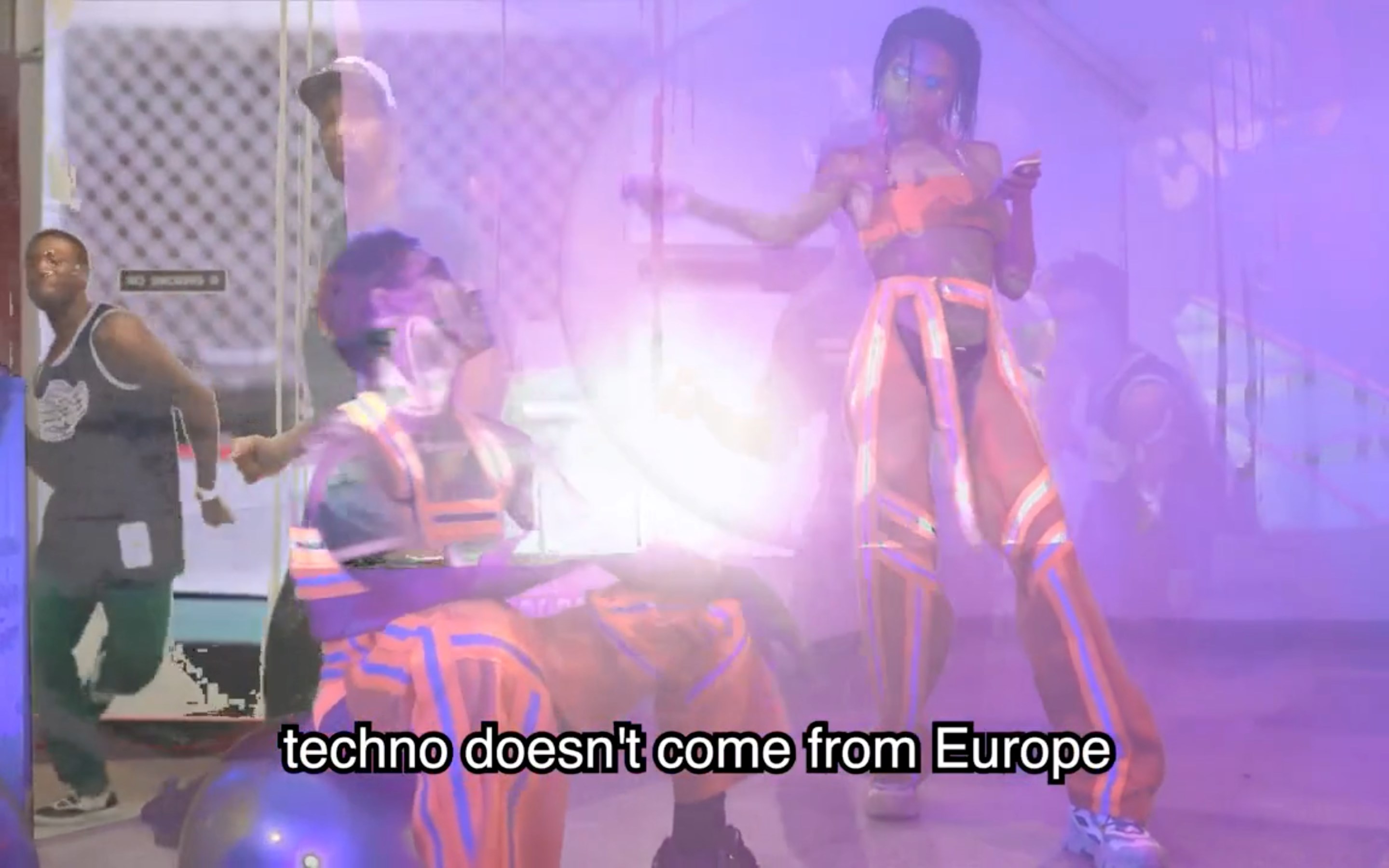
{WF} I wanted to do a performance on the stories of dance in Latin America and its connection to the world. I saw Jenn Nkiru’s Black To Techno (2019) on the black roots of techno and Jeremy Deller’s Everybody in the Place: An Incomplete History of Britain 1984–1992 (2018) on house music and its relation to social freedom in England. These two great video works talk about the socio-political context of techno and house and raised many questions that I wanted to work with in A Skip of the Beat A Change of the Heart.
There are so many links between techno and Latin America, and the idea was to do a lecture-dance performance because I didn’t want to talk about dance and not be moving. I also wanted to do it as a collaboration to connect my ideas with those of people in Colombia, where I was doing a residency for five months in 2020. When I found LoMaasBello on Instagram and saw their work I had no doubts—it was a gift from God!
“To put all these systems into question is what’s interesting—to open the field for all of us to build these new conceptualisations.
{LMB} It was also a way to connect with the ways and experiences that we live. What Will explained to me seemed fantastic because many of the questions that are posed here—such as gender, appropriation, and racialisation—are very common themes in my artistic expression. I sent him a selection of my songs and what I thought could fit was what fit! We designed the costumes inspired by what we wanted to talk about, such as the use of the body in dance, but also the body as territory.

{WF} For the talk, I was looking for an artist in Colombia who worked with themes of colonialism, language, historical narratives, performance, and curatorship, and Luisa, you had the ideal profile. In addition, I wanted to discuss some of the institutional dynamics in this country, in relation to the representation and participation of Afro-Colombians.
“That is related to the title. ‘A skip of the beat’, or syncopation: what happens when you wait for the beat and it doesn’t come? What happens atthat moment?
{WF} LoMaasBello’s songs made many connections to what I was writing, as well as the theory. For example, there is a very direct connection between the verse in ‘Shut Up’: ‘this undefined fag makes you question yourself’, and Fred Moten’s quote, ‘constant escape is an ode to impurity, an obliteration of the last word’. In this context, we worked with images related to freedom, including the use of technology and how we use VR to symbolically access Berghain, the techno club in Berlin notorious for its strict door policy.

{LMB} I think that’s a really interesting question. What we were looking to do when we put those things together was to see what their validation points are, and what could be considered as an option of escape. In ‘Pose’, there are references to ballroom culture, which was created as a safe space for diverse and racialised bodies in the U.S. When this culture was appropriated by the hegemony, other rules began to operate it, which were not disguised.
For example, we see certain aesthetic parameters that must be met in order for them to be valid within these spaces, when they were initially created so that all dissident aesthetics could be valid—I believe this is very connected to the fact that Palenque is considered to be the cultural heritage of humanity. Why is that declaration necessary, in order for Palenque to have that connotation?
This makes us question how these types of spaces are created. We talk about Berghain, but we could compare with the experiences of many transracialised people in Bogotá’s Theatron [the largest gay club in Latin America], where it is known that people have problems entering and socialising because these are spaces that have been permeated by hegemony.

{WF} I just wanted to stress that one of the ideas with the performance is to create relationships between, for example, the murders of social leaders with the murders of trans women on the street. There is a connection between the exploitation of the territory and the exploitation of marginalised bodies. In other words, if you’re at the trans march, you have to be aware that if you don’t fight for the land rights of indigenous and ethnic groups too, you will not go very far.
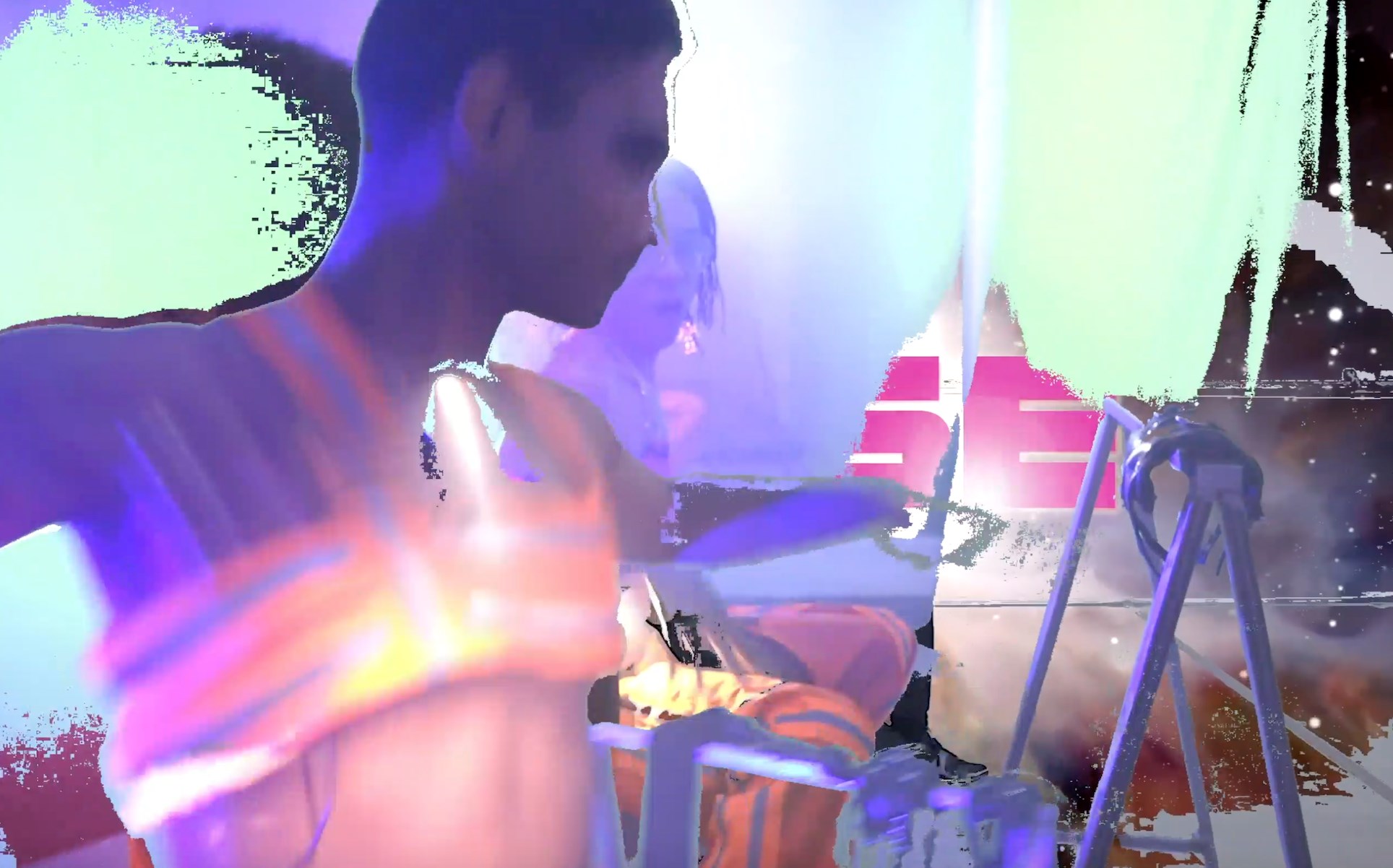
{LMB} In the performance, the body is used as territory, and that links to the normalisation of extractivism in the territories, which is central to the armed conflict in Colombia. From the perspective of conquest, for example.
{WF} We wanted to reveal that this idea of sexual freedom of minority people in a party context where community forms, is a black concept from San Basilio de Palenque—the first territory in America that gained independence from Europe. We also talk about appropriation. And although minority groups created Berghain, they are still white and European, and are therefore part of an oppressor group too. Plus, it’s also a business.
In the performance, we try to maintain some ambivalence and perhaps some contradiction. Ambivalence is important if we’re not to fall into binarisms again. I also wanted to open a space for doubts, questions, and new subjectivities.
“Ambivalence is important if we’re not to fall into binarisms again. I also wanted to open a space for doubts, questions, and new subjectivities.
{LMB} I think that one of the most beautiful aspects of the project is that there are a lot of intersections between Will’s theoretical approach and my artistic approach. We almost didn’t change any of our own ideas, and it was not necessary to write new lines in order to make the project work. That seemed very interesting to me, because we have very different backgrounds.
I am from Buenaventura and have had very different life experiences to Will, who was born in Portugal. It goes to show that the African diaspora has many intersections, regardless of where in the world we are.
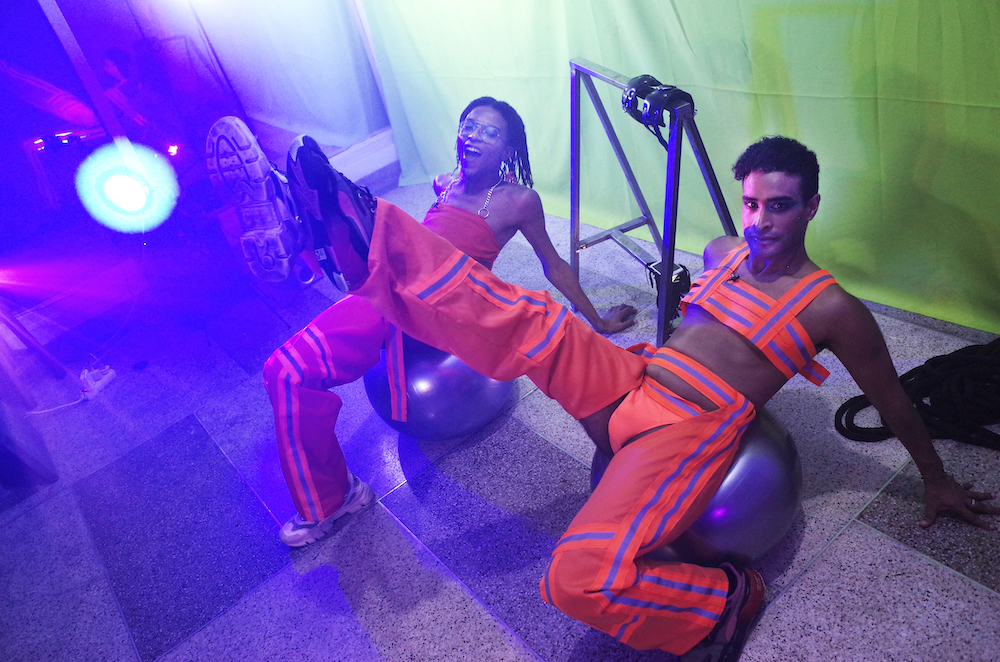
{LMB} A point our project raises is questioning itself. What we propose is too complex to pick one side. To put all these systems into question is what’s interesting—to open the field for all of us to build these new conceptualisations.
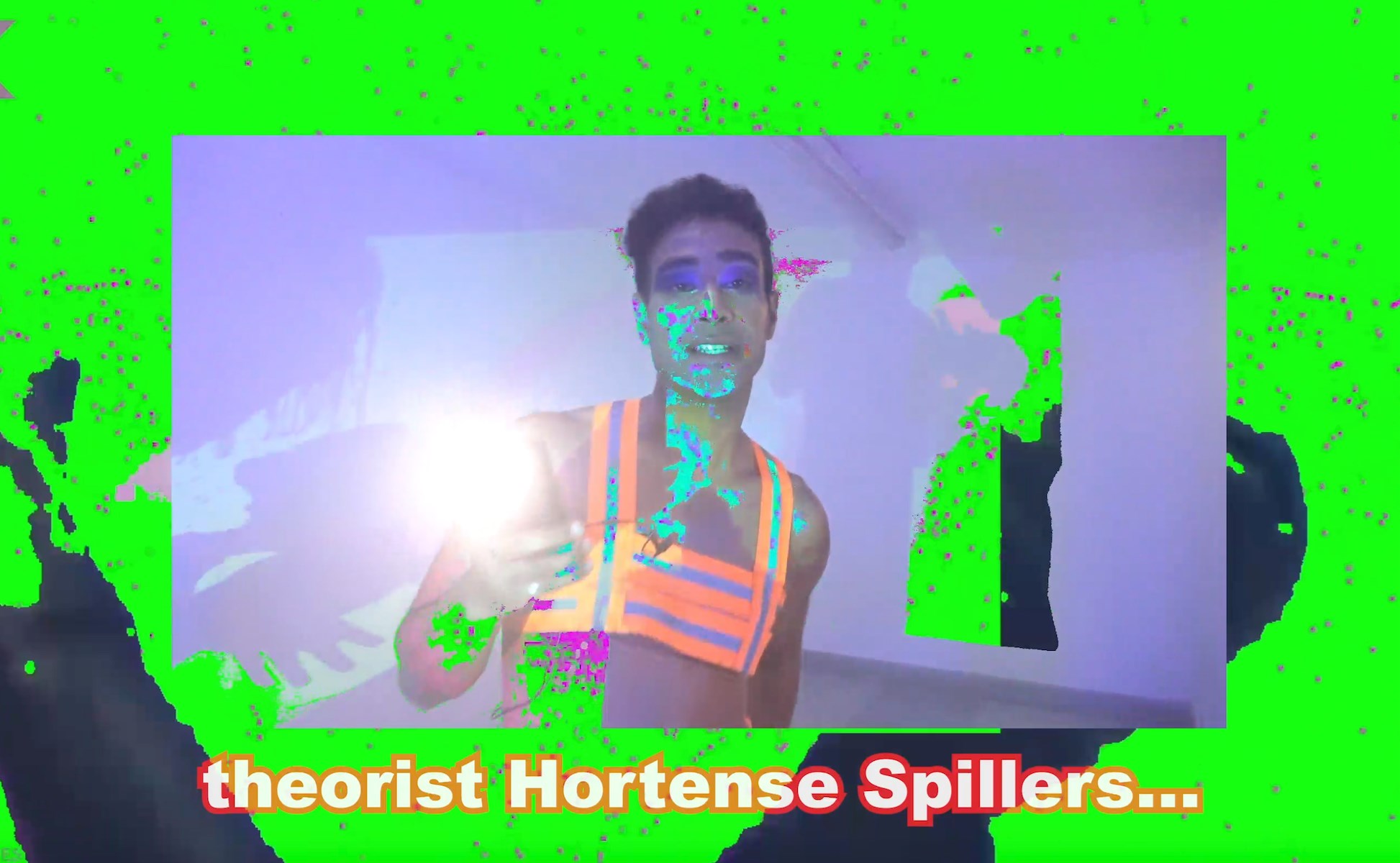
{LMB} It’s also important to consider the validations that we give these concepts, and how I perceive myself and create other perceptions. Something very cool that Luisa mentioned is the terminology used to refer to certain practices in Colombia. For example, in the Pacific, we call a singer ‘cantadora’ instead of ‘cantante’. Which one am I as a dissident fag? Or which artistic discipline would I be put into?
{WF} There is a line in the song ‘Shut Up’ that says ‘undefined and modern’, which I love because it questions that need to define things and people, which relates to the European tradition of taxonomy, in which everything is catalogued, and everything has its value. That’s almost the complete opposite to indigenous knowledge. For example, in the philosophy of Mayan cosmovision, there are no hierarchies between the elements of this world, that is, a person has no more value than a stone and therefore everything must be respected equally.
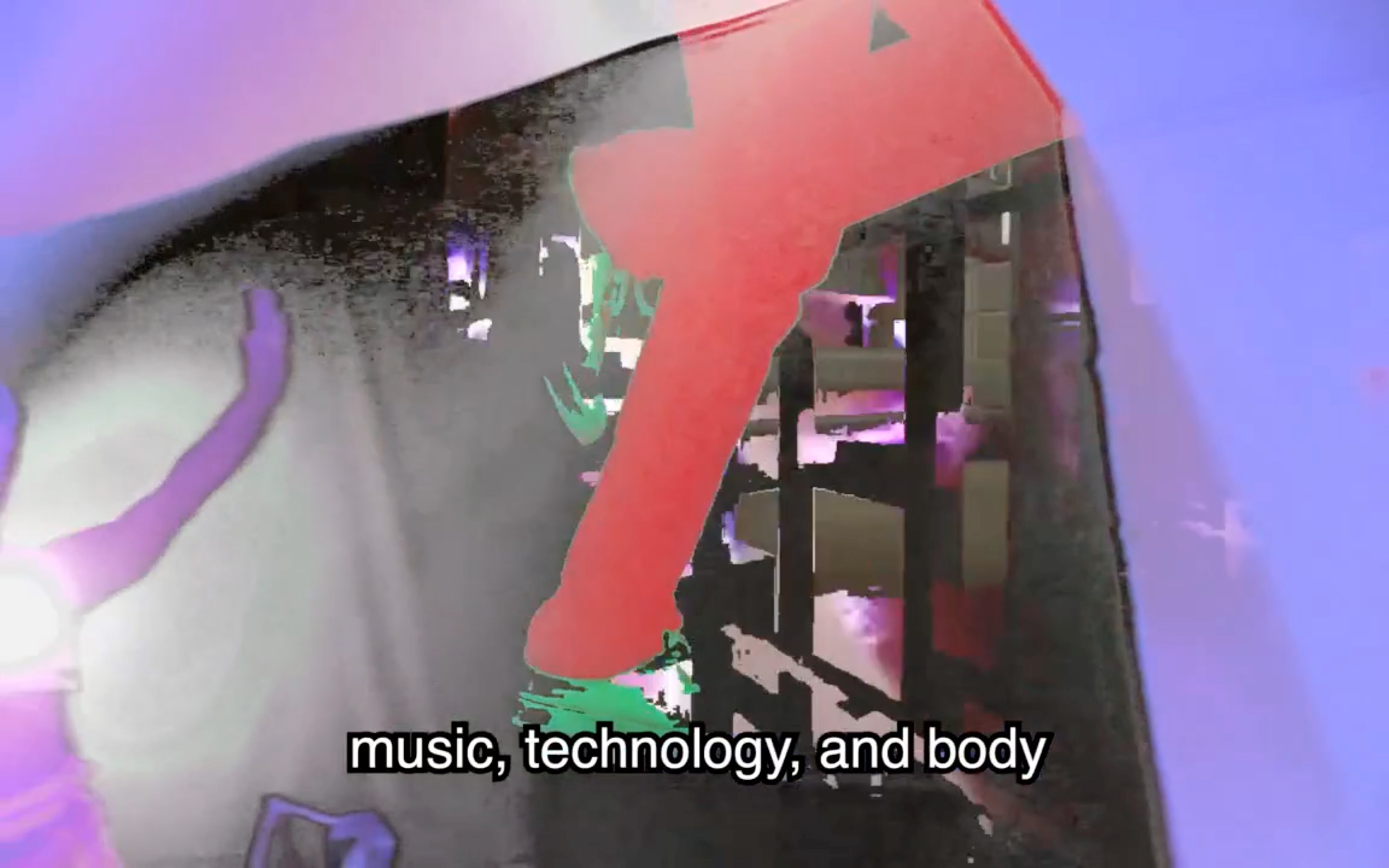
{WF} What is also interesting is how we can relate that to capitalism, the art market, and the museum.
{LMB} I would also like to name the concept of control, because if something can be categorised, it can be controlled, right? Also, who creates those categorisations, and who gives meaning to them? In this sense, I believe diverse bodies enter to pose those kinds of questions. That’s what I put forward in ‘Shut Up’, because it is about taking power away from those who observe to control what they see. The West has taught that the one who observes is the one who gives value to the things that they see, which has generated so much violence. Of course, it’s also important to mention that there are personal constructions that play a role in this interaction.
“We wanted to question the posture and body language that is suitable for talking about certain topics.
{WF} That is related to the title. ‘A skip of the beat’, or syncopation: what happens when you wait for the beat and it doesn’t come? What happens at that moment? What does it make you question? It’s a little like what is happening now with the pandemic—this moment of ‘abnormality’, what reflections does it bring?
{LMB} We wanted to question the posture and body language that is suitable for talking about certain topics. We usually discuss decolonisation between ourselves, so why is it that often a certain ‘respectability’ is expected to discuss certain academic topics? So, in the performance I look like I’m reading from a cell phone, but actually I’m not—I’m texting someone who I will meet at the party later.
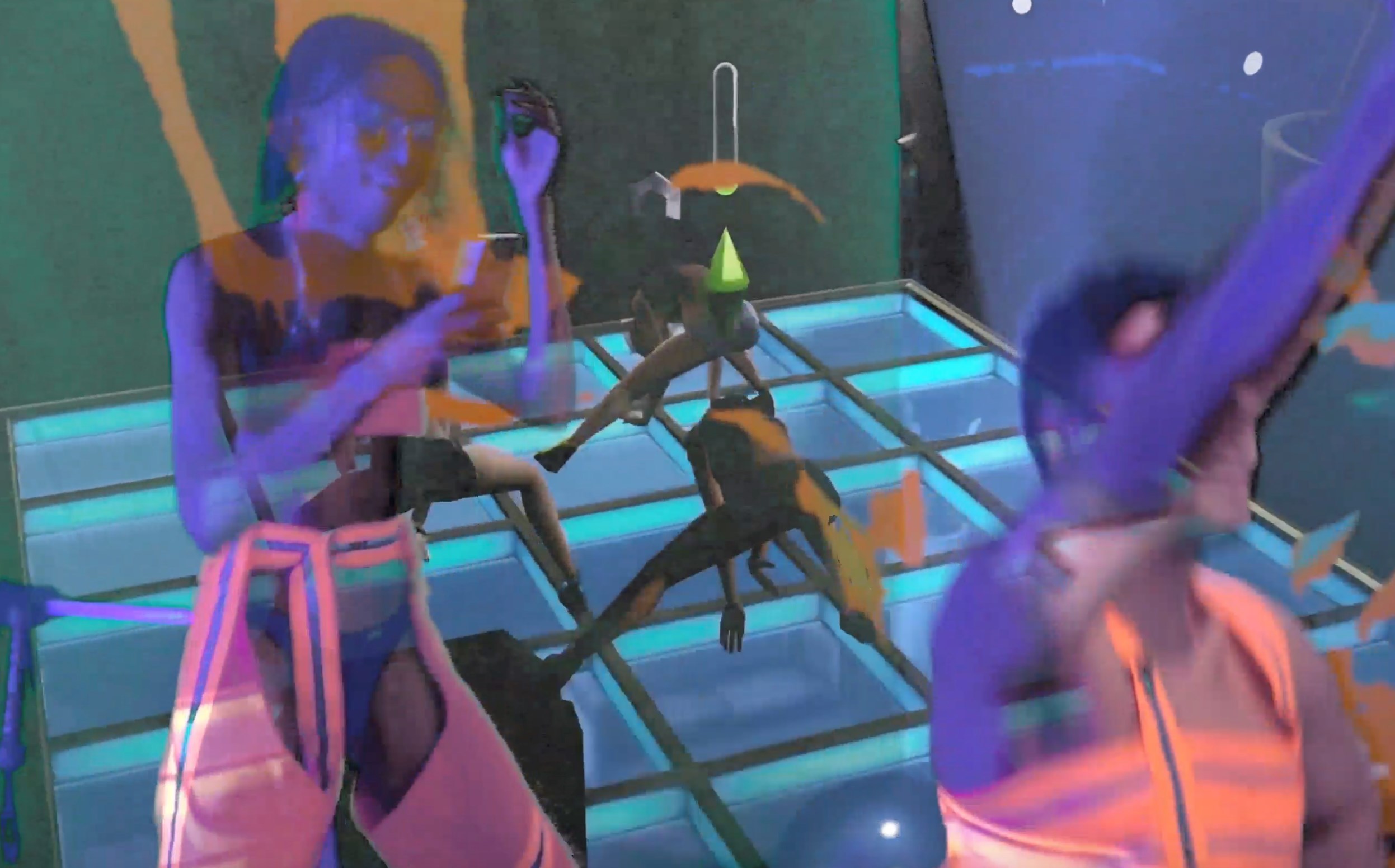
{WF} Totally. When you find out that you have the right to reinvent yourself, you will be at war. You’ll find a lot of resistance and it will not be easy, but it’s worth the fight.
{LMB} I think it speaks volumes to the line we quote by the theorist Neil Roberts, that no one is born free and that freedom consists in seeking freedom. I think we could also talk about temporality, and that categorisation is not fixed—it moves as we move as social beings.
“We usually discuss decolonisation between ourselves, so why is it that often a certain ‘respectability’ is expected to discuss certain academictopics?
{LMB} It fills me with emotion to hear the name Jerrika within this space. Jerrika was a trans woman who lived on the streets and was a drug user. She was a performer, too, and it’s important that she existed in realms other than just the streets. It could also be interpreted that she was an artist and made art from other ways of existing. It’s touching to me that her name is mentioned in this space. It means her life meant a lot to many people.
{WF} In relation to the point about terminology not being accessible, I think it is key to remain self-critical and open to questions and doubts, such as whether the terms we use are fair or not.—[O]
A respected voice in contemporary art discourse.
Focusing on ambitious storytelling and insightful art-world commentary. Ocula Magazine publishes in-depth interviews, critical essays and timely analysis on the artists, exhibitions and ideas driving the global art world.
Learn more about Ocula Magazine
Showcasing the best of the art world.
Ocula partners with galleries from around the world to highlight their artists, artworks and exhibitions. Gallery membership is by application and invitation, with each member vetted by an independent panel.
Learn more about Ocula Membership
Specialises in the sale of major artworks.
Led by a team with deep ties to the world’s leading auction houses, galleries and collectors. Ocula’s advisory team offers bespoke services to high-net-worth clients from around the world who are looking to acquire the best of contemporary and modern art.
Learn more about our team and services