The art world in focus
Subscribe to our newsletter for news and insights on artists, galleries and exhibitions.

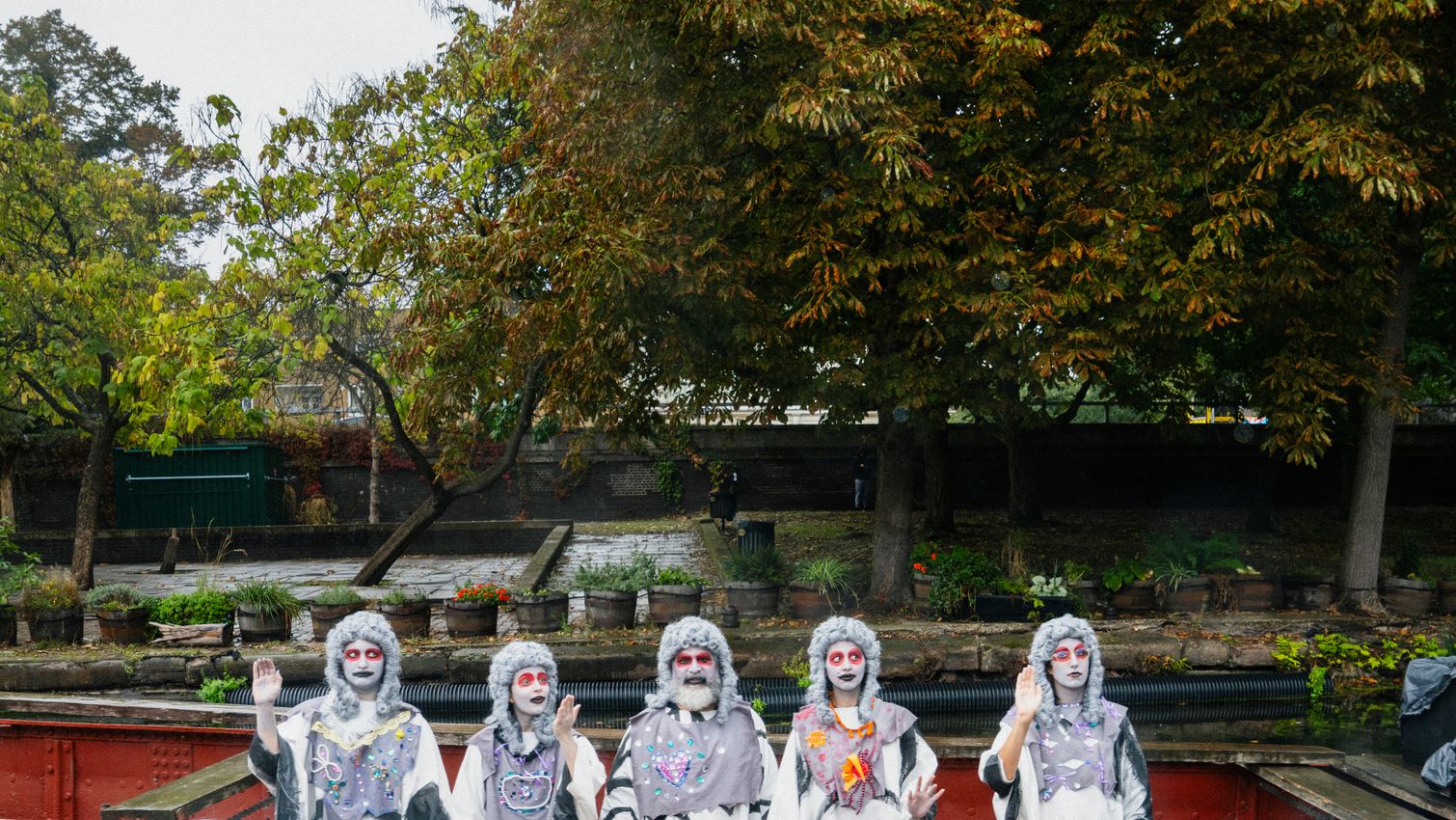
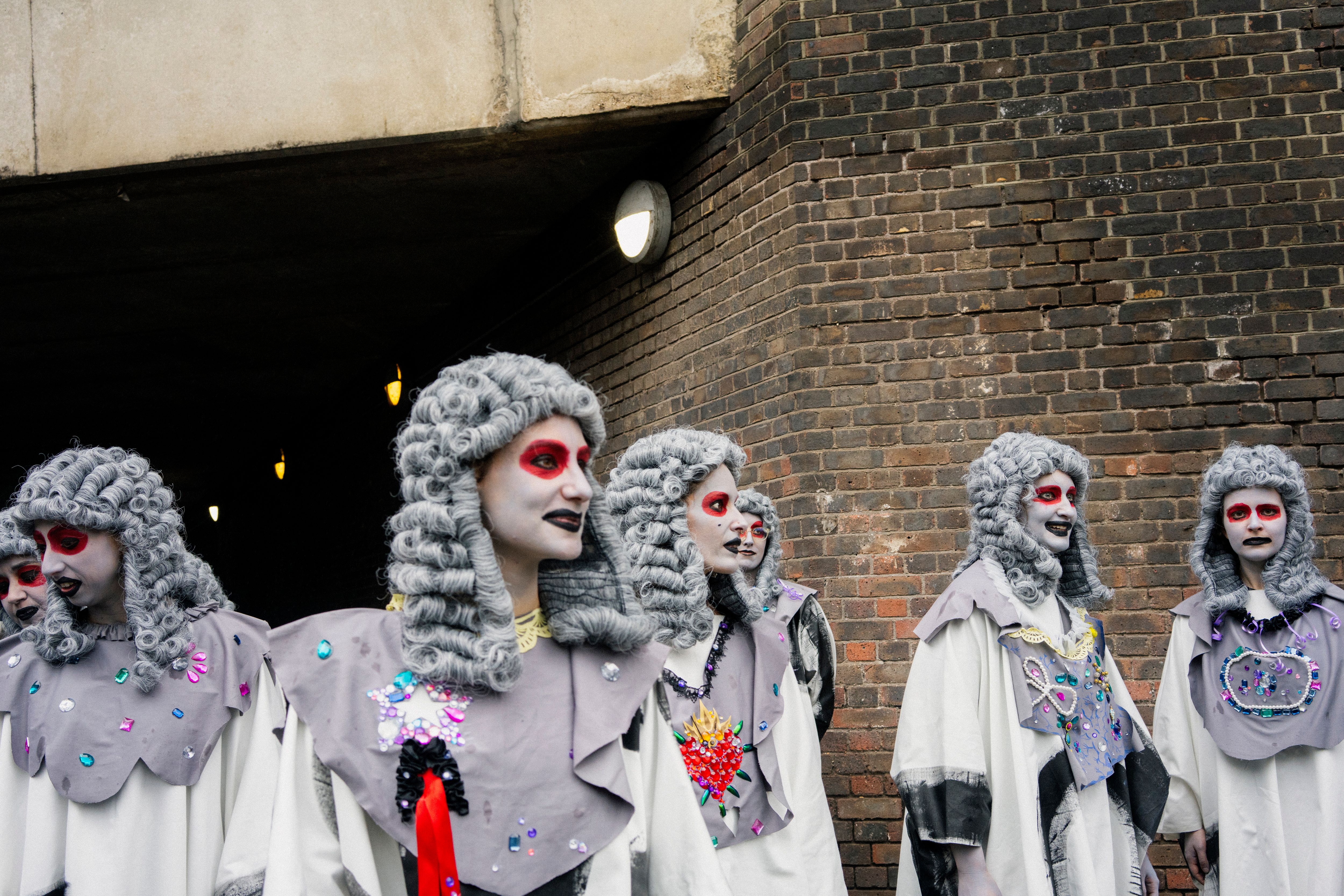
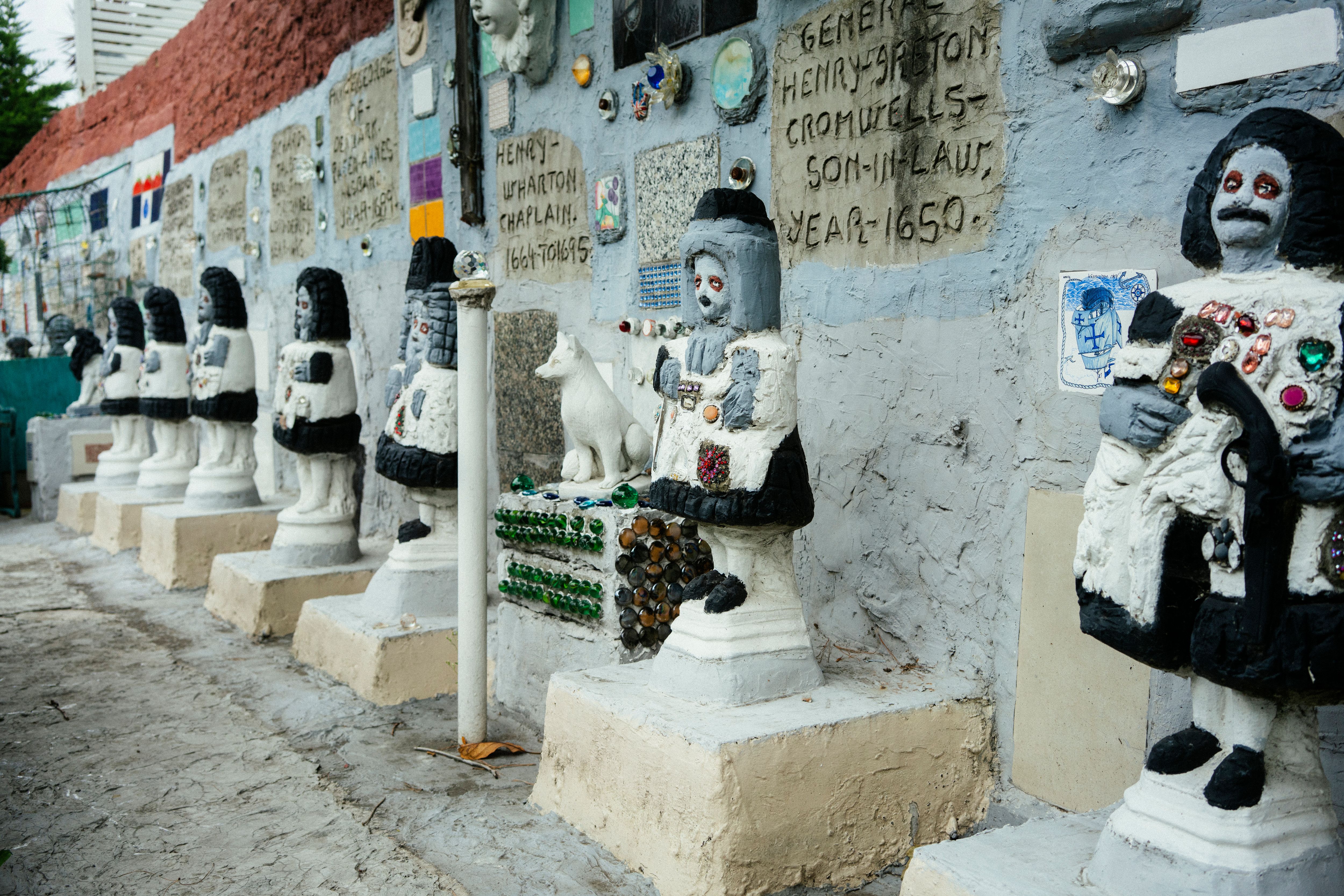
There is an idyll in the shadow of the Trellick Tower, an icon of Brutalist architecture designed for the Greater London Council by Ernő Goldfinger and first opened as social housing for the local community in 1972. Walk down the Grand Union Canal towpath from Trellick Tower towards central London and across the water you will see a gleaming assortment of colourful plastic gems decorating a wall: peculiar figures with stupendous grey coiffures and red-circled eyes peek out solemnly from beneath it, half-concealed by low hedges.
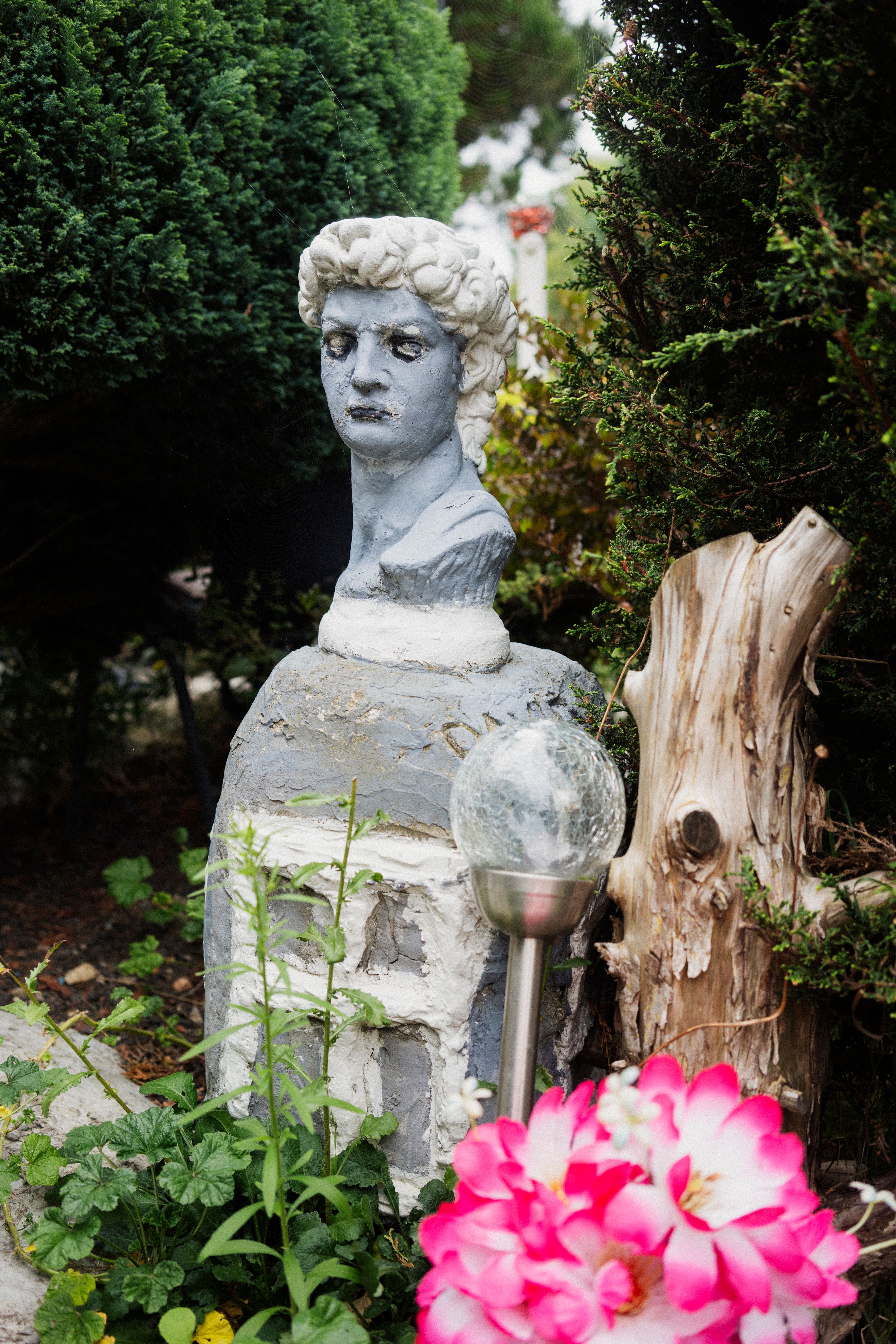
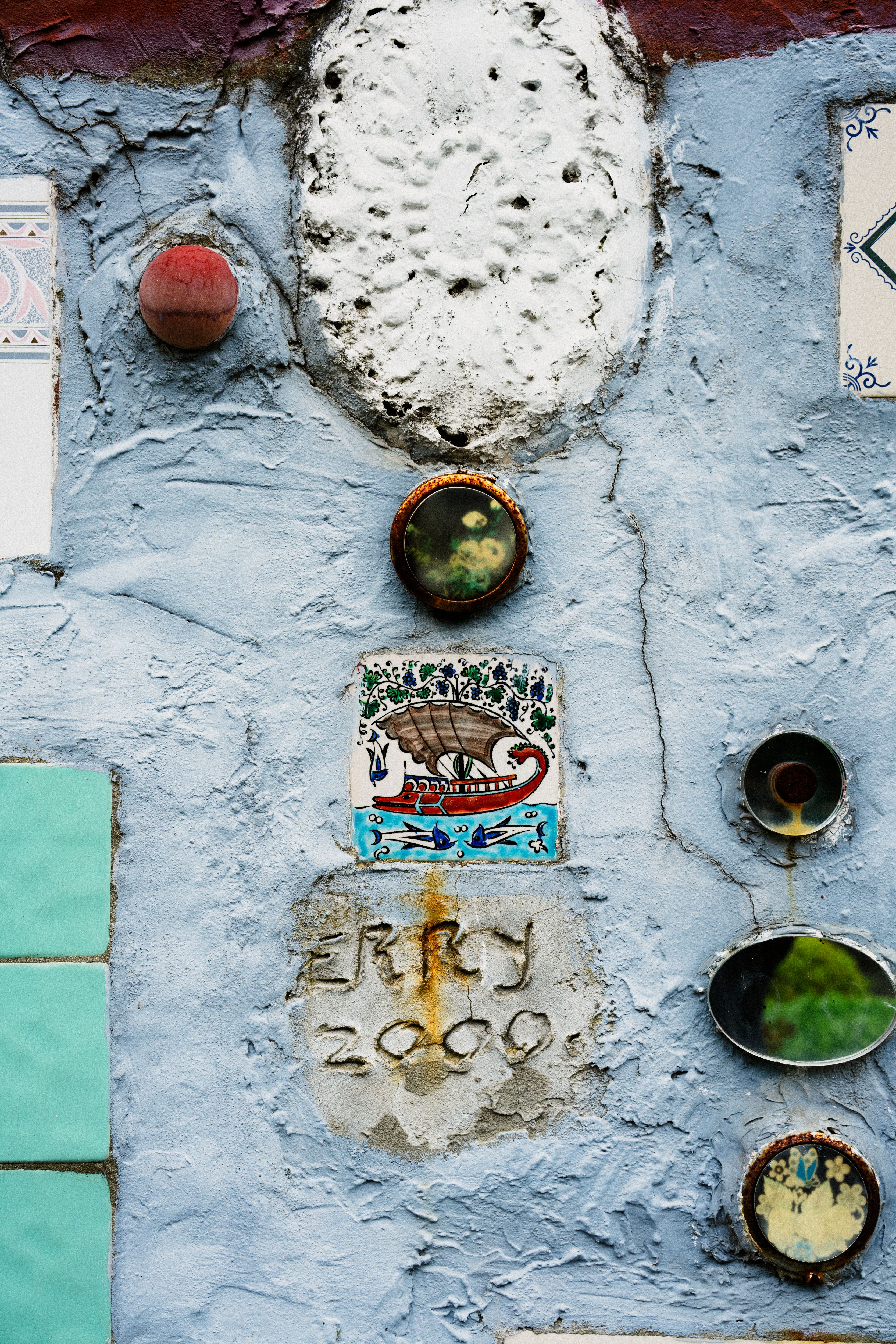
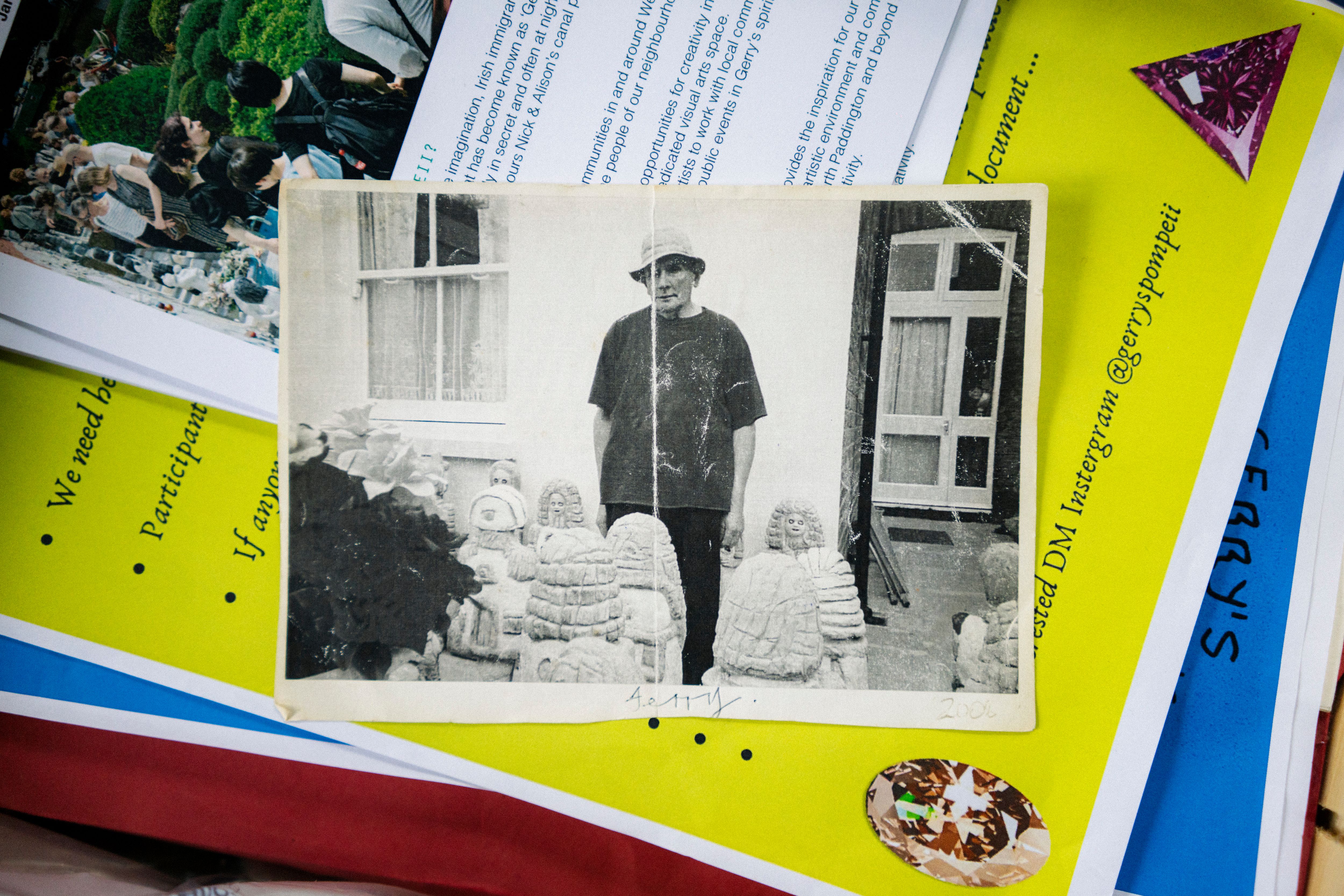
Look closer, and naïve sculptures of cherubs and buddhas rendered roughly from plaster come into view. A patchwork of tiles shows landscapes and arabesque patterns, while others are plain white bathroom units. Behind this wall are miniature sculptures of the same material standing on rough-hewn concrete plinths, each one with a grey face, wig-like hair and a black-and-white robe stuck with trinkets. They depict British historical figures (Queen Catherine of Braganza, King George I, Prime Minister George Canning) and can be identified not by their appearance but by text scrawled into plaques in the wall above. There is one outlier, with noticeably less hair than his neighbours. His name is given simply as Gerry.
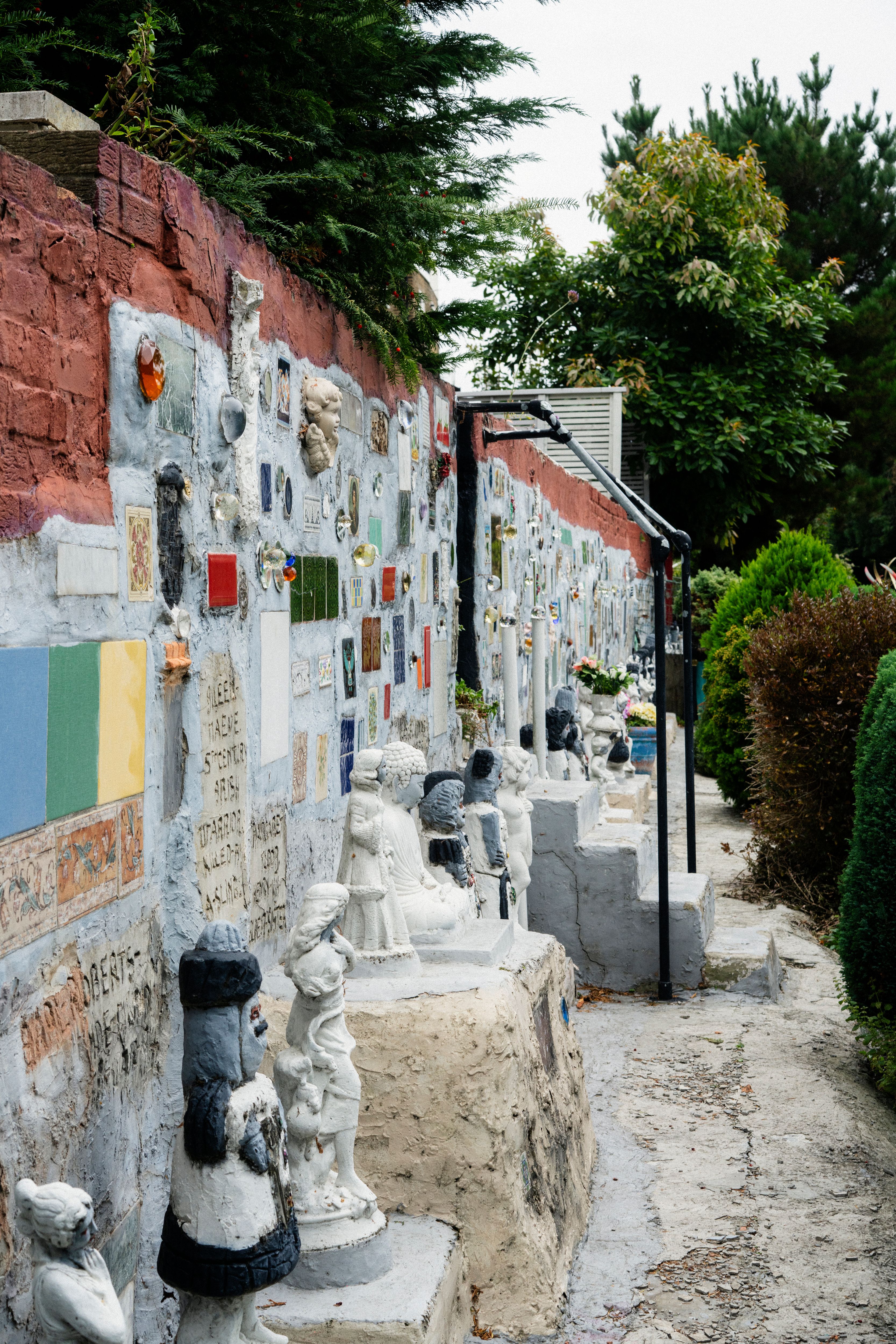
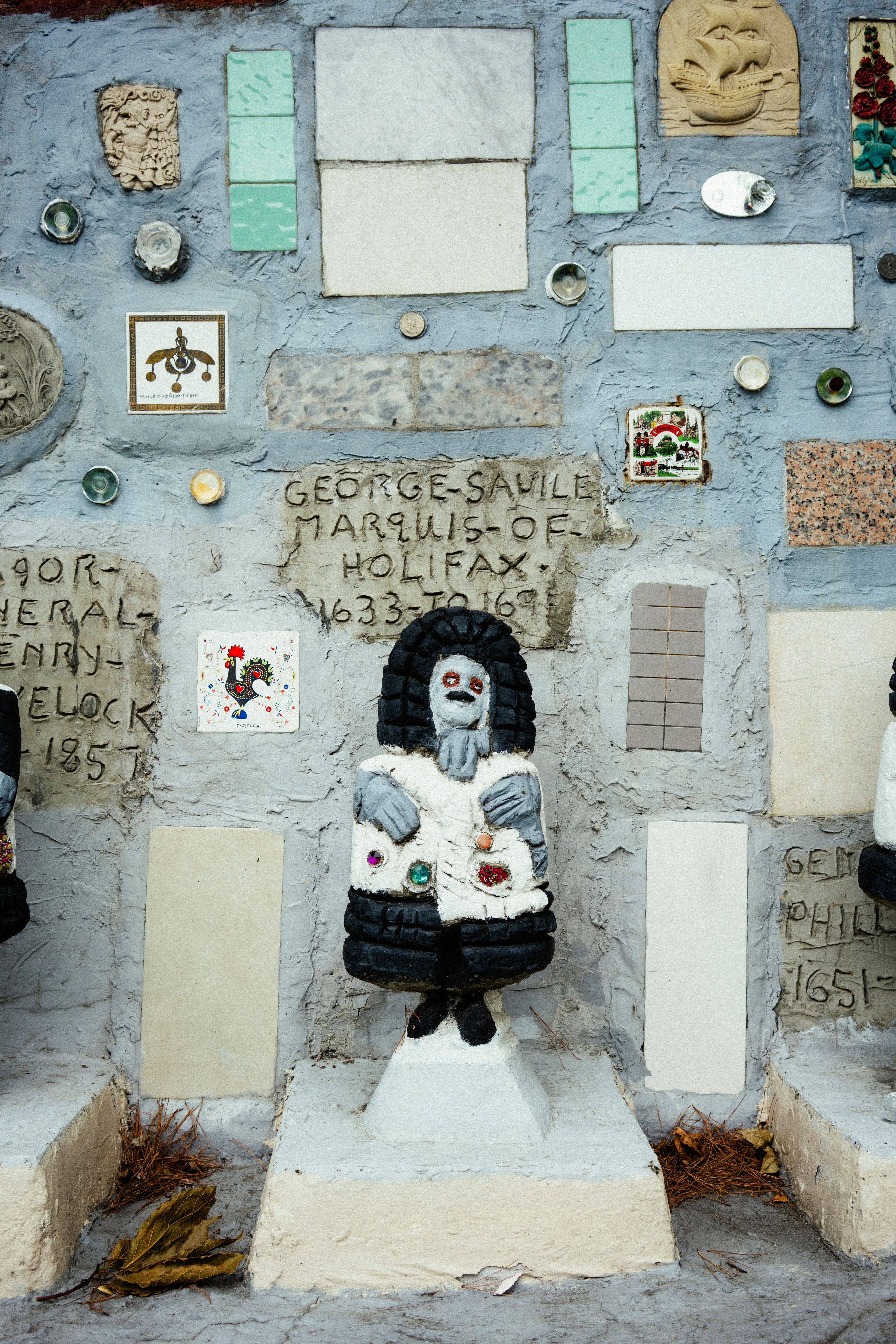
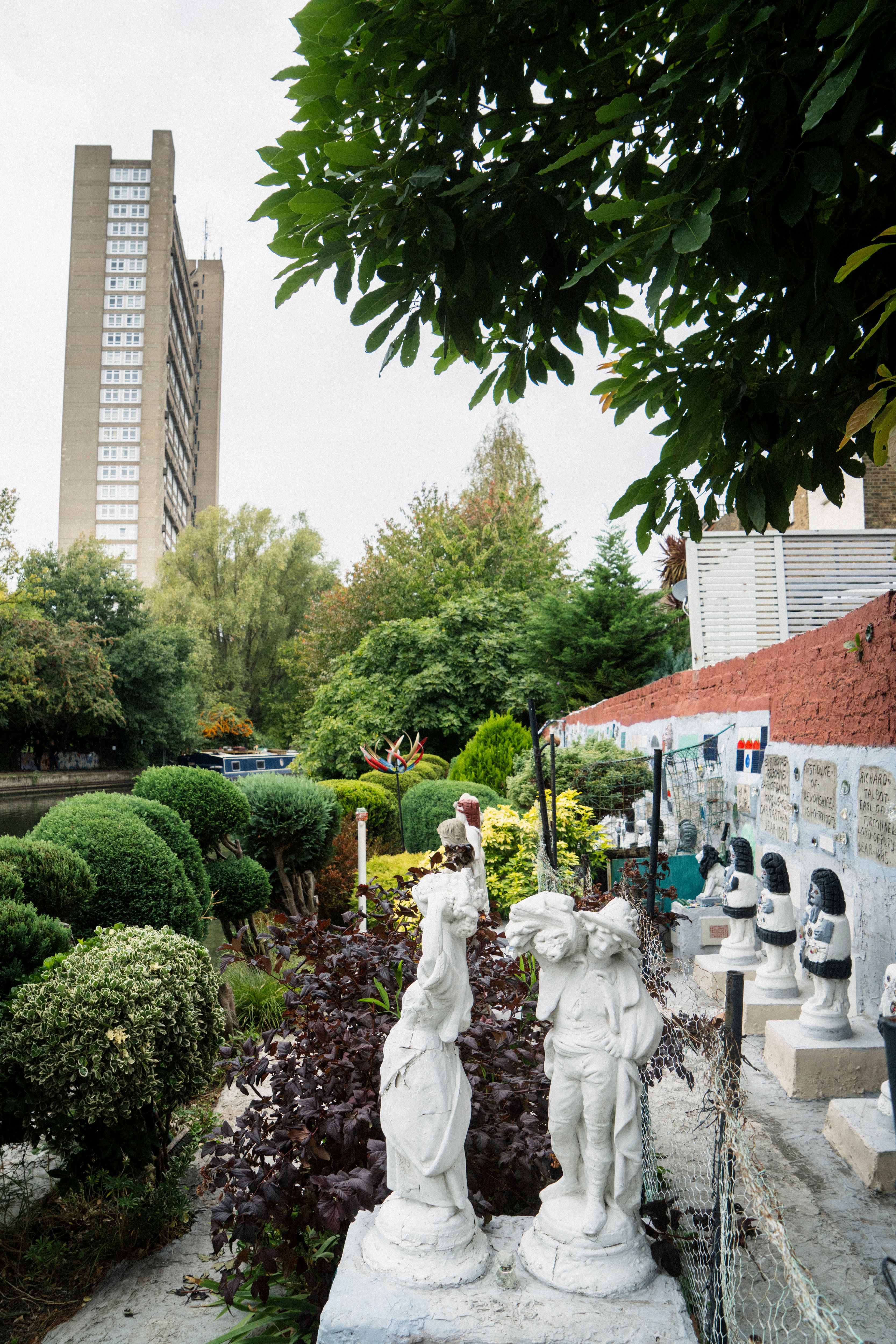
This is Gerry’s Pompeii. For more than 30 years, an Irishman called Gerry Dalton, whose former ground-floor flat at 32A Hormead Road backs on to this canalside sliver of land, would install his sculptures secretly by night. For a while almost no one knew what he was doing: the land was once concealed by higher hedges and piled with bottles, mattresses and other detritus. But then, with the help of his neighbour, Japanese artist Satoshi Kitamura (now an award-winning children’s author), Dalton cleared this away. Not long before his death in 2019, he said: ‘They’ll be astonished by what they’ll find in my garden in years to come. It’ll be like Pompeii or something.’
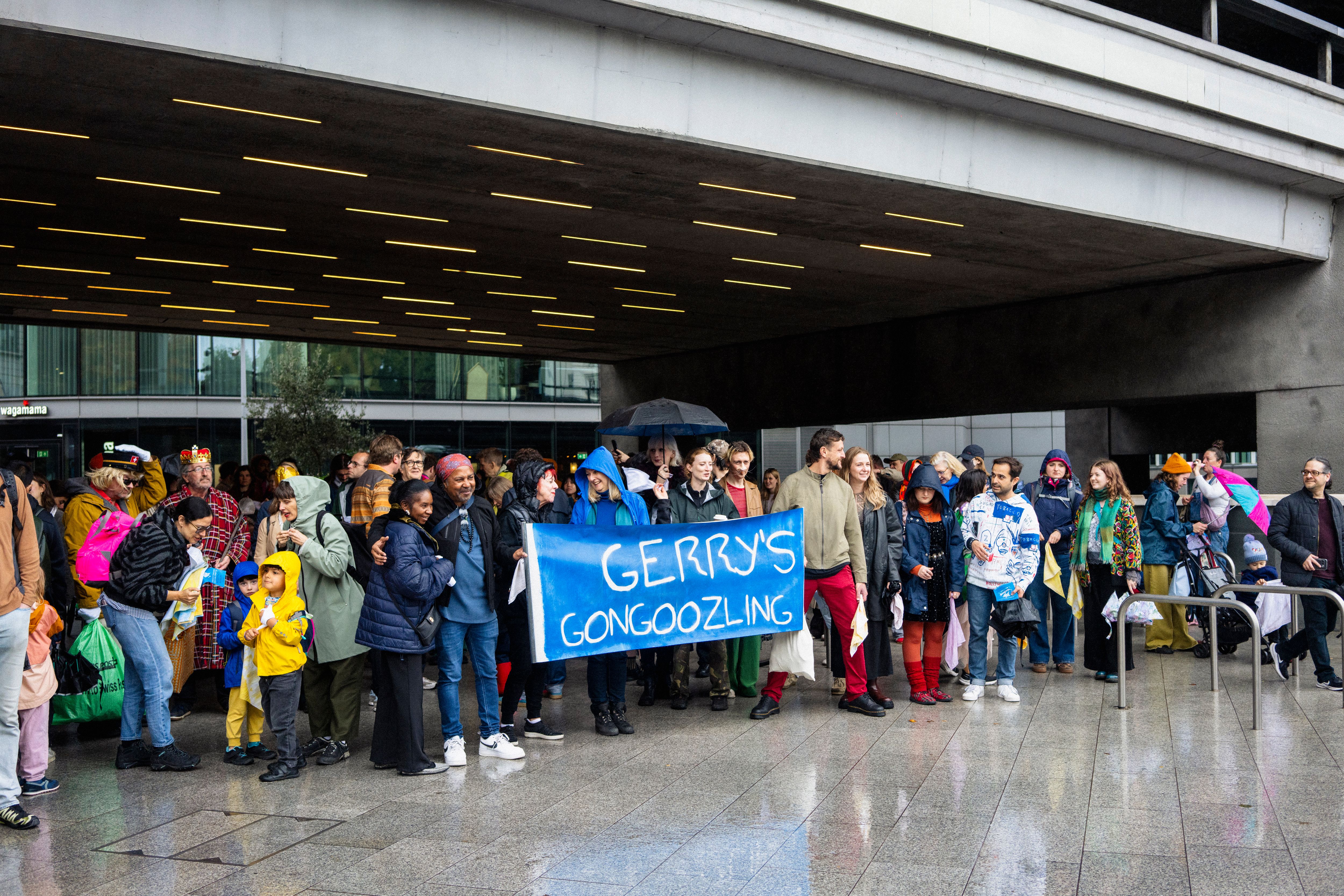

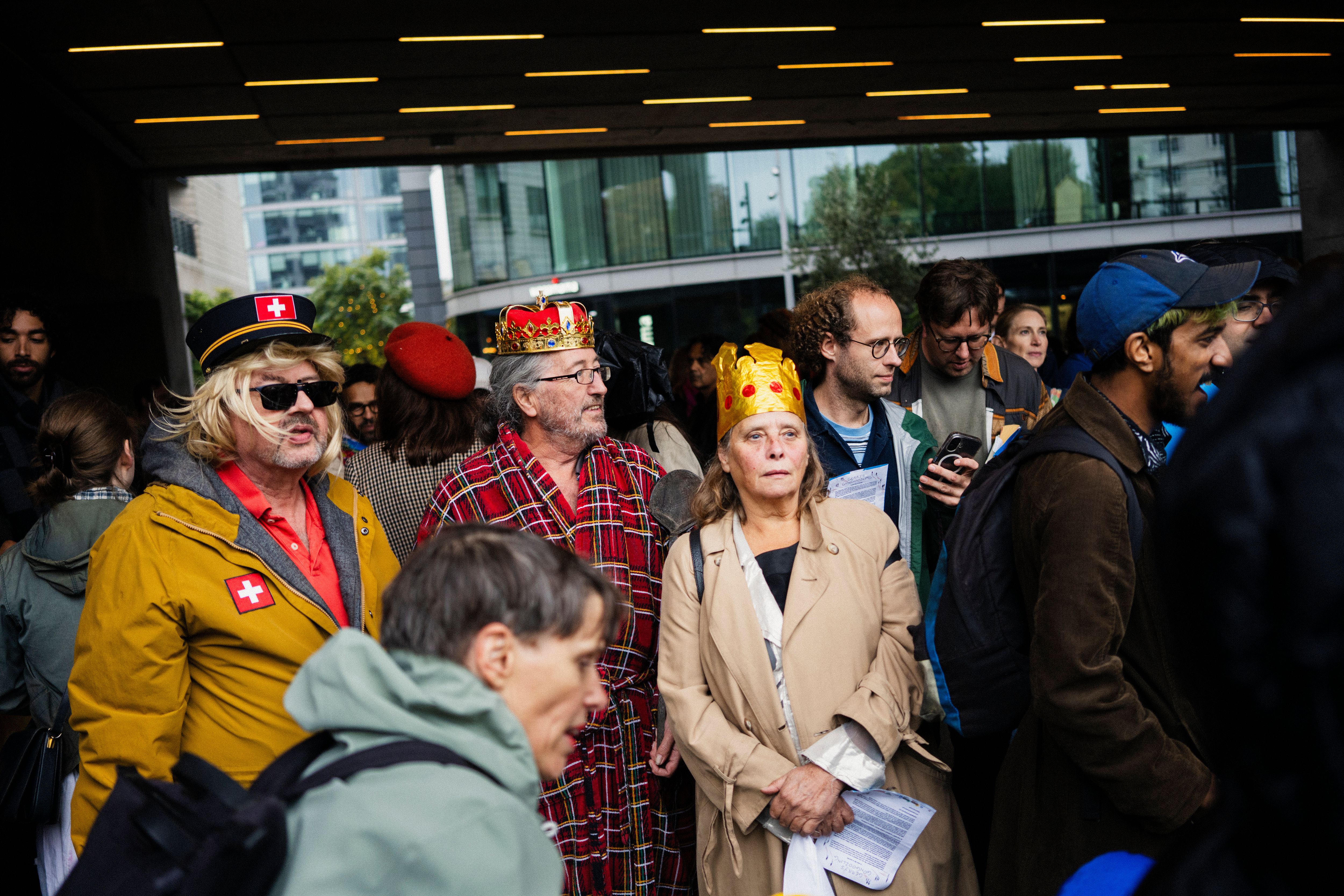
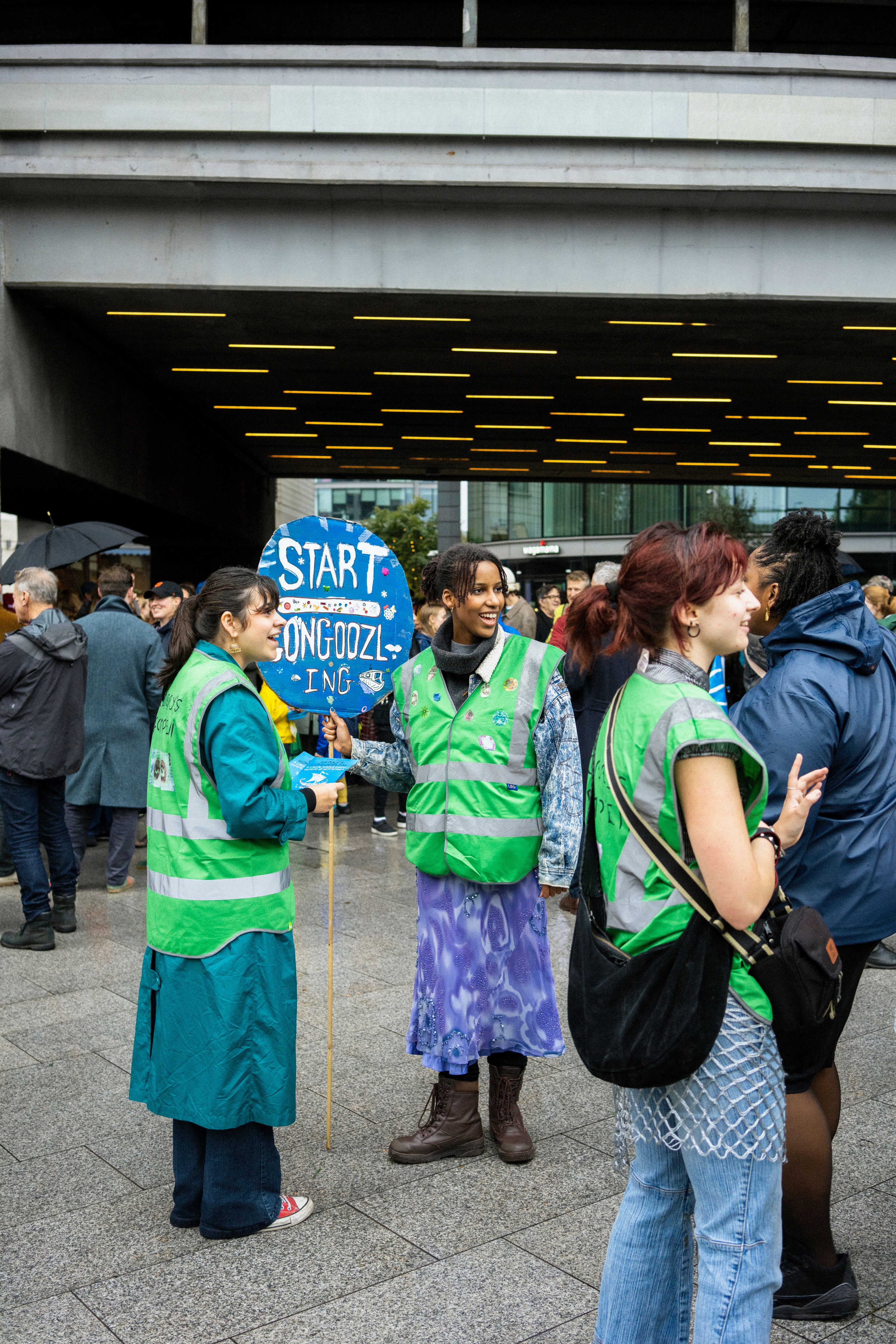
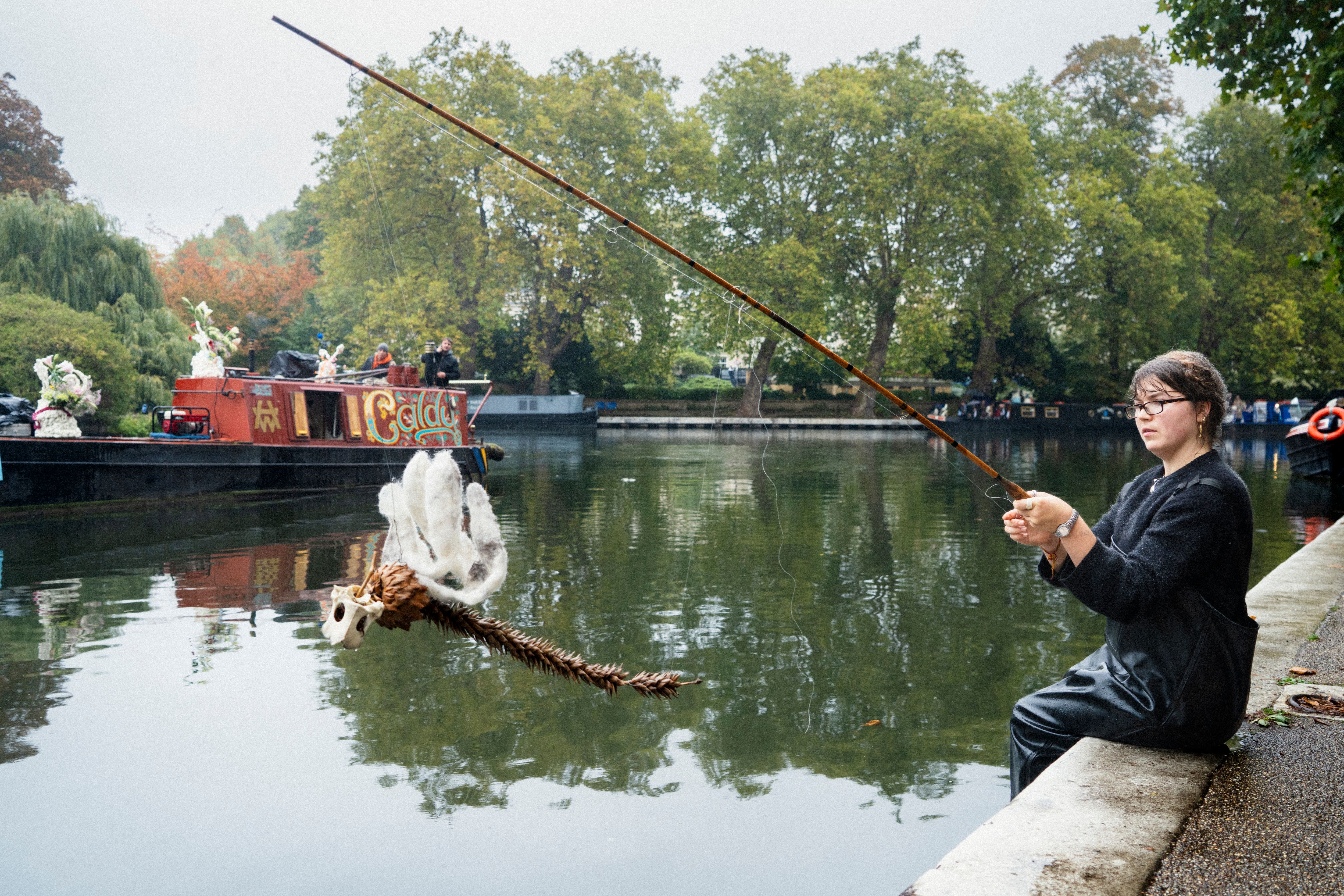
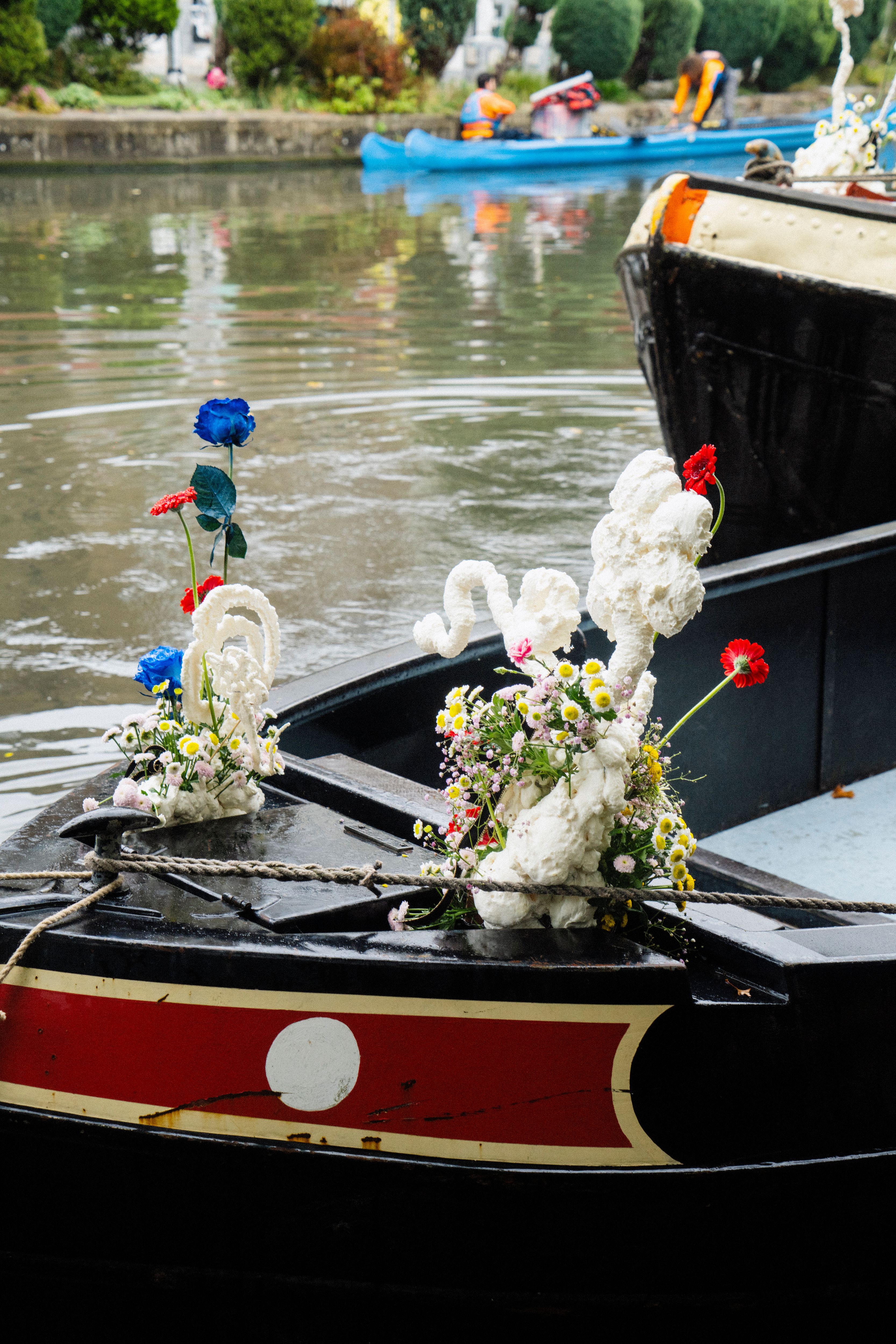
On an overcast afternoon in late September, several hundred fans, artists, curious bystanders and neighbours processed along the canal beside a boat filled with performers dressed up as Dalton’s sculptures. The living statues languidly imitated the motions of individual spectators in stony slow motion, whether raising a phone or scratching a nose, before bursting into occasional synchronised movements to blasts of choral music. This was Gerry’s Gongoozling (a gongoozler is a person who enjoys watching canal activity), the latest in a long-running series of events organised by an ongoing campaign to preserve and remember the life and work of Dalton, led by curator Sasha Galitzine. The parade began at Paddington Basin (Dalton worked for a period as a night postal porter at Paddington station), headed west and ended at his garden.
The assembled crowd was greeted at intervals by performances by a samba band, a troupe of actors dressed as canal rats, and puppets floating over the water. In a performance conceived by the artist Amalia Pica, a series of lone figures stood on a succession of bridges waving handkerchiefs coloured by natural dye, made in a workshop by residents of a nearby care home. A musical troupe, clad in back-to-front denim outfits, serenaded passersby with surreal ditties. Performance artist Philip Ewe periodically appeared across the canal to perform absurdist spoken word pieces. Saxophonist James Cockling played a rousing solo from a balcony at a final stop just above Dalton’s creations.
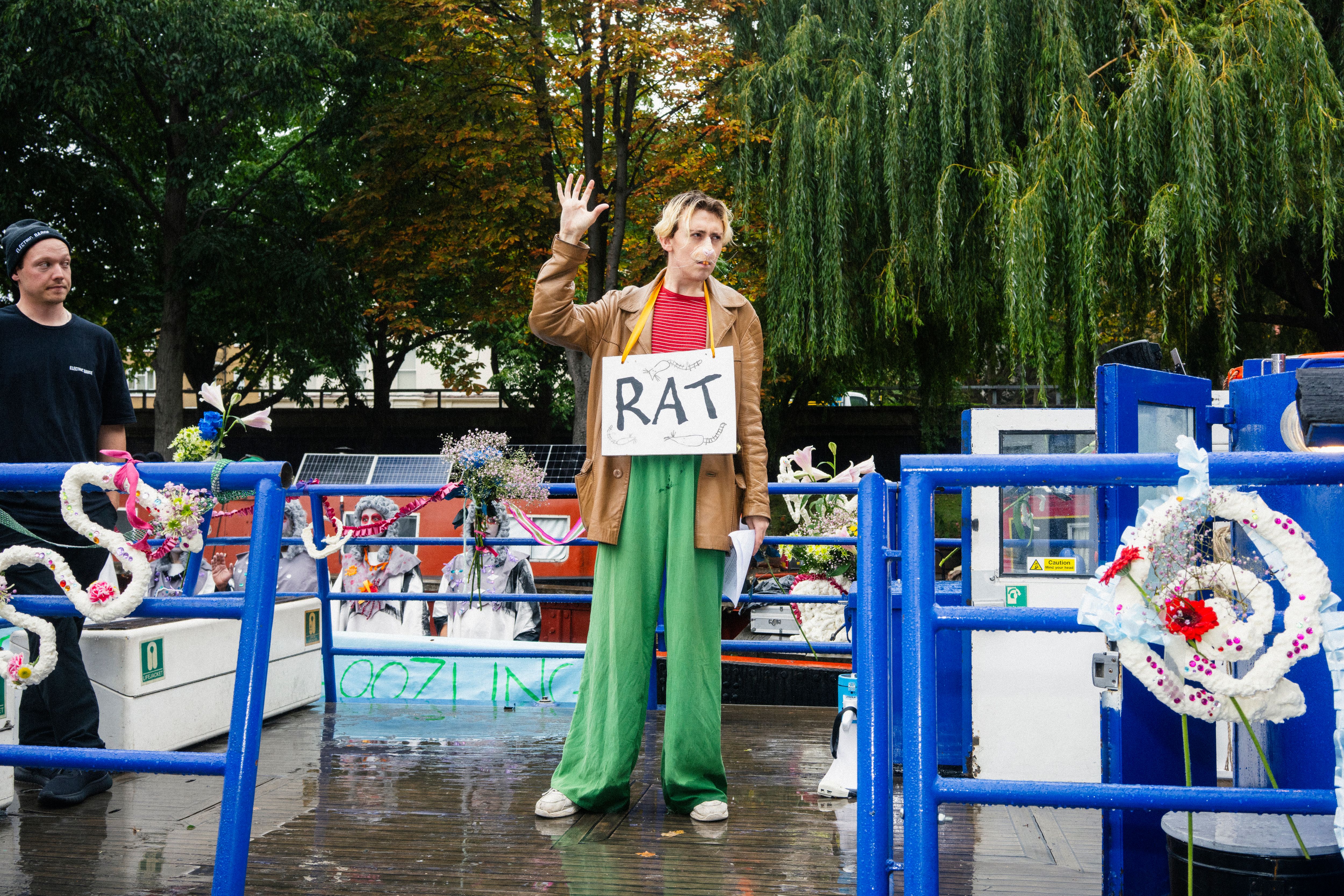
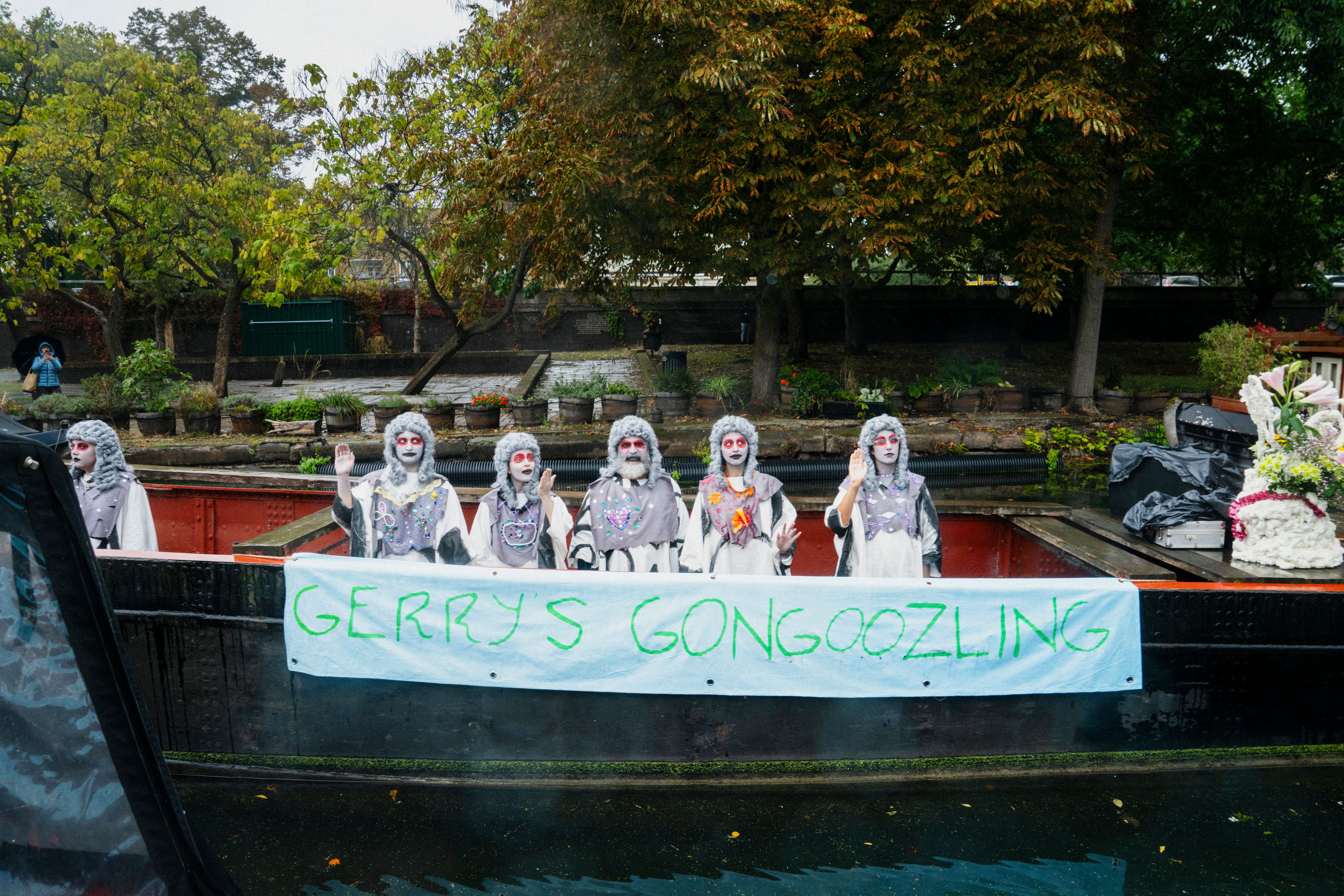
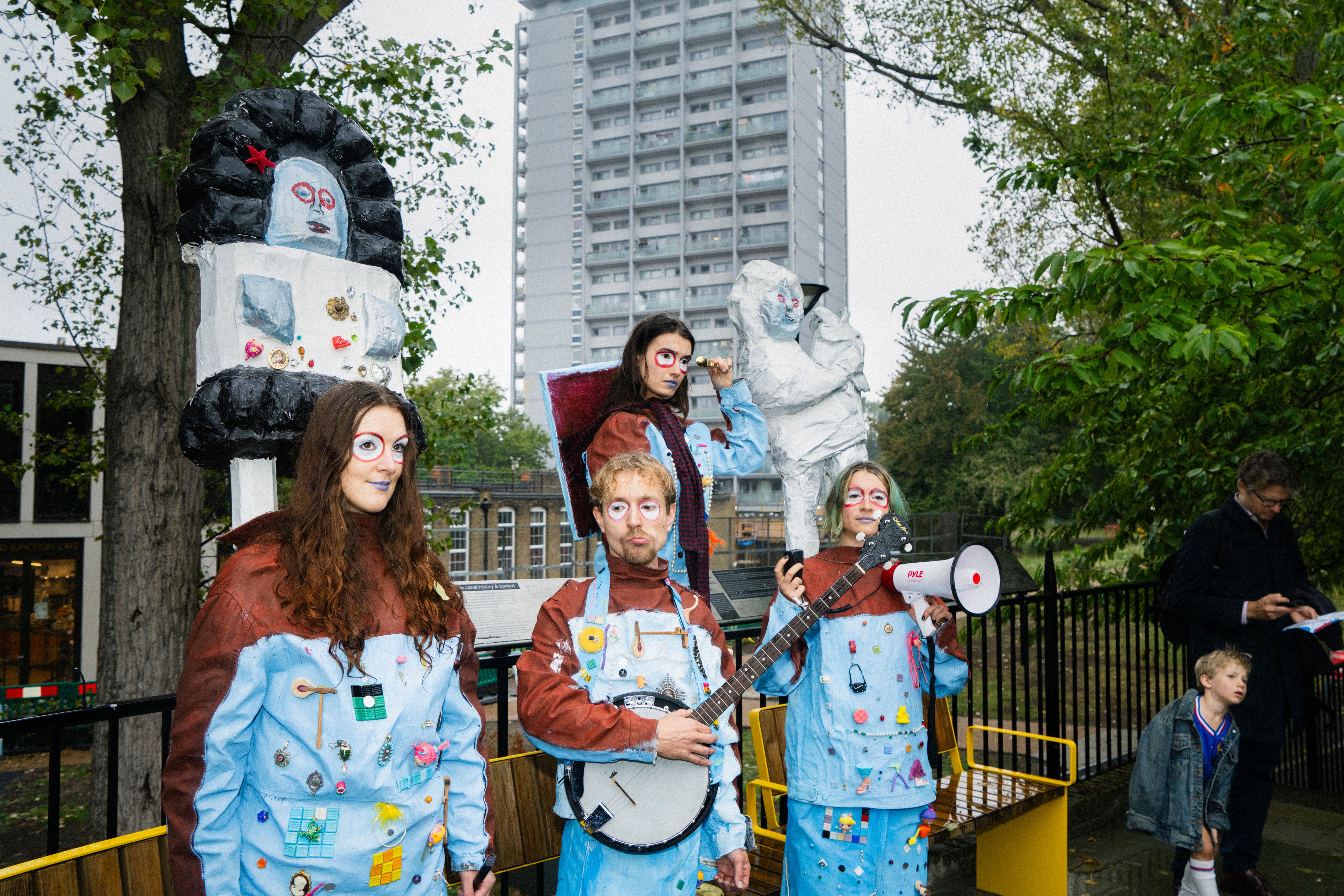
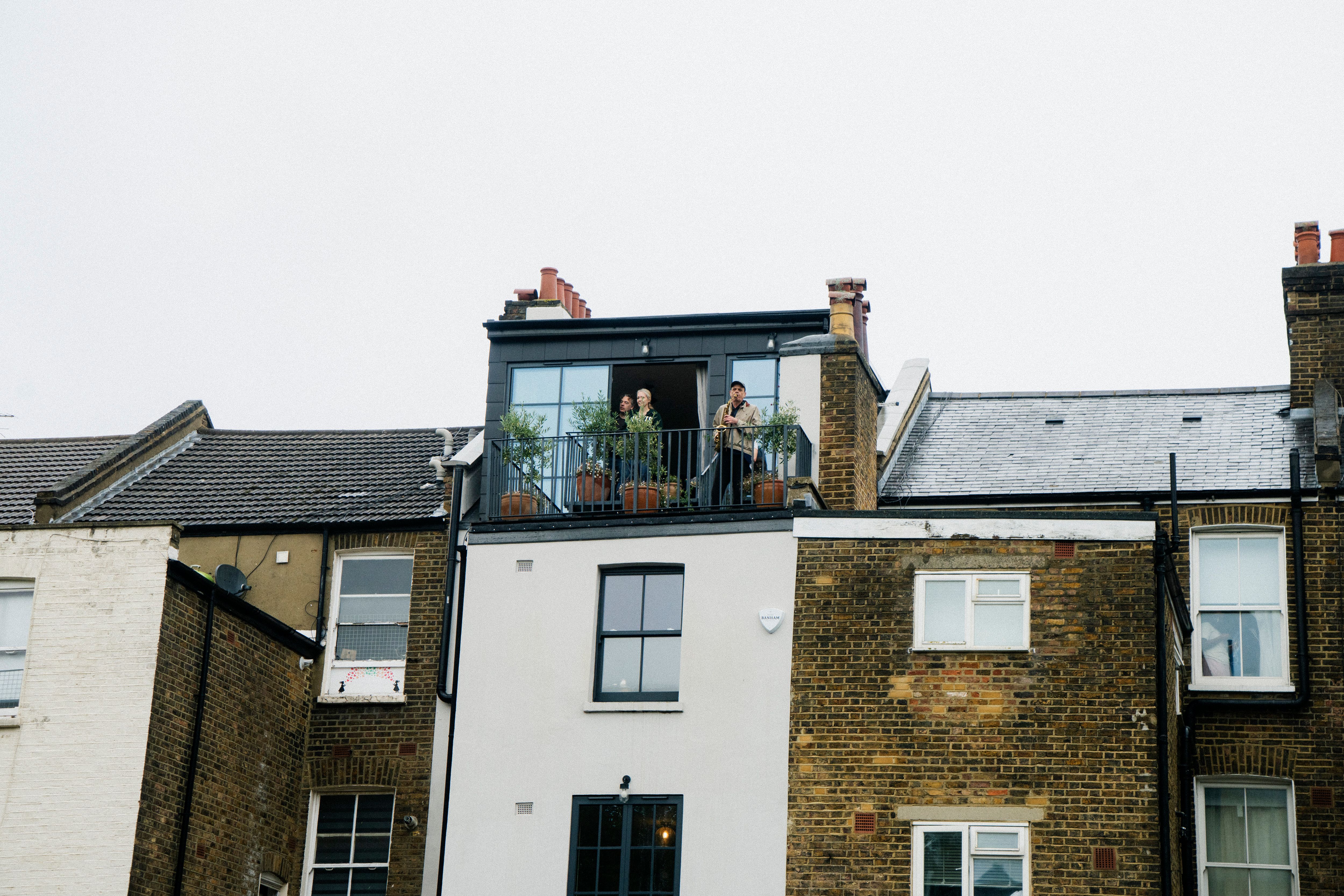
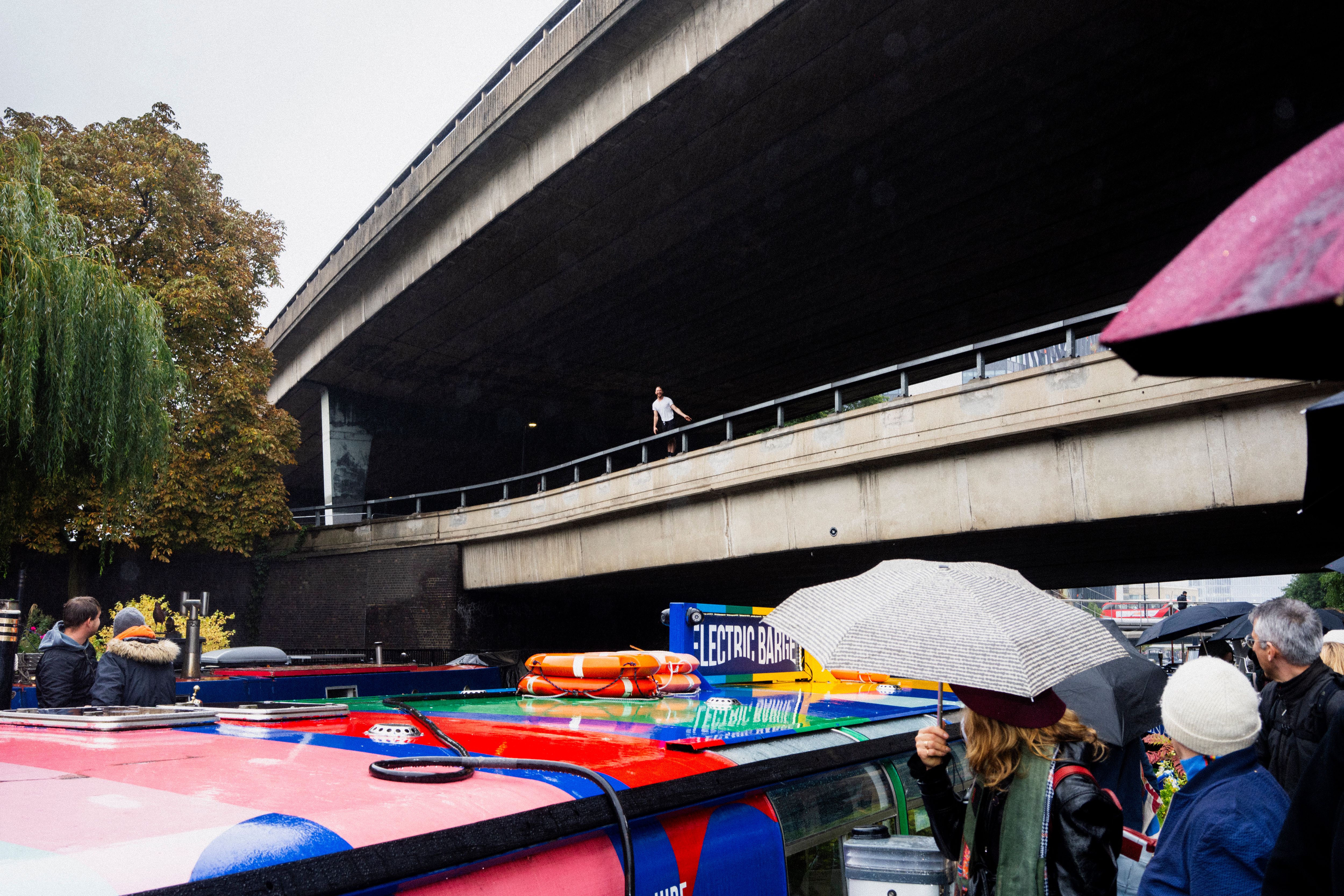
West London is often stereotyped as a land of empty offshore investments and Made in Chelsea casting hopefuls. But the procession route revealed a more nuanced picture. Although the canal wends its way through some of London’s most affluent areas, its origins as a working waterway and post-industrial brownfield site are still in evidence. As one walks further west, brick townhouses soon give way to former warehouses and post-war housing estates. For one stretch, the Westway—a 1960s-built elevated section of the A40 road, a brawny concrete carriageway that has variously served as an inspiration for The Clash, Blur and the dystopian novels of J.G. Ballard—arcs over the canal path with a fenced-off wasteland beneath it.
The surrounding districts, which include Portobello and Golborne Road, have large Middle Eastern, Portuguese, and West Indian populations, while during the 1970s the area was an epicentre of London’s radical squatting scene, with Meanwhile Gardens, the park that surrounds Trellick Tower, created as a community resource after a group of artist-led activists successfully petitioned the council to forestall development. Meanwhile Gardens remains run by a community association that places itself against continued attempts to develop the land into high-value private housing. The parade, as well as the broader campaign to save Gerry’s Pompeii, captures this spirit, activating the towpath as a defiantly public space.
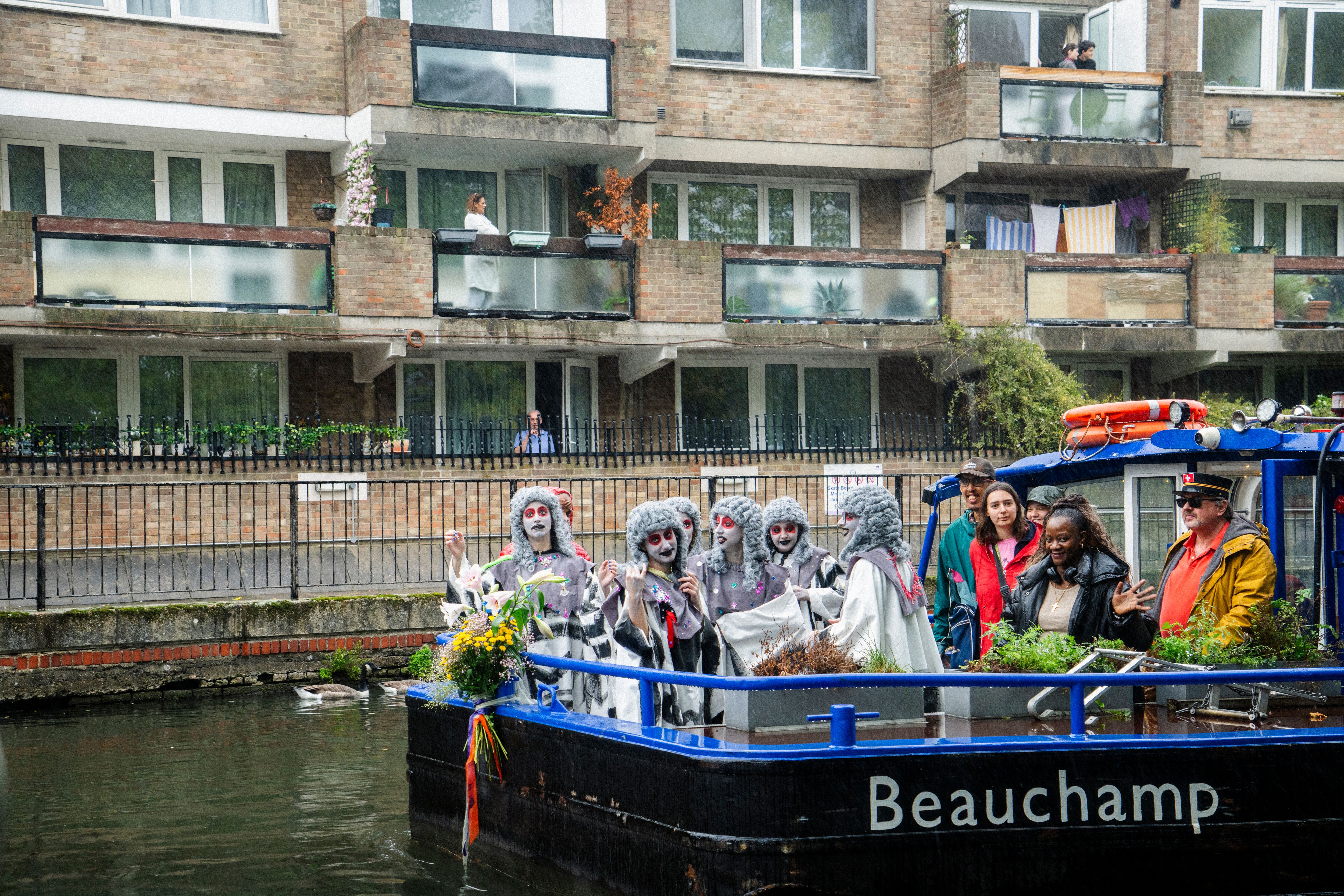
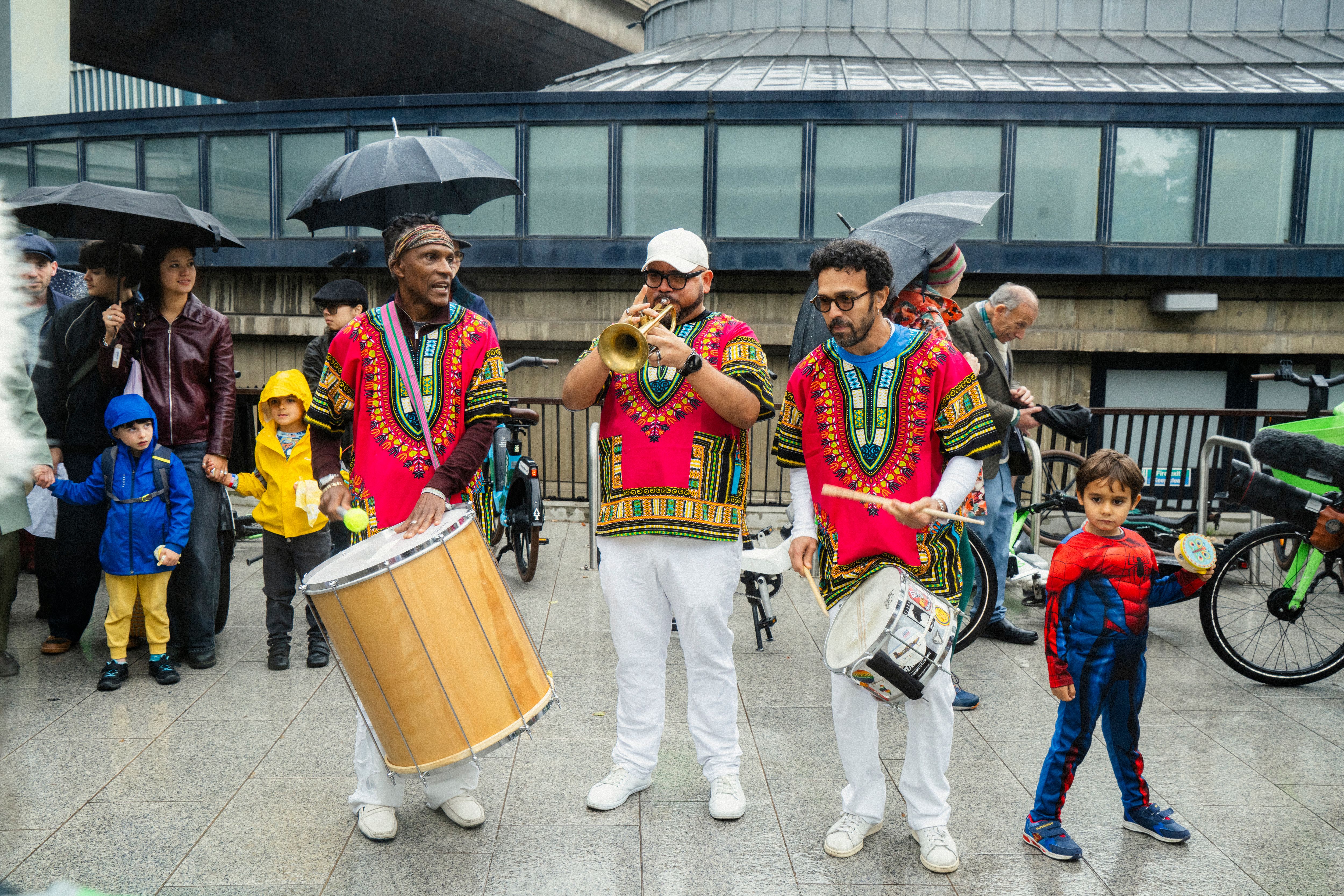
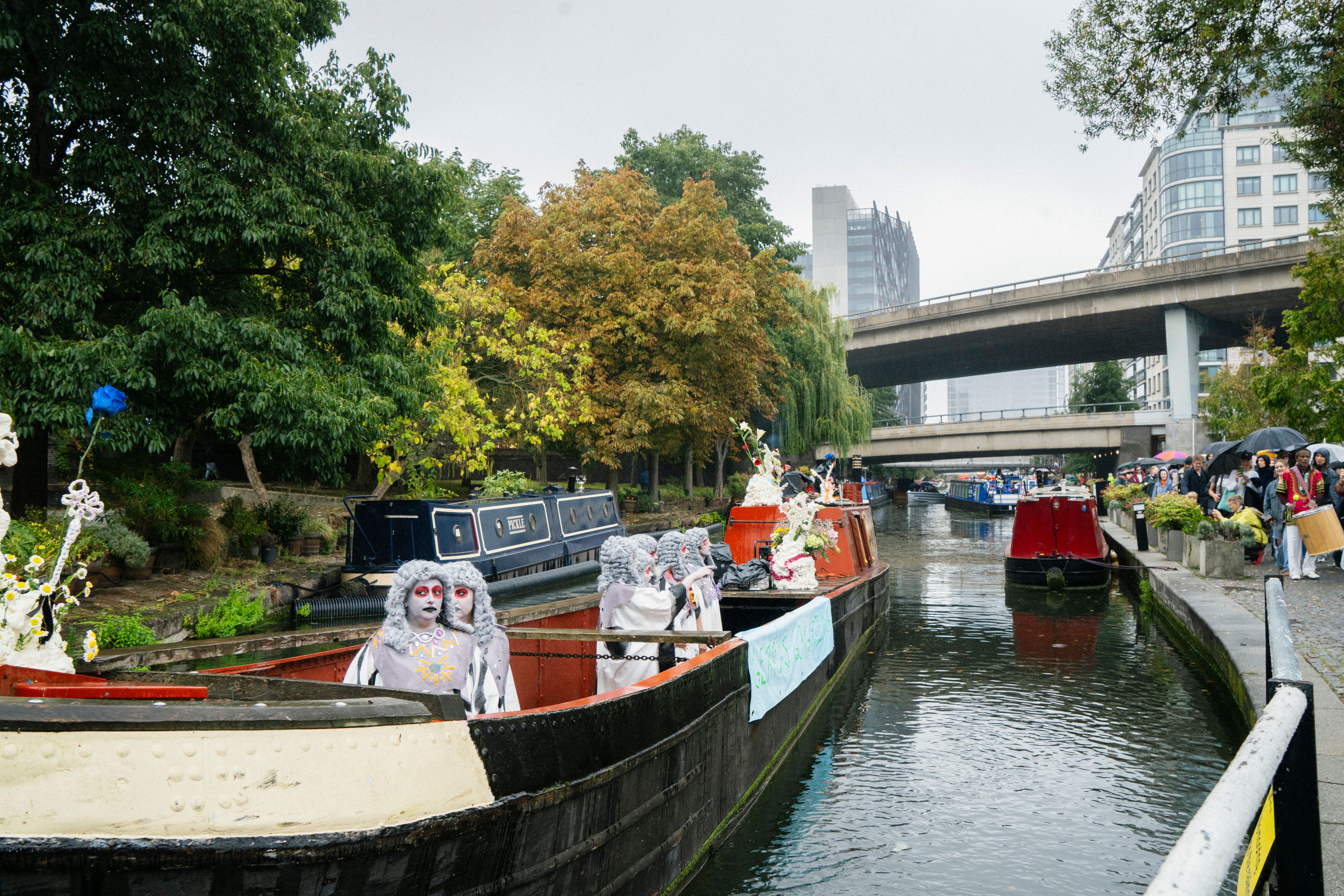
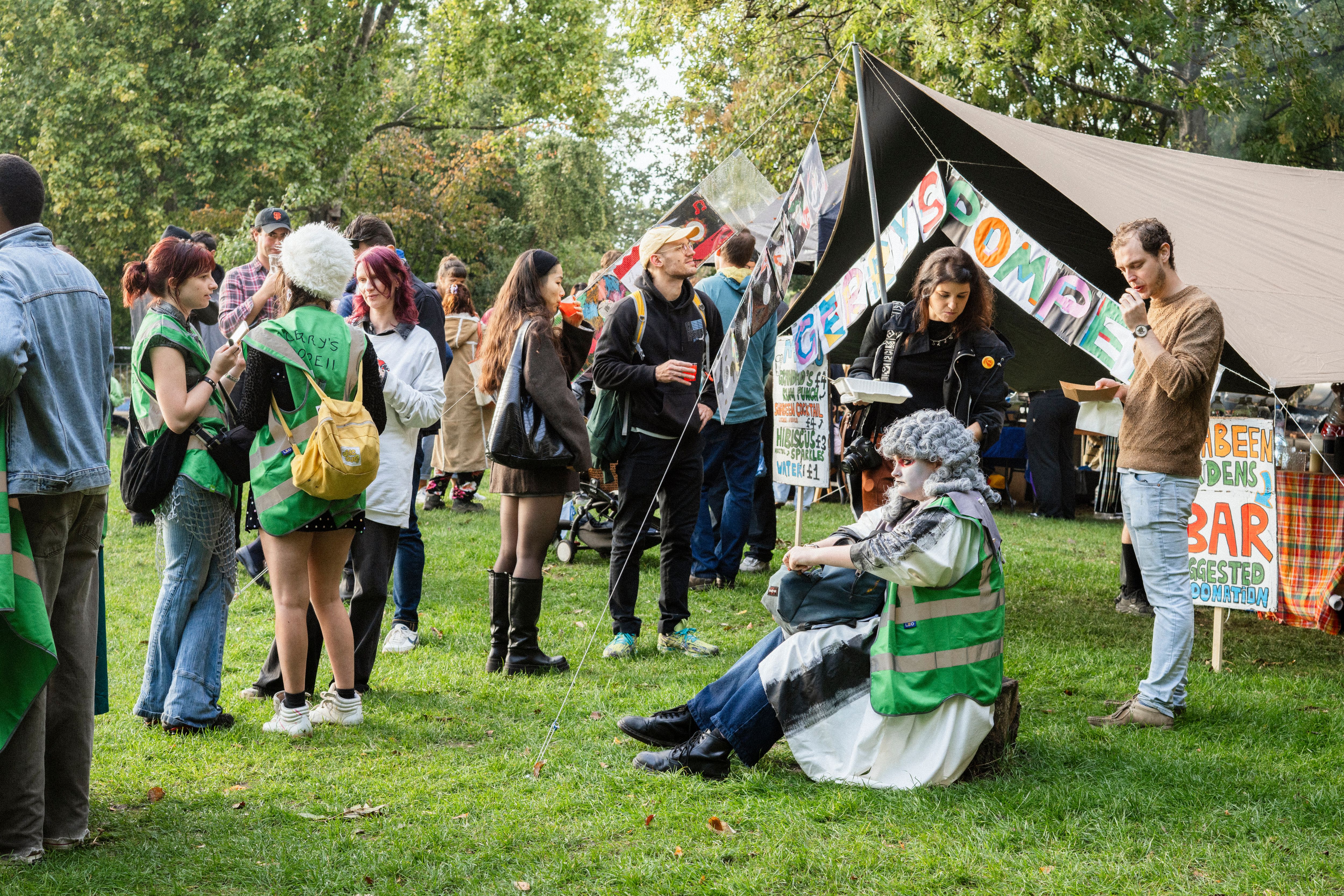
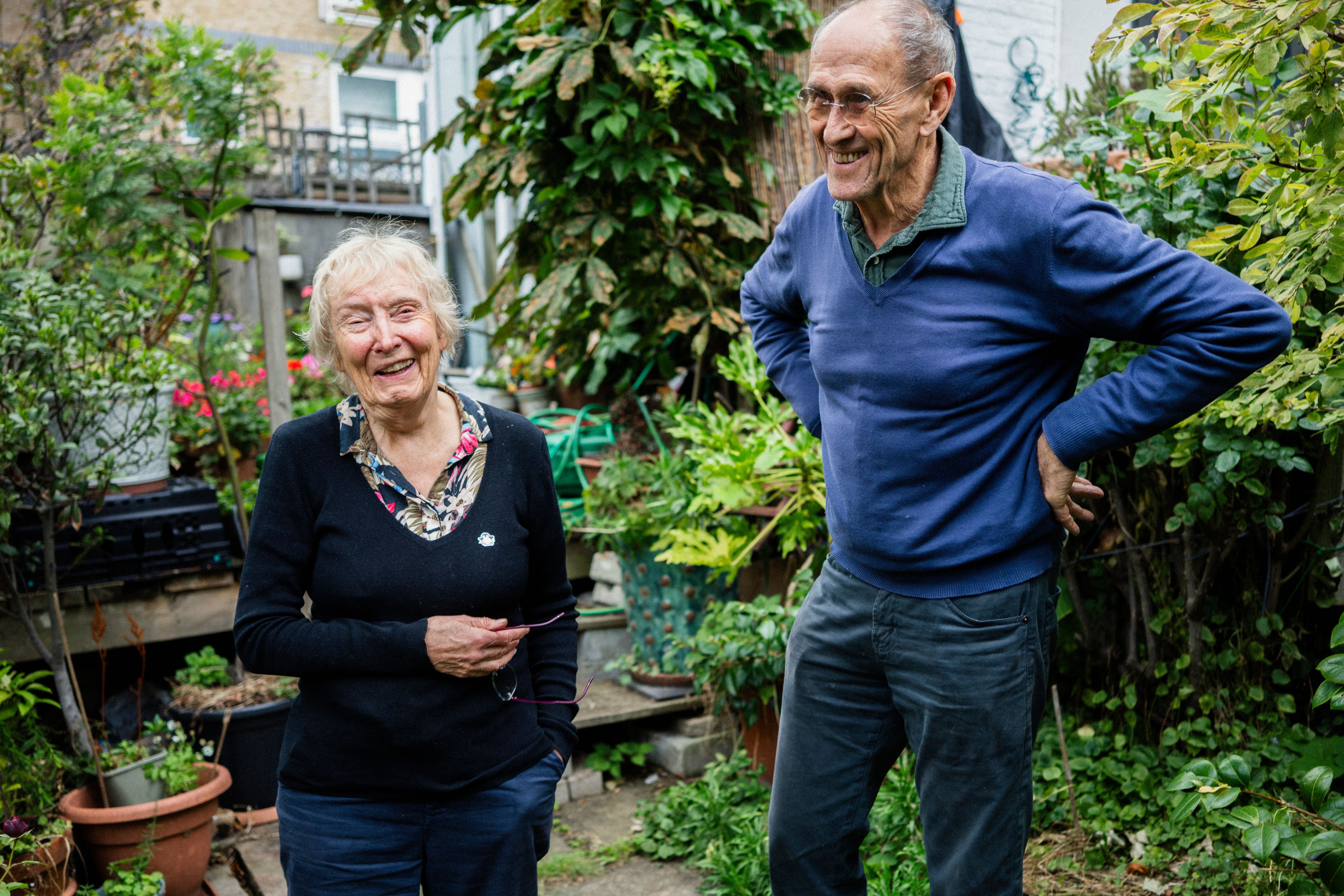
As the scent of jerk chicken emanated from a smoke grill at the end of the route, attendees and participants in the parade came together, often indistinguishable from one another. Many had turned up in sparkly costumes, with one guest sporting a full and faithful rendition of one of Dalton’s sculptures. The atmosphere was lively. It is hard to know what Dalton, a private individual, would have made of the occasion. John Nugent, a longtime neighbour of Dalton who used to watch Western films with him, remembers him as: ‘A normal Irish guy. He helped his neighbours: he’d sweep the ground. But he kept to himself.’ Neighbour Alison calls him a ‘chap’s chap’. Alison and her husband Nick were Dalton’s first patrons. When they bought their house at the end of Dalton’s terrace, they acquired a lease on the land where Gerry’s Pompeii stands. In their house they keep a trove of photographs depicting the garden at various points.
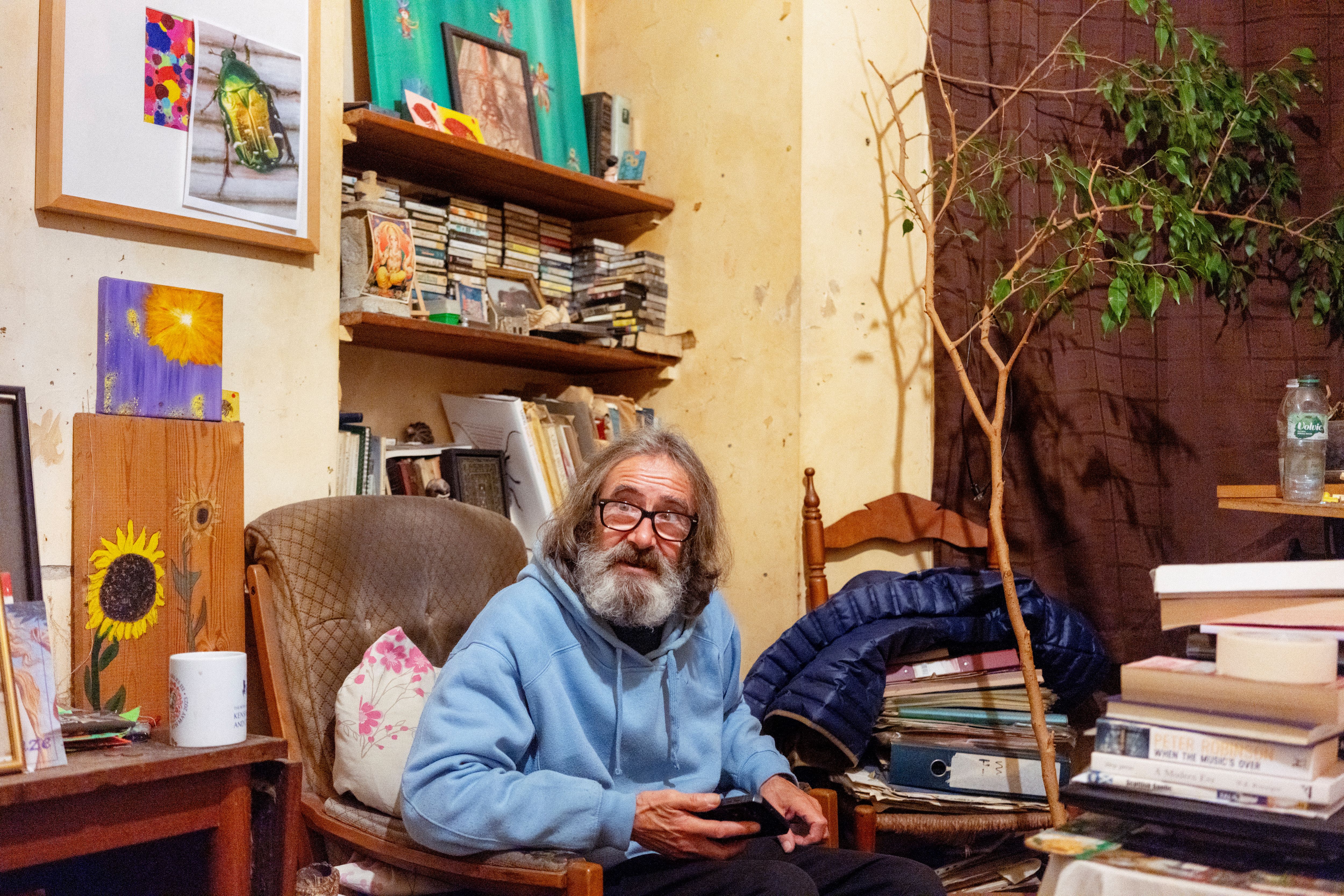
The sculpture garden that remains along the edge of the canal is just one part of Dalton’s former kingdom. Inside his home, he built vast dollhouse-esque models of St Paul’s Cathedral, Buckingham Palace and Hampton Court, among others. After Dalton’s death in 2019, an influential campaign was established by Galitzine to buy his flat from the housing association (to which it still belongs). This was supported by U.K. organisations including the National Trust and the Arts Council, alongside celebrities including Jarvis Cocker and Stephen Fry, and raised £300,000 of its £500,000 target before Covid-19 struck and the country entered lockdown. The flat was cleared by Dalton’s relatives before the campaign could intervene, although Galitzine and her campaign group believe the work is in storage and can be eventually retrieved.
The ambition of the campaigners is to establish a long-term project around the work and life of Dalton through the creation of a museum or local heritage site. But questions remain as to where the sculptures should end up. When market-friendly artists die, their estates deal with their assets, often in collaboration with a commercial gallery or auction house. After film director David Lynch died earlier this year, everything from his art supplies to his vacuum cleaner was snapped up at auction by admirers. But for an artist who lacks such fame, name recognition or market value, the ultimate fate of such objects is more ambiguous—especially as they were created and installed in situ, in a flat to which the campaign no longer has access.
Dalton was born on a smallholding in County Athlone in 1935. He moved to London in 1959, where he worked in a succession of low-income jobs—for the Royal Mail, machine cleaning, hotel kitchens and cafés. He began making statues in 1996 after retiring. The first sculpture was of the Irish Republican poet John Keegan Casey; next was King Charles II; eventually there were 115 in total. This was his summer project. In the winter cold he would work on his architectural models. His choice of topic remains elusive. Why would this Irishman create sculptures of English historical figures, some of whom participated in the colonial subjugation of his homeland? Nugent thinks it was ‘a rebellion against his uprising’. When asked by his neighbour Roc Sandford why he did it, Dalton gave a bluff response: ‘I never thought I would do so much, but I did do. In the days before television we didn’t have much to do so we had to devote our minds to something else.’
Dalton is now recognised as an artist, though he may not have considered himself one. Yet he clearly had some ambition for his art to be enjoyed by a public. As is so often the case when it comes to so-called ‘outsider artists’, it was only following his death that the value and extent of Dalton’s work fell into relief. The creations of a man who lived and worked outside the whims and grasp of the art world became suddenly of value. Artists including Dorothy Cross and Richard Wentworth joined the campaign to save it. Serpentine’s artistic director Hans Ulrich Obrist even called Dalton’s remarkable creations, in which he blurred the line between work and life: ‘An extraordinary Gesamtkunstwerk.’ The survival of sites such as Gerry’s Pompeii might depend on the art world’s ability to bestow value and legitimacy on them.
Yet what makes both Gerry’s Pompeii and its plight so compelling is what it reveals about London today. As Philip Ewe argues, Dalton’s work speaks to the city at large, revealing the ongoing tension between ‘public and private land, as well as the importance of individual pursuits with no monetary value’. These pursuits might seem near impossible in today’s London, where space is tight and everything comes with a cost. It seems unlikely another Dalton would be able to transform such a prime strip of canalside property today. Though a remarkable project in its own right, Gerry’s Pompeii and its continued remembrance might represent a collective nostalgia for a gentler, more community-orientated vision of the city. —[O]
A respected voice in contemporary art discourse.
Focusing on ambitious storytelling and insightful art-world commentary. Ocula Magazine publishes in-depth interviews, critical essays and timely analysis on the artists, exhibitions and ideas driving the global art world.
Learn more about Ocula Magazine
Showcasing the best of the art world.
Ocula partners with galleries from around the world to highlight their artists, artworks and exhibitions. Gallery membership is by application and invitation, with each member vetted by an independent panel.
Learn more about Ocula Membership
Specialises in the sale of major artworks.
Led by a team with deep ties to the world’s leading auction houses, galleries and collectors. Ocula’s advisory team offers bespoke services to high-net-worth clients from around the world who are looking to acquire the best of contemporary and modern art.
Learn more about our team and services