





Come Together: UAE And South Korea Compare, Contrast and Comment Via Cultural Collaboration
A pair of new books documents two exhibitions marking the dawning of a cultural exchange between South Korea and the United Arab Emirates. Save to My Ocula
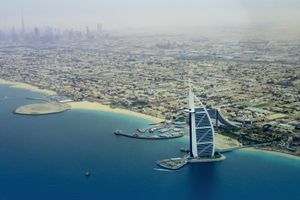
South Korea and the United Arab Emirates aren’t bound by any significant ancient ties or troubled past encounters, but they do share an experience of modern history: both developed rapidly over the same period, beginning in the 1970s and 1980s. The UAE was founded in the early 1970s, swiftly evolving into a global energy power. In East Asia, the end of the Second World War split Korea into two; following the Korean War, South Korea experienced significant economic growth and industrialisation, which ramped up during the 1970s. Both countries can recognise something of the other’s urban transformation and of the cultural differences felt between generations.
“Both countries can recognise something of the other’s urban transformation”
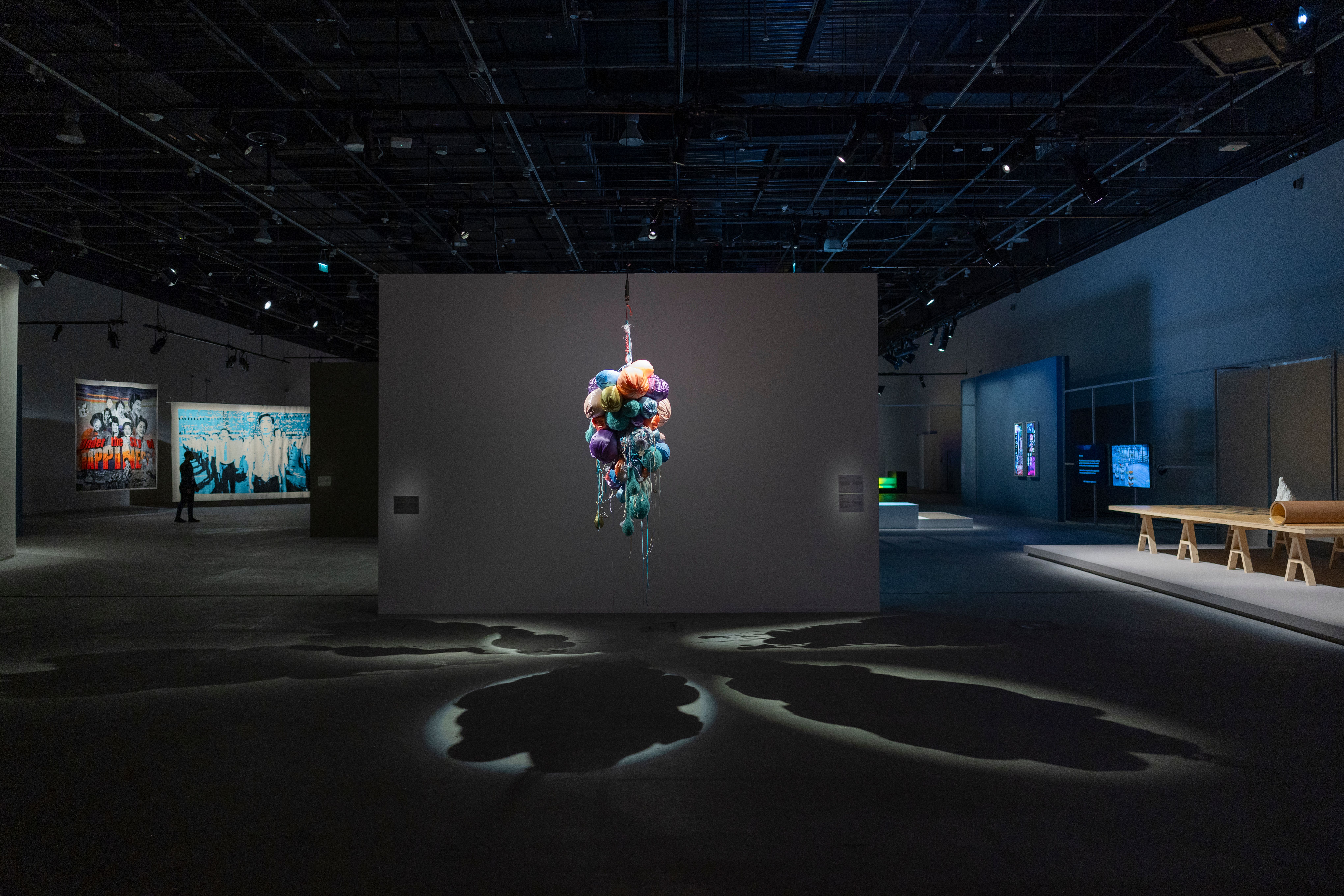
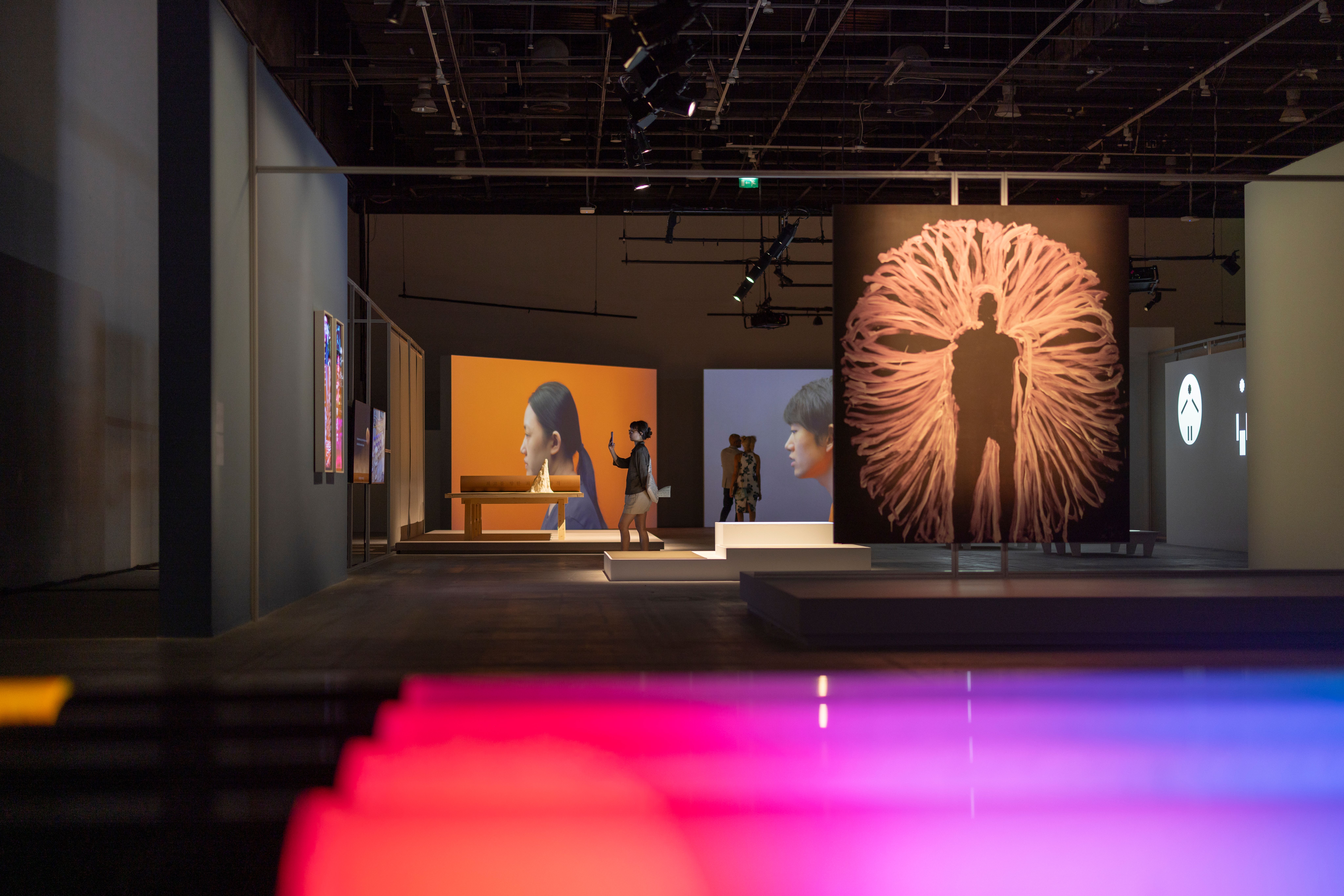
In recent years, ties between the two nations have evolved into a partnership, and a collaboration at government and institutional levels has opened up new avenues across sectors, including culture. This is reflected in a joint initiative between the Abu Dhabi Music & Arts Foundation and the Seoul Museum of Art, launched in 2024, which has led to a series of creative collaborations. The first opened last summer: an exhibition of 29 Korean new media artists at Manarat Al Saadiyat on Abu Dhabi’s Saadiyat Island, titled Layered Medium: We Are in Open Circuits. It included art from the past 60 years, spanning Nam June Paik’s TV-based installation works from the 1960s through to Delivery Dancer Simulation, Ayoung Kim’s 2022 videogame tracking the movements of a delivery driver. This winter, the exchange flipped, with Proximities, an exhibition of work by 47 UAE-based artists at the Seoul Museum of Art, the largest showcase of work from the Emirates in East Asia.
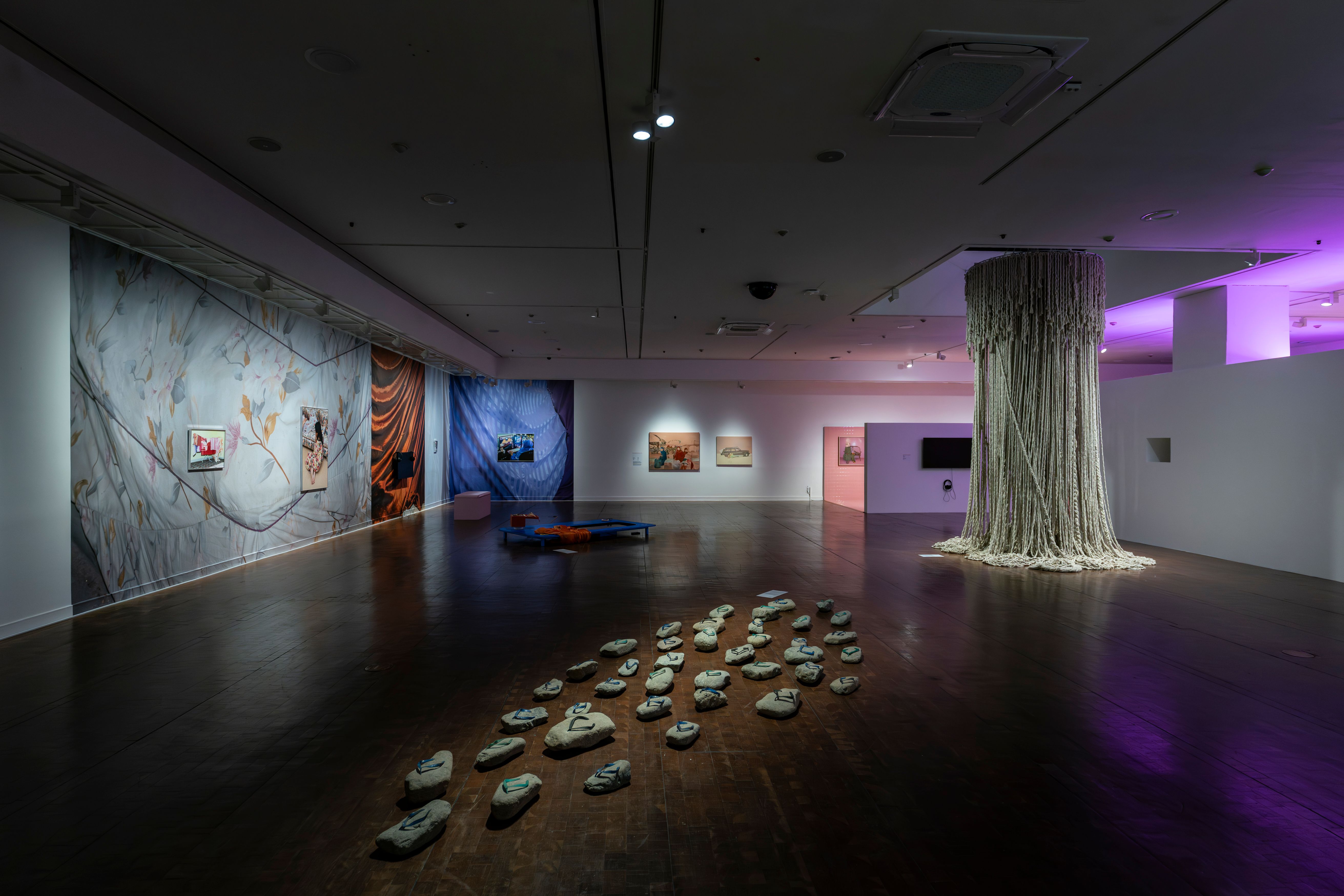
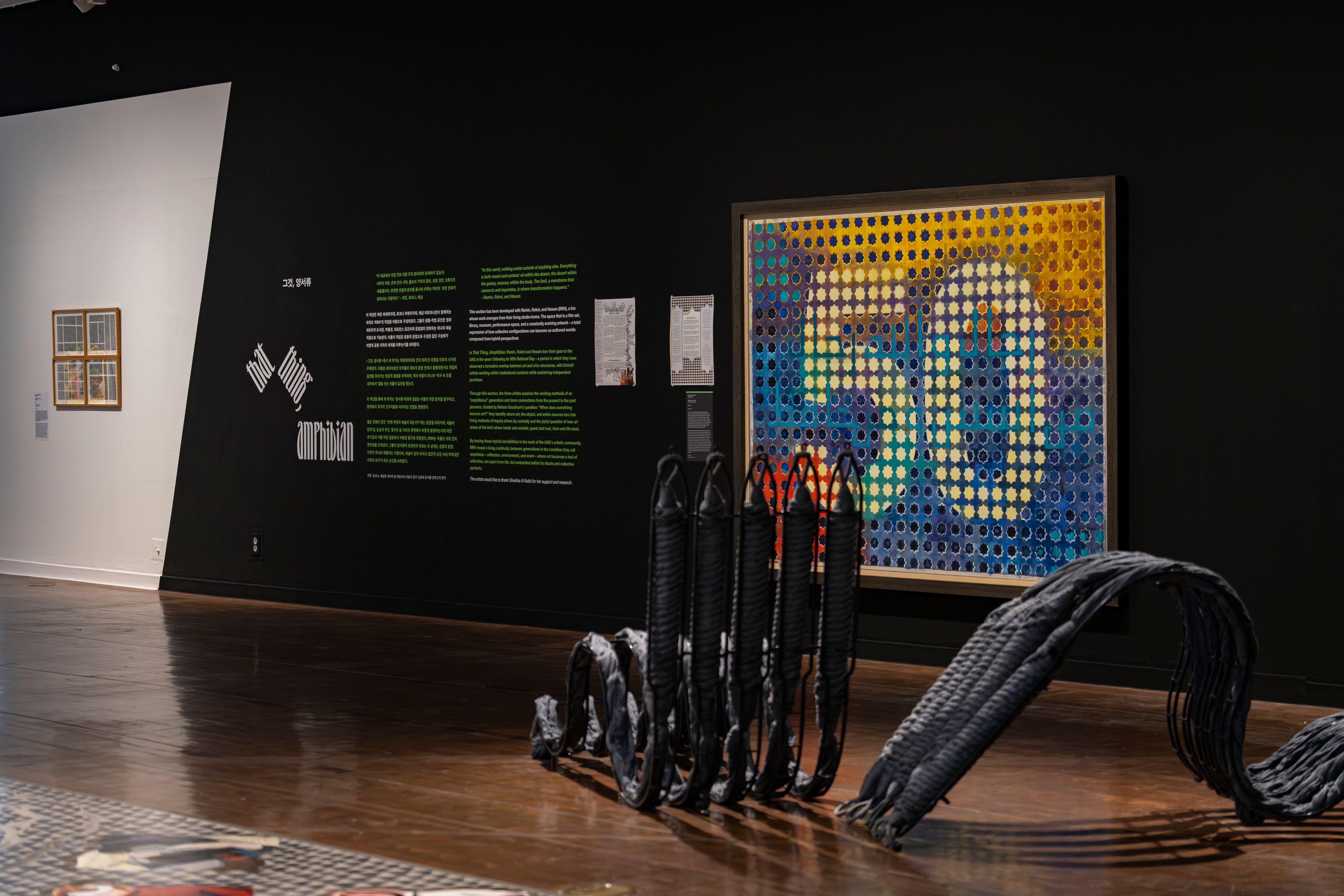
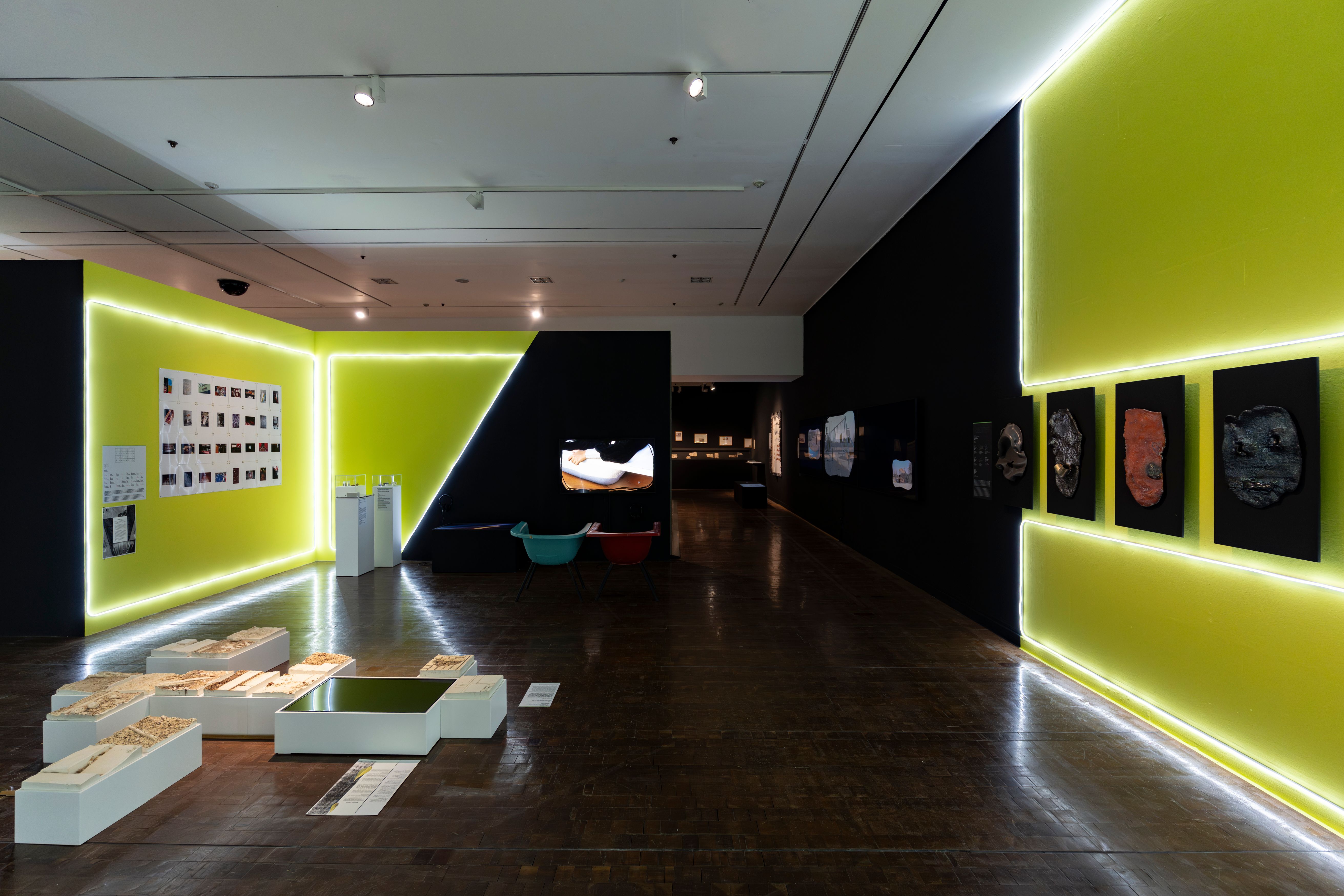
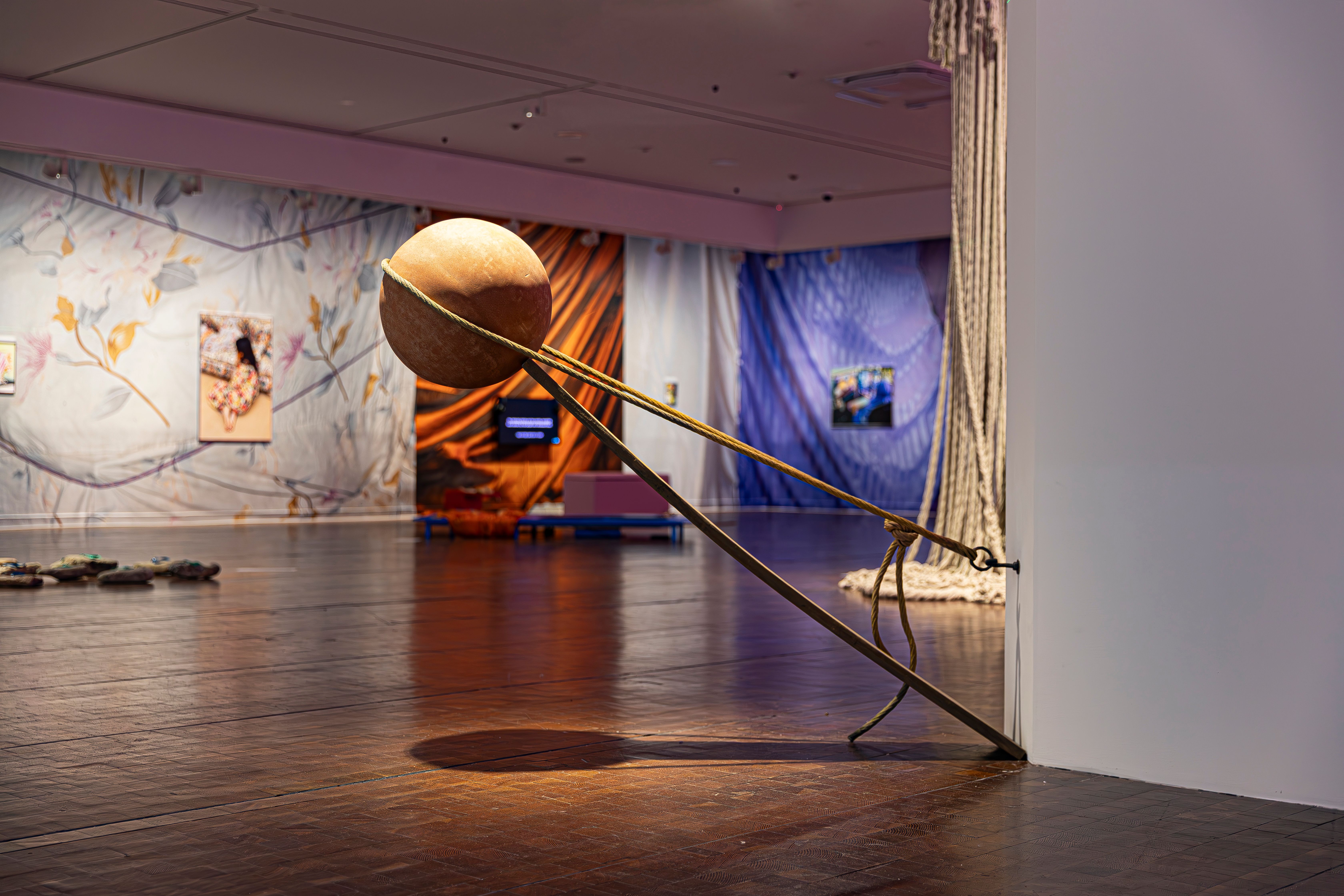
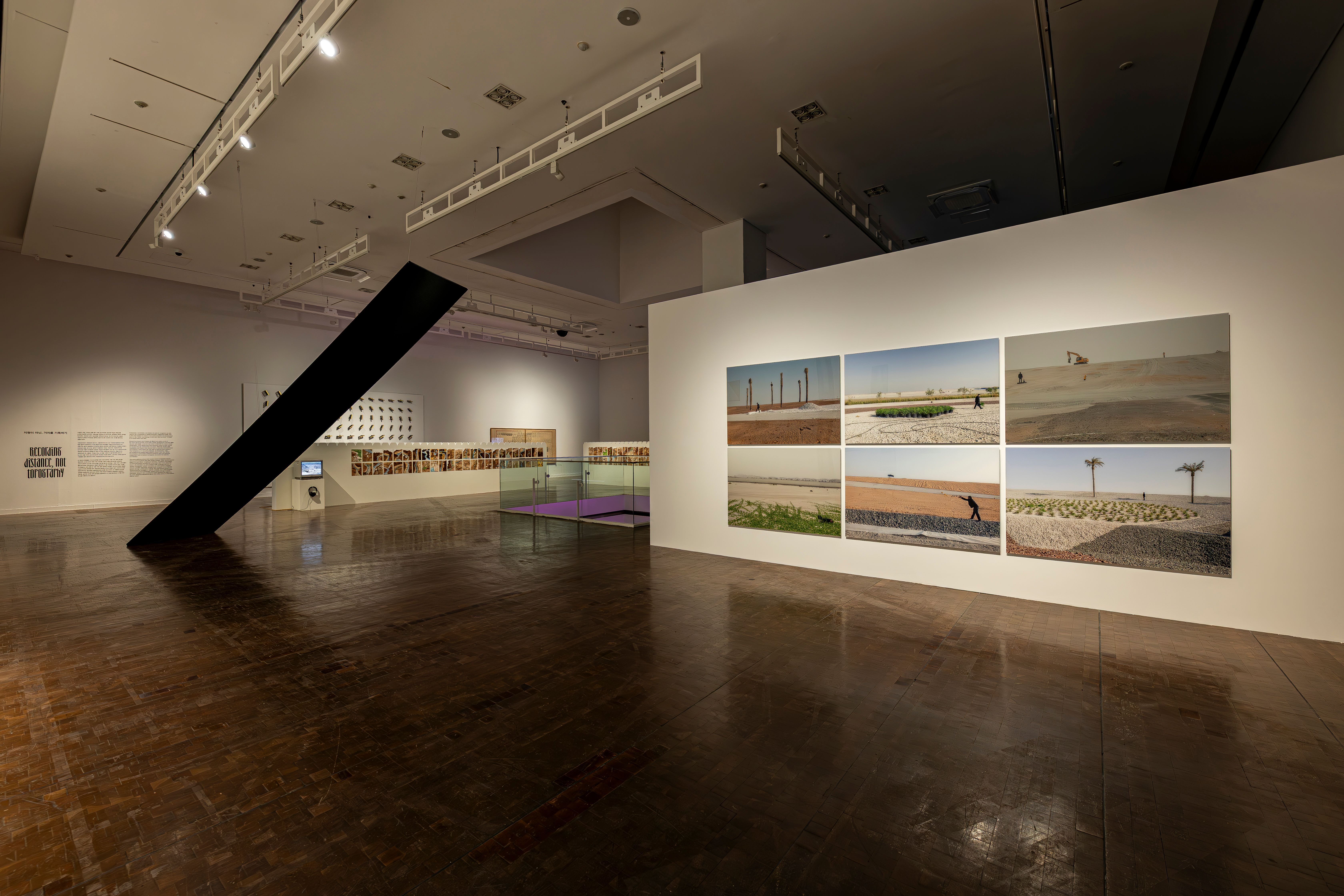
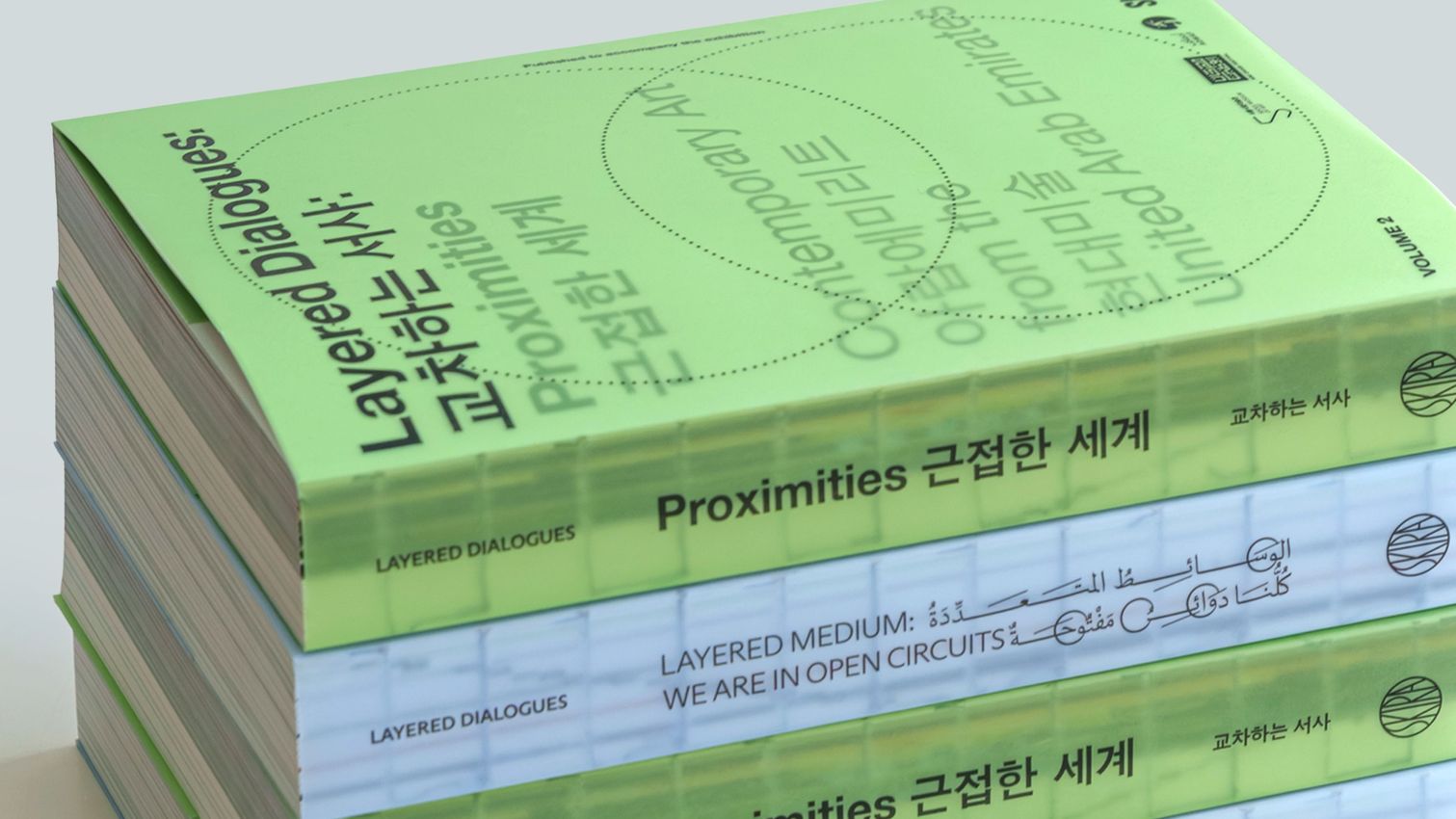
The final instalment is a pair of books that expand on the ideas in the exhibitions. Published as Layered Dialogues, the two volumes feature new writing from thinkers rooted in each context. In Layered Dialogues: We Are in Open Circuits, UAE-based writers respond to Korean artworks; in Layered Dialogues: Proximities, Korean writers engage with work from the Emirates. Rather than explaining or contextualizing, the texts reflect how meaning shifts when art is encountered from elsewhere.
Like the exhibition it chronicles, Layered Dialogues: Proximities explores the idea of closeness and the ways in which it can both exclude and bring together. The subject was inspired in part by a work by artist and curator Mohammed Kazem, titled Window (2003–2005). For that piece, he photographed workers constructing a five-star hotel in Dubai, observing them from his own window. He realised that they had a different relationship to the place from his own: although they had an intimate knowledge of the building, they would essentially be excluded from the space once it was completed. “This paradox shaped our curatorial premise: nearness as a condition of both connection and exclusion,” curator Maya El Khalil writes in her essay.
“Proximities explores the idea of closeness and the ways in which it can both exclude and bring together”
The book brings together other artists who have probed that contradiction: Emirati painter Almaha Jaralla interprets her own family photographs, taken during the years in which the UAE was developing, in oil paint. In one painting, a family car is shown parked out in the red-hued desert; in another, she shows a group of women pushing prams along Abu Dhabi’s Corniche promenade. The tender faded scenes reveal that “care and intimacy did not simply disappear amid rapid urban expansion”, as Korea’s National Museum of Modern and Contemporary Art’s curator Ohah Hyun writes.
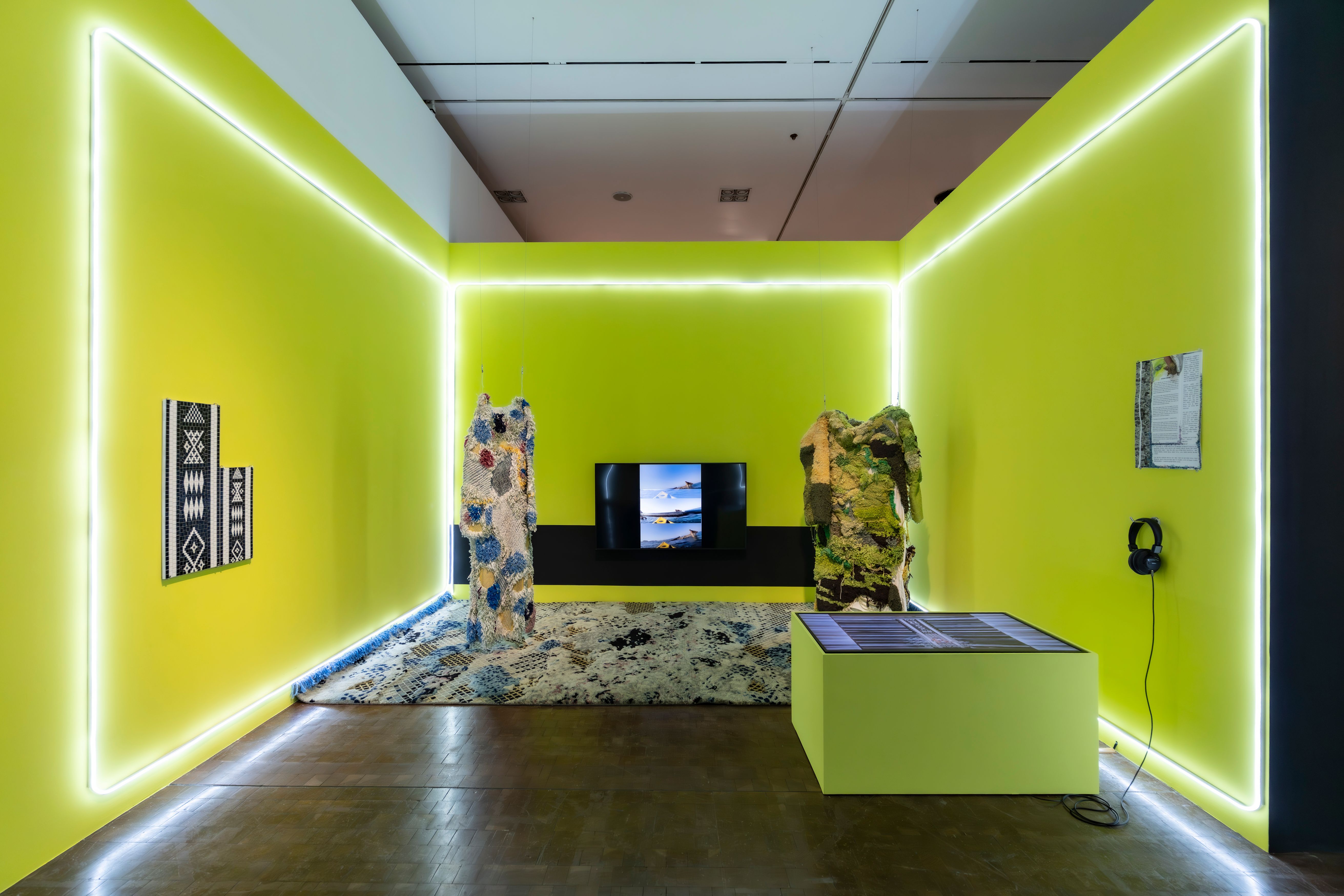
Another artist, Ayesha Hadhir, contributes a video and a series of sculptural pieces exploring how the discovery of oil changed life in the Gulf. In an underwater video, she placed domestic possessions, including dresses and carpets, in the sea near an underwater shipwreck off the island of Al Dhabiya in Abu Dhabi. Removing the items, she found that the algae, seaweed, crabs and starfish which made their homes among the fabrics had died, leaving glittering residues. Those traces come to stand for both the beauty and the loss involved in the unearthing of natural resources in the UAE.
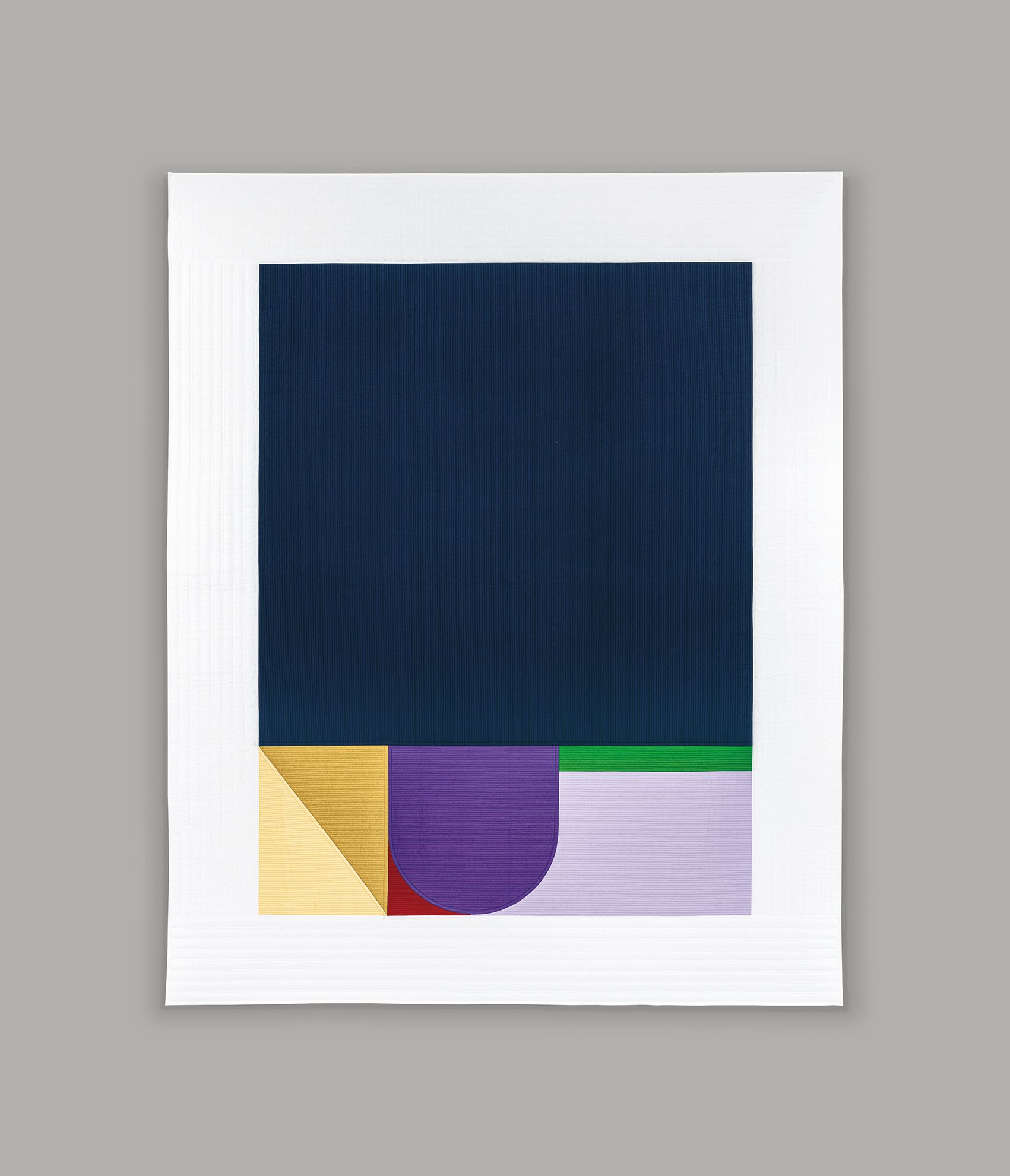
The sister publication, Layered Dialogues: We Are in Open Circuits, chronicles the exhibition of work by South Korean artists. Through pieces by 29 different artists, the book traces how artists have treated media not simply as a tool, but as a system through which bodies, societies and spaces are mediated. In Seulgi Lee’s work U: A Rat Pretending to be Dead = To Stay Really Calm from 2020, the artist has translated traditional Korean proverbs into abstract, geometric quilt designs made using the traditional Korean quilting technique “nubi”, offering an example of how cultural heritage can reappear in fresh forms.
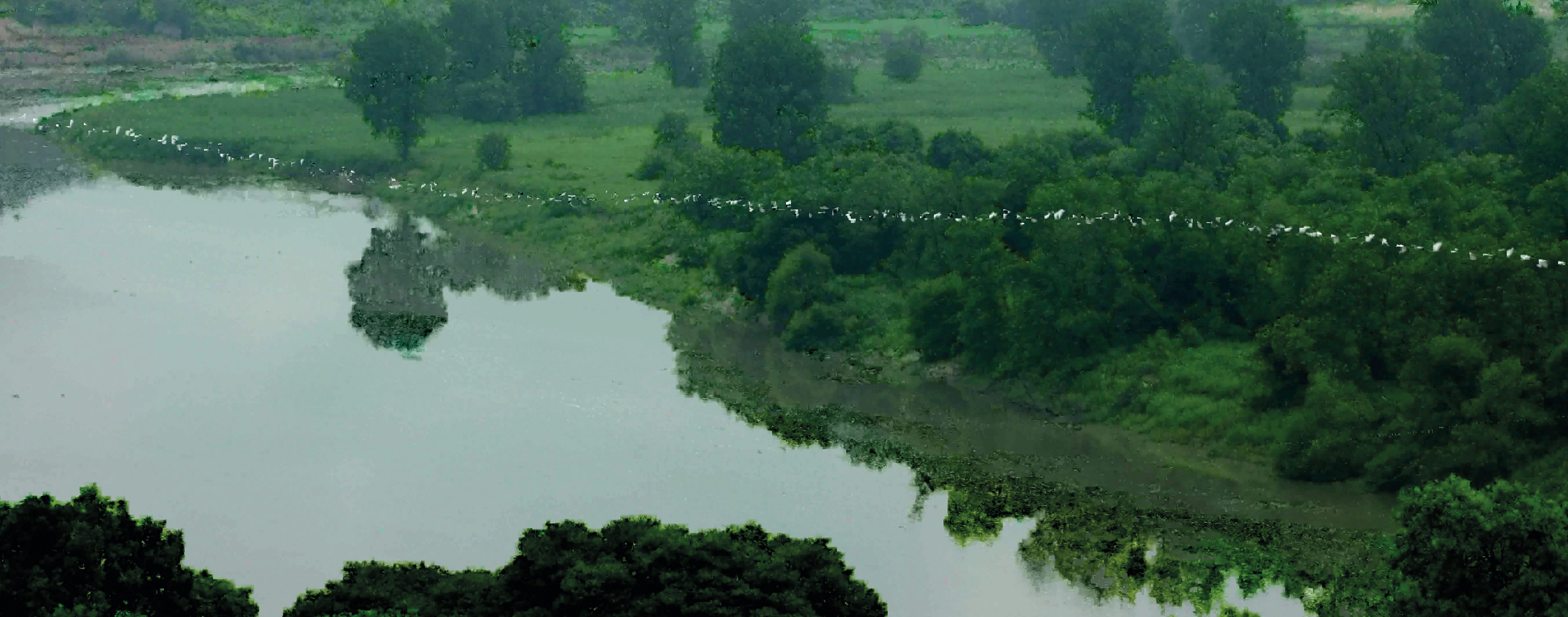
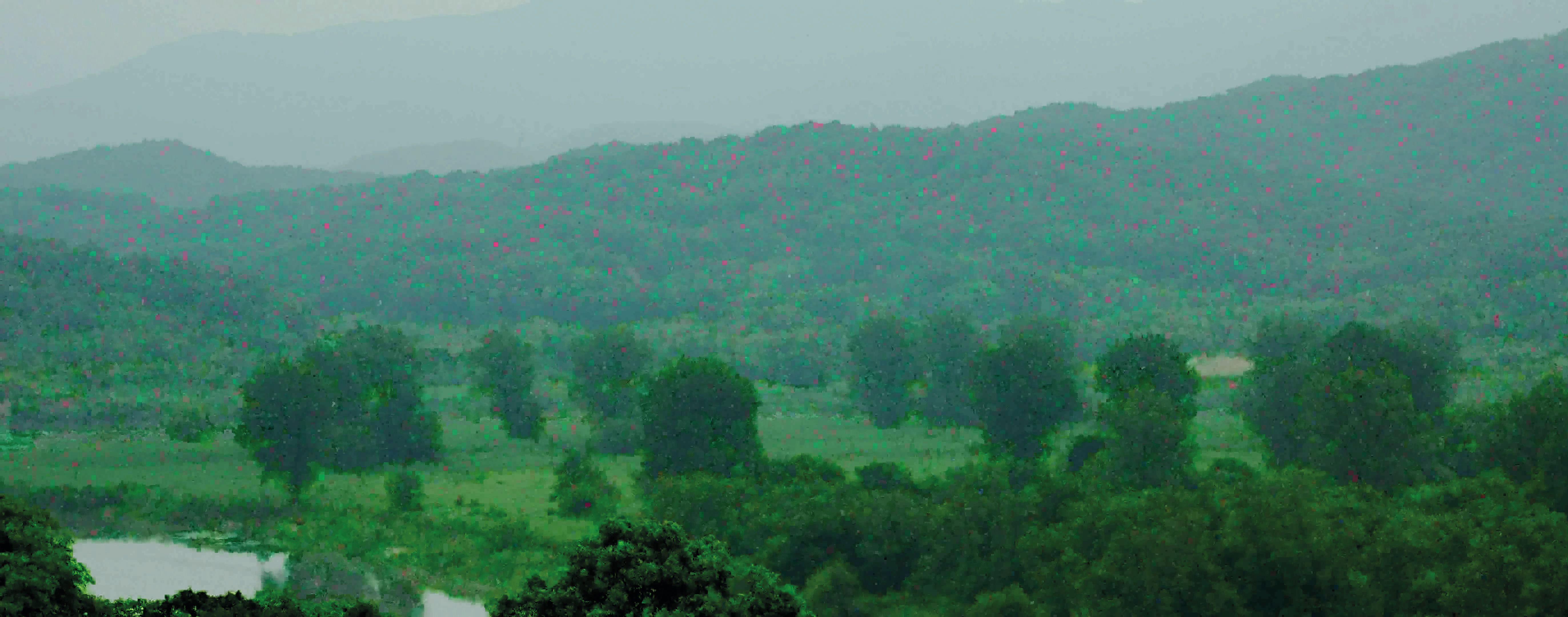
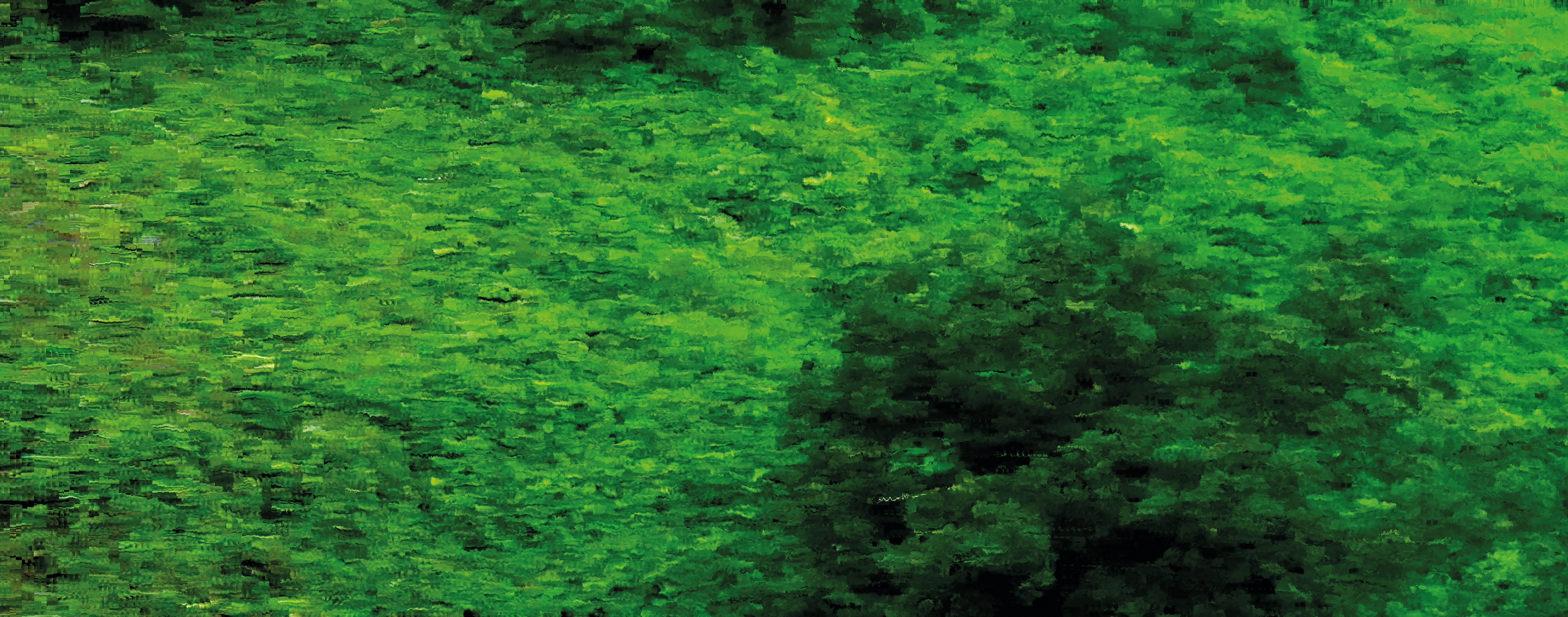
Sojung Jun confronts questions of identity across borders in Green Screen, a purposefully glitchy single-channel video reconstructing the landscape of the Demilitarised Zone that runs between North and South Korea. The eerily empty landscape is shown as both a scar of the division that split the country in two, and a strangely beautiful, luscious space, where the trees and waterways have been left to flourish, free from human intervention. It reveals the land as a place where multiple and contradictory truths can co-exist. —[O]
Layered Dialogues: We Are in Open Circuits and Layered Dialogues: Proximities are published by Skira and will be available for purchase in Autumn 2026.
Main image: The new publications explore cross-cultural dialogue between South Korea and the UAE.


A respected voice in contemporary art discourse.
Focusing on ambitious storytelling and insightful art-world commentary. Ocula Magazine publishes in-depth interviews, critical essays and timely analysis on the artists, exhibitions and ideas driving the global art world.
Learn more about Ocula Magazine
Showcasing the best of the art world.
Ocula partners with galleries from around the world to highlight their artists, artworks and exhibitions. Gallery membership is by application and invitation, with each member vetted by an independent panel.
Learn more about Ocula Membership
Specialises in the sale of major artworks.
Led by a team with deep ties to the world’s leading auction houses, galleries and collectors. Ocula’s advisory team offers bespoke services to high-net-worth clients from around the world who are looking to acquire the best of contemporary and modern art.
Learn more about our team and services