






Of This Earth: Dan Colen Farms Meaning in the Hudson Valley
At Sky High Farm, New York, the food system and art market are upended in an artistic project that reimagines how we might engage with our existing structures so that more than a few of us can thrive. Save to My OculaI felt a certain twitch of possibility at the opening of the Sky High Biennial. It’s a feeling I often get in repurposed spaces, of having been let in on a little secret, one that will only ever be told right here. That summer day, there was ice cream and beer, and, at the building’s threshold, an ice sculpture by the artist Lizzi Bougatsos featuring a pair of women’s legs that my children were hell-bent on licking.
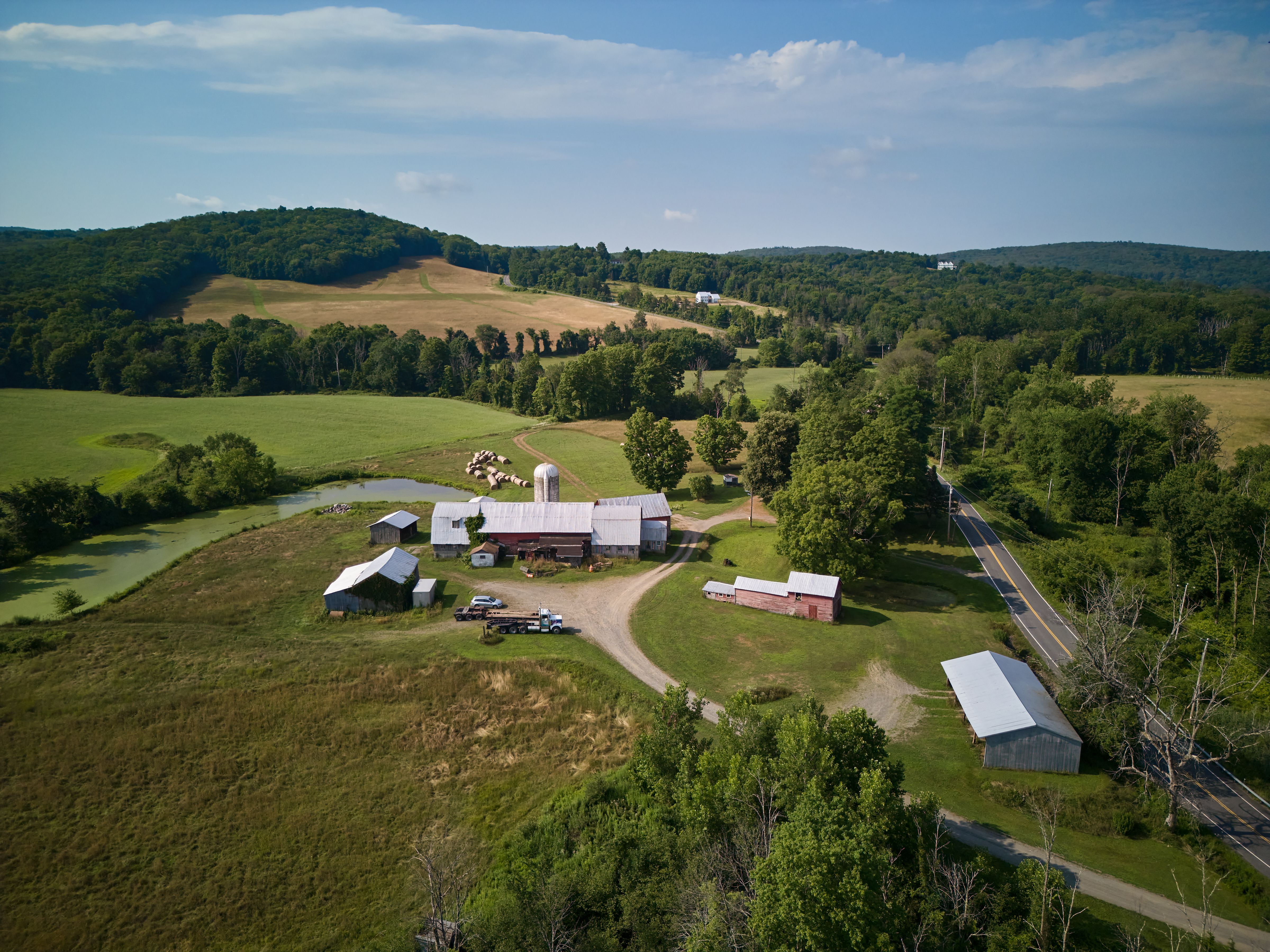
Founded in 2011 by artist Dan Colen, Sky High Farm now operates as a non-profit run by co-directors Josh Bardfield and Sarah Workneh, dynamically addressing local and systemic food insecurity. (Colen is president of the board.) Its inaugural biennial—an ambitious, site-specific exhibition titled Trees Never End and Houses Never End, held in an enticingly dilapidated cold storage warehouse in Germantown, New York—was conceived as a way to raise awareness of and funds for the farm, which is located just a few hamlets away, in Ancram. They’re in the process of expanding onto a new 560-acre parcel, and their mission is widening, too.
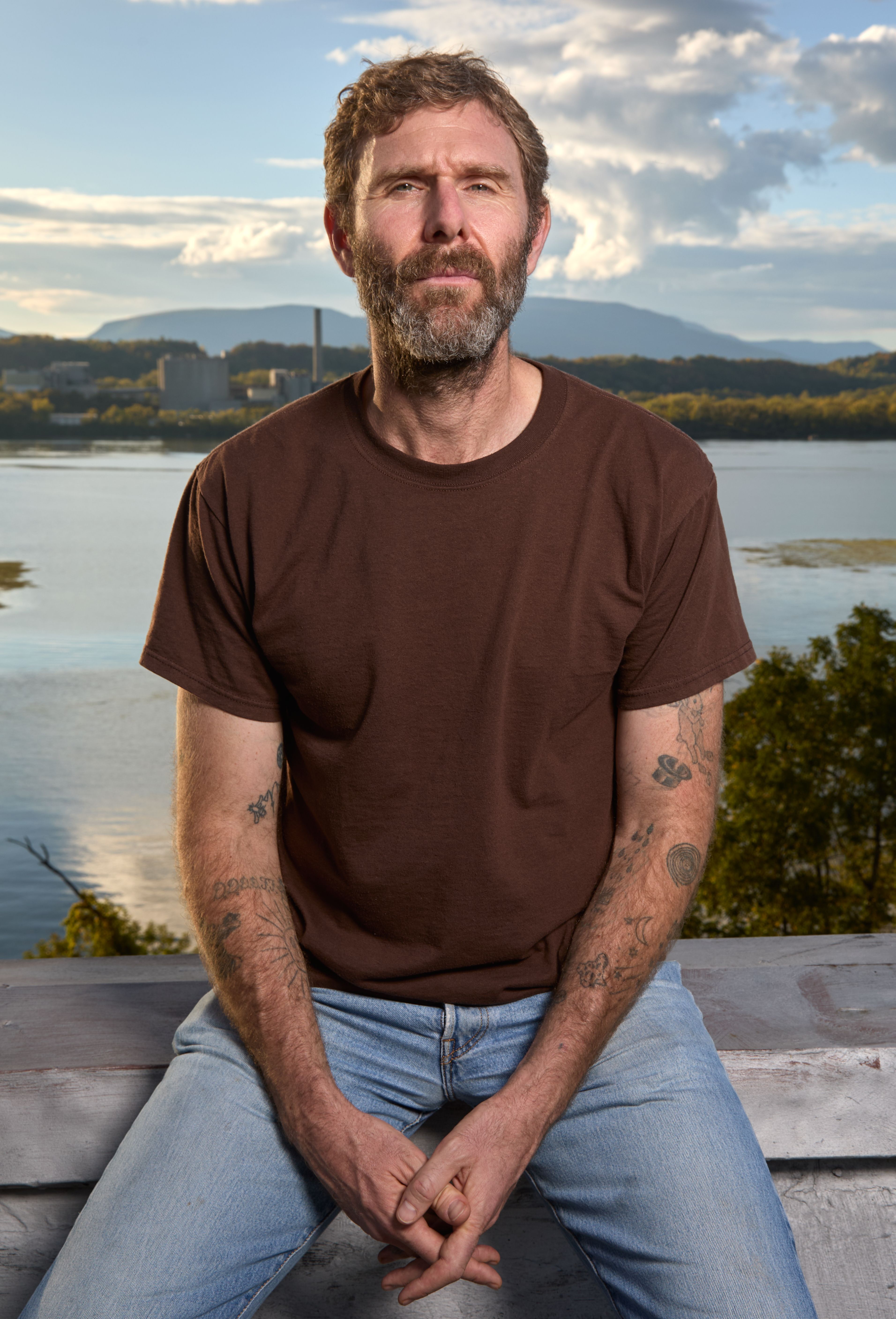
The ice sculpture fully licked away and the party over, I am happy to return to the biennial in September, to get a peek behind the scenes into the decision-making that informed Colen’s first curatorial endeavour, and that guides his practice at large.
I meet Colen in the warehouse. He is tall, and wearing a shirt with a Ryan McGinley photograph on it. It hints at his former station as a talented member of a pack of young NYC artists, including McGinley, who rose to fame after 9/11, and whose work reflected their lives in a post-apocalyptic city. Colen explains that the concept for the show arose from a desire to ‘reverse engineer’ the typical donor-focused fundraising model—aka the gala—which is, to his mind, ‘absurd’. Colen believes that art is a change-maker, but that traditional art world charity events are rigidly set things that artists themselves won’t ever get to change.
‘If you are prioritising the artist in the art world,’ he says, ‘you end up with something like this.’ He’s referring to the physical and financial set-up of the biennial, which runs counter to the money-first models that often house art.


For the biennial, Colen was adamant that it should operate in a way that would benefit the farm’s mission, while also supporting the artists. Profits from the sale of artworks in the show will help fund the farm’s expansion, and, unusually, each artist gets to decide how much they’ll give.
‘The distribution of funds, power, and resources is something I’m very interested in,’ Colen tells me. ‘[This is] a different profit-share model and that’s a big thing for me. That’s how I created the farm. I like creating that kind of opportunity for artists here … At the end of the day, what happens to the profits from artwork informs the meaning of the artwork.’
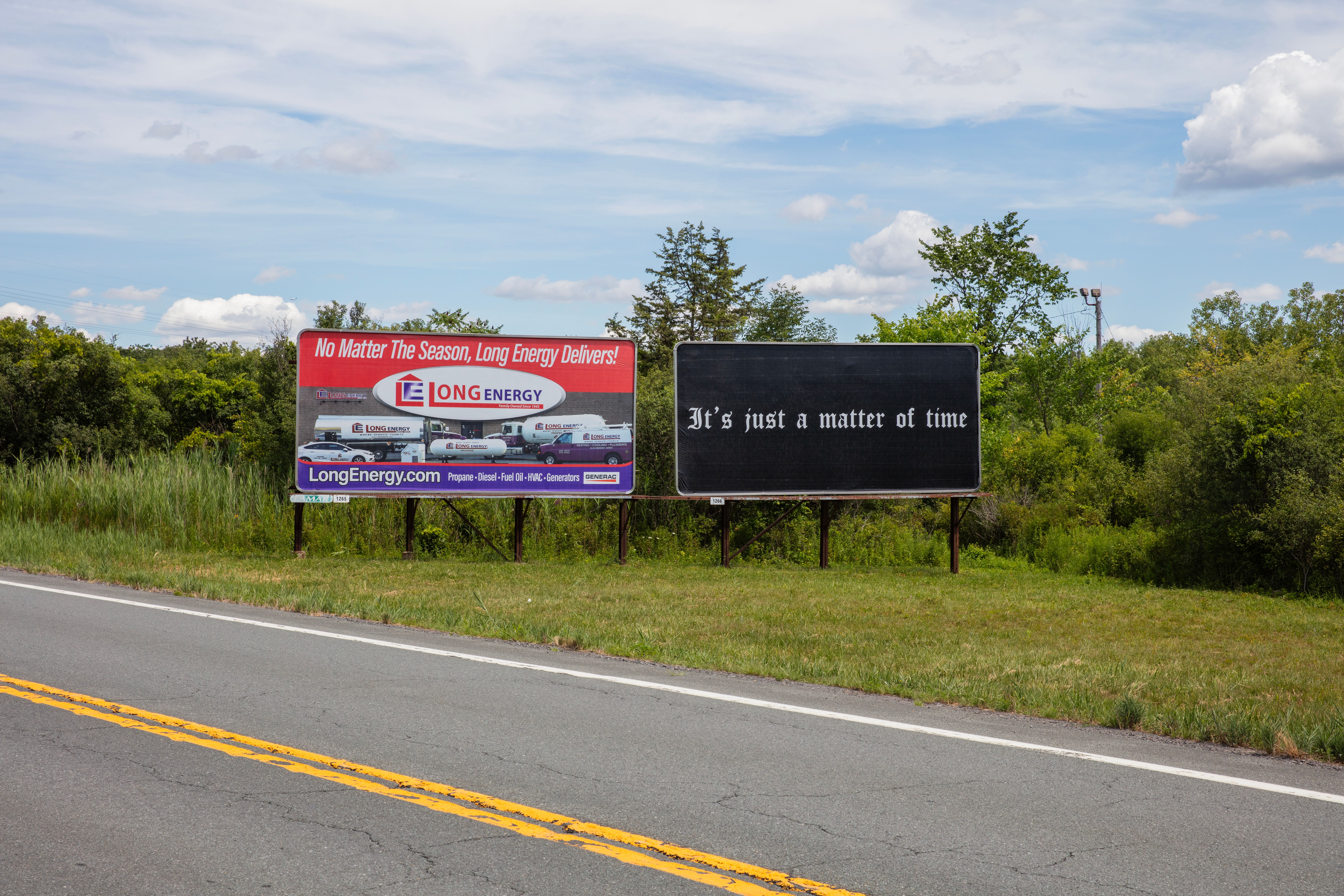
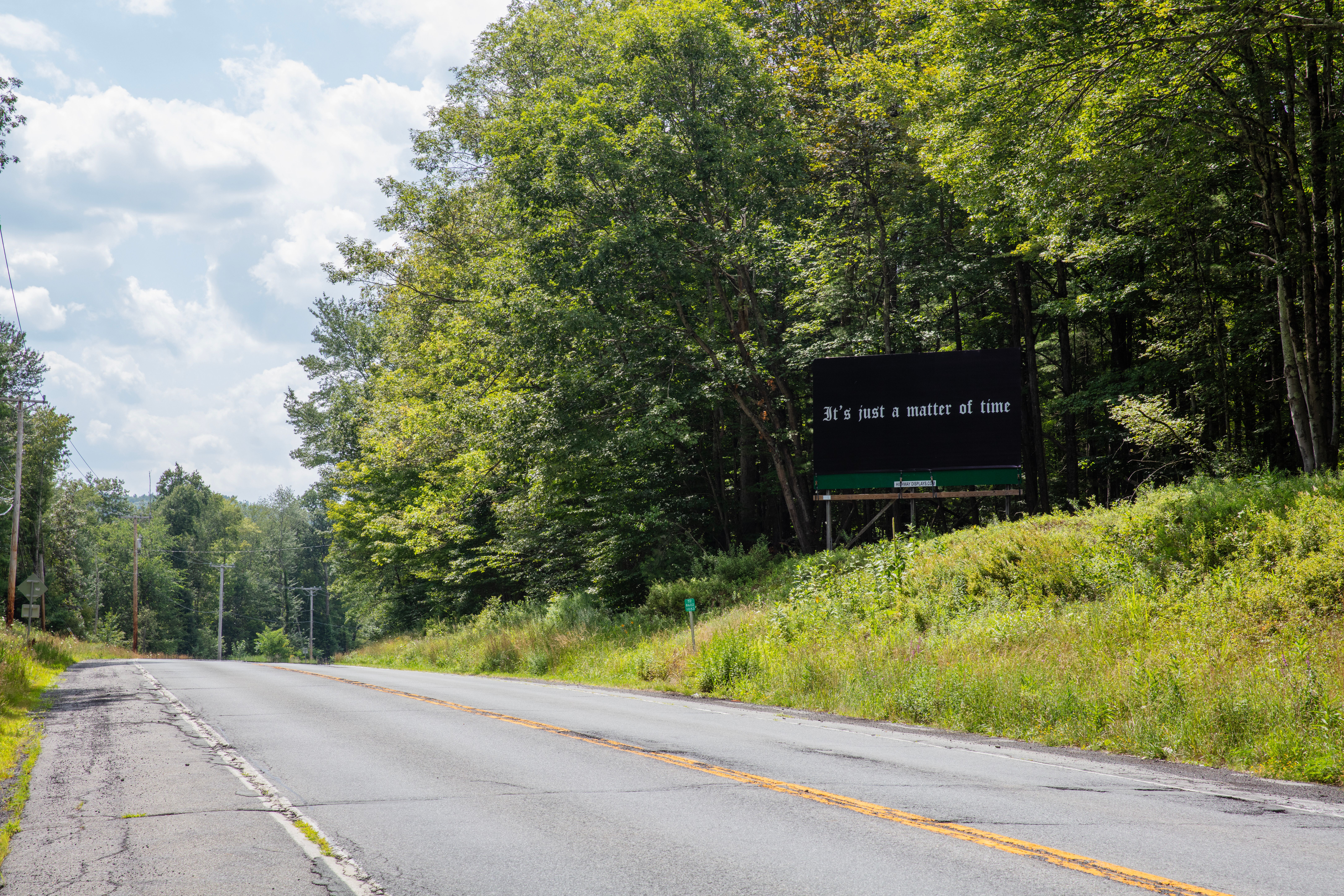
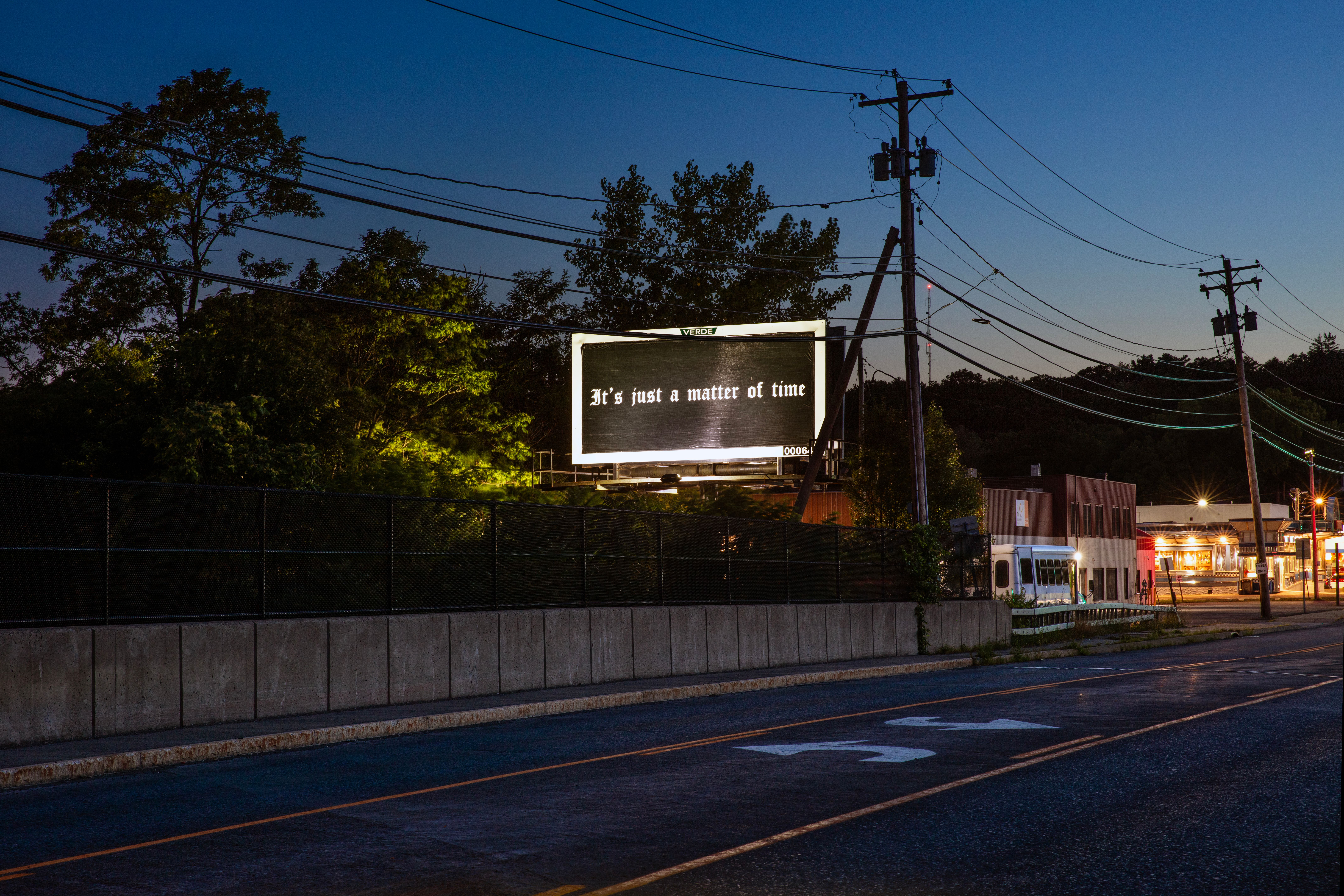
The exhibition features work by 50 artists, ranging from a heavy-hitting collaboration with the Felix Gonzalez-Torres Foundation, Untitled (It’s Just a Matter of Time) (1992), whose 26 billboards now line the roads heading down to the city, to work by the ascendant Chase Hall, a newer Hudson Valley resident, whose coffee-on-canvas painting Esopus Bathers (Black Creek) (2025) is enigmatically reflected in the mirrored Plexiglas floors on the second floor—a psychedelic reprise of Rudolf Stingel’s Untitled (2004) that, for Colen, ‘speaks to some qualities that the river has—it runs in two ways’. (The Hudson River is actually an estuary.)
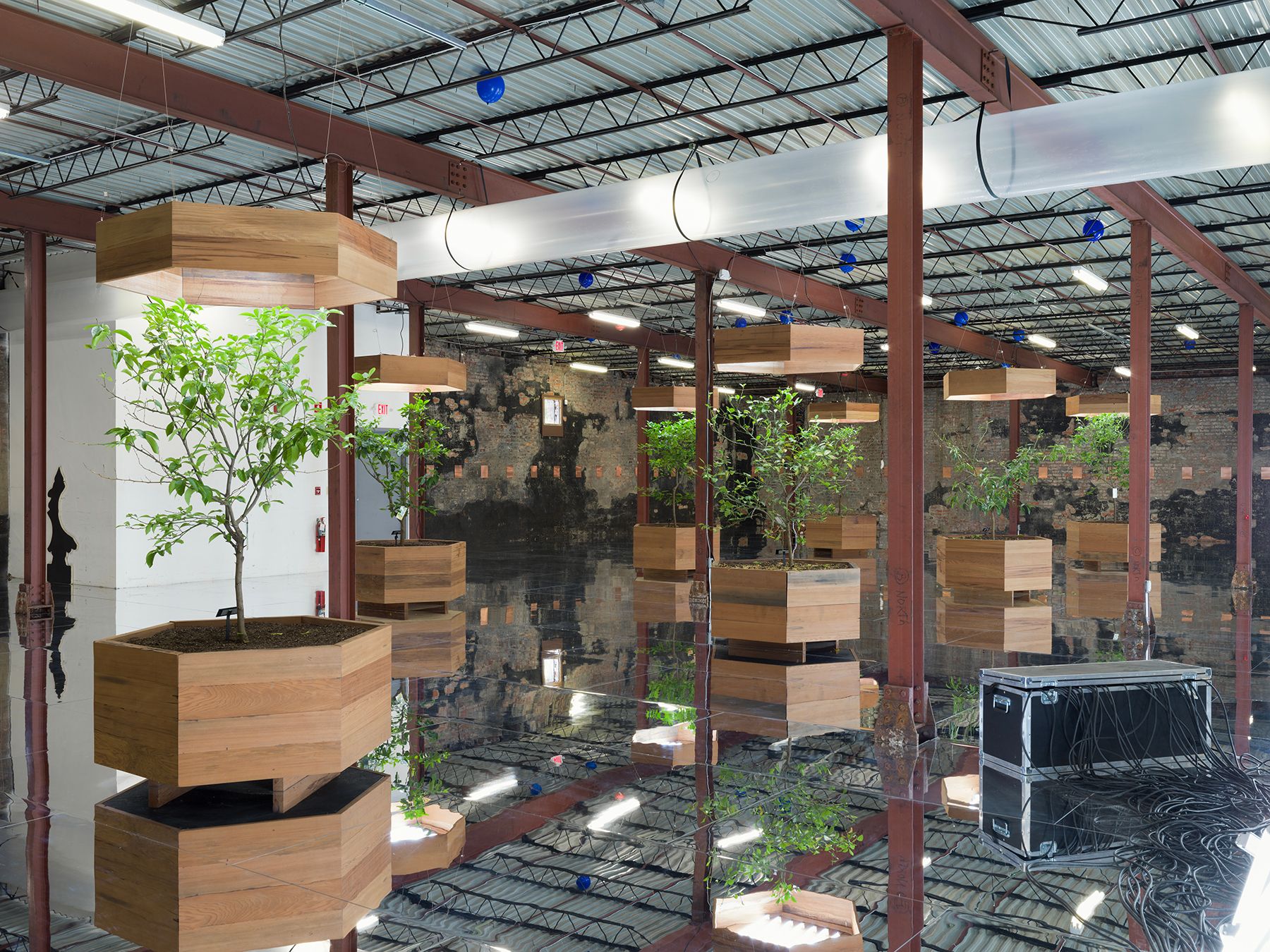
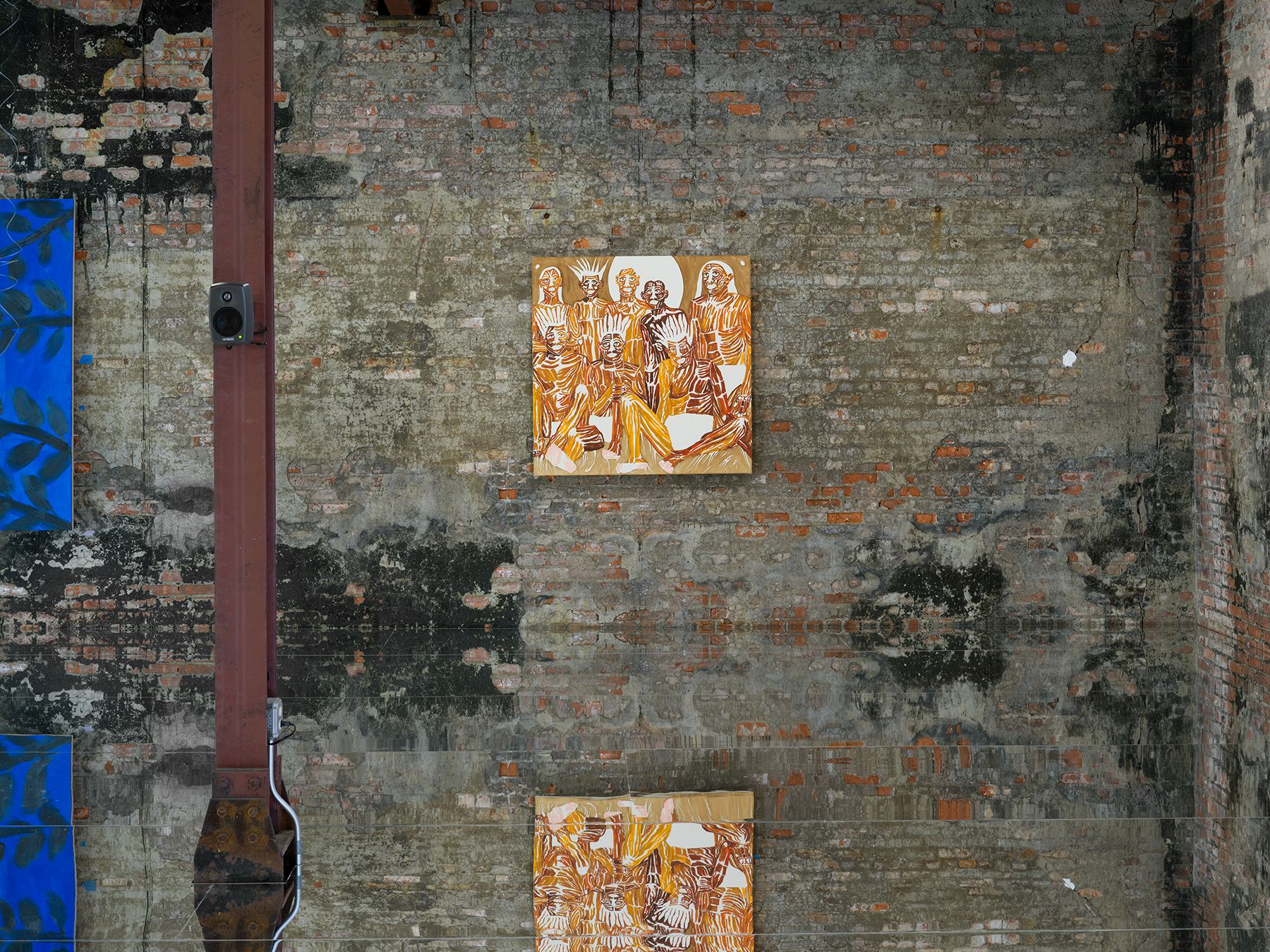
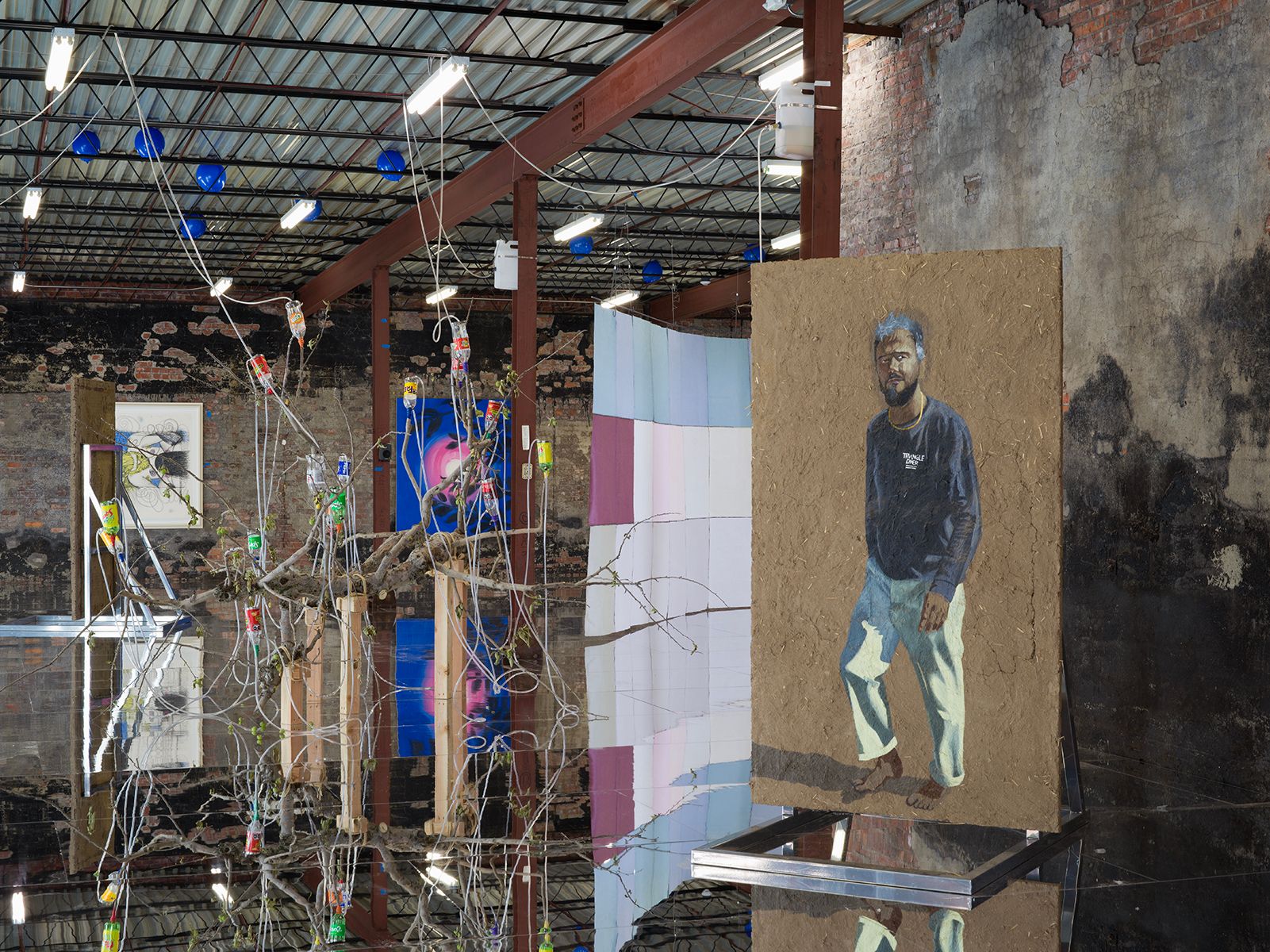
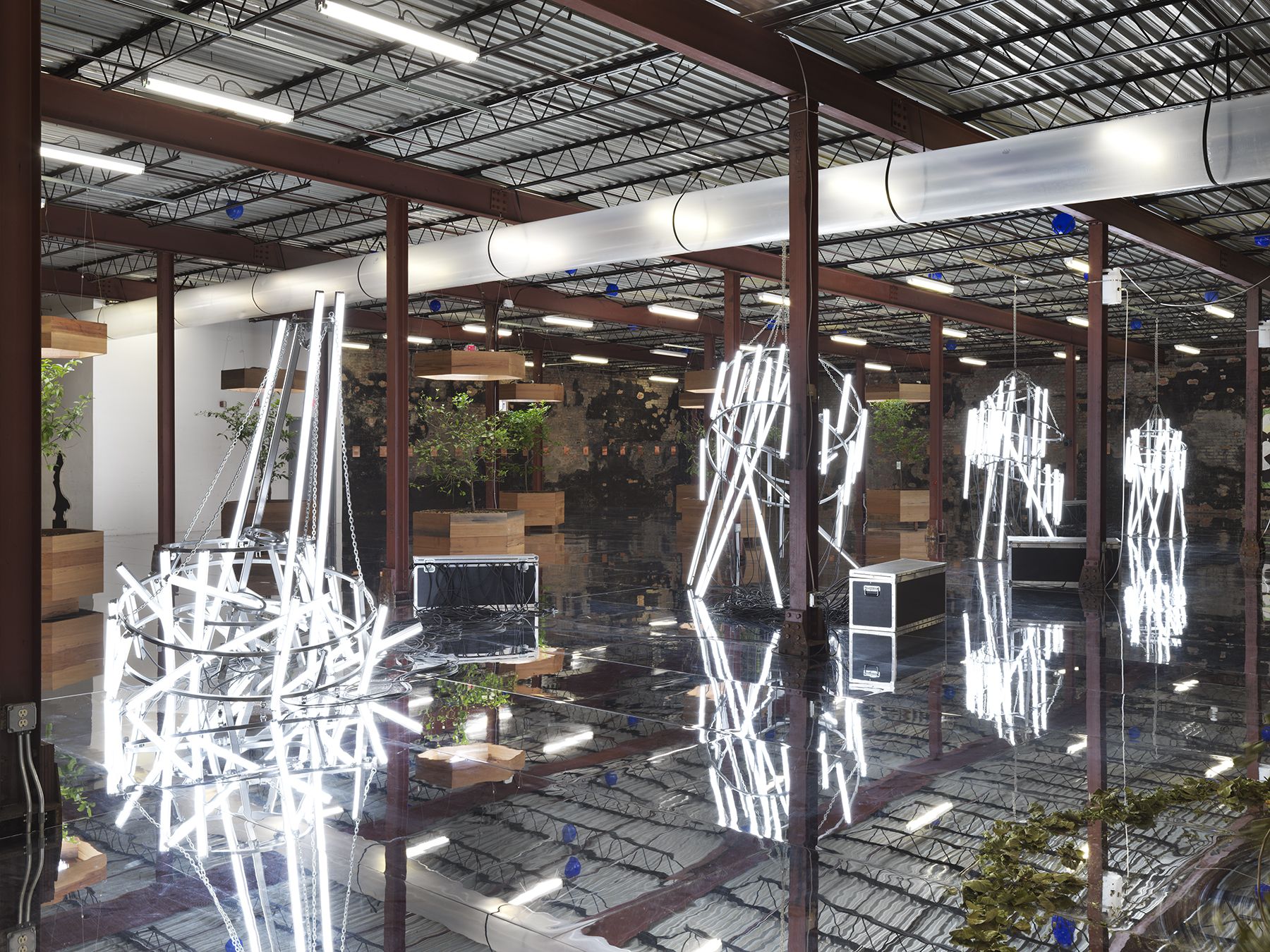
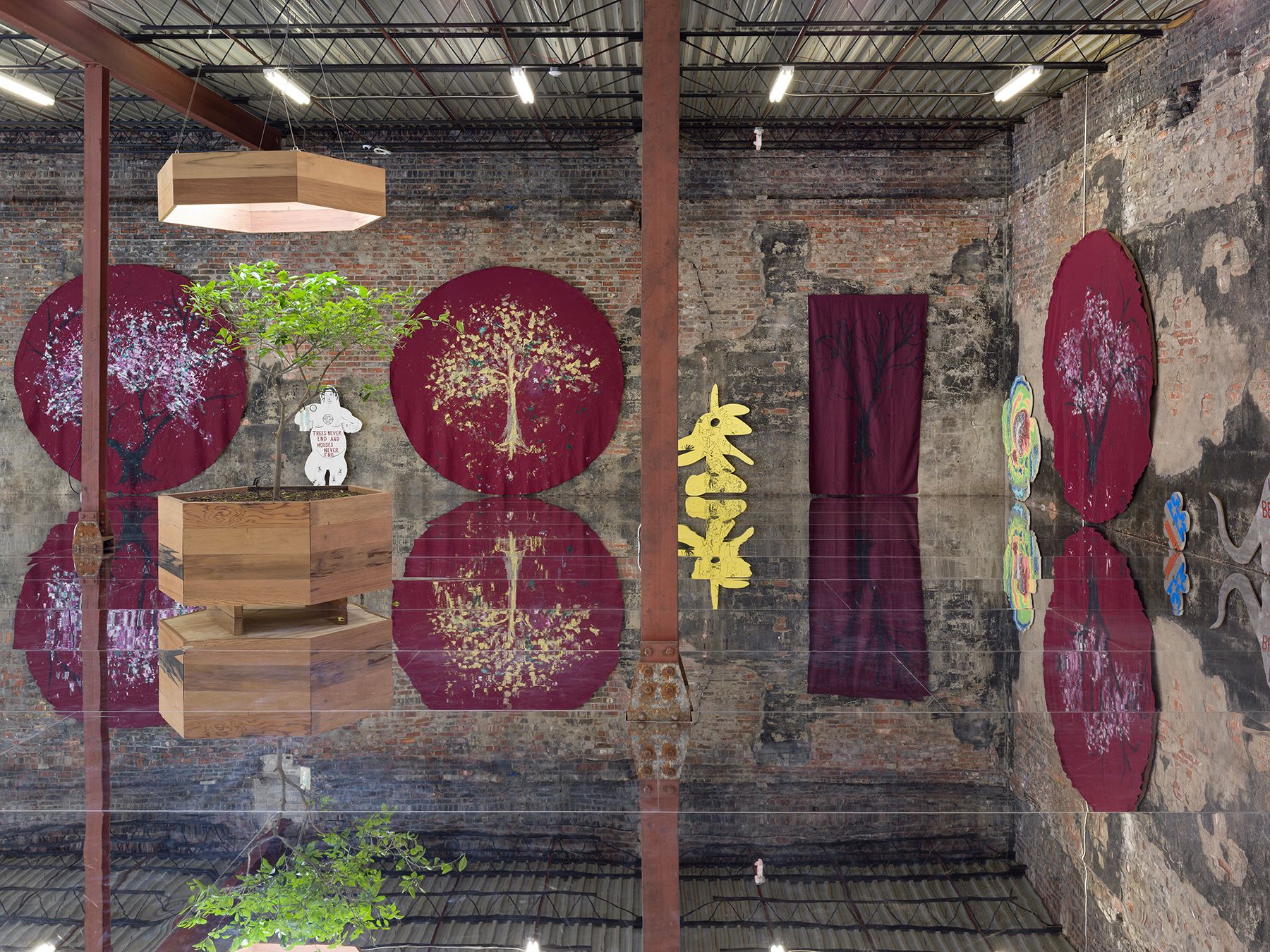
While Colen may be over a decade deep in Hudson Valley’s slower pastoral setting, his curation is clearly in dialogue with the global contemporary art scene—while also keeping an eye on the future. And that future, for Colen, is a world that functions in consonance with nature.
‘I wanted the exhibition to have a relationship to the ecological world,’ Colen says as we walk through Anne Imhof’s Untitled (Germantown) (2025), a maze of large plastic liquid storage containers that acts as an architectural element throughout the first floor. ‘Specifically, the one that’s right outside, and the river. You’re hearing multiple things at the same time. You’re kind of flowing. There are no clean moments. Everything is becoming one and releasing you into the next thing.’
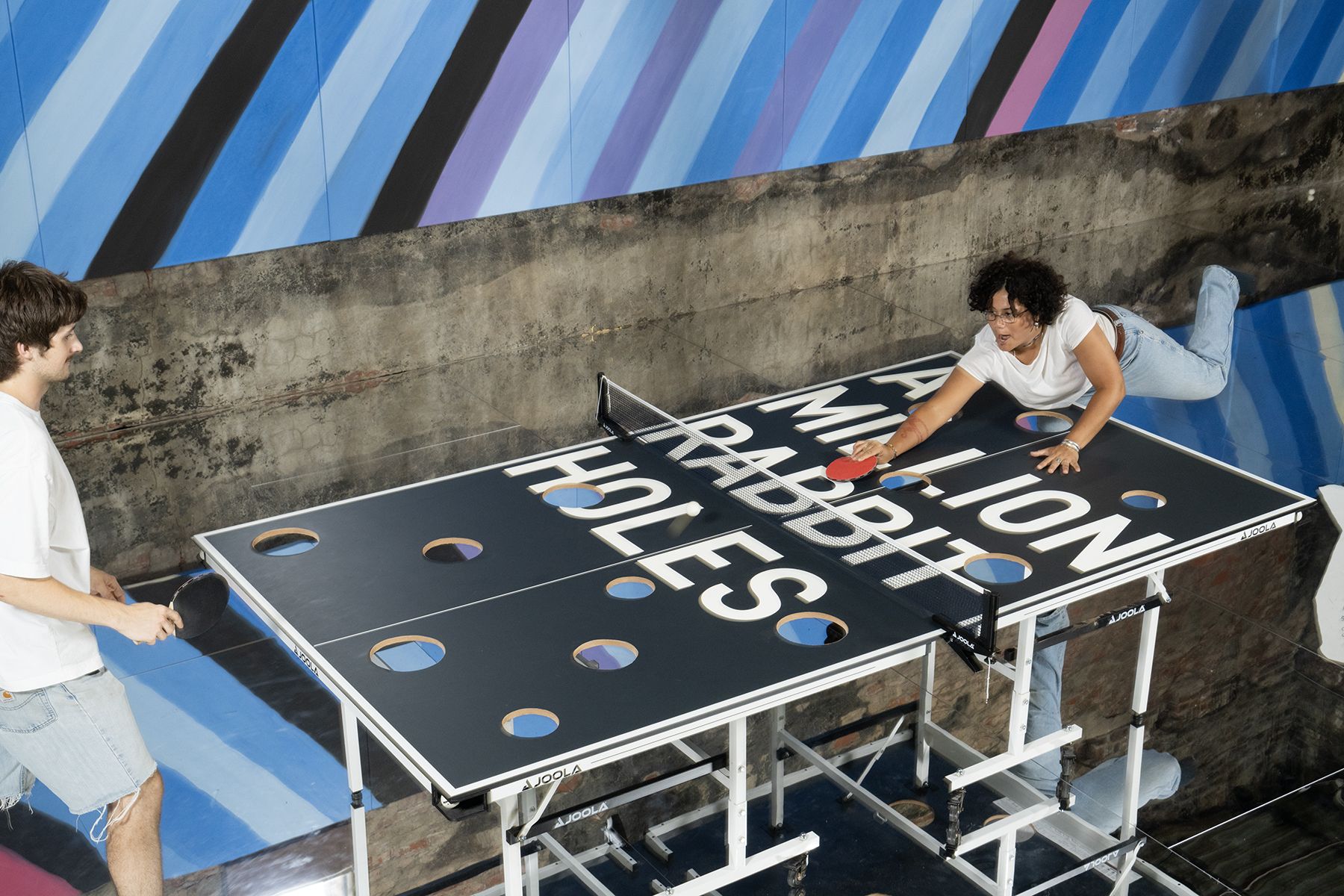
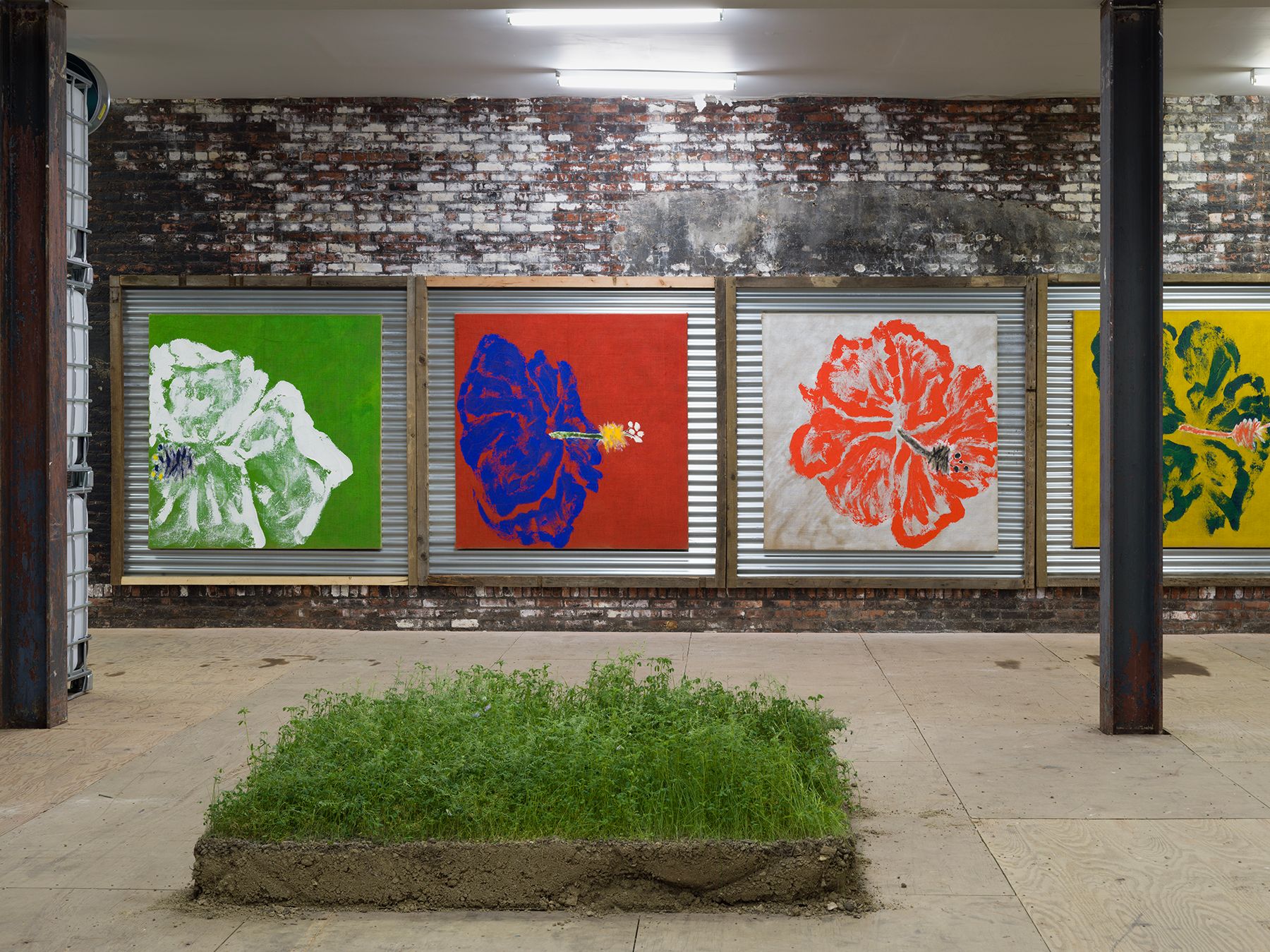
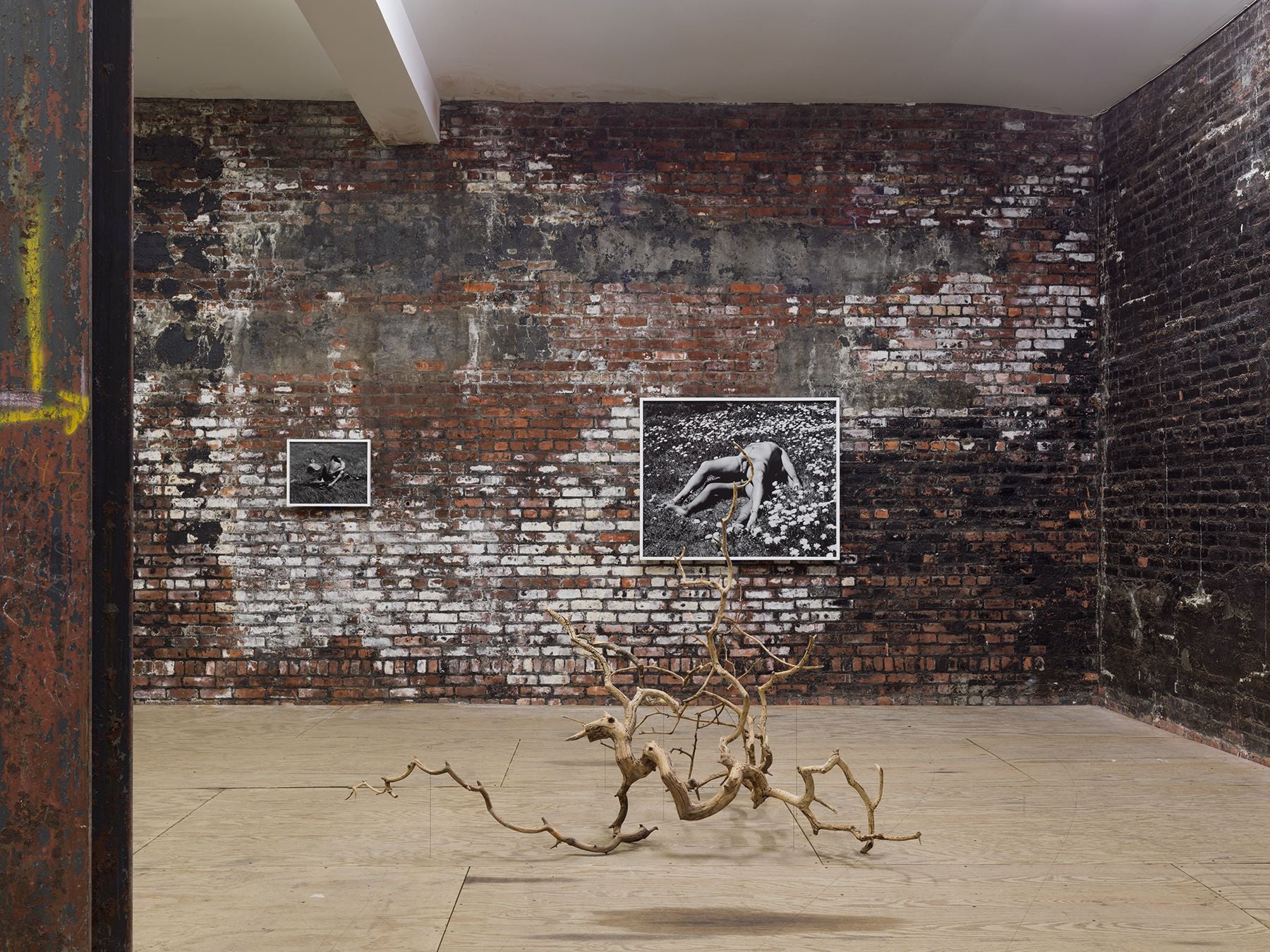

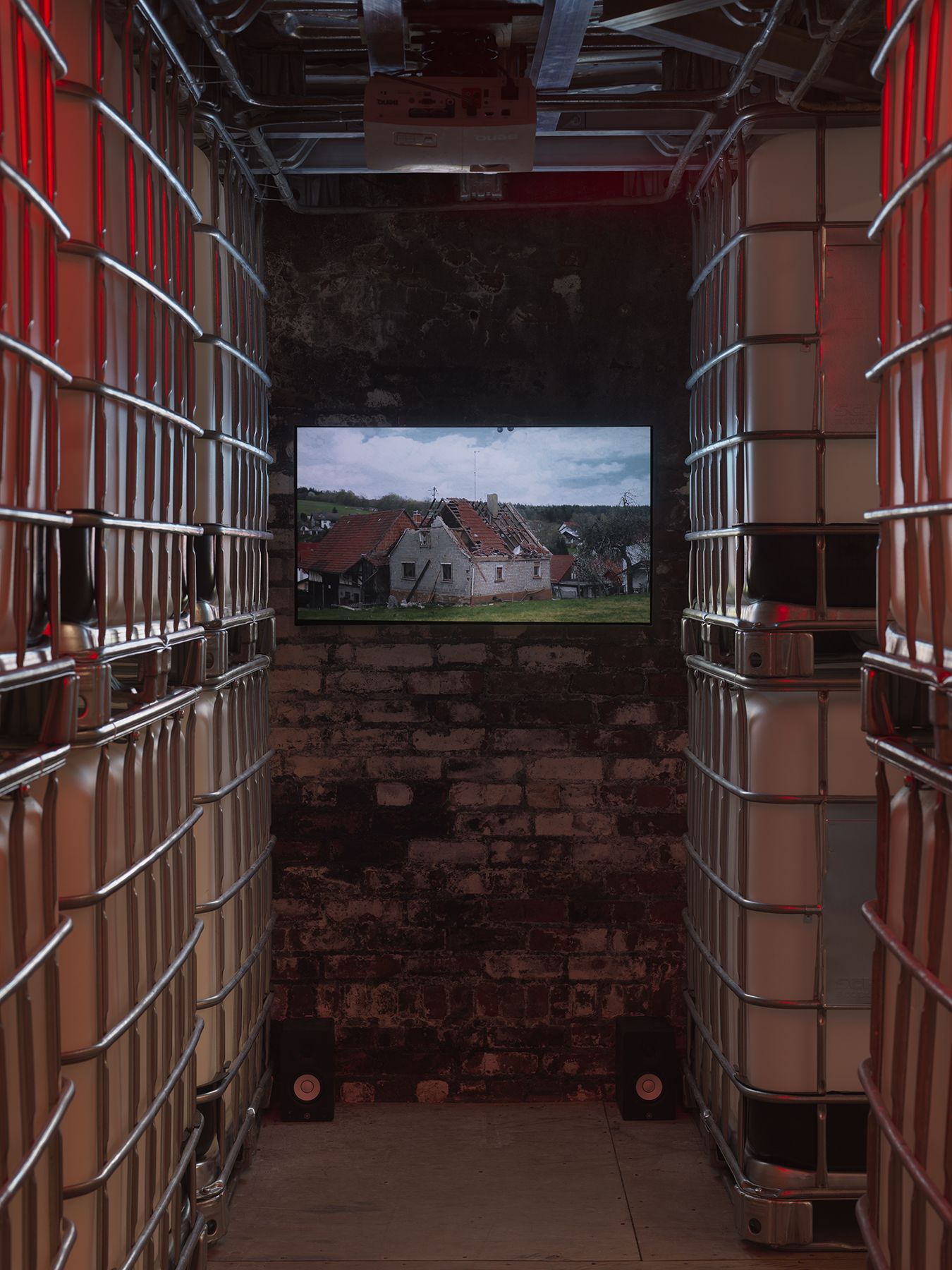
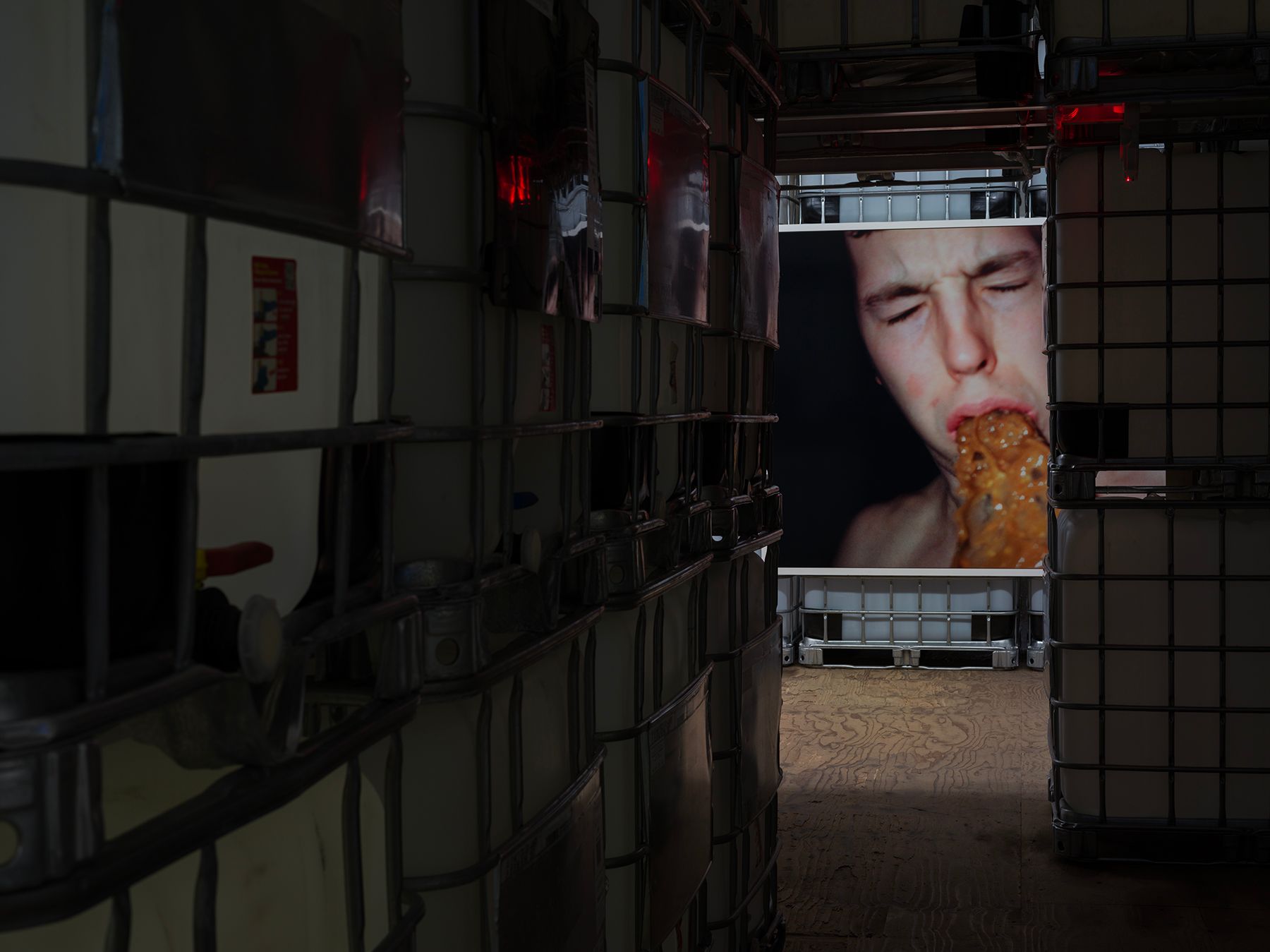
Together, we watch a Michael Sailstorfer video, Forst (2021), featuring a small wooden house being burned, piece by piece, in its own wood stove. We flow into the next hallway, where I spot the McGinley photograph from Colen’s t-shirt, huge and hanging from Imhof’s containers alongside photographic works by Andrew Moore, Lauren Bon, Luke Fischbeck, and Nan Goldin.
‘These are artists you would never find together,’ Colen says. ‘But they’ve all focused on the same subject for such a long period of time: the Hudson Valley. Plus this vomit picture, which is, you know, just like the river outside.’ He’s talking about another McGinley work, titled PUKE! (Self-Portrait) (2002), which might best be described as a barf selfie. Despite the McGinley cameo, Colen stretched his curatorial reach well outside of his inner circle, approaching artists, estates, and galleries he’d never been in contact with before. ‘I wanted to be really rigorous,’ he says. ‘I wasn’t like: Who do I know? Who are my friends? It was like: Who should be in this?’
Both projects—the biennial and the farm—are beautiful in form and in function. Each involves a kind of regeneration—making new, productive use of land that has gone to seed. Perhaps most excitingly, both push up against systems that have proved inefficient and unjust—the food system and the art market—asking us to reimagine how we might engage with our existing structures, so that more than a few of us can thrive.
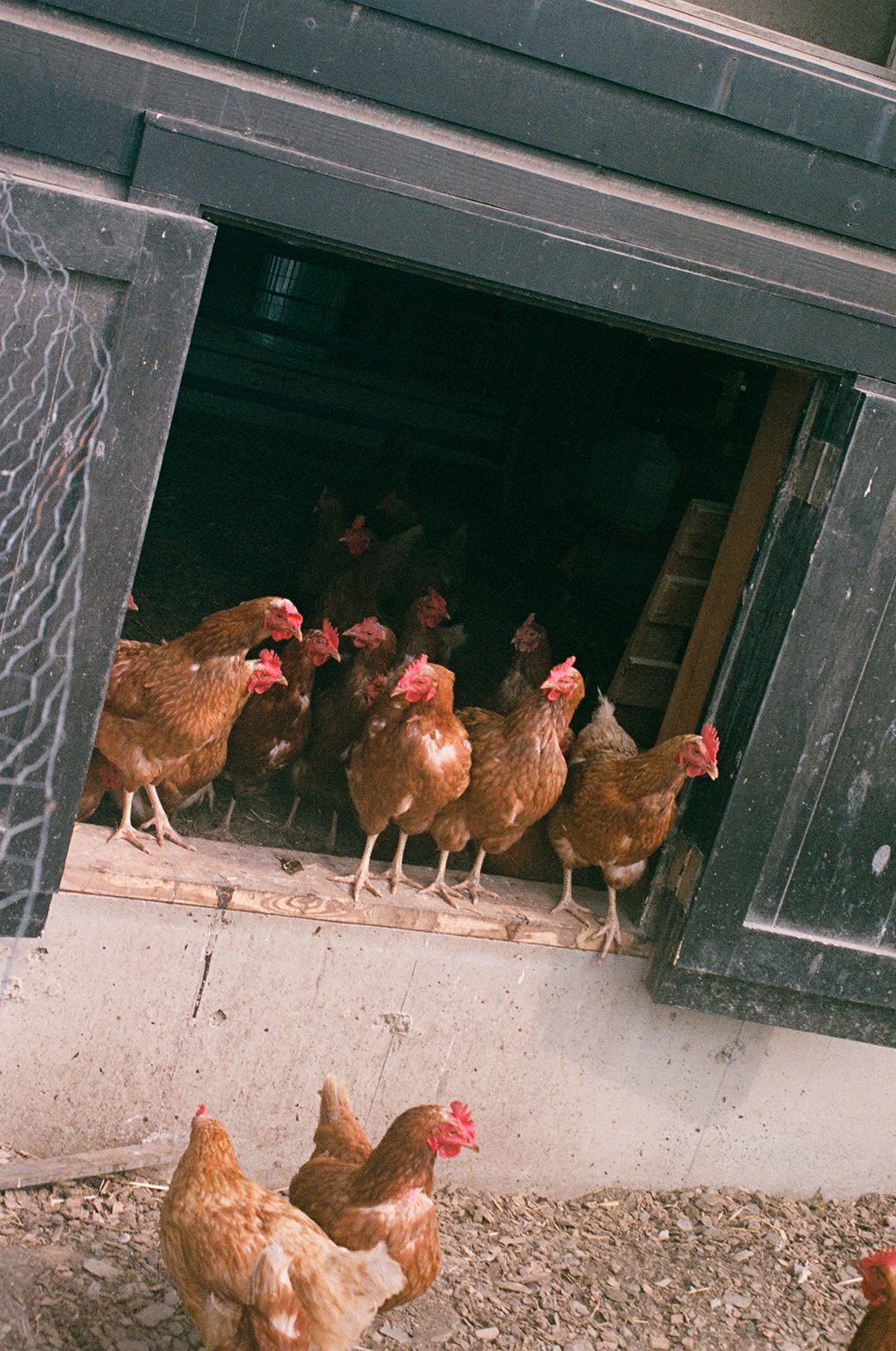
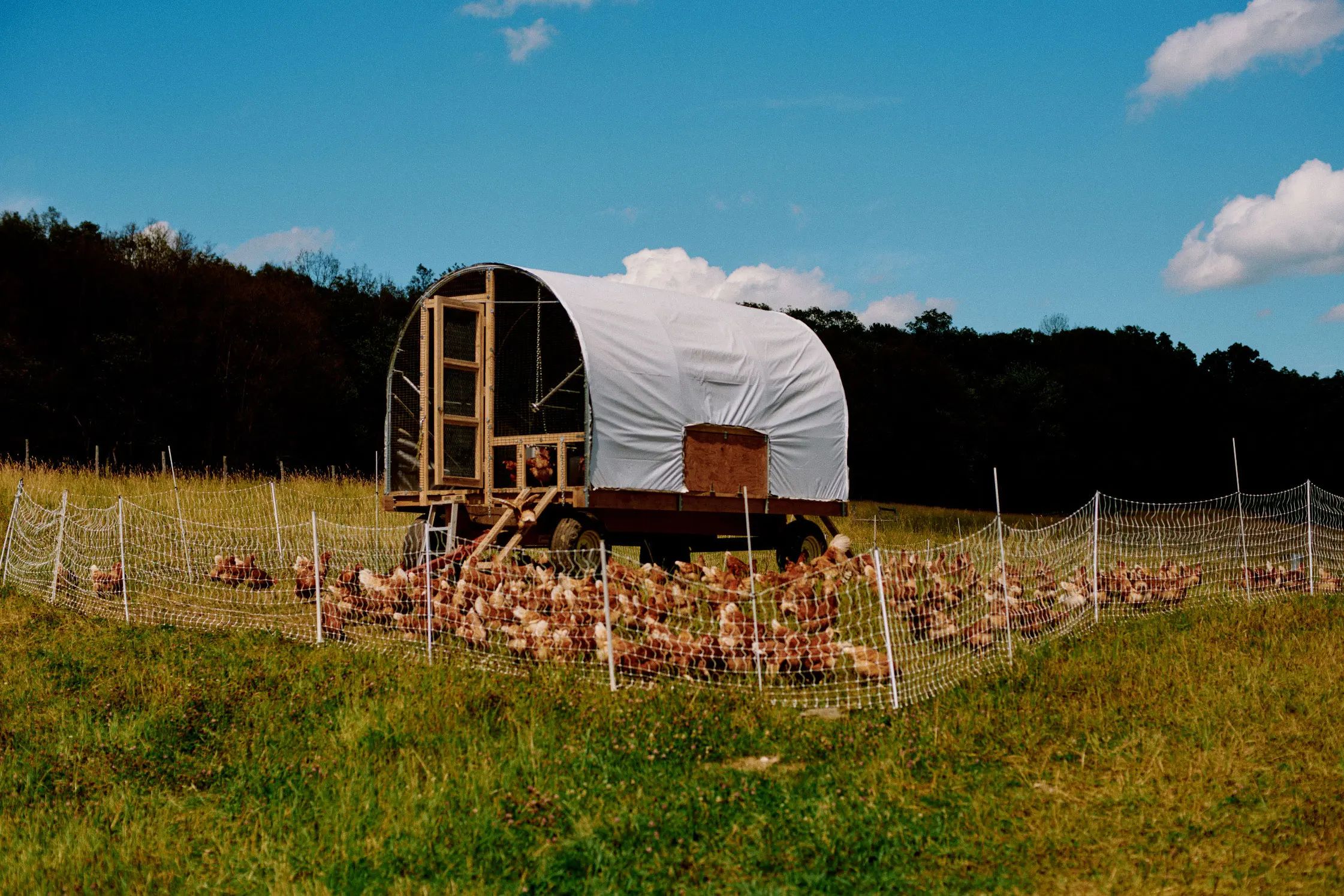
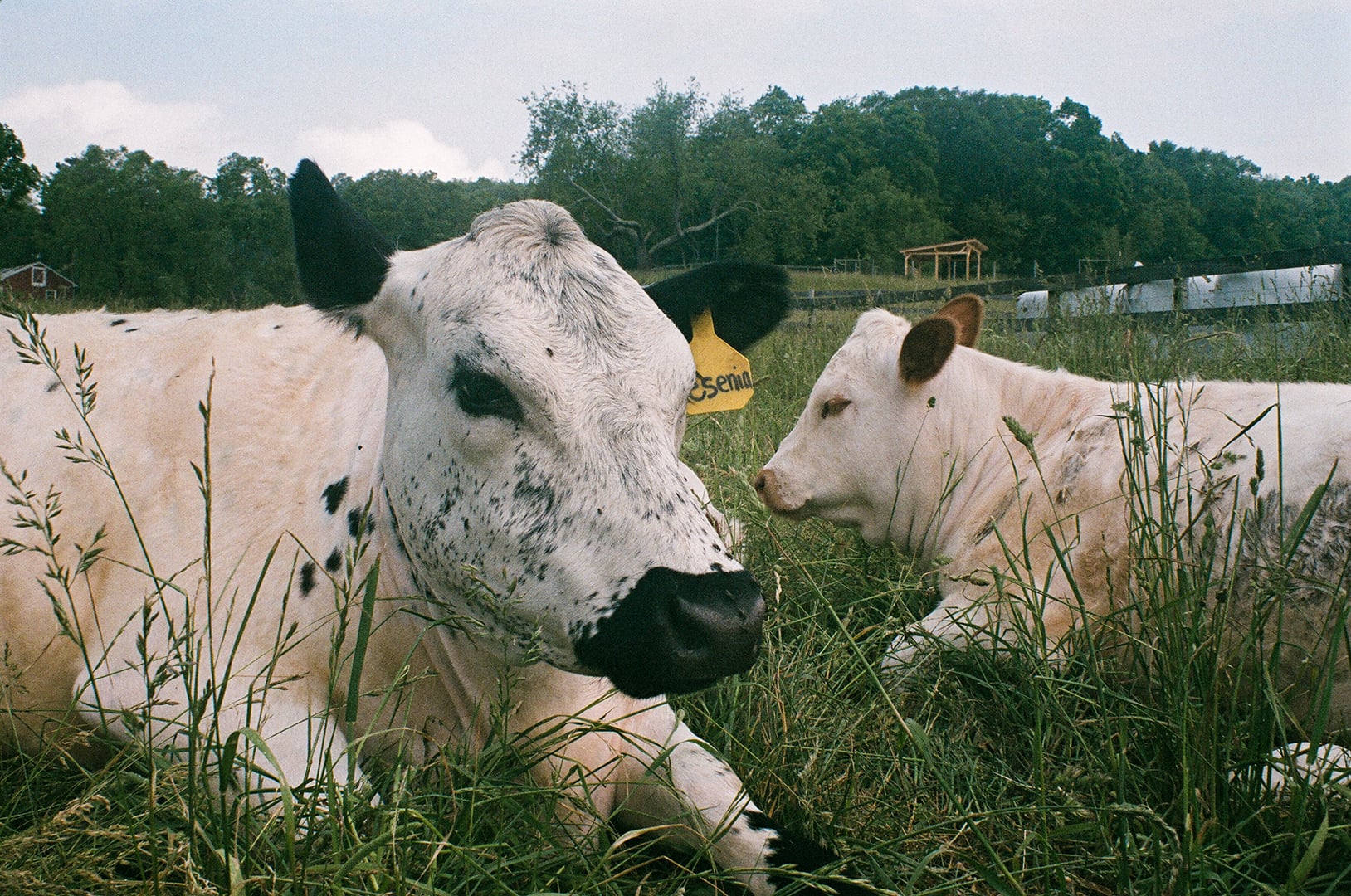
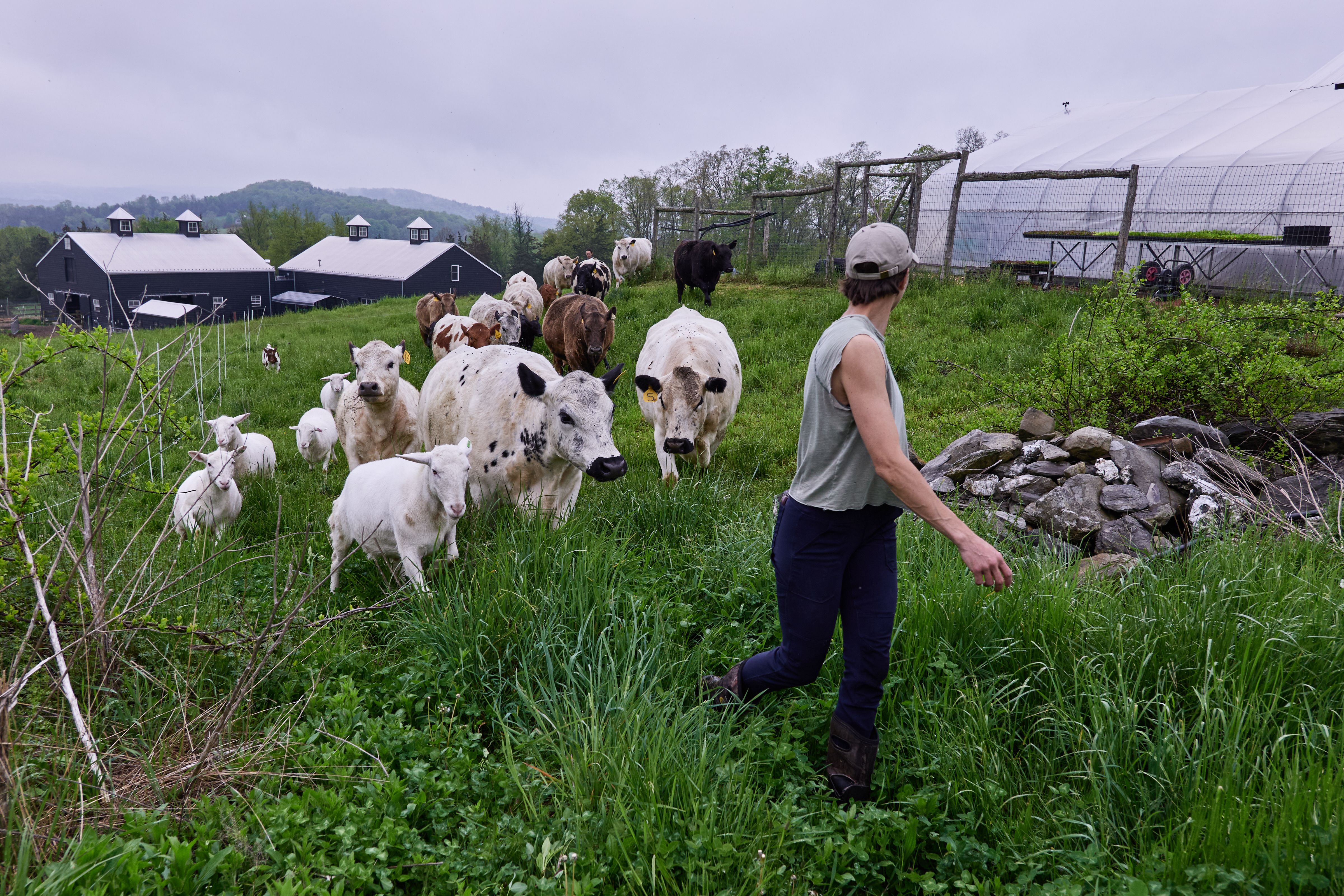
The farm’s mission, along with Colen’s relationship to it, has evolved since he started the project over a decade ago. When he bought the original property—a 40-acre parcel set on a verdant hillside that came with a big barn—he had no intention of farming it. He was looking to escape the city that had ‘shackled him for many, many years’, having found art fame young and been subsequently tethered to the galleries and the scene. Despite attempts in those early years to throw the art world off his scent—moving away from painting toward producing ever-more ephemeral works—galleries and collectors continued to pursue him. He wanted something different, something that existed totally outside of the marketplace and perhaps even functioned as its opposite.
‘Art had become too much of a business,’ Colen tells me. ‘A bigger business than I ever anticipated. And I wanted to not add to that. I wanted to rebuild the sacred space for myself that I may have thought art would be.’
With the help of friends, farmers, experts, time, intuition, and constant reiteration, this sacred space became a working farm, with a mission to feed people. From the outset, Colen and his collaborators decided to give 100 percent of the food produced at Sky High Farm to food access partners across New York state. Early on, Colen consulted Josh Bardfield, who worked in public health at the time, to help him set up the relationships with these partners and tailor the farm’s production to their needs, and to those of the communities they feed. Their approach was to ask people directly what they needed, what food they liked, what was culturally appropriate, and how they needed it delivered, rather than showing up with predetermined solutions. Though Colen considers the farm an extension of his art practice—‘a touchpoint back to painting’—he also understands the reality: ‘It’s a public health organisation; it is very deliberate with how it does the work it does.’
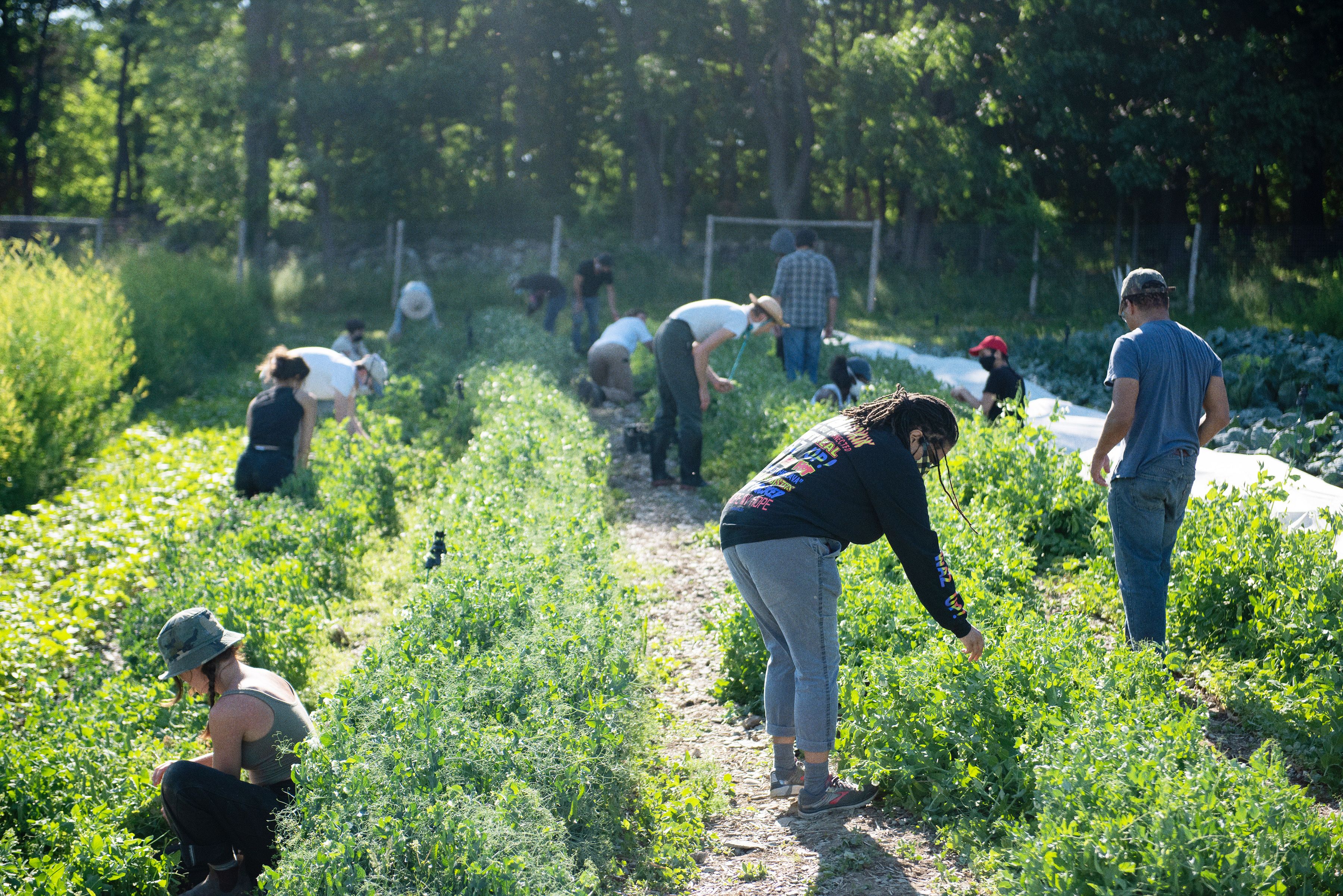
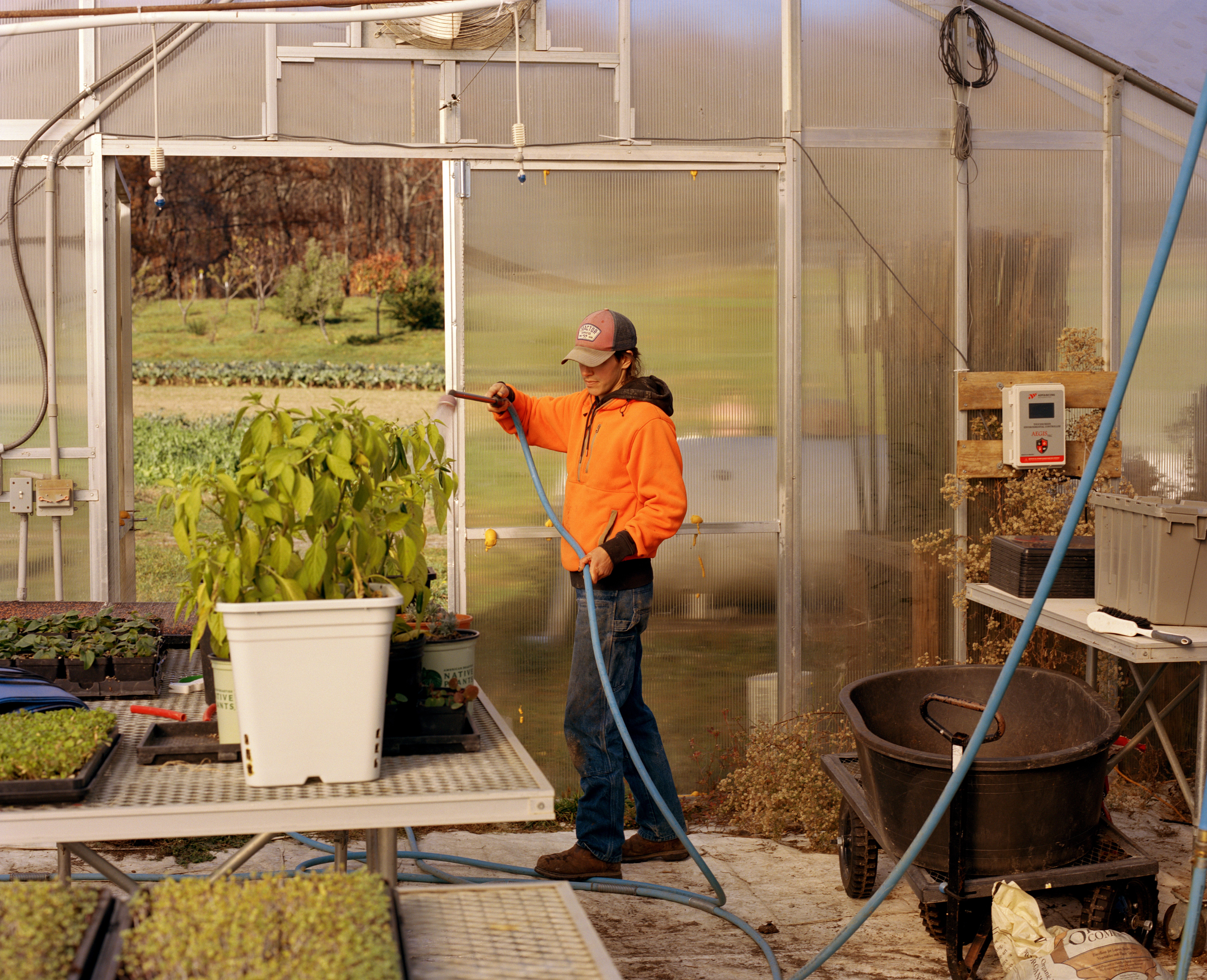
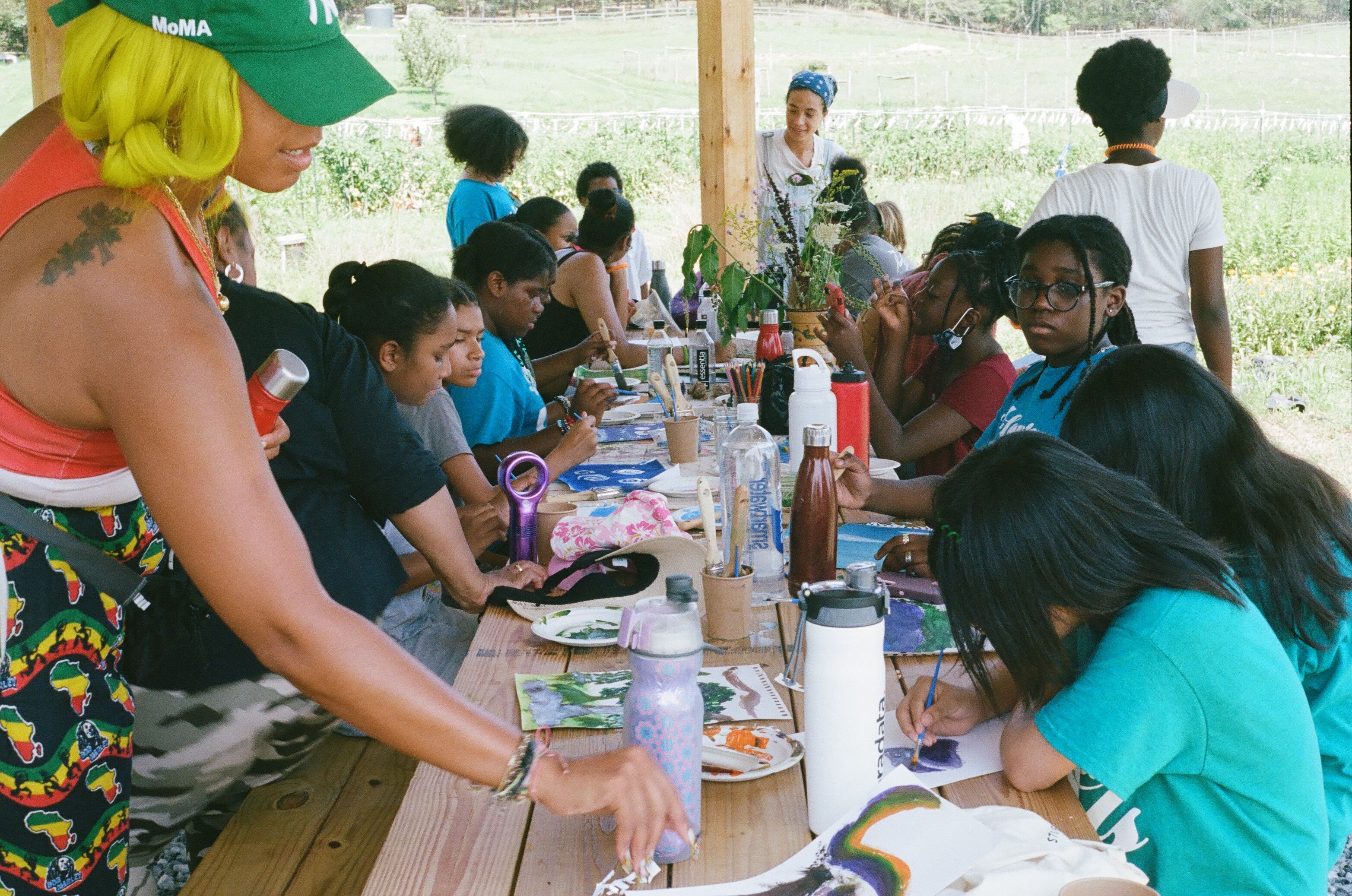
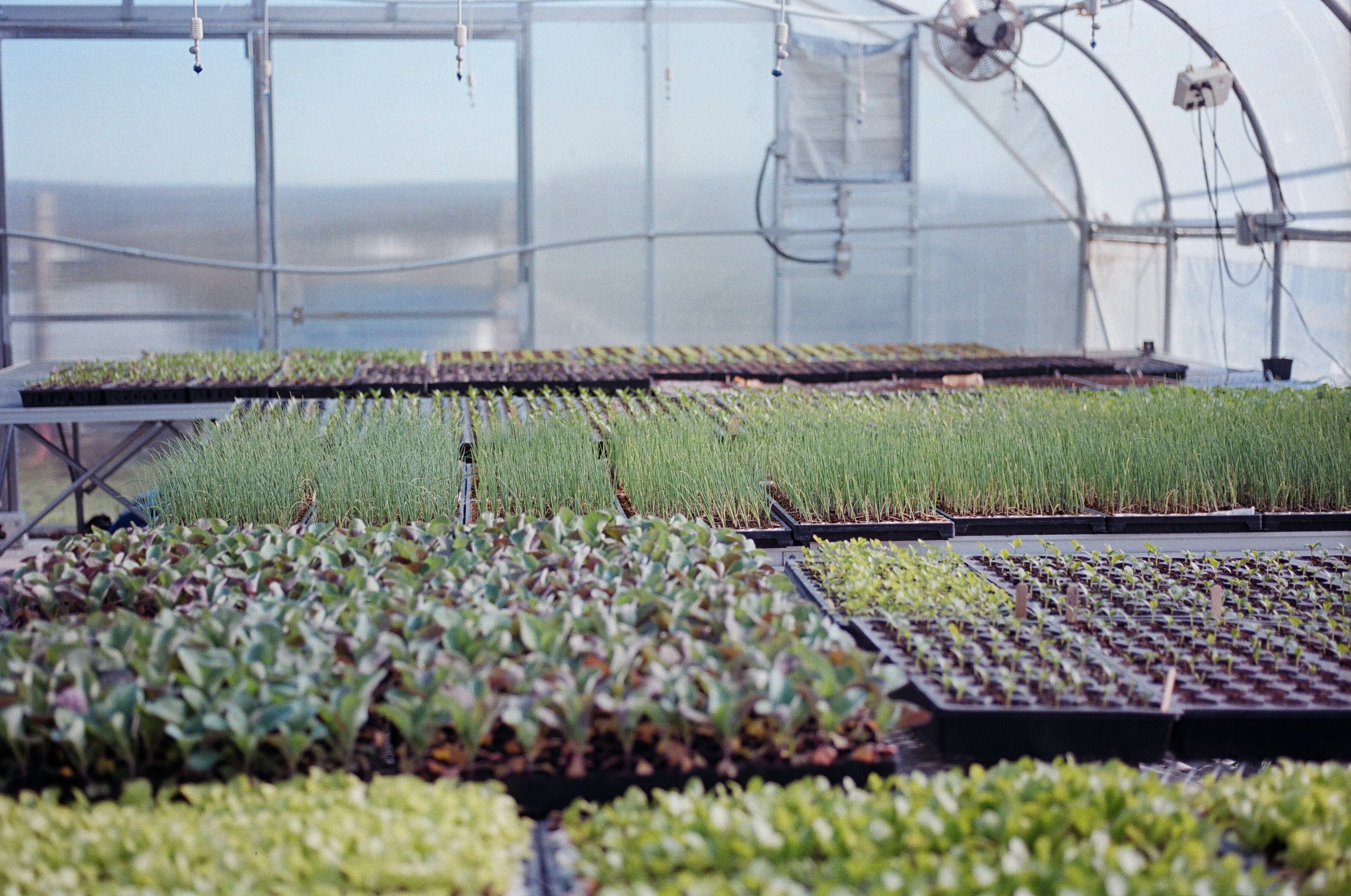

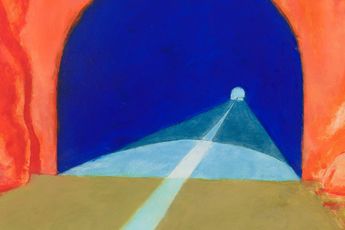
When I’d visited the farm the day before and spoken to the co-directors Bardfield and Workneh, this deliberateness was apparent. We roamed the original farmland, where the garden beds were being put to sleep and the little beaks of the jalapeños were blackening on their feathery bushes. We then drove to the new, expanded site, where we looked out over the vast expanse of land and watched the warm wind comb its long grasses. I learned that the farm’s early food access work had given the directors a deeper understanding of larger systemic issues, which led them to develop a dynamic range of programming, including education and volunteer opportunities, grant-making, ecological research, and land restoration—programmes that will further evolve as the farm expands onto this new land.
‘The most important lesson was going to some of these food banks and food pantries and seeing the food that was available to people on a regular basis,’ Bardfield said. ‘And understanding not only that there was an opportunity to supplement that food with super nutritious food, but also to do it in a way that respected the ecology of the place and promoted a vision of land stewardship.’
Beyond tending to its own land and community, the farm has been widening its reach with an annual grants programme; since the programme began in 2022, it has distributed 1.5 million dollars to projects by farmers and food justice advocates. ‘How you build your budget is how you prioritise your values and how you make your values apparent,’ Workneh said. ‘It’s not an obligation—it’s the remarkably right thing to do.’

Back at the biennial, I ask Colen what he’s working on in his own studio, and he tells me he’s pivoted back to painting. He’s working in a hyper-detailed style that he hasn’t employed since his first body of photorealist work. It’s slow and laborious, which is part of what he loves about it. ‘I’m interested in the original decision behind [painting], thousands of years ago’ he says, which I understand as a reference to Paleolithic cave art. ‘To grind up the planet we live on and make marks with it, and then find different parts of the planet. It’s of this earth in a very direct way. Each mark made with it, the trillions and trillions of marks that have been made with it, each, in theory, carry some sort of power.’
The provocation that pushes through all of this work is about what becomes possible when that power is redistributed. When we think about the way things have always been done, and decide that doing them differently would be more healthy, more interesting, or more human, we become bold enough to believe that the marks we make might matter.
‘I think we all want our art to speak to that complexity of life,’ Colen says. ‘The complexity of the universe, of experience. Whether or not it does, again: I’m very happy to say that’s absurd, that it doesn’t, even. And in the next minute I’ll say: of course it does. If you approach it in a way that it does, then it will.’ —[O]
Sky High Farm will host the closing celebration for the 2025 Sky High Biennial, Trees Never End and Houses Never End, at 11 Main Street, Germantown, New York, on 11 October 2025.
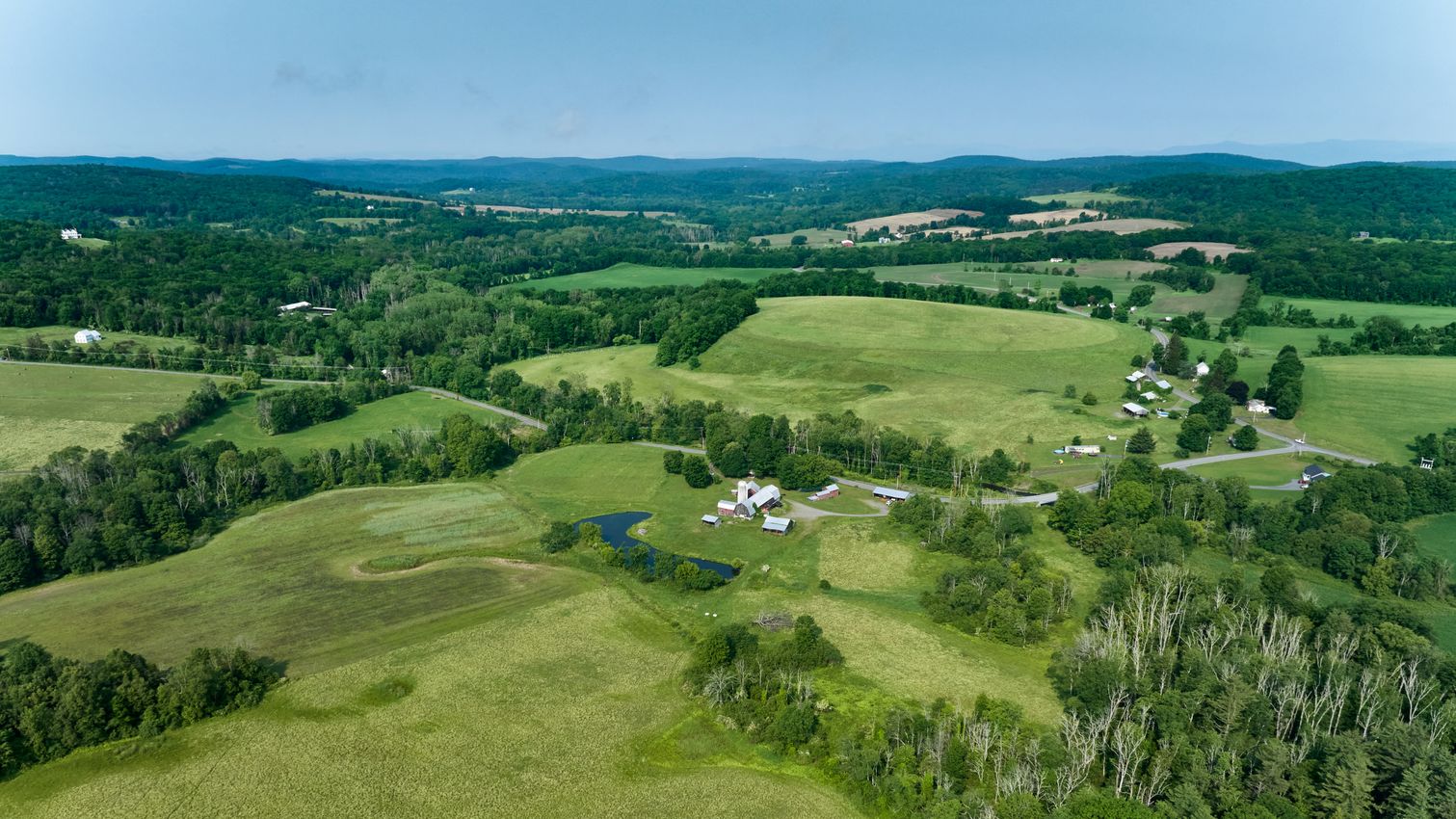
Main image: Sky High Farm’s new 560-acre property in Ancram, New York. Courtesy Sky High Farm. Photo: Walter Hergt.





A respected voice in contemporary art discourse.
Focusing on ambitious storytelling and insightful art-world commentary. Ocula Magazine publishes in-depth interviews, critical essays and timely analysis on the artists, exhibitions and ideas driving the global art world.
Learn more about Ocula Magazine
Showcasing the best of the art world.
Ocula partners with galleries from around the world to highlight their artists, artworks and exhibitions. Gallery membership is by application and invitation, with each member vetted by an independent panel.
Learn more about Ocula Membership
Specialises in the sale of major artworks.
Led by a team with deep ties to the world’s leading auction houses, galleries and collectors. Ocula’s advisory team offers bespoke services to high-net-worth clients from around the world who are looking to acquire the best of contemporary and modern art.
Learn more about our team and services