






Hiroji Kubota at Sundaram Tagore Gallery and Aperture Foundation, New York
Save to My Ocula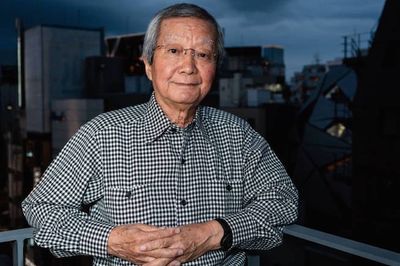
You currently have on show more than 100 of your photographs at both Sundaram Tagore and the Aperture Foundation – perhaps you could pick out which image you feel is most symbolic of your practice?
For me, there are a few works which standout. Of the dye-transfers on show at Sundaram Tagore, it is my triptych of the Guilin Mountains in China from 1981 and my photograph of the Golden Rock of Burma from 1978. Then at the Aperture Foundation, where they have on display my earlier platinum prints from the 60s and 70s, my image of Shanghai in 1979 and Hong Kong in 1971 are especially symbolic.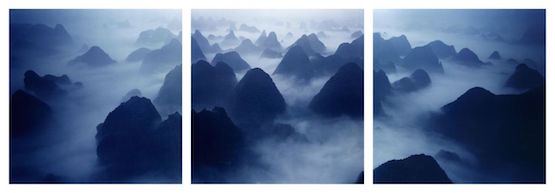
The works on show at Sundaram Tagore utilise the technique of dye-transfer printing, which you worked with in the 1980s. Please could you take us through this method of production?
Producing works using the dye-transfer technique is extremely complex and time-consuming. With the help of the genius printer, Nino Mohnde, we would painstakingly print my photographs using 6 to 9 natural dye colours. The technique cannot be used today as the technology no longer remains.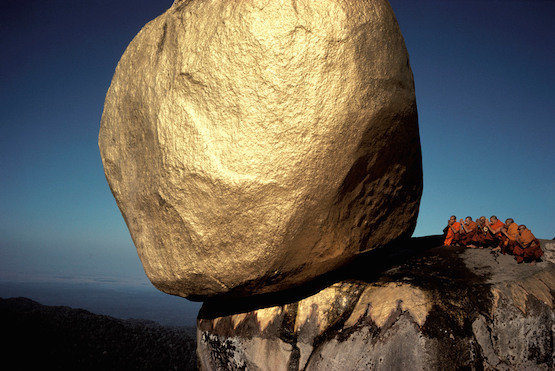
How has your involvement with Magnum Photos Photographers co-operative influenced your practice over the years?
In 1961, while I was studying political science as Waseda University, Tokyo, I met 4 Magnum Photographers (Elliott Erwitt, Rene Burri, Burt Glinn and Brian Brake). It was so fascinating that soon after, instead of seeking a secure job, I decided to be a photographer despite my lack of background in photography and art. Upon graduating in 1962, and with the support of Erwitt, I bought one Leica body camera, two lenses and a one-way ticket to New York. Soon after my arrival there, I met Cornell Capa, the younger brother of Robert Capa the founder of Magnum Photos, and he became my father (not in the legal sense) for the first 3 years of my photographic career. I worked everyday from 5am to 11pm; Burt and Cornell gave me assistant jobs and extra cash, which I needed badly. Fortunately in 1965, I got big jobs through Magnum and ever since then people thought I became a photographer. I should say, I am extraordinarily lucky; Magnum has always been my family and the only family in photography I know of. 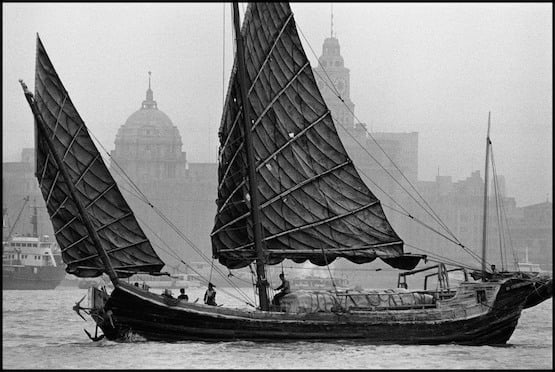
The exhibition’s title ‘Photographer’ is emblematic of your dedication to the medium – perhaps you could explain what this word means to you?
To me, a photographer is someone who takes photographs all the time, they do not talk, teach or lecture about it. The life of a photographer, it seems to me, is very lonely. You have to go far away many times, and your family suffers. When you get lonely your sensitivity, I feel, gets amplified. A sensitivity, basic knowledge and great curiosity is so important to observe people, society and the world. I am not saying that I am a photographer like that, but I will keep trying till my heart stops beating. Also, I want to emphasize I owe Elliott Erwitt so much; without him, I could not be a photographer. I also learnt a lot from Andre Kertesz, to whom my retrospective book is dedicated. —[O]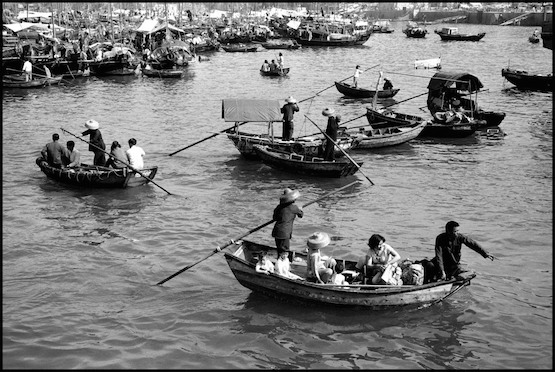
Main image: Hiroji Kubota. © Dan Szpara






A respected voice in contemporary art discourse.
Focusing on ambitious storytelling and insightful art-world commentary. Ocula Magazine publishes in-depth interviews, critical essays and timely analysis on the artists, exhibitions and ideas driving the global art world.
Learn more about Ocula Magazine
Showcasing the best of the art world.
Ocula partners with galleries from around the world to highlight their artists, artworks and exhibitions. Gallery membership is by application and invitation, with each member vetted by an independent panel.
Learn more about Ocula Membership
Specialises in the sale of major artworks.
Led by a team with deep ties to the world’s leading auction houses, galleries and collectors. Ocula’s advisory team offers bespoke services to high-net-worth clients from around the world who are looking to acquire the best of contemporary and modern art.
Learn more about our team and services