





The art world in focus
Subscribe to our newsletter for news and insights on artists, galleries and exhibitions.
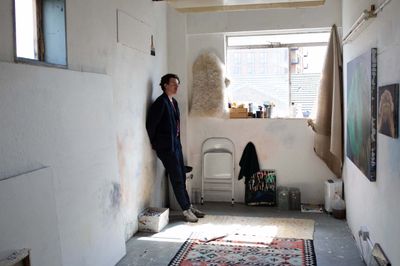
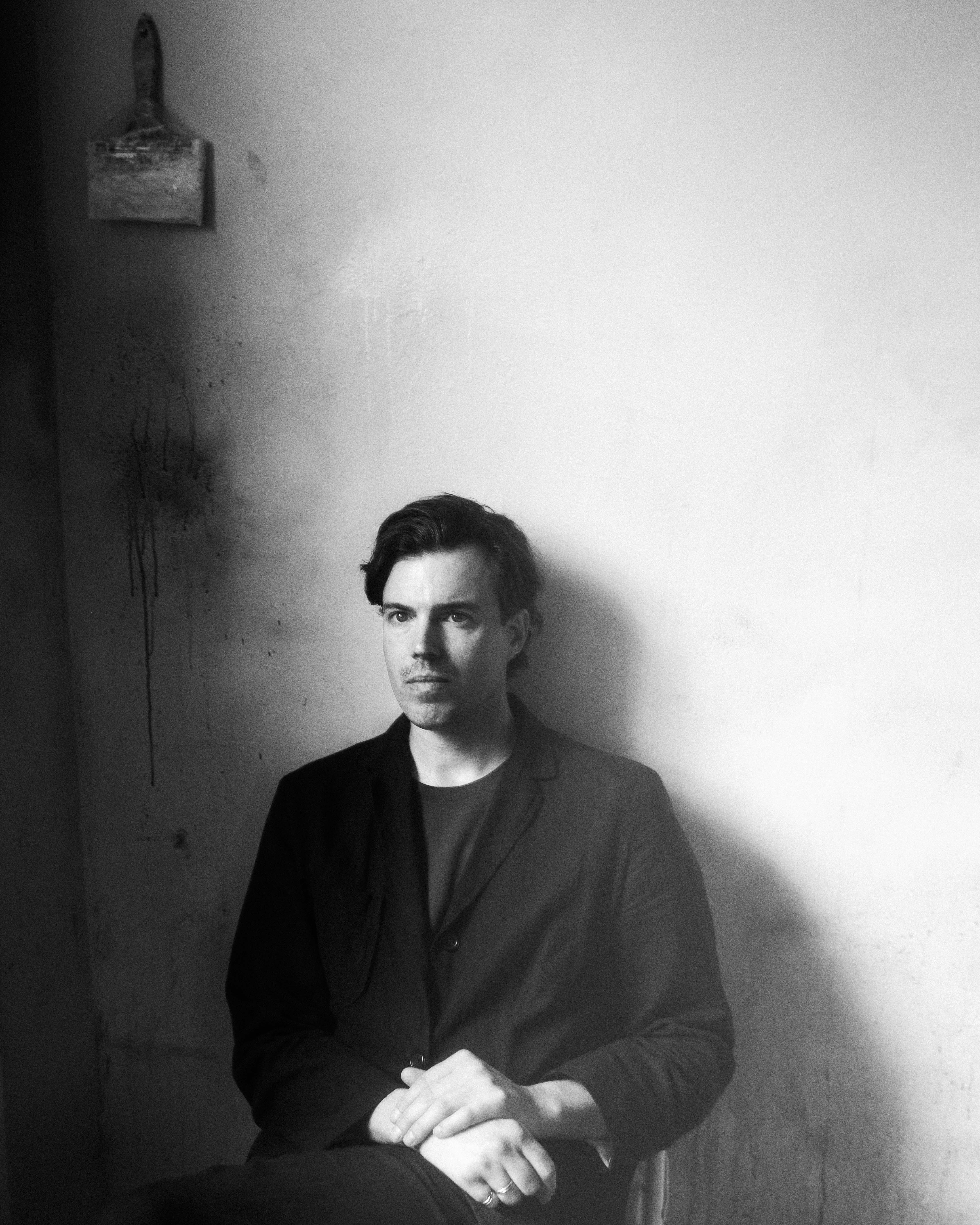
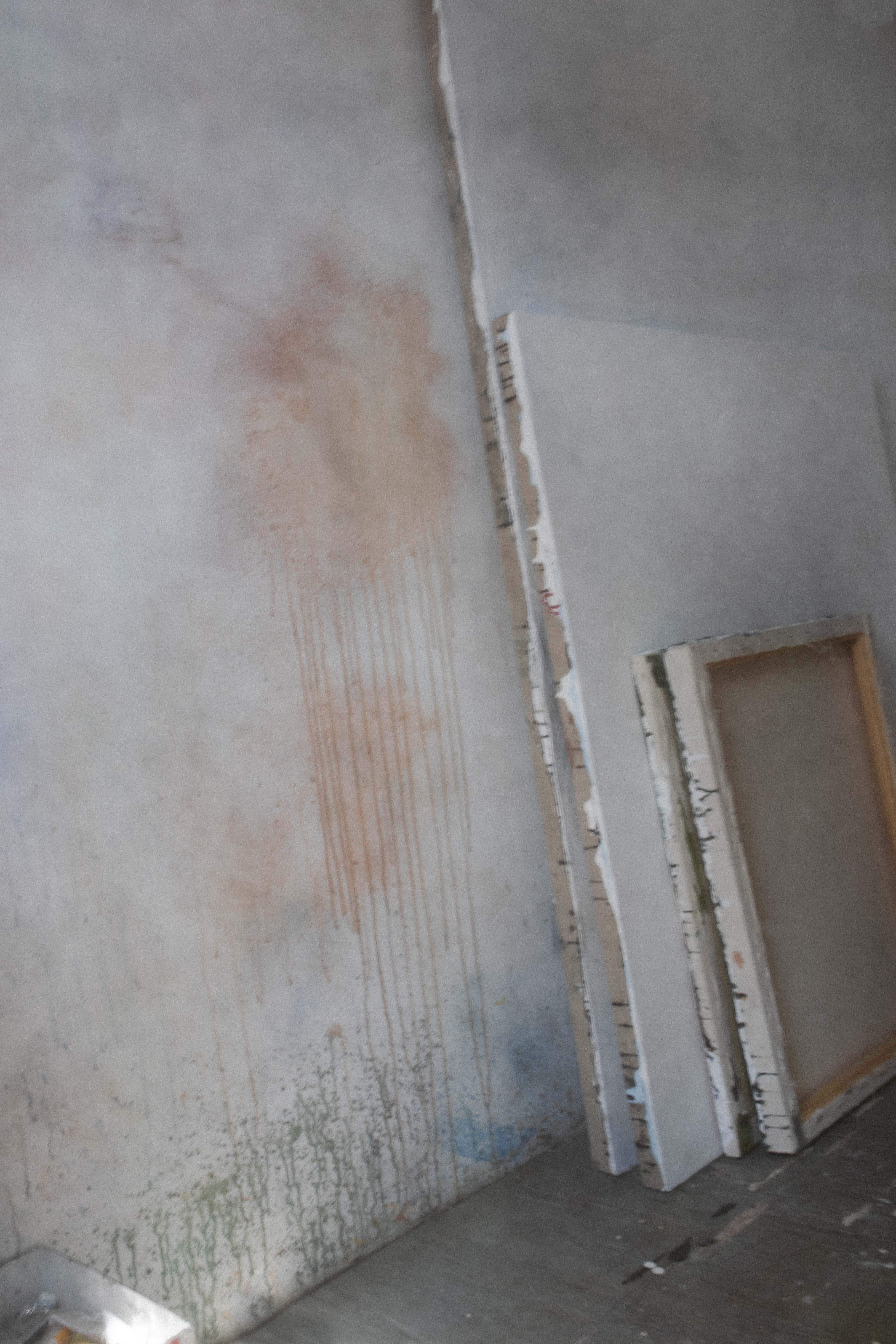
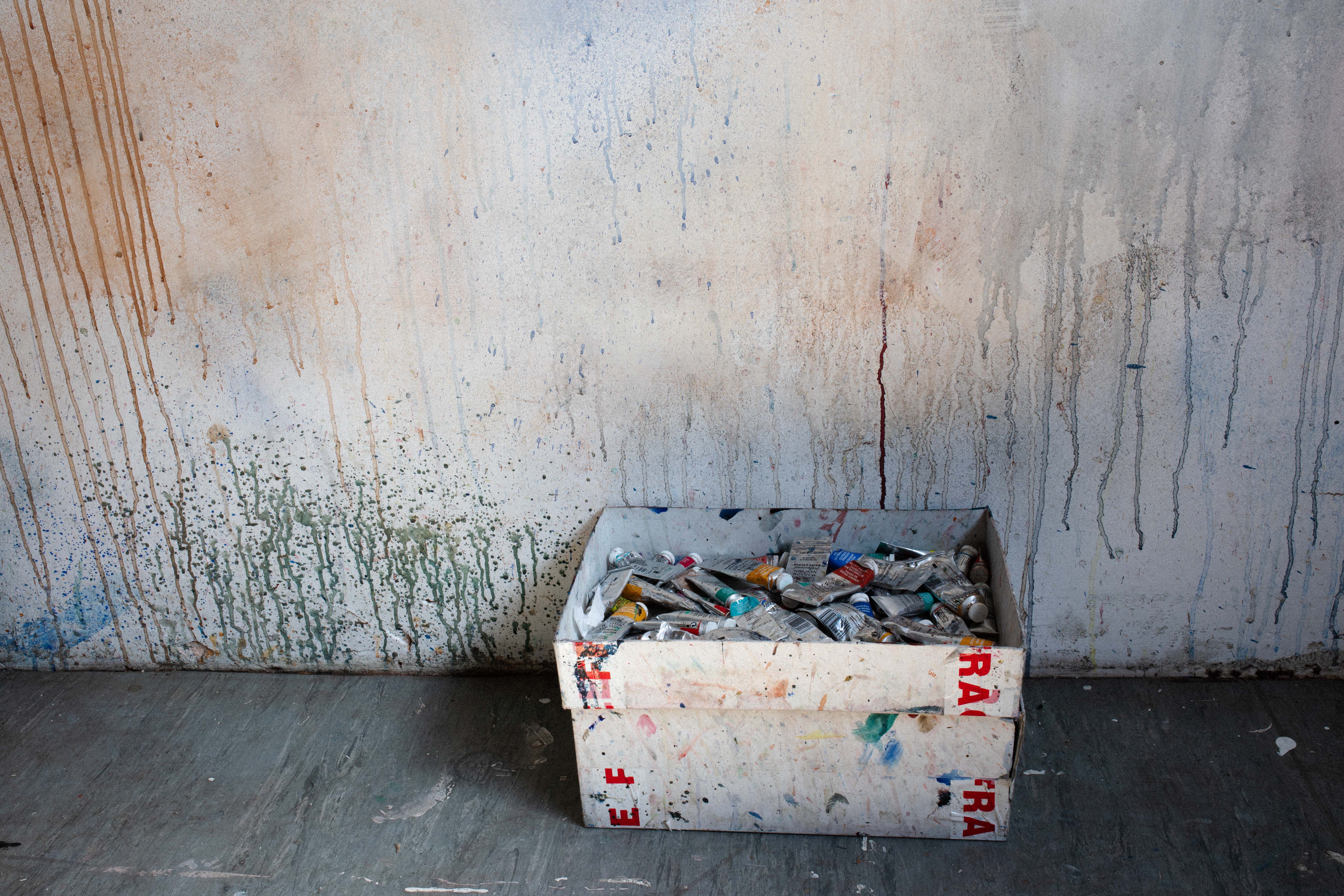
Joseph Yaeger, studio view. Photo: © William Waterworth.
Whether a close-up of lips kissing or the face of a figure in desperation, fingertips brushing through immaculately rendered hair, an encounter with a painting by Joseph Yaeger is a powerful experience.
Since receiving his MA in painting from London’s Royal College of Art in 2019, the artist’s emotive paintings have featured in solo exhibitions including Project Native Informant (2021) and VO Curations (2020) in London, with another show scheduled at the former in 2023.
We caught up with Yaeger at his East London studio ahead of a forthcoming solo exhibition at Shanghai’s Antenna Space to discuss his approach to unearthing new subject matter, depicting heightened emotional states, and using watercolour on gesso-primed linen to guide his way of seeing.
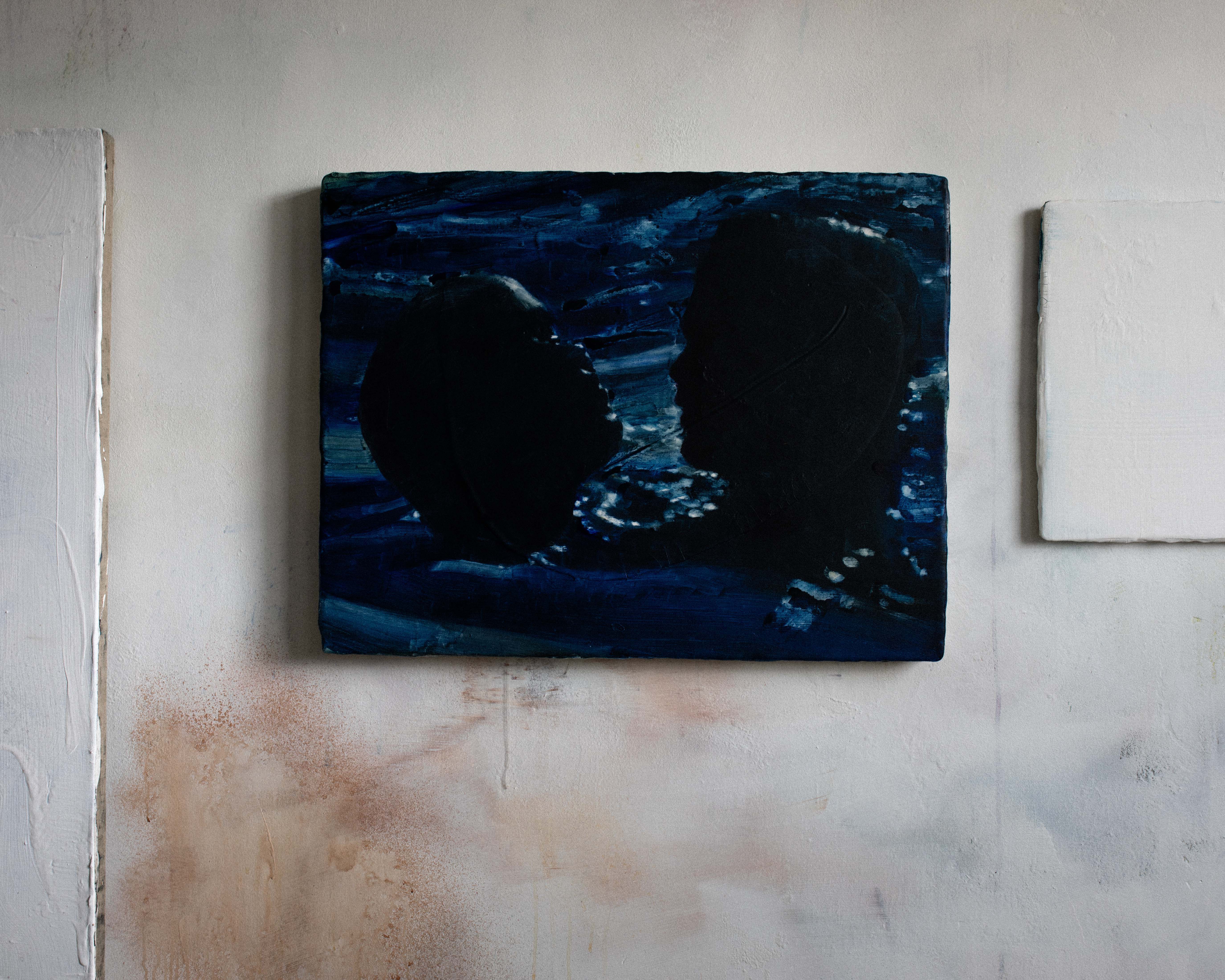
Just being very open and kind of keeping my ‘antennae’ up for something that has any kind of resonance. I begin reading more novels and start watching cinema, for instance, with maybe a little more leisure in the way things are being ingested—letting things happen as opposed to forcing it.
Intuition works a lot better when you’re actually receptive to things, rather than almost saying to yourself, ‘I am receptive now’.
When I’m actually making the work, however, there’s a hunger that attends the actual making. There’s one after the other, after the other. There’s a flow there.
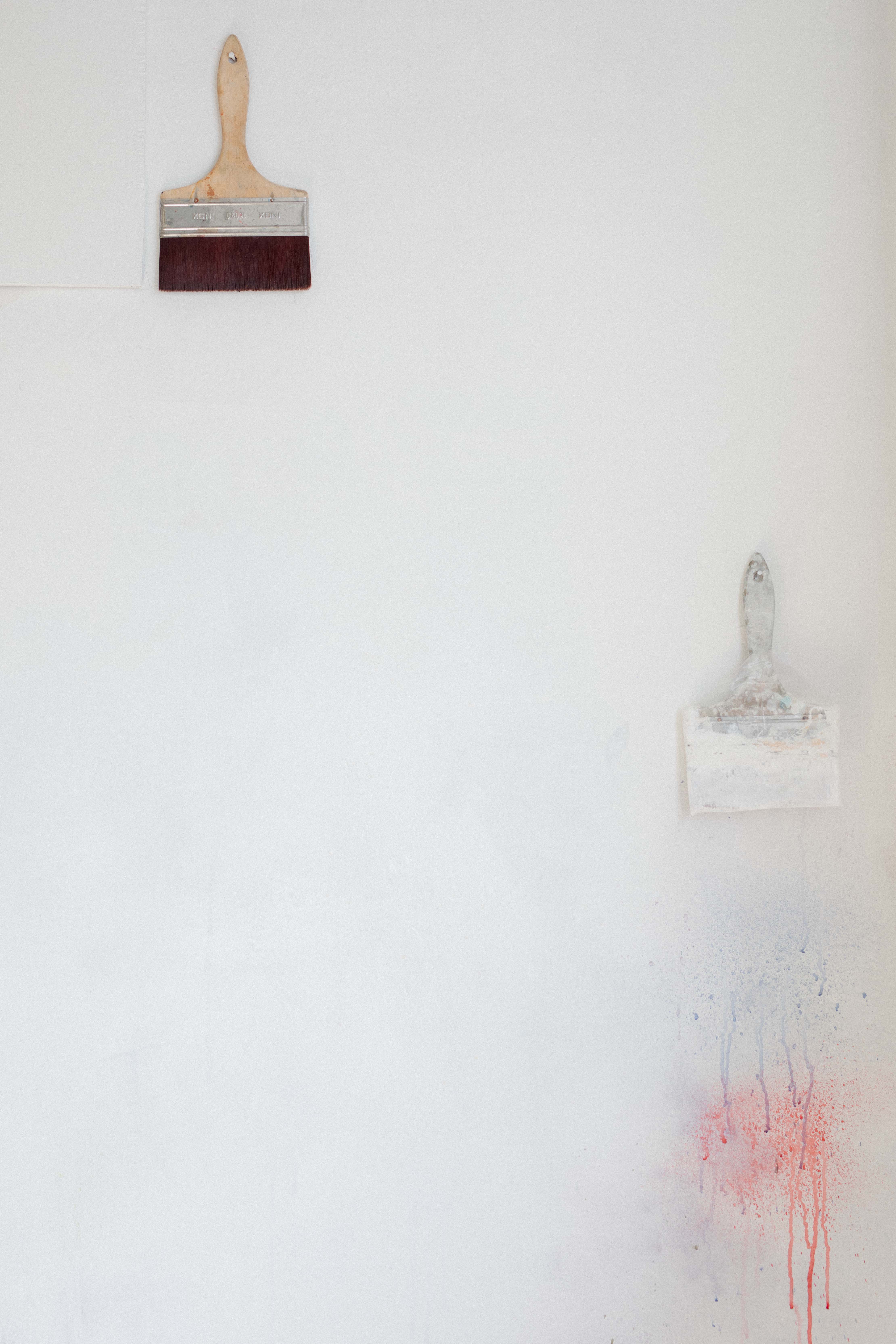
The genesis of things is always a little mysterious, but I remember wondering, what can happen in the form of painting if you allow in another form’s duration? So you’re right, there are not quite 25 works here but 24, which is the filmic second.
I wanted to get really close to cinema, so the proportions of each work are 16:9 and there are 24 of them. It became about really trying to engage with what can happen in a second, and looking at the deficiencies of both media.
I was considering about what painting could do that cinema can’t. How close can you get the two, and where is the gap? For me, that’s what the question here was.
I would say the former, but I would also say that the former is totally incidental. I want them to share a certain tonality, or I want there to be some kind of discourse within the archive, as it were.
I began this body of work on the 31st of December of last year and that was arbitrary, like all things in art, which begin arbitrarily and take on new meaning in time, or at least in my case that’s how it works.
There are way, way more images than there are paintings, and they are all kept in folders on my desktop, ordered to the date. The body of paintings, which is separate from the images, are then concurrent as well.
I’m the person engaging in the media and capturing the images, so it’s almost impossible that they don’t start to acquire certain obsessions or modes of thought.
If I had begun in the middle of summer, then invariably the images would be less penumbral; they would have a certain kind of hope or hopelessness.
There’s a psychology to their very capture that I’m encountering and dealing with. So it’s all incidental, but it’s also purposeful and has to be. Very seldom do I paint a picture that just stands on its own.
It seems that the borders of each image naturally engage with the borders of the next. Whether that’s physical or metaphorical.

It’s kind of just how I’ve always been. Whether it’s the music I listen to or movies I watch, there’s always a certain innate, maudlin sadness.
The feeling of welling, strong emotion is one I seek very, very regularly, but it’s more about this private sadness.
I think there is a kind of method acting involved when I paint. I probably do manipulate my own face and try to get into what emotional state the people in the paintings are experiencing and heighten it as much as possible to get that overture, good-cry feeling, which is indistinguishable from happiness or sadness.
It’s the affect itself; the feeling of affect.
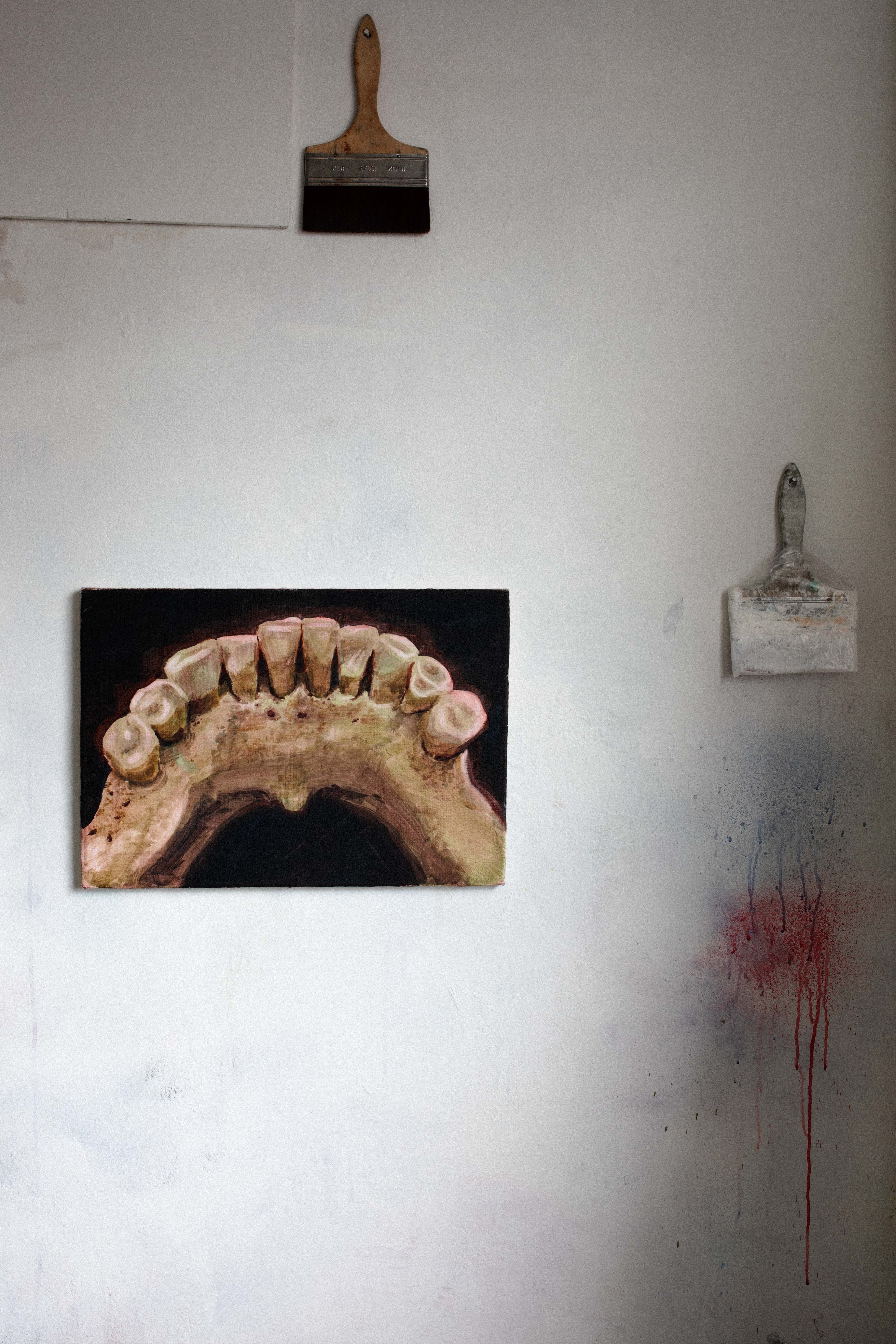
I don’t think it gets talked about a heck of a lot, but there really is something to verisimilitude that I think of as being important in my work.
I don’t think it’s very sexy or stylish right now to be depicting something in a way that feels very tactile or recognisable in a way where you go, ‘Ah, I know exactly how that feels.’
But that is important to the work—to find a new way to make something that feels really tactile.
Photography is so mediated that it becomes very far away from what it really feels like to be alive, whereas painting to me very much can describe what it feels like to get pinched or bite your tongue.
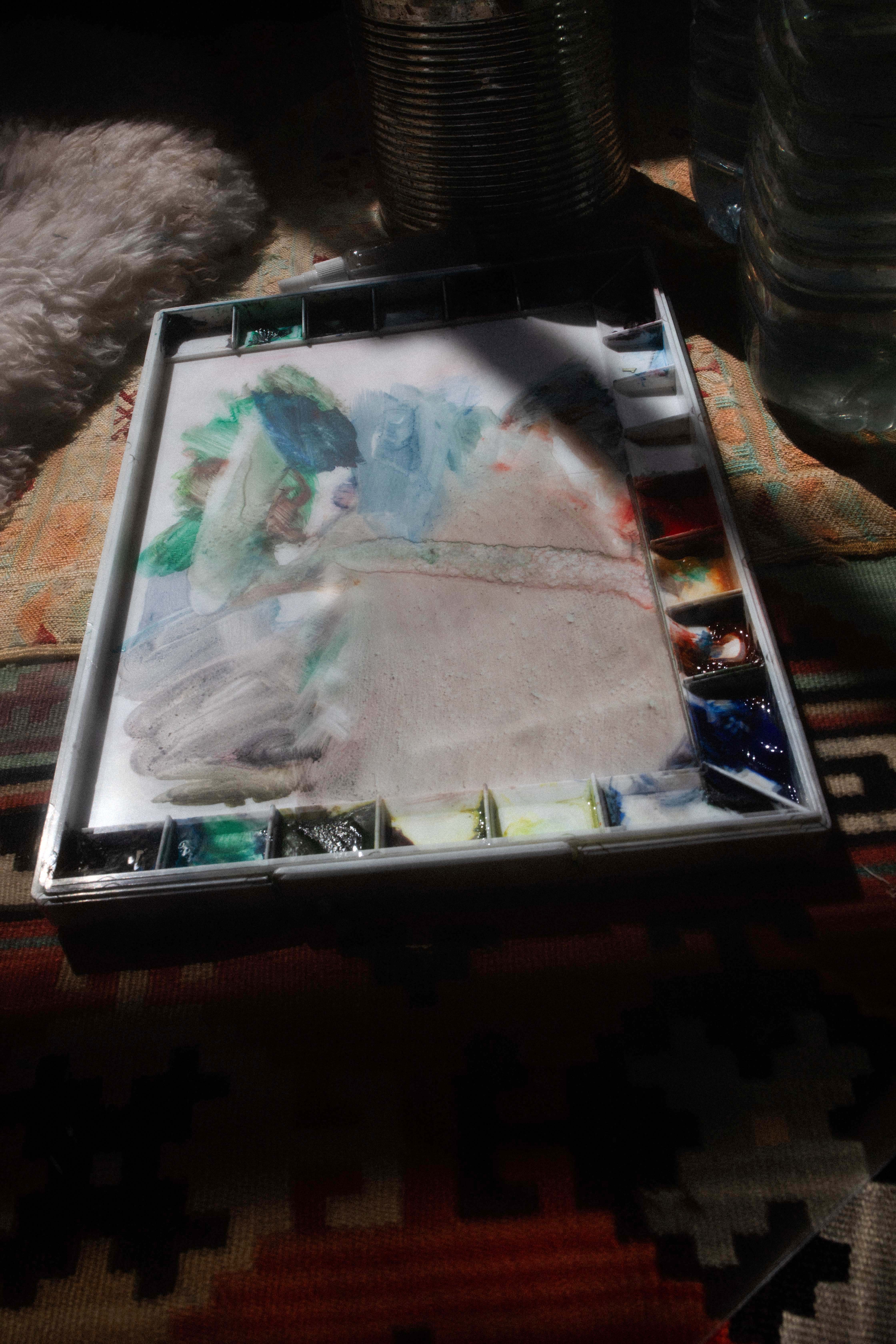
Like a lot things in the studio, it happened not necessarily by accident but out of necessity. In my final year of graduate school, I was affixing watercolour paper onto canvas or stretched linen, gluing it to the surface, wanting desperately for it to be painting onto a structure.
Essentially I began painting directly on to the gesso because I didn’t have paper.
There’s a huge argument between them—the watercolour does not want to be on the gesso, it will bead to begin with and it’s extremely removable, so you spray it with water and you’re essentially restarting the painting. It has to be, at least in the very first stages of it, done in one go. Or else you’re fucked.
Yes, definitely and incontrovertibly that has to be the case. You learn the limitations of the technique you’re using and then those limitations begin to guide the way you see the world.
The source material I look at now is with a much sharper eye than I used to, and that’s not something that is even fixed. It’s like at this point of time this is how I’m looking at things.
I’m sure I will want to blow that up in 18 months or two years’ time and do it completely differently, but it’s fun for things to get refined and for it to feel like the paintings are getting better or more specific or more true to what they can be.
It’s always about reaching an ideal... that’s probably very religious sounding. —[O]
A respected voice in contemporary art discourse.
Focusing on ambitious storytelling and insightful art-world commentary. Ocula Magazine publishes in-depth interviews, critical essays and timely analysis on the artists, exhibitions and ideas driving the global art world.
Learn more about Ocula Magazine
Showcasing the best of the art world.
Ocula partners with galleries from around the world to highlight their artists, artworks and exhibitions. Gallery membership is by application and invitation, with each member vetted by an independent panel.
Learn more about Ocula Membership
Specialises in the sale of major artworks.
Led by a team with deep ties to the world’s leading auction houses, galleries and collectors. Ocula’s advisory team offers bespoke services to high-net-worth clients from around the world who are looking to acquire the best of contemporary and modern art.
Learn more about our team and services