





Joanna Warsza: 'Art Will Remind Us That We Need to Go In Another Direction'
In Brussels, Bozar hosts an exhibition that focuses on Poland’s vantage point at the epicentre of the continual shifts and struggles in Eastern Europe. Ocula speaks to its curator on the impetus for the show at this critical time for the region. Save to My OculaIn Brussels, Bozar Centre for Fine Arts hosts an exhibition that focuses on Poland’s vantage point at the epicentre of the continual shifts and struggles in Eastern Europe. Ocula speaks to its curator, Warsaw native Joanna Warsza, on the impetus for the show at this critical time for the region.
Since the full-scale invasion of Ukraine three years ago, global attention has increasingly focused on Eastern Europe—a diverse region with a shifting identity, which borders on Russia and is now home to large communities of displaced Ukrainians. Poland in particular, a country that shares its border with seven countries, including Russia and Ukraine, looks set to play a major role in Europe’s future, both in terms of its increasing militarisation and its role in international diplomacy. These are some of the issues addressed by Familiar Strangers. The Eastern Europeans from a Polish Perspective, an exhibition commissioned by Bozar to coincide with the Polish Presidency of the Council of the European Union in 2025.
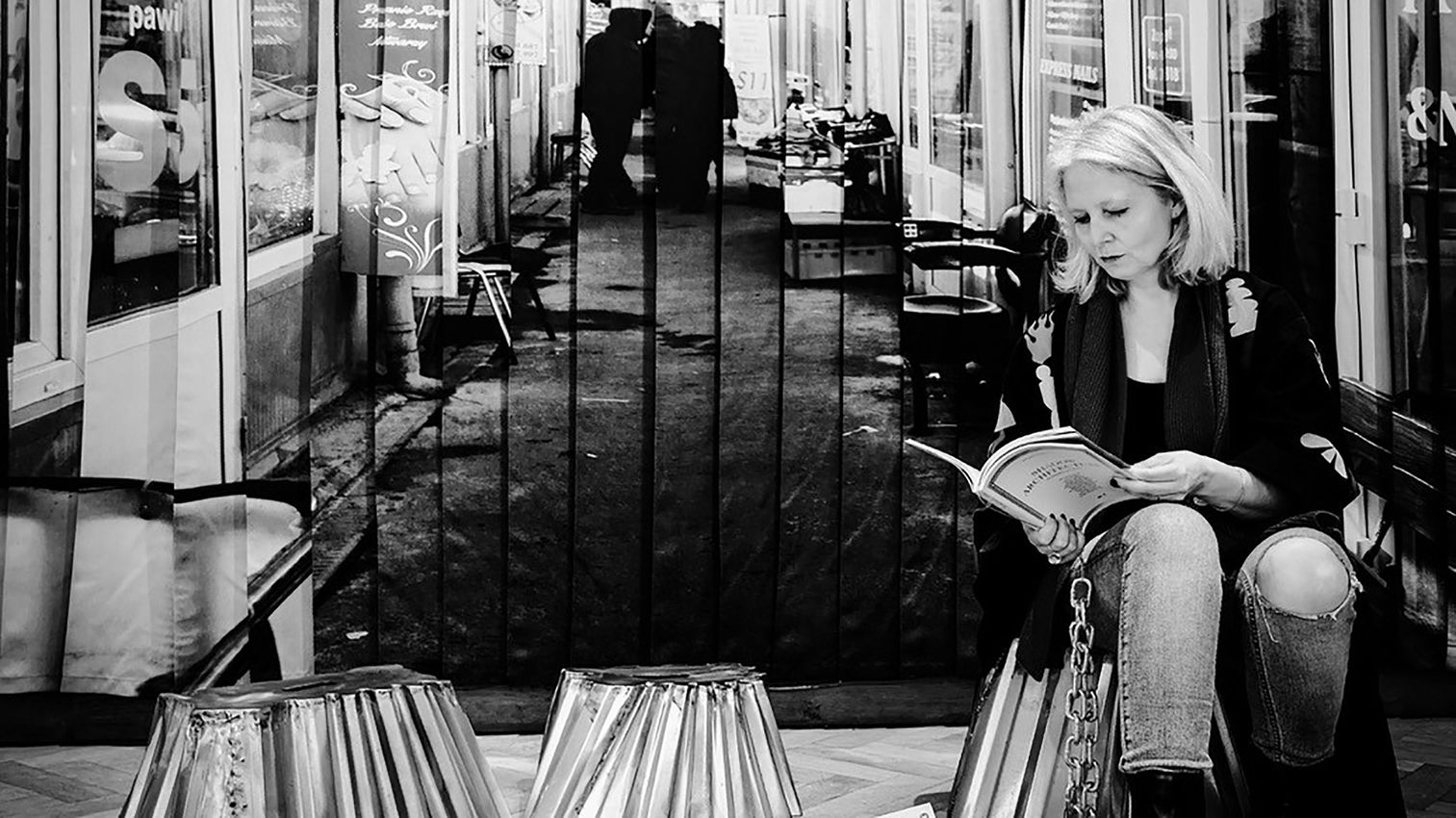
Conceived by Joanna Warsza, who lives and works in Hamburg, the exhibition reflects on the multifaceted nature of contemporary Polish art through the work of 13 artists connected to Poland, many of whom are also active beyond the country’s borders. Its scope is broad and eclectic, with practices that reflect the complexities of a multicultural society whose arts and culture, Warsza argues, are in a continual state of ‘becoming’.
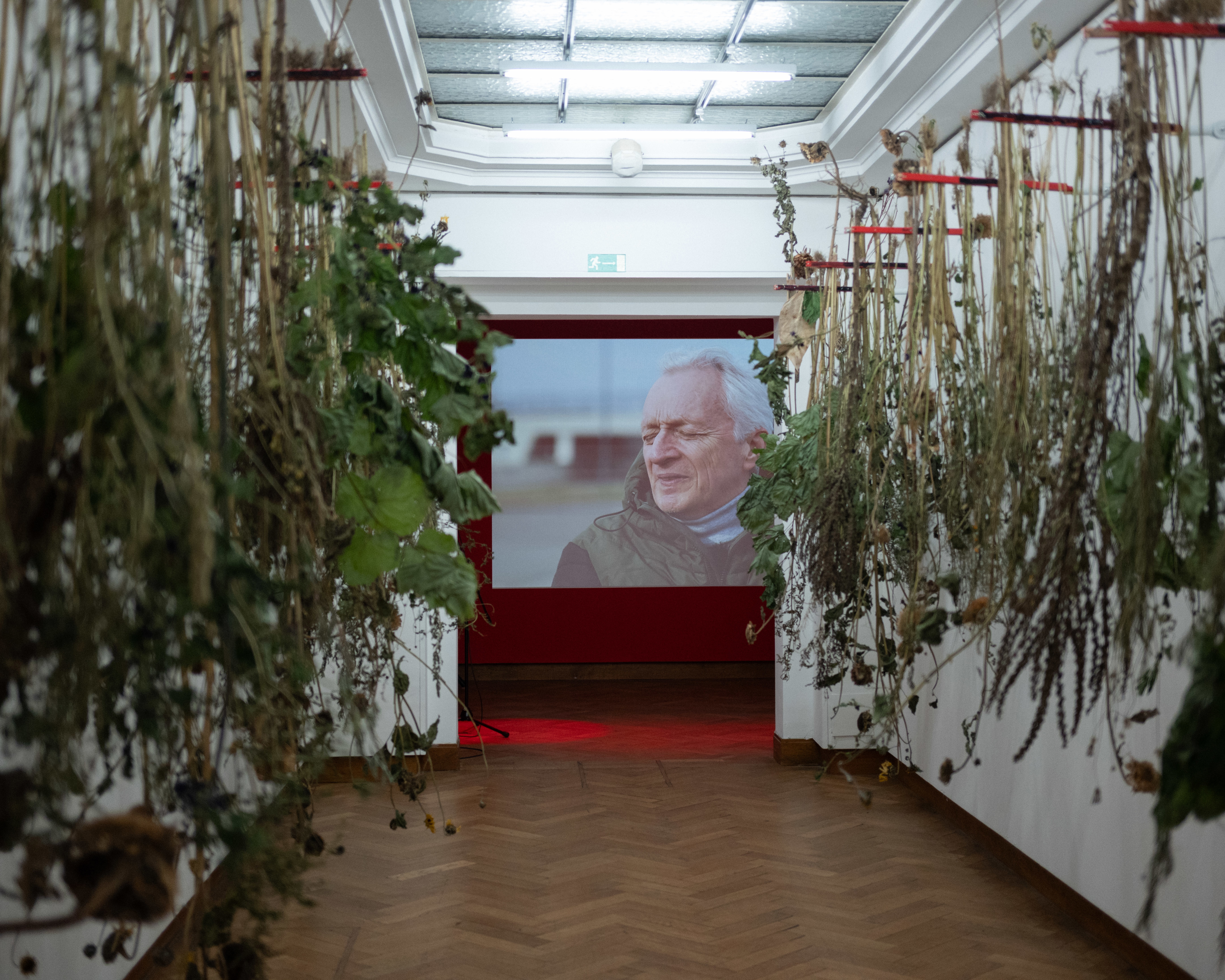
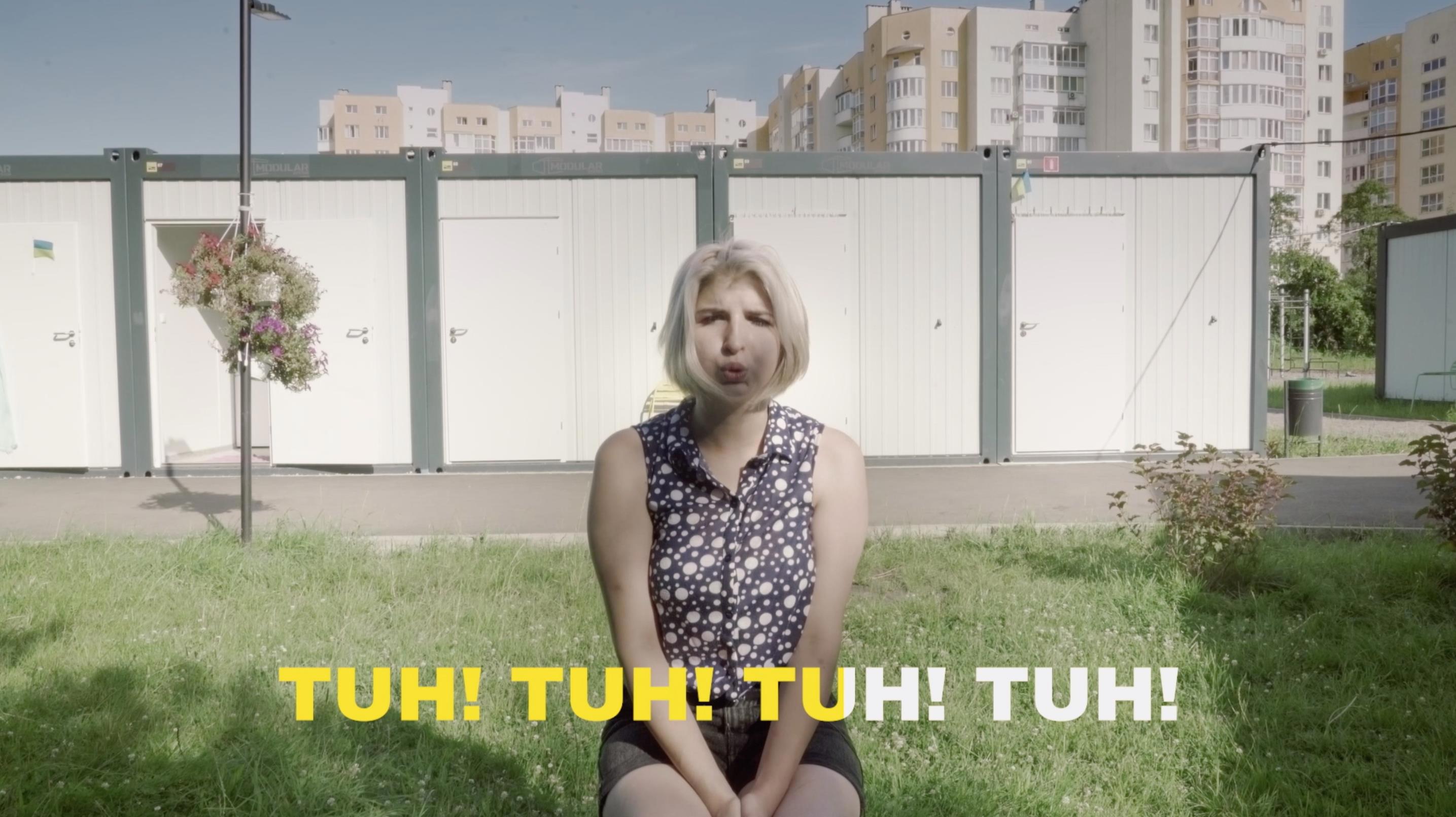
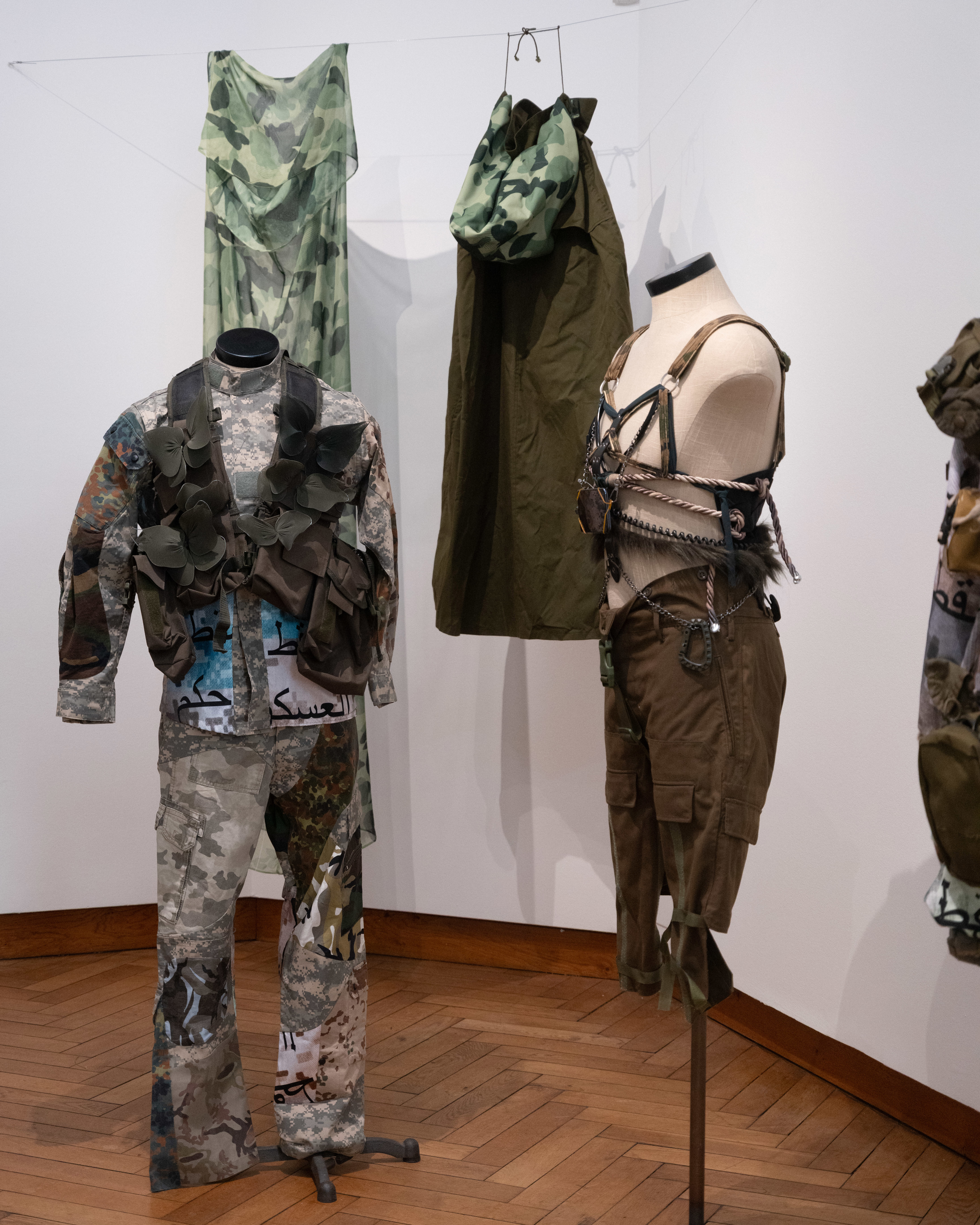
Egyptian Polish artist Jasmina Metwaly’s patchworked camouflage garments are devised for use during protest marches, where their design enables wearers to evade state surveillance and police violence. The Ukrainian collective Open Group—founded in Poland in 2012 and, since 2015, based across several countries—are showing Repeat After Me (2022), a video of Ukrainians in a refugee camp in Lviv mimicking the sounds of weapons used in the Russian invasion of Ukraine, from the staccato outbursts of semi-automatic rifles to the howls of missiles.
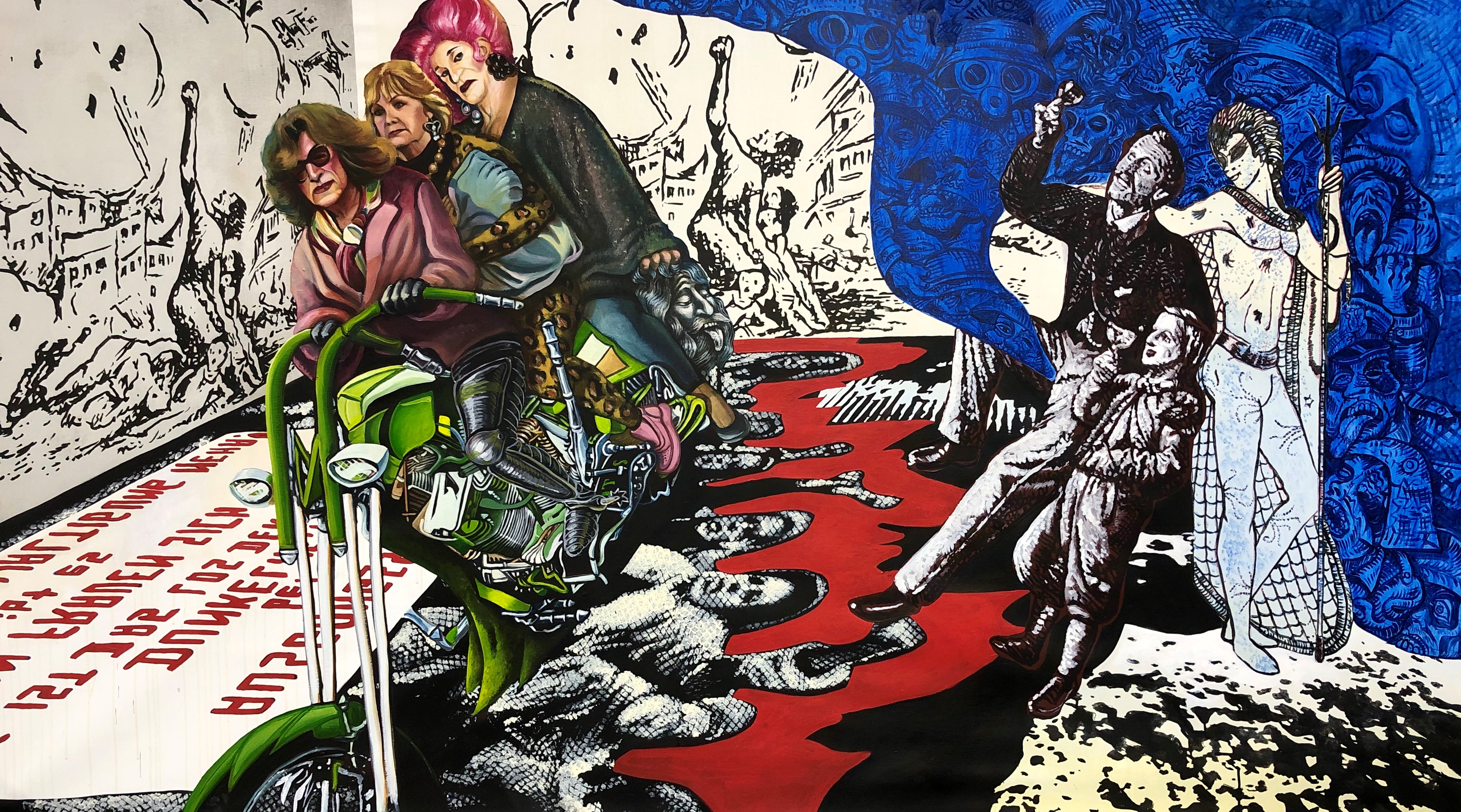
Mikołaj Sobczak‘s counter-historical paintings collide eastern and western queer iconographies in surreal, kaleidoscopic scenes, such as Modliszka (Mantis) (2020), in which a trio of drag queens—active in the 1966 Compton’s Cafeteria riot for trans rights—sit astride a motorcycle against a background of stormtroopers wearing gas masks, sampled from the iconography of German expressionist Otto Dix. Warsza spoke with Ellen Mara De Wachter about the influence of the cultural theorist Stuart Hall, the breadth of Polish contemporary art, and how her personal background informs the exhibition.
EMDW: How did it feel to have the opportunity of curating an exhibition of Polish art at what seems like a historic moment?
JW: When I was growing up in the 1980s in eastern Europe, I felt that we were not fully European because the true Europe was western Europe. Also, Poland after the Second World War was a very homogeneous society, despite cultivating a multicultural image of so-called Mitteleuropa [central Europe], and maybe that’s why I’ve always been interested in diasporic, transnational, and multicultural life and dialogue. For 15 years, I have lived abroad and, whenever I return to Warsaw, I see how quickly it is changing from a post-communist society to a post-migrant one. It is filling up with ‘familiar strangers’ and recognising its own ‘familiar strangeness’.
“I have come to see myself not as an activist but as a curator who can support activist messages”
Being invited to curate this exhibition was a great opportunity to touch on some of those topics and be in conversation with many artists from various diasporas and minorities, who, in one way or another, deal with the idea of culture not as a way of being, but a way of becoming. The show comes at a time when we Europeans must really define ourselves and, for this to happen, east and west must see each other, both the good and the bad. Despite our differences, we need to learn to live with a legacy that is both terrible and thrilling.
EMDW: Let’s talk about the term, ‘familiar stranger’: how did you come across it and why have you chosen to use it?
JW: Familiar Stranger is the title of Stuart Hall’s 2017 autobiography. Hall, a Jamaican British scholar whose writings address diaspora and identity, grew up in Jamaica, with a perception of Britain as a metropolis, a place to look up to. When he moved to the U.K., however, he understood that perspective to be a colonial construct, and he started to feel like a stranger, both in the U.K. and back home in Jamaica. Yet, for him, the condition of ‘familiar stranger’ was productive, and helped him develop the notion that, in cultural exchanges, you should not stay fixed, but you can look at it as an opportunity for both sides to learn from each other. He understood that, to thrive in a culture, it could be empowering to be a familiar stranger, always in a state of questioning and recognising a need for improvement.
EMDW: Does the exhibition have an activist intention?
JW:
Many of the artists in the show are also activists. Małgorzata Mirga-Tas divides her time between art and activism for her local Roma community. I met Jasmina Metwaly as a member of the Mosireen Collective on Tahrir Square during the Arab Spring and her video and textile work draws on this experience. Oliwia Bosomtwe, the author of Like the White Man. The Story of Poles and the Others (2024), is involved in the movement for people of colour in Poland through her writing and editing, and Zuzanna Hertzberg is an anti-fascist, intersectional, and anarcho-feminist ‘artivist’.
These days, it’s hard not to be an activist, and not to wish for an exhibition to have some sort of social or political stance. Generally speaking, over the years, I have come to see myself not as an activist but as a curator who can support activist messages and build bridges between them and contemporary art.
EMDW: The exhibition opens with Janek Simon’s figurative sculpture Familiar Stranger (2025). How does this piece usher in the concepts behind the show?
JW: The sculpture is from Simon’s series ‘Meta Folklore’ (2022–ongoing). He is an anarchist and a computer programmer who uses artificial intelligence and machine learning in a socialist way. This sounds utopian, but maybe it is good training for the imagination these days. To make his sculptures, Simon feeds huge data sets of depictions of anthropomorphic figures from around the world into the computer: all the self-representation the human imagination has produced, from folk and traditional artforms to Lego figurines. The result is a dialogue with machine learning to find an anthropomorphic representation that would be universal—not according to a Eurocentric worldview but in a decentred way. It’s a semblance of a planetary Homo sapiens, merged with a cyborg of sorts. Simon’s meta question is whether tools such as AI can be redirected from a purely capitalist use—related to surveillance, profit, and control—to a more social use, to create a planetary commons.
EMDW: In contrast with that universalist ambition, the exhibition includes some culturally specific imagery, for example Mirga-Tas’ textile assemblages relating to the history of Roma people in Poland and further afield.
JW:
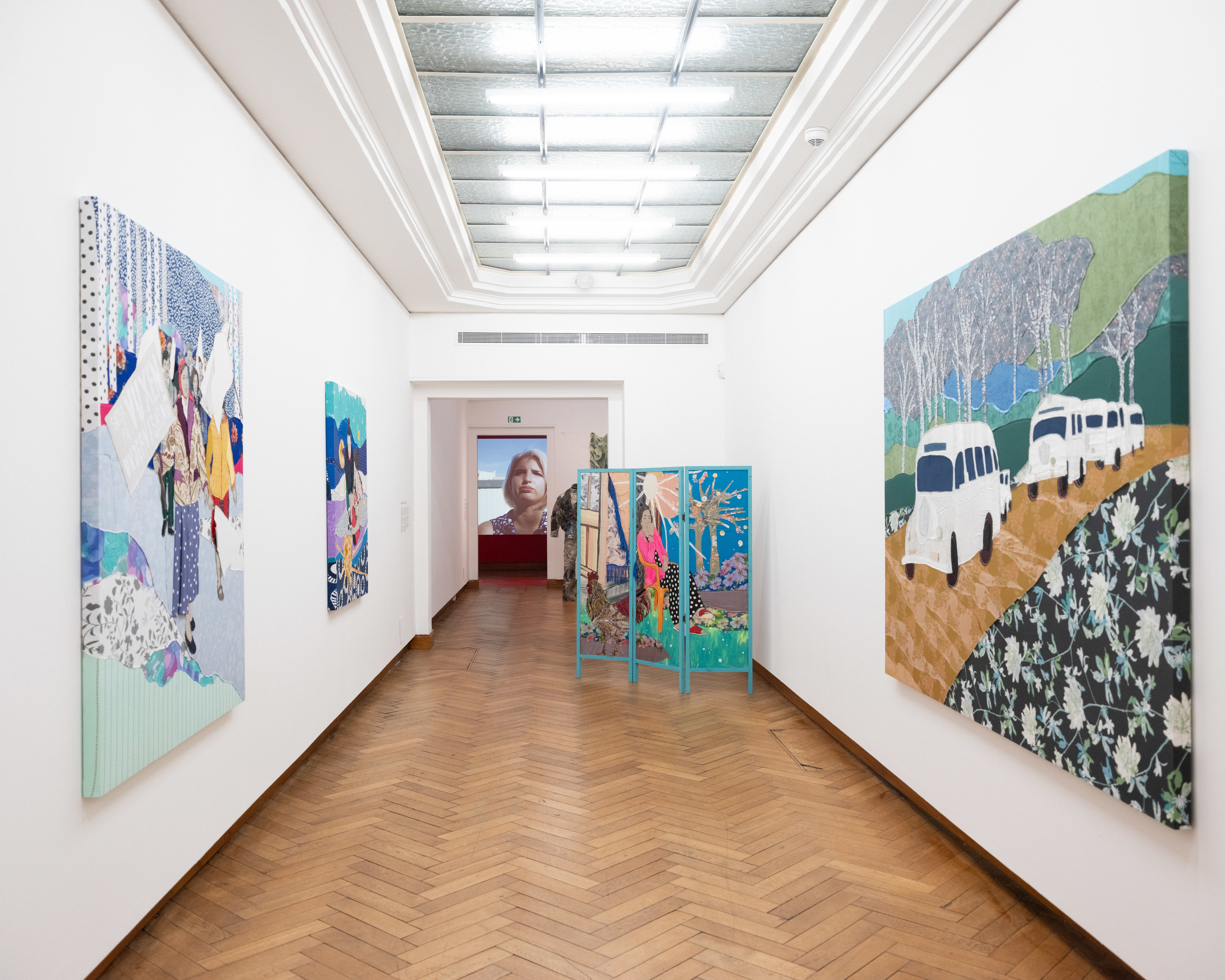
The Roma community is the biggest European minority, with 12 million people present in every European country, and it does not have any nationalist tendencies. Mirga-Tas traces Roma histories in Europe in works such as Przytradle kola so przedzidzile (Those Who Survived Have Arrived) (2023), which references the ‘White Buses’, an initiative of the Red Cross in Sweden to send buses to rescue survivors of concentration camps, such as Ravensbrück. But the ‘rescue’ was conditional because Roma people were not allowed on the buses. One of the passengers who boarded the buses illegally was Sofia Taikon, a Polish Roma woman who went on to make a life for herself in Stockholm, becoming part of a famous activist family and reforming anti-Roma legislation in Sweden.
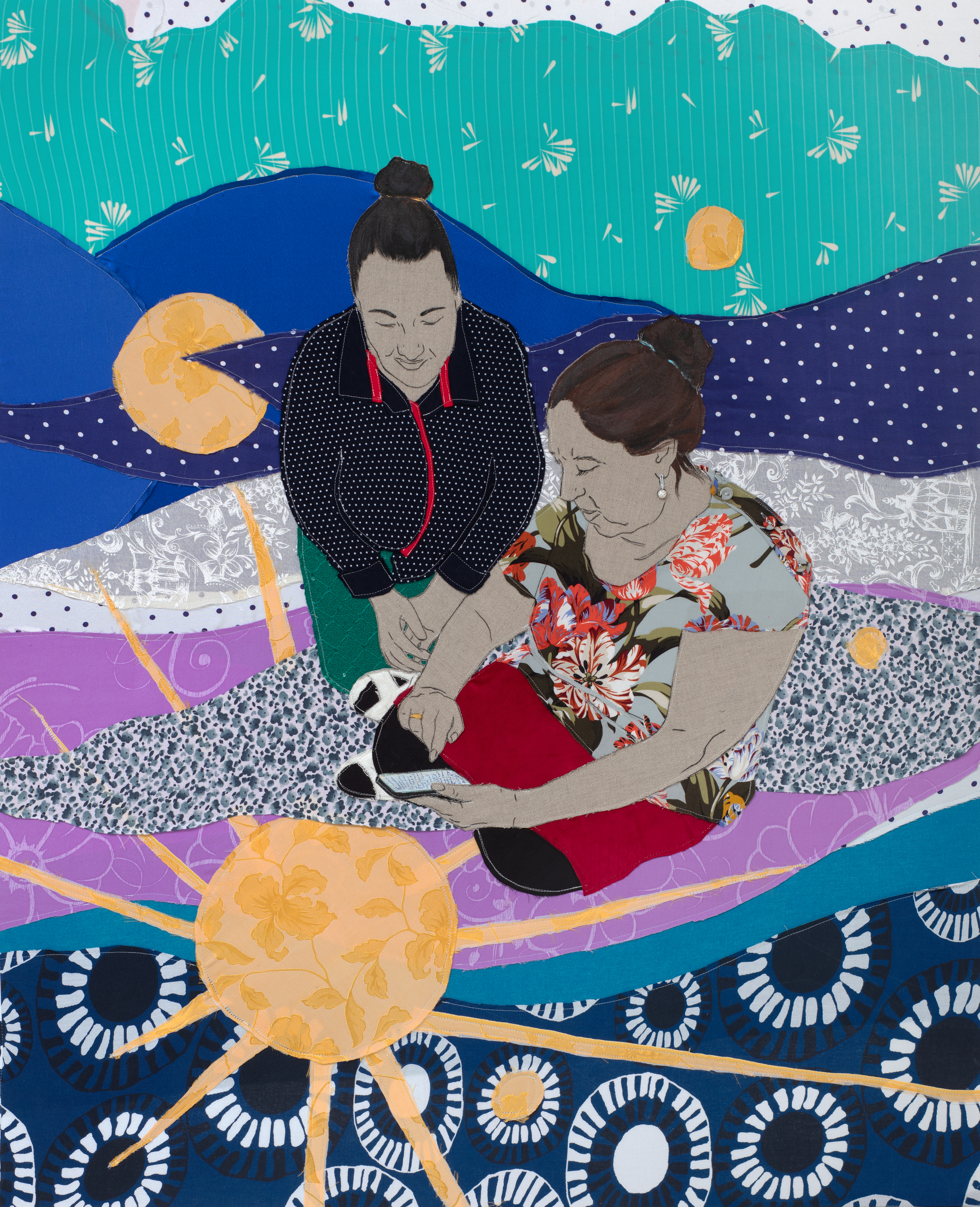
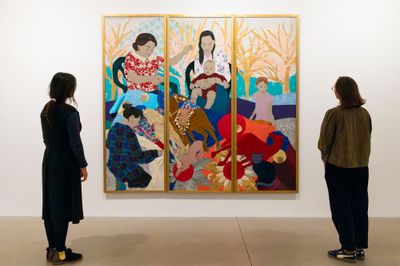
Another work, Papuszakri Gili (Papusza’s Song) (2024), which shows two women participating in a quilt-making workshop about the Romani poet Papusza, relates to what Mirga-Tas calls her ‘personal zodiac’—a group of women who guide her and influence her life, which she depicts performing routine activities in everyday scenes.
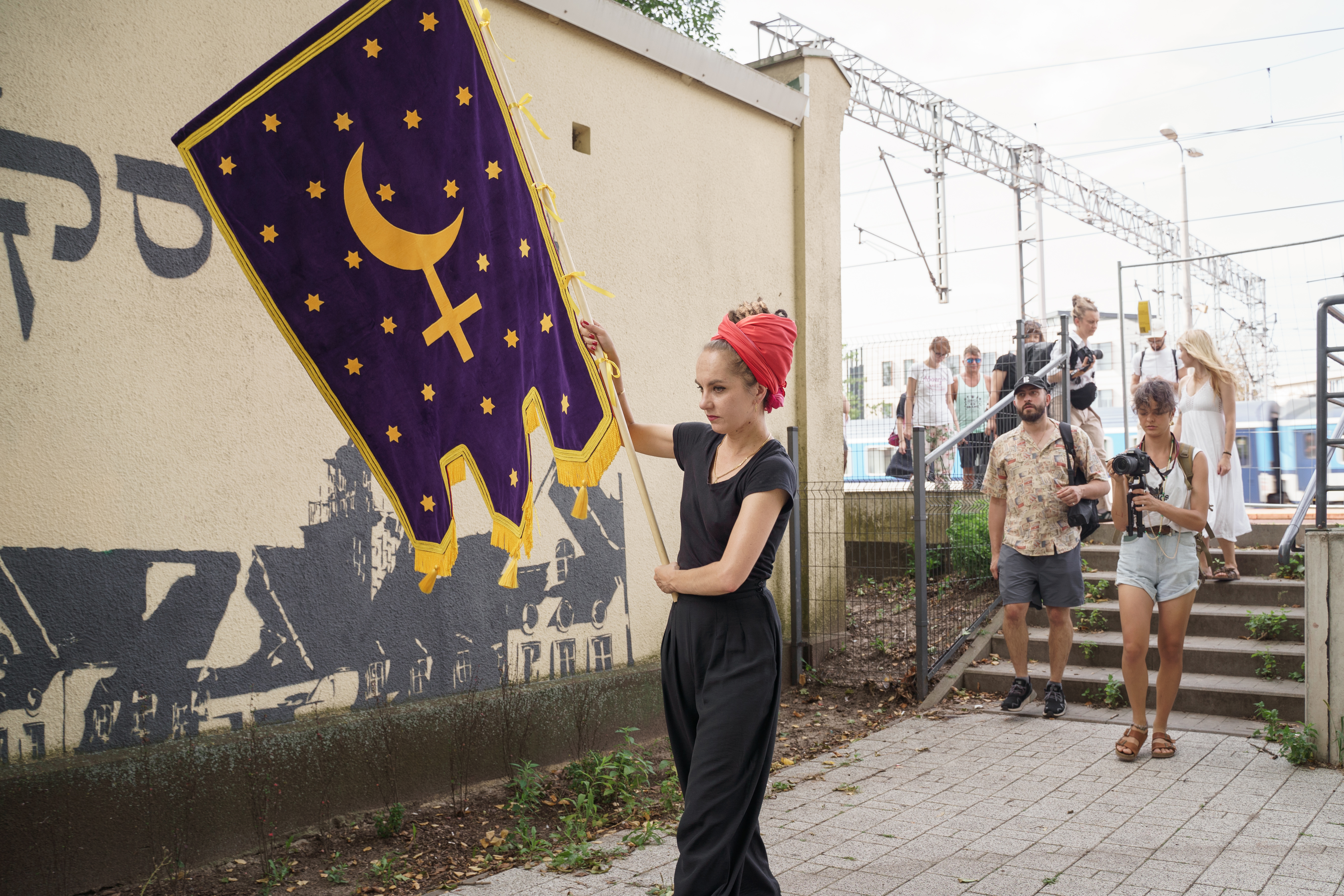
EMDW: A group of banners by Hertzberg, who refers to herself as an artivist, are similarly striking in their beauty, but they are also used in protests. What is the origin of these works?
JW: Hertzberg is a Jewish anarcho-feminist, whose work is concerned with terminating the so-called ‘subtenant contract’. This is a reference to The Subtenant (1992), a book by journalist Hanna Krall about the historical relationship between Poles and Jews. Krall describes the situation of Jews in Poland as being in a permanent state of subletting, and their presence as being conditional. One can say this applies to other minorities and groups, too: reading the news over the past few days, for example, we can see that the presence of Palestinians in the U.S. is also becoming conditional.
“Art will always be there to remind us that we need to go in another direction.”
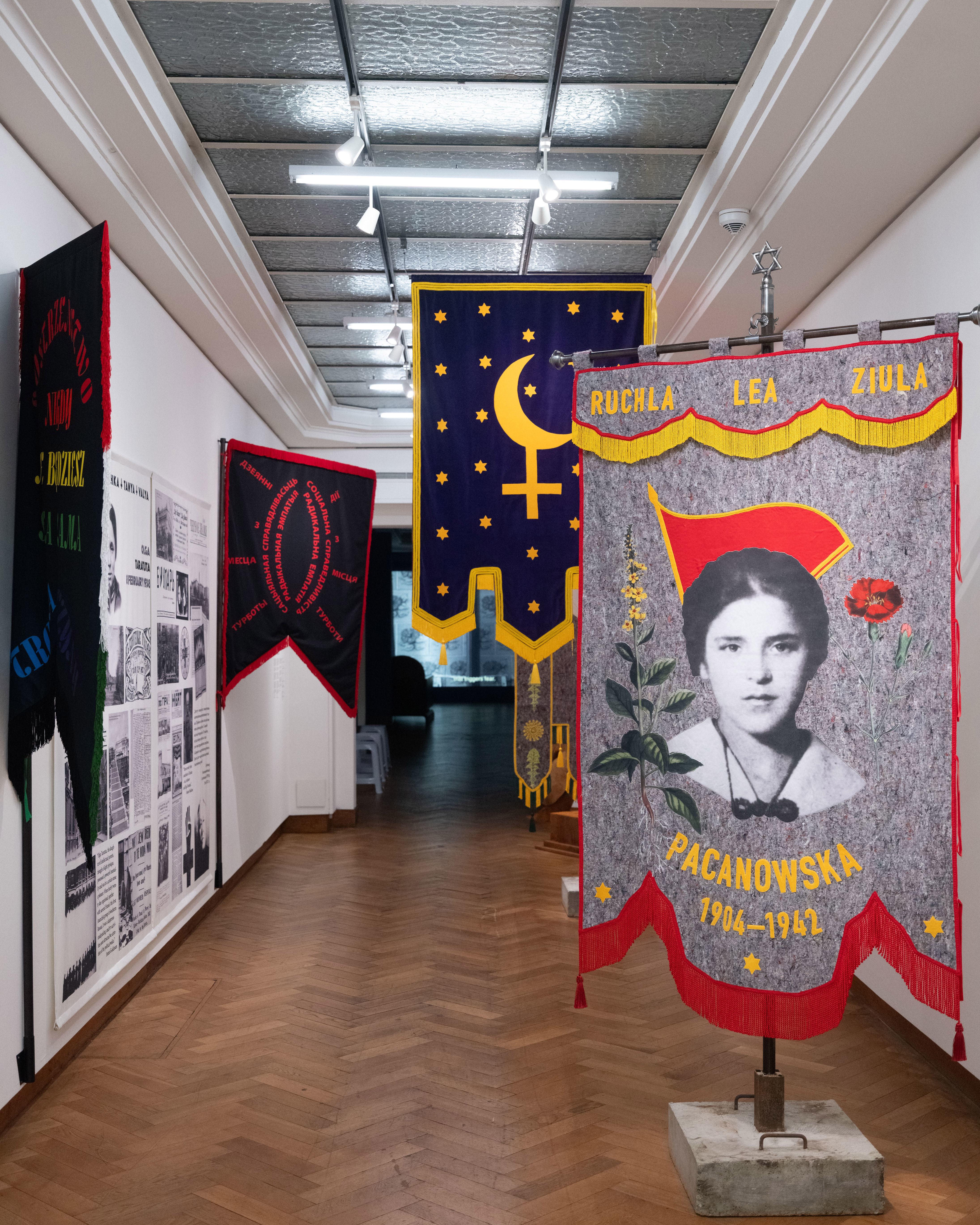
Finding a way to terminate the subtenant contract is Hertzberg’s driving force, and she does this through several channels, including art and activism. She is also involved in the abortion movement, because abortion is still banned in Poland. Often, her banners are first used in protest marches, and then exhibited as artworks. Recalling the ornamented banners displayed in churches and used in religious processions, Hertzberg replaces the image of the Virgin Mary with that of other Jewish women whose stories have been written out of history.
EMDW: Across the world, censorship of cultural outputs is on the rise. How has this played into the way you have curated this show?
JW: I live in Germany, where self-censorship is now part of everyday life when it comes to discussing Israel and Palestine, but processes of censorship are increasingly at play across the whole of Europe. However, in curating this show, we had both the full trust of Bozar and the full support of the Adam Mickiewicz Institute, the government organisation that promotes Polish culture abroad.
I do not take this for granted: I see it now as a luxury to be able to align political values. We don’t know how long it will last, as the next election in Poland is at the end of 2027. At this moment in time, in some parts of Europe, we still have the privilege of trust and freedom of speech. This might be just a window of opportunity, but hopefully not. Art will always be there to remind us that we need to go in another direction. —[O]
Familiar Strangers: The Eastern Europeans from a Polish Perspective is on show at Bozar, Brussels, from 14 March through 29 June 2025.
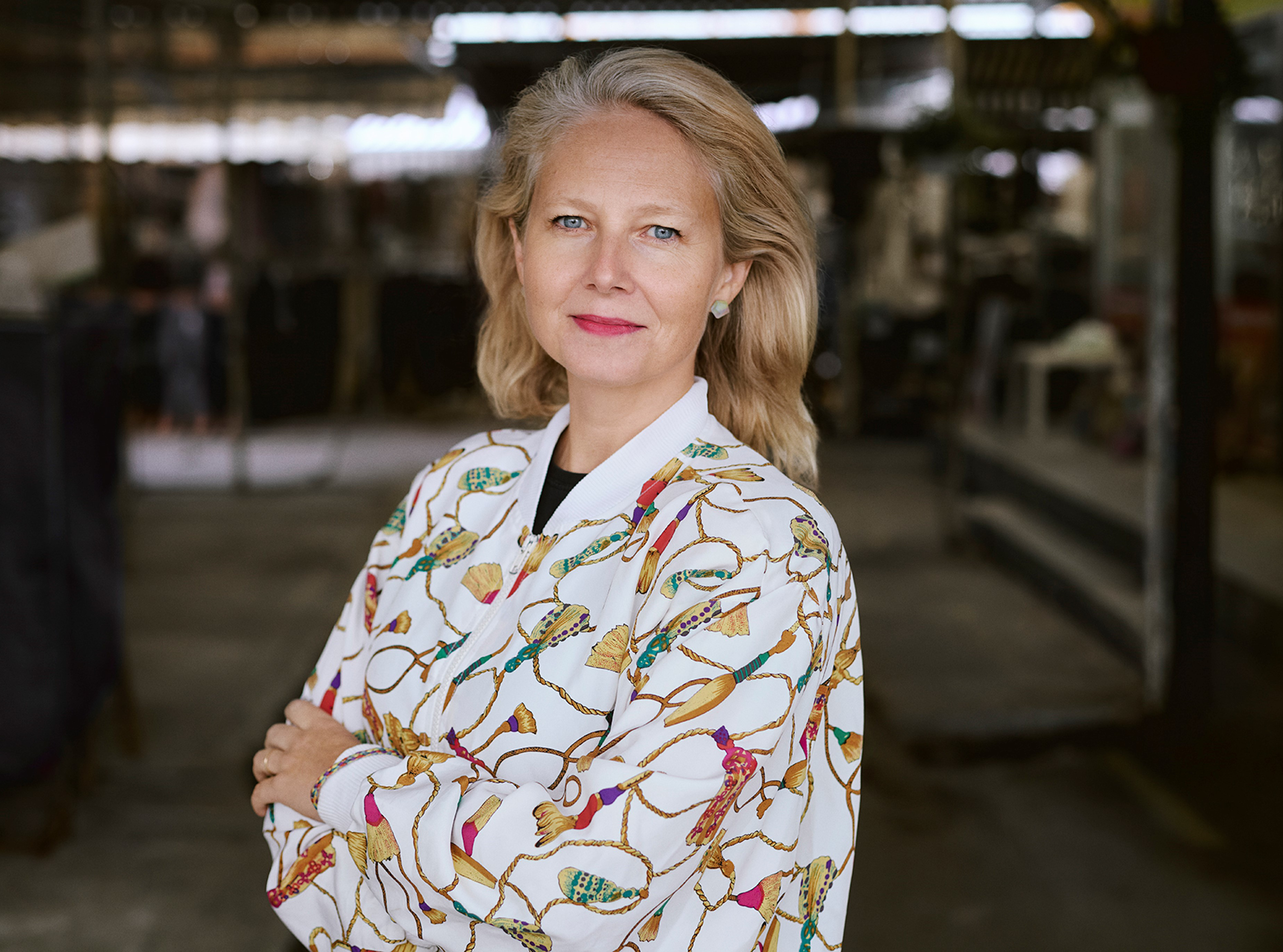
Main image: Joanna Warsza at Expo Familiar Strangers. Courtesy Bozar, Brussels.






A respected voice in contemporary art discourse.
Focusing on ambitious storytelling and insightful art-world commentary. Ocula Magazine publishes in-depth interviews, critical essays and timely analysis on the artists, exhibitions and ideas driving the global art world.
Learn more about Ocula Magazine
Showcasing the best of the art world.
Ocula partners with galleries from around the world to highlight their artists, artworks and exhibitions. Gallery membership is by application and invitation, with each member vetted by an independent panel.
Learn more about Ocula Membership
Specialises in the sale of major artworks.
Led by a team with deep ties to the world’s leading auction houses, galleries and collectors. Ocula’s advisory team offers bespoke services to high-net-worth clients from around the world who are looking to acquire the best of contemporary and modern art.
Learn more about our team and services