






Hold Still: Sally Mann's Memoir Reviewed
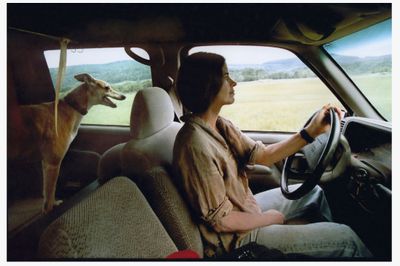
Sally Mann and her greyhound, Honey. © Sally Mann. Courtesy Penguin Random House.

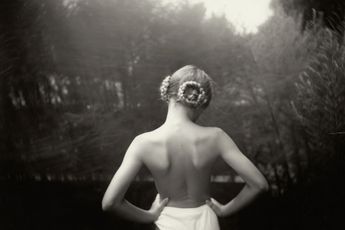
Few things sum up Sally Mann‘s approach to photography and writing better than the title of a central chapter in Hold Still (2015/2024). It is, with recognisable Mann gravitas, a Latin tag, lifted from the 12th-century theologian Richard of Saint Victor: Ubi amor, ibi oculus est. You might translate it as, ‘Where there is love, the eye lingers,’ but it is more complex than that. We love to look upon the ones we love—something Mann has done across her whole career—but love also makes us look when we might most wish to look away.
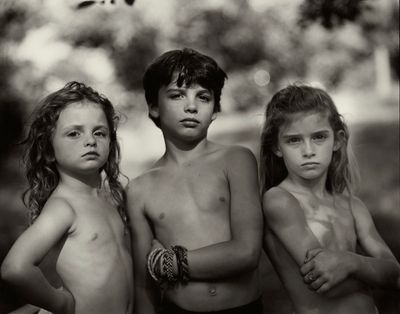
This double bind runs through Mann’s work, with its persistent reflections on death, history, and personal pain. But nowhere is it more visible than in the chapter’s main subject: Immediate Family (exhibited 1990, published 1992), the collection whose publication propelled her, for good and ill, to controversial stardom. At the time, a moral panic over the intimate, playful, confrontational images of her daughters and son threatened to drown out the real heart of the series: the inextricability of love and fear. It is a theme Mann pulls out explicitly in Hold Still, writing about the earliest photo in the series, Damaged Child (1984). Recording her daughter Jesse’s face, swollen from a reaction to insect bites, looking almost as if she has been beaten, with an expression of ‘damaged defiance’, Mann writes that she realised suddenly that photographing her child’s pain could, paradoxically, ‘be an escape from the manifold terrors of child-rearing, an apotropaic protection’ against further pain. The eye lingers on what it loves in the hope that nothing more will happen to it.

There are, perhaps, not so many photographers working today who are likely to quote medieval theology or drop the word ‘apotropaic’ into a sentence to explain their work, but Mann has never shied away from what a less articulate writer might call ‘the big stuff’. Hold Still is, in certain ways, the acme of that seriousness. First published in 2015 and reissued this year as a Penguin Classic, it is a dense, complex, and fascinating journey into Mann’s work and mind. Hold Still is a brilliant volume, simultaneously an autobiography and an investigation into her Southern roots, that plots a mazy path through a forest of Mann’s own photos, family snapshots, and archival material to form a kind of retrospective manifesto for her work.
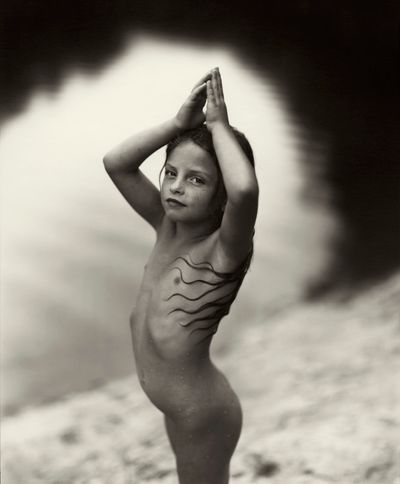
Across nearly 600 pages, it finds Mann digging deep into the strange recesses of her and her husband’s family histories, into the never-healing scars of race in her home state, into the controversy that greeted Immediate Family, and—over and again—into the big questions of life, death, art, and time. Above all, though, it is governed by that sense that the eye—and, with it, the mind—lingers on the things we love. Like the photographer herself, this is a book that asks you to hold still and be patient; and, like her photos, it rewards the effort many times over. —[O]
Main image: Sally Mann and her greyhound, Honey. © Sally Mann. Courtesy Penguin Random House.

A respected voice in contemporary art discourse.
Focusing on ambitious storytelling and insightful art-world commentary. Ocula Magazine publishes in-depth interviews, critical essays and timely analysis on the artists, exhibitions and ideas driving the global art world.
Learn more about Ocula Magazine
Showcasing the best of the art world.
Ocula partners with galleries from around the world to highlight their artists, artworks and exhibitions. Gallery membership is by application and invitation, with each member vetted by an independent panel.
Learn more about Ocula Membership
Specialises in the sale of major artworks.
Led by a team with deep ties to the world’s leading auction houses, galleries and collectors. Ocula’s advisory team offers bespoke services to high-net-worth clients from around the world who are looking to acquire the best of contemporary and modern art.
Learn more about our team and services