






Shadi Al-Atallah Has a Theory About Holes
Save to My Ocula
For Shadi Al-Atallah, a hole is ‘a portal to infinite possibility’—whether physical, spiritual, or psychic. Emily Steer met with the Saudi Arabia-born painter in their London studio.
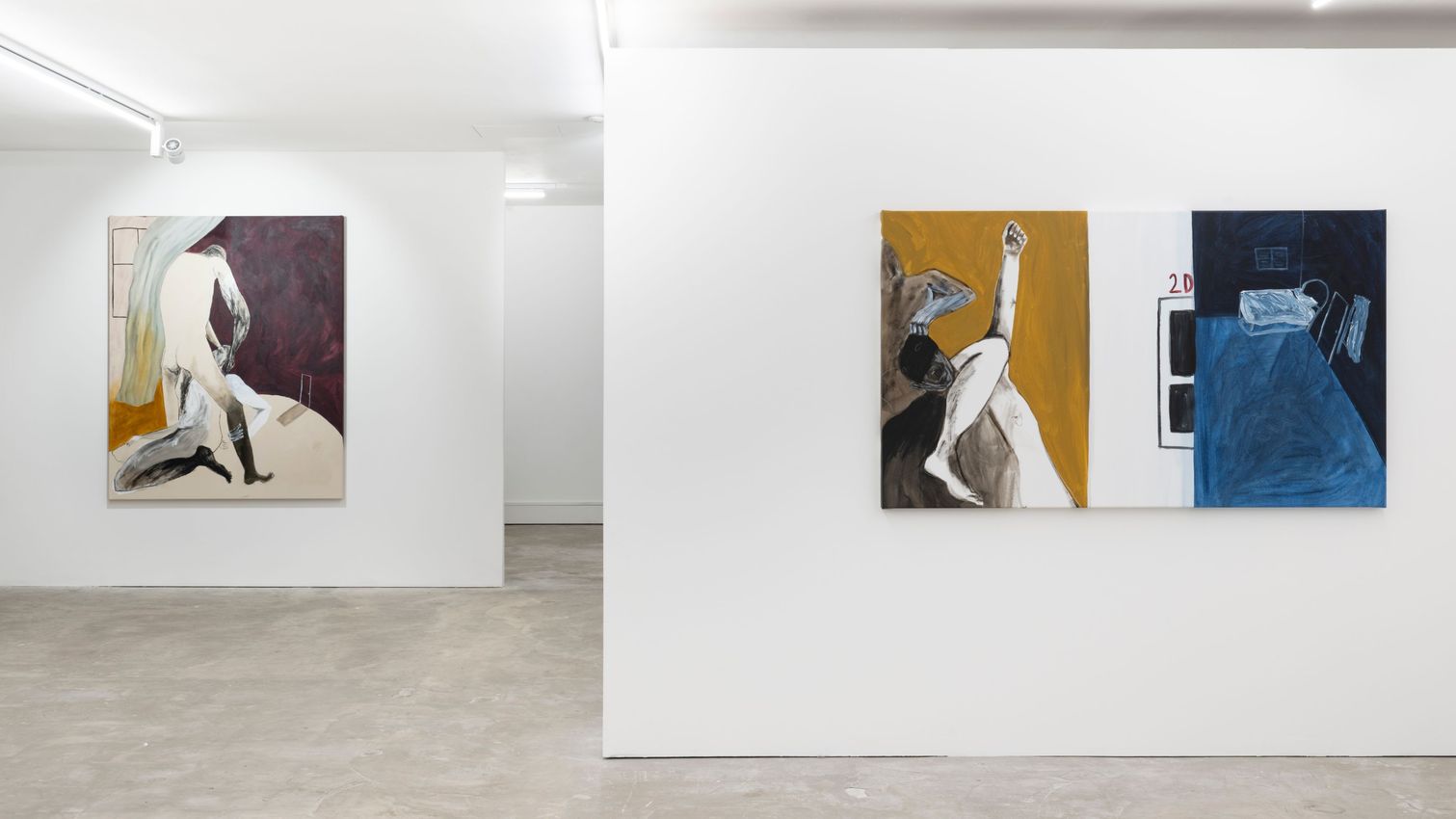
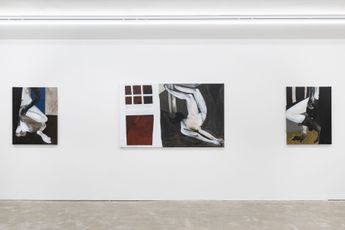
Shadi Al-Atallah‘s visceral paintings feature ambiguous, energetic entanglements of bodies, which can simultaneously be read as violent, sexual, or tender. These deeply psychological pieces might be tussles between multiple people, or more symbolic expressions of an individual psyche in conflict with itself. The movements in Al-Atallah’s paintings have been influenced by a plethora of performative and expressive gestures, from the queer ballroom scene to folkloric dance traditions from the African diaspora. The surrounding rooms are painted unsettlingly, with skewed perspectives, blood-red or inky-black backgrounds, and raging fires of which the figures seem entirely unaware.
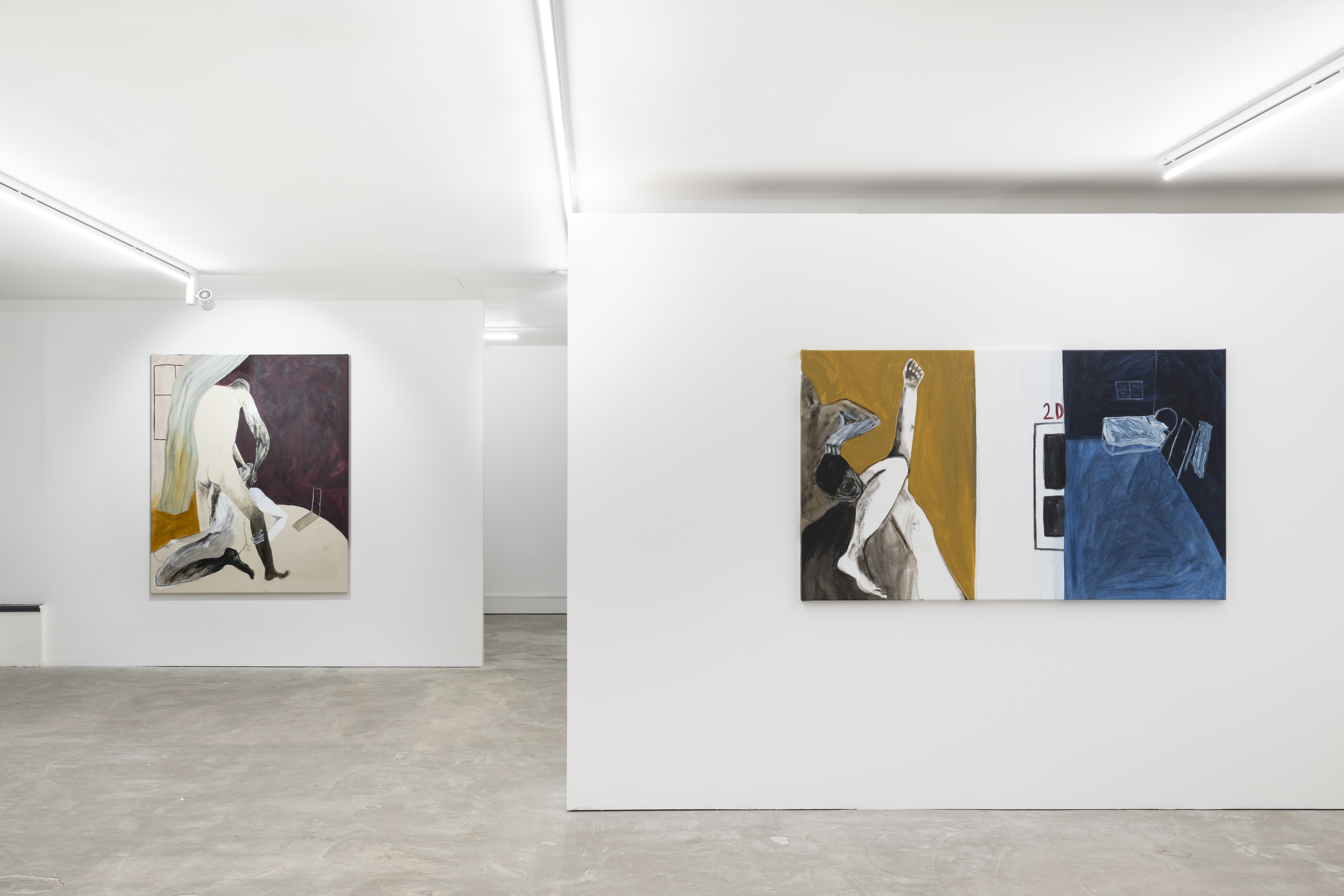
Al-Atallah’s recent exhibition, Hole, at London’s Niru Ratnam saw a shift in focus for the artist, who has begun to research black holes in relation to the transitioning body. The artist highlights the genderless state of holes in the body, inspired by Leo Bersani’s ‘Is the Rectum a Grave?’ (1987) and Pope L.‘s ‘Hole Theory’ (2002). This series of works challenges the typical view of a hole as something empty and destructive, instead presenting it as a portal to infinite possibility.
I met the artist at their South London studio to discuss transitioning, repetition compulsion, and their new approach to collage using fetish magazines as source material.

ES: The collages you’ve shown me today include very visually impactful images. Is there a feeling, or a particular dynamic between the figures, that makes you choose a source image?
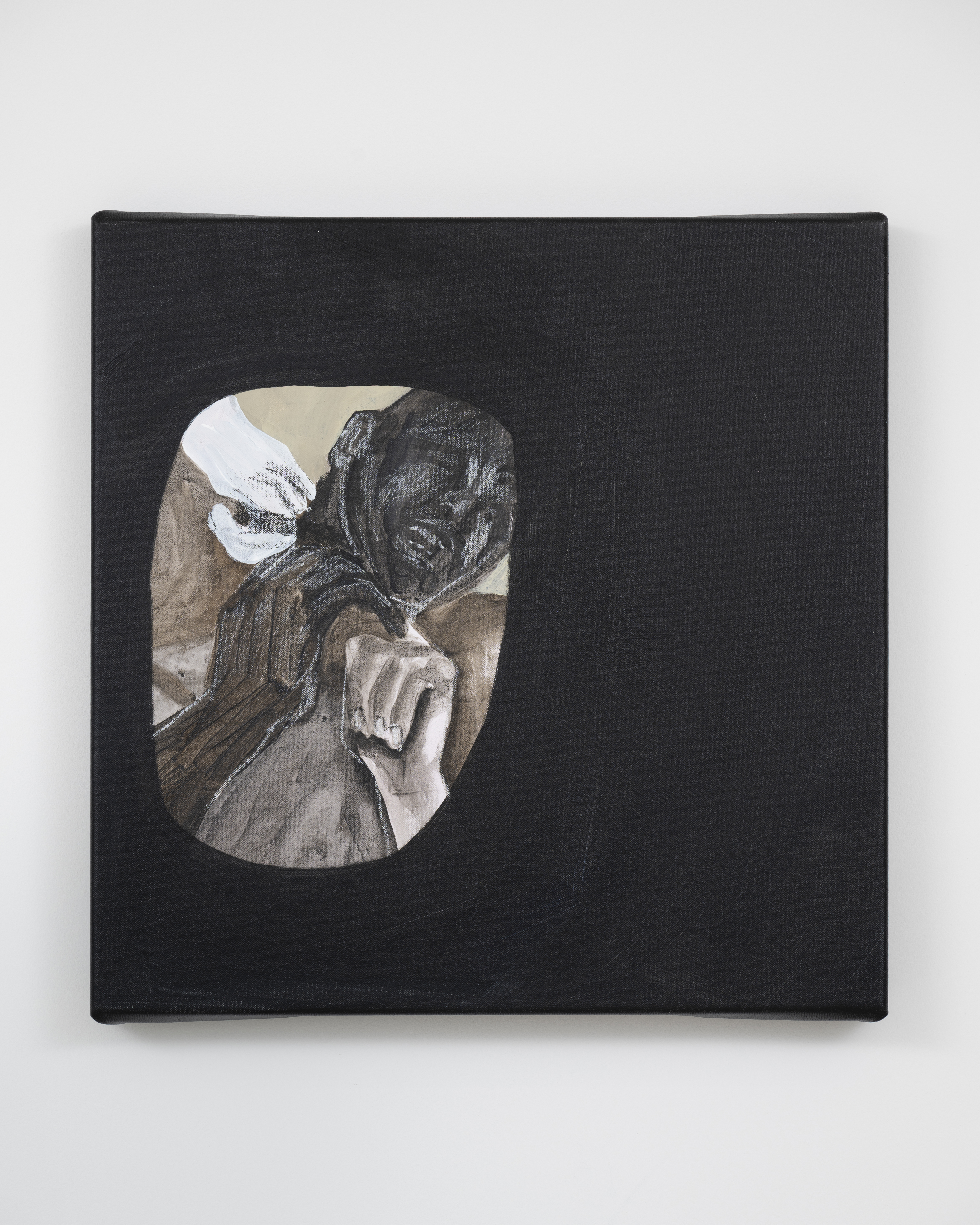
SA: A lot of my source imagery comes from fetish magazines. I’m interested in the intensity. The images I choose are often cropped to intentionally blur the power dynamic or to make it less obvious. There are also a lot of limbs. I’ve always been interested in painting limbs; they tell you a lot about power dynamics.
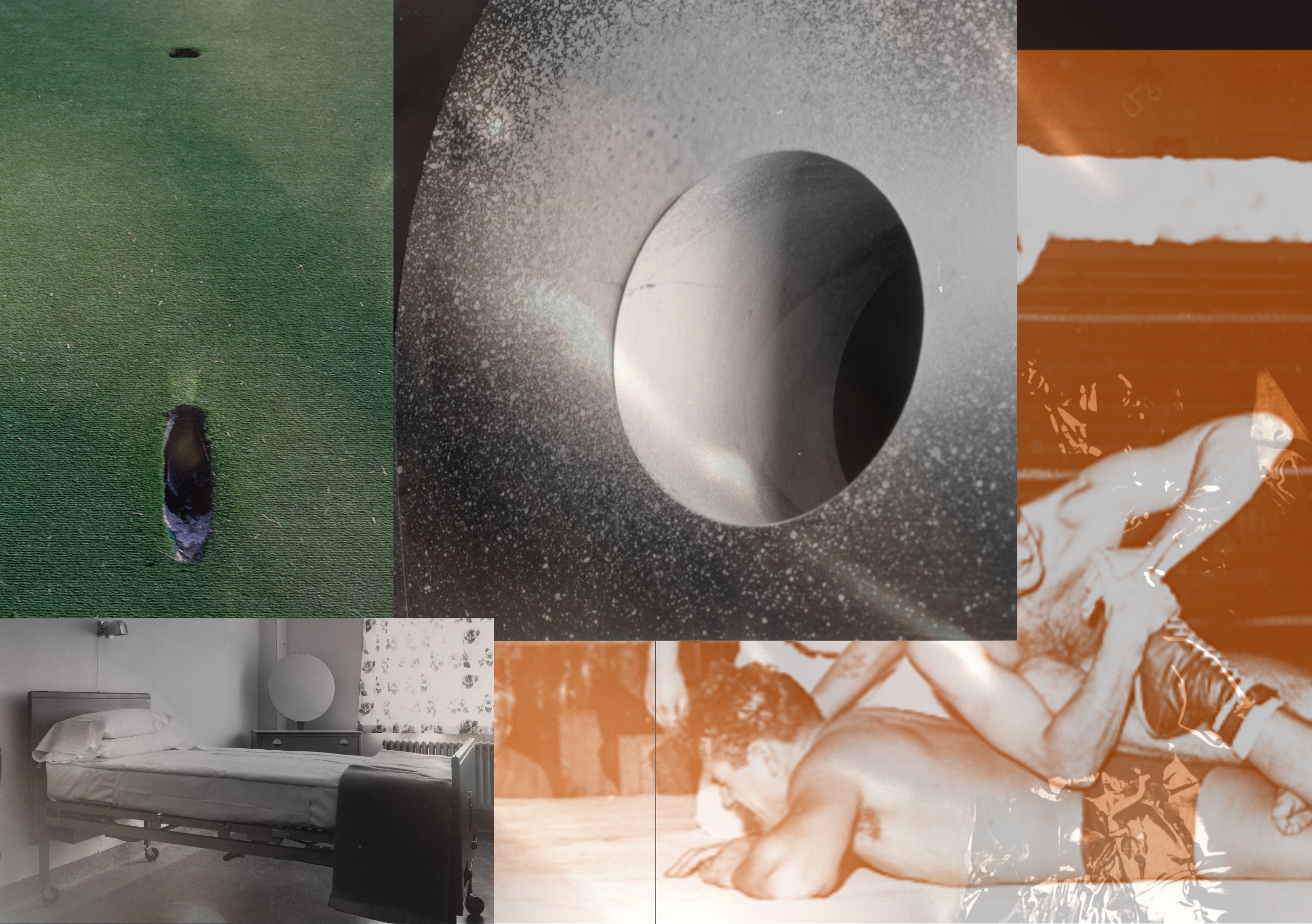
My show at Niru Ratnam focused on the idea of holes as places of transformation. Everything I’m currently making comes from that starting point. I used to begin by painting the figure and then working out what was happening in the environment around it. With the final few works for Hole, I took a completely different approach. Source images have become an important part of my process. Since then, I’ve been painting from collage. I have started stacking images side by side and seeing how that creates a conversation.
“The word transition suggests going from one place to another, but I like to think of it as entering a hole, since holes feel endless.
ES: The limbs in your work feel frenetic, often kicking out at sharp angles. It creates this windmill of legs and arms, which reminds me of cartoon fights, when there’s an unrecognisable bundle in the middle of flailing limbs.
SA: Limbs are also less gendered than other parts of the body. I used to paint the torso a lot and people would see chests and read them as breasts. I’ve been intentionally playing around with making these new figures genderless. If they were gendered, then the power dynamic would be assumed, and I’m not interested in that because I want to focus on these in-between areas.
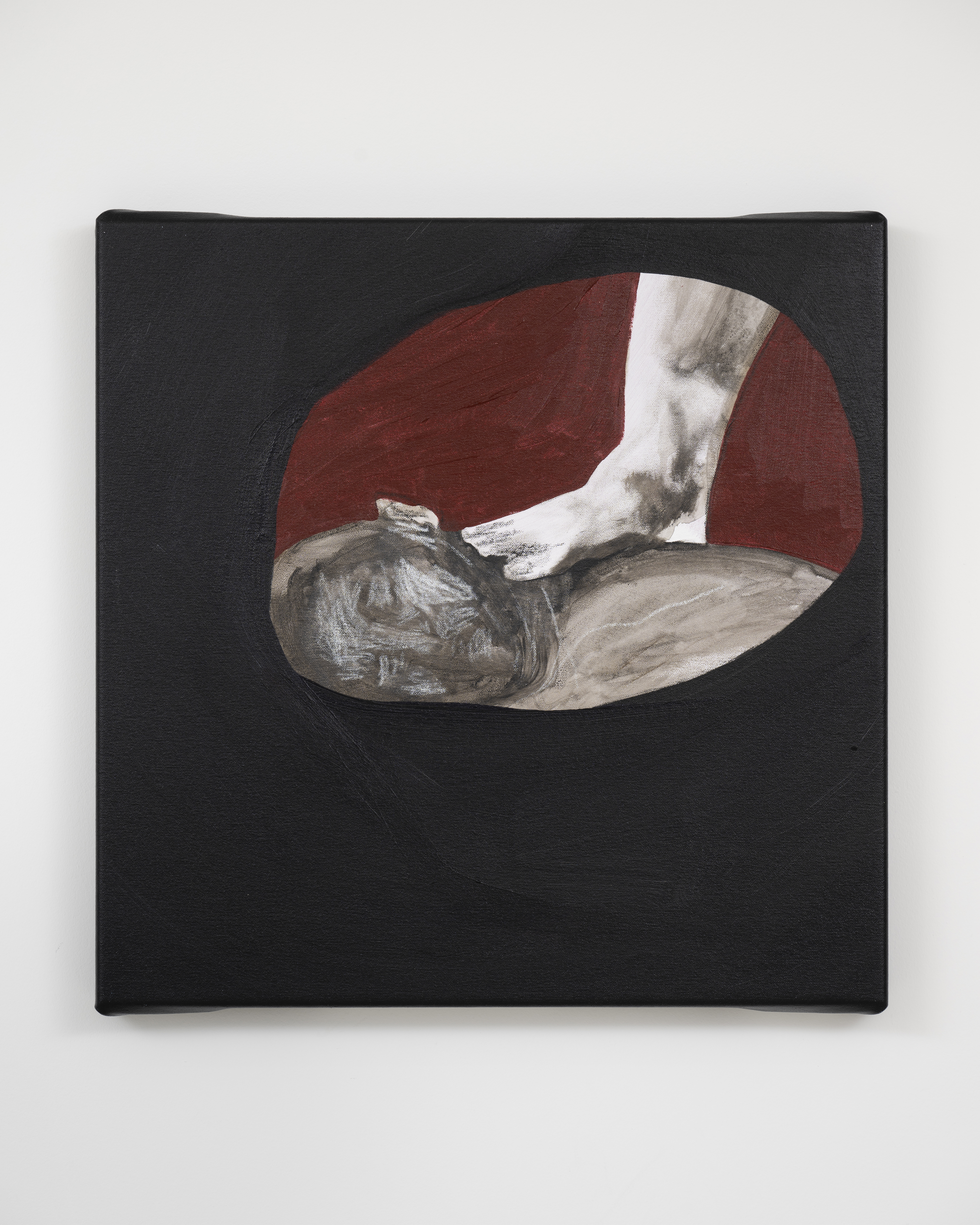
ES: In your recent work, you explore the hole as a genderless space. Rather than present it as something dangerous that we might fall into, there is a sense of embracing the hole as a state of existence. Can you tell me a little about your thinking behind this?
SA: My research looks at black holes and the way matter transforms when it enters one. It becomes something else, and a lot of information about it is lost. I found it interesting to think about transness in this way. Perhaps there is no destination: the process involves a constant state of moving and transformation.
I’ve been trying to deconstruct what transformation means for my own body. The word transition suggests going from one place to another, but I like to think of it as entering a hole, since holes feel endless. I’ve also been reading Testo Junkie (2008) by Paul B. Preciado, which talks about the holes that you inject testosterone into, and different points of transformation. That hole is deconstructing and reconstructing you.
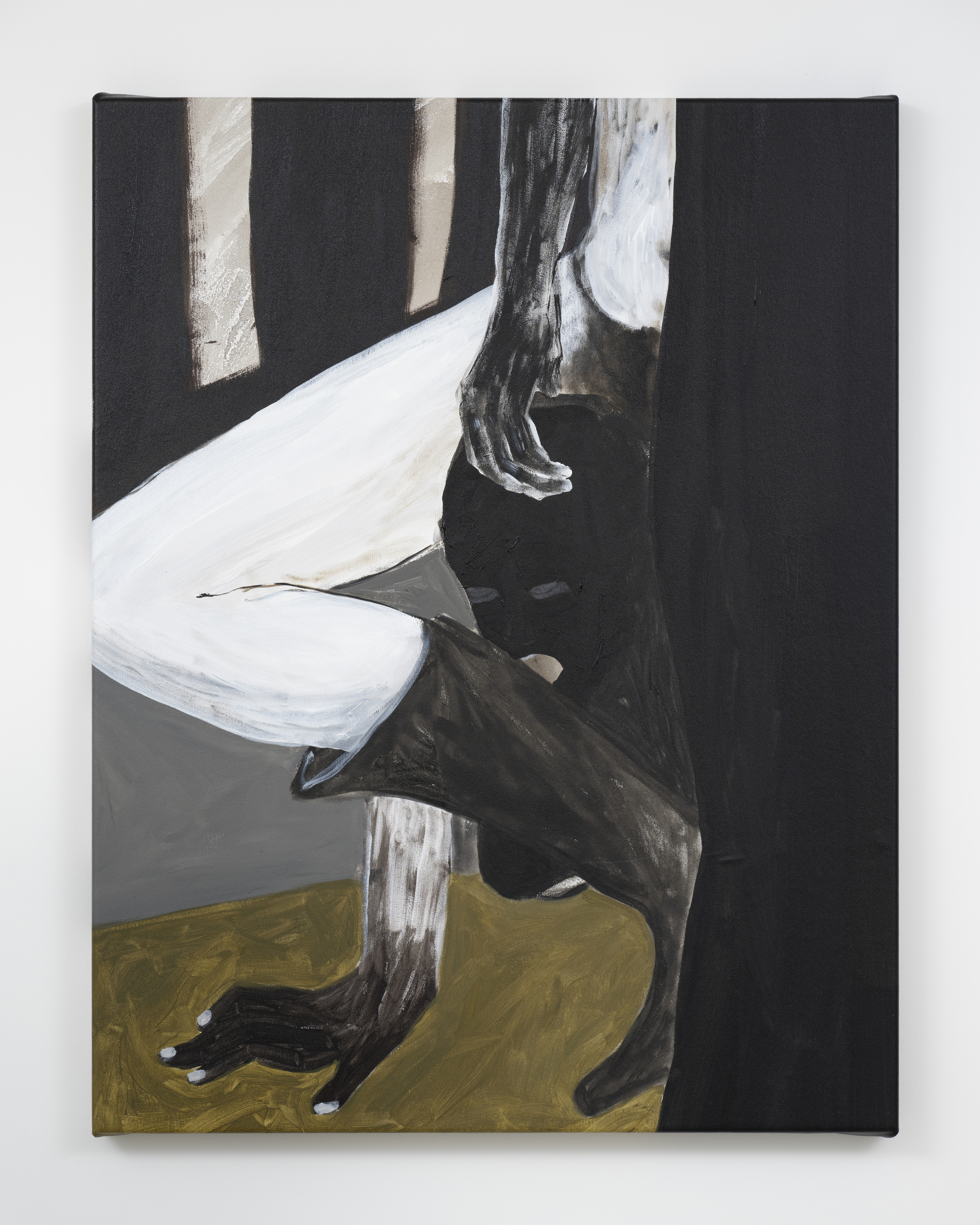
ES: It is often unclear whether your figures represent different people or split parts of one person’s psyche. I’ve always understood them to communicate conflicting aspects of yourself. Do you see them as autobiographical?
SA: The work is always going to be personal. I struggle with it being purely autobiographical as that will box me in, but it is an extension of me. With my new work, I’m being a lot more intentional about what I reveal and what I hide. That creates an interesting dynamic with the viewer. Even though my paintings address ideas of transness and spirituality, at their core they explore universal themes that I want the viewer to connect with on a personal level and just see themselves through the work.
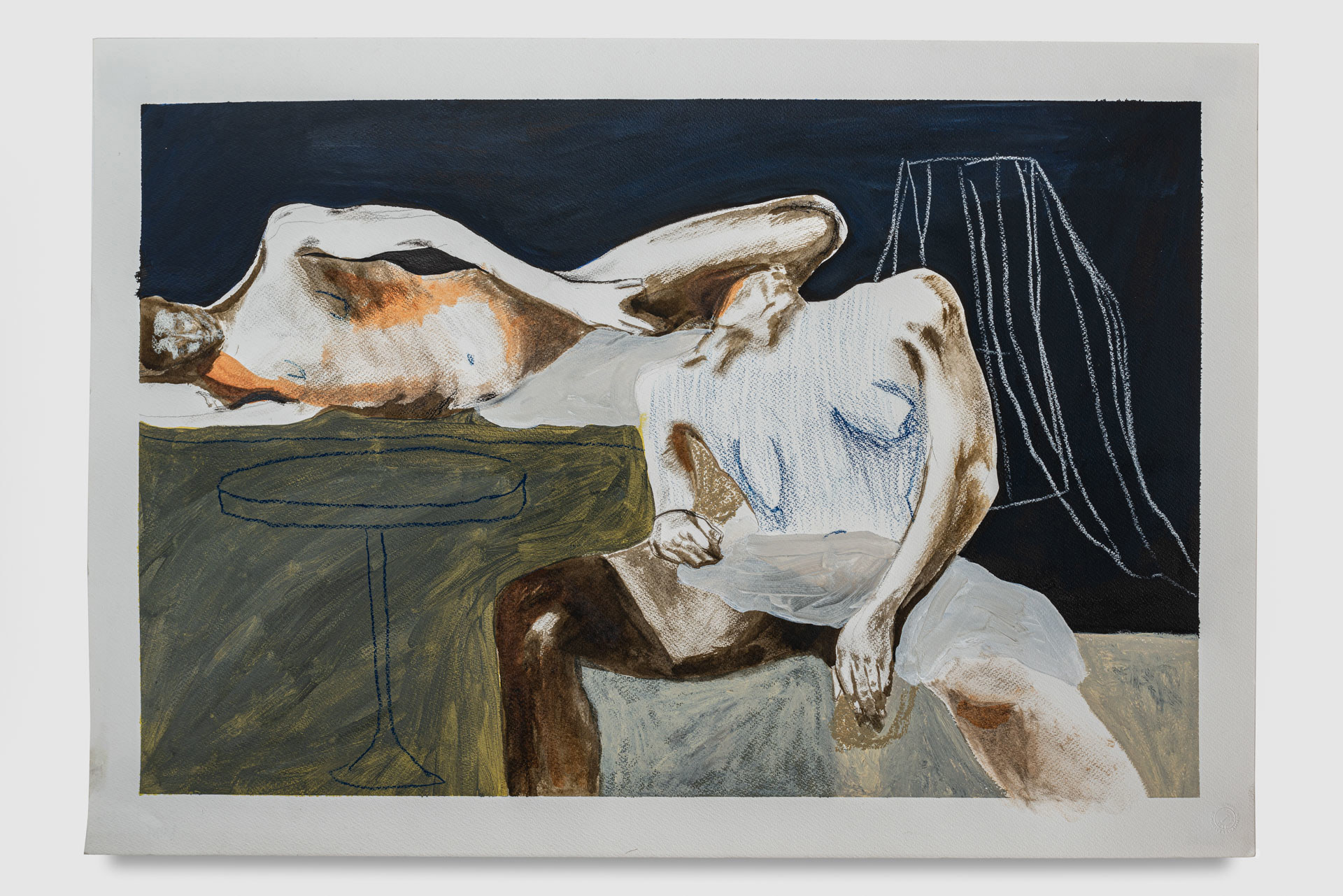
ES: There’s a type of therapy called Internal Family Systems (IFS), which I always think of when I look at your work. It involves speaking with a therapist to identify different parts of yourself and integrate the bits that we want to suppress.
SA: I did something like that in hypnotherapy. I found it terrifying to begin with: I regressed and was talking in a baby voice to the part of myself that felt really small. I didn’t want to give it a name, so I gave it a shape. Our brains don’t always act the way we want. There can be a need to revisit traumatic events not just to process them, but also out of this weird desire to relive them. Maybe it’s a desire for control, or we just can’t help it.
“Constructing a body out of the space around it feels like sculpting.
Likewise, I repeat the same images over and over in my work. The clinical settings, the doors, and the numbers all reference moments from my own life. It’s like a compulsion. Sometimes a work doesn’t feel complete until I’ve put a hospital bed in there.
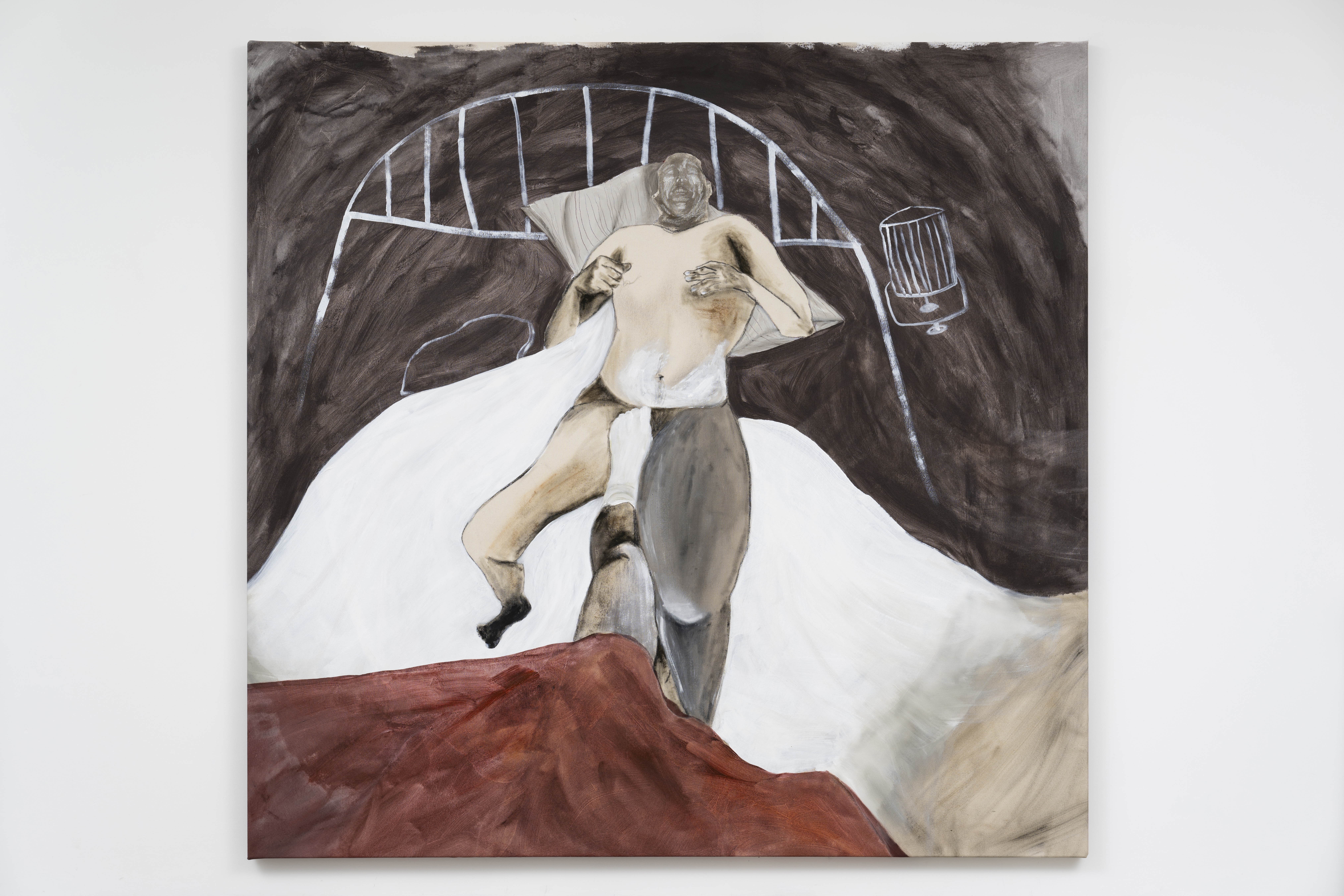
ES: I’m really interested in the beds, which feature heavily in your work. Beds are such conflicting spaces: they can represent peace, tenderness and rest, while simultaneously being the sites of nightmares, sexual violence, or sickness.
SA: Beds keep creeping in! All the beds in my works come from a real memory. Often that specific bed doesn’t connect with the activity that is happening in the work, it’s intuitive. Sometimes it’s as though the bed is leaking into the background. I’ve also painted about sleep paralysis before, which is like the brain torturing itself. When I’ve had it, it’s as though my mind has reconstructed the room that I’m sleeping in exactly as it is.
“I’ve been using a lot of fleshy colours. I want it to seem as if you’re in a canal or bodily orifice.
ES: You paint rooms in such an unnerving way. As the viewer, it can feel difficult to ground yourself in them.
SA: The backgrounds exist in the same fragmented way that those original spaces exist in my memory. I have this compulsion to go back to them, but I don’t fully feel them, in some way I’ve numbed myself to them. Across all my paintings, it feels like a house made up of all these different stages in my life that has become one large, strange whole.
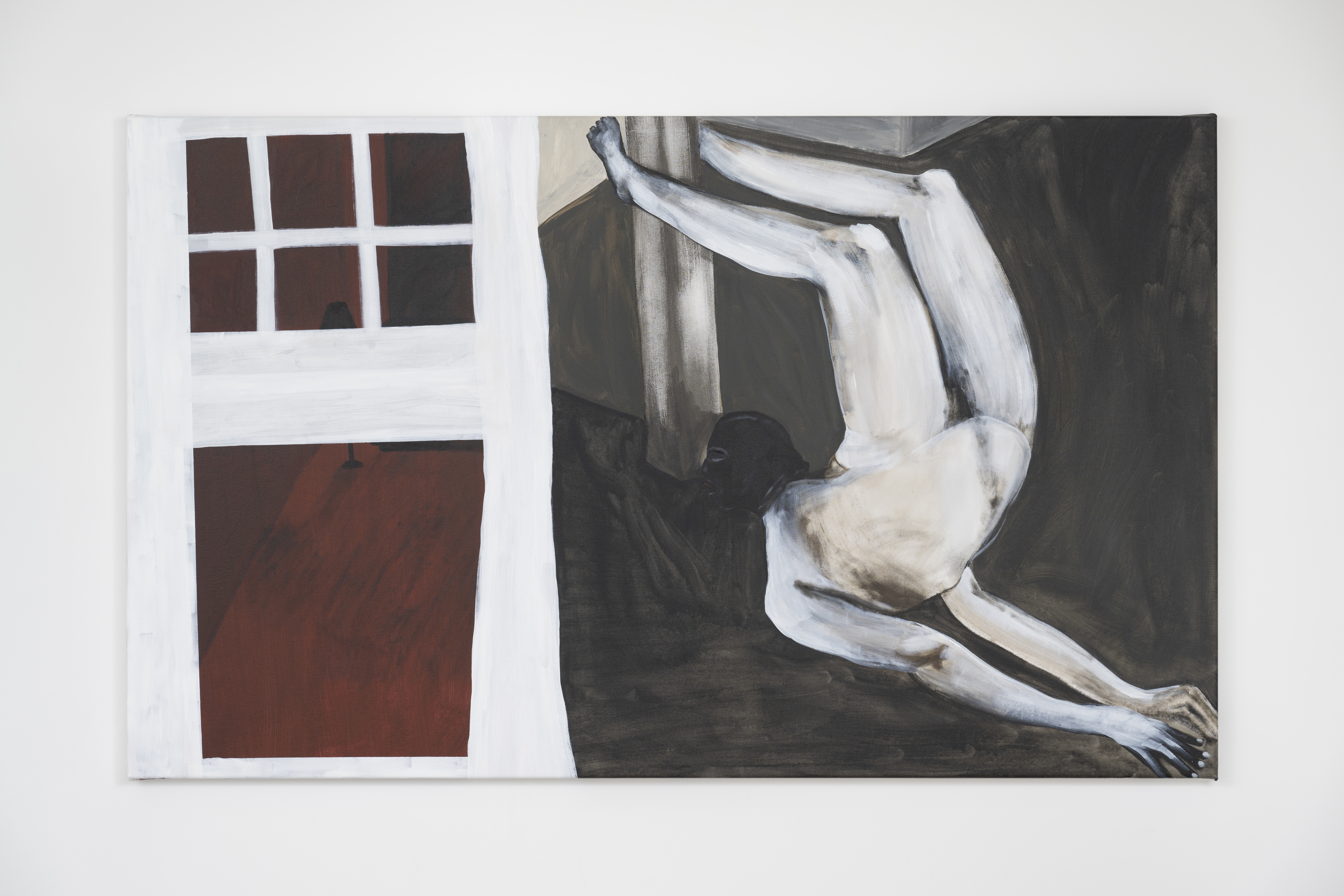
ES: The backgrounds also feel bodily; there’s so much red, which makes me think of gory insides.
SA: Especially in the more recent works, I’ve been using a lot of fleshy colours. I want it to seem as if you’re in a canal or bodily orifice.
ES: When you look back on past works, do you sometimes see emotions playing out that you weren’t aware of at the time?
SA: All the time. I’m never fully aware of what I’m creating. Even with these new pieces, I don’t know how the collages and images will translate into the final paintings. It’s very dependent on how restricted I am; if I’m painting on the floor, where I can’t fully see what’s going on, or on the wall, where I’m restricted by the dripping. A lot of these things change the mood and dynamic between the figures. Also, the way I paint the body has changed a lot. I used to begin with the figure, and everything else would come later. Now it’s the other way around: the body is revealed by the surroundings.
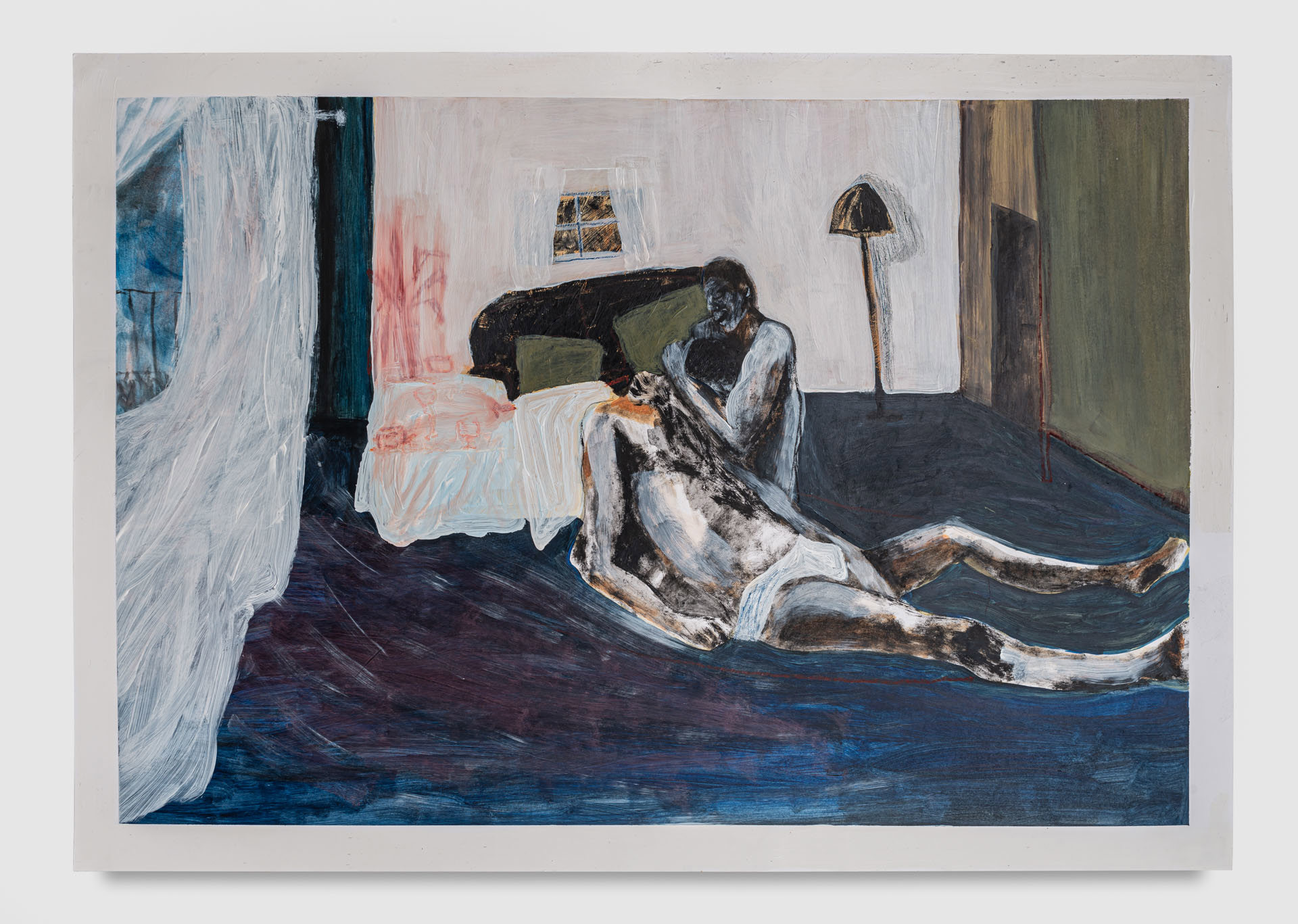
ES: The body becomes a hole in the work and everything around it is the more solid space.
SA: Constructing a body out of the space around it feels like sculpting. More mistakes come in. It gives me less control over the outcome. You can’t really tell which person the limbs belong to. It creates very interesting shapes.
ES: What is your working process like?
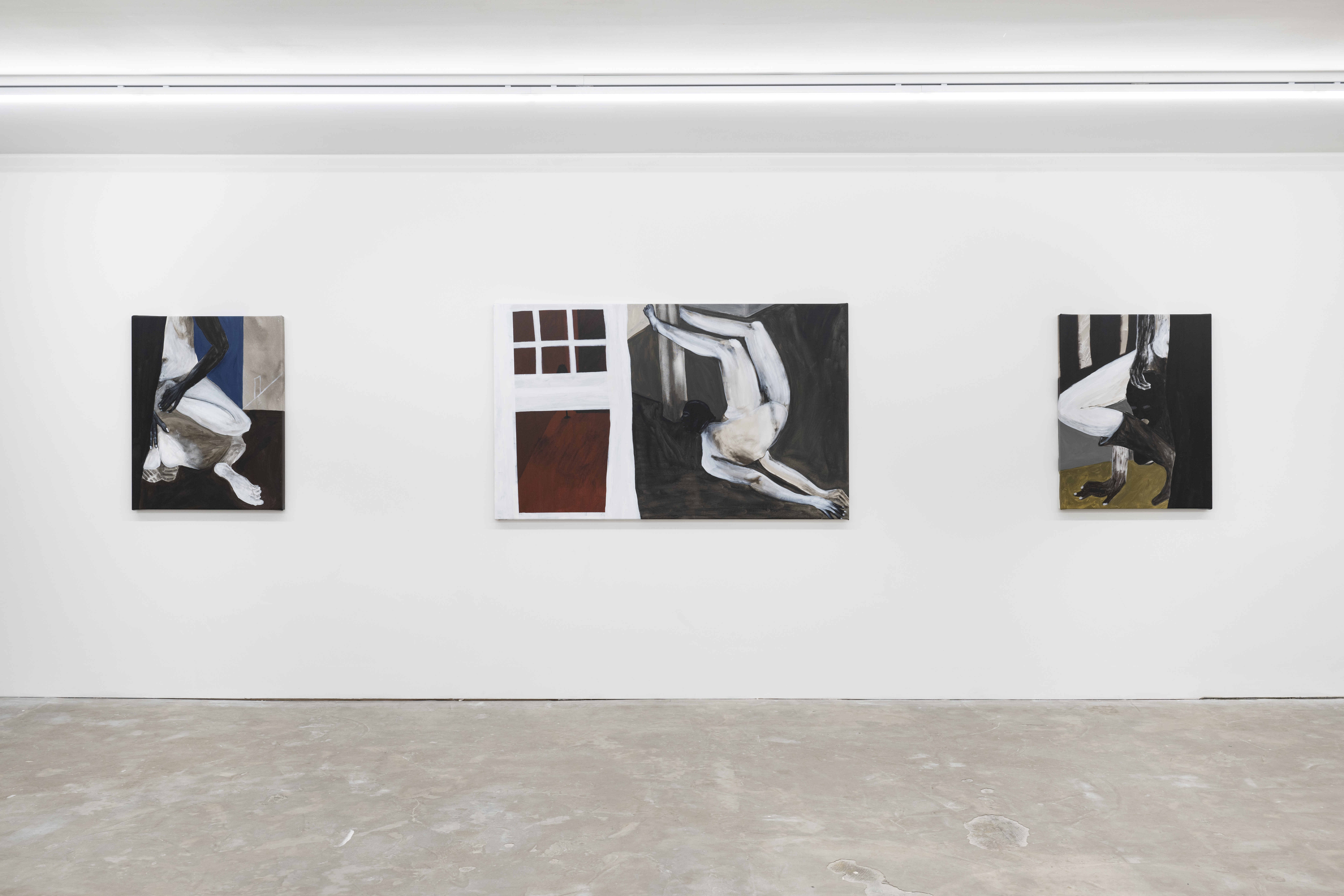
SA: It’s fast-paced. I have no patience, so I’m never going to be the type of painter who works on something for weeks or months. I like to capture it as it happens in my brain. I’ll have the reference ready if there is one, which usually there is. Then I’ll mix the paints or pre-decide what direction I want to go with the initial colour, which is really diluted and turned into a wash so it’s easy for me to glide the brush. I start painting around the figures really quickly. I’ll spend more time on the parts that feel thicker, or the fabrics. I like how delicate those parts are compared to everything else in these new works, they add an intimacy. These recent pieces are much more tender. —[O]
Main image: Shadi Al-Atallah, sunken into the earth (2024). Acrylic, charcoal, ink, and chinagraph. Courtesy the artist and Niru Ratnam, London. Photo: Studio Damian Griffiths.


A respected voice in contemporary art discourse.
Focusing on ambitious storytelling and insightful art-world commentary. Ocula Magazine publishes in-depth interviews, critical essays and timely analysis on the artists, exhibitions and ideas driving the global art world.
Learn more about Ocula Magazine
Showcasing the best of the art world.
Ocula partners with galleries from around the world to highlight their artists, artworks and exhibitions. Gallery membership is by application and invitation, with each member vetted by an independent panel.
Learn more about Ocula Membership
Specialises in the sale of major artworks.
Led by a team with deep ties to the world’s leading auction houses, galleries and collectors. Ocula’s advisory team offers bespoke services to high-net-worth clients from around the world who are looking to acquire the best of contemporary and modern art.
Learn more about our team and services