





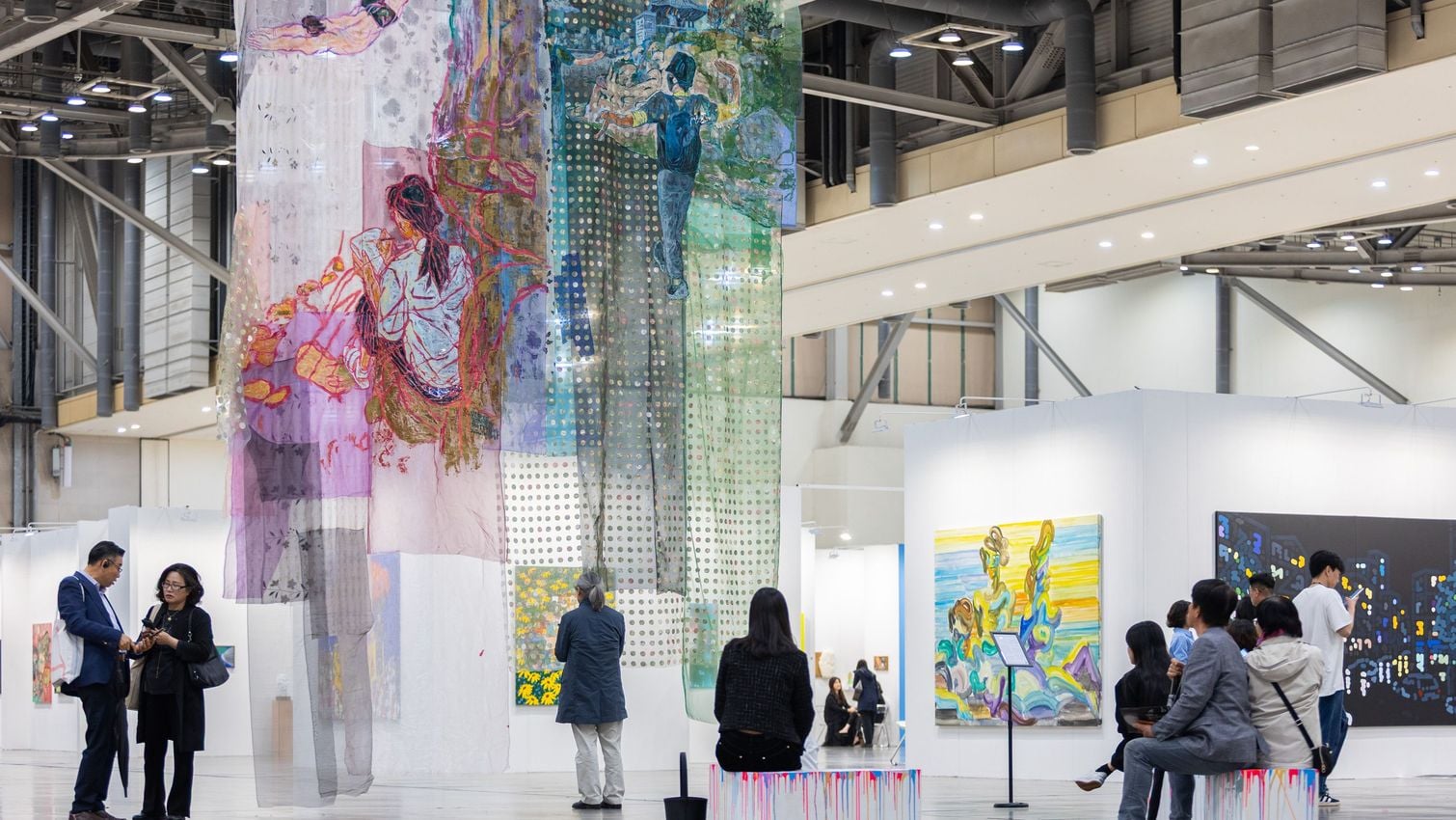
Art Busan 2025 Broadens the Cultural Horizon in Asia
This year’s edition saw the fair prioritise curatorial density and sustainable engagement, unfolding across Busan’s urban texture. Save to My Ocula

As the global art calendar bursts into motion each May, anchored by Frieze New York, Taipei Dangdai, and a constellation of international events, Art Busan continues to carve out its own rhythm from the vibrant coastal city of Busan.
Art Busan 2025 marked a notable expansion in both ambition and execution. With heightened selection processes and renewed attention to curatorial integrity, the fair brought together a robust range of voices. Leading Korean galleries such as Arario Gallery, Gallery Hyundai, Johyun Gallery, and Kukje Gallery were joined by internationally prominent participants, including CANADA, Kotaro Nukaga, MASSIMODECARLO, SOCIÉTÉ, Tang Contemporary Art, and Whitestone Gallery.
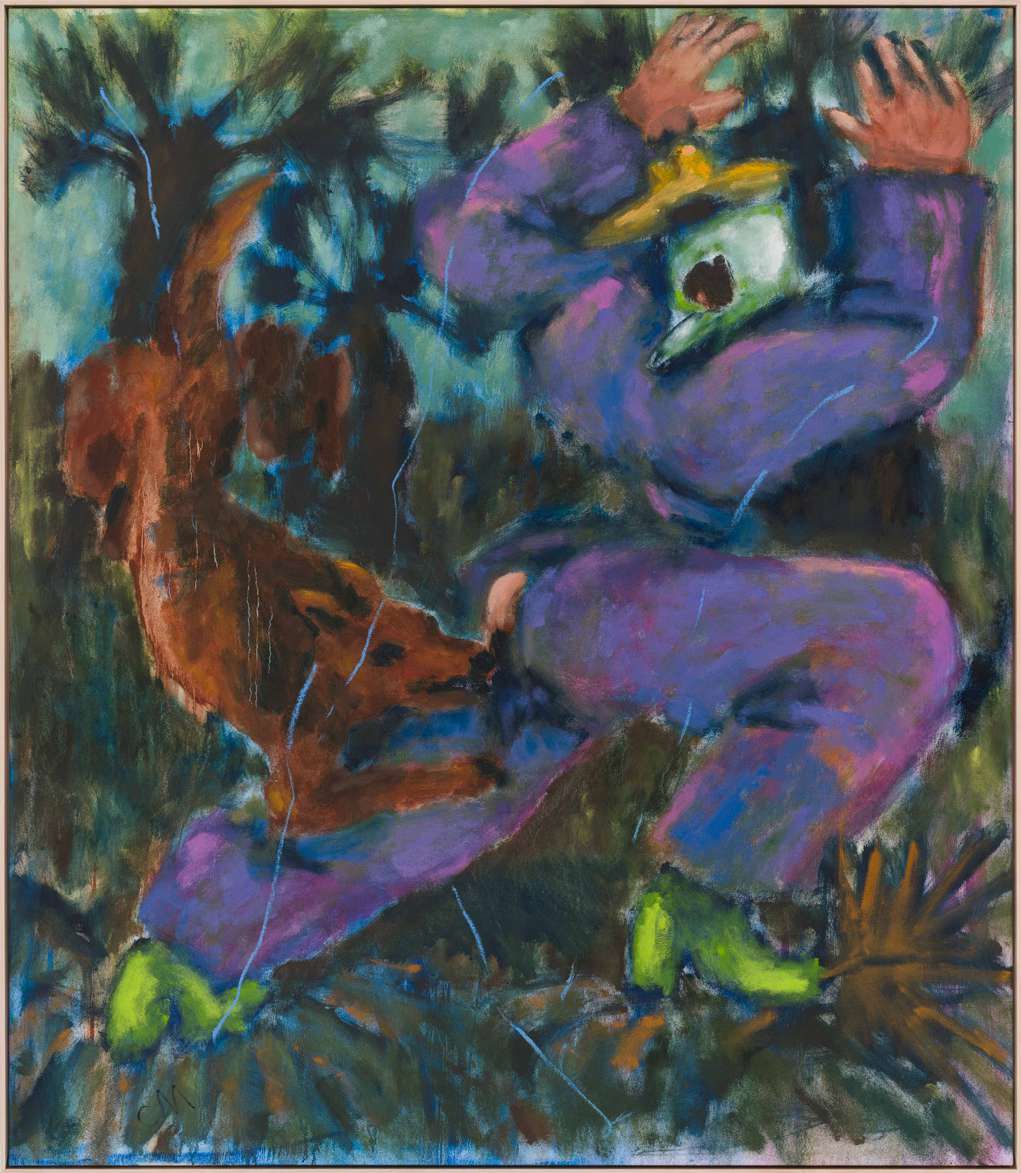
The result was a strong balance between emerging perspectives and institutional gravity. Many of the international exhibitors expressed a desire to engage more deeply with collectors in East Asia, seeing Art Busan as a strategic point of entry. Several works were acquired by regional museums and private foundations, reinforcing the fair’s evolving role as a cultural broker within the region.
Despite the global economic uncertainty, many galleries reported strong sales throughout the week. Returning for his eighth consecutive edition, Jason Haam described Art Busan as ‘an essential platform for artist exposure and institutional dialogue.’ The gallery placed works by Han Ji-hyung, Michael Lee, and Urs Fischer with collectors from the United States and across Asia.
‘But more importantly,’ Haam added, ‘the fair fostered meaningful conversations—with curators, institutions, and new collectors alike.’
Beyond the booths, Art Busan strengthened its ecosystem for the long term by supporting emerging galleries and regional artists through FUTURE and ART ACCENT.
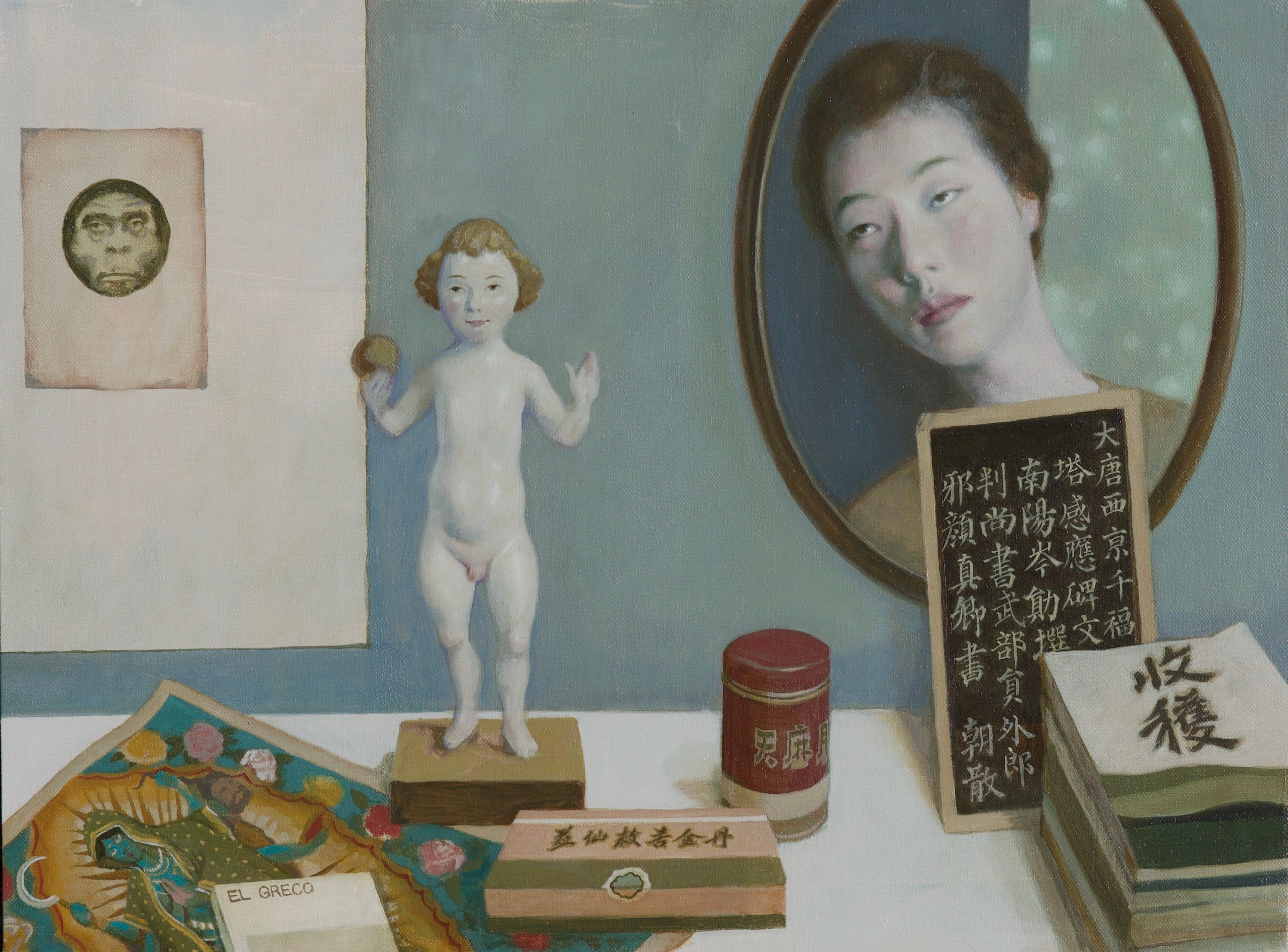
FUTURE, a section dedicated to galleries under four years old, featured 19 emerging spaces. This year also marked the debut of the Future Art Award, supported by lead partner Hana Financial Group, which was awarded to Chinese Canadian artist Jeffrey Chong Wang presented by Seoul-based gallery WWNN. FUTURE drew notable attention from visitors, with collectors and curators actively engaging with many of the participating booths.
Developed in collaboration with Busan-based institutions, ART ACCENT featured seven emerging artists from the Busan and Gyeongsang regions, in partnership with Hongti Art Center. Following the fair, participants will have opportunities to exhibit with partner institutions. Many of the works, including a sell-out of Choi Min-young’s abstract painting series, were placed with collectors during the fair. More than a showcase, ART ACCENT reflected the fair’s ongoing investment in building sustainable support systems for local talent.
Art Busan’s curatorial identity has never been confined to the fairground. Since 2021, it has extended into the city through CONNECT, a hybrid platform that expands the role of galleries by introducing curated presentations outside the standard booth format.
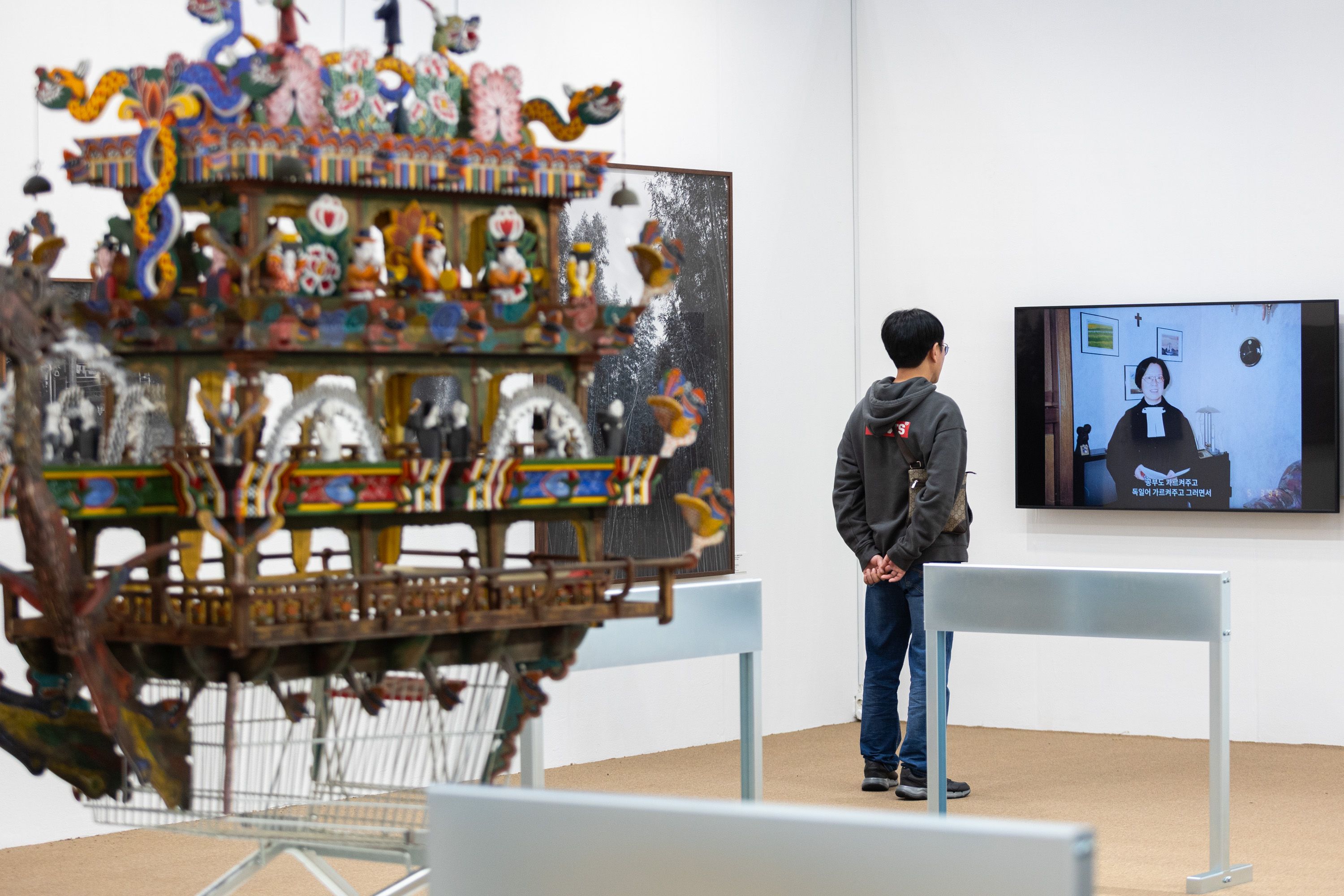
This year’s CONNECT, titled Territories and Boundaries, was curated by Wonseok Koh, Director of Line Culture Foundation. The central exhibition, titled Fragmented World, Living Entities, was developed in collaboration with galleries and institutions from Asia, among them Suwon Museum of Art, TKG+ (Taipei), and NIKA Project Space (Dubai), with works by Alexander Ugay, Hou I-Ting, Kim Ok-sun, Kim Sang-don, Kwon Do-yeon, and Park Ki-won.
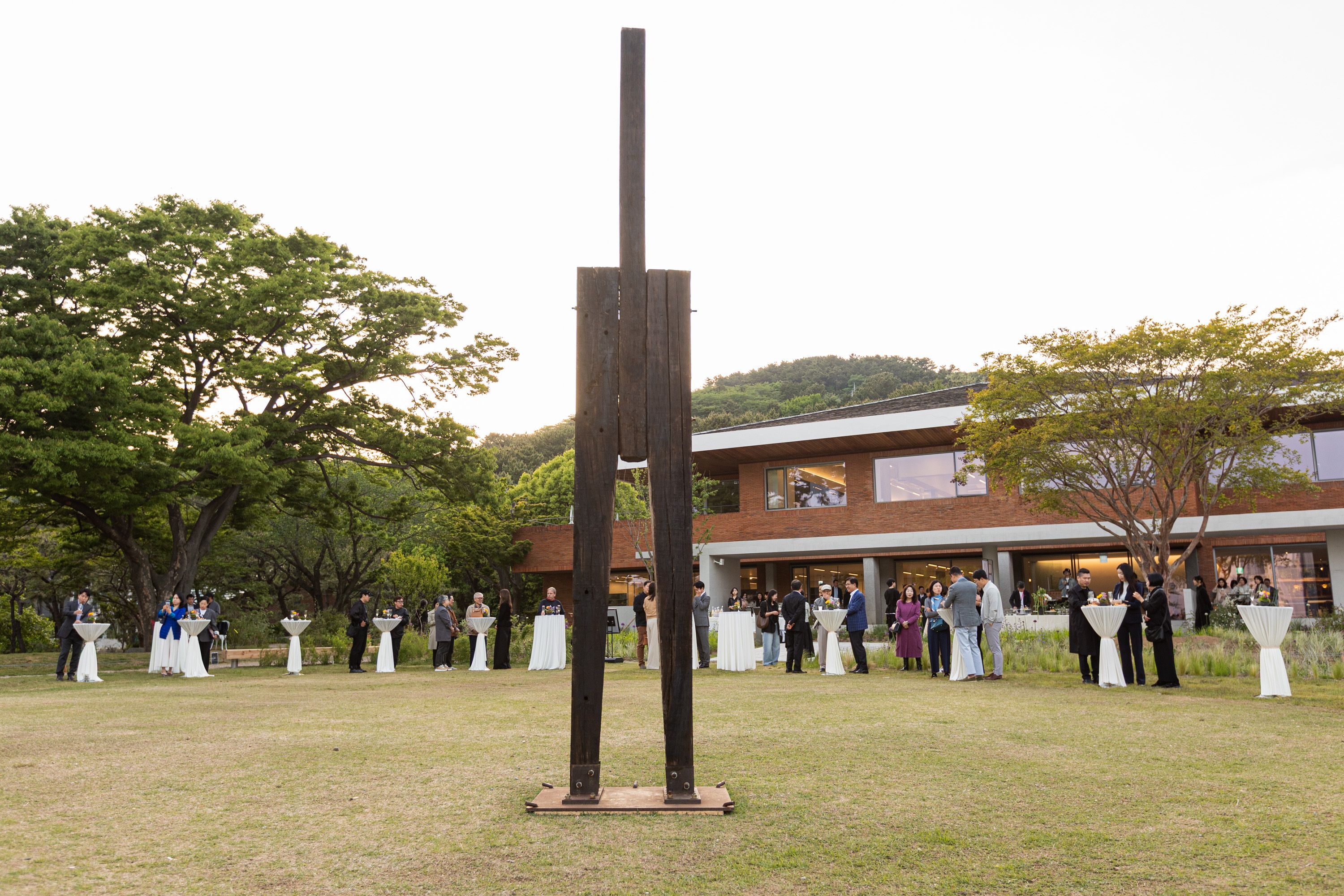
Participating galleries showed ten solo presentations, forming a parallel series to the central exhibition. Nine were installed on the fairground, while the monumental outdoor installation The Standing Man (2023) by sculptor Chung Hyun was presented off-site at Domoheon, a former mayoral residence. Its quiet, meditative garden became the stage for Chung’s weathered wooden figures, offering a contemplative counterpoint to the energy of the fair. Unlike other CONNECT projects, this work will remain on view until late June, linking the fair temporally and spatially to the broader cultural life of the city.
This year’s CONVERSATIONS programme brought together curators, artists, and collectors across geographies to reflect on collaboration, collecting, and the role of institutions in an increasingly fractured global landscape. With participation from the Garage Museum of Contemporary Art, Hamburger Bahnhof, OAR Museum of Contemporary Art, Supper Club Hong Kong, and Tokyo Gendai, the nine-session series explored topics such as cross-border artist mobility, the evolving function of regional platforms, and the political agency of curation.
Charlotte Knaup, a curator from Hamburger Bahnhof, and Fabien Pacory, a Guangzhou-based collector and Vice President of the French Chamber of Commerce in China, shared perspectives on how institutions and collectors can shape the future of art ecosystems. Knaup emphasised the importance of building international institutional networks and fostering collaboration to support emerging artists. Echoing this view, Pacory proposed to look to the future. ‘Despite the strong dominance of blue-chip Dansaekhwa and conceptual art, Korea must invest in its new generation. The answer lies in sharing, cross-border projects, and long-term investment in ideas—not just objects,’ he said.
A highlight was the panel ‘Art in Motion: People and Platforms across Asia,’ featuring Fabien Pacory, Seokho Jeong (Art Busan), Willem Molesworth (Supper Club Hong Kong), and Eri Takane (Tokyo Gendai). Moderated by Vivienne Chow (Artnet), the discussion explored how regional fairs and alternative models can recalibrate institutional discourse and collector behavior during a period of transition.
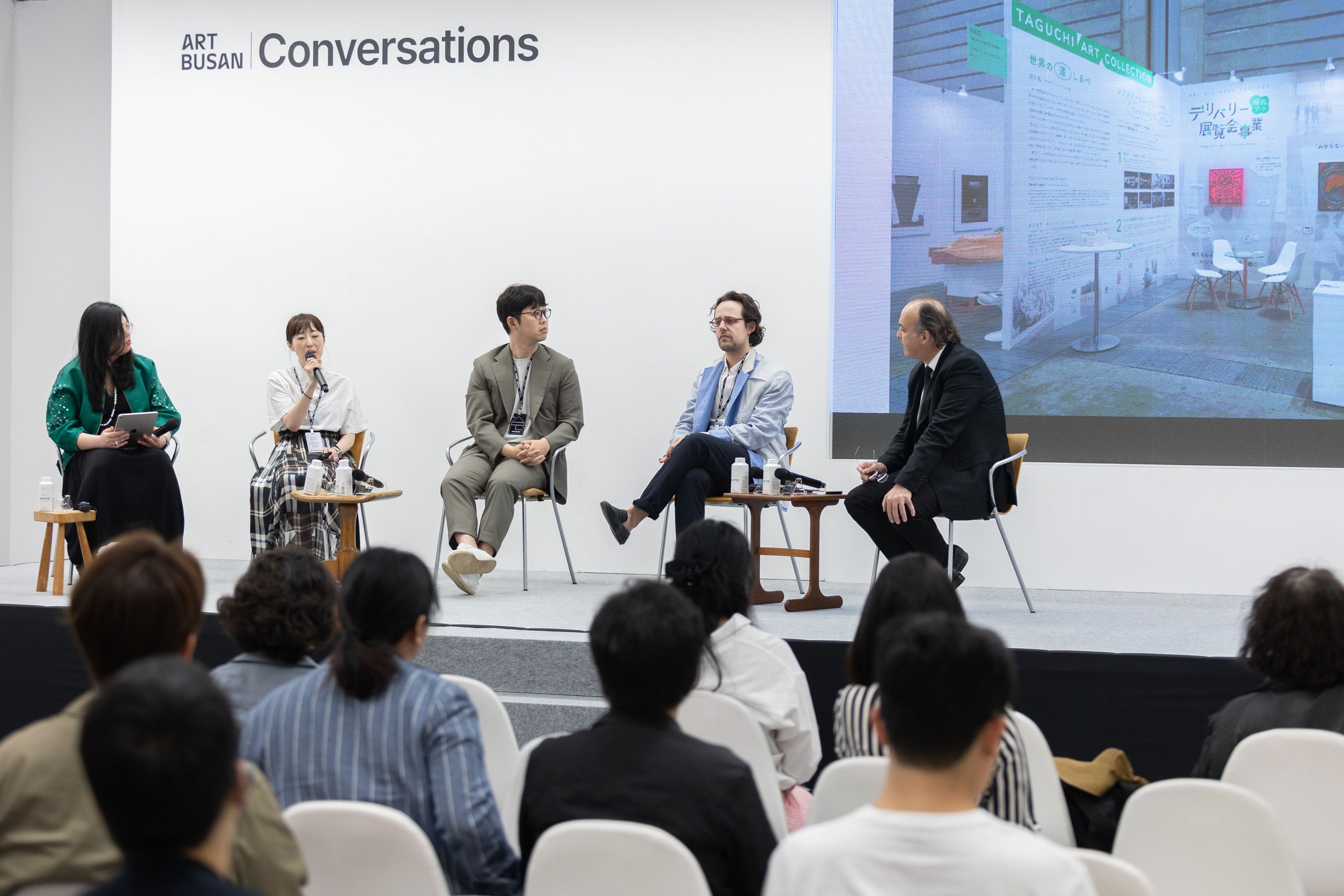
Takane described the fair as ‘an amazing opportunity to discover local galleries and artists.’ The panel discussion on the future structure of fair models particularly interested Takane, who said that ‘As we move toward more collaborative projects in the art world, I think these discussions can and should expand across disciplines—bringing in voices from design, tech, and even urban planning to see how fairs can evolve as cultural platforms.’
The breadth of collector engagement stood out this year for not only its scale but for its depth. Collectors from Korea, China, Europe, Japan, and Southeast Asia traveled to Busan to experience the full range of the fair’s offerings, including curated exhibitions, studio visits, and private collection previews.
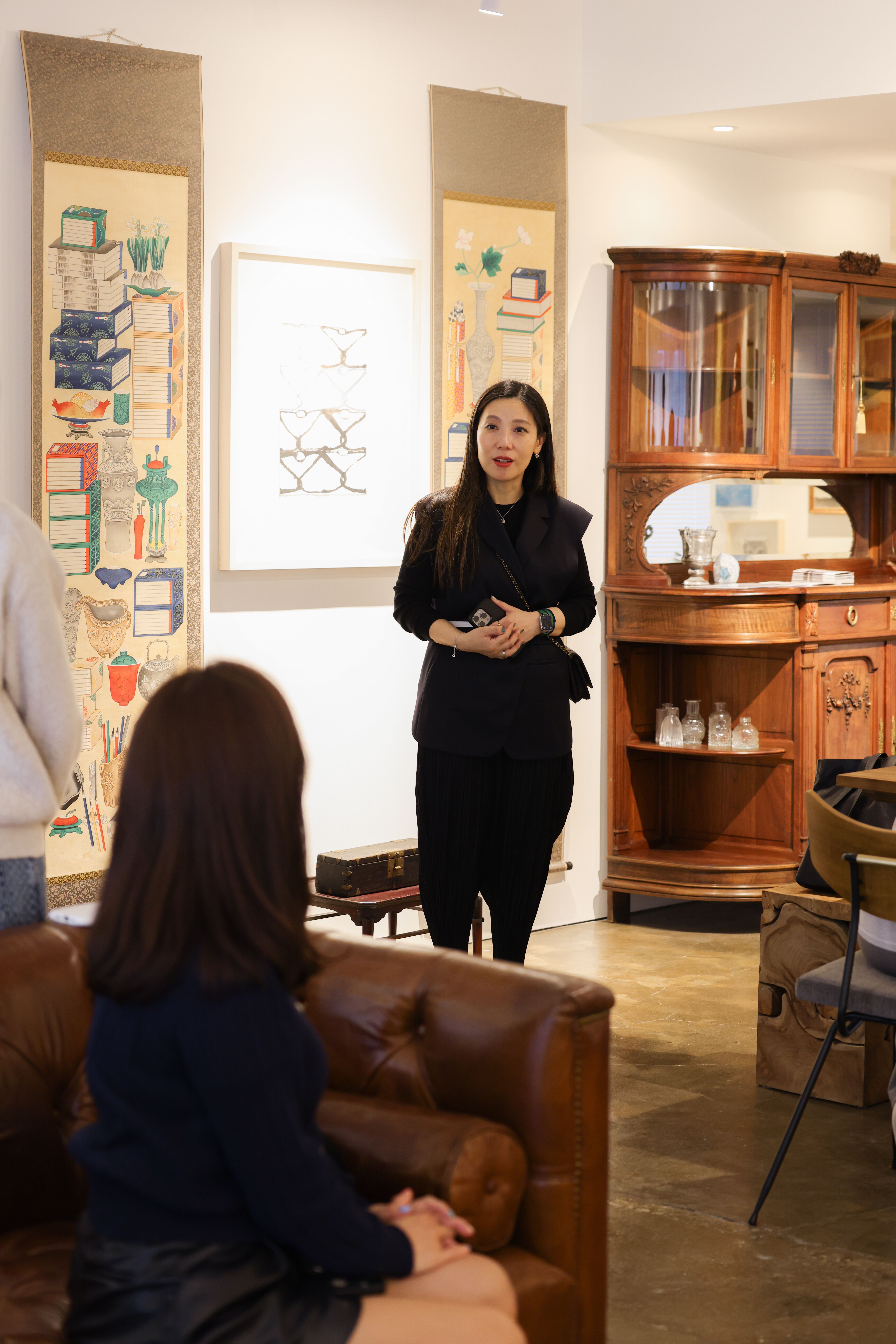
A standout of the VIP programme was the private tour of Villa O Mondo, a boutique art hotel in Gwangalli founded by a local physician couple. Each of the hotel’s floors are themed—Korean aesthetics, Mediterranean styles, and French antiques—housing a rotating selection of the founders’ personal collection. For many local and international guests, the visit offered a rare moment of intimacy and reflection amid the accelerated pace of the fair week.
‘Villa O Mondo means a space that connects the world and ourselves.’ said the co-founders Hankee Lee and Yunha. ‘It was inspired by the memories of a couple’s home and their shared experiences with family.’
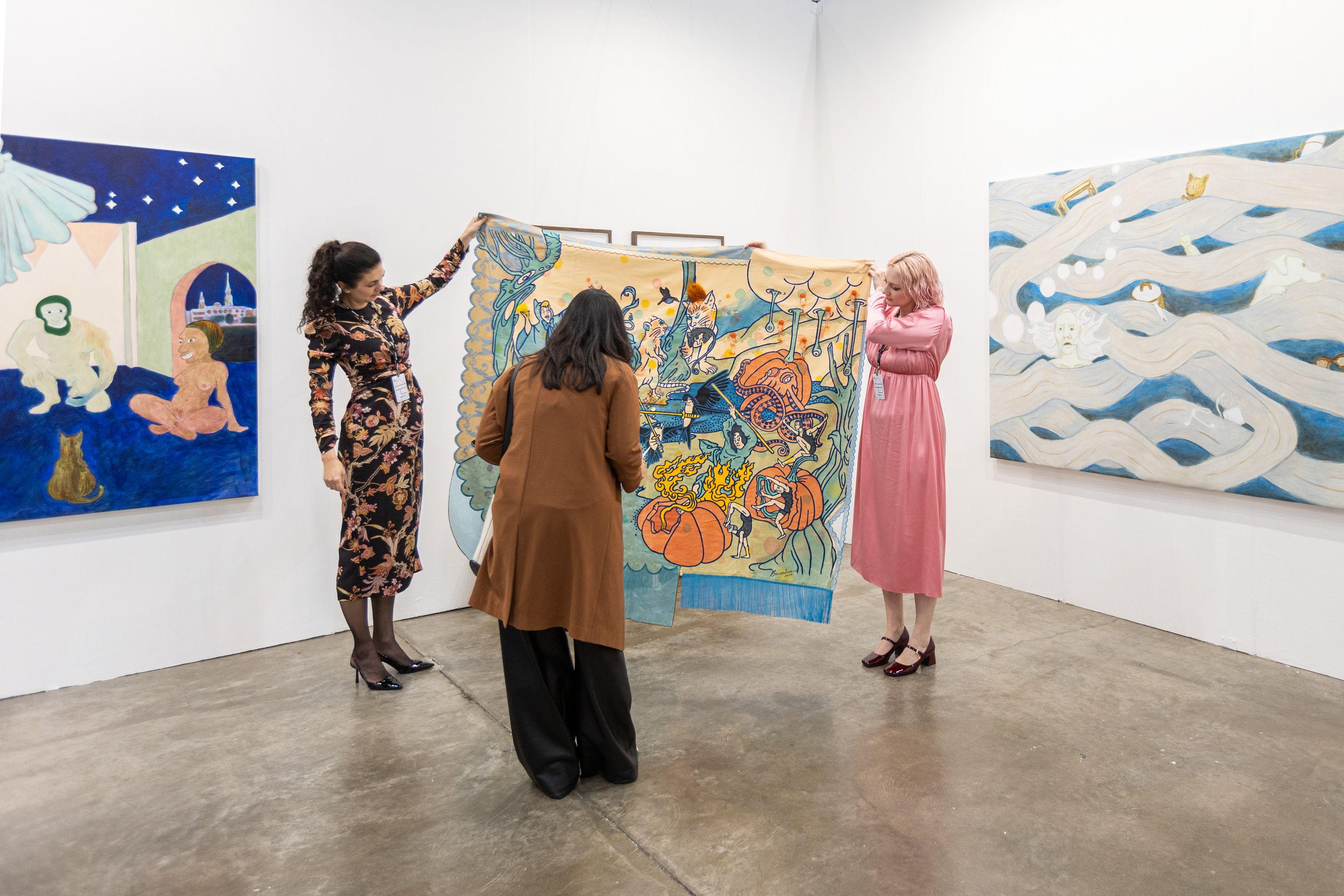
The Collector Group from Art Jakarta joined the fair’s VIP programme for three days as part of a collaboration between Art Jakarta and Art Busan. ‘Some of the galleries are situated in such cool architectural buildings and surrounded by the beauty of Busan’s nature,’ said Teddy Koentjoro, a collector based in Indonesia. ‘Visiting Space Lee Ufan is definitely one of the highlights!’
Patrons from the Garage Museum of Contemporary Art also visited Art Busan as part of the programme, with one of the guest curators, Ekaterina Savchenko, participating in CONVERSATIONS. ‘As this was my first visit to Art Busan, I was impressed by the mix spanning established figures in Korean and international art, as well as emerging voices,’ Savchenko said. ‘The overall presentation was both diverse and thoughtfully arranged.’
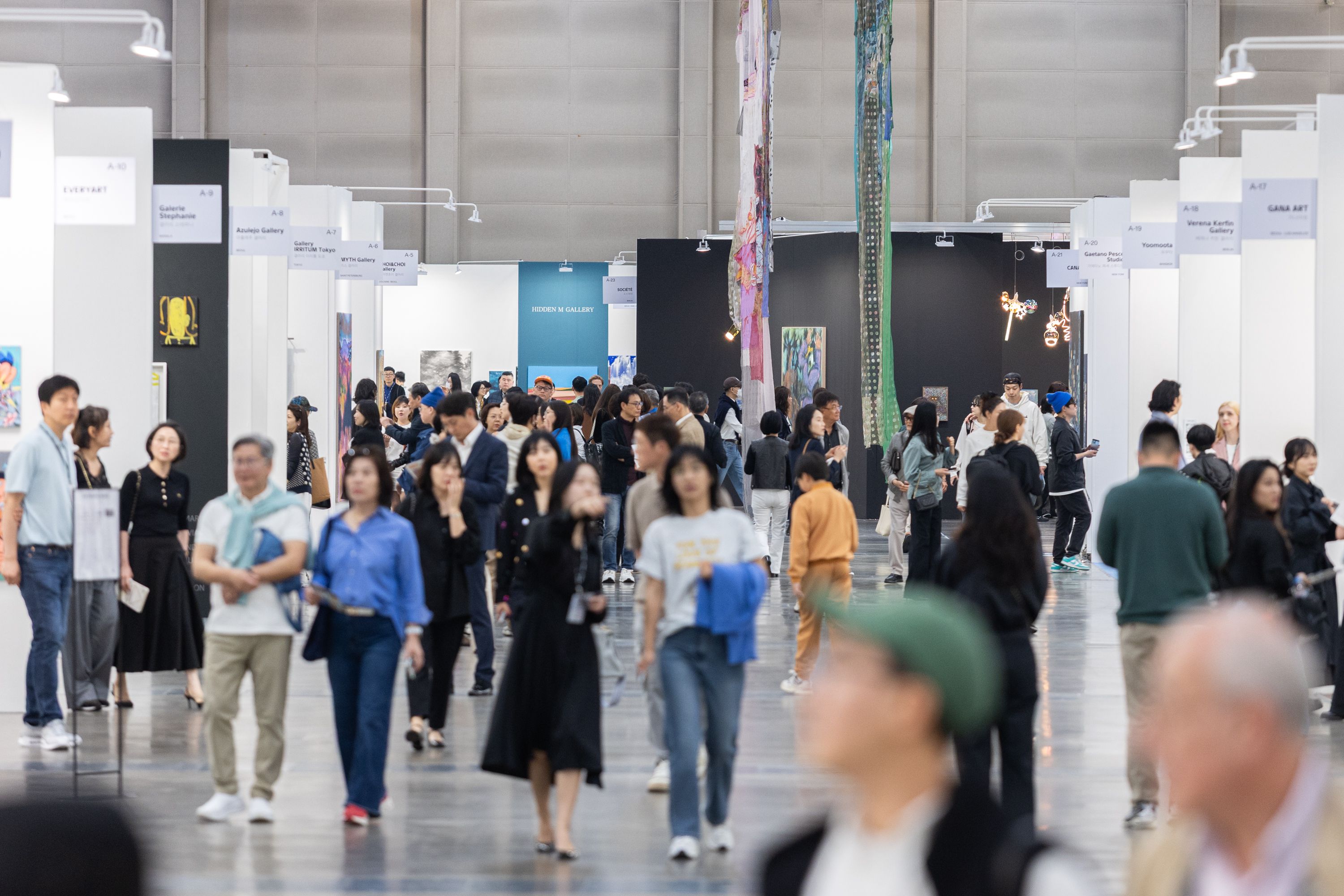
As global fairs continue to adapt to shifting market conditions and institutional expectations, Art Busan offers a compelling model—not simply as an alternative to Seoul or Hong Kong, but as a platform with its own evolving ecosystem.
‘We placed emphasis on balancing curatorial depth, international connectivity, and regional specificity,’ said Seokho Jeong, Director of Art Busan. ‘In a market like this, what matters most is long-term trust. We’re building a platform where artists, collectors, and institutions can grow together anchored in the unique rhythms of this city.’ —[O]
Main image: Art Busan 2025 (8–11 May 2025). Courtesy Art Busan.




A respected voice in contemporary art discourse.
Focusing on ambitious storytelling and insightful art-world commentary. Ocula Magazine publishes in-depth interviews, critical essays and timely analysis on the artists, exhibitions and ideas driving the global art world.
Learn more about Ocula Magazine
Showcasing the best of the art world.
Ocula partners with galleries from around the world to highlight their artists, artworks and exhibitions. Gallery membership is by application and invitation, with each member vetted by an independent panel.
Learn more about Ocula Membership
Specialises in the sale of major artworks.
Led by a team with deep ties to the world’s leading auction houses, galleries and collectors. Ocula’s advisory team offers bespoke services to high-net-worth clients from around the world who are looking to acquire the best of contemporary and modern art.
Learn more about our team and services