





The Eternal Echo of Stephen Prina
In a career retrospective at the Museum of Modern Art, the U.S. artist and musician reinvents chart‑topping pop songs and iconic works from art history to destabilise notions of memory, history and taste. Save to My Ocula
I step into A Lick and a Promise at 10:50am, just ten minutes before the Michael Jackson song Will You Be There, reinterpreted as tonal bell chimes, rings out through two megaphones mounted at the upper corners of the gallery’s walls. These two speakers and an illuminated wall clock are the only visible elements of The Top Thirteen Singles from Billboard’s Hot 100 Singles Chart for the Week Ending September 11, 1993 (1993). Installed in a busy nook on the second floor of the museum, the work occupies a lively space that feels like a public piazza, where visitors naturally congregate while in transit.
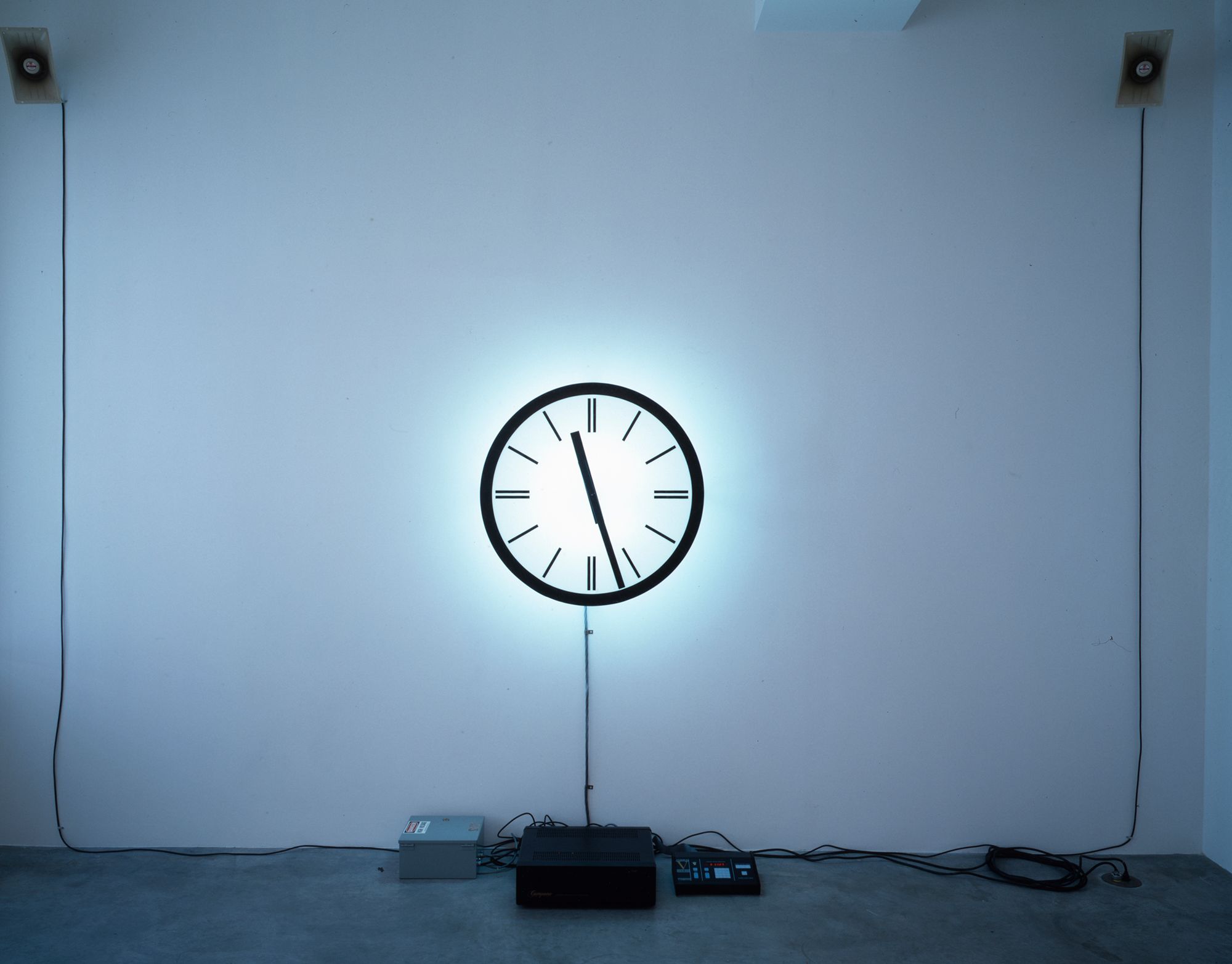
It is a piece that epitomises Stephen Prina’s wide-ranging 50-year career, spanning roles as an artist and composer who binds the visual, the sonic, and the temporal. Trained at the California Institute of the Arts, Prina emerged as an active contributor to what British philosopher Peter Osborne has theorised as post-conceptualism, a tendency where art (after conceptualism) continues to operate through ideas and relations, and beyond the mere object. Prina’s multidisciplinary practice recentres fragments sourced from inside and outside his own production, blurring the edges between the original and its echo. In line with this exploration of repetition and recirculation, the clock from The Top Thirteen Singles marks each hour with 1993’s best-loved songs reinvented by the artist as chimes, including such chart-topping classics as Dreamlover by Mariah Carey, Whoomp! (There It Is) by Tag Team, and The River of Dreams by Billy Joel.
Prina resurrects these songs from the near past, making them newly liturgical. Having grown up in a small town in Italy, I am reminded by these arrangements that bells are never just markers of time: they summon the faithful, announce weddings, toll death. They translate abstractions into something tangible and yet fleeting. In Prina’s hands, the sound of bells conjures this history of humanity’s attempt to make sense of our own existence. With the choice of songs, meanwhile, he ‘celebrates music’s ability to mark the sensibilities of an era’, as the accompanying exhibition notes state, reframing these tunes not only as a time capsule of a specific era but as eerily timeless. Prina’s secular horologe is a poignant reminder that what returns when we listen to the beloved songs of our earlier years is not the past itself, but the impossibility of full retrieval.
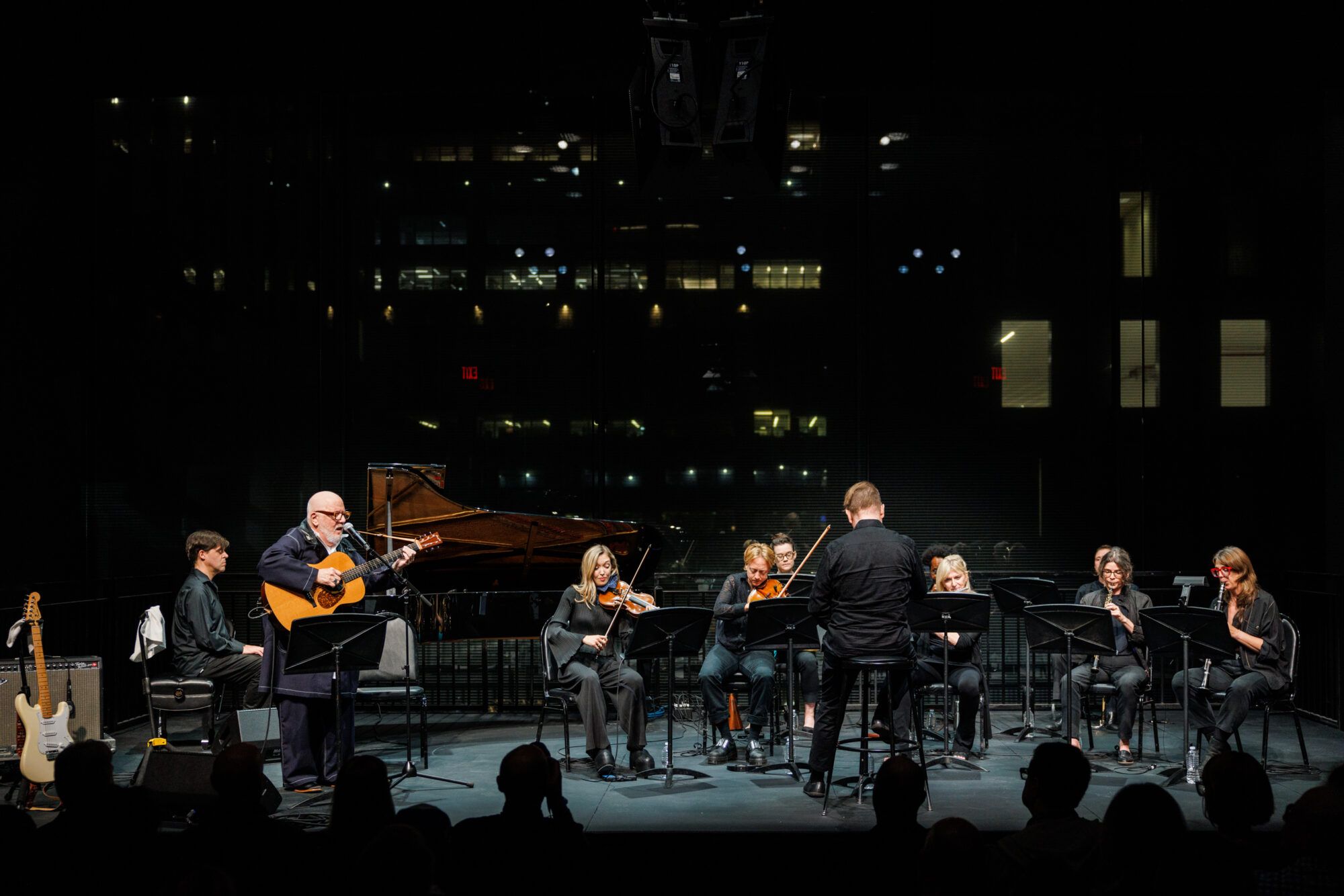

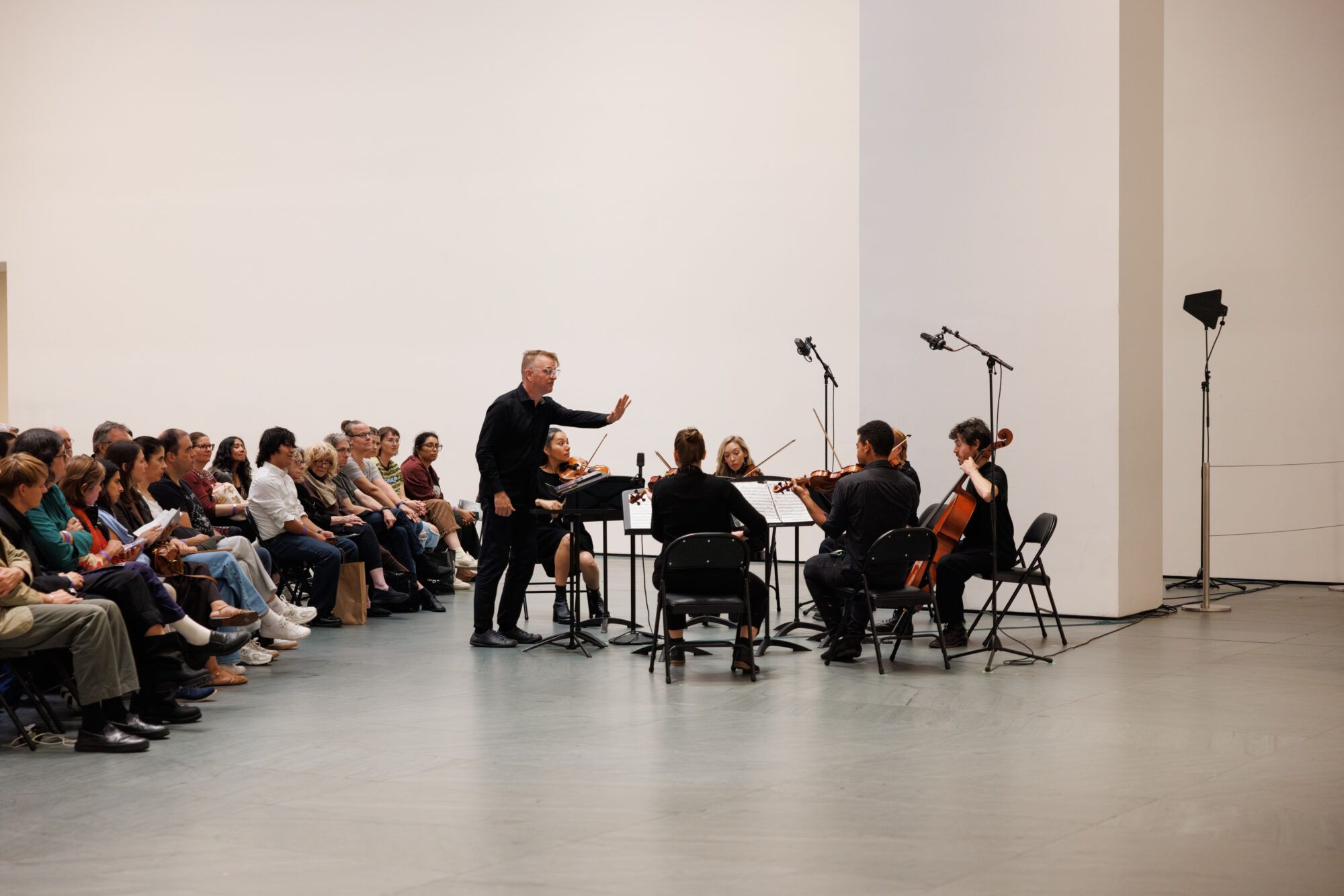
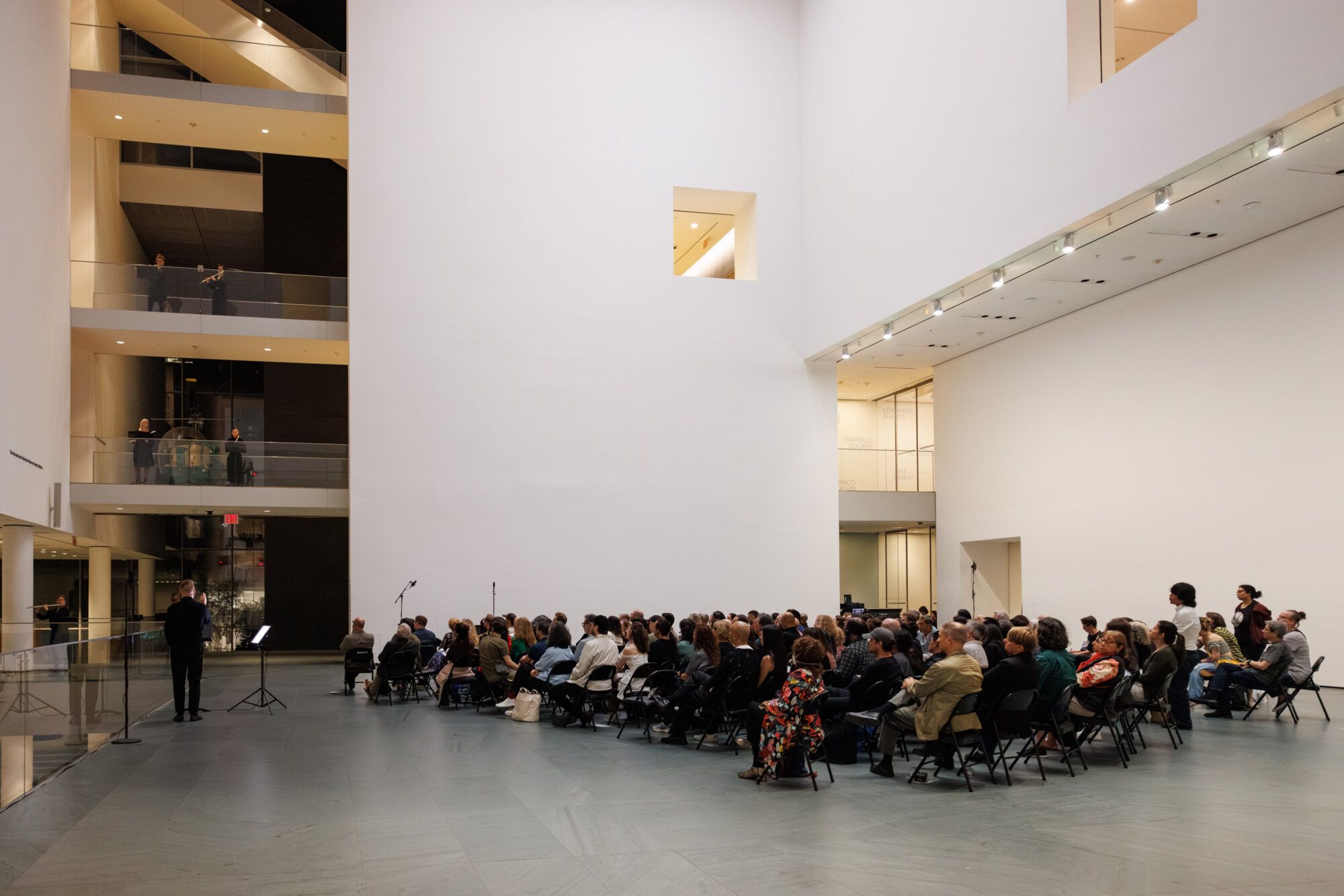
These short motifs speak to something joyful, too. It’s the ‘ting ting’ of the closing lines in Dante Alighieri’s Paradiso Canto X, where the Italian poet uses the image of a clock to describe the celestial harmony of the gloriosa rota (glorious wheel) of souls in heaven: ‘Ting! ting! resounding with so sweet a note, / That swells with love the spirit well disposed . . .’ In the context of Prina’s work, you can almost distinguish this perceptible ‘ting ting’. Yet Dante qualifies this tone as beyond human comprehension—it is not of earth, but belongs to ‘where joy is made eternal’. Prina suggests that even our most ephemeral cultural expressions, like pop songs, carry a resonance that makes them live beyond their moment. But this doesn’t qualify them as eternal, since their echo is a promise only: one of continuity. As they gesture toward transcendence, they ultimately remain tightly bound to the ‘ting ting’ to which we are limited.
This tension extends to the title of Prina’s exhibition itself. A Lick and a Promise was titled by the artist after a phrase used by his mother, who was an Italian migrant in the United States alongside his father. It points to the vernacular of his childhood, Italian in origin and immigrant in context. ‘I grew up in a household that was bleached and boiled,’ Prina said in an interview last month. ‘If company was visiting, and my mother didn’t have time to totally go over the house, she would give what she would describe as “a lick and a promise” to make it look presentable.’
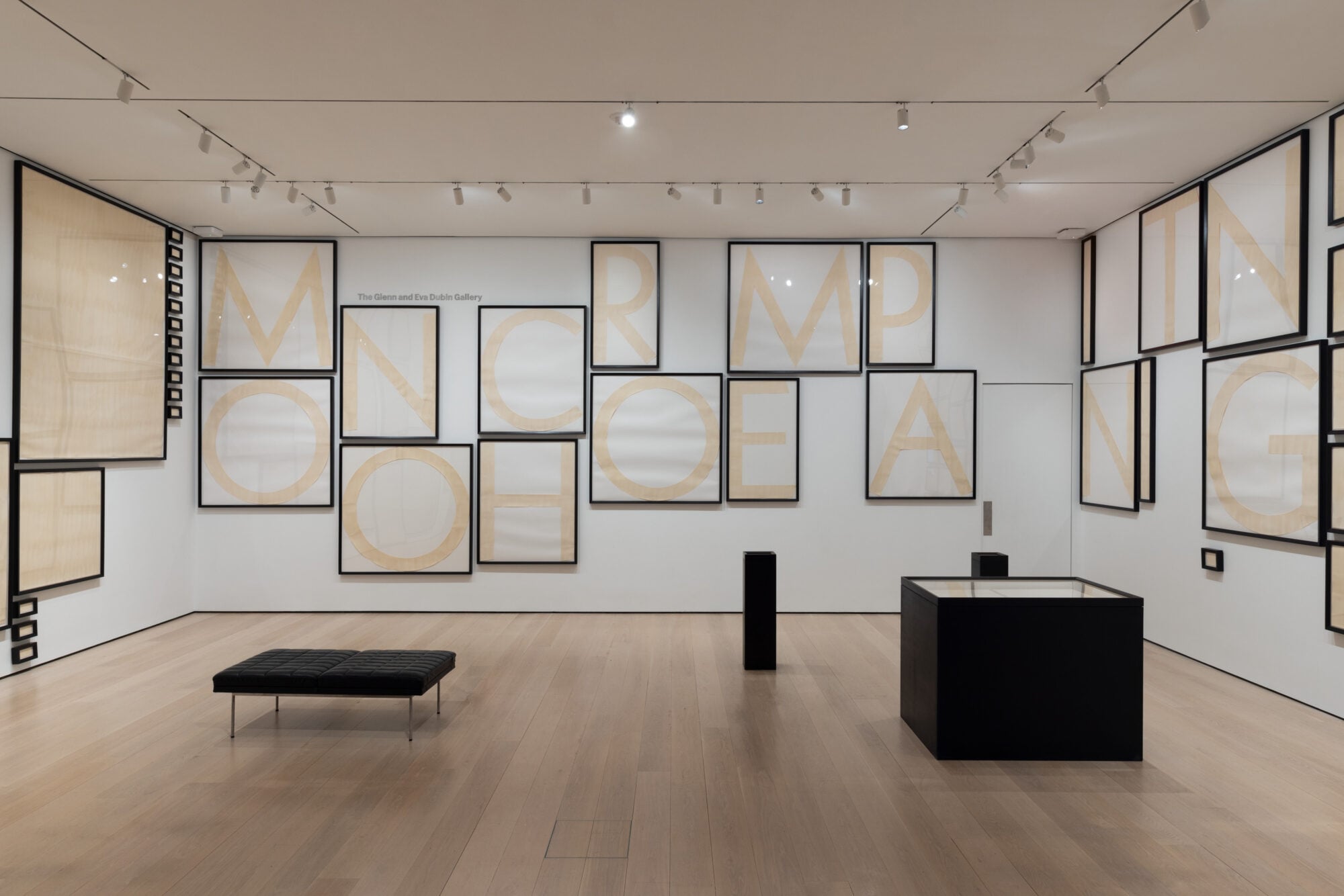
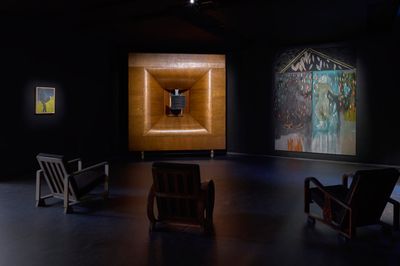
The title suggests an attempt to render as complete something that is inherently unfinished, a strategy that Prina brings to the entirety of the exhibition, which is composed of three object-based works placed in strategic positions within the museum’s galleries, and a busy calendar of live performances and concerts that run until 13 December. The lengthily titled Untitled/“The history of modern painting, to label it with a phrase, has been the struggle against the catalogue”—Barnett Newman/(Monochrome Painting, 1988–1989) (1991) sits on the fourth floor in a dedicated white cube right in front of the Kravis Studio, MoMA’s platform for live art. A floor-to-ceiling, large-scale installation assembled from 67 framed ink-wash drawings, the work references Monochrome Painting (1988–1989), an earlier version consisting of 14 green monochrome paintings by Prina that replicate historical monochromes by various artists of the 20th century, including Barnett Newman’s Abraham (1949), Ad Reinhardt’s Abstract Painting, Black (1960–1966), and Piero Manzoni’s Achrome (1959).
This 1991 version is expanded to encompass a catalogue, poster, invitation, envelope, and various additional graphics and printed ephemera. Hung together, a portion of the works spells out ‘monochrome painting’, one letter at a time. The piece seems to push the idea that it is not what manifests aesthetically that is important, but the institutional framing and taxonomical classification that dictate how artworks are perceived and organised. The work’s title references Newman’s famous quote: ‘The history of modern painting . . . has been the struggle against the catalogue.’ Prina’s interpolation exposes the museum as an active agent that organises, crafts, and strategically systematises meaning in its relation to production.
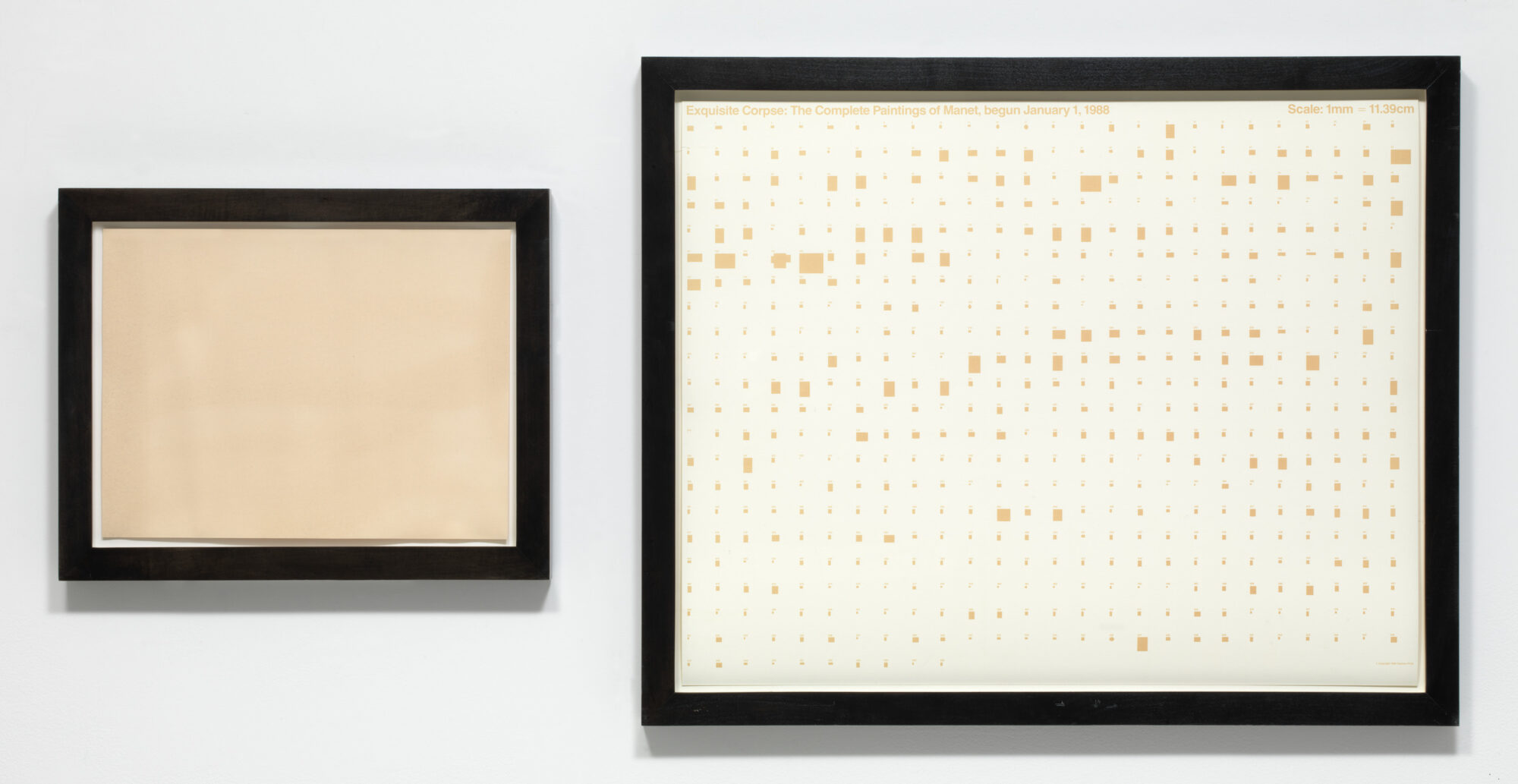
Exquisite Corpse: The Complete Paintings of Manet, 41 of 556, Nymphe Surprise (The Startled Nymph), 1861, Nasjonalgalleriet, Oslo (31 December, 1988) furthers the exhibition’s argument around the logics of classification. Another ink wash, this diptych belongs to an ongoing series of 556 works that the artist began on New Year’s Day in 1988, each of which reinterprets a painting from a 1969 Penguin paperback edition of Édouard Manet’s catalogue raisonné, as Prina explained in a 2011 interview. On the right panel of the diptych, the French painter’s works are organised together and reduced in scale, with the original images replaced by a flattening sepia ink wash set in a black frame. A small inscription in the upper right corner records the ratio: ‘1 mm = 11.39 cm.’ On the left panel, one piece is singled out and rendered at scale with identifying details (date, provenance, title).
Significantly, Exquisite Corpse is installed in the museum’s Post-Atomic Abstraction exhibition, which opened in May 2024. Here, it sits in dialogue with other works dealing with a post-World War II society reconfigured, physically and culturally, by nuclear physics and mass destruction. Introducing its own use of destruction, Exquisite Corpse offers a slippery take on the Impressionist’s body of work, imposing a distance that reimagines the paintings as data—an object of record rather than vision. By reproducing only the dimensions of Manet’s paintings and translating their images into monochrome, Prina reveals how artistic value is manufactured by institutions and sustained by strategies of classification rather than the sensorial presence of images themselves. Prina’s work performs a distance that removes art from earthly comprehension (to return to Dante), suggesting how inevitably fragile and frustrating it is to attempt to stabilise meaning, memory, history—and, of course, taste.
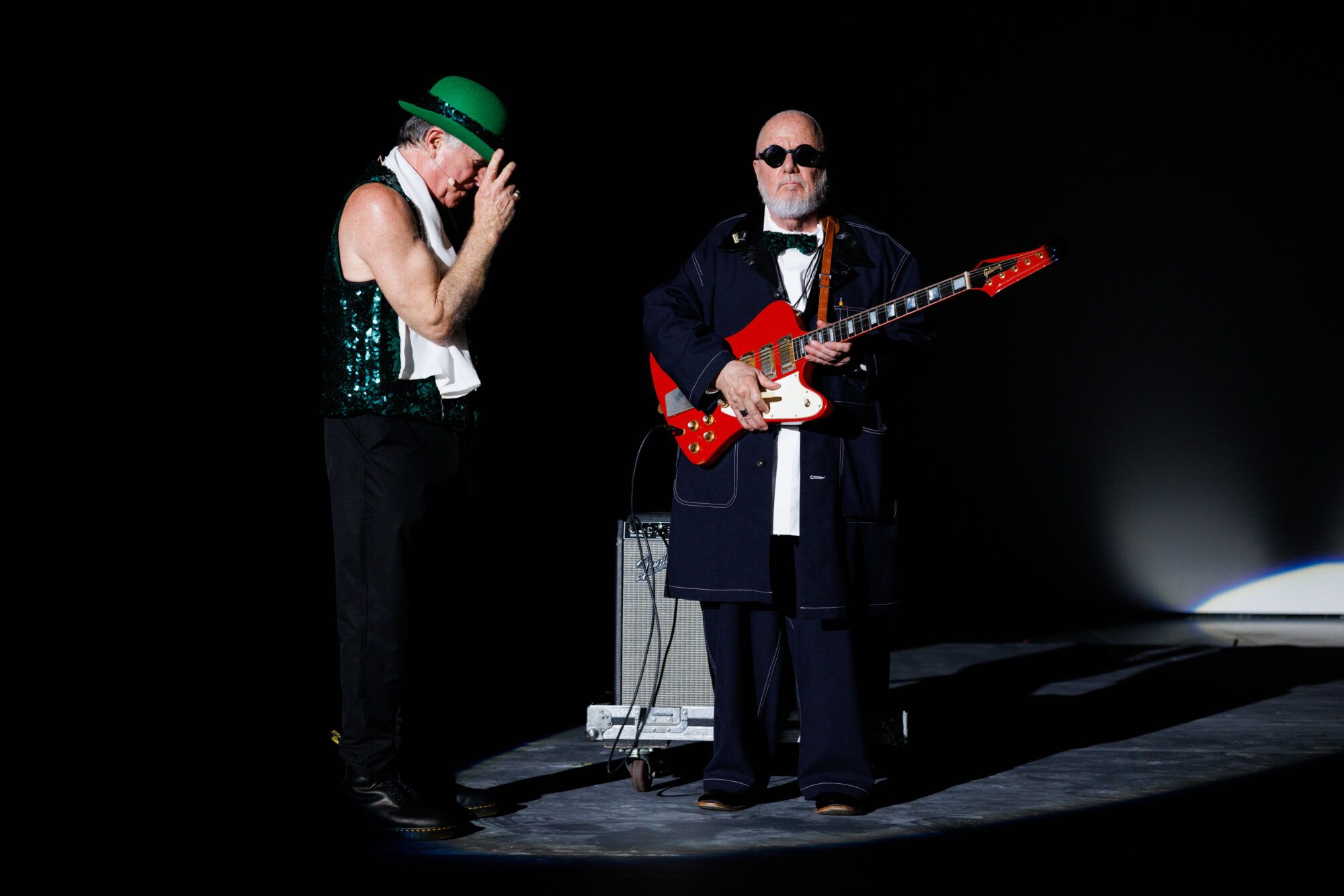
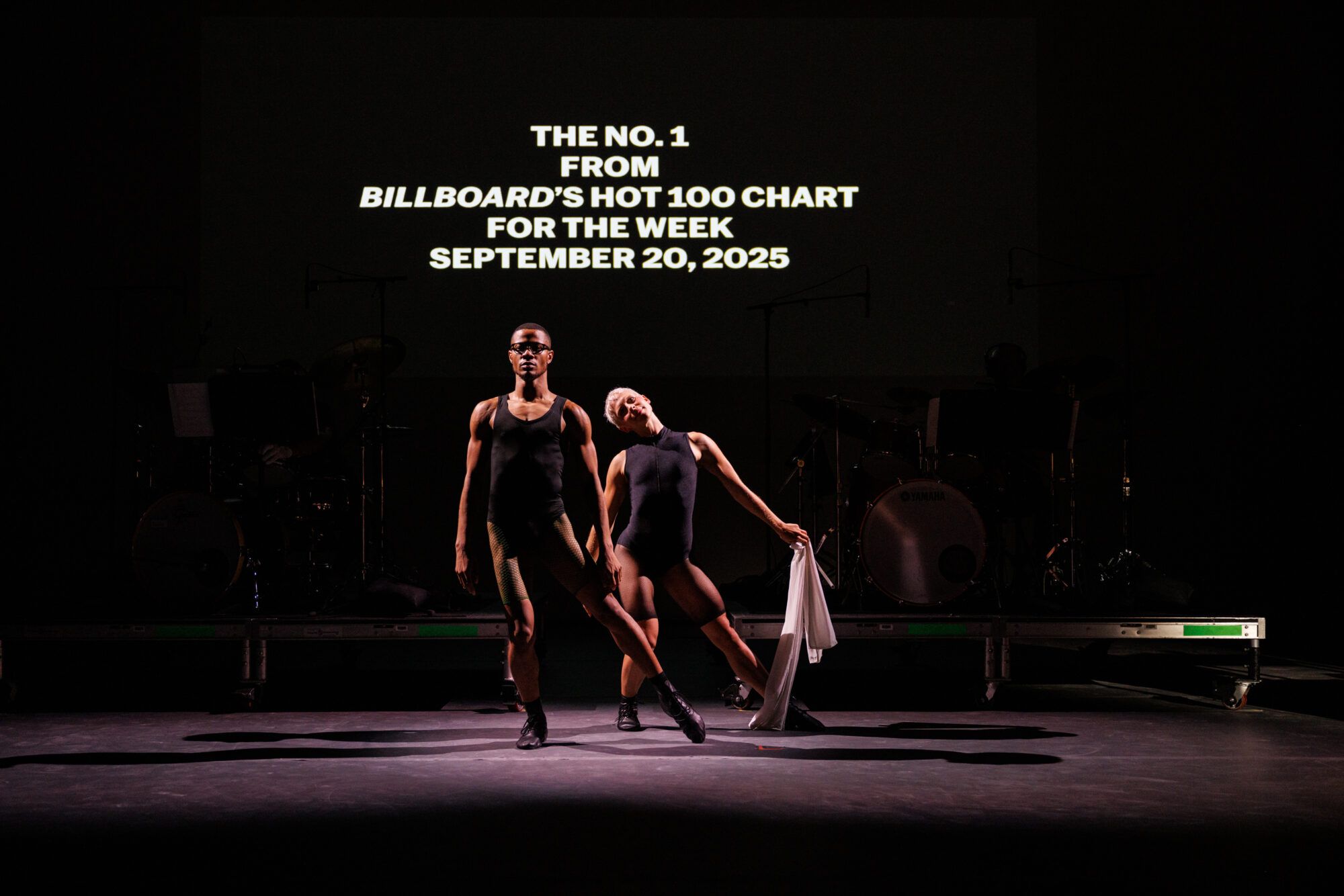
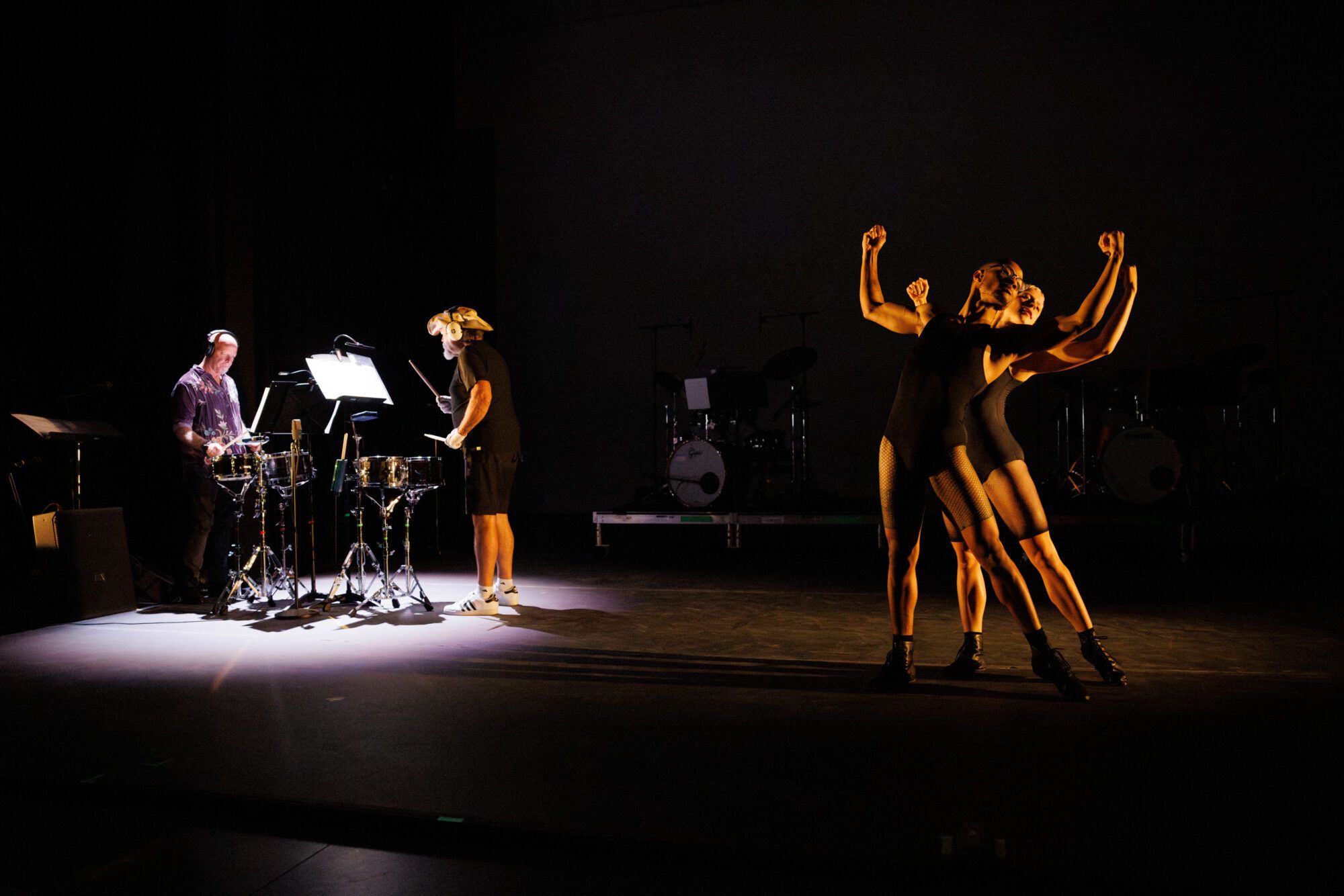
This deliberate refusal of stability extends to a newly restaged iteration of Beat of the Traps (1992), a performance Prina first co-authored alongside the late American artist and musician Mike Kelley and the choreographer Anita Pace. Set in the MoMA Atrium, the choreography unfolds with an original mix of dance, two-drummer solos, and monologues. The original choreography is set to number one hits from Billboard’s radio songs charts for the week of 20 September 2025 (including a cover of singer-songwriter Alex Warren’s ‘Ordinary’, performed live by Prina himself). An actor performs Mike Kelley’s text—free-flowing riffs on rock culture’s clichés, nostalgia, and myths of rebellion—while drummers from the original line-up engage in drum duets with one beat out of sync, following tablatures from well-known rock songs. Two dancers interpret Pace’s choreography, gesturing to moments of asynchrony and silence.
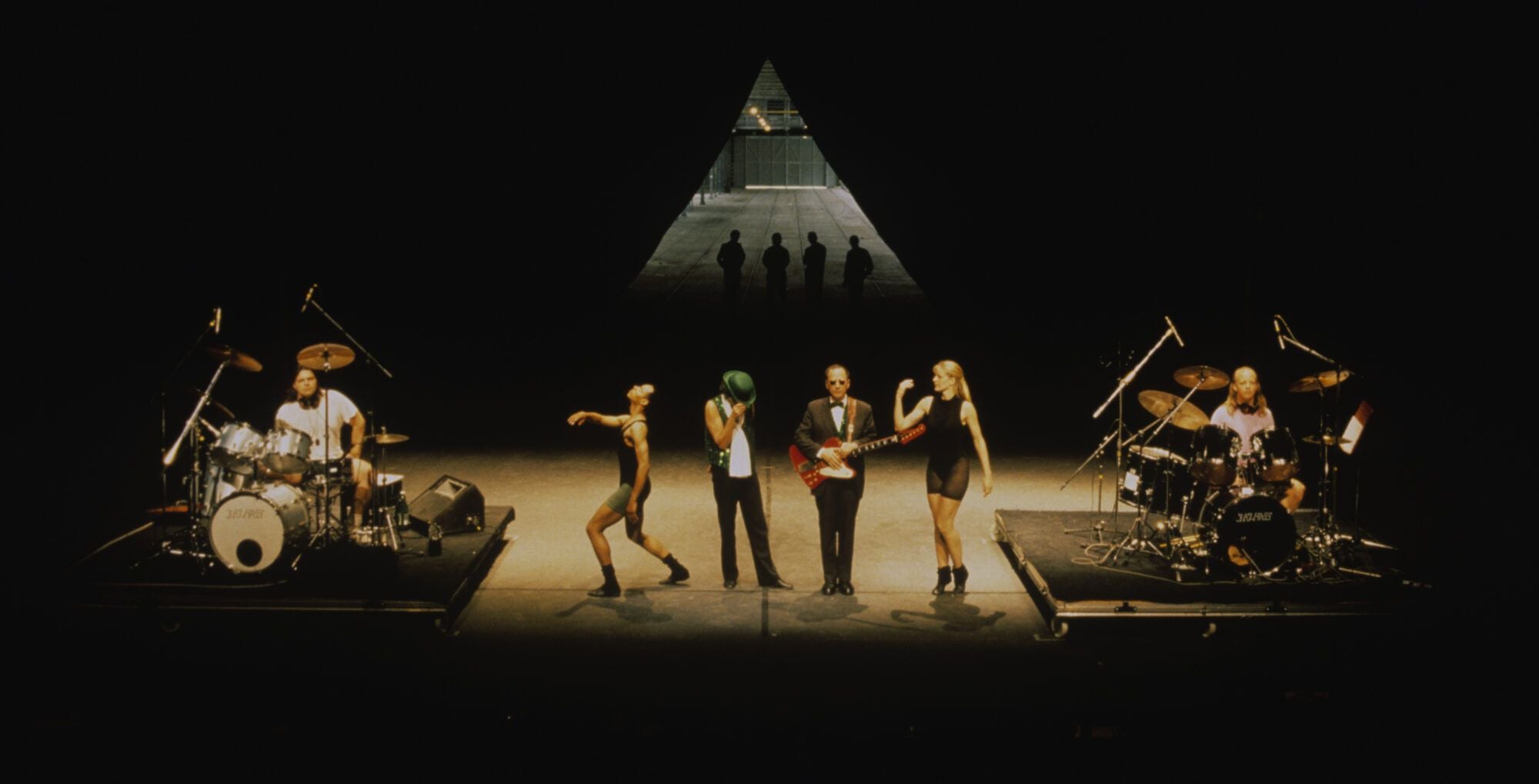
As I watch their movements, I sense a radical rupture from the distant echoes of Prina’s object-based works. With the drum kits shifted right in front of us, as if in confrontation with the assembled crowd, the drummers launch into their final solos: ten minutes of noisy strikes that reverberate in the audience’s ears and through our bodies, which I feel most keenly as an immediate form of emotion in my heart. The ‘ting ting’ becomes a full-bodied pulse, a direct artery to Dante’s ‘sweetness’. In this instant, Prina’s abstract promise materialises: violent, palpable, and joyously lived. —[O]
Stephen Prina: A Lick and a Promise is on view at the Museum of Modern Art in New York from 12 September to 13 December 2025.
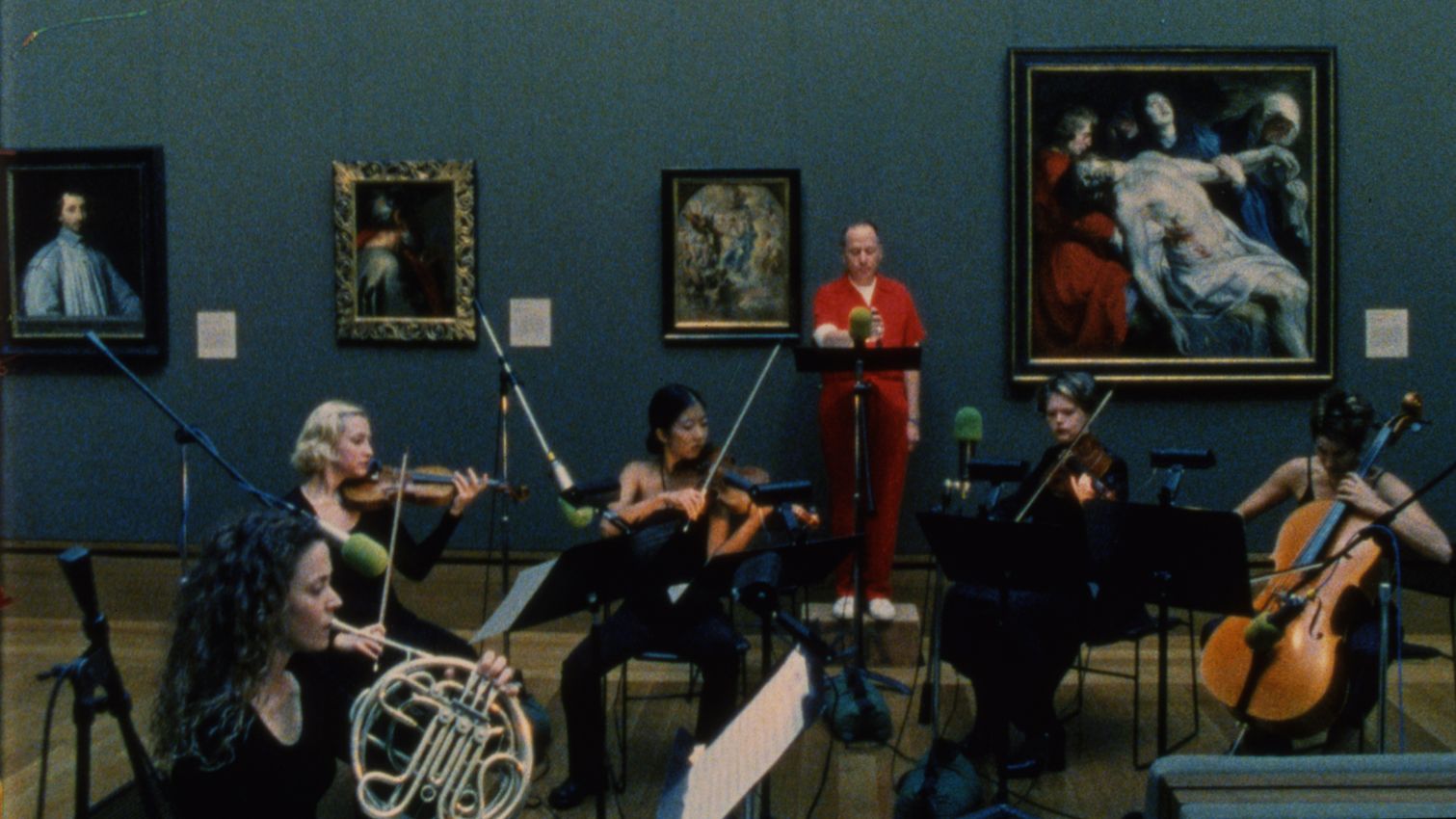
Main image: Stephen Prina, Vinyl II (2000) (still). Courtesy the artist and Petzel, New York.


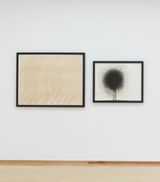
90 x 116.5 cm
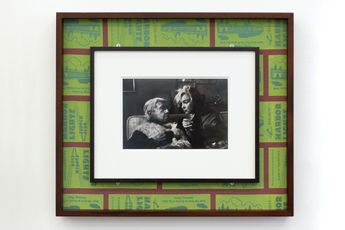
66 x 83 inches (incl frame) Sprüth Magers Request Price & Availability

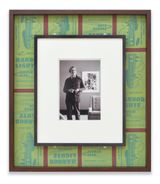
68.4 x 60.4 cm
Sprüth Magers Request Price & Availability




A respected voice in contemporary art discourse.
Focusing on ambitious storytelling and insightful art-world commentary. Ocula Magazine publishes in-depth interviews, critical essays and timely analysis on the artists, exhibitions and ideas driving the global art world.
Learn more about Ocula Magazine
Showcasing the best of the art world.
Ocula partners with galleries from around the world to highlight their artists, artworks and exhibitions. Gallery membership is by application and invitation, with each member vetted by an independent panel.
Learn more about Ocula Membership
Specialises in the sale of major artworks.
Led by a team with deep ties to the world’s leading auction houses, galleries and collectors. Ocula’s advisory team offers bespoke services to high-net-worth clients from around the world who are looking to acquire the best of contemporary and modern art.
Learn more about our team and services