“Q_uality, light, colour, depth, which are there before us, are there only because theyawaken an echo in our bodies and because the body welcomes them._” Maurice Merelau-Ponty, Eye and Mind
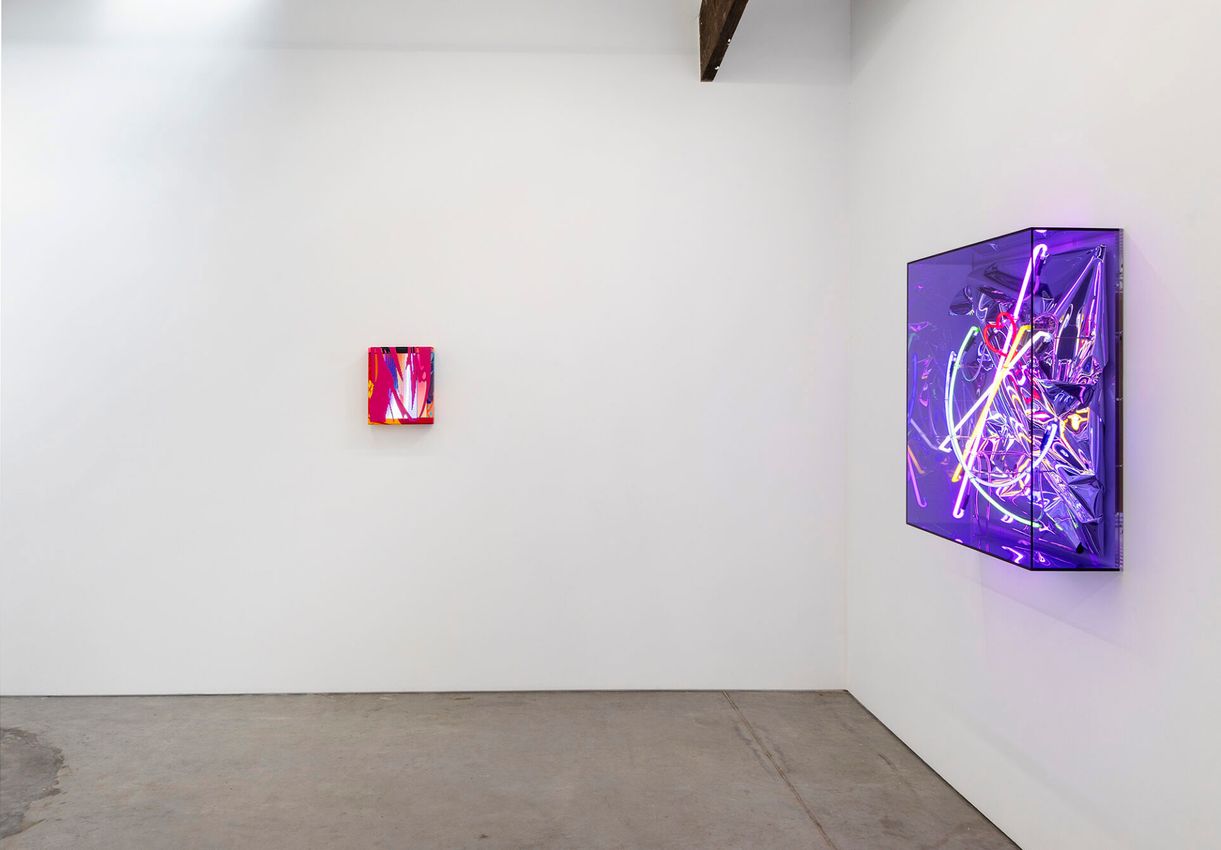
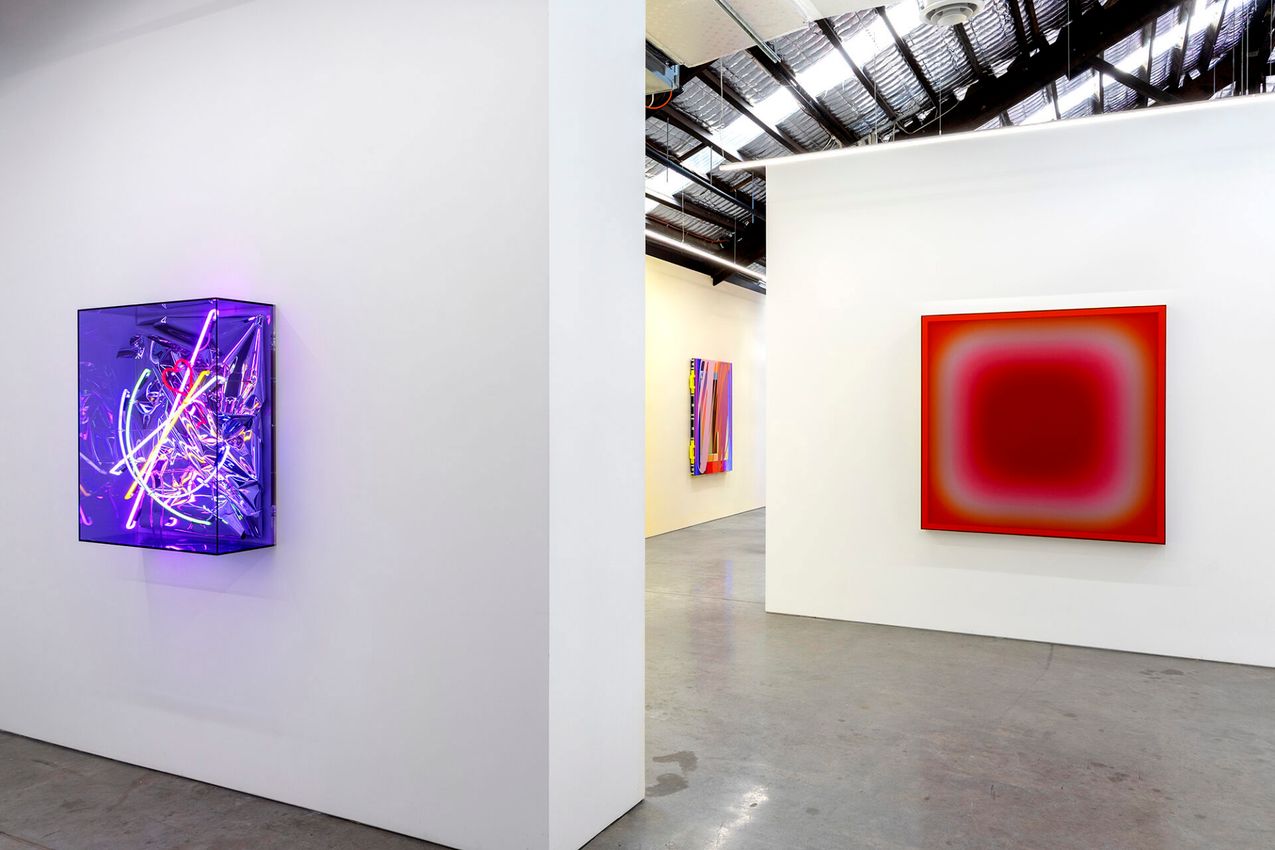
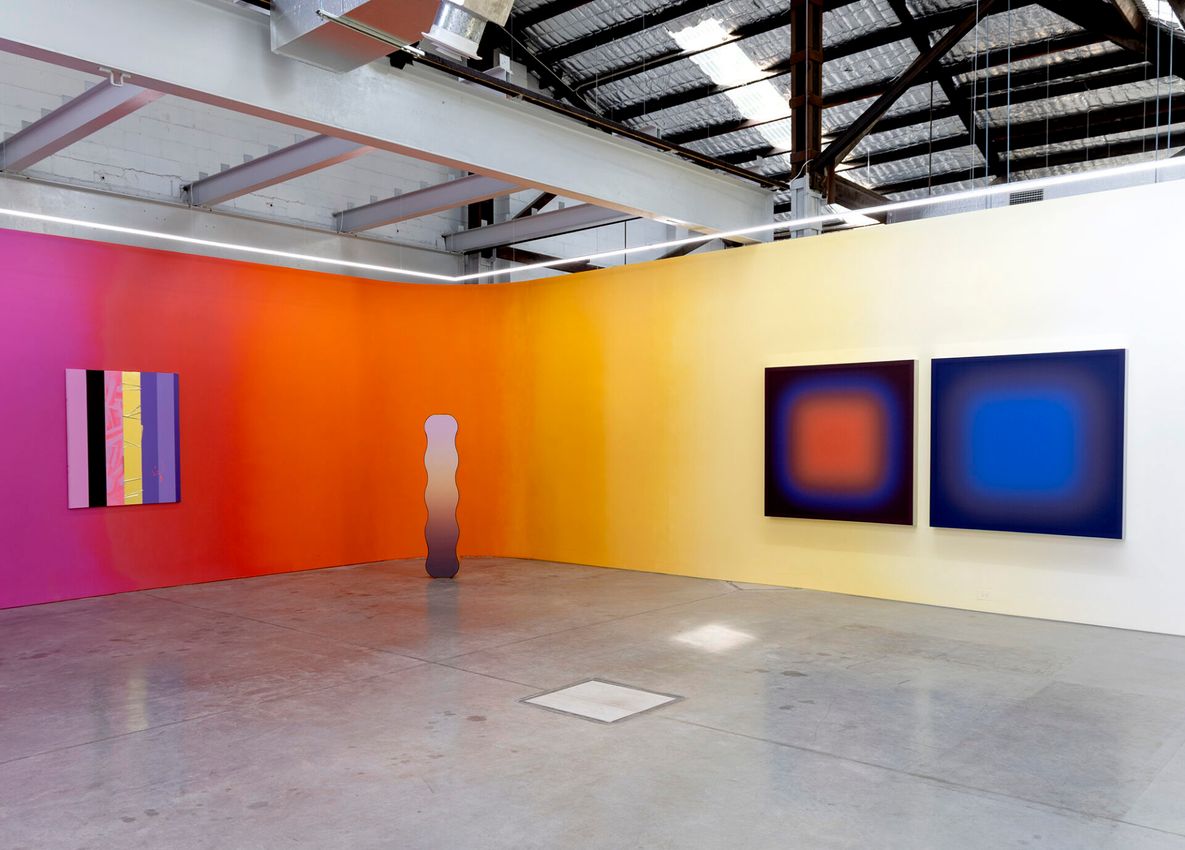
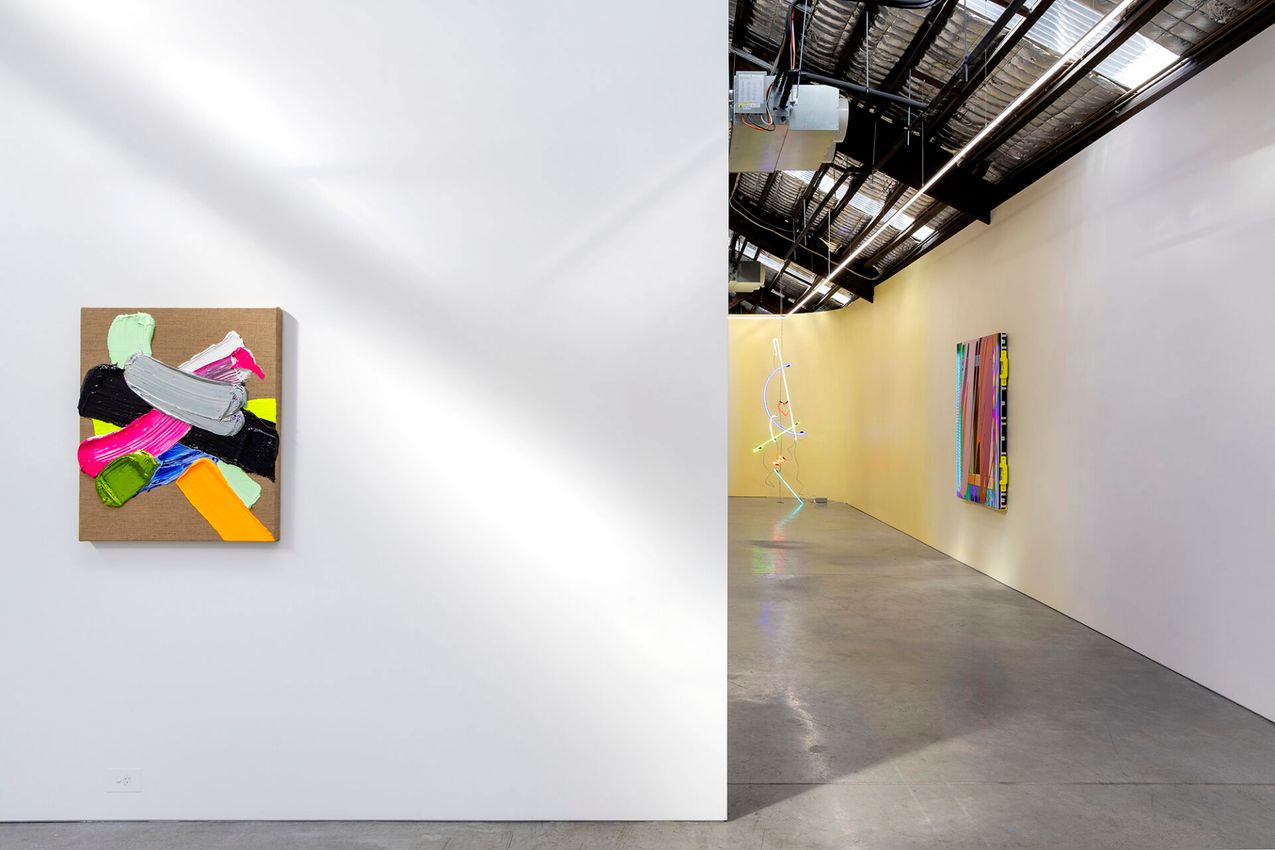
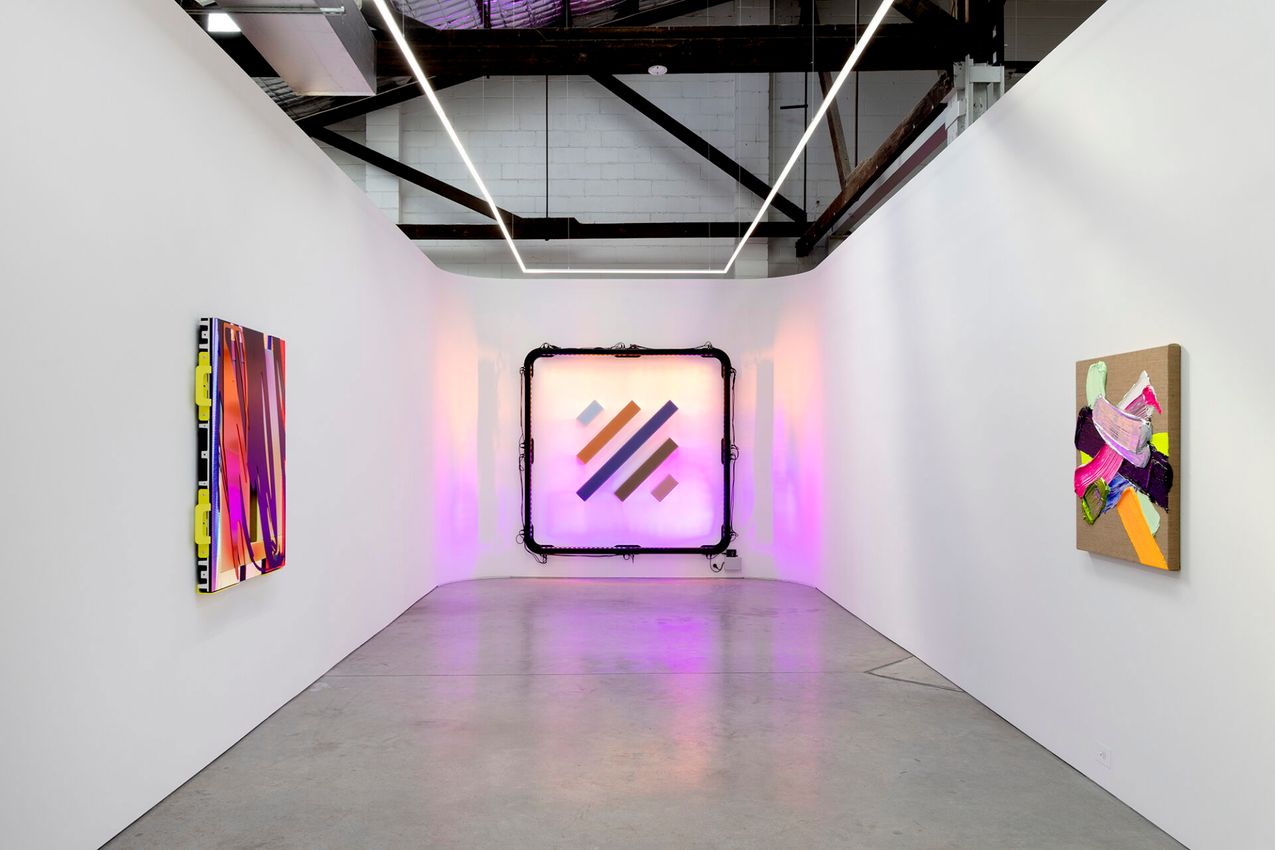
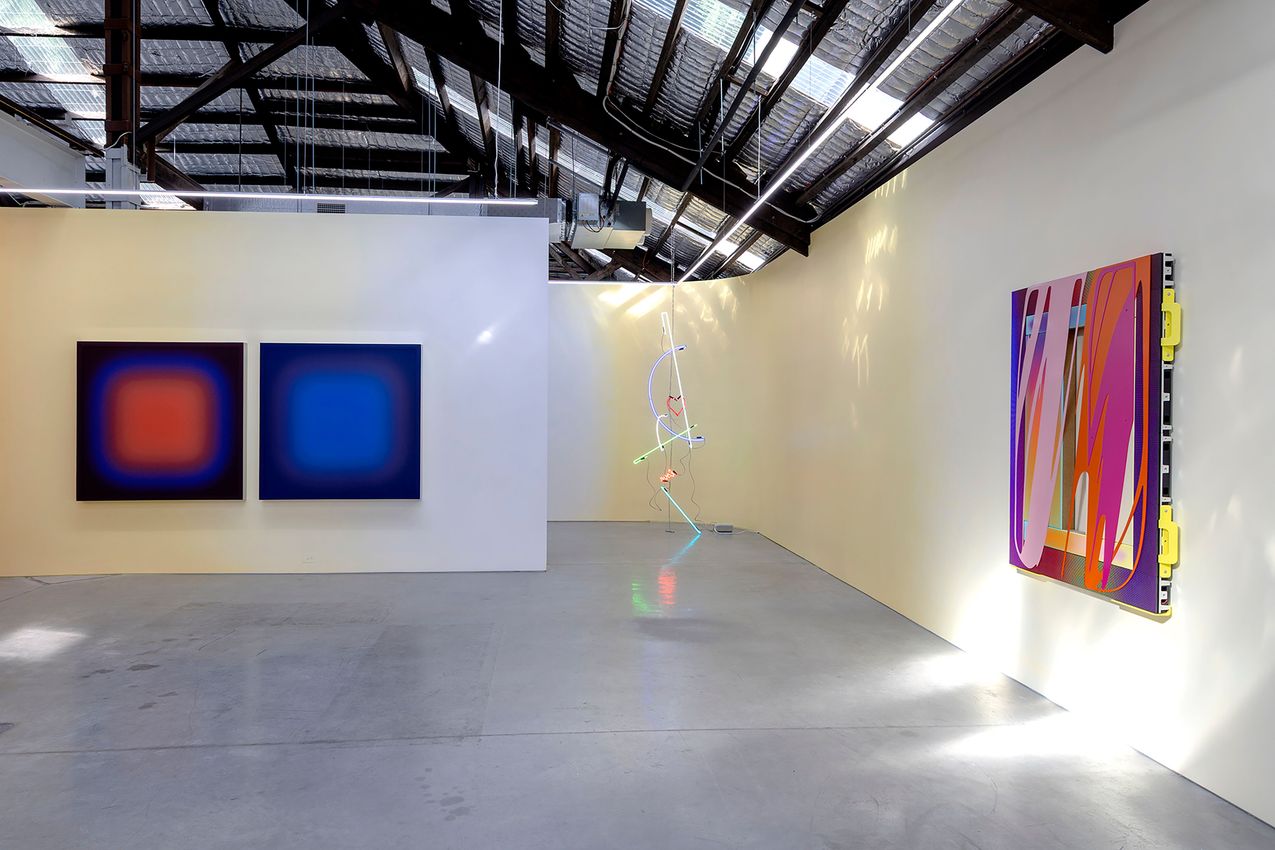
Colours, some electric with blazing ferocity, others absorbing the viewer in total tenderness,welcome the body into the space. The practices of Jonny Niesche (b. 1972, Sydney, Australia),Anselm Reyle (b. 1970, Tübingen, Germany), and Márton Nemes (b. 1986, Székesfehérvár,Hungary) converge in a shared fascination with colour, surface, materiality, and embodiedpresence. Lebenswelt unfolds as a microcosm of its own: colour fields permeate rounded walls,suspended neon tubes punctuate space, and coloured lights refract from mirrored bars. Drawingon the inherited languages of postwar abstraction, impressions of popular culture, and the musicscenes they gravitate towards, their worlds coalesce here as variations on a theme. Paintingexpands far beyond the picture plane, echoing not only in space, but in our bodies.
Lebenswelt, literally lifeworld, denotes the everyday world as it is lived and implicitly understood.It is the realm of the taken-for-granted—bodily automatisms, memories, assumptions,expectations, social conventions, and acquired cultural knowledge; things that ordinarily escapeour attention and scrutiny. A term adopted from phenomenology, Lebenswelt, operates here asa touchstone for encounters with the artworks, individually and collectively. Focus is directed thustowards the often-neglected perceptive encounter, preceding—but never detaching from—thefacts, references, histories, and theorisations through which the artworks become legible.
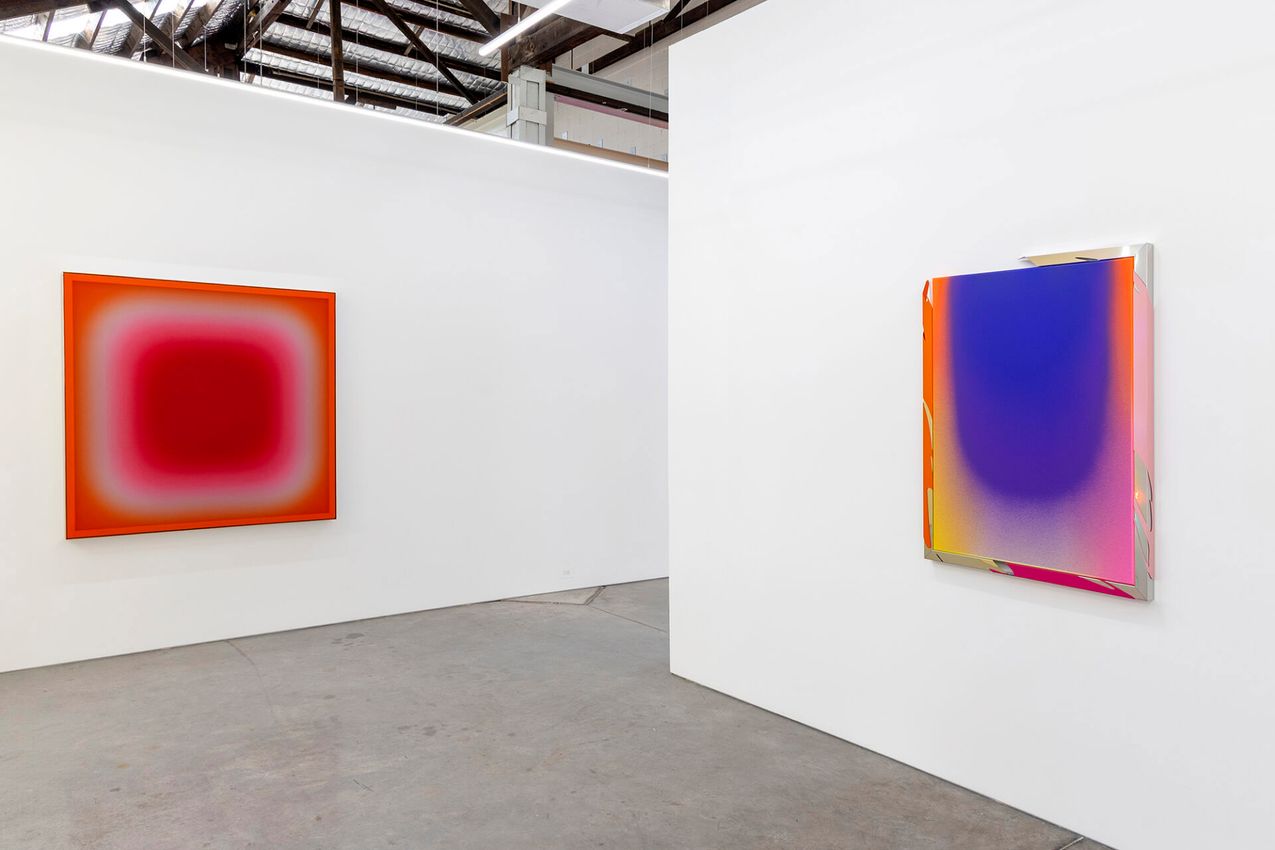
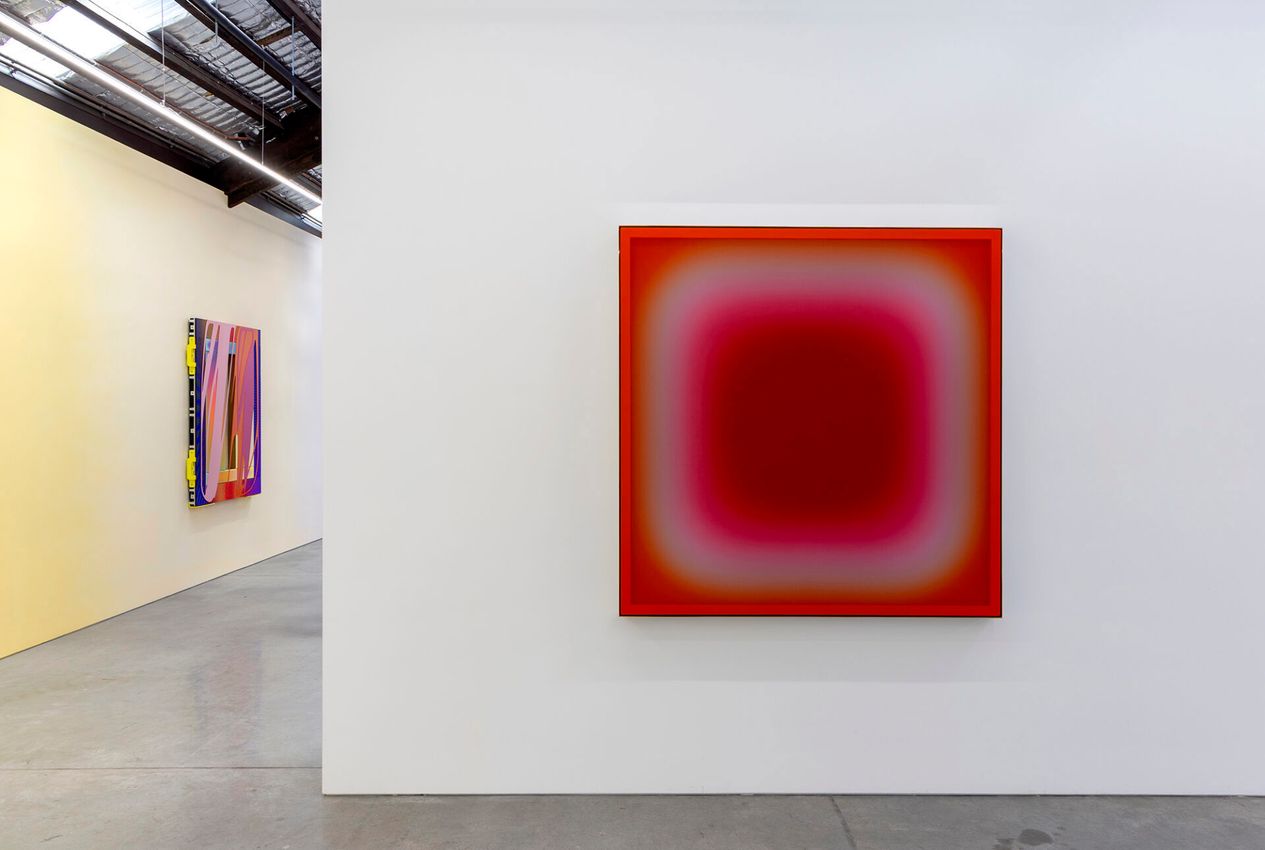
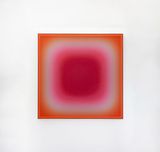
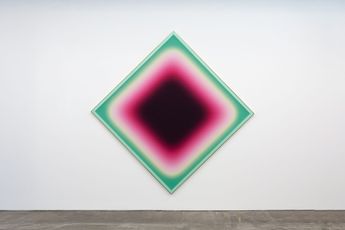
Sleek mirror edges frame pulsating, hypnotic rings of colour in Jonny Niesche’s perfectly squarecomposition: a deep crimson nucleus, encircled by an arena of acid pink and pale lilac, draws thegaze inwards—an almost gravitational pull. The colour field is nebulous, while the physical objectremains extraordinarily crisp. Niesche treats colour as both a material and a perceptual event.Cosmetic sheen and glam-rock aesthetics mingle with echoes of Minimalism, Op Art, and ColourField painting.
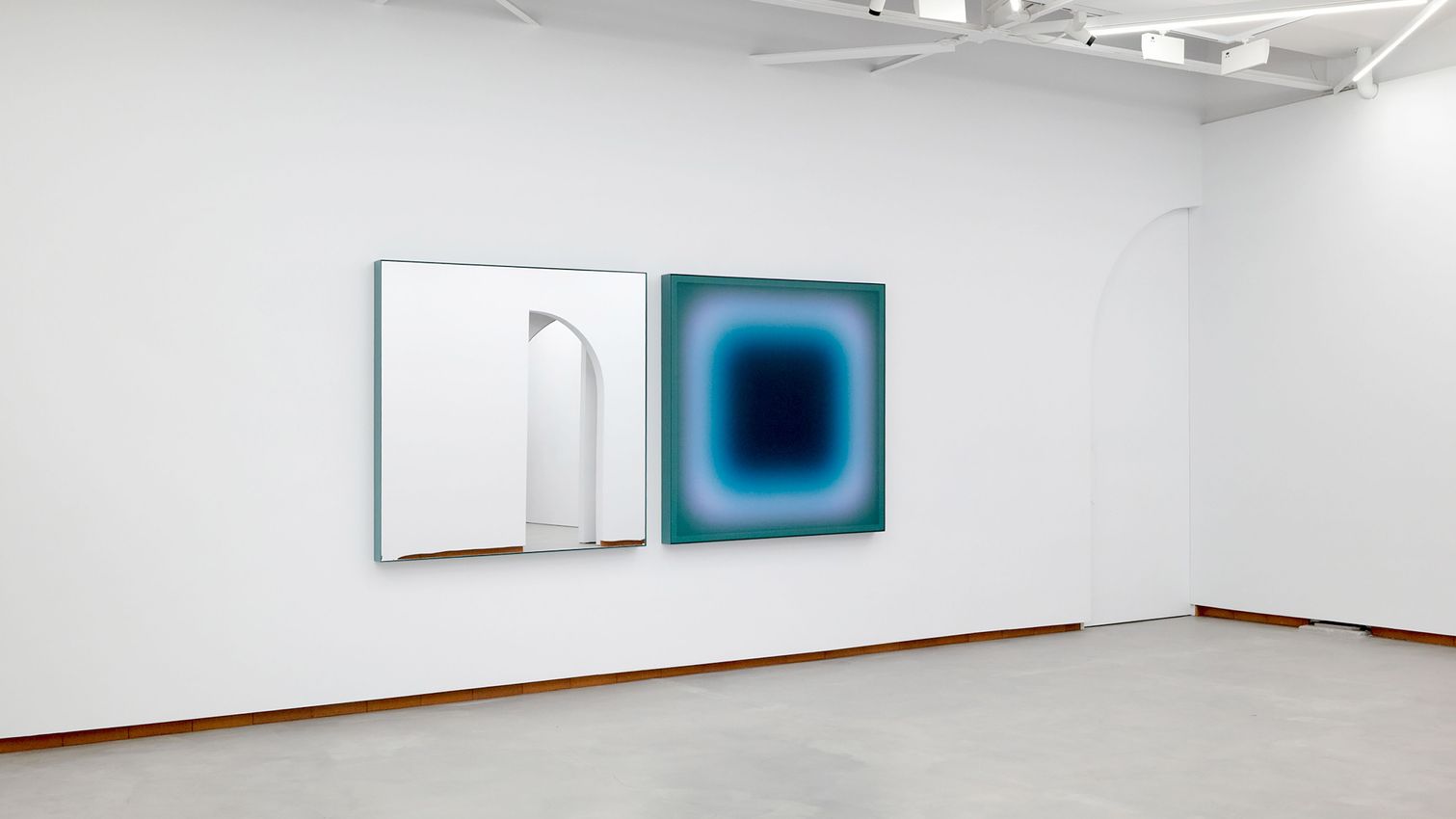
At a distance, the narrowing concentricity in Geiger counter for Rupprecht (2026) or Binary Mystic(diptych) (2026) produces an almost anatomical sense of interiority. Colour performs itself. Itconfronts the viewer with an irresistible magnetism, in which saturation and spatiality togetherevoke an intense bodily response—much like a deep inhalation that expands the lungs to theirfullest capacity. Close up, layers of dye-sublimated voile blend tones softly in spatial rather thanpurely optical terms, producing a moiré effect that destabilises vision and focus. Beyond illusion,Niesche’s image-objects have actual depth, a body; their mirrored edges invite the viewer tomove, see and be seen, unsettling the distinction between object and subject.
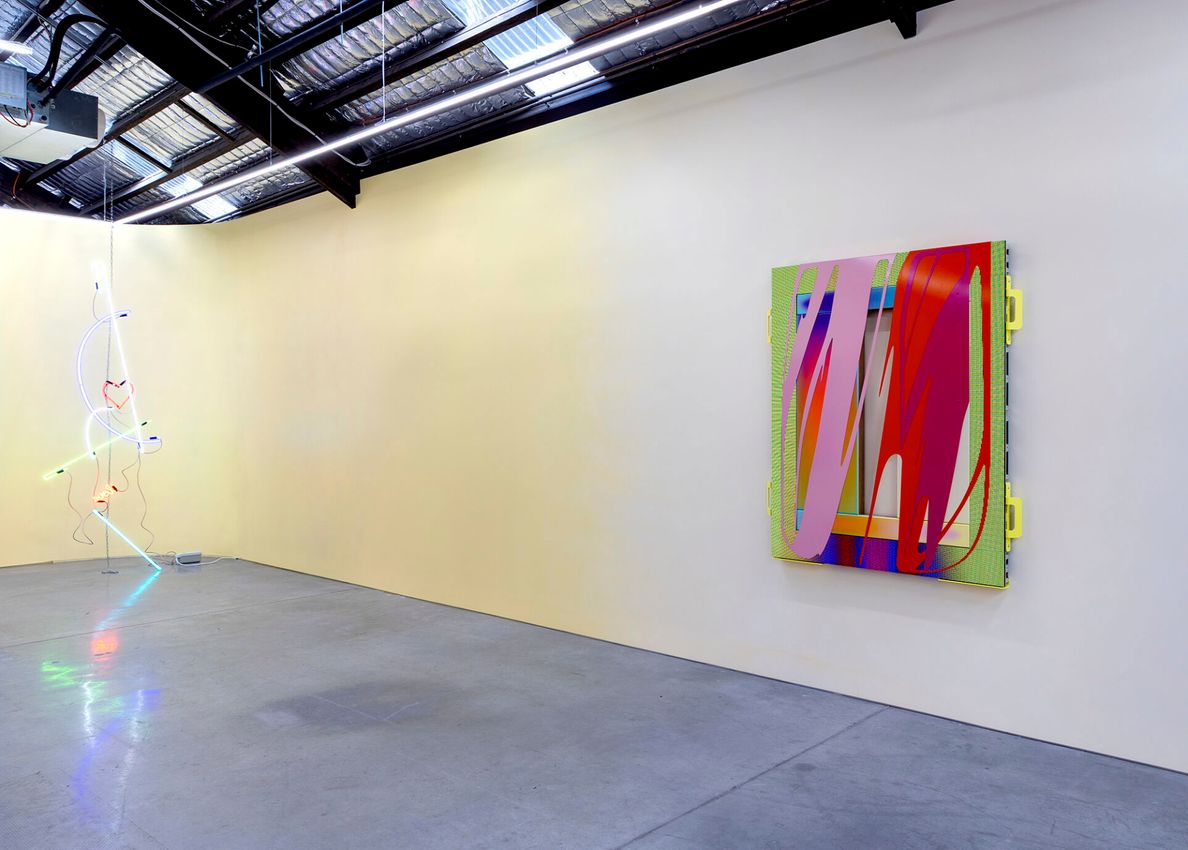
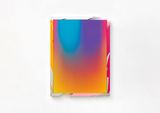
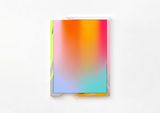
_Cosmic division (Markers of intimacy) _(2026) extends this dynamic further into space. Mirrorsalong the peripheral sides of coloured bars simultaneously distance and embed the viewer,creating a sense of intimacy. The mirror-polished steel frames of Nemes’s Silence Paintingsoperate similarly. For Reyle, however, reflection is more tacit. In his Stripe Paintings, verticalbands collide, each held in tension with the next—assertive pink pops against the glowing goldenband of creased mirror foil; three shades of lavish purple are interrupted by a drop of bright neonorange. Reflection becomes a latent pigment, with only a holographic shadow signalling theviewer’s presence in the golden band. In Untitled (2025), Reyle troubles material certainty withisolated, synthetic chrome brushstrokes—appearing freshly painted—analytically layered overcrude burlap. Reyle decontextualises the expressive brushstroke and turns it into simulation,ultimately revealing the underlying ambiguity in the familiar.
Whereas Niesche draws the viewer inwards through an ethereal vocabulary, Anselm Reyleanchors the body through substantial materiality—reinforcing its sense of balance andgroundedness. A fluorescent neon configuration hangs on chains; luminous lines converge anddiverge like expressive strokes drawn in space. Amidst them, a tilted red heart and the word lovebecome legible. Chains suggest dependence, oblique neon tubes lability, and electricity aconditional source of power. Borrowing materials from domestic, consumer, urban, and industrialenvironments, Reyle uses the logic of commercial signage to proclaim the most human ofexperiences: love—universally understood, yet resistant to a single definition. Or is it simply aplayful take on an enduring tacky cliché? High art and kitsch collide.
Readily decipherable signs recur in Untitled (2023), where neon lines appear against crumpledmetallic foil alongside the inscription club. Enclosed behind tinted acrylic glass evocative of aconfined nightclub, the glowing work recalls the bodily intensity of nightlife, pulsating with lightand rhythm as crowds breathe almost in unison. Escapism and isolation come into play.
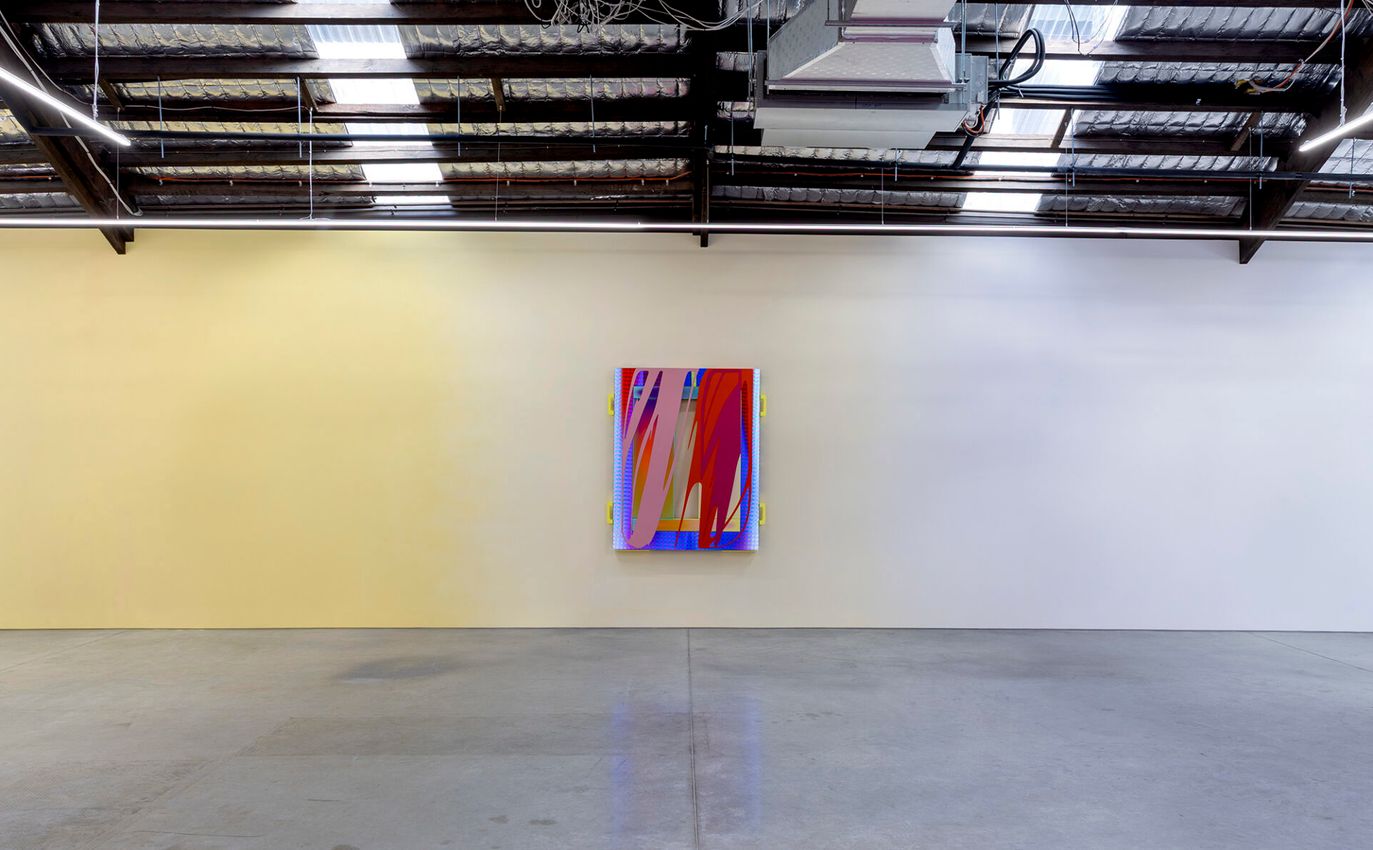
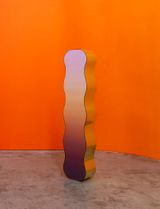
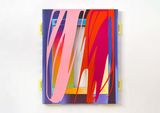
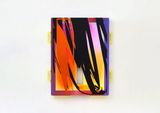
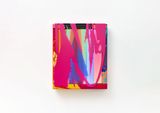
With a deep engagement in techno and rave culture, Márton Nemes’s art generates energy likebodies on the dancefloor—synchronised, ecstatic, heaving. In Synchronicity Paintings, pungentgestural slashes partially conceal a chasm and LED panels animating shifting colours andfragmented shapes. Gesture is arrested in solid matter, only to be set back in motion throughanimation. Artificial light floods outwards, reversing Niesche’s corporeal inward pull. As paintingis given an algorithmic dimension, Nemes points to the digital habits and screen-mediatedbehaviours naturalised in contemporary life. Amidst this technological excess, where physical anddigital structures coexist, a serene desire to grow silent emerges.
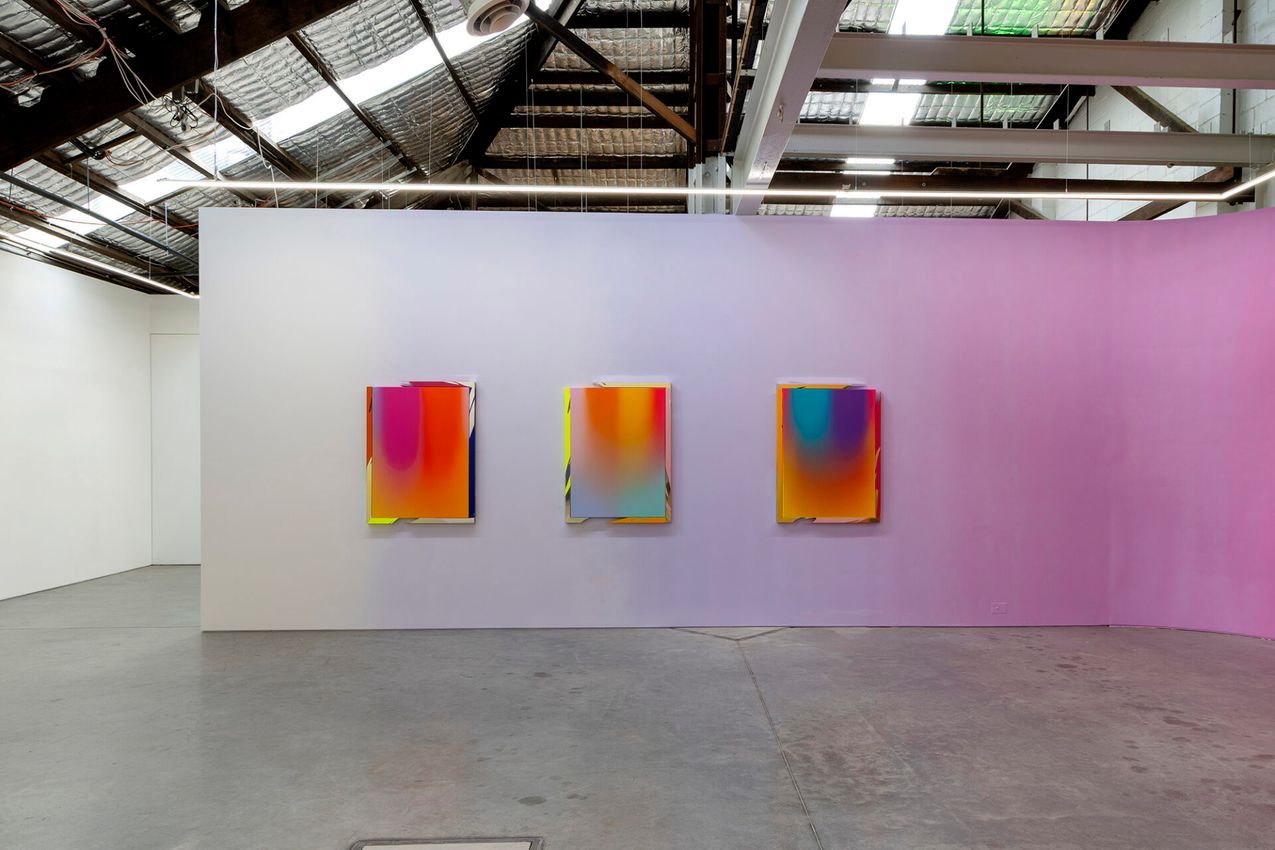
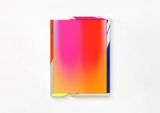
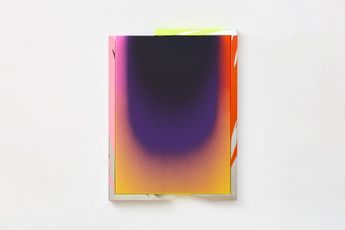
Soft oblongs of vibrant pink and deep orange-red diffuse across Silence Paintings 15 (2026), theirairbrushed transitions appearing weightless and atmospheric. Metal brackets wrap around thepainting without fully enclosing it, while the two descending oval fields overlap along the centralaxis. Their fading contours recall a pair of lungs. Nemes’s colour fields align with Lee Ufan’sproposition of painting as exhalation, turning invisible bodily reflex into visible trace. SilencePaintings dwell at the threshold between holding a breath before fully letting go—pressurefollowed by complete release. The gap in the frame materialises this outward flow, orexternalisation: neither absence, nor completion, but an opening where energy is releasedoutwards. Fierce acrylic shades and polished steel oscillate between confinement and openness,visibility and invisibility. Reaching from techno towards spirituality, Nemes makes movement—oflight, image, air, and body—integral to painting.
Niesche’s colour field draws inwards, Reyle’s glowing materials electrify and ground, whileNemes’s painting releases energy outwards. In the lifeworld created by these three artists, the_taken-for-granted_ becomes perceptible. Lebenswelt asks us to notice what thought so easilypasses over: the body that looks, moves, remembers, and breathes—through which the artworkcomes to life.
– Hanna Claris


1301SW was founded in 2022 in Naarm/Melbourne’s inner-south, embracing the region while having strong roots internationally. Extending from its Melbourne base, the gallery expanded its unique and ambitious exhibition program to Gadigal/Sydney with the opening of a second gallery space in late 2024.
A respected voice in contemporary art discourse.
Focusing on ambitious storytelling and insightful art-world commentary. Ocula Magazine publishes in-depth interviews, critical essays and timely analysis on the artists, exhibitions and ideas driving the global art world.
Learn more about Ocula Magazine
Showcasing the best of the art world.
Ocula partners with galleries from around the world to highlight their artists, artworks and exhibitions. Gallery membership is by application and invitation, with each member vetted by an independent panel.
Learn more about Ocula Membership

Specialises in the sale of major artworks.
Led by a team with deep ties to the world’s leading auction houses, galleries and collectors. Ocula’s advisory team offers bespoke services to high-net-worth clients from around the world who are looking to acquire the best of contemporary and modern art.
Learn more about our team and services