





JONNY NIESCHE
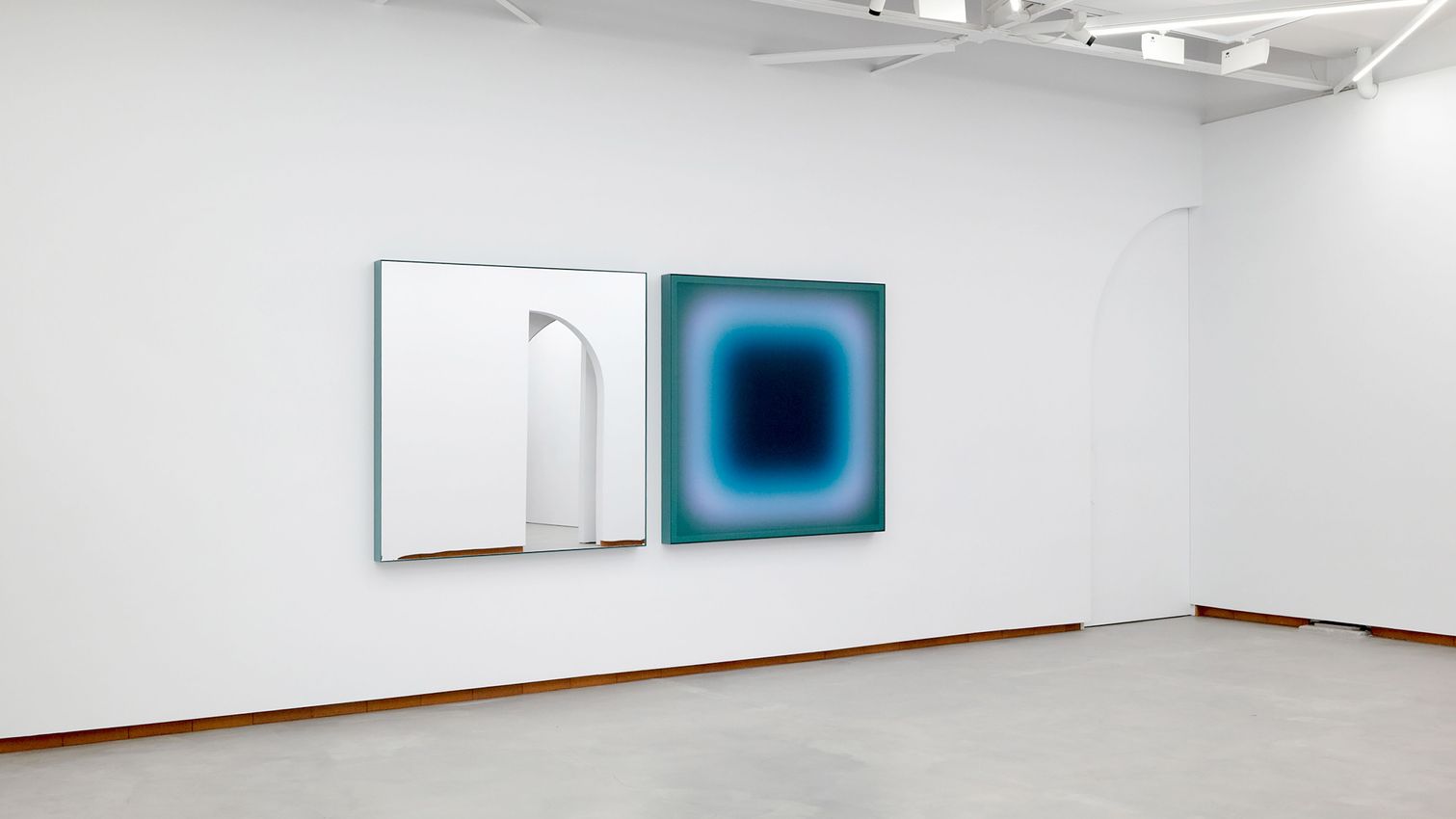
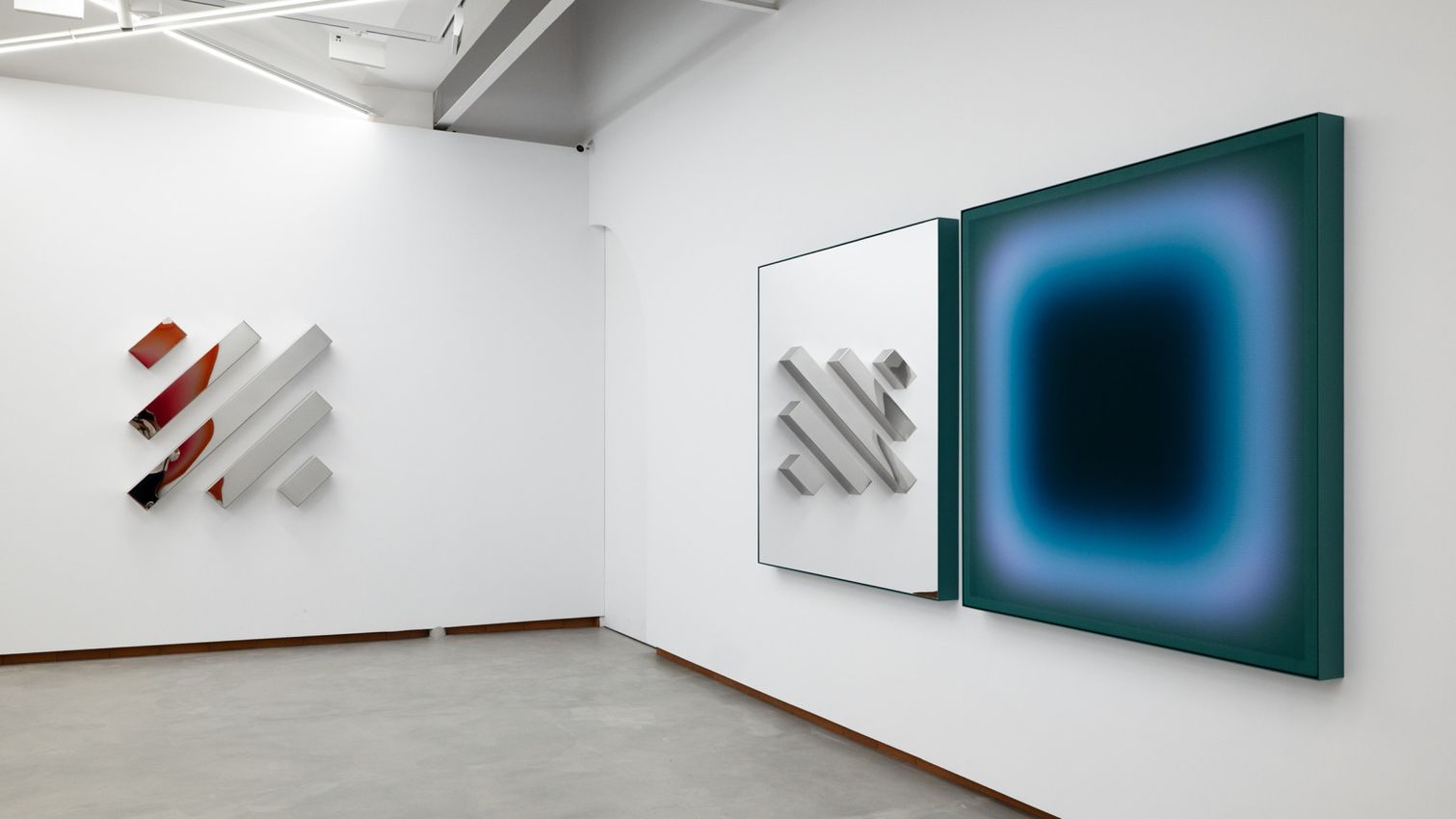
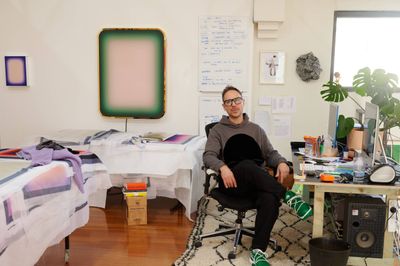
b. 1972, AustraliaCombining paint and reflective materials that include glitter, mirrors and translucent fabrics, Australian artist Jonny Niesche creates vibrantly coloured abstractions that straddle painting and sculpture. Niesche considers traditionally static art objects as ever-shifting events, engaging with form, light and the process of perception to create works that appear to change depending on the viewer’s position.
Early Years
In his 2018 monograph Cracked Actor Jonny Niesche explained that his fascination with colour, mirrors and glitter began during the early 1980s when he visited the cosmetics counters in a Sydney department store with his mother. Born in Sydney, Australia in 1972, Niesche spent a decade as a musician in New York and has said that he was “obsessed with sonic manipulation”—visual waveforms and making “art with a call-and-response that’s visually connected” are now part of his practice. Returning to Australia, he renovated and sold his parents’ house and decided to do an impromptu painting on the “for sale” sign. More paintings and a gallery show prompted him to study and figure out how he could fit into the art world. He gained his masters at Sydney College of the Arts under Mikala Dwyer and followed this with a stint at the Academy of Fine Arts in Vienna where he was mentored by Heimo Zobernig.
Jonny Niesche: Artworks
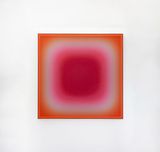
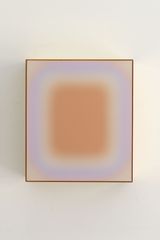
Aesthetics play a key role in Jonny Niesche’s geometrically abstract pieces. Blending painting with sculptural elements, he works with polished, flat, mirrored services, pastel fabrics and welded steel. He experiments with visual perception, using glitter, reflection, colour and light to involve the viewer in the work. Jonny Niesche’s artworks, whether displayed on the wall or suspended from the ceiling, often feature a geometric plane with a gradient of colours. His bold or soft pastel colour palettes evoke minimalist works.
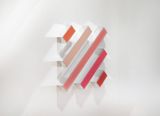
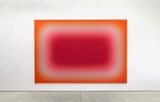
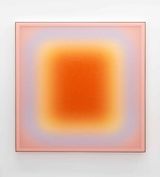
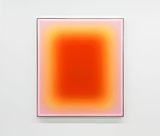
- Mutual Vibration (address the body whole) (2017) is a painting-sculpture with a mirror on one side and a dye-sublimation print on voile on the other. The central orange-red fades into orange and then white, ending with salmon pink around the edges. Suspended from the ceiling, the work prompts the viewer to walk around it and contemplate the shifting colours and flaws in the surface.
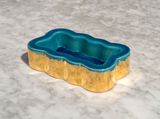
- Snow White (Wax Ballet) (2025) brings an object into the work: a lava lamp. Light plays on the edges of the platform on which the lamp is mounted, as well as in the lamp itself.
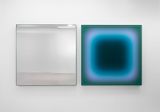
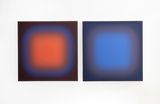
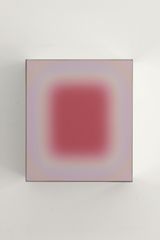
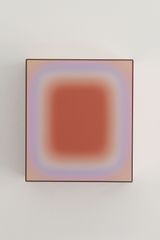
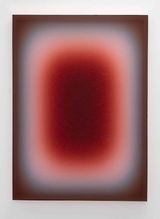
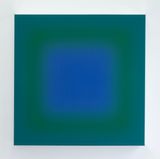
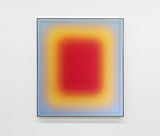
- Three of Niesche’s acrylic-mirror-and-voile works featured in the 2026 group exhibition lull between storms in Los Angeles: Bette Davis (2025), Erasing lilac (2025) and Orange aberation (2025) are three pieces where the focus is on a blurred rectangle where colour spreads to the outside of the artwork in a similar way to an “afterimage”.
Jonny Niesche: Select Public Commissions
- Festival Artist of the Munich Opera Festival (2024)
- Virtual Vibration, Vivid Sydney, Museum of Contemporary Art Australia, Sydney (2018)
Johnny Niesche: Exhibitions
Select Solo Exhibitions
- _Lava Lamp, _1301SW, Melbourne (2025)
- Fat Lava, Starkwhite, Auckland (2025)
- Hovering, 1301PE, Los Angeles (2025)
- Sound and Vision, 1301SW, Sydney (204)
- Königsaal Spectrum (Munich Opera), Bayerische Staatsoper, Munich (2024)
- Electric Light Orchestra, Galerie Ron Mandos, Amsterdam (2024)
- You say sfumato, I say sfumato, Starkwhite, Auckland (2023)
- Furry light, Westlotto, Münster (2022)
- Atoms Encode, 1301SW, Melbourne (2022)
- Poikilos, Starkwhite, Auckland (2020)
- When I get very stressed, I make jam, Station Gallery 5, Melbourne (2020)
- Cosmos Cosmetics Vol II, Galerie Zeller van Almsick, Vienna (2020)
- Blush, Sarah Cottier Gallery, Sydney (2019)
- Moving Picture, Station, Melbourne (2018)
Select Group Exhibitions
- Homecoming, Arndt, Athens (2026)
- lull between storms, 1301PE, Los Angeles (2026)
- More than Human, Light Art Museum, Budapest (2025–2026)
- Arriving slowly, Ipswich Art Gallery, Ipswich (Australia) (2024)
- 25 Years of Galerie Ron Mandos, Galerie Ron Mandos, Amsterdam (2024)
- Metamorphosis, Art Gallery of South Australia, Adelaide (2023)
- Phenomena Evoking Theosis, Zeller van Almsick, Vienna (2023)
- Messe St Agnes, König Galerie, Berlin (2021)
- Hand-picked masterpieces, Collectors Room Hamburg, Andrea von Goettz, Hamburg (2020)
- Cubed, The Hole, New York City (2020)
- Shit that I like, Nicholas Projects, Melbourne (2019)
- New acquisitions from the collection, Museum of Contemporary Art Australia, Sydney (2019)
Further reading
- Johnny Niesche’s website
- Johnny Niesche’s Instagram
- An interview with Ocula in 2023
- Video interview with Johnny Niesche about his installation with musician Mark Pritchard at Light Art Museum in Budapest (2025)
Jonny Niesche FAQs
What are Jonny Niesche’s influences?
Jonny Niesche’s works channel mid-century glamour, notably 1970s glam rock icons David Bowie and Debbie Harry (his paintings have sampled colours from their eyeshadows). His work has been described as Pop Minimalism, and he is interested in the artists of the Light and Space movement in late-1960s California (including Larry Bell, Robert Irwin and James Turrell), as well as Colour Field artists. He has also talked about Donald Judd, Dan Flavin and Mark Rothko.
What materials and techniques does Jonny Niesche use?
Jonny Niesche works with mirrors, glitter, steel and fabric (including voile) and has said he is “obsessed” with colour and surface. Some of his artworks are made by sublimation-printing digital images on to transparent fabric, and in general he aims to use materials that respond to the viewer, to the light, and to any changes in environment. Transparent fabrics appear more saturated when viewed side-on, while mirrors create light and shadows that change of the course of a day. Niesche also cultivates a relationship between vision and music, often working with British composer Mark Pritchard.
What are the main themes in Jonny Niesche’s work?
Niesche often returns to themes of horizons and the space taken up by sunsets. He has spoken about the “blurred space” of a Sydney sunset and how he sees similar colours in Californian sunsets.
Ocula


The Renshaws Brisbane 8 October–7 November 2026


The Renshaws Brisbane 26 September–26 December 2026
View Jonny Niesche's Artworks


























Explore and Follow Artists Shaping Contemporary Art
A respected voice in contemporary art discourse.
Focusing on ambitious storytelling and insightful art-world commentary. Ocula Magazine publishes in-depth interviews, critical essays and timely analysis on the artists, exhibitions and ideas driving the global art world.
Learn more about Ocula Magazine
Showcasing the best of the art world.
Ocula partners with galleries from around the world to highlight their artists, artworks and exhibitions. Gallery membership is by application and invitation, with each member vetted by an independent panel.
Learn more about Ocula Membership
Specialises in the sale of major artworks.
Led by a team with deep ties to the world’s leading auction houses, galleries and collectors. Ocula’s advisory team offers bespoke services to high-net-worth clients from around the world who are looking to acquire the best of contemporary and modern art.
Learn more about our team and services